


The Heartbeat of Irish Music
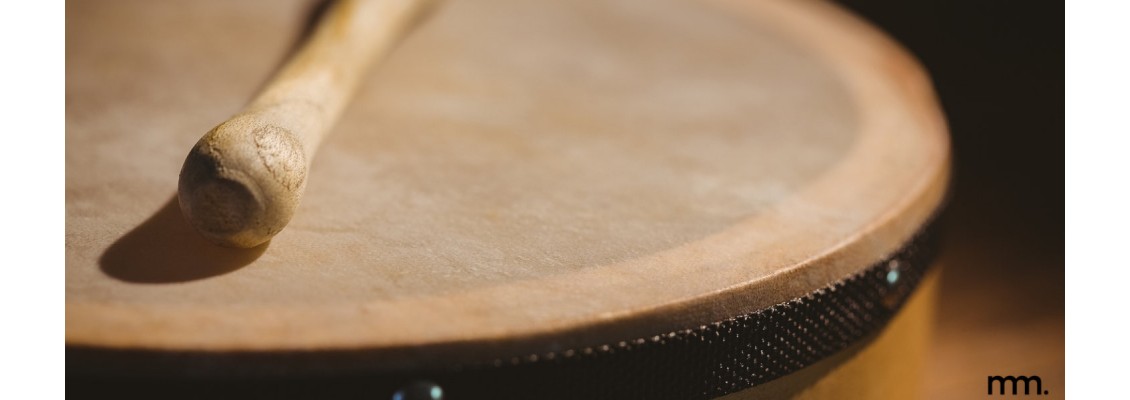
Why the Bodhrán Is the Soul of Every Trad Session
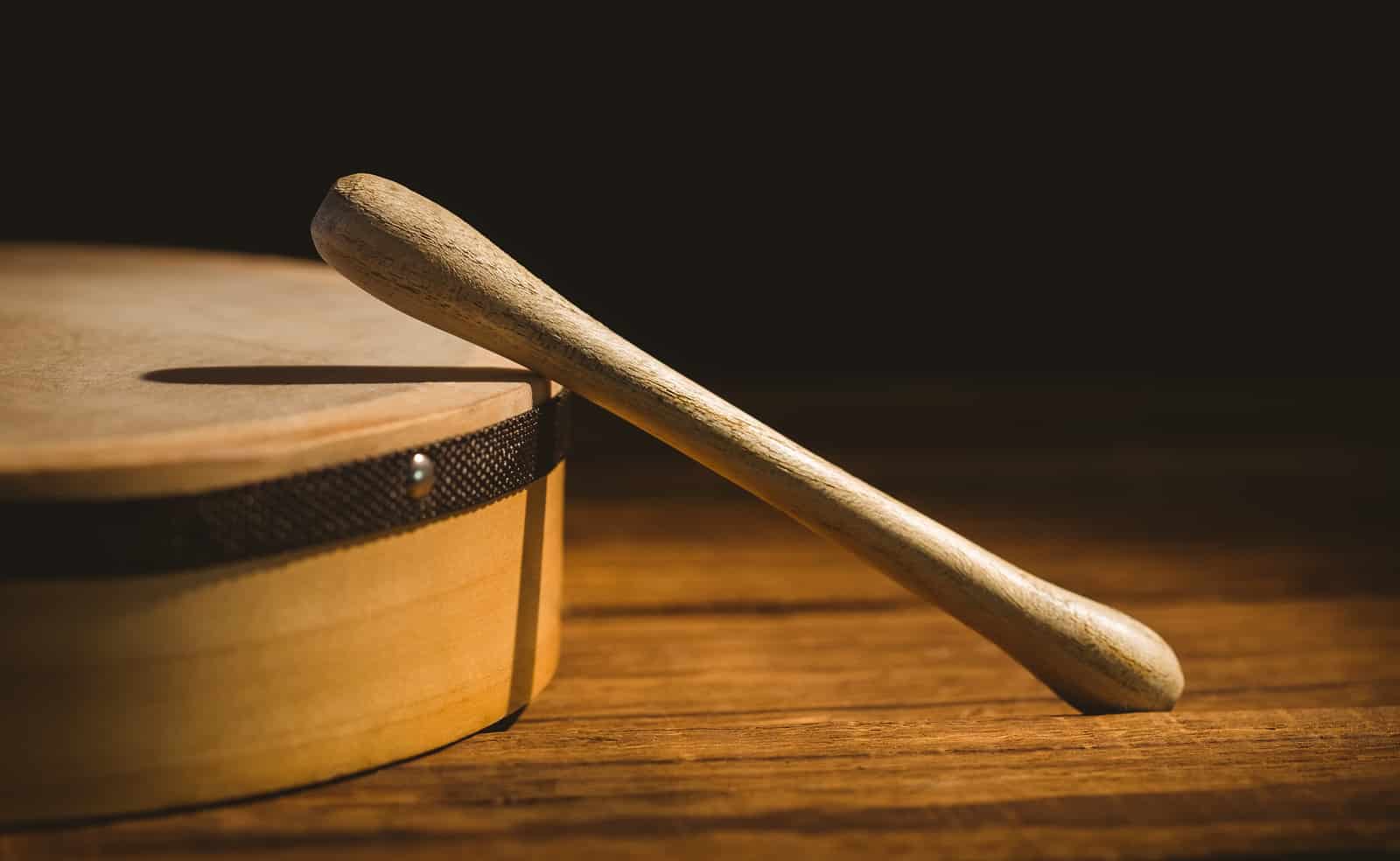
There’s a moment in every good trad session when the room shifts.
The fiddles are flying, whistles are weaving melodies through the air, maybe a banjo is chugging along happily — and then someone reaches down beside their chair, lifts a round frame drum onto their knee, and suddenly everything locks into place.
The bodhrán has arrived.
Across Ireland — from packed pub corners in Galway to quiet midweek sessions in Dublin — the bodhrán remains the rhythmic engine that drives traditional music forward. It’s simple, powerful, and deeply expressive, capable of whispering subtle textures or thundering through a reel like a runaway train.
This Trad Month at Musicmaker, we’re celebrating that heartbeat properly — with a fantastic selection of Koda bodhráns for players of every level, whether you're just dipping your toe into trad or you're already deep in the session circuit.
Starting the Journey
Koda Bodhrán 8” x 1½” Natural with Beater
Every trad musician remembers their first instrument, and for many players the bodhrán is where that journey begins.
The Koda 8” x 1½” Natural Bodhrán is a brilliant introduction to the instrument — compact, lightweight and incredibly approachable. Its smaller size makes it perfect for younger players, beginners or anyone looking for an easy way to explore traditional rhythm without jumping straight into a full-sized drum.
Despite its smaller footprint, it still captures the warm, organic tone that makes the bodhrán so special. The natural skin head produces a classic percussive voice that feels instantly connected to the long tradition of Irish folk music.
Available in four classic designs, it’s also a lovely visual piece — the kind of instrument that looks just as good hanging on the wall as it does sitting beside a roaring pub session.
And most importantly, it’s great fun to play.
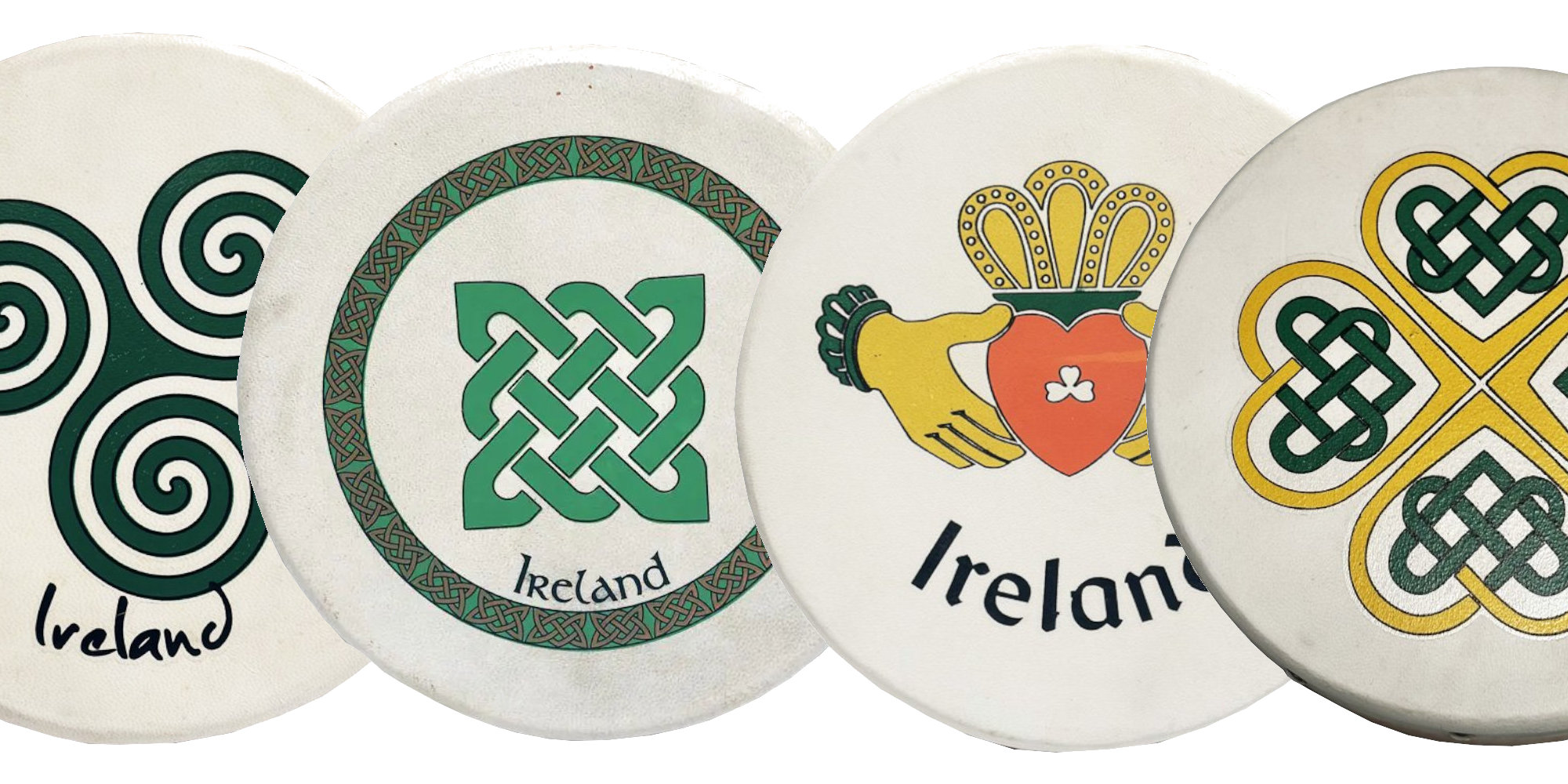
Well made and fun to play, check out the Koda Bobhráns in Musicmaker now.
A Perfect First Session Drum
Koda Bodhrán 12” x 3” Black – Shamrock Ireland
For players ready to step up into a more traditional size, the Koda 12” x 3” Bodhrán is an excellent choice.
This drum strikes a perfect balance between portability and presence. The slightly larger frame allows for a fuller tone and greater dynamic control, while still being light enough to handle comfortably for extended sessions.
Finished in classic black and featuring the Shamrock Ireland design, it proudly wears its traditional roots. It’s the kind of bodhrán that feels right at home in a session circle — responsive, musical and full of character.
The included bag and beater make it a complete starter package, meaning you can walk out of the shop and straight into the next session fully prepared.
And if Paddy’s Day sessions are on your calendar, this is exactly the kind of drum you’ll want beside you.
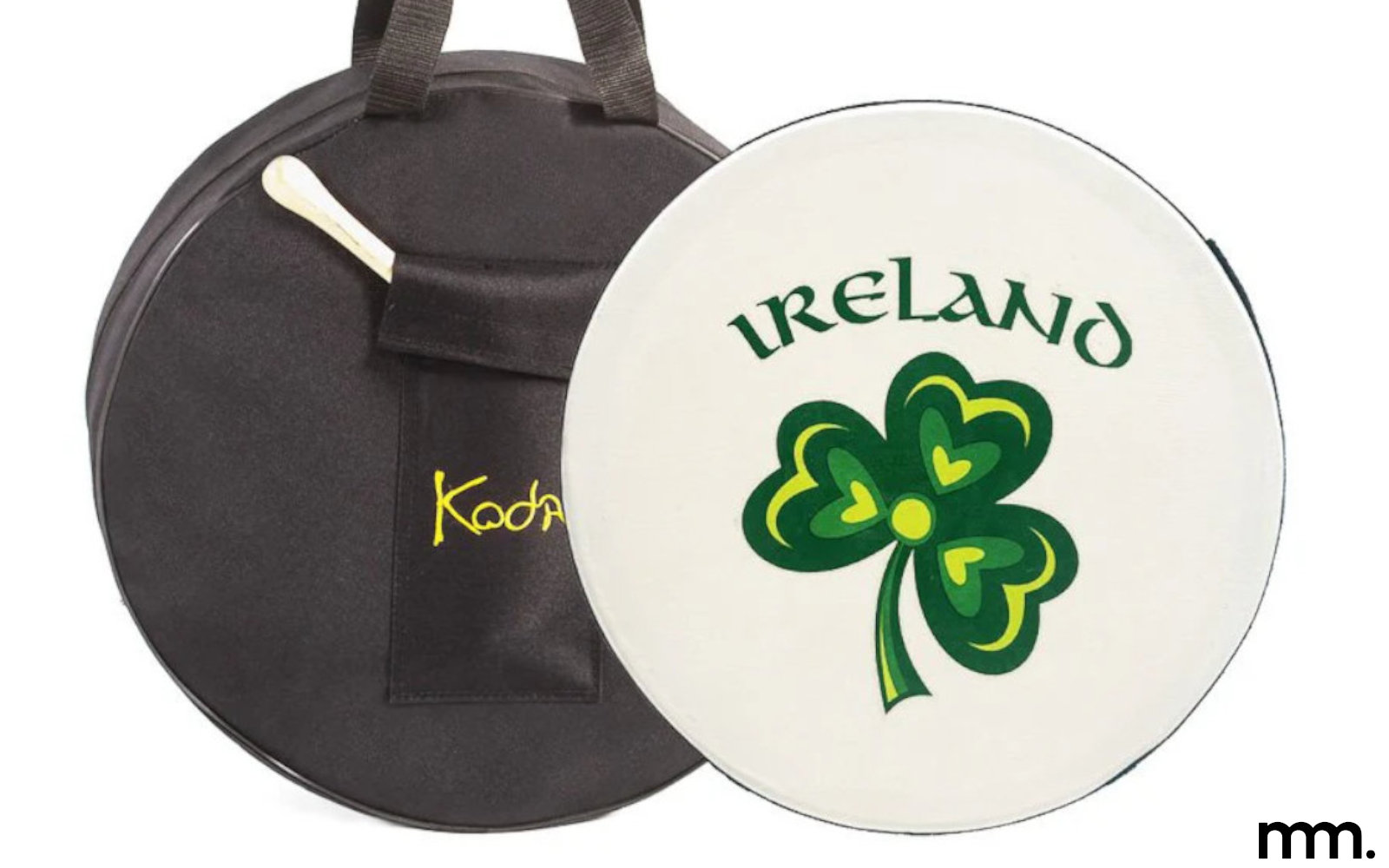
Have bag, will session. The Koda 12" x 3" Bodhrán.
The Session Standard
Koda Bodhrán 14" x 4" Black / Plain (Non-Tuneable)
Step into most trad sessions across Ireland and you’ll quickly notice that the 14-inch bodhrán is the classic working size.
The Koda 14" x 4" Black Bodhrán delivers that familiar balance of warmth, punch and responsiveness that players love. The slightly deeper frame gives the drum more body and resonance, allowing rhythms to sit beautifully underneath the melody without overpowering it.
Its plain black finish gives the drum a timeless, understated look — all business, no fuss.
For players who prefer the straightforward simplicity of a non-tuneable bodhrán, this model is a fantastic option. The natural skin head develops its own unique tonal character over time, becoming more expressive the more you play it.
Included with a bag and beater, it’s ready for sessions, rehearsals and gigs the moment you pick it up.
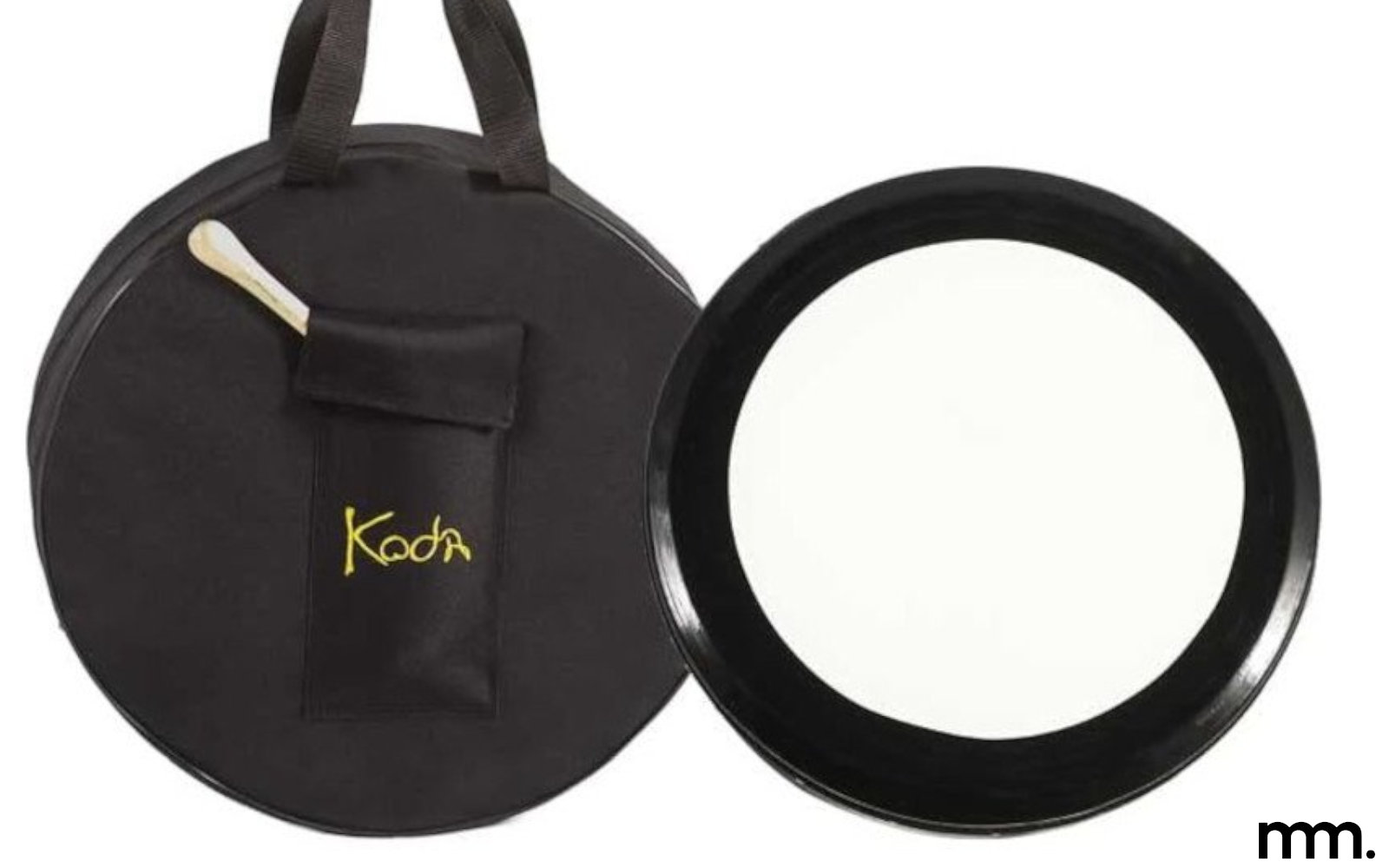
Things are getting serious. The Koda 14" x 4" Bodhrán with Bag and Tipper.
The Heavyweight of the Session
Koda Tuneable Bodhrán 16” x 5” Black
For players who want the full bodhrán experience, the Koda Tuneable 16” x 5” Bodhrán is where things get serious.
This larger drum produces a deeper, richer tone with incredible presence — the kind of sound that anchors an entire session when played well. The extra depth adds warmth and resonance, giving the instrument a powerful low-end character while still allowing subtle rhythmic textures to shine through.
What truly sets this model apart is its tuneable design, allowing players to adjust the drum head tension to suit different environments and playing styles. Whether you're performing in a warm pub, a cool rehearsal room, or a busy stage environment, the ability to fine-tune your bodhrán keeps your tone consistent and responsive.
Finished in sleek black with black tape detailing, and supplied with a padded gig bag and beater, it’s a professional-ready instrument built for serious session players.
When the music gets lively and the tempo starts climbing, this is the kind of bodhrán that keeps everything grounded.
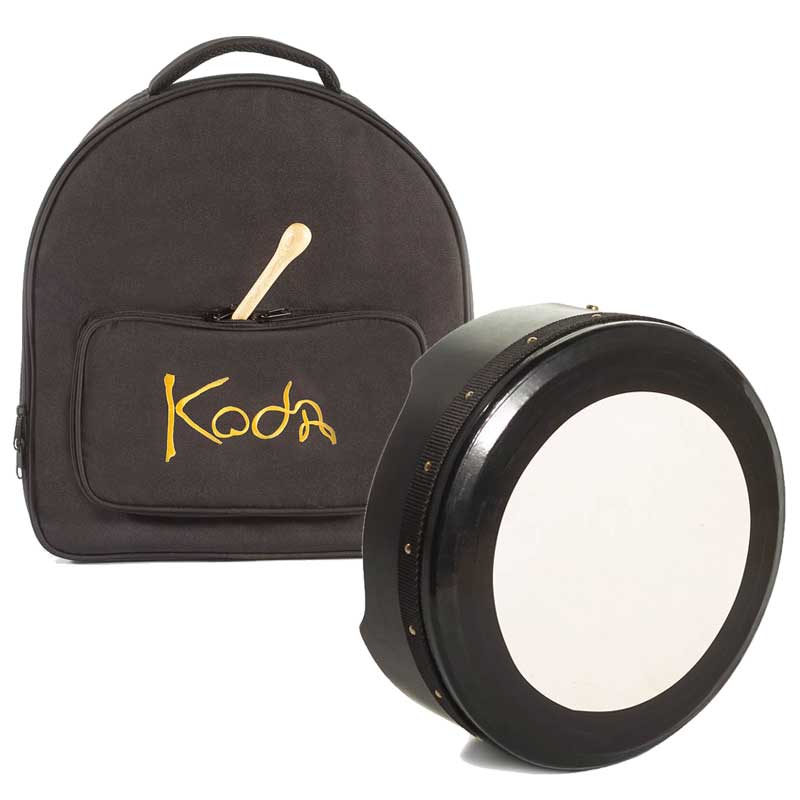
We are all in. Check out the Koda 16" x 5" Tuneable Bodhrán in Musicmaker today.
FAQ Section
What is a bodhrán?
A bodhrán is a traditional Irish frame drum commonly used in Irish folk and traditional music sessions. It is played with a wooden stick called a tipper and controlled with the player's hand inside the drum to shape tone and rhythm.
What size bodhrán should beginners start with?
Beginners often start with a 12" or 14" bodhrán, as these sizes offer a good balance of control, tone and comfort for learning traditional rhythms.
What is the difference between a tuneable and non-tuneable bodhrán?
A tuneable bodhrán allows players to adjust the tension of the drum head to control tone and pitch, which is useful in changing environments. A non-tuneable bodhrán has a fixed head tension and offers a more traditional playing experience.
Is the bodhrán difficult to learn?
The bodhrán is relatively accessible for beginners, but mastering it takes time and practice. Many players start by learning basic jig and reel rhythms before developing more advanced techniques.
Do I need a beater or tipper to play the bodhrán?
Yes. Most bodhrán players use a tipper (also called a beater) to strike the drum head while the other hand controls tone and pressure from inside the frame.
How to Play the Bodhrán at an Irish Session
A Beginner’s Guide to Joining the Rhythm
Walking into your first trad session can feel a little intimidating. There are fiddles flying, flutes dancing around the melody, and tunes moving at a speed that can seem impossible to follow.
But here’s the secret: the bodhrán doesn’t need to be flashy to be brilliant.
In fact, the best bodhrán players often do less, not more. Their job is to support the tune, give it energy, and help the entire session breathe together.
If you're starting out, here are a few simple principles that will get you playing confidently in no time.
Start With the Pulse
Most traditional Irish tunes fall into a few common rhythm patterns:
- Reels (4/4 time) – steady and driving
- Jigs (6/8 time) – rolling and flowing
- Polkas (2/4 time) – lively and punchy
Your goal isn’t to play complicated rhythms straight away. Instead, focus on locking into the pulse of the tune. A simple, steady rhythm played well will always sound better than something overly busy.
Good bodhrán players make the music feel grounded.
Let the Tune Lead
Unlike drum kits or percussion in rock bands, the bodhrán in a trad session isn’t meant to dominate.
Listen carefully to the melody instruments — fiddles, whistles, flutes, pipes — and let them guide your rhythm. When the tune lifts in energy, you can push the rhythm slightly. When it softens, pull back.
The best bodhrán players act almost like a second heartbeat for the tune.
Use Your Hand to Shape the Sound
One of the most magical parts of the bodhrán is the control hand inside the drum.
By pressing against the back of the drum skin, you can subtly change the pitch and tone as you play. This allows for a huge range of sounds, from deep bass pulses to sharper rhythmic accents.
It’s this expressive control that makes the bodhrán so unique compared to other frame drums.
Less Is Often More
When players first learn the bodhrán, there’s often a temptation to fill every space with rhythm.
But in traditional music, space is powerful.
Sometimes the most musical thing you can do is simply keep a steady pulse and let the melody shine. As you gain confidence, you can gradually add small variations, accents and rolls.
Sessions are about playing together, not competing for attention.
Bring the Energy — Not the Volume
Trad sessions can build incredible energy as tunes gather momentum. The bodhrán helps drive that feeling forward, but it’s important to keep balance.
A well-played bodhrán should feel like a rhythmic engine under the music, supporting the tune rather than overpowering it.
When played with sensitivity, it becomes one of the most powerful instruments in the session.
Join the Session
One of the beautiful things about Irish traditional music is how welcoming it can be. Sessions happen everywhere — pubs, community halls, festivals, living rooms — and musicians of all levels gather simply to play.
If you’ve been thinking about trying the bodhrán, there has never been a better time to start.
Pick up a drum, learn a few rhythms, find a local session and jump in.
Because once that pulse starts and the tunes begin to roll, you’ll quickly discover why the bodhrán has been the heartbeat of Irish music for generations.
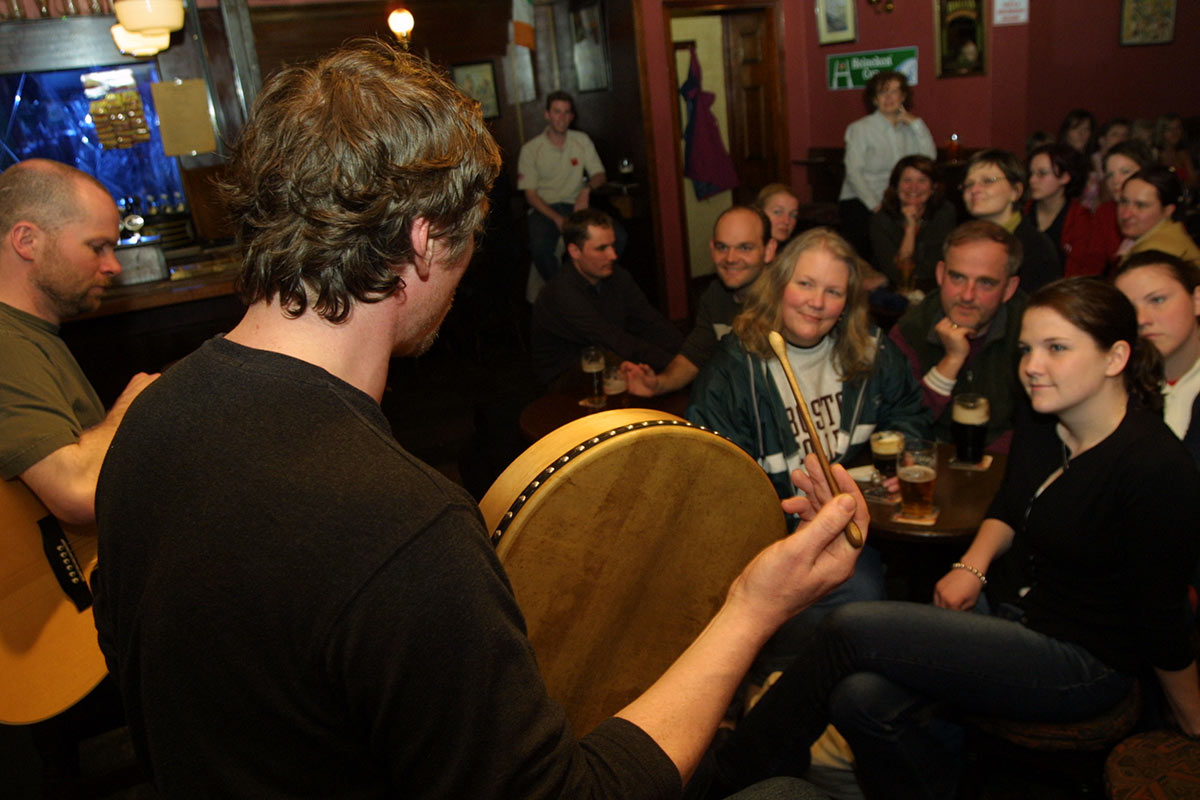
Get out there and get involved.
Trad Month at Musicmaker
March is when Irish traditional music truly comes alive.
Sessions multiply, pubs fill with musicians, and instruments that might have been resting quietly through winter suddenly find themselves back in the spotlight.
At Musicmaker, we’re proud to support that tradition with a wide selection of bodhráns, whistles, fiddles, mandolins, banjos and other session essentials.
Whether you're picking up your first drum, upgrading to a tuneable session instrument, or simply curious about joining the trad world, our team is always happy to help.
Because trad music isn’t something you just listen to.
It’s something you play.
And if you’re looking for the heartbeat of that music, you’ll find it right here — in the steady pulse of a bodhrán.