





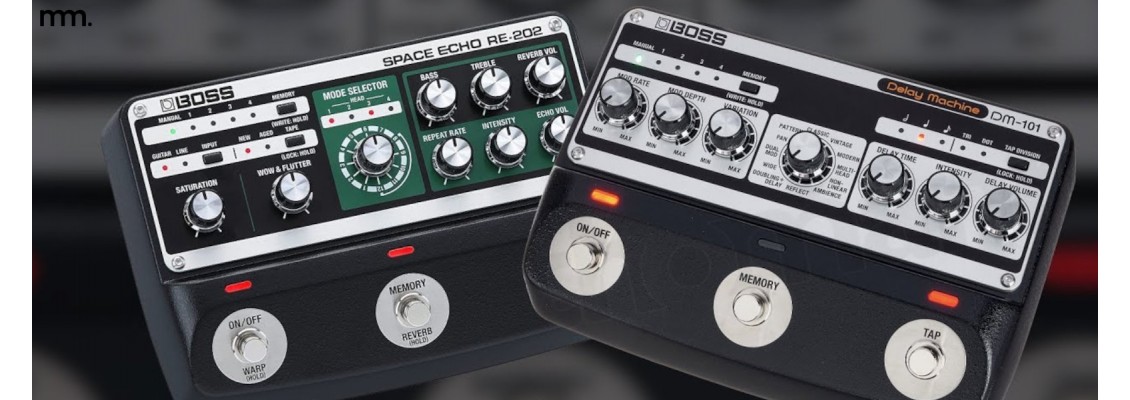
Boss DM-101 vs Boss RE-202
Analog Delay Meets Digital Legend
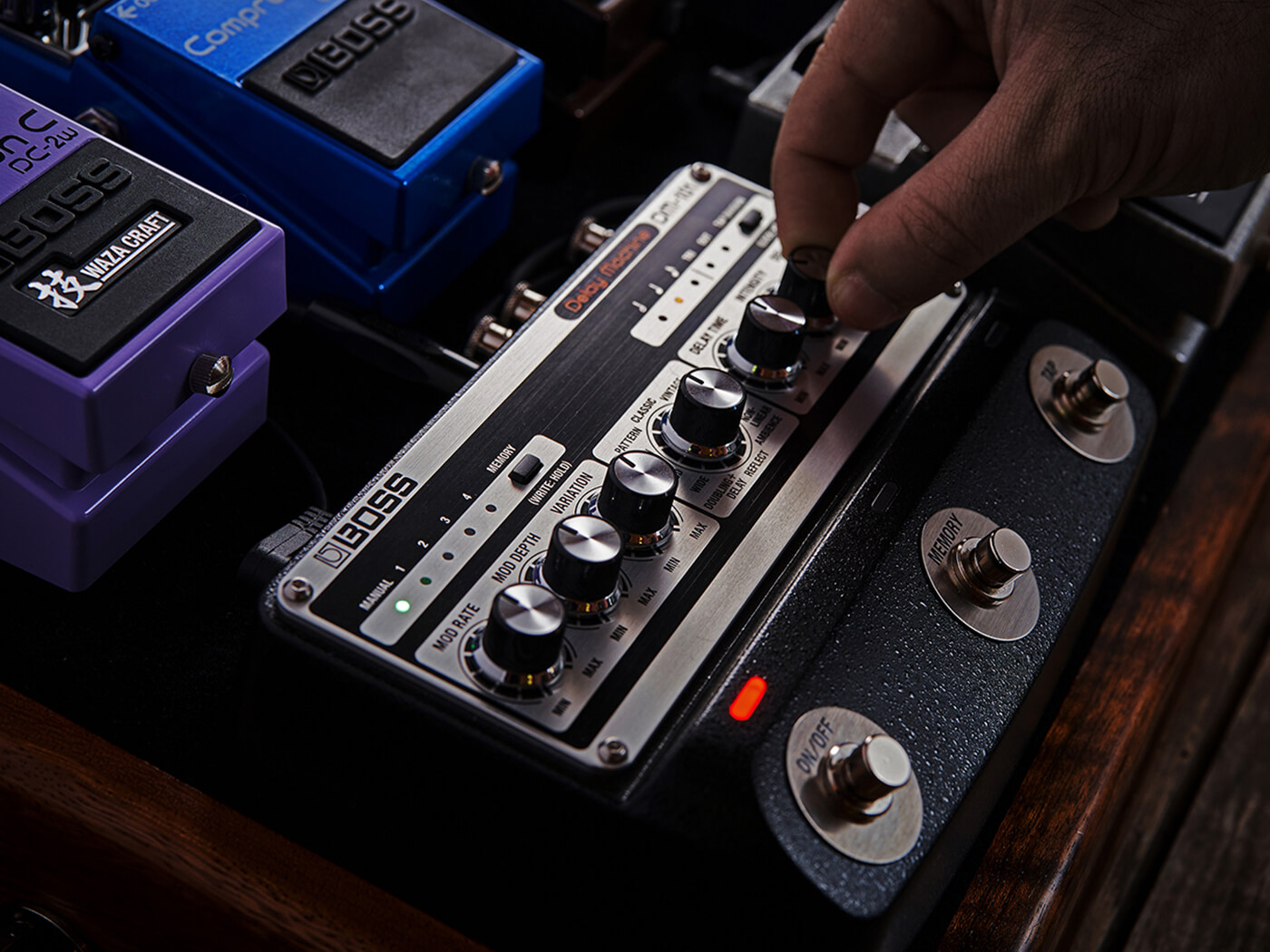
Check out the mighty BOSS DM-101 at Musicmaker today.
And if there is one company that has shaped the history of delay pedals more than almost anyone else, it's Boss.
From the earliest analog delay units of the late 1970s to the legendary Space Echo recreations of today, Boss have spent decades perfecting the art of repeats, echoes, ambience and beautiful sonic confusion.
Now, at Musicmaker Dublin, two of the most fascinating delay pedals in the Boss lineup sit side by side, representing two completely different philosophies of delay:
The gloriously analog Boss DM-101 Delay Machine.
And the endlessly atmospheric Boss RE-202 Space Echo.
Analog versus digital. Precision versus unpredictability. The laboratory versus the time machine.
And honestly?
Both are magnificent.
Boss & The History Of Delay
To understand these pedals, it helps to understand Boss themselves.
Since launching in the late 1970s, Boss have become one of the most influential pedal manufacturers in history. Their compact stompboxes have appeared on countless stages, records and pedalboards, helping define entire genres of music.
And delay has always been part of that story.
The original Boss DM-2 Analog Delay, released in 1981, became legendary for its warm bucket brigade repeats and organic decay. Players quickly fell in love with the way analog delays softened and darkened with each repeat, creating echoes that felt musical rather than mechanical.
Meanwhile, Roland — Boss's parent company — had already changed music history with the iconic RE-201 Space Echo, a tape echo machine whose swirling repeats and preamp coloration became beloved by everyone from Pink Floyd and Radiohead to reggae pioneers, dub producers and experimental musicians.
Those two lineages eventually evolved into the pedals we're talking about today.
And what a glorious evolution it has been.
The Boss DM-101 Delay Machine
The Analog Dream Realised
The Boss DM-101 Delay Machine feels like the result of a secret meeting between analog purists and modern engineers.
Because somehow Boss achieved something many people thought impossible. They built a fully featured stereo analog delay pedal.
Not digital modelling. Not analog-inspired. Actual analog delay.
At the heart of the DM-101 are eight genuine bucket brigade delay chips, delivering the rich, warm and naturally compressed repeats that have made analog delay one of the most beloved effects in guitar history.
Every repeat gently softens and darkens as it trails away, sitting beautifully behind the original note rather than competing with it. Chords become lush and cinematic. Lead lines gain dimension and movement. Ambient textures seem to float endlessly around the room.
But what makes the DM-101 truly remarkable is how far Boss pushed the concept.
This isn't a simple vintage recreation.
The DM-101 offers twelve different delay modes, stereo operation, expanded delay times and an astonishing amount of flexibility while still retaining the unmistakable character of true analog circuitry. It can be subtle and supportive one moment, then explode into vast ambient landscapes the next.
For pedal enthusiasts, it's a dream machine.
For guitarists who love warm, organic repeats, it may be one of the finest analog delay pedals ever produced.
Why Guitarists Still Love Analog Delay
There is something beautifully imperfect about analog delay.
Digital delays tend to reproduce every repeat with almost surgical accuracy. Analog delays don't. Each repeat loses a little high-end content. A little clarity. A little definition.
And that's exactly why people love them.
The echoes seem to melt into the background naturally. They become part of the atmosphere rather than sitting on top of the music. The effect feels alive, responsive and deeply musical.
When players talk about:
- warm delay tones
- organic echoes
- ambient guitar textures
- vintage delay sounds
- or boutique analog delay pedals
this is usually what they're chasing.
And the DM-101 captures that feeling magnificently.
The Boss RE-202 Space Echo
A Legend Reborn
Then we arrive at the Boss RE-202 Space Echo. Calling this a delay pedal almost feels unfair.
The original Roland RE-201 Space Echo wasn't simply an effect unit. It became part of the sound of modern music itself.
Tape echoes have a magic all their own. Unlike digital delays or bucket brigade circuits, tape echoes introduce subtle modulation, compression, saturation and beautiful instability into every repeat. The result feels wonderfully unpredictable and deeply musical.
The RE-202 recreates that entire experience with astonishing accuracy.
Everything people loved about the original Space Echo is here:
- the multi-head delay patterns
- the immersive spring reverb
- the preamp coloration
- the evolving tape-style repeats
and that glorious sense of movement that makes every note feel larger than life.
Plug into the RE-202 and suddenly you're hearing echoes of Pink Floyd, Radiohead, U2, Brian Setzer, Lee "Scratch" Perry, David Gilmour and countless other artists who built entire sonic identities around echo.
This is not merely delay.
It's atmosphere.
Digital Delay Has Grown Up
For years, guitarists often framed the debate as:
Analog = warm.
Digital = cold.
That simply isn't true anymore.
The RE-202 demonstrates just how sophisticated modern digital processing has become. Boss have meticulously recreated the behaviour, modulation and imperfections of vintage tape echoes while adding reliability, consistency and modern functionality impossible in the original hardware.
You get MIDI, presets, extended control options, stereo operation, and all the flexibility contemporary players demand.
But you never lose the magic. That's the trick.
The RE-202 sounds like history while behaving like the future.
DM-101 or RE-202?
Which Boss Delay Is Right For You?
The fascinating thing about these pedals is that they are not really competitors.
They're different flavours of obsession.
The Boss DM-101 Delay Machine is for players who love analog circuitry, warm repeats and the uniquely organic character of bucket brigade delays. It excels at atmospheric playing, ambient textures, expressive lead work and the kind of subtle musical enhancement that makes a rig feel alive.
The Boss RE-202 Space Echo, meanwhile, is a portal into one of the most influential delay sounds ever created. It's bigger, more theatrical, more immersive and wonderfully cinematic. It transforms simple phrases into sprawling sonic landscapes and rewards experimentation endlessly.
One is the finest expression of analog delay.
The other is a love letter to tape echo history.
And both are extremely inspiring.
Boss Delay Pedals FAQ
What is the difference between analog and digital delay?
At the simplest level, analog delay pedals create repeats using physical circuitry, while digital delay pedals use digital processing to recreate and manipulate echoes.
Analog delays tend to sound warmer, darker and more organic as the repeats gradually lose high-end content over time. Digital delays are typically cleaner, clearer and capable of producing longer delay times and more complex features. Neither is better — they're simply different flavours of delay.
For many guitarists, the choice comes down to personality as much as sound.
Is the Boss DM-101 a true analog delay pedal?
Yes. The Boss DM-101 Delay Machine is a genuine analog delay pedal built around eight real bucket brigade (BBD) chips rather than digital modelling.
This gives it the warm, musical repeats and natural decay that players associate with classic analog delay pedals while still offering modern features such as stereo operation, multiple delay modes and extended flexibility.
It is one of the most advanced analog delay pedals Boss has ever produced.
What is a bucket brigade delay?
A bucket brigade delay (BBD) is the technology used in classic analog delay pedals. The signal is passed through a series of tiny capacitors, each passing the signal along like a line of people passing buckets of water during a fire. As the signal travels through the circuit it gradually loses a little fidelity and brightness, creating the warm, soft repeats that have become synonymous with analog delay.
Many of the most sought-after vintage delay pedals used bucket brigade technology, and the Boss DM-101 proudly continues that tradition.
What is the Boss RE-202 based on?
The Boss RE-202 Space Echo is based on the legendary Roland RE-201 Space Echo, one of the most iconic tape echo units ever created.
The original RE-201 became famous for its rich tape repeats, spring reverb and wonderfully unpredictable modulation. It helped shape countless recordings across rock, ambient music, dub, post-rock, shoegaze, indie and experimental genres.
The RE-202 recreates that experience while adding modern reliability, presets, MIDI functionality and stereo operation.
What is a tape echo pedal?
A tape echo pedal recreates the sound of vintage tape delay machines, where recorded audio is played back from moving magnetic tape. Unlike standard digital delays, tape echoes introduce subtle modulation, compression, saturation and tonal changes into the repeats. This creates a more organic, evolving sound that many players find incredibly musical.
The Boss RE-202 is considered one of the finest modern tape echo pedals available today.
Which Boss delay pedal is best for ambient guitar?
Both pedals excel at ambient guitar, but they approach it differently.
The Boss DM-101 creates lush, warm analog textures that blend beautifully into the background, making it ideal for atmospheric lead work, worship guitar, cinematic soundscapes and expressive fingerstyle playing.
The Boss RE-202 creates larger, more immersive environments with tape-style movement, spring reverb and multi-head delay patterns that can completely transform a simple phrase into an evolving sonic landscape.
For ambient guitar players, either pedal could easily become the centrepiece of a professional pedalboard.
Is the Boss DM-101 good for shoegaze and post-rock?
Very much so. Shoegaze and post-rock players often gravitate towards analog delay because of its ability to create rich layers of texture without sounding overly clinical. The DM-101's stereo operation, multiple delay modes and genuine bucket brigade circuitry make it a fantastic choice for players building immersive walls of sound, ambient guitar textures and evolving soundscapes.
It's the sort of pedal that encourages experimentation for hours at a time.
What artists famously used delay and echo effects?
Some of the most iconic guitar sounds in history are built around delay.
David Gilmour used delay extensively to create the soaring lead tones heard throughout Pink Floyd's catalogue.
The Edge of U2 transformed delay into a rhythmic instrument, building entire songs around repeating echo patterns.
Radiohead used tape echoes and atmospheric delay sounds to create many of their most cinematic textures.
Meanwhile, pioneers like Lee "Scratch" Perry and King Tubby revolutionised dub music using tape echoes and Space Echo units, influencing generations of producers and musicians.
Delay isn't simply an effect — it's part of modern music history.
Is the Boss RE-202 worth it?
For players seeking authentic tape echo sounds without the maintenance of a vintage tape machine, absolutely.
The RE-202 captures the character, movement and atmosphere of the original Space Echo while providing modern conveniences such as presets, MIDI integration, stereo operation and exceptional reliability.
It delivers the romance of vintage echo with the practicality of modern technology.
Which is better: analog delay or tape echo?
That depends entirely on the player.
Analog delay pedals like the Boss DM-101 tend to create warm, soft repeats that sit naturally behind the original note. They excel at subtle ambience, lead enhancement and organic musicality.
Tape echo units like the Boss RE-202 introduce movement, modulation, saturation and evolving character into the repeats, creating a larger and often more dramatic sonic experience.
Many experienced guitarists eventually end up owning both. And that's usually where the real fun begins.
Why are Boss effects pedals so respected?
Few companies have shaped the world of guitar effects like Boss.
Their pedals are trusted by everyone from bedroom players and weekend giggers to professional touring musicians because they consistently deliver outstanding sound quality, reliability and innovation. From overdrive and distortion to chorus, reverb and delay, Boss effects pedals have appeared on countless legendary recordings and remain a benchmark for modern pedal design.
Simply put, when Boss release a flagship delay pedal, guitar players pay attention.
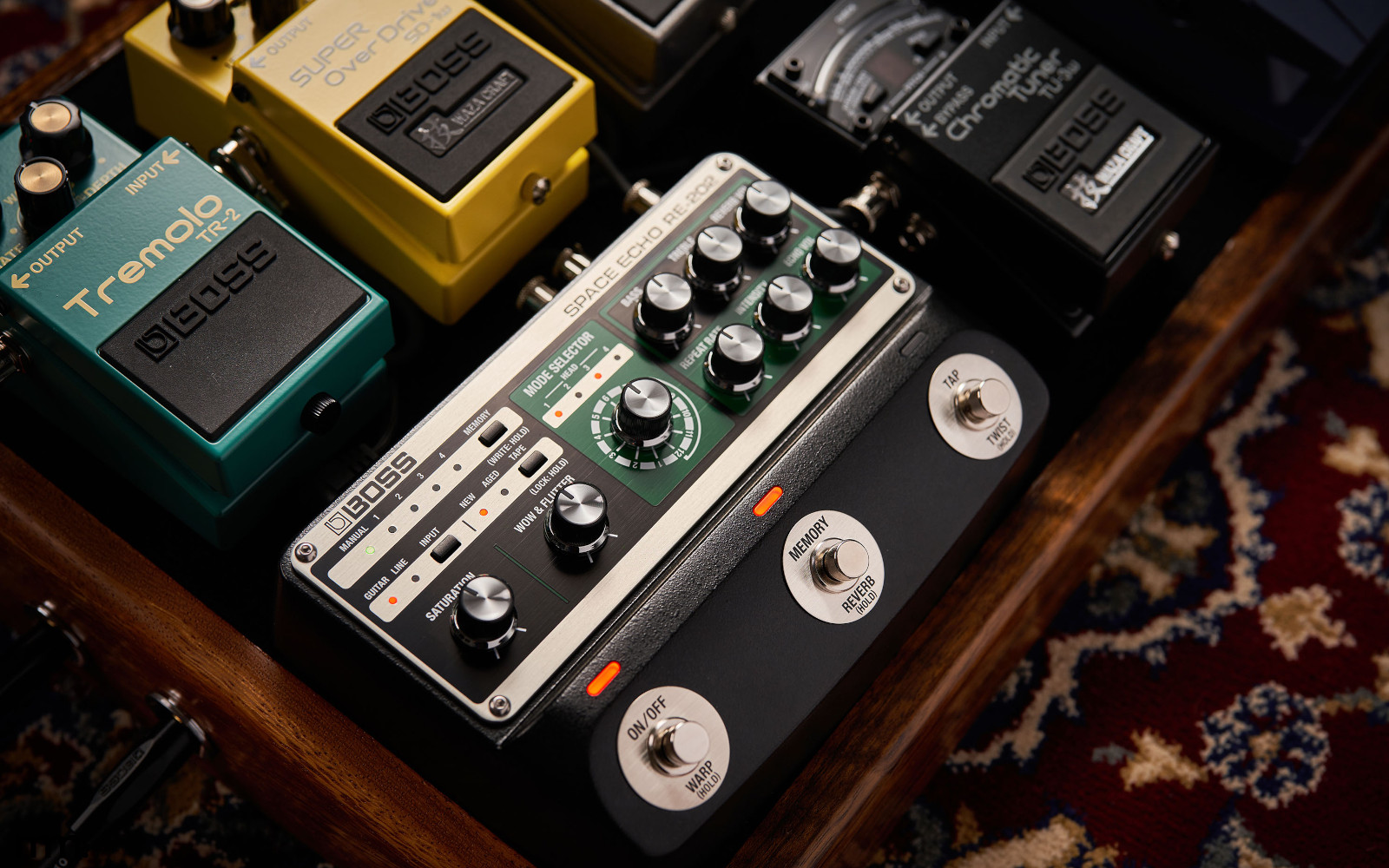
Get into Musicmaker and check out the BOSS RE-202 immediately.
Why Boss Delay Pedals Remain The Benchmark
Few companies have contributed more to the history of delay pedals than Boss.
From the legendary DM series to the iconic Space Echo lineage, Boss continue to build effects that combine innovation, reliability and genuinely beautiful sound quality. Whether you're searching for the best analog delay pedal, a professional stereo delay, a tape echo pedal, an ambient guitar effect or simply one of the most inspiring stompboxes available today, the DM-101 and RE-202 represent two of the most exciting delay pedals currently available.
At Musicmaker Dublin, they're more than just pedals on a shelf.
They're invitations. To experiment. To explore.
To get lost in echoes for a few hours and emerge with entirely new songs.
Check out the Boss DM-101 Here
Check out the Boss RE-202 Here