




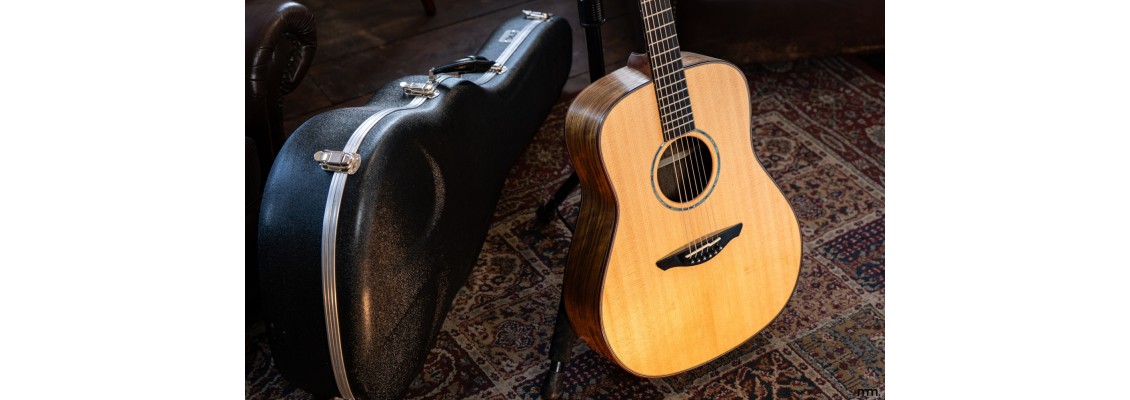
Handcrafted in Northern Ireland: Avalon D310 Amazaque
There are acoustic guitars that announce their quality through decoration, rarity or excess. Then there are instruments that make their point the moment the first chord leaves the soundhole.
The The Avalon D310 Amazaque acoustic guitar belongs firmly to the latter camp.
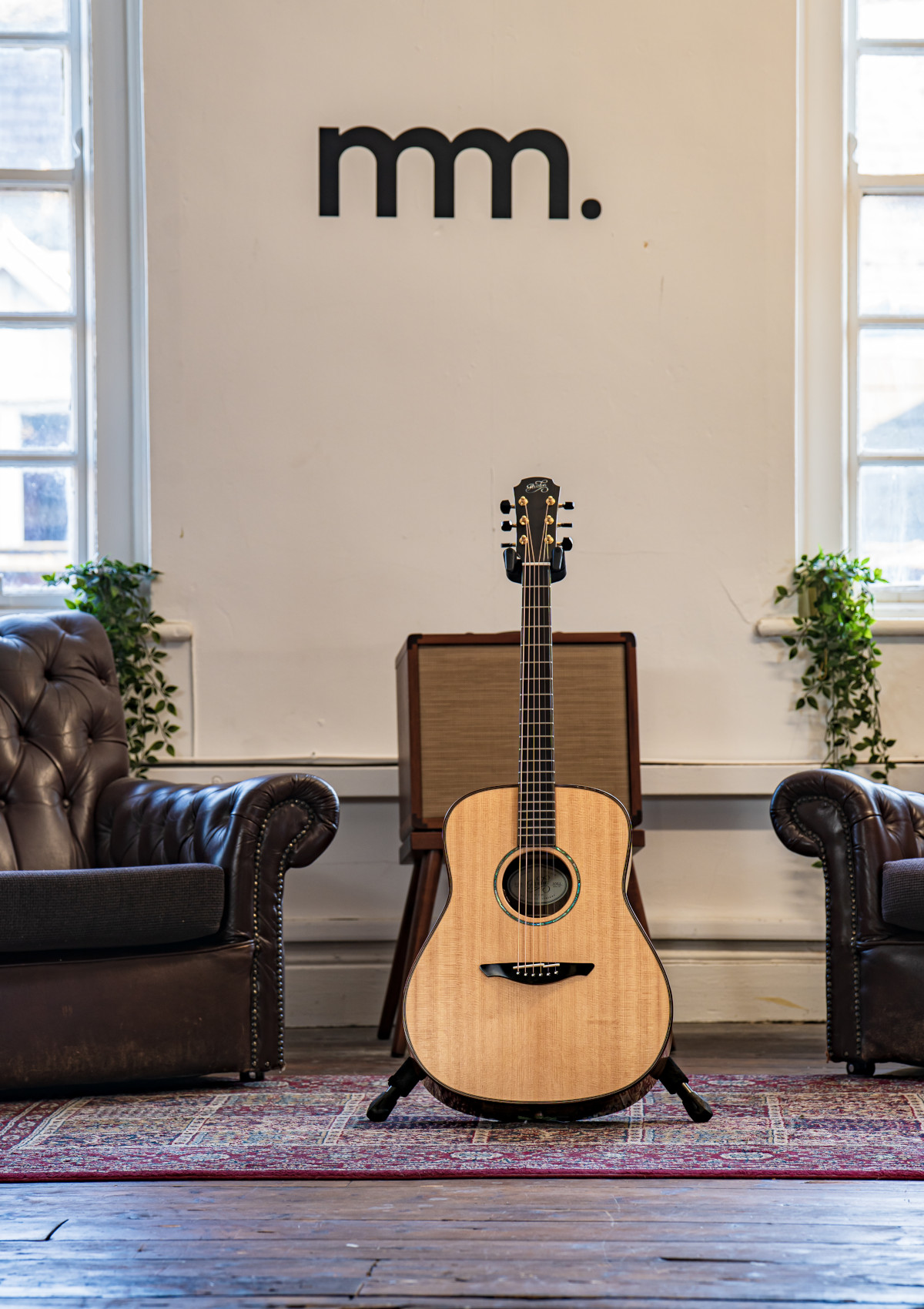
It is a dreadnought in the great tradition of dreadnoughts: broad-shouldered, powerful and capable of moving a serious amount of air. Yet in the hands of Avalon's luthiers in Northern Ireland, that familiar outline becomes something more considered. The power is still there, but it has been disciplined. The bass is substantial without swallowing the rest of the guitar. The treble has brightness without hardness. Chords arrive with scale and authority, yet individual notes retain their identity inside them.
And behind that voice lies one of the most interesting woods in the Avalon Premier Series.
Amazaque.
A Different Kind of Tonewood
Even the name sounds exotic.
Amazaque is a timber that deserves more attention from acoustic guitar players. Sometimes associated in the guitar world with ovangkol, it occupies fascinating tonal territory, possessing some of the breadth and harmonic complexity players often seek from rosewood while bringing a strong, present midrange of its own.
That makes it particularly interesting on a dreadnought.
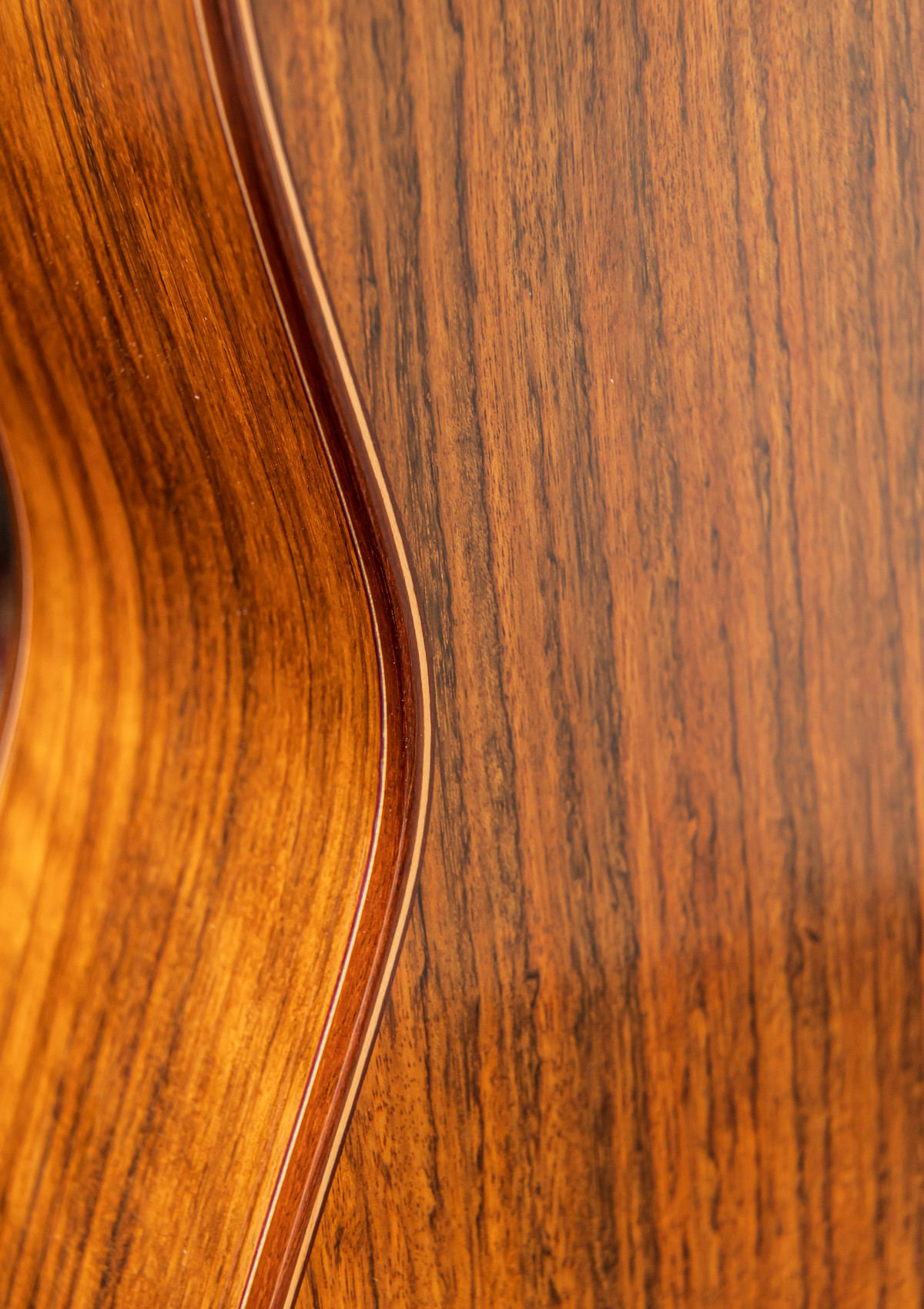
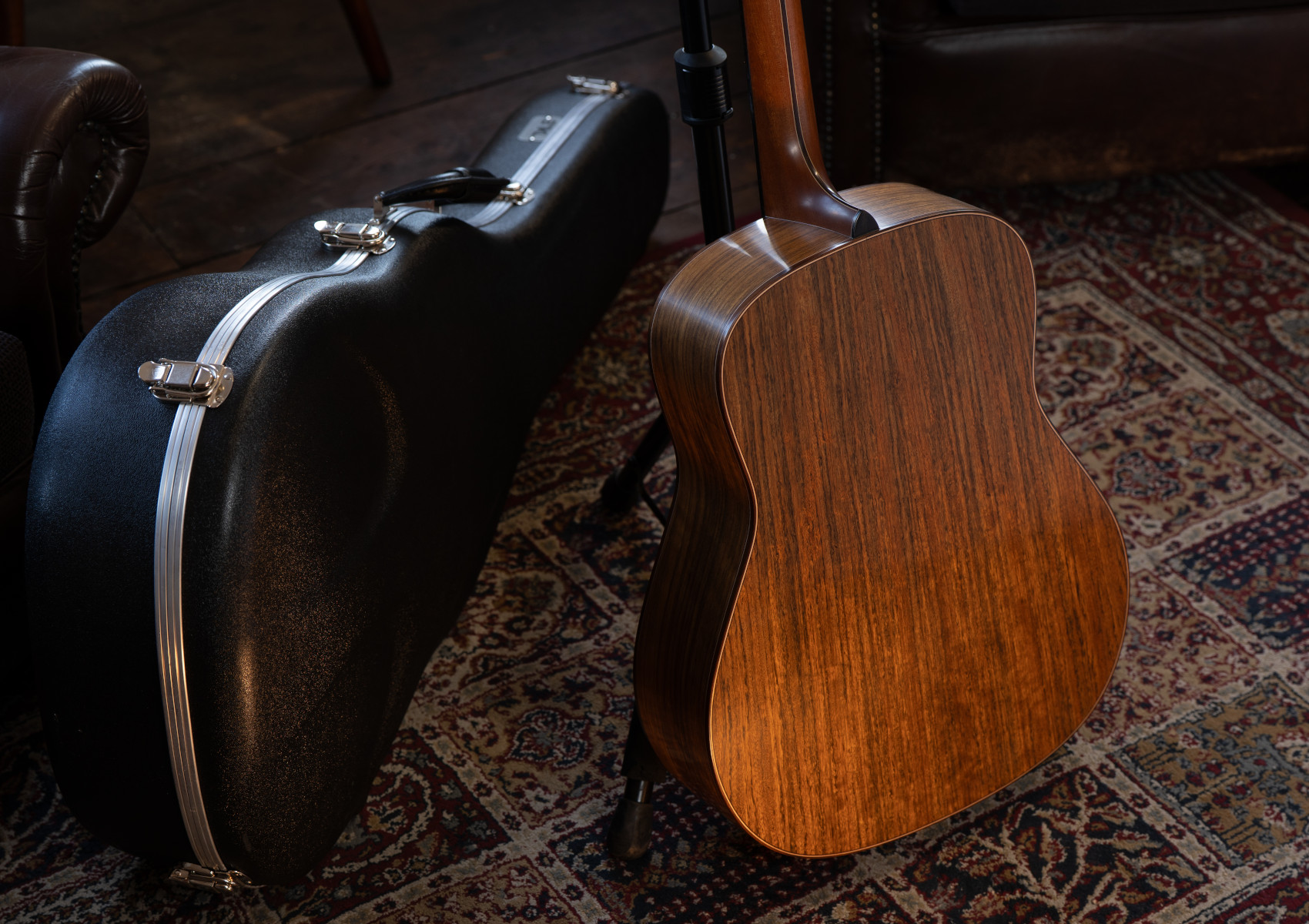
Look closely at the back and sides of the D310 and the first attraction is visual. The timber carries deep natural figuring and long, dramatic lines that seem to move as the guitar turns in the light. There is richness here, but very little ostentation. This isn't decoration applied to the instrument after the fact.
The wood is the decoration.
More importantly, it has been chosen to make music.
That distinction lies at the heart of Avalon.
Handcrafted in Northern Ireland
Every Avalon guitar is hand-built in Northern Ireland.
That statement means something rather specific here.
Avalon says there are no CNC routers involved in its guitar building. Instead, these instruments pass through the hands of experienced luthiers using tools, time and technique to turn individual pieces of timber into responsive musical instruments.
That human element matters because acoustic guitars are remarkably sensitive structures.
The soundboard needs strength, but it also needs freedom. Bracing must support hundreds of pounds of string tension without strangling the top's ability to vibrate. Neck, bridge, saddle, body and soundboard all become parts of one mechanical system, transferring energy from a vibrating string into the air around the player.
Tiny decisions accumulate.
A little material removed here. A brace shaped there. A piece of timber listened to rather than simply measured.
Eventually those decisions become a voice.
And when you play an Avalon, that sense of deliberate construction is difficult to miss.
Sitka Spruce: The Engine Room
At the front of the D310 sits one of the great acoustic guitar soundboard timbers: solid Sitka Spruce.
There's a reason builders return to Sitka again and again.
A good spruce top combines stiffness with relatively low weight, allowing it to respond sensitively to the strings while retaining enough structural strength and dynamic headroom to cope with a much heavier attack.
Play softly and it responds. Lean into it and there's somewhere left to go.
On the D310, that characteristic becomes particularly important. A dreadnought needs to be able to take energy without collapsing into an indistinct wall of sound, and the Sitka top gives this guitar the headroom to move from delicate picking into genuinely forceful strumming while maintaining composure.
That is where the relationship with Amazaque becomes so interesting.
Where Spruce Meets Amazaque
Tonewoods are often discussed as though each species carries a fixed EQ curve.
Real guitars are far more complicated.
Body dimensions, soundboard thickness, bracing, bridge mass, neck construction, strings and — most importantly — the skill of the builder all contribute to the final instrument. No responsible description can tell you exactly how a guitar sounds simply by naming two species of tree.
But the pairing can tell us something about intent.
Here, Sitka Spruce provides articulation, projection and dynamic range, while the Amazaque back and sides contribute depth, colour and a particularly satisfying sense of body through the middle frequencies.
The result is a dreadnought that sounds large without sounding loose.
Strike a broad open chord and the low strings arrive with genuine authority. Above them, the trebles remain clean and alive rather than disappearing into the bass. The midrange gives notes enough substance to keep melodic lines present, producing a voice that feels rich but unusually well organised.
There is plenty happening.
The Dreadnought, Refined
That distinction becomes clearer when you change your right hand.
Give the D310 a heavy flatpick and it behaves exactly as a serious dreadnought should. There is projection, low-end weight and enough headroom for open chords to expand rather than compress beneath the attack. For accompaniment, singer-songwriter work and powerful rhythm playing, that physical reserve is enormously satisfying.
Then ease back.
Fingerpicked notes emerge with surprising separation. Alternate tunings reveal long harmonic trails. Arpeggios have space around them. Move from flesh to nail or pick and the guitar responds clearly enough for those changes in attack to become part of the performance.
This is where the D310 moves beyond the old stereotype of the dreadnought as simply the loud acoustic guitar.
Power is easy to understand.
Controlled power is much harder to build.
A Guitar That Rewards the Right Hand
Spend time with a great acoustic guitar and eventually you stop thinking about its specifications.
You start noticing behaviour.
How quietly can you play before the instrument stops giving something back?
How much force can you put into the strings before the sound hardens?
What happens when you move the picking hand towards the bridge?
What changes when you play closer to the fingerboard?
These are the questions that separate a responsive acoustic guitar from one that merely produces an attractive sound.
The D310 gives the player room to investigate.
Near the bridge, the attack tightens and becomes more immediate. Move towards the soundhole and the voice broadens. Back away with the right hand and the instrument settles into something intimate; dig in and the dreadnought body wakes up.
The guitar doesn't impose one sound upon the player.
It gives the player a range to work within.
That is a much more valuable quality.
Beauty Without Noise
Then, inevitably, you turn it over again.
The Amazaque back and sides are extraordinary.
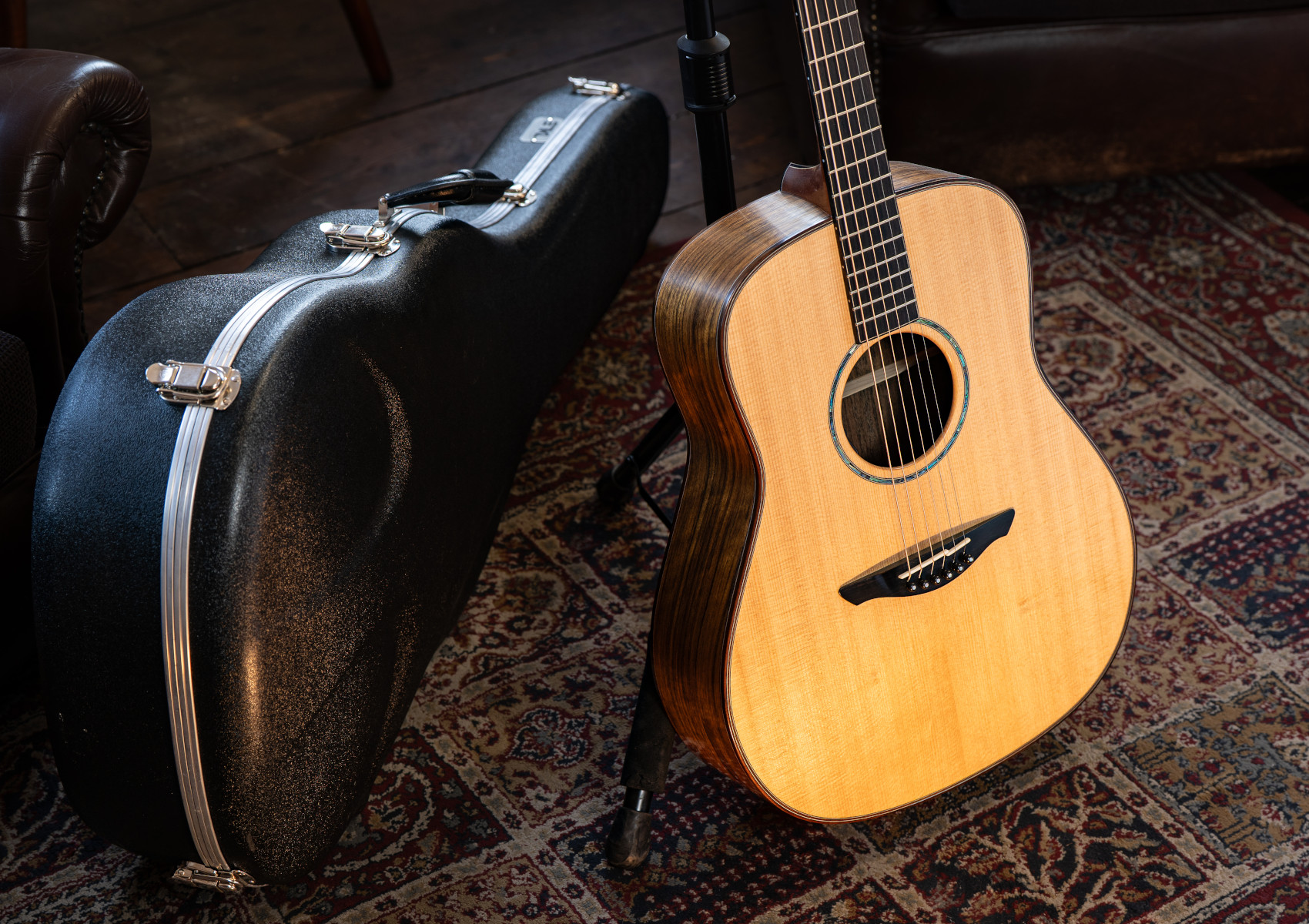
Natural figuring travels across the timber with an almost liquid quality, and Avalon wisely allows the material to remain the visual centre of the guitar. Rosewood bindings frame the body elegantly, while an ebony fingerboard, bridge and headplate introduce darker, quieter contrasts.
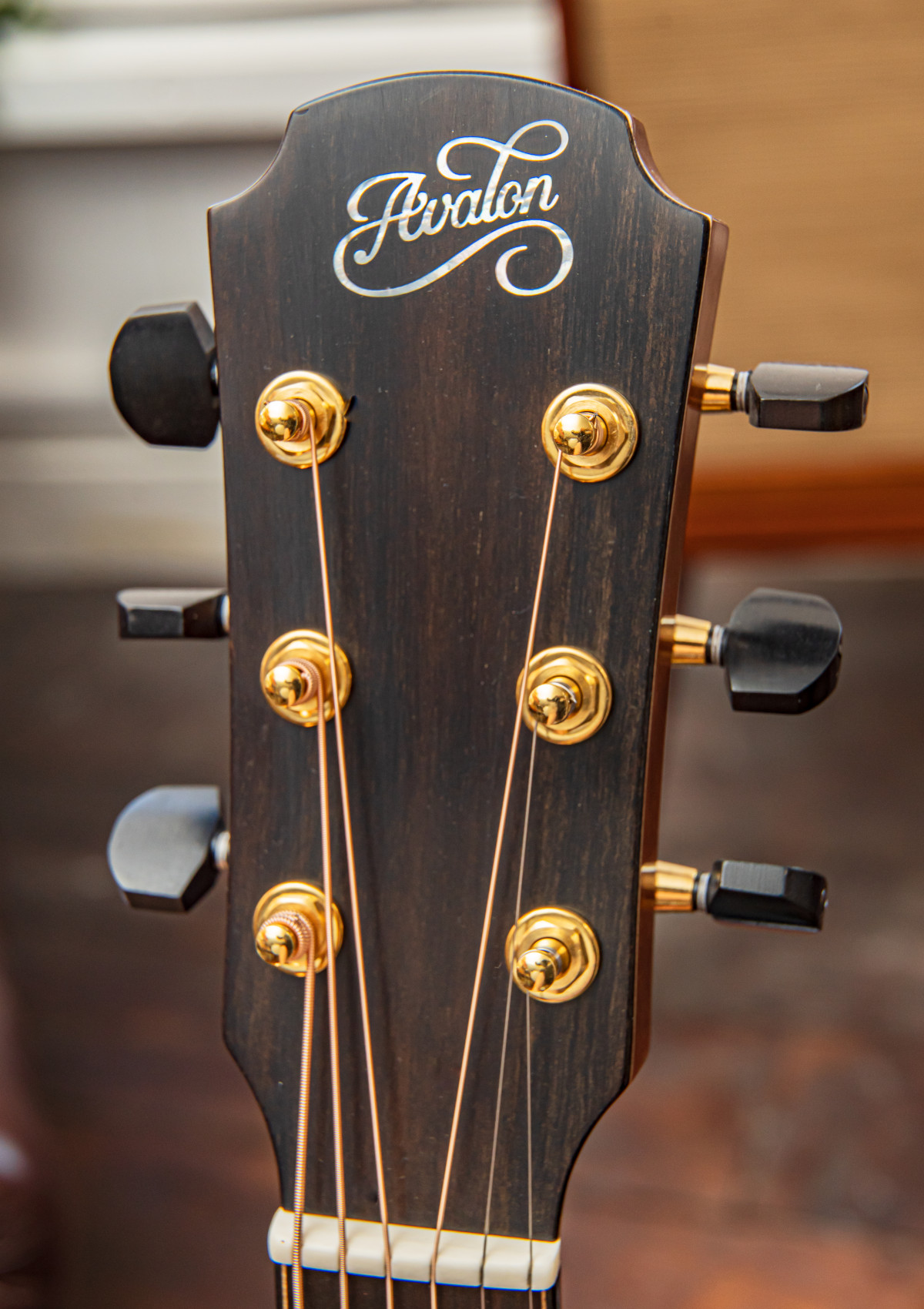
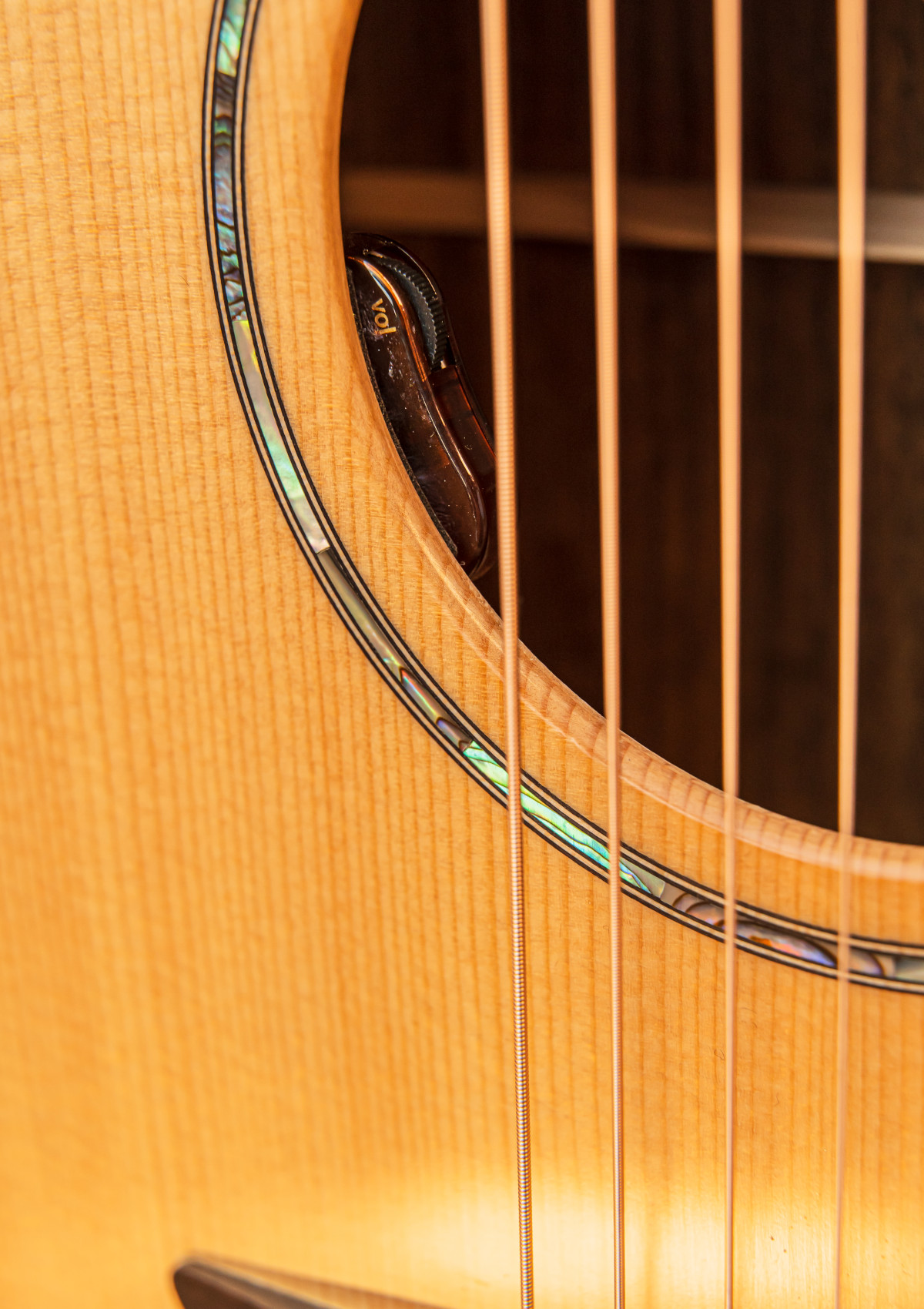
Around the soundhole sits a solid Paua Abalone rosette, catching flashes of blue, green and violet as the instrument moves. Above it all, the Mother of Pearl Avalon logo sits on the headstock with the restrained confidence that has become part of the company's visual identity.
Nothing needs to shout.
The Amazaque has already done enough.
The Parts You Feel
The neck is Brazilian Mahogany, shaped into that reassuringly organic territory where a good acoustic neck quickly disappears from conscious thought.
That's exactly what you want.
A neck can be technically perfect and still constantly remind you that you're holding it. A great one simply allows the hand to move.
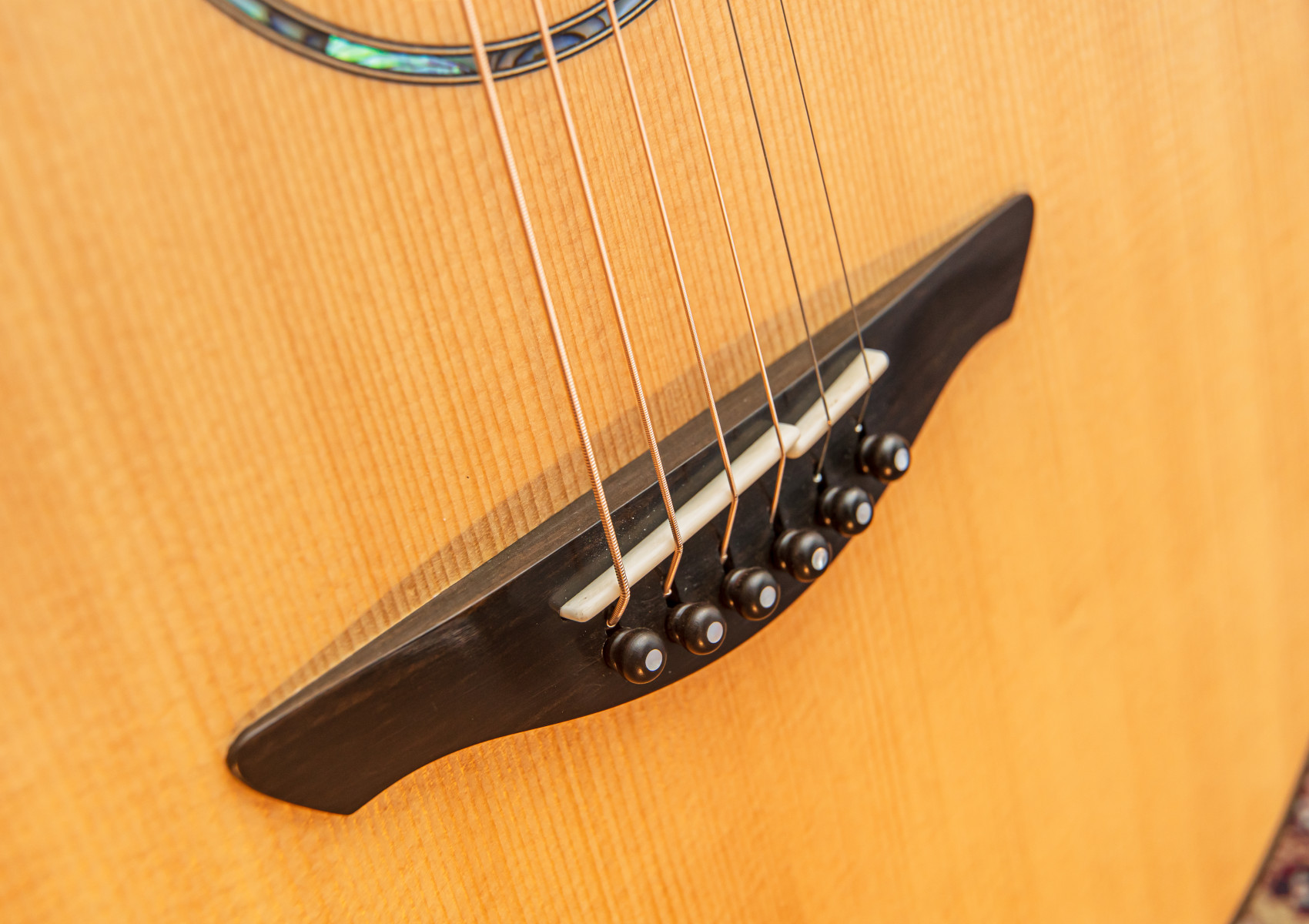
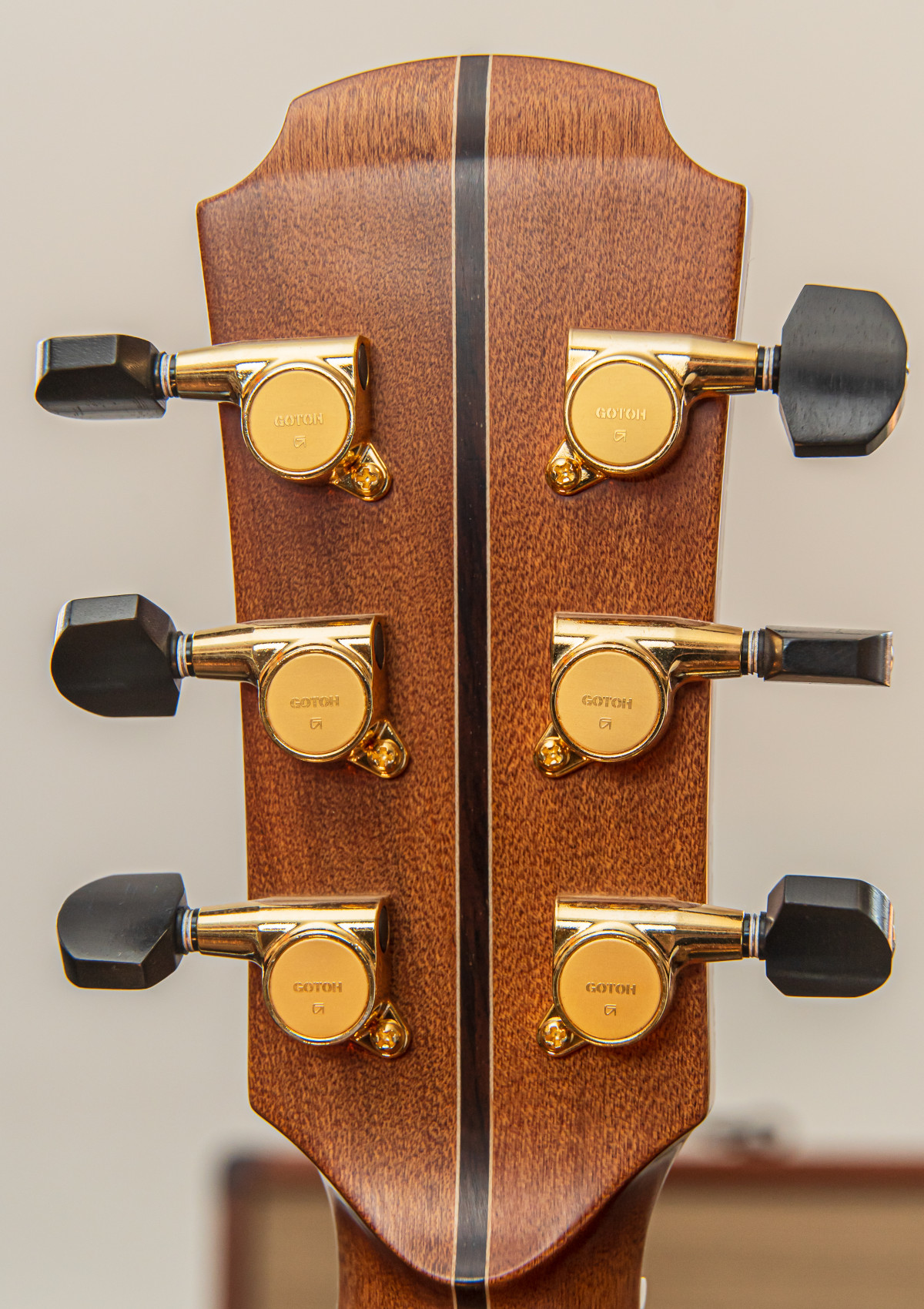
Underneath the strings, a natural bone nut and saddle provide hard, precise contact points for the vibrating string and contribute to efficient transfer of energy through the instrument. At the headstock, Gotoh SG381 machine heads provide the smooth, accurate tuning control expected on a professional handmade acoustic guitar.
The D310 arrives strung with D'Addario XS .12–.53 strings, a very natural match for a dreadnought intended to offer both dynamic range and substantial acoustic output.
These aren't glamorous details in isolation. Together, they're the interface between player and instrument.
And that's where craftsmanship becomes tangible.
Taking the D310 to the Stage
A handmade acoustic guitar presents an interesting problem when amplification enters the conversation.
You've spent all this time creating a resonant wooden structure with a distinctive acoustic personality.
Then somebody asks you to plug it into a PA.
The D310 is fitted with an LR Baggs Element pickup system, allowing the guitar to move into live performance and recording environments without turning its amplified identity into something completely unrelated to its acoustic one.
For a working player, that matters enormously. This is not an instrument that needs to remain protected in a quiet room and admired from a safe distance. It is built to write with, record with, rehearse with and perform with.
The deluxe TKL hard shell case supplied with the guitar reinforces the point.
Protect it properly. Then take it somewhere.
What Happens After Ten Years?
Perhaps the most beautiful thing about a guitar like the D310 is that the instrument leaving the Avalon workshop is not necessarily the finished story.
Solid acoustic guitars live under tension. They vibrate. They experience seasons, rehearsals, recordings, stages and thousands upon thousands of hours of music. Their soundboards and structures settle over time, and players often find that a familiar instrument develops greater openness and ease as the years accumulate.
There is no stopwatch for this process and no honest way to promise exactly how an individual guitar will change.
That's part of the romance.
The D310 you play today carries the potential to become the guitar you know instinctively ten or twenty years from now: the neck whose dimensions your hand no longer notices, the response your right hand understands without thought, the marks and tiny imperfections that record where the instrument has been.
A factory specification remains frozen on a page.
A good wooden instrument has a life after the specification ends.
Why Handcrafted Acoustic Guitars Always Matter
We live in an extraordinary age of guitar manufacturing.
Modern production techniques can create remarkably consistent instruments at prices that would have seemed impossible a generation ago. That deserves celebration.
But consistency and individuality are different ambitions.
The reason a handcrafted acoustic guitar still matters isn't nostalgia. It isn't a rejection of technology. And it certainly isn't because machinery is somehow incapable of precision.
It matters because there are still builders who believe an individual piece of wood deserves an individual response.
Avalon's Premier Series exists in that space. The company describes it as the point in its range where more exotic, character-rich tonewoods enter the story — materials selected not simply because they're beautiful, but because they give the luthier another voice to shape.
The D310 makes that philosophy wonderfully easy to understand.
Spruce. Amazaque. Mahogany. Ebony. Rosewood.
Bone.
A collection of materials that, separately, make no music at all.
Then somebody builds a guitar from them.
The Avalon D310 at Musicmaker
At Musicmaker, we've spent more than four decades around acoustic guitars.
Eventually, you learn that the really special ones rarely need much explanation when they're placed in a player's hands.
You feel the neck. Play an open chord. Listen.
Then play another.
The Avalon Premier Series D310 Amazaque/Spruce is that kind of instrument. It has the scale and authority expected from a great dreadnought, but underneath the power lies something more compelling: balance, sensitivity and an unmistakable sense that the instrument has been made by people who were listening while they built it.
The Amazaque makes every glance at the back worth another look.
The Sitka Spruce gives the right hand somewhere enormous to go.
And Avalon's Northern Irish craftsmanship brings the two together into something that feels remarkably complete.
There are easier ways to manufacture an acoustic guitar. Faster ways. More predictable ways.
Avalon has chosen another route.
Wood. Hands. Ears. Time.
Perhaps that's why these guitars feel the way they do.
From the Musicmaker Workshop
We’ve spent more than four decades putting acoustic guitars into players’ hands at Musicmaker, and instruments like the Avalon Premier Series D310 remind us why the handmade tradition still matters. Built in Northern Ireland from solid Sitka Spruce, beautifully figured Amazaque and carefully chosen tonewoods, this is a guitar shaped as much by listening as by building. There is power in its dreadnought voice, but also sensitivity, balance and that wonderful responsiveness that makes you alter your playing simply to hear what the instrument gives back. We’re enormously proud to champion Avalon Guitars in Ireland and to have guitars like the D310 here in Dublin — instruments made close to home, by remarkable craftspeople, with the expectation that their real story begins only when somebody starts playing them.