





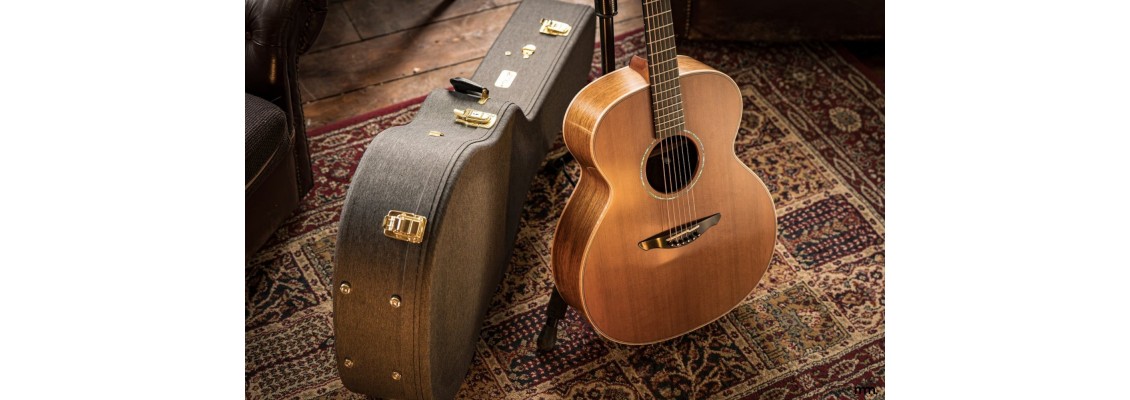
Avalon L311 Iroko/Cedar: The Bastard Teak Guitar
Handcrafted in Northern Ireland: The Final Chapter
Some pieces of wood arrive at a guitar workshop with impeccable credentials. They have been carefully selected, seasoned, graded and stored, waiting for the moment when a luthier decides what they might become.
The timber behind the Avalon L311 Iroko/Cedar arrived carrying something rather different.
It had already been a table.
More remarkably, it had been a table in a hidden drinking den and brothel somewhere in Northern Ireland, a piece of furniture surrounded for years by lives being lived rather enthusiastically around it. Later, the building itself underwent a remarkable change of purpose, becoming a church-led community space associated with addiction recovery and helping people rebuild their lives. The old table remained, occupying the same physical space while everything around it changed.
Eventually, its usefulness as furniture came to an end. Most old tables finish their stories there.
This one went to Avalon Guitars.
And if there is a more appropriate beginning for the final instalment of our Handcrafted in Northern Ireland series, we haven't heard it.
The Wood That Fought Back
Reclaimed timber is a wonderfully romantic idea until somebody actually has to work with it.
Decades of age and use had left this old iroko extraordinarily dry and difficult, and turning it from furniture into the thin, precisely worked components of an acoustic guitar was apparently anything but straightforward. The wood resisted. It damaged blades. It fought the process with sufficient enthusiasm that the Avalon luthiers eventually bestowed upon it a wonderfully affectionate workshop nickname:
“Bastard Teak.”
There is something magnificently Northern Irish about that.
Not a lavish marketing name dreamed up after the guitar was finished. Not Heritage Reserve Iroko or Ancient Select African Tonewood.
Because the bastard kept breaking things.
And still they persisted.
That matters, because only three guitars were ultimately created from this remarkable reclaimed timber. The Avalon L311 sitting with us at Musicmaker is one of them.
Three instruments from a material that had already completed an entirely different working life before anybody thought to put strings anywhere near it.
At that point, rarity almost becomes the least interesting thing about it.
From Table to Tonewood
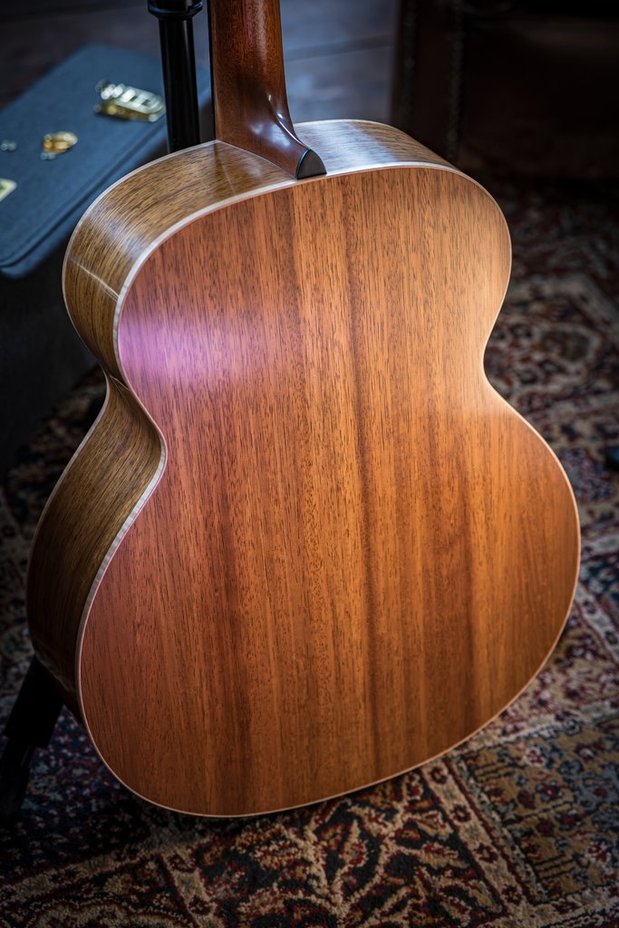
Iroko is sometimes referred to as African Teak, although it is botanically distinct from true teak. It is a dense, durable hardwood valued in applications where stability and resilience matter, but the material Avalon encountered here was not freshly prepared instrument timber. This was reclaimed wood whose character had been shaped by decades of existence before it ever entered the workshop. And that changes the way you approach the guitar.
There is a temptation with any instrument carrying an extraordinary provenance to listen to the story before listening to the strings. With the L311, the trick is to do the opposite.
Play it.
Because the guitar doesn't require its biography to be interesting.
The Cedar top establishes the first part of its personality beautifully. There is immediacy beneath the fingers, a warmth that appears without needing to be forced from the instrument and a sensitivity that rewards subtle changes in the picking hand. Cedar has that wonderful ability to make a lightly played note feel complete almost immediately, and here it gives the L311 an intimate, expressive front edge rather than the harder attack we might associate with a powerful spruce-topped acoustic.
Then the iroko begins to make itself known.
Behind the Cedar's warmth is a drier, more grounded character: woody midrange definition, focused bass and enough separation to prevent the richness of the top from becoming blurred. Chords remain composed. Individual notes retain their identity. There is complexity, but there is also control.
It is a fascinating pairing.
Cedar gives the guitar its invitation. The iroko gives it its accent.
A Guitar That Already Feels Lived In
There is a particular quality we sometimes look for in older acoustic guitars that is extraordinarily difficult to describe without disappearing into mythology.
It isn't simply sustain. It isn't volume. It isn't bass response, overtone content or any other characteristic that can be conveniently isolated and measured.
It is a sense that the instrument has settled.
Great older acoustics can have a looseness and confidence to the way notes develop, an absence of brittleness, a feeling that the materials have stopped arguing with one another and learned how to operate as a whole.
The Avalon L311 is not an old guitar. The Iroko herein, however, has had a life.
And although we should be careful about pretending that provenance can be heard as some mystical property of timber, there is unquestionably something compelling about the mature, dry articulation of this instrument. The Cedar responds quickly; the iroko seems to organise what follows. Play gently and there is intimacy and detail. Increase the attack and the voice develops authority without losing its centre.
For fingerstyle playing, that separation is beautiful. Bass notes have weight without hanging around and clouding the next phrase, while the midrange carries enough texture for melodic movement inside chords to remain audible. Under a pick, the guitar has a woody directness that keeps rhythm work controlled and articulate.
It doesn't sound precious. For a guitar this rare, that's one of the best things we can say about it.
It wants to be played.
Handcrafted in Northern Ireland
And here, at the end of our Avalon journey, we arrive back at the thing that has connected every instrument in this series.
The workshop.
Avalon's history and reputation have been built around handmade acoustic guitars from Northern Ireland, with instruments constructed from solid tonewoods and shaped around the relationship between materials, craftsmanship and the finished voice. Avalon itself has long described its handmade instruments in terms of carefully selected tonewoods, responsive tone and natural playability.
With an instrument like the L311, that approach becomes particularly important. Uniform manufacturing loves predictable materials.
This was not predictable material.
Reclaimed timber demands judgement because the luthier isn't beginning with an anonymous rectangle whose entire working life has occurred under controlled conditions. The material has history. It has dried, moved, aged and endured stresses nobody building the original table could possibly have imagined would matter to a future guitar maker.
So you listen to it. You work around what the wood gives you.
You decide where it can be used, how it should be shaped and what it wants from the rest of the instrument.
That human judgement is one of the reasons handcrafted acoustic guitars continue to matter. Not because machines are incapable of extraordinary precision — they plainly are — but because extraordinary materials sometimes demand decisions rather than repetition.
The L311 is full of decisions.
And apparently a few destroyed blades.
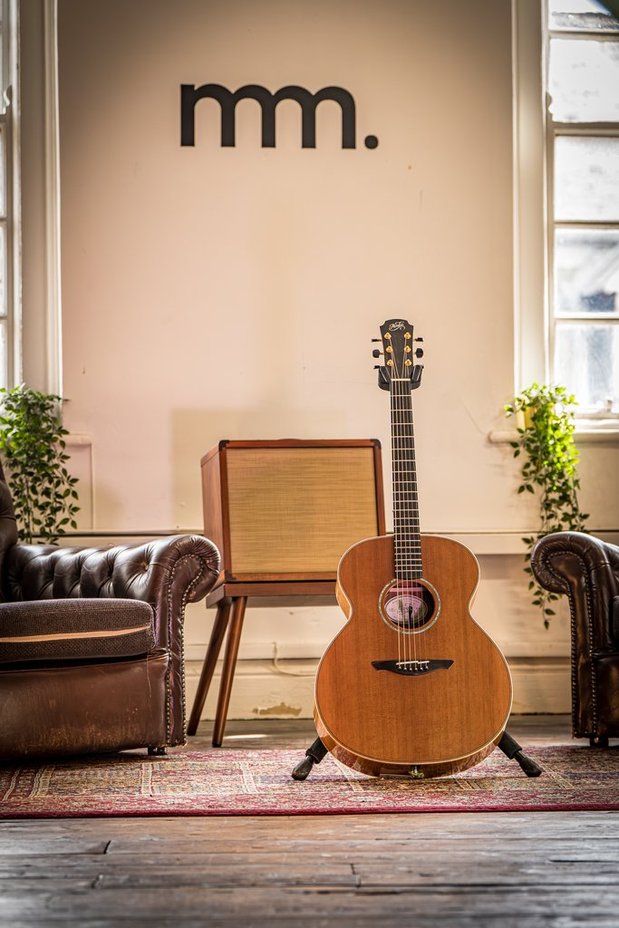
The rare and exquisite is HERE.
Restraint Around an Extraordinary Story
Avalon could have dressed this guitar like a trophy.
It didn't, which may be one of our favourite things about it.
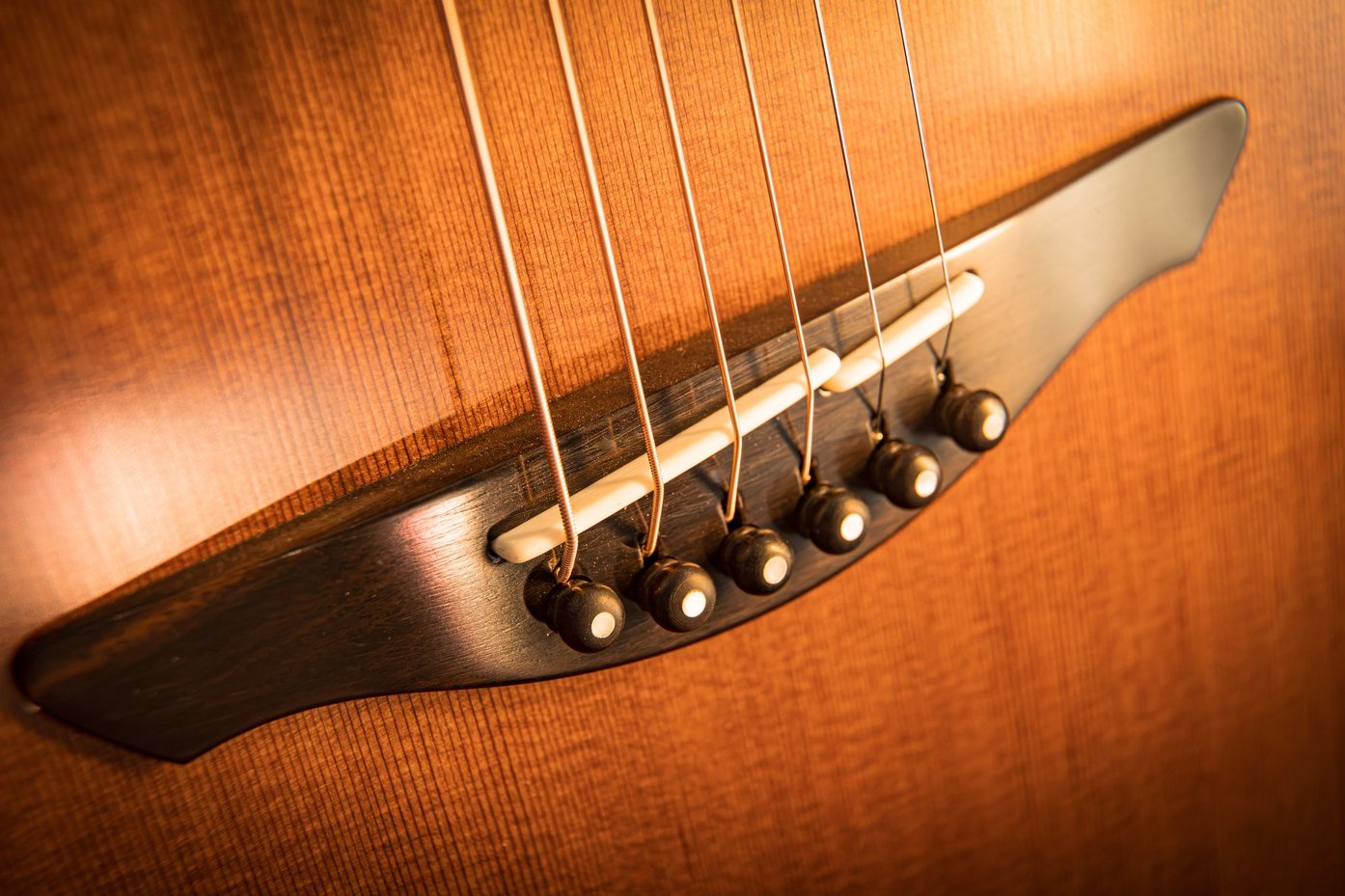
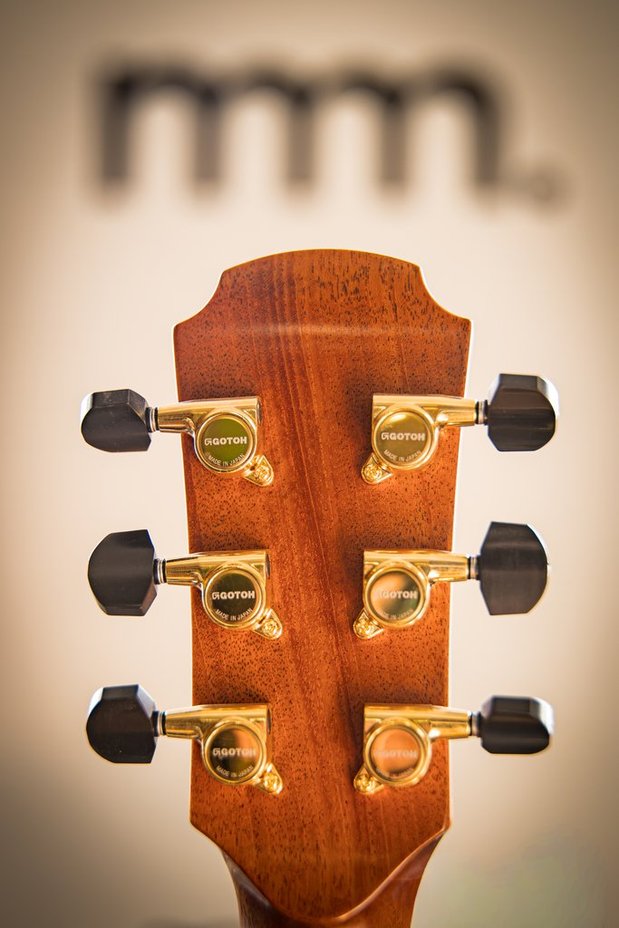
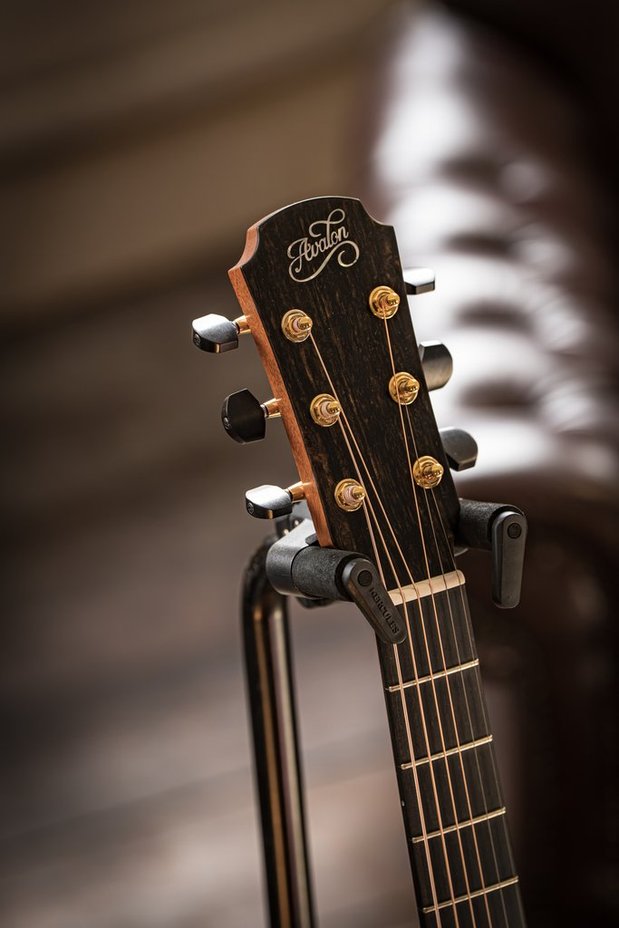
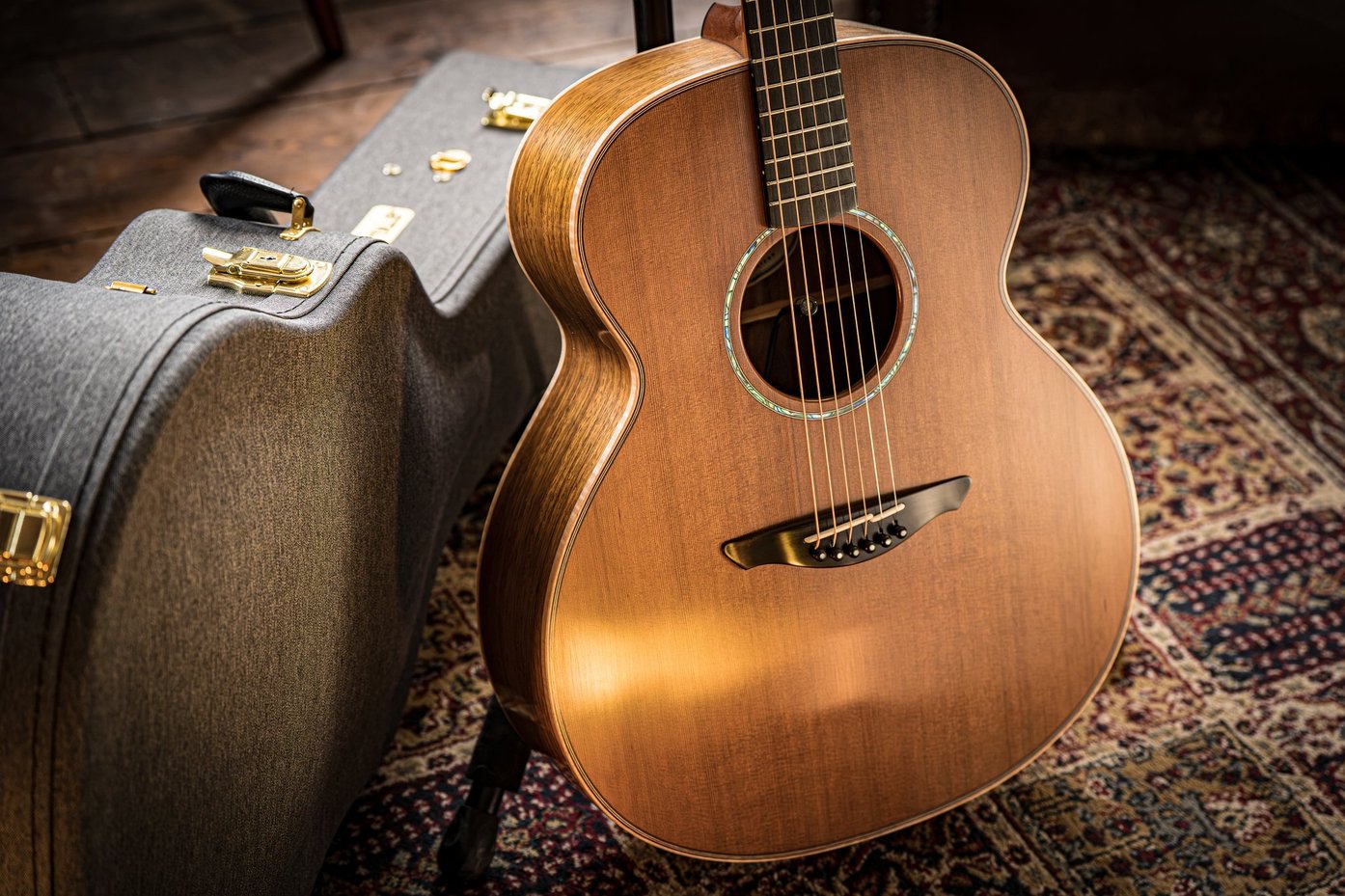
The L311 lets the reclaimed iroko remain visually central, surrounding it with appointments that feel refined rather than theatrical. Sycamore binding creates a beautiful natural contrast around the body, while ebony is used for the fingerboard, bridge and headplate. A solid Paua Abalone rosette provides colour around the soundhole, complemented by the familiar Mother of Pearl Avalon logo.
The Brazilian Mahogany neck continues the instrument's emphasis on substantial, traditional materials, while a natural bone nut and saddle complete the acoustic connection between strings and structure.
None of it tries to compete with the iroko.
When your guitar began life as furniture in a clandestine Northern Irish drinking establishment, you don't really need flame graphics.
The Fishman Ellipse Blend: Taking the Story On Stage
There is a practical question lurking beneath all this romance.
Would you actually gig it? We would hope so.
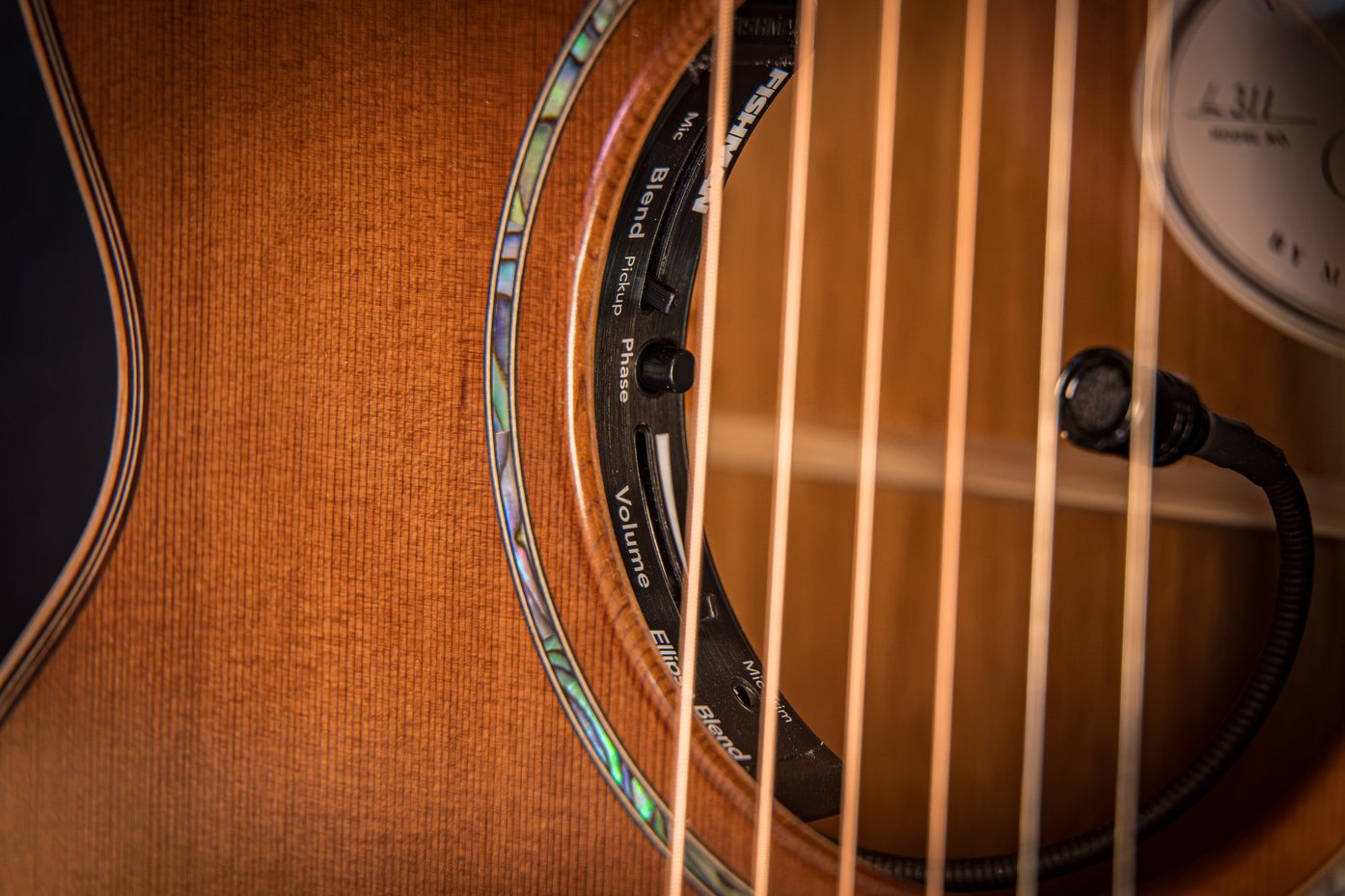
Avalon has equipped the L311 with a Fishman Ellipse Matrix Blend, and it's a particularly sensible system for an acoustic guitar whose appeal lies in nuance rather than brute-force output.
Fishman's design combines its Acoustic Matrix undersaddle pickup with an internal gooseneck condenser microphone, allowing the player to blend the directness and consistency of the pickup with more of the body character captured by the microphone. Volume, blend and phase controls are discreetly accessible around the soundhole, while microphone positioning and trim allow the system to be tailored to the instrument.
That combination matters on the L311.
An undersaddle signal gives you the definition and practicality required on stage, while introducing the internal microphone allows more of the air and acoustic complexity of the body to enter the amplified sound. The blend can then be adjusted according to the room, volume and feedback situation rather than forcing one solution onto every performance.
This guitar has already spent enough of its existence being a table.
It deserves a stage.
Only Three
We talk about rarity rather casually in the guitar world.
Limited edition. Special run. Exclusive finish. Numbered series.
The language becomes so familiar that eventually it stops meaning very much.
Three guitars were made from this reclaimed iroko.
That's it.
When those pieces of the old table became instruments, there was no warehouse full of matching sets waiting for another production run. The material was finite because its history was finite. You cannot order another old table with the same decades behind it, from the same building, carrying the same sequence of events through Northern Irish life.
That makes the Avalon L311 Iroko/Cedar collectible, certainly.
But we'd resist allowing the word collectible to turn it into something static.
Put fingerprints on it.
Play it. Write some moving music on it.
Take it out of the case.
Allow the Cedar to change as the instrument ages. Let the iroko accumulate another few decades of scratches, vibrations, rooms, songs and stories.
The remarkable thing about reclaimed timber is that making a guitar from it doesn't preserve its history in amber.
It gives the history somewhere else to go.
The Bastard and the Beautiful
There is an easy version of this story in which everything becomes a neat metaphor.
A table from a place associated with excess moves through a space associated with recovery, is rescued from disposal and eventually becomes a musical instrument.
Redemption. Transformation. Second chances.
It practically writes itself.
But the actual story is more interesting because the material apparently didn't cooperate with its redemption narrative whatsoever.
It fought them. It broke things. It behaved so badly in the workshop that the people trying to save it called it Bastard Teak.
Great instruments don't need immaculate beginnings. Great materials don't always arrive neatly labelled and ready to cooperate. And craftsmanship isn't demonstrated only by what happens when everything goes according to plan.
Sometimes craftsmanship is what happens when the wood says no and the luthier quietly finds another way.
The Final Avalon
Over the course of our Handcrafted in Northern Ireland series, we've encountered some extraordinary instruments and some extraordinary timber.
We've heard the warmth of Cedar and the authority of Spruce, the complexity of Rosewood and Amazaque, the astonishing character of Irish Bog Oak preserved beneath the earth for millennia. We've seen Avalon use familiar tonewoods beautifully and deeply unfamiliar materials with imagination and restraint.
But perhaps the L311 is the right guitar to finish with because it expresses something fundamental about what handcrafted guitar making can still mean.
This isn't simply a story about rare wood. It is about seeing potential in material that has already been something else.
It is about the knowledge required to turn difficult reclaimed timber into something thin, resonant and musical without erasing the character that made the material interesting in the first place.
And ultimately, it is about the peculiar alchemy at the heart of every great acoustic guitar.
Wood becomes structure. Structure becomes vibration. Vibration becomes music.
And in this particular case, an old table from one of the more colourful corners of Northern Irish history ends up beneath a guitarist's hands.
You couldn't design that provenance.
Avalon L311 Iroko/Cedar at Musicmaker Dublin
For us at Musicmaker Dublin, the Avalon L311 represents exactly why we wanted to tell this entire story in the first place.
Avalon isn't an abstract boutique guitar maker on the other side of the world. These are handcrafted guitars built in Northern Ireland, emerging from a guitar-making tradition happening here, on this island, with its own materials, personalities, ingenuity and stories.
And bloody hell, this one has a story.
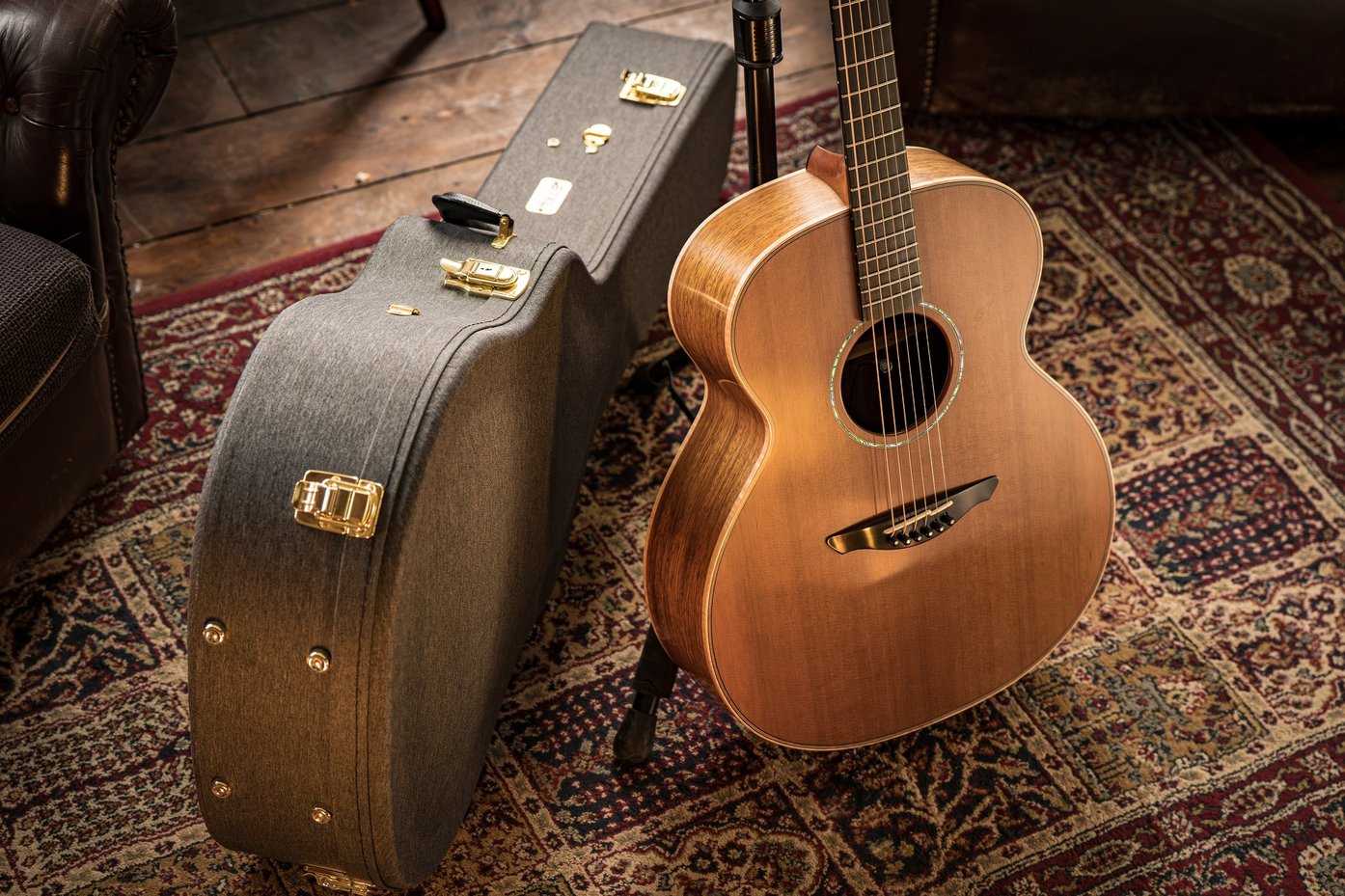
The solid Cedar top, reclaimed Iroko back and sides, Brazilian Mahogany neck, ebony fingerboard, bridge and headplate, sycamore binding, Paua Abalone rosette, Mother of Pearl detailing, natural bone components and Fishman Ellipse Matrix Blend make the L311 a formidable acoustic-electric guitar on specification alone. It comes protected in a deluxe TKL hard shell case, as an instrument of this calibre absolutely should.
But specifications are not why we'll remember it.
We'll remember the table. We'll remember the building.
We'll remember the workshop fighting with the timber.
We'll remember Bastard Teak.
And we'll remember that, against considerable odds, somebody looked at an old piece of discarded iroko and heard a guitar hiding inside it.
Free Shipping Across Ireland
An instrument this unusual deserves to find the right player, even if that player can't make the journey into Dublin. Musicmaker offers free shipping across Ireland on qualifying orders, so the Avalon L311 can make one more journey — from the Avalon workshop, through our guitar room and eventually into the hands of the musician who will write the next part of its story.
Although, if you can come in? Come in.
Play it.
There are only three of these guitars in existence, and photographs cannot tell you what decades-old reclaimed iroko and Cedar feel like when they begin moving air in front of you.
Some guitars can be bought from a specification sheet.
This bastard deserves an introduction.
From the Musicmaker Workshop
And so we reach the end of our Handcrafted in Northern Ireland journey.
We've spent this series talking about tonewoods, bracing, responsiveness, pickups, necks and all the endlessly fascinating details that turn timber and wire into an acoustic guitar. But underneath every Avalon we've looked at has been a simpler idea: some things are still worth making slowly.
Worth choosing by hand. Worth listening to. Worth getting wrong and trying again. Worth fighting a particularly uncooperative old table over.
Musicmaker has been putting instruments into musicians' hands since the early 1980s, and after all those years, genuinely special guitars can still stop us in our tracks. Not because they're expensive. Not because they're rare. Not even because somebody has attached an extraordinary story to them.
Eventually somebody picks one up.
And plays.
Then all the craftsmanship, timber, history and human effort have to survive the only test that ultimately matters.
Does it make you want to keep playing? The Avalon L311 does.
The old table has another job now.
And what a mighty job it does.