



Back to School, Back to Trad: Start Playing Irish Music
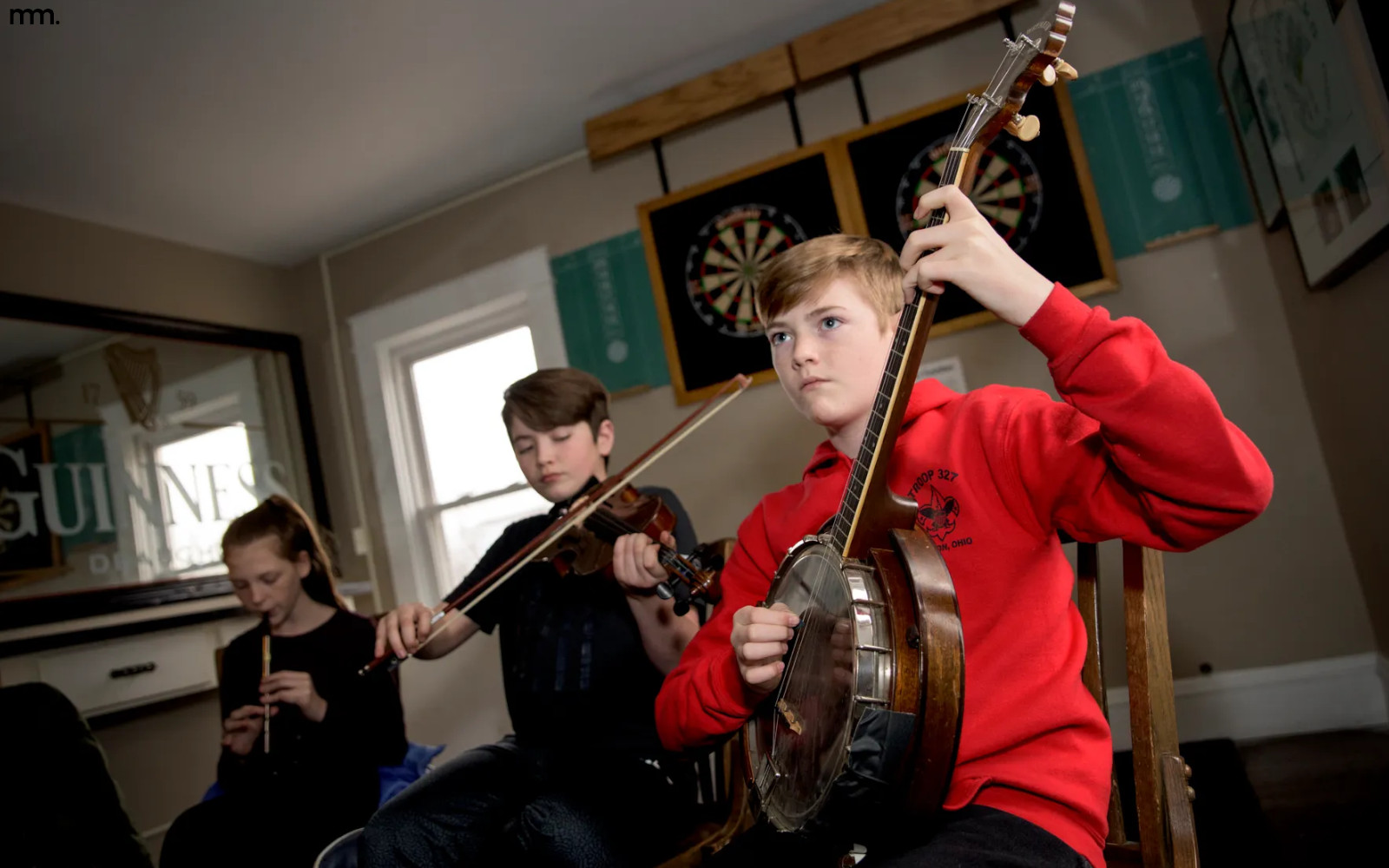
There is a particular moment in an Irish session when everything locks together.
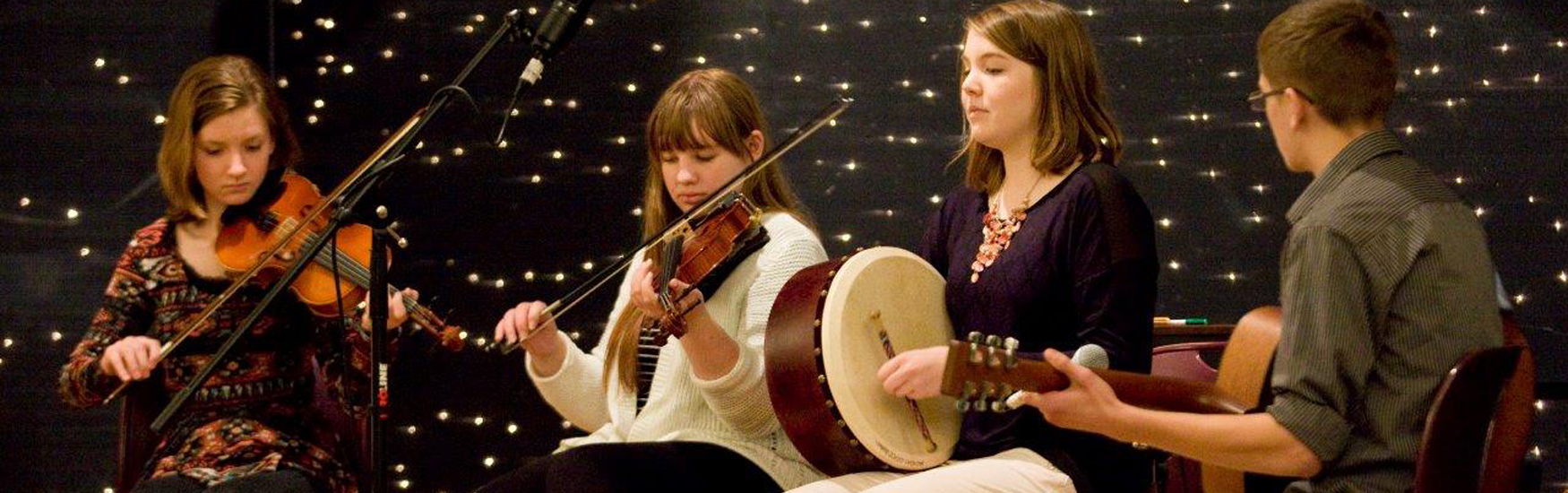
The fiddles have found the tune. The whistle is floating above them. A bodhrán settles underneath without getting in anybody's way. Somebody catches the next tune in the set before the last note has quite disappeared, and suddenly a collection of individual musicians becomes one moving thing.
No conductor. No enormous stage. No need for anybody to explain what just happened.
That's Irish traditional music.
And for generations of players, the journey towards that moment has started somewhere considerably quieter: a classroom, a kitchen table, a music lesson, a first whistle, a borrowed fiddle and a tune played slowly enough that you can almost hear the concentration.
So, for Back to School, we're going properly home-grown.
At Musicmaker, we've got wonderfully accessible ways for new players to begin exploring Irish traditional music, alongside instruments with enough depth to follow them considerably further down the road. From Irish-made Feadóg tin whistles and Tony Dixon's fascinating range of soprano, alto and low whistles to Stentor violin outfits, the wonderfully practical Gold Tone AC-4 tenor banjo, and a pile of Koda bodhráns and traditional wooden spoons, there has rarely been a better excuse to learn your first tune.
Because Back to School doesn't only mean going back to lessons.
It can mean going back to the session.
Start With a Whistle
There may be no better introduction to Irish traditional music than the tin whistle.
Six finger holes. No reeds to buy. No strings to change. No bow to learn how to hold. No enormous case to drag onto the bus. Put it in your school bag and you are carrying an instrument capable of playing an extraordinary proportion of the Irish traditional repertoire.
The simplicity is deceptive, of course.
Getting a sound from a whistle is easy.
Getting your sound from a whistle can occupy you for the rest of your life.
Breath pressure, articulation, rolls, cuts, taps, slides and phrasing gradually transform a sequence of notes into something recognisably personal. The instrument is accessible enough to put a first tune within reach of a beginner, yet expressive enough that exceptional players can make those same six holes do astonishing things.
And in Ireland, one of the most familiar names on the instrument is Feadóg.
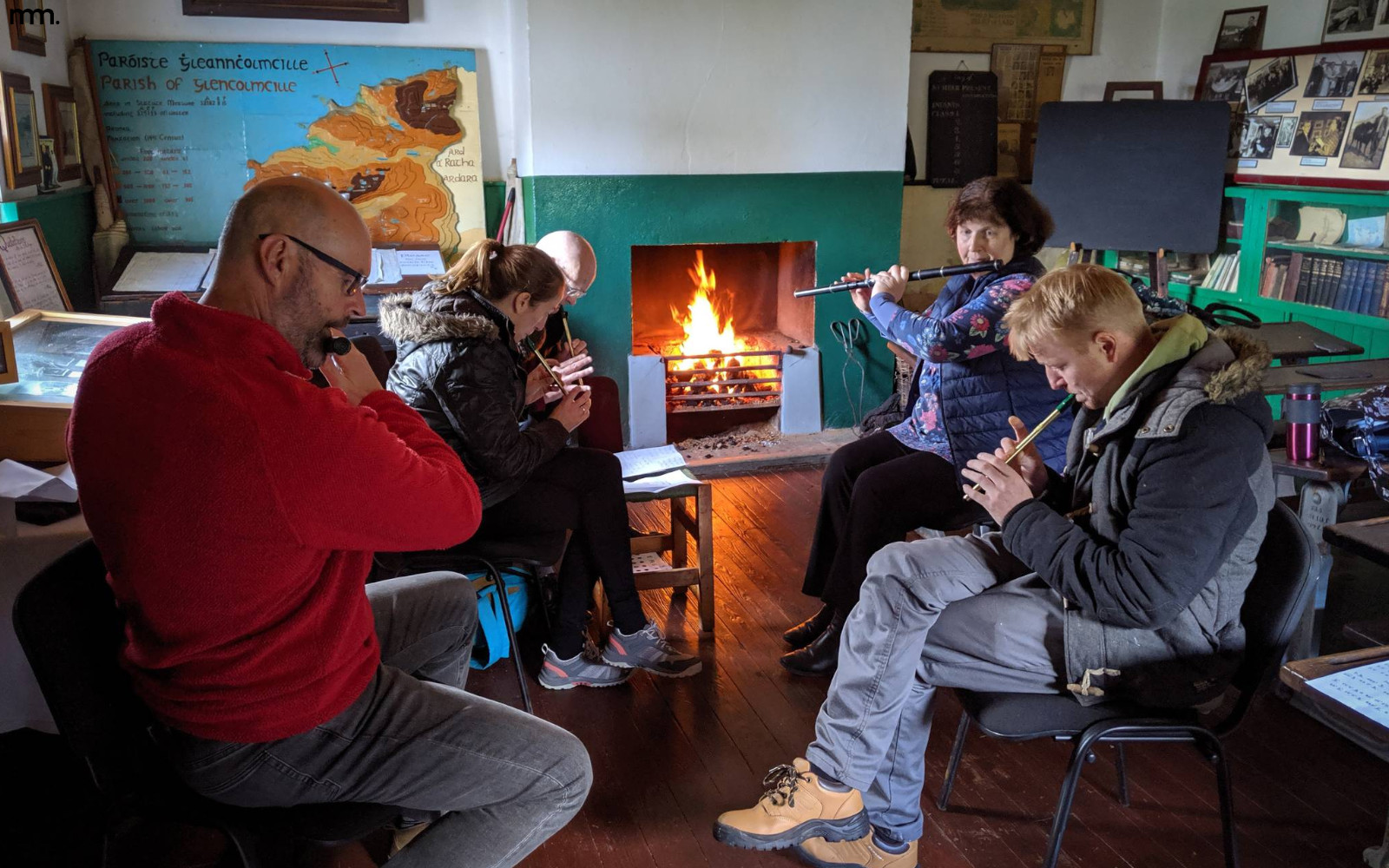
And entirely appropriate for all ages. Get your whistles at Musicmaker today!
Feadóg: A Little Bit of Dublin in Your School Bag
This bit makes us particularly happy.
Feadóg whistles have been manufactured in Ireland since 1978, and the company is based right here in Dublin. More than four decades later, these beautifully uncomplicated instruments are still introducing new players to traditional music in Ireland and far beyond it.
For a Back to School instrument, that is difficult to beat.
The Feadóg Single Tin Whistle in Nickel, Key of D gives you the familiar bright nickel finish and, crucially, puts you in D, the natural starting territory for Irish traditional whistle playing. A D whistle also gives straightforward access to music centred around D and G, which is one reason it is such a ubiquitous sight in lessons, sessions and trad groups.
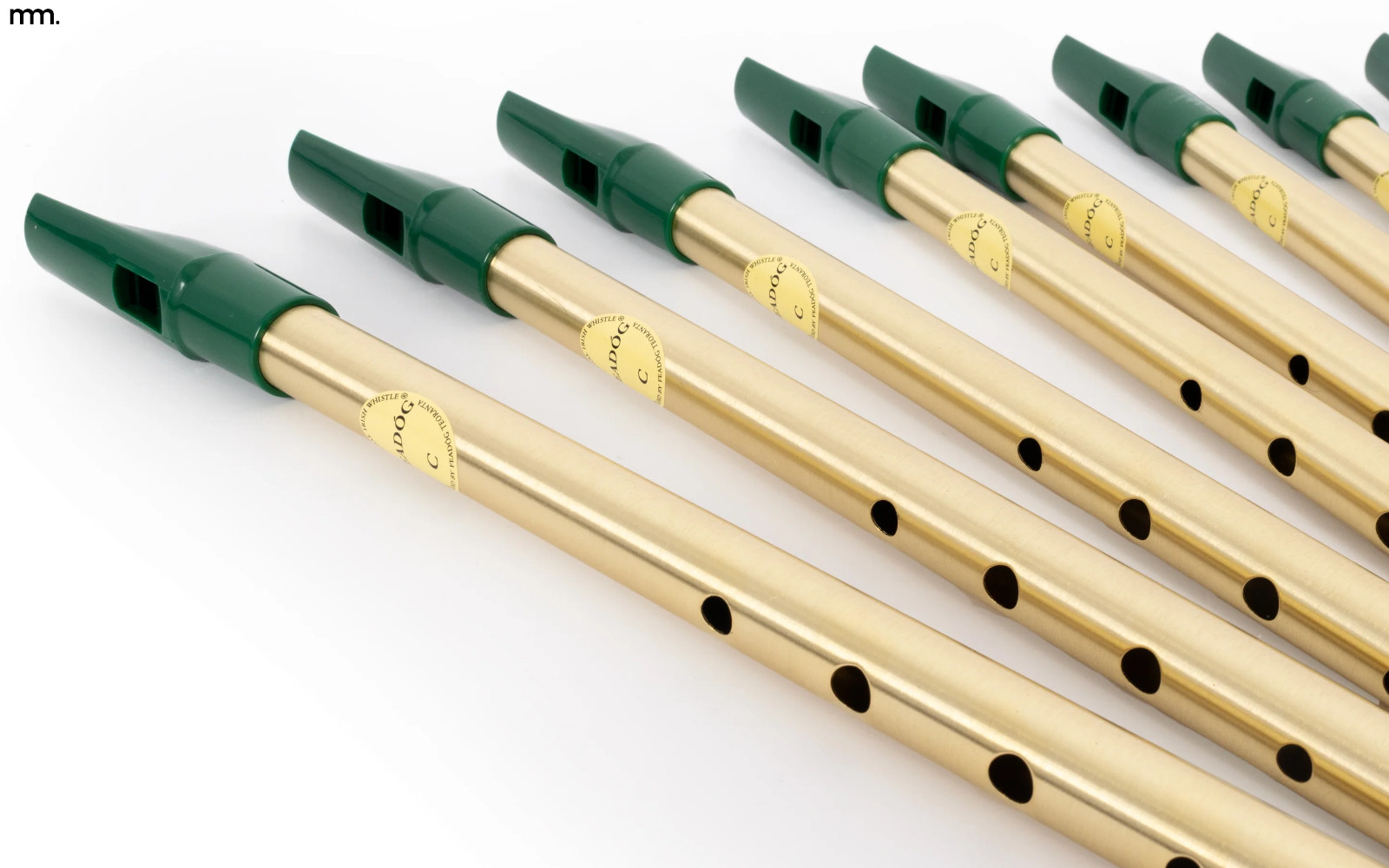
Then there is the classic Feadóg Brass D Tin Whistle. It is beautifully simple: a seamless brass barrel, familiar mouthpiece and an instrument you can start making music with almost immediately. Feadóg itself describes its Brass D as suitable for beginners and experienced players alike.
Want another useful voice in the bag? The Feadóg Brass Tin Whistle in C moves everything down and gives the player another tonal colour and key centre to explore. It retains the straightforward seamless brass construction of the Feadóg design, but the key of C can be useful when repertoire, accompaniment or other players take you away from the standard D-whistle territory.
And for the complete beginner, we particularly like the Feadóg Nickel D Tin Whistle & Book Pack. A whistle is wonderfully intuitive once somebody shows you what to do, but having a proper tutor beside it removes some of the early guesswork. Feadóg's current whistle-and-book range combines the instrument with a dedicated tutor, and the company offers a Nickel D version.
That's a lovely first traditional instrument.
Whistle. Book. School bag.
Off you go.
Why D?
If you're buying a first Irish tin whistle and wondering why the letter D keeps appearing everywhere, there is a reason.
A huge amount of traditional Irish repertoire sits comfortably around the keys of D and G, and the standard D whistle fits naturally into that world. It is the instrument you're particularly likely to encounter in beginner classes and group playing, which makes it the sensible place to start if your eventual ambition involves playing tunes with other people.
And that last bit matters enormously. Trad is social music.
You can practise alone — and you absolutely should, unless you want to discover your fingering problems at session speed — but there is a different kind of learning that happens when your tune meets somebody else's.
You begin listening differently. You learn where to breathe. You discover that rhythm isn't something belonging exclusively to the bodhrán player.
You hear ornaments you haven't learned yet. You forget a bit, find your place again and keep going.
That's the education hiding inside the session.
Tony Dixon Whistles: When You’re Ready to Go Deeper
Once the whistle bug bites, things can escalate remarkably quickly. You start with a D whistle because you want to learn a few tunes. Perfectly reasonable. Then you hear a different material, discover tuneable whistles, encounter your first Low D and suddenly there are six whistles in the house and you're explaining to somebody that no, actually, they are all completely different.
This is normal. We understand.
Tony Dixon's range is a brilliant place to explore those differences because it takes the beautifully simple whistle concept and experiments with materials, registers, bore designs and tuneability. For a developing trad player, that means you can move beyond simply asking “Can I play the tune?” and start discovering how different instruments respond to breath, articulation and ornamentation — and, eventually, what sort of whistle actually suits the way you play.
The Tony Dixon DX001D Soprano Whistle in D keeps things wonderfully straightforward. Its one-piece polymer construction makes it light, durable and uncomplicated, with a warm, approachable character that makes it equally attractive as a first whistle or an alternative to the brighter metallic voice many players associate with traditional tin whistles. The DX006D Tuneable Aluminium Soprano Whistle in D takes a substantial step in another direction, combining an aluminium body with an ABS head and internal tuning slide. The aluminium construction brings a bigger, more projecting voice, while the ability to fine-tune the instrument becomes genuinely useful when you're playing alongside fiddles, flutes, accordions and other musicians rather than practising alone.
And that's really the progression here. The DX001D gives you simplicity, durability and an inviting high-D voice; the DX006D gives the developing player more control, projection and the practical advantage of tuneability. Same familiar six-hole musical language, but two noticeably different ways of speaking it.
Going Low: Low D, Alto G and the Road Towards Flute
Then somebody plays a Low D whistle.
And everything changes.
Dropping the whistle into that deeper register produces one of the most immediately recognisable sounds in contemporary traditional music: broad, warm and breathy, with a wonderful weight beneath slow airs and a completely different physical character when pushed through reels and jigs. The larger instrument requires wider finger spacing and a different relationship with the breath, so moving from high D to Low D isn't simply the same whistle but bigger. Familiar tunes suddenly demand something new from the player.
The Tony Dixon TB003D One-Piece Polymer Low Whistle in D is a particularly approachable way into that world. Its lightweight polymer construction and tapered bore keep the instrument manageable while delivering the richer, deeper voice players are looking for from a Low D. Alongside it, the Tony Dixon DX102 Low Whistle in D gives us another take on that all-important register and demonstrates something experienced whistle players learn rather quickly: two whistles in the same key can feel remarkably different. Resistance, bore, spacing, breath requirement and response all affect the way ornaments speak and phrases flow, which is why we'd always encourage players to get these things into their hands whenever possible.
Then there's the gorgeous middle ground of the Tony Dixon DX107G Tuneable Aluminium Alto Whistle in G. Sitting below the familiar soprano D but above Low D territory, the Alto G offers a rich, mellow voice without quite the same physical stretch demanded by the larger low whistle. Its tuneable aluminium construction gives the player another distinct combination of register, response and projection, while the different key can make familiar melodies feel surprisingly fresh beneath the fingers.
And finally, for the whistle player beginning to cast suspicious glances towards the flute section, there is the wonderfully clever Tony Dixon TB022D Tuneable Flute/Whistle Duo in D. Its interchangeable head system allows the player to explore both whistle and simple-system flute-style playing from the same core instrument. Moving to flute still means learning a new embouchure and a completely different relationship with the air — sadly, changing the head doesn't instantly turn you into Matt Molloy — but for an inquisitive trad musician, the TB022D provides a fascinating bridge between two closely related worlds.
That's ultimately what makes the Tony Dixon range so much fun. You can begin with the immediacy of a simple high D whistle, move through aluminium and tuneable designs, descend into Low D, explore the character of an Alto G, and eventually start experimenting with flute.
One tune leads to another.
Apparently, one whistle does too.
Check out all our Tony Dixon Whistles HERE.
The Fiddle: Where a Tune Learns to Speak
Then there is the fiddle.
Technically, of course, we're talking about a violin.
Culturally, once it starts throwing out reels in a session, nobody is particularly interested in correcting the terminology.
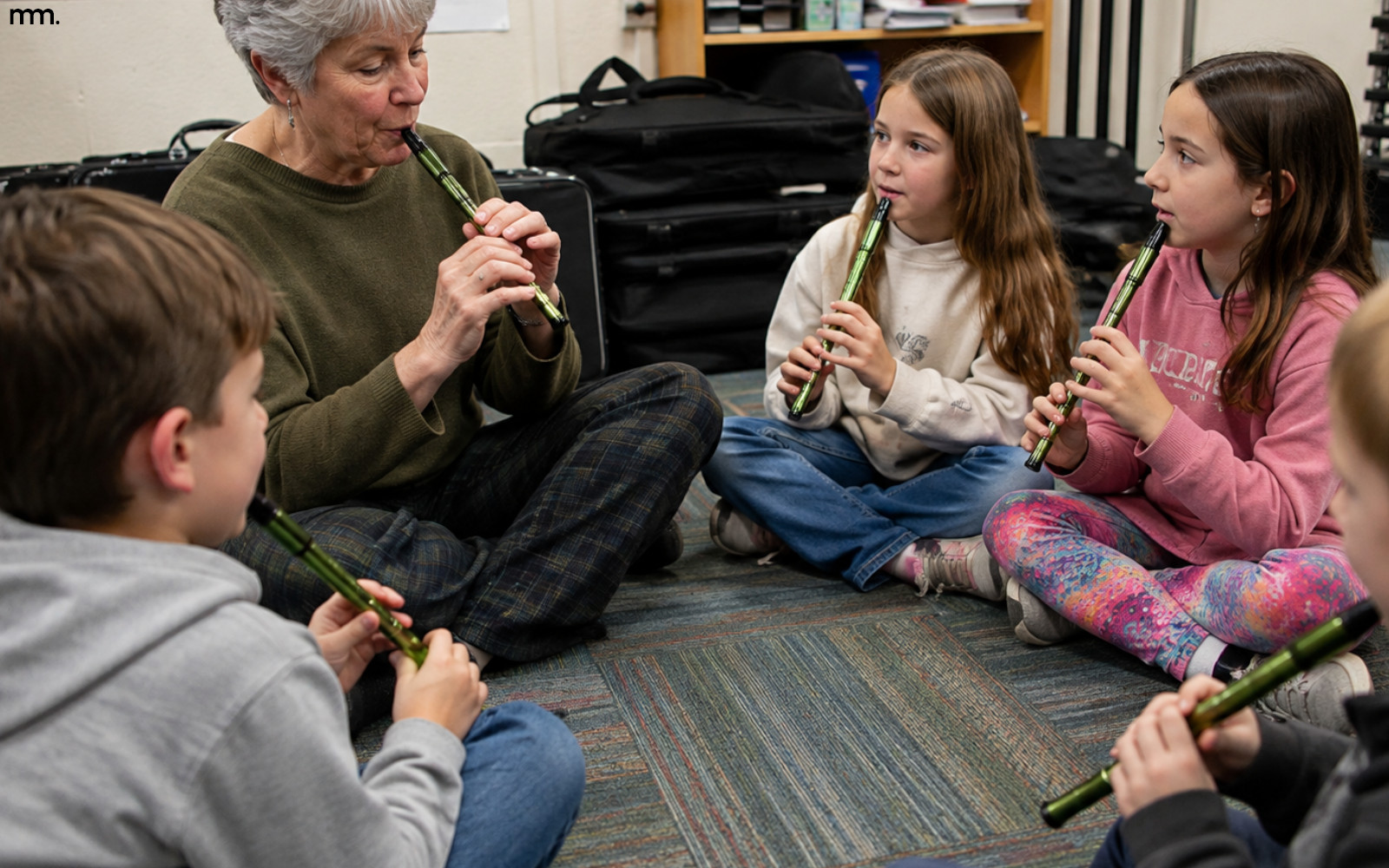
The fiddle sits right at the heart of Irish traditional music because of what it can do with a melody. There are no frets fixing the pitch beneath your fingers. The bow can attack a note, lean into it, soften it, connect it to the next one or turn a run of eighth notes into something with lift, pulse and personality.
It is also an instrument that rewards a good start.
That's why Stentor violin outfits make so much sense for Back to School.
Stentor Violin Outfits: Start With the Right Size
Stentor has built a considerable reputation around student bowed instruments, and its current student violin range stretches from the accessible Student Standard and Student I through the Student II, Graduate and Conservatoire models. Crucially for younger players, many are offered across a broad selection of fractional sizes rather than forcing a child onto a full-size instrument too early.
That is incredibly important.
A violin should fit the player.
The Stentor Student Standard uses carved solid tonewoods and comes as an outfit with a bow and lightweight case. Move to the Student I and you get a carved spruce front with carved maple back and ribs, a fitted maple bridge and a complete outfit including bow, case and rosin.
The Stentor Student II steps things up again with an ebony fingerboard and pegs, quality bridge, composite tailpiece with integral adjusters and a supplied wood bow and lightweight case.
For the progressing fiddle player, Stentor's Graduate and Conservatoire models provide further room to develop, with the Graduate adding ebony fittings and synthetic-gut strings, while the Conservatoire moves into finely carved spruce, flamed maple and an upgraded outfit.
But don't get hypnotised by the ladder.
For a young beginner, correct sizing and a properly set-up playable instrument matter enormously. An instrument that is physically wrong for the player can make learning harder before the music has even had a chance.
Come into Musicmaker. Bring the future fiddle player. We'll help.
Then prepare yourself for the same tune to be practised approximately nine hundred times.
That's how this works.
Gold Tone AC-4: A Brilliant Trad Gateway
The Gold Tone AC-4 Acoustic Composite 4-String Banjo is a wonderfully practical way into this territory.
It is an open-back tenor banjo built around Gold Tone's durable composite rim construction, and the company specifically positions it for beginner tenor banjo players, fiddle and viola players looking for a banjo sound, travelling musicians and anyone after an affordable secondary tenor. It also features a Zero Glide nut, two-way truss rod, single coordinator rod, vintage-style tailpiece and covered guitar-style tuners, with a gig bag included.
The composite construction is interesting because it makes the AC-4 lightweight and resilient, two very useful characteristics for a student instrument that may be travelling between home, school, lessons and sessions.
But the real attraction is musical.
That short, immediate banjo attack gives traditional melodies a completely different energy from the fiddle or whistle. Ornamentation becomes pick articulation. Triplets crack through the rhythm. A melody suddenly has edges.
And if you've already learned the tune on fiddle?
Your fingers may know considerably more than you think.
And Now We Need Rhythm
Right. Everybody behave.
The bodhrán players have arrived.
There is a terrible temptation when somebody first acquires a bodhrán to assume that every available millisecond of a tune requires percussion.
It does not. The secret of good traditional accompaniment is listening.
A great bodhrán player isn't simply keeping time. They are responding to the pulse of the tune, shaping accents, leaving space and working with the melodic players rather than attempting to defeat them in single combat.
And learning that restraint is part of learning the instrument.
Fortunately, we've got some beautifully accessible Koda options for beginning the journey.
Koda Bodhráns: Your First Trad Beat
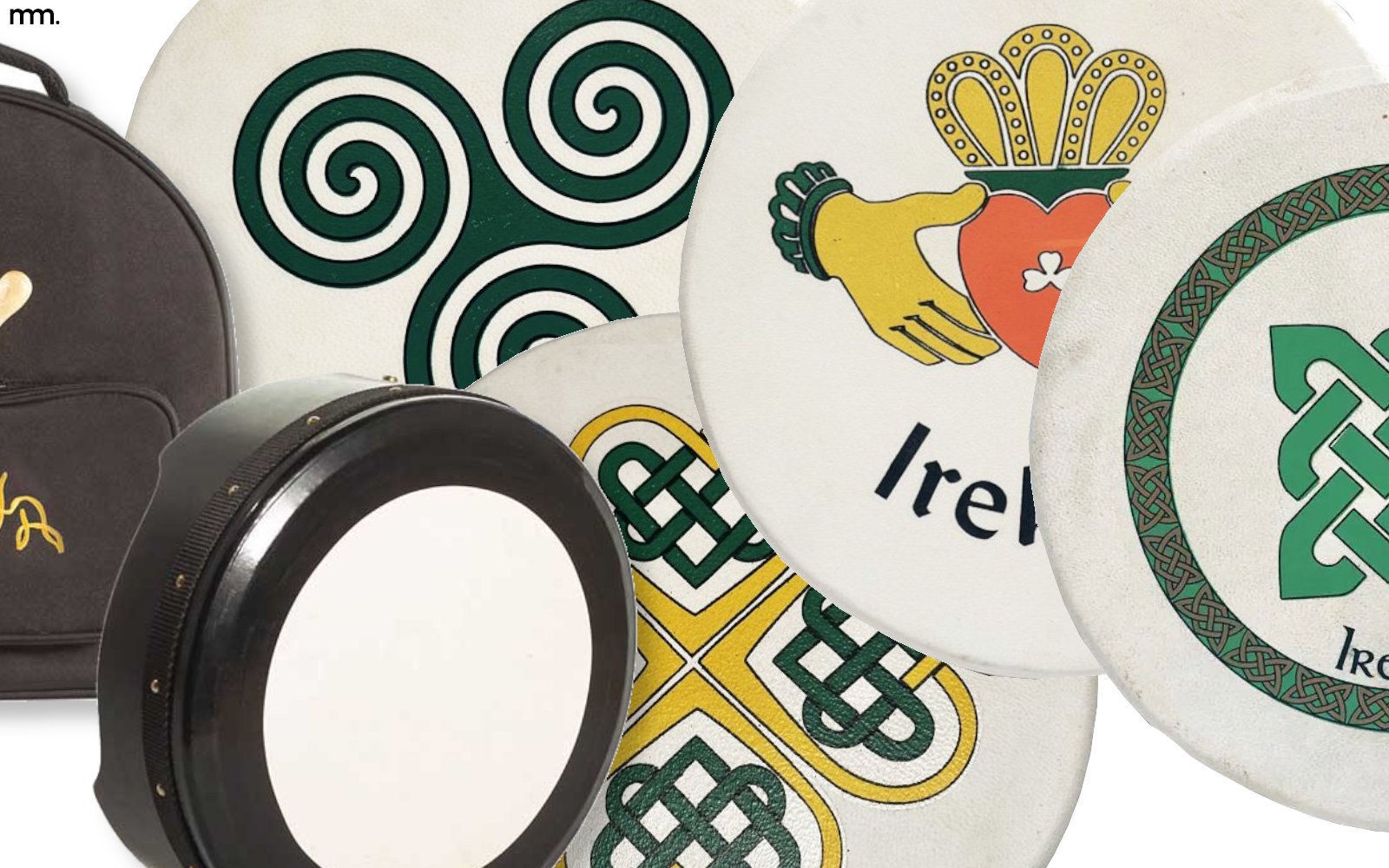
The Koda 14" x 4" Black/Plain Non-Tuneable Bodhrán gives the developing player a proper-sized frame to begin working on basic tipper control, pulse, accents and tonal changes, and it comes with a bag and beater — exactly the sort of practical complete setup we like for students.
For something more compact, the Koda 12" x 3" Black Bodhrán with Shamrock Ireland design also includes its bag and beater, making it a fun and portable introduction to the instrument.
And then we have the little 8" x 1½" Koda bodhráns, available in gorgeous Irish-themed designs including Celtic Knots in Hearts, Claddagh and Newgrange Swirl Green. Supplied with beaters, they're compact, characterful pieces of percussion with unmistakably Irish visual flavour.
Are they going to replace a large professional tuneable bodhrán in the hands of an experienced session player? No.
Do they make us grin? Absolutely.
And sometimes an instrument begins because somebody sees something, picks it up and thinks: I'd like to learn how that works.
Never underestimate that moment.
Koda Traditional Wooden Spoons: Yes, Spoons
And finally: Spoons.
Because Irish music has never required an enormous equipment budget before you're allowed to join in.
The Koda Wooden Traditional Spoons in Beechwood take one of folk percussion's most gloriously straightforward ideas and turn it into a proper playable little instrument.
The principle is simple. Two wooden surfaces are held together and articulated rhythmically against the hand or leg, creating that characteristic clacking pulse.
The technique? That's where things become considerably less simple.
Like bones and other traditional handheld percussion, spoons reward control, rebound and feel. Get them moving properly and you can create rolling rhythmic figures with an absurd amount of energy from an instrument small enough to disappear into a pocket.
And there is something we deeply love about placing them beside digital drum kits and sophisticated electronic percussion in Musicmaker.
Humans have spent centuries inventing new ways of making rhythm.
Sometimes the simple answer remains: two bits of wood.
Magnificent.
Your First Session Is Not an Exam
This is important.
Traditional music can look intimidating from the outside because experienced session players often appear to possess approximately eight thousand tunes, all of which begin without warning.
You do not need eight thousand tunes. Learn one. Then learn another.
Learn them slowly enough that the rhythm stays intact. Listen to good players. Learn where the phrases breathe. If you're learning whistle or fiddle, resist the urge to cover every available note in ornamentation before the melody itself is secure.
Then find other people. A school trad group, local class, Comhaltas branch, teacher, youth ensemble or beginner-friendly session can transform the experience because Irish traditional music makes most sense when it becomes shared music.
And when you eventually recognise a tune somebody else starts? That's a fantastic moment.
You don't need to announce anything.
You just join in.
Back to School, Back to Our Musical Heritage
There is something particularly lovely about a young musician learning Irish traditional music now.
The instruments are old in concept, but the tradition isn't frozen.
A child learning their first notes on a Feadóg D whistle is participating in the same musical culture as the experienced player carrying a low whistle to a session. The student opening a Stentor violin outfit might eventually discover that the instrument they know as a violin has become their fiddle. The fiddle player might pick up the Gold Tone AC-4, recognise the tuning relationship and find an entirely new voice for tunes already living beneath their fingers.
Then somebody gets a bodhrán. Somebody else brings the spoons.
It seems we've started a session.
That's the good stuff.
Irish Traditional Instruments at Musicmaker Dublin
Musicmaker has been part of Dublin's musical life since the early 1980s, and although we're very happy surrounded by electric guitars, synthesisers, drum kits, recording equipment and amplifiers capable of alarming nearby architecture, there is something special about the simplest traditional instruments in the shop.
A whistle doesn't require an operating system. A fiddle doesn't need charging. A bodhrán has never asked you to update its firmware five minutes before a gig.
These instruments ask for something else.
Time. Listening. Repetition. Other musicians.
That's why they fit Back to School so beautifully.
The Feadóg Brass and Nickel whistles offer one of the most accessible beginnings imaginable — and they're made here in Ireland. Tony Dixon gives the developing whistle player an entire landscape of different registers, materials and designs to explore. Stentor provides properly constructed student violin outfits in sizes that can grow alongside young players. The Gold Tone AC-4 opens the unmistakable world of Irish tenor banjo without demanding a huge, heavy traditional instrument. And Koda gives us bodhráns and the glorious simplicity of traditional wooden spoons.
None of them comes with a session built in.
That's your next job.
From the Musicmaker Workshop
Irish traditional music has a wonderful way of collapsing the distance between learning and participating. You can spend years refining your technique, repertoire and style, but you don't have to wait years before the music becomes something you can share.
For parents looking at Back to School musical instruments in Ireland, we'd also encourage you not to think exclusively in terms of the instrument somebody is supposed to learn. Let them hear a fiddle. Put a whistle in their hands. Show them what a tenor banjo sounds like. Let them watch a good bodhrán player. Find the sound that makes them curious enough to want another go.
Because Ireland's musical heritage doesn't survive simply because we celebrate it.
It survives because somebody learns the next tune.
And somewhere, right now, that somebody is a beginner.
Free Shipping Across Ireland
And if your next trad player isn't within handy reach of our Dublin shop, Musicmaker offers free shipping across Ireland on qualifying orders, making it easier to get the right instrument from our place to yours. From Feadóg and Tony Dixon whistles to Stentor violin outfits, the Gold Tone AC-4 tenor banjo and Koda traditional percussion, we can help get the Back to School trad adventure moving.
Then comes the difficult bit. Someone has to practise.
Thankfully, that's where the tunes are.
Browse all the Instruments HERE.