




The Rise of the Modern Guitar Rig
For generations, guitarists measured progress in pedals.
A fuzz pedal saved for over an entire summer. A delay bought after months of gigging. A chorus borrowed from a friend because it sounded just like that record you'd been obsessing over. Every addition to a pedalboard marked another step in a lifelong search for tone, and every scratched enclosure carried stories of rehearsals, pub gigs and late nights spent experimenting long after everyone else had gone to bed.
There was something wonderfully personal about building a pedalboard one stompbox at a time.
There still is.
But there has never been a more exciting time to be a guitarist, because the way we think about guitar rigs has quietly undergone a revolution.
Today's guitar multi-effects processors are no longer simply collections of digital effects. They are complete musical ecosystems capable of replacing amplifiers, cabinets, pedalboards and recording interfaces while opening creative possibilities that previous generations of players could scarcely have imagined. A sound that once demanded a van full of equipment can now travel comfortably inside a backpack, ready to appear beneath your foot with a single press of a switch.
That's more than convenience.
It's freedom.
Chasing Tone Has Always Been Part of Being a Guitarist
Every guitarist knows the feeling.
You finally learn the solo. The bends are right. The timing is there.
Then you listen back to the original recording and realise something is still missing.
The notes are yours. The sound isn't.
Suddenly you're reading about analogue delay, compressors, boost pedals, cabinet speakers, EQ, modulation, noise gates, valve amplifiers, signal chains and speaker cabinets. Before long you're comparing overdrives, researching power supplies and wondering whether your next purchase should be another stompbox or a bigger pedalboard to hold the ones you already own.
Tone becomes its own hobby. And for many guitarists, that's part of the fun.
The problem isn't that there are too many sounds to explore.
It's that exploring them has traditionally been expensive, complicated and sometimes a little intimidating.
Modern multi-effects units change that conversation entirely.
Instead of asking, "Which pedal should I buy next?"
They ask something much more exciting.
"What sound do you want to create today?"
The Journey from Digital Curiosity to Professional Standard
The first generation of multi-effects processors promised the impossible.
One box containing every sound a guitarist could ever need.
It was an exciting idea, but the technology was still finding its feet. Processing power was limited, menus could be confusing and many players felt they had to choose between convenience and great tone. Through the 1990s and early 2000s, digital modelling improved enormously, yet there remained a lingering belief that nothing quite captured the feel of standing in front of a favourite valve amplifier.
That conversation has changed dramatically.
Today's processors aren't simply recreating EQ curves or distortion characteristics. Modern DSP analyses the behaviour of entire amplifier circuits, modelling preamp response, power amp compression, speaker interaction and cabinet resonance with astonishing realism. Impulse Responses (IRs) reproduce the complex relationship between speakers, microphones and recording spaces, while sophisticated amp modelling technologies such as Boss AIRD have transformed digital guitar rigs from practical alternatives into professional choices trusted by touring musicians and recording engineers alike.
The question is no longer whether digital sounds convincing.
It's which workflow inspires you to play.
More Than Effects
Calling them multi-effects pedals almost feels unfair.
Today's units combine amp modelling, cabinet simulation, IR loading, delay, reverb, chorus, compression, EQ, pitch shifting, octave effects, wah, modulation, loopers, expression pedals, USB recording, MIDI control, stereo routing, XLR outputs, headphone practice, direct-to-PA connectivity and sophisticated preset management into a single floor unit.
Want to practise silently at midnight?
Done.
Need to record directly into Logic Pro, Ableton Live, Cubase, Reaper or Pro Tools?
Done.
Playing Sunday's service, Friday's pub gig and recording on Saturday morning?
Three presets.
Three footswitches.
Job done.
Meet the Modern Multi-Effects Family
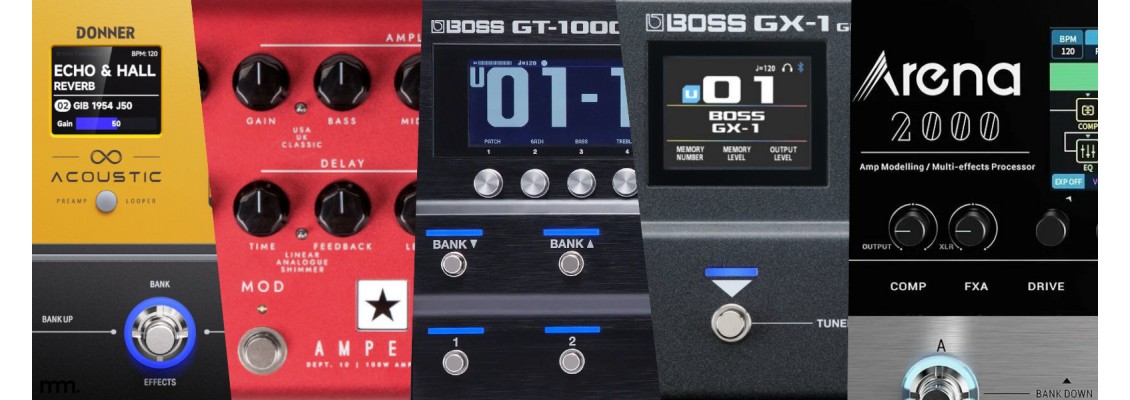
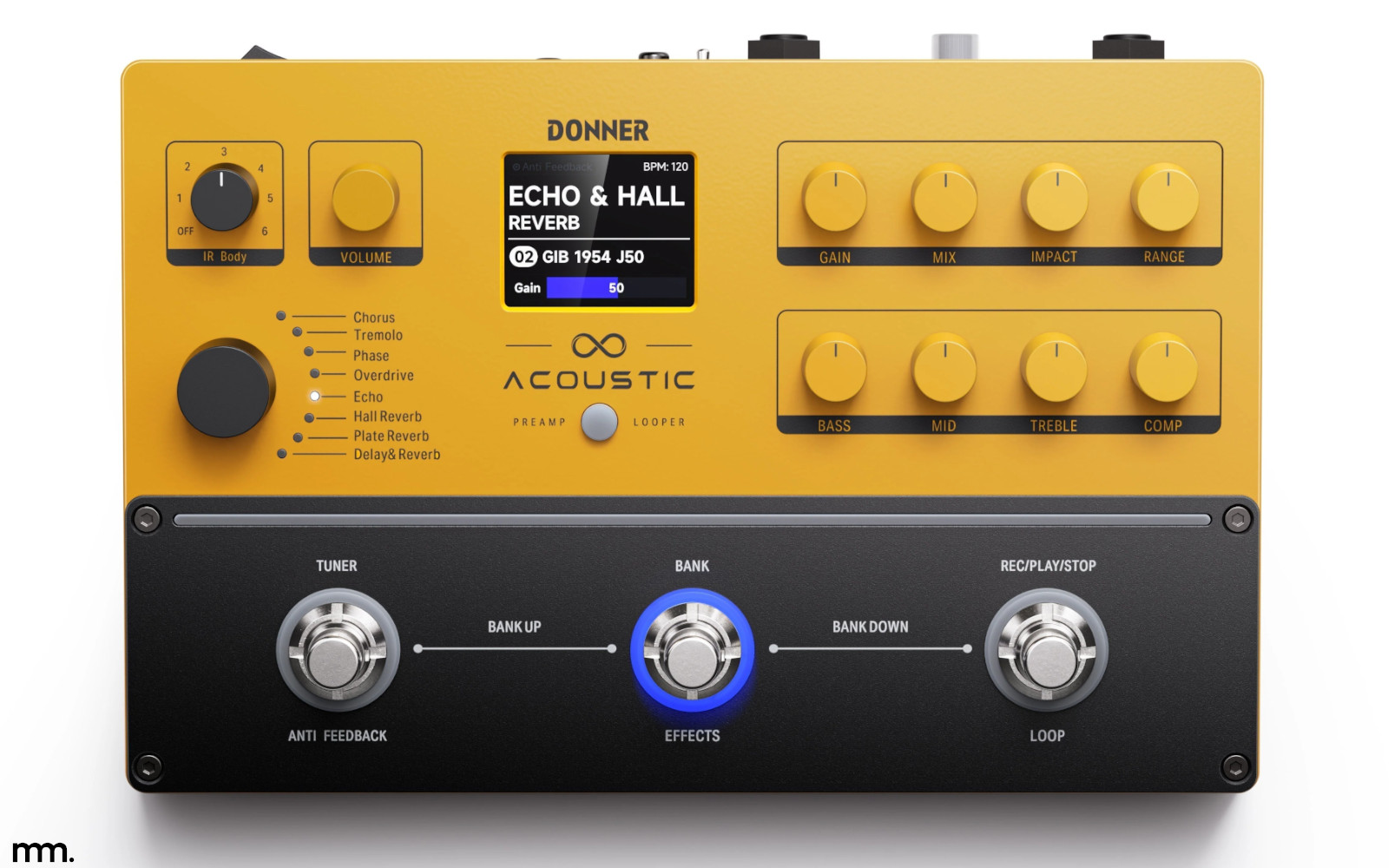
Donner APL Multi Effects Pedal
Acoustic Tone, Reimagined
Acoustic players deserve more than a simple reverb pedal.
The Donner APL Multi Effects Pedal has been designed specifically for acoustic instruments, bringing studio-inspired processing to performers who want to enhance, rather than disguise, the natural voice of their guitar. With six IR body simulations, carefully voiced ambience and intuitive controls, it allows players to add warmth, depth and realism while preserving the character that made them fall in love with their instrument in the first place. Whether you're playing an intimate café, recording fingerstyle arrangements or stepping onto a festival stage, the APL helps an acoustic guitar sound polished, balanced and ready for the spotlight.
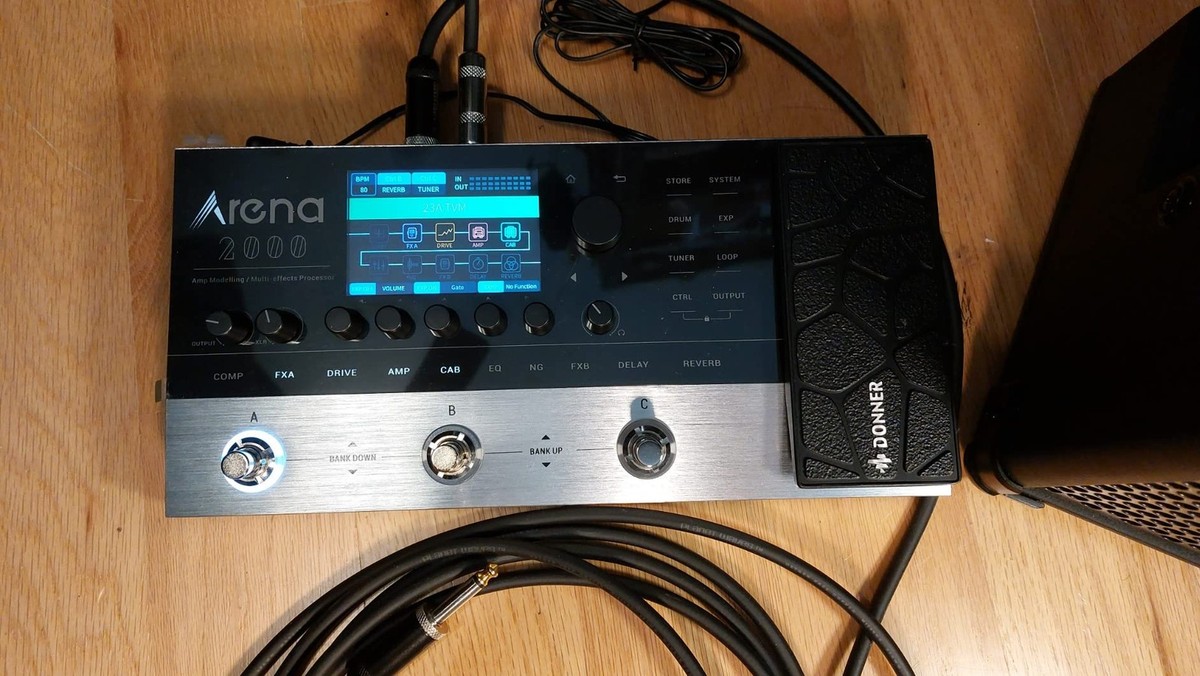
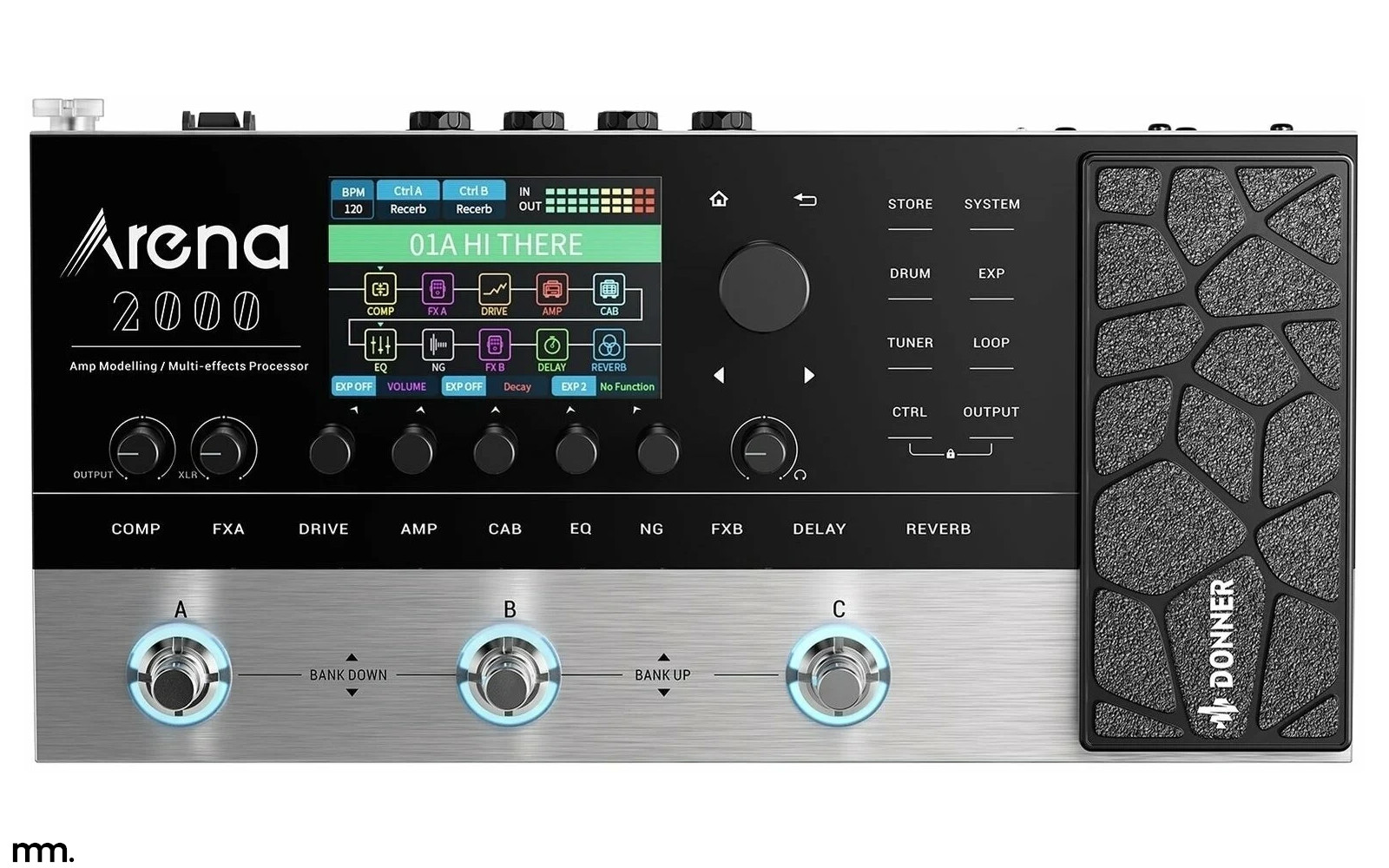
Donner Arena 2000
The Bedroom Producer's Dream Rig
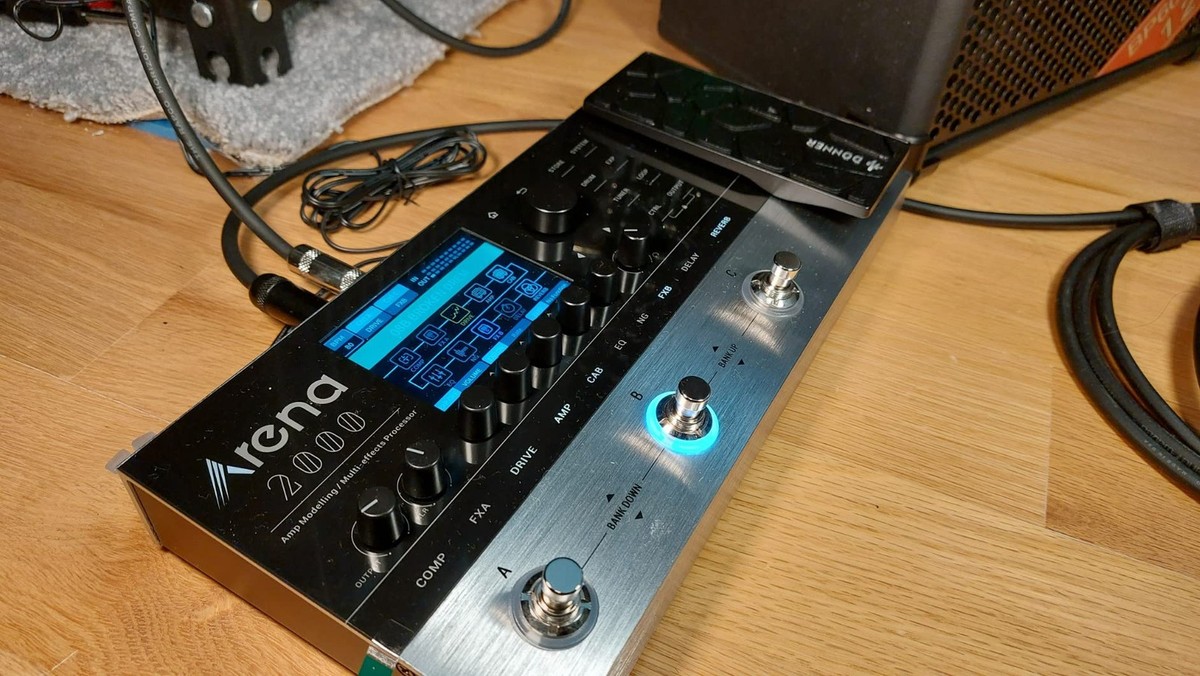
The Donner Arena 2000 proves just how far affordable digital modelling has come.
Powered by Donner's FVACM (Forward Analog Virtual Circuit Modelling) technology, it delivers 278 effects, including 80 amp models, 50 cabinet simulations, 100 classic effects and support for 50 additional third-party impulse responses. High-resolution 23.2 ms IR processing, a built-in 60-second looper, 40 drum patterns, USB recording, MIDI input, XLR outputs and Bluetooth editing make it equally comfortable in a bedroom studio, rehearsal room or live venue. It's not simply a multi-effects pedal; it's an entire guitar ecosystem packed into a remarkably compact format.
Blackstar Dept. 10 Amped 2
The Amp That Refuses to Stay in One Box
Some products refuse to fit neatly into a category.
The Blackstar Dept. 10 Amped 2 is one of them.
Part 100-watt performance amplifier, part professional multi-effects processor, part pedalboard hub and part recording solution, it has been built for guitarists who want to leave the traditional amp behind without sacrificing the feel that makes valve amplifiers so addictive. Whether you're running directly into a speaker cabinet, feeding a front-of-house PA through cabinet simulation or recording silently into your computer, the Amped 2 adapts effortlessly. It's equally at home driving a traditional cab on stage as it is serving as the centrepiece of a modern, lightweight touring rig.
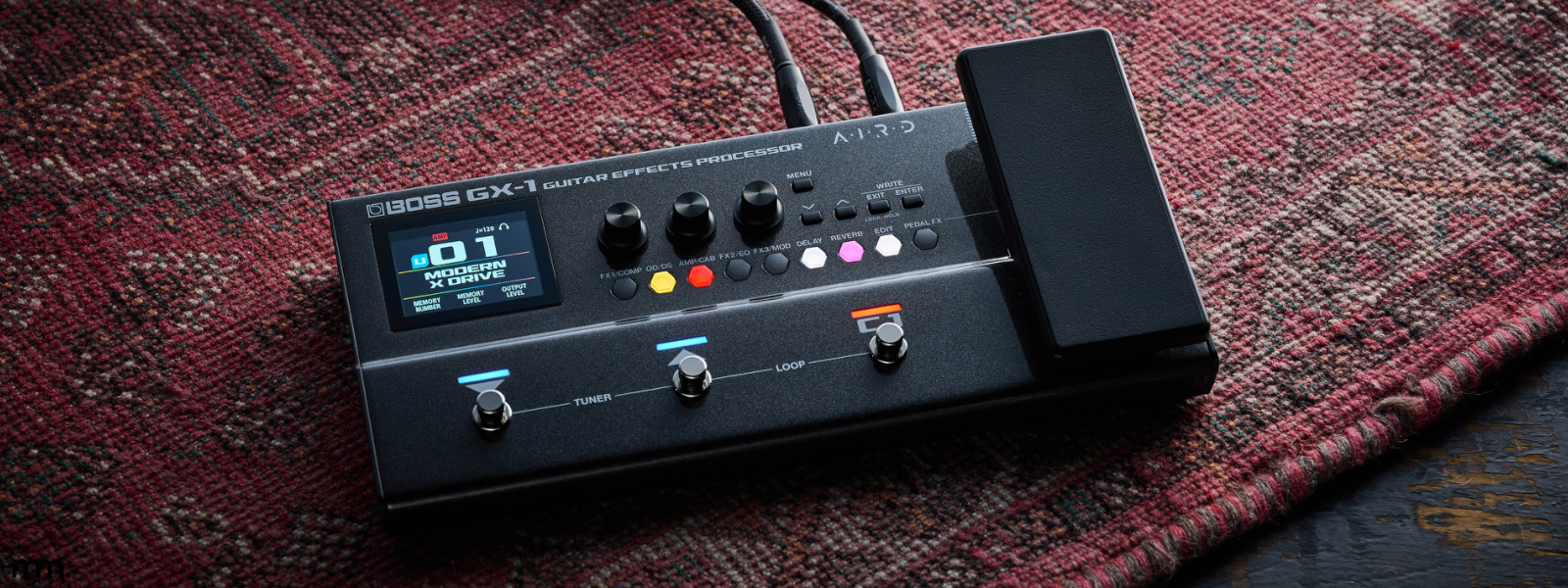
Boss GX-1
Small Pedal. Serious Ambition.
Boss has spent decades earning the trust of guitarists around the world, and the Boss GX-1 brings that experience together in an impressively compact format.
With its intuitive colour display, onboard expression pedal, USB connectivity and carefully curated collection of Boss effects and amplifier models, the GX-1 offers an inviting route into professional multi-effects without overwhelming new users. It's compact enough to slip into a gig bag, powerful enough for rehearsals, recording and live performance, and flexible enough to grow alongside the guitarist using it. Sometimes the best piece of equipment is the one that encourages you to spend less time scrolling through menus and more time making music.
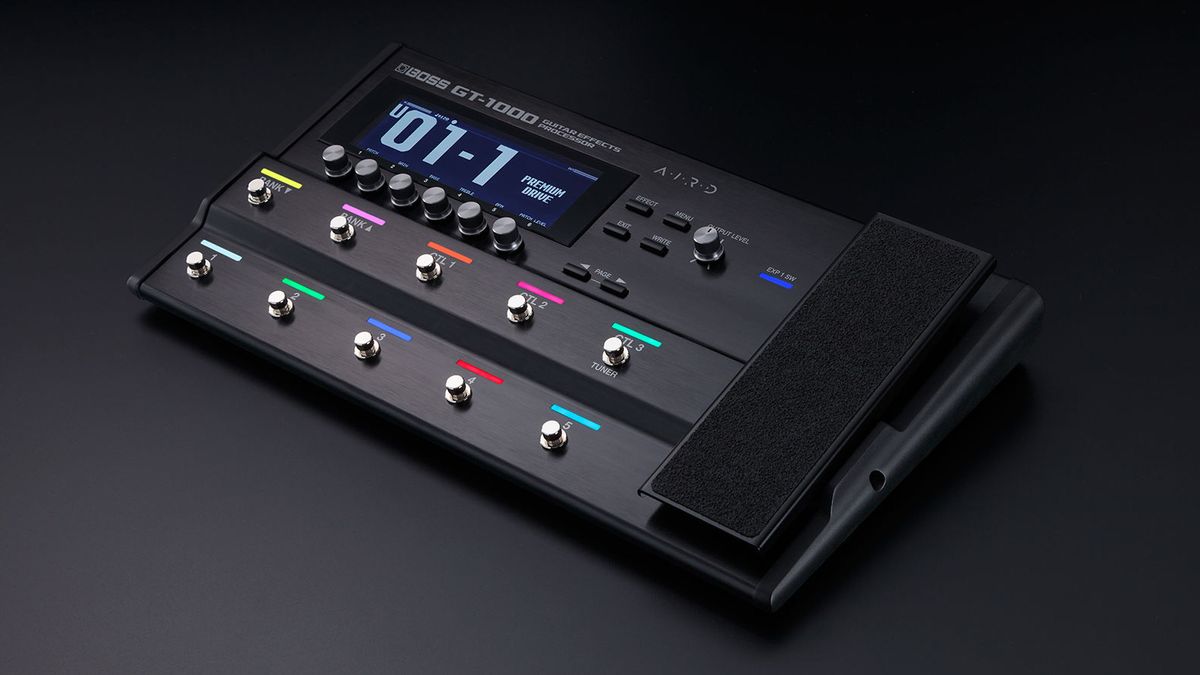
Boss GT-1000
When Compromise Leaves the Room
Every generation produces one piece of equipment that quietly becomes a benchmark.
For many guitarists, the Boss GT-1000 is exactly that.
Built around Boss's acclaimed AIRD (Augmented Impulse Response Dynamics) technology, it delivers astonishingly realistic amp response, sophisticated effects processing, deep signal routing and professional connectivity that comfortably handles everything from bedroom recording to international touring. Dual signal paths, extensive switching options, studio-grade effects and exceptional playing feel have made it one of the most respected guitar processors available. It isn't trying to imitate a pedalboard.
It has become one.
A Saturday Morning
Imagine this. It's Saturday morning. The house is quiet.
Coffee in one hand. Your favourite guitar in the other.
You begin with the sparkle of an American-style clean amplifier before drifting into a roaring British stack. A few minutes later you're swimming in lush stereo chorus, experimenting with tape echo, stacking ambient reverbs and discovering lead tones that seem to sing long after the note has faded. Before lunchtime you've wandered through blues, classic rock, shoegaze, country, modern metal and cinematic soundscapes.
Not because you've spent years assembling a pedalboard. Not because you've borrowed five amplifiers.
Because curiosity only needed one footswitch. That's what modern multi-effects processors really offer.
Not more pedals. More possibilities.
Silent Practice Has Changed Everything
For many players, one of the greatest innovations isn't a new overdrive model or another reverb algorithm.
It's the headphone socket.
Modern guitar processors allow inspiring practice at any hour, delivering authentic amplifier tones, cabinet simulations and studio-quality effects without disturbing neighbours, housemates or sleeping children. Late-night inspiration no longer has to wait until morning, and countless songs have probably been written because someone could simply plug in, put on a pair of headphones and keep playing.
Sometimes the biggest technological breakthrough is simply removing another excuse not to pick up the guitar.
Why Guitarists Are Falling in Love with Multi-Effects
Something interesting has happened over the past few years.
For a long time, digital effects were judged by what they couldn't quite reproduce. Players spoke about the warmth of analogue pedals, the feel of valve amplifiers and the subtle imperfections that made vintage gear so desirable.
Today's conversation sounds very different.
Modern amp modelling, cab simulations and impulse response technology have reached a point where the discussion is no longer about replacing traditional equipment. Instead, it's about expanding what's possible. A single preset can contain sounds that would once have required thousands of euros' worth of equipment. Entire signal chains can be recalled instantly. Studio-quality tones travel to gigs in a backpack. Inspiration arrives faster because the technical barriers have quietly disappeared.
That's perhaps the greatest gift these units offer.
Not convenience.
Momentum.
The Best Guitar Rig Is the One That Gets Switched On
Guitarists have always dreamed about the perfect setup.
For some, that's a wall of vintage amplifiers and a pedalboard assembled over decades.
For others, it's a single processor that fits into a backpack, connects to almost anything and contains more creative possibilities than entire recording studios once offered.
Neither philosophy is right. Neither is wrong. Both exist for exactly the same reason.
To disappear.
Because the greatest compliment any piece of equipment can receive is that, after a few minutes, you stop thinking about the technology altogether.
You stop chasing pedals. You stop chasing amplifiers. You stop chasing gear.
You start chasing songs.
And that's where the magic has always been.
Check out a range of cool multi effects and more HERE.
Free Shipping Across Ireland
Musicmaker offers free shipping across Ireland on qualifying orders, making it easier to build the perfect guitar rig with multi-effects pedals, amp modellers, cab simulators, expression pedals and professional guitar gear.
From the Musicmaker Workshop
Since the early 1980s, Musicmaker has helped guitarists discover new sounds, from their very first stompbox to complete professional rigs. Today's multi-effects processors continue that journey, giving players more freedom than ever to experiment, perform, record and create. The technology has evolved, but the goal remains exactly the same: helping musicians find the sound that feels like home.