





Big Sound, Small Footprint: Bose Portable PA Has Arrived
Two Remarkable Bose PA Systems, Built to Make Live Sound Easier
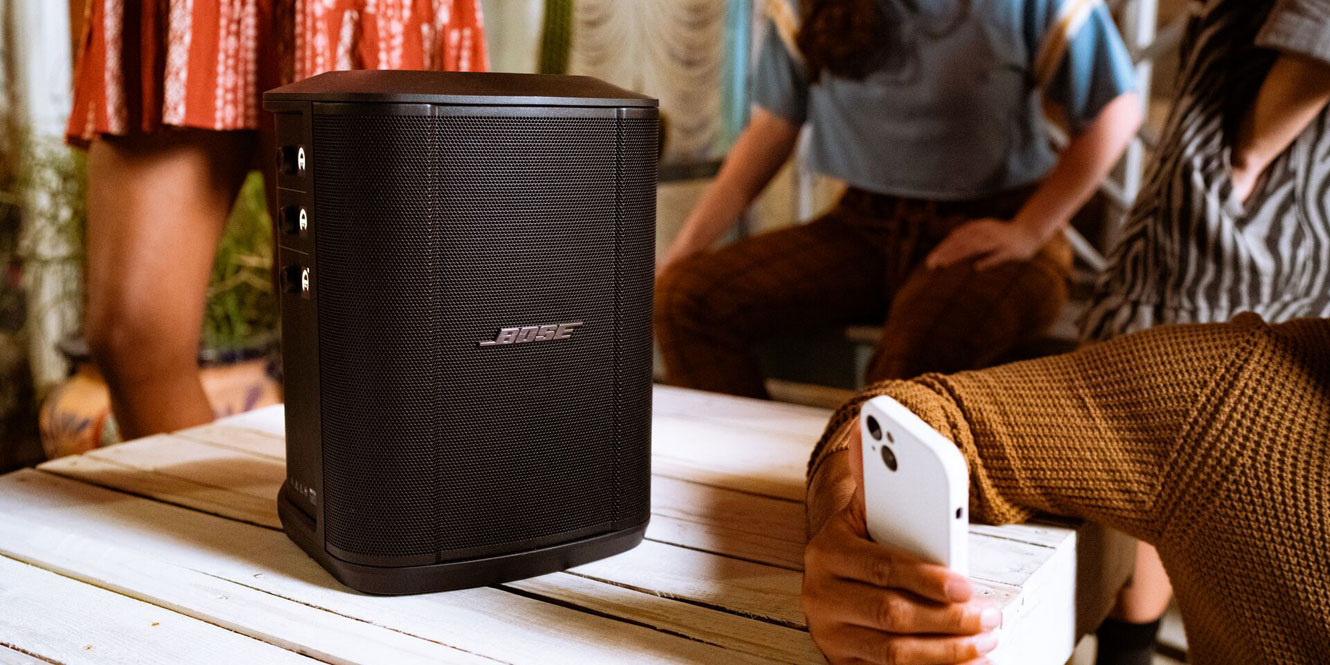
The small yet remarkably mighty S1 Pro+ Portable PA, available at Musicmaker now.
There is a particular point before every gig when musicians stop being musicians and briefly become removal companies.
Speakers come out of cars. Stands appear. Extension leads multiply. Somebody discovers that the mixer is still in another bag. A microphone cable has somehow tied itself around three unrelated pieces of equipment, and the elegant simplicity of “turn up and play” suddenly feels like a distant dream.
Bose has spent decades asking why things have to work that way.
That question sits at the heart of two very different Bose portable PA systems now at Musicmaker: the wonderfully compact Bose S1 Pro+ Portable Bluetooth PA System and the beautifully engineered Bose L1 Pro8 Portable Line Array System.
One is a battery-powered little powerhouse that can follow a singer-songwriter almost anywhere. The other takes the traditional PA stack and stretches it vertically into one of the cleverest live sound designs around.
Different tools. Different scale.
The same obsession with making excellent sound easier to live with.
Bose Has Never Been Particularly Interested in Doing Things Normally
The Bose story begins with Dr Amar G. Bose, engineer, MIT professor and lifelong problem solver. After completing his doctorate in electrical engineering in the 1950s, Bose rewarded himself with a high-end stereo system whose specifications looked exceptional on paper. His ears disagreed. The experience sent him towards research into acoustics and psychoacoustics — not simply how loudspeakers measure, but how human beings actually perceive sound in real rooms.
Bose Corporation followed in 1964, and by 1968 the company had introduced the now-famous 901 Direct/Reflecting loudspeaker, an early expression of an idea that would become central to Bose: the room and the listener are part of the acoustic system too.
That willingness to reconsider accepted wisdom has followed Bose through home audio, automotive sound, noise cancellation and professional audio. Rather than simply making conventional products a little better, Bose has often preferred to ask whether the conventional product needs to exist in quite the same form at all.
Portable PA is a perfect example.
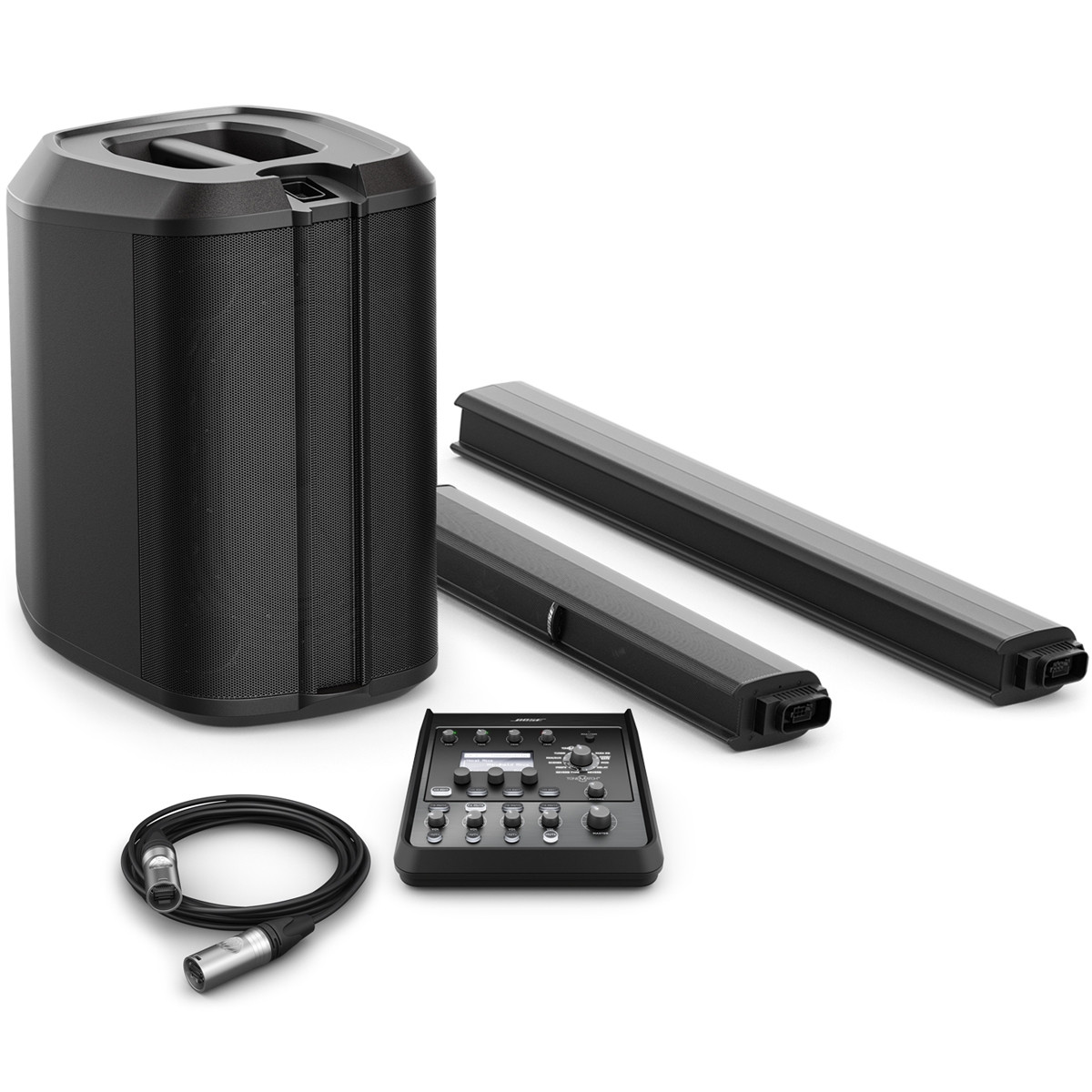
Super slick technology with the Bose L1 Pro8 Portable PA. Available in Musicmaker now.
Bose S1 Pro+
The PA That Refuses to Stay Home
The Bose S1 Pro+ Portable Bluetooth PA System is beautifully difficult to categorise.
It can be a portable PA. It can be a floor monitor. It can be a practice amplifier.
It can handle a microphone and instrument for a solo performance, provide music at an event, sit on a speaker stand or simply become an extremely serious Bluetooth sound system.
And crucially, it can do all of this without demanding a nearby wall socket.
The internal rechargeable battery offers up to 11 hours of operation, while the complete system weighs only around 6.5kg, making the S1 Pro+ genuinely easy to carry from the car to the stage, rehearsal room, garden, wedding ceremony or street performance.
That portability matters because it changes the question from “Can we set up a PA here?” to something considerably more useful:
“Where do we want to play?”
A Three-Channel Mixer Hiding in the Back
This isn't simply a powered speaker with Bluetooth added afterwards.
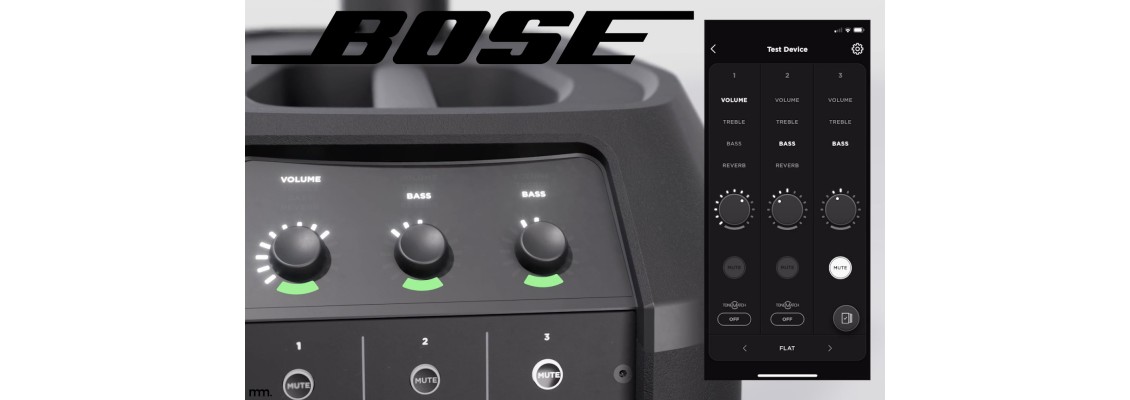
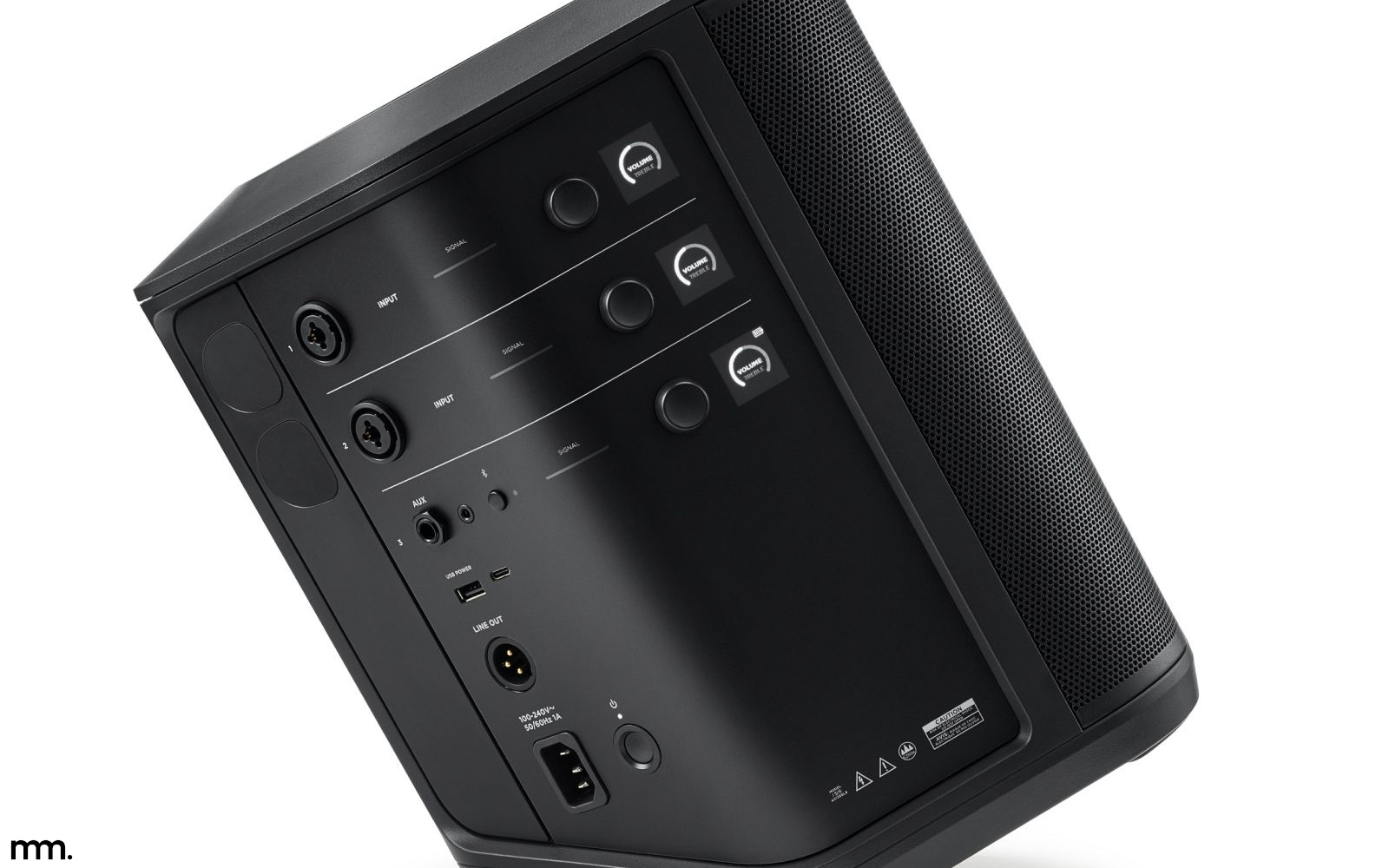
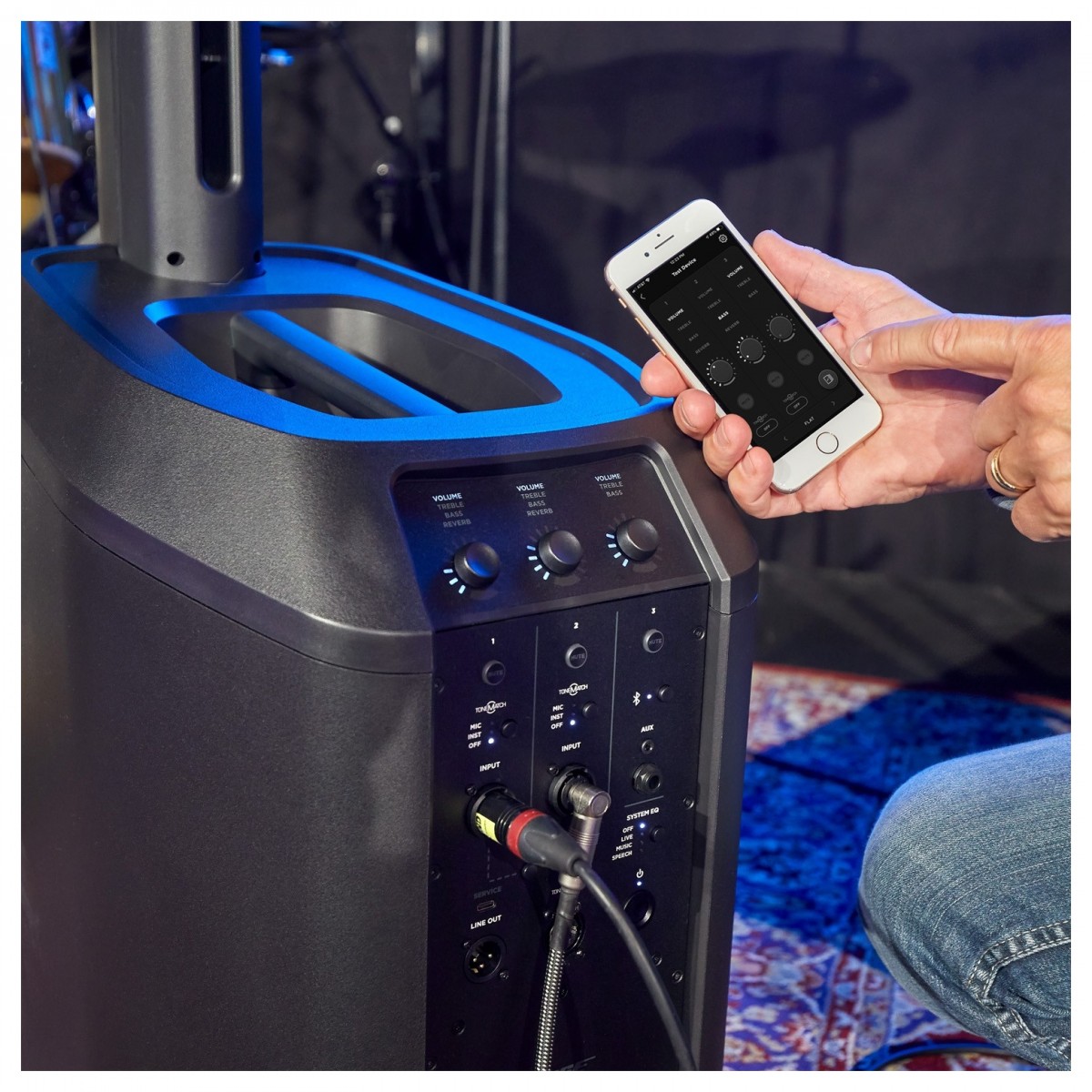
At the centre of the S1 Pro+ is an integrated three-channel mixer. Channels 1 and 2 are designed for microphones and instruments, with onboard control of volume, treble, bass and reverb, alongside Bose ToneMatch presets for quickly optimising common microphone and instrument sources. The third channel handles Bluetooth audio or an auxiliary source, allowing backing tracks and interval music to sit alongside live performance without requiring a separate mixing desk.
Those controls are accompanied by rotating OLED displays that remain readable as the system changes orientation, which sounds like a small detail until you're kneeling beside a monitor on a dark stage trying to find the correct parameter.
Small details become very large details remarkably quickly in live sound.
Put It Almost Anywhere
One of the cleverest things about the S1 Pro+ is that Bose assumes you're going to use it in different ways.
It can stand vertically, tilt backwards on the floor, sit horizontally as a monitor or mount conventionally on a speaker stand. Auto EQ senses the speaker's orientation and adjusts the system response accordingly, helping preserve a balanced sound rather than leaving the musician to compensate every time the cabinet moves.
That's classic Bose thinking.
The technology isn't there because it looks impressive on a specification sheet.
It's there because somebody has clearly thought about what actually happens during a gig.
Wireless Without the Usual Carry-On
The S1 Pro+ gets particularly clever when paired with Bose's optional wireless transmitters.
Dedicated XLR mic/line and ¼-inch instrument transmitters can connect directly to the S1 Pro+ over 2.4GHz wireless RF, removing another pair of cables from the performance area. Better still, the transmitters can be stored and charged inside dedicated bays in the speaker itself, so they're ready the next time the system leaves the house.
The optional transmitters provide up to around four hours of operation, making them particularly attractive for singer-songwriters, celebrants, buskers, presenters and mobile performers looking for an exceptionally clean setup.
Add control through the Bose app, Bluetooth 5.0 streaming and access to additional ToneMatch options, and this little black box starts looking considerably more sophisticated than its dimensions suggest.
Bose L1 Pro8
The PA System Turned on Its Head
Then we get to the Bose L1 Pro8.
And this is where Bose's obsession with rethinking loudspeakers becomes impossible to ignore.
A conventional PA places one or more relatively large drivers inside a speaker cabinet and asks that cabinet to project sound towards an audience. Bose's L1 concept takes another path, using a tall array of smaller drivers to distribute sound across an unusually wide horizontal area.
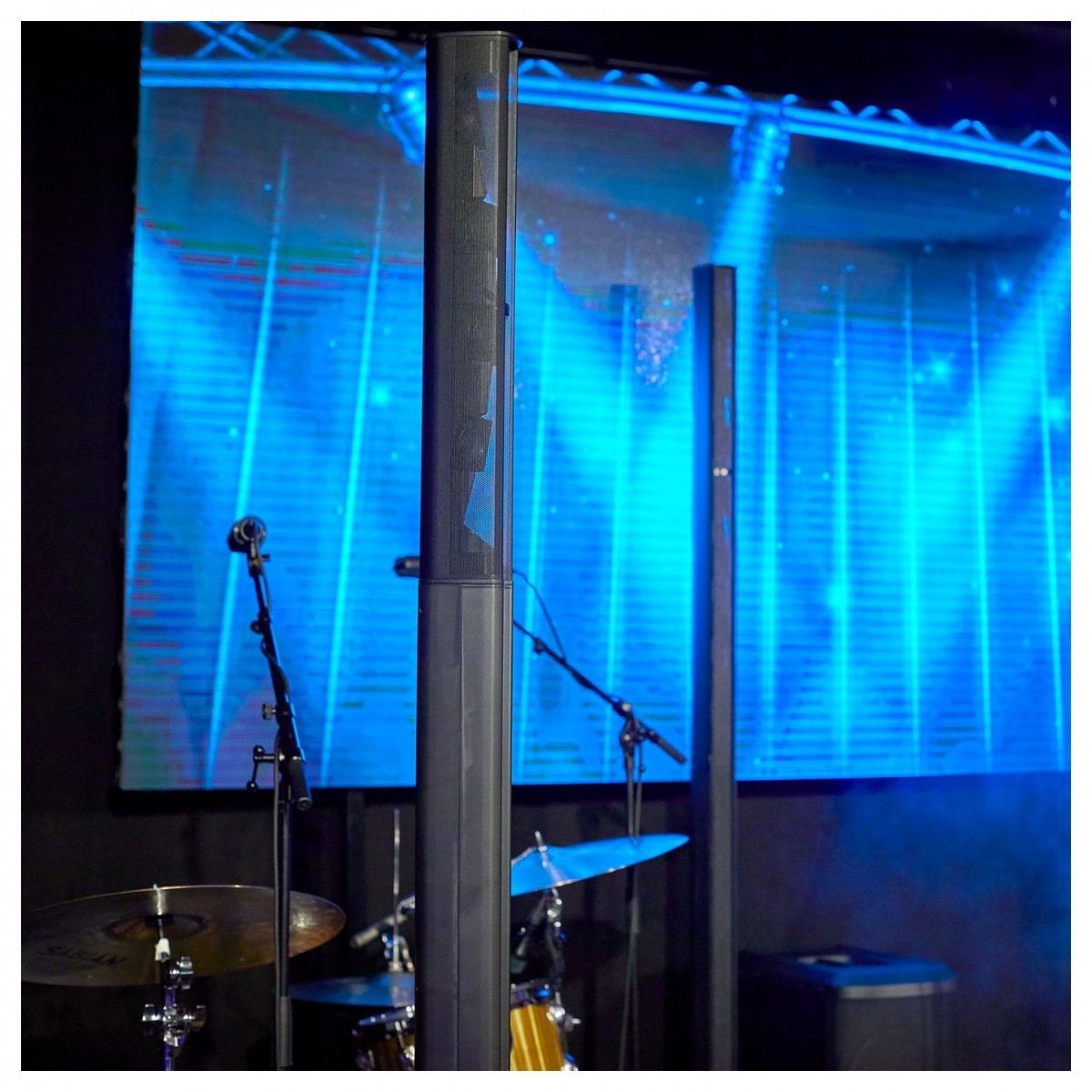
The L1 Pro8 uses eight articulated 2-inch neodymium drivers arranged in a C-shaped line array, providing an enormous 180-degree horizontal coverage pattern with approximately 40 degrees of vertical coverage.
That figure matters.
In smaller venues, audiences don't stand politely in one narrow beam directly in front of a loudspeaker. They sit at tables. Move to the bar. Stand beside the stage. Gather around the edges of the room. Wide horizontal dispersion is designed to help more of those people hear a consistent, articulate performance without simply making the system painfully loud for the unfortunate souls standing directly in front of it.
It's less about throwing sound aggressively into a room.
More about distributing it intelligently.
Eight Little Drivers Doing Very Big Work
There's an elegance to the physics of a line array.
Multiple drivers working together can control dispersion differently from a conventional single-driver enclosure, allowing designers to shape where acoustic energy travels through the room.
In the L1 Pro8, Bose uses those eight articulated drivers to maintain impressive vocal and instrument clarity across a broad listening area. The system reaches a calculated maximum of 112dB continuous and 118dB peak SPL at one metre, giving the Pro8 considerably more authority than its beautifully slender appearance suggests.
Its specified frequency response is 45Hz–16kHz at -3dB, with an overall frequency range extending from 33Hz to 18kHz at -10dB.
Which brings us to the bottom end.
Because Bose has done something delightfully strange down there too.
Meet the RaceTrack
Look at the base of the L1 Pro8 and you might reasonably wonder where Bose has hidden the subwoofer.
The answer is inside — and it isn't shaped like a normal woofer.
The integrated bass module uses Bose's 7 x 13-inch high-excursion RaceTrack driver, an elongated transducer designed to deliver bass performance comparable to a conventional 12-inch woofer while occupying considerably less physical space.
That unusual geometry allows Bose to create a low-profile power stand without sacrificing the low-frequency weight needed for vocals, acoustic instruments, keyboards, backing tracks and mobile DJ work.
The amplification is split between a 240W low-frequency channel and 60W high/mid-frequency channel, both using efficient Class-D amplification.
This is exactly the sort of engineering we love. Not smaller for the sake of looking clever.
Smaller because somebody found a smarter way to use the available space.
The Mixer Is Already There
Like the S1 Pro+, the L1 Pro8 isn't waiting for you to arrive with another box of electronics.
Its onboard three-channel digital mixer provides two combination XLR/¼-inch mic, instrument and line inputs, complete with 48V phantom power, while a third channel accepts ¼-inch and 3.5mm line sources alongside Bluetooth audio streaming.
Volume, treble, bass and reverb can be controlled directly from the system, while Bose ToneMatch presets provide optimised starting points for microphones and instruments.
For larger setups, a dedicated ToneMatch port connects directly to optional Bose T4S or T8S mixers, carrying digital audio and power through a single connection. The L1 Mix app adds remote control from a smartphone, meaning you can walk into the room, listen from the audience's perspective and adjust the system without repeatedly wandering back to the stage.
Anyone who has mixed their own gig will immediately understand why that's lovely.
The Gigging Musician's Favourite Specification: 17.4kg
We can talk about frequency response, dispersion patterns and DSP all afternoon.
Eventually somebody still has to carry the thing.
Fully assembled, the L1 Pro8 stands around two metres tall, yet the modular three-piece design separates for transport and the complete system weighs approximately 17.4kg.
The line array and extension pack neatly away, while the base contains amplification, bass driver, mixer and connectivity.
For singer-songwriters, acoustic duos, small ensembles, mobile DJs, houses of worship, corporate presentations and intimate venues, that combination of coverage, integrated mixing and genuinely manageable portability is enormously attractive.
The best PA isn't necessarily the system with the most boxes.
It's the system that makes the soundcheck shorter.
S1 Pro+ or L1 Pro8?
Two Very Different Ways to Make Yourself Heard
These two Bose systems overlap, but they solve different problems.
The Bose S1 Pro+ is the grab-and-go hero. Battery operation, extremely low weight, Bluetooth, onboard mixing, flexible positioning and optional wireless microphone and instrument transmitters make it brilliant for performers who value speed and freedom. Solo acoustic gigs, ceremonies, busking, teaching, presentations, garden performances, rehearsals and smaller events are exactly the kind of environments where it makes enormous sense.
The Bose L1 Pro8 is the more complete small-venue PA proposition. Its articulated line array provides extremely wide horizontal coverage, while the integrated RaceTrack bass driver delivers far greater low-frequency authority than the slender design initially suggests. For singer-songwriters, duos, keyboard players, mobile DJs and performers who need to cover a proper room while keeping their setup beautifully manageable, it's an exceptionally elegant solution.
One goes almost anywhere.
The other makes almost anywhere feel like a venue.
Why Bose Portable PA Makes Sense
There is a strange tendency in professional audio to equate complexity with seriousness.
More speakers. More stands. More cables. More boxes. More knobs.
Sometimes that's absolutely necessary.
Sometimes it isn't.
Bose's great achievement with systems like the S1 Pro+ and L1 Pro8 is not simply that they've made PA equipment smaller. They've removed friction from the entire experience.
The mixer is built in. The processing is built in. Bluetooth is built in.
The L1's bass system is built in.
The S1 Pro+'s battery is built in.
The cleverness isn't really any one of those technologies.
It's the fact that you can spend considerably less time assembling equipment and considerably more time performing through it.
Bose Portable PA Systems at Musicmaker Ireland
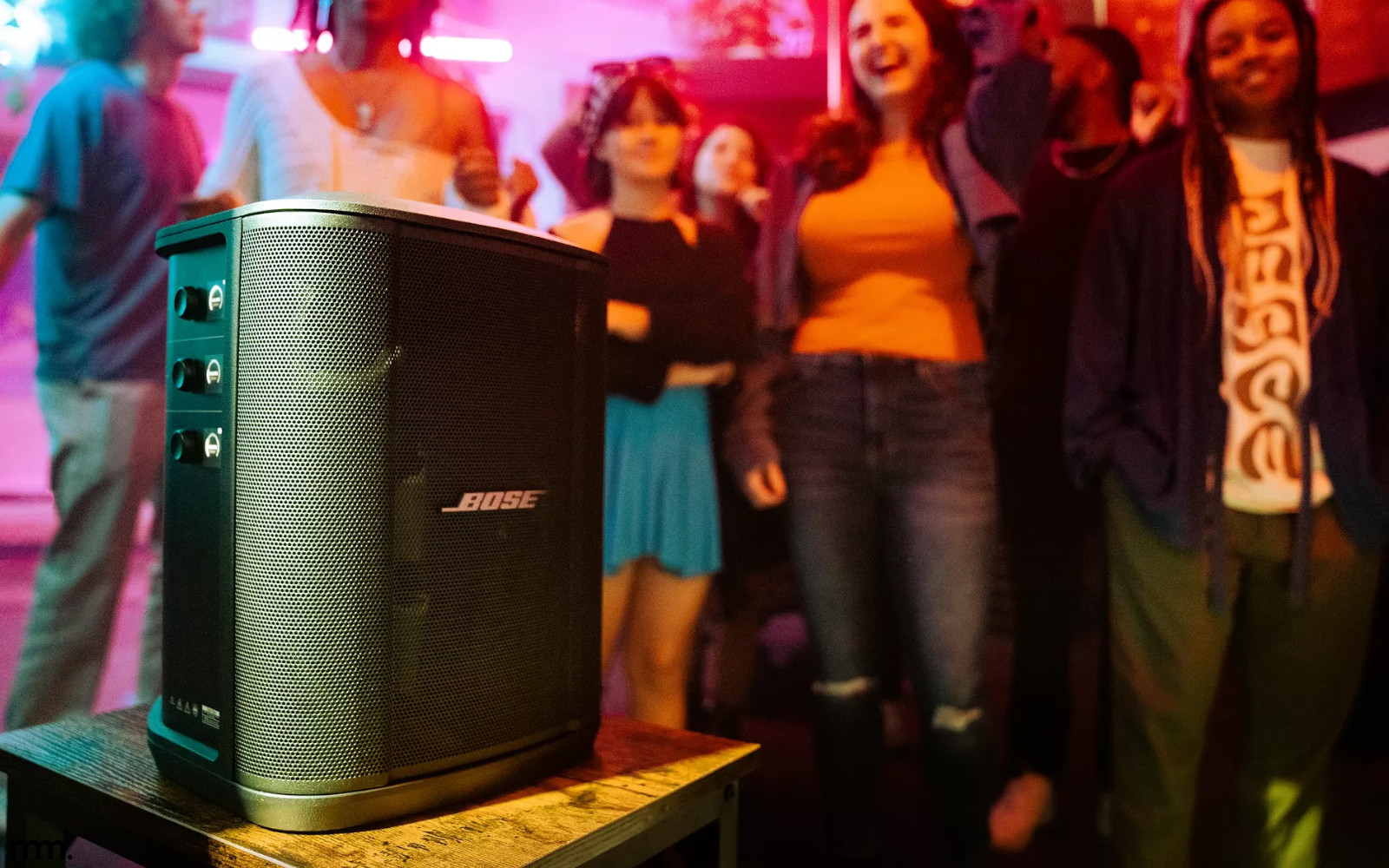
We're delighted to have both the Bose S1 Pro+ Portable Bluetooth PA System and Bose L1 Pro8 Portable PA System with Bluetooth in-store at Musicmaker Dublin.
They're very different pieces of equipment, but both represent the same wonderful philosophy that has followed Bose since Amar Bose first became dissatisfied with what conventional audio equipment could achieve.
Don't simply make the existing thing bigger. Question the existing thing.
Rethink the speaker. Rethink the room. Rethink the setup.
And if you can make excellent live sound easier for the person who actually has to carry the equipment through the venue door?
Even better. Because musicians have enough to think about before a performance.
The PA shouldn't be one of them.
From the Musicmaker Workshop
Since the early 1980s, Musicmaker has helped Irish musicians make themselves heard, from rehearsal rooms and first performances to professional stages and complete live sound systems. We love equipment that solves genuine musical problems, and Bose has built its reputation doing exactly that. Great live sound should be powerful, dependable and beautifully clear — but above all, it should let the performance remain the most interesting thing in the room.