




Build Your Cymbal Sound Without Going Broke
There is a point in almost every drummer’s life when the cymbals that were simply there stop being enough.
At first, you are learning to make the limbs cooperate. The hi-hat opens when it is supposed to, the kick lands somewhere close to the beat, and successfully getting through a fill without accidentally throwing a stick across the room feels like a legitimate artistic triumph. At that stage, a crash is a crash, a ride is a ride, and the principal requirement for a cymbal is that hitting it produces something resembling KSSSSHHHH.
Then your ears betray you by getting better.
You begin hearing the difference between a crash that opens instantly and one that needs to be driven. You notice the stick definition sitting above the wash of a ride. You discover that one pair of hi-hats sounds tight, articulate and controlled while another pair seems to breathe around the groove. You hear dark cymbals, bright cymbals, dry cymbals, thin cymbals, enormous cymbals that seem to continue ringing until the next rehearsal.
Congratulations. You now have cymbal taste.
This can become financially challenging. Surprisingly quickly.
Fortunately, it can also become enormous fun, because building a great cymbal setup does not have to mean buying the most expensive bronze you can find. In fact, one of the smartest things a developing drummer can do is learn what different cymbal sizes, weights and constructions actually contribute before throwing serious money at somebody else's idea of the perfect setup.
And that brings us rather beautifully to Stagg cymbals.
Stagg and the Great Democratisation of Bronze
Stagg occupies an interesting place in the drum world because affordability runs through the brand without confining it entirely to beginner territory. At one end you have straightforward cymbal sets designed to get a new drummer playing without financial catastrophe; move through the range and you encounter traditionally lathed and hammered cymbals, increasingly distinctive tonal choices and ultimately the hand-hammered B20 bronze Genghis Series. Stagg itself separates its student-oriented AX Innovation sets from professional B20 ranges including Sensa and Genghis.
That progression matters because learning cymbals is really learning to listen.
A drummer heading back to school, back to lessons, into college or into their first serious band does not necessarily need a €600 ride cymbal. What they need is an instrument responsive enough to teach them something. They need to hear how changing stick position alters the sound, how the edge responds differently from the bow, how a bell cuts through a band, how an open hi-hat transforms a groove and why the crash that sounded spectacular on its own suddenly becomes a wall of white noise beside two distorted guitars.
This is where Stagg becomes far more interesting than simply calling it an affordable cymbal brand.
It gives you room to develop an opinion.
And opinions about cymbals are how perfectly reasonable drummers eventually find themselves discussing hammer marks over pints.
Before You Buy Anything: Listen to the Metal
Cymbals are wonderfully complicated instruments.
Their sound is determined not merely by diameter or alloy but by an interacting collection of variables: material, thickness, profile, weight, hammering, lathing and the physical areas of the cymbal being played. Stagg identifies the bell, body and edge as three principal playing zones, each capable of producing a different response. It also notes that, all else being comparable, a heavier cymbal generally produces a brighter, higher and more focused voice while requiring more energy to open up, whereas increasing diameter tends to lower the voice and extend sustain.
That immediately makes our current Musicmaker selection more interesting.
A 14-inch hi-hat and 15-inch hi-hat are not merely two sizes of the same thing. The larger pair can bring a broader, lower character and a different physical response beneath the stick. Similarly, moving from a 20-inch ride to 21 or 22 inches changes the scale of the instrument, with the potential for a lower fundamental character, more wash and longer sustain depending on the particular model and construction.
Then weight enters the equation. A thin crash flexes and opens relatively easily, which can make it beautifully expressive at lower dynamics; a heavier cymbal generally requires a firmer hand before the whole disc becomes excited, but can reward that energy with greater focus and projection.
This is why choosing cymbals purely from a specification sheet is like choosing curry based entirely on colour.
Useful clues. Not the experience.
So let us build a cymbal sound.
AXK Innovation: The First Proper Setup
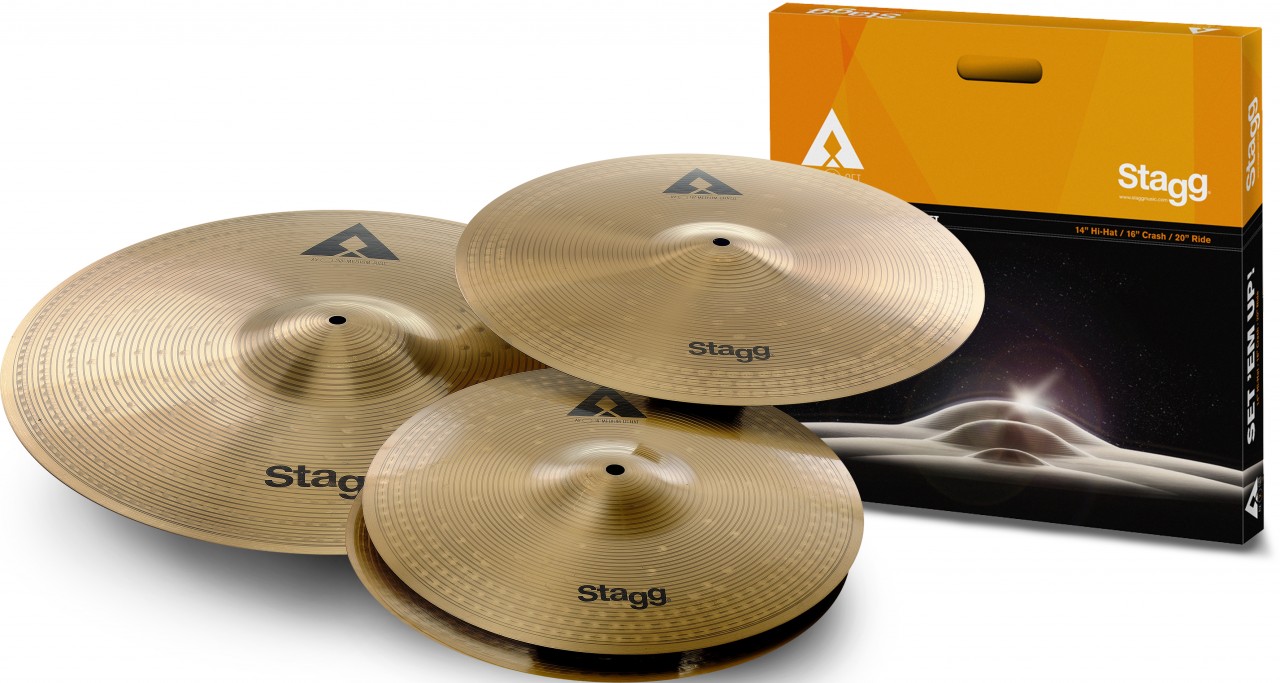
The Stagg AXK Innovation Cymbal Set – 14/16/20 starts with one of the most useful combinations in drumming: 14-inch hi-hats, 16-inch crash and 20-inch ride.
There is a reason that configuration has become such familiar territory. The hats give you the principal timekeeping voice and an enormous vocabulary of closed, half-open, open, foot and accent sounds; the 16-inch crash introduces a dedicated accent cymbal; and the 20-inch ride provides the broader sustained surface required when the groove needs to open up. Stagg itself describes 14-inch hats, a 20-inch ride and a 16- or 18-inch crash as the basic cymbal setup.
More importantly, the AXK set gets a developing player beyond the miserable situation where every musical job is being performed by one battered cymbal that came free with something in 2009.
For a student drummer or first acoustic kit, this is the sensible beginning. You can learn proper ride technique because you own a ride. You can learn hi-hat dynamics because you have a pair of hats. You can crash without attempting to make the ride impersonate an explosion.
At €219 from the current Musicmaker selection, it is also a wonderfully sane way of acquiring the essential voices together.
And there is an important philosophy here.
Your first cymbal setup does not have to be your final cymbal setup. It needs to get you playing.
Because once you have played for long enough, you will begin to understand what you want to change.
That is when the real trouble starts.
Stagg SH: Welcome to the Rabbit Hole
The Stagg SH Series is where this article begins grinning suspiciously.
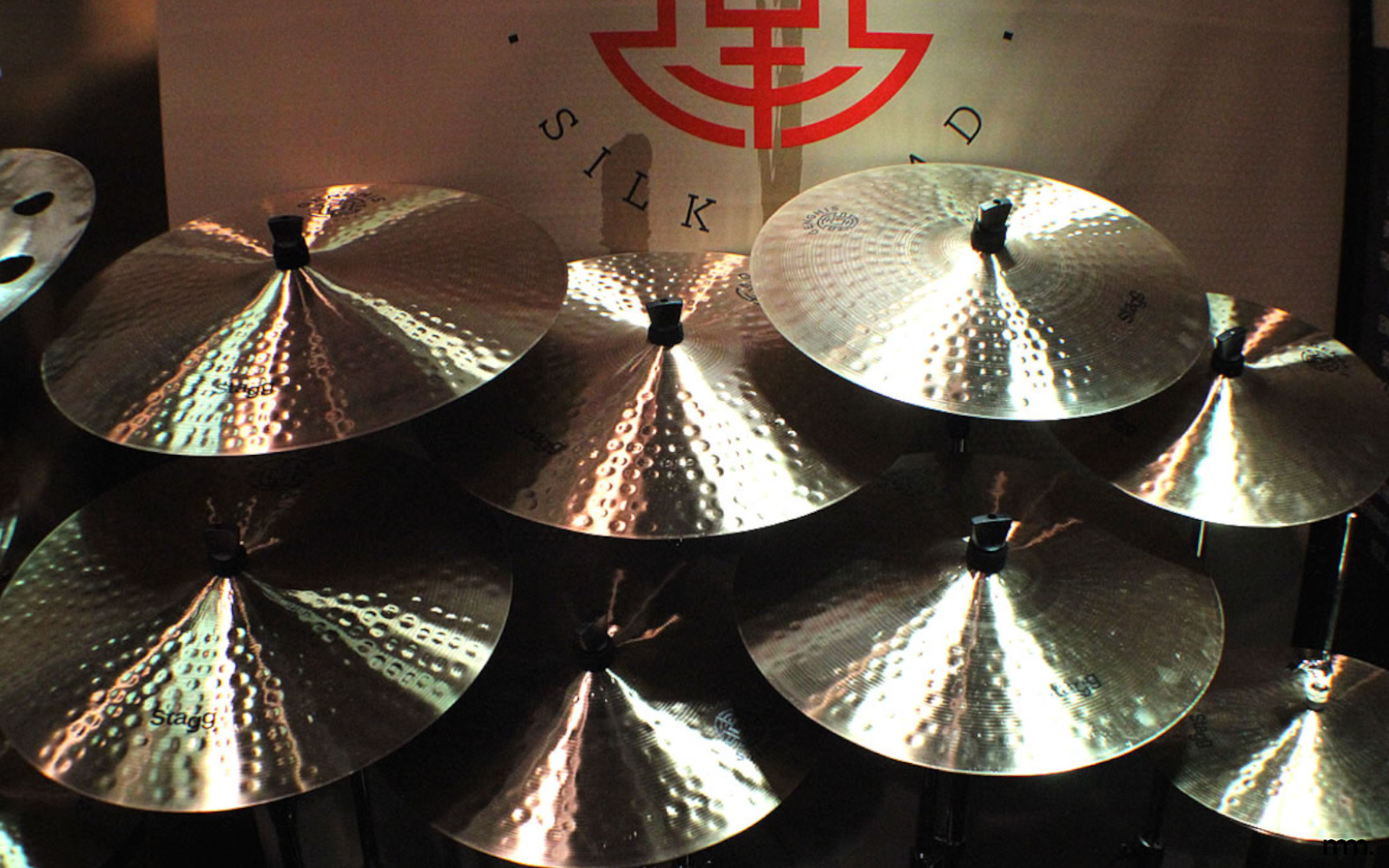
Stagg makes the SH cymbals using a single light hammering treatment and traditional lathing, with the range deliberately positioned as an affordable and versatile option suitable for a wide spread of musical styles.
Now we're talking about some of the physical processes that give cymbals their personality.
Hammering changes the structure and tension of the bronze surface, influencing the way vibrations travel through the instrument. Lathing removes material in circular grooves, changing mass and flexibility while contributing to the way the cymbal responds and sustains. These are not cosmetic flourishes; alongside alloy, weight and profile, they are fundamental parts of cymbal voicing.
And our current SH selection gives us a beautiful little lesson in size.
The Stagg 14" SH Medium Hi-Hats represent the classic all-round hi-hat diameter. Fourteen-inch hats have become ubiquitous for good reason: they can provide enough body for rock and pop while remaining manageable and articulate enough for a huge range of playing.
But sitting beside them are the Stagg 15" SH Medium Hi-Hats.
One inch. Doesn't sound particularly dramatic.
In cymbal land, it matters.
That extra diameter can shift the feel towards something broader and lower, giving the hats a little more physical presence and potentially more sustain. If your idea of a hi-hat sound is less tick-tick-tick and more sssshhh-KCHK-sssshhh, congratulations: the bigger hats are calling.
Then we reach the rides.
The 21" SH Medium Ride and 22" SH Medium Ride are immediately interesting because we're moving beyond the standard 20-inch starting point. Larger cymbals generally trend lower and sustain longer when other variables remain similar, and that makes big rides particularly attractive when you want a broad foundation beneath the stick rather than a tiny, clinical ping.
Add the 18" SH Medium Crash and you have a series that allows a developing drummer to start making deliberate choices instead of merely filling empty stands.
That is the SH appeal.
It is the moment when you stop asking: “Do I have a crash?”
And start asking: “What do I want my crash to do?”
Now you're a cymbal person.
There is no known cure.
Sensa: Paint With the Things!
Once the basic cymbal architecture is established, things can get considerably stranger.
This is where Stagg Sensa comes in.
Stagg positions Sensa among its professional B20 bronze cymbal families and describes the range as having sweet, bright tonal characteristics suited to contemporary musical styles.
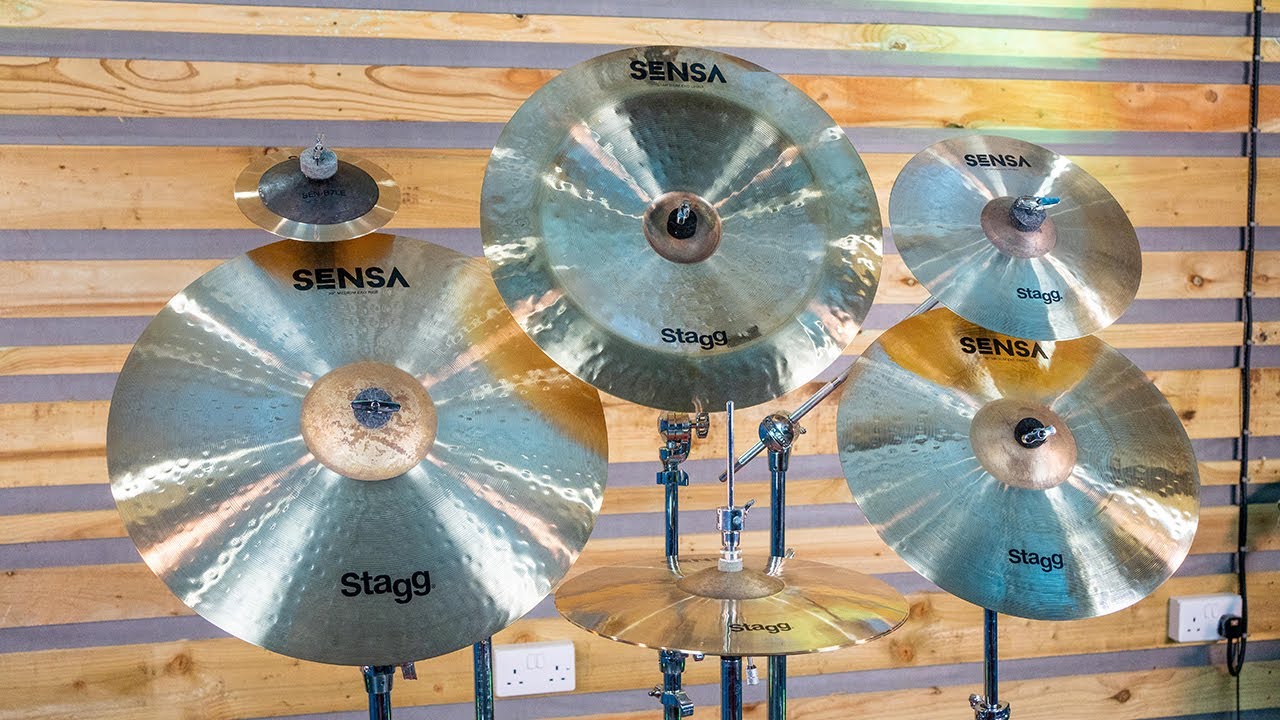
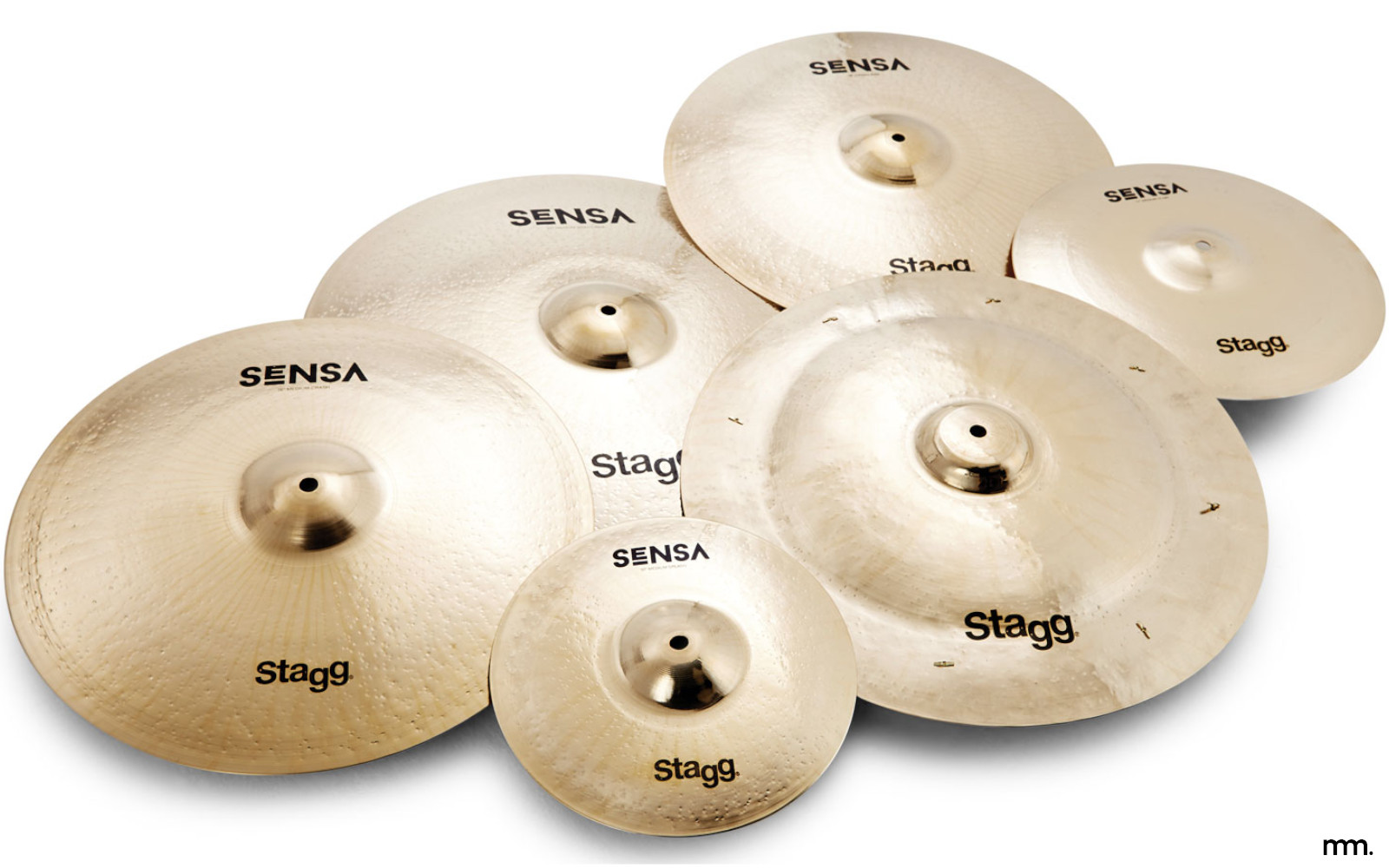
The current Musicmaker selection is particularly good because it shows how Sensa can expand a kit rather than simply duplicate what is already there. We have 10" and 12" Exo Splashes, a beautifully intriguing 10" Ocean Extra Thin Splash, plus 16" Exo Medium Crash and 18" Exo Crash models.
Splashes are where drummers discover punctuation.
A big crash can announce the arrival of a chorus like somebody kicking open a door. A splash does something completely different. Its smaller diameter generally gives it a quicker, shorter response: a flash of colour, a sharp accent, something that can appear between parts of a groove without swallowing everything around it.
And once you have one, you begin finding increasingly irresponsible places to put it.
The 10" Ocean Extra Thin Splash pushes the concept towards fast response through its extra-thin construction, while moving up into the 16- and 18-inch Exo crashes brings the Sensa character into cymbals capable of carrying much larger musical statements. Stagg's own range includes numerous Sensa Exo and Ocean designs, confirming that these are distinct voices within a much broader Sensa palette.
This is no longer about completing the drum kit. This is about colouring it.
A splash above the hats. Another over the floor tom. A second crash with a different diameter and decay. Perhaps something filthy and strange on the other side.
Suddenly your cymbal stands begin multiplying overnight.
Nobody knows where they come from.
Genghis: Now We're Talking Dirty
And then there is Genghis.
This is the point at which the idea of Stagg as merely a budget cymbal company needs to be quietly escorted from the building.
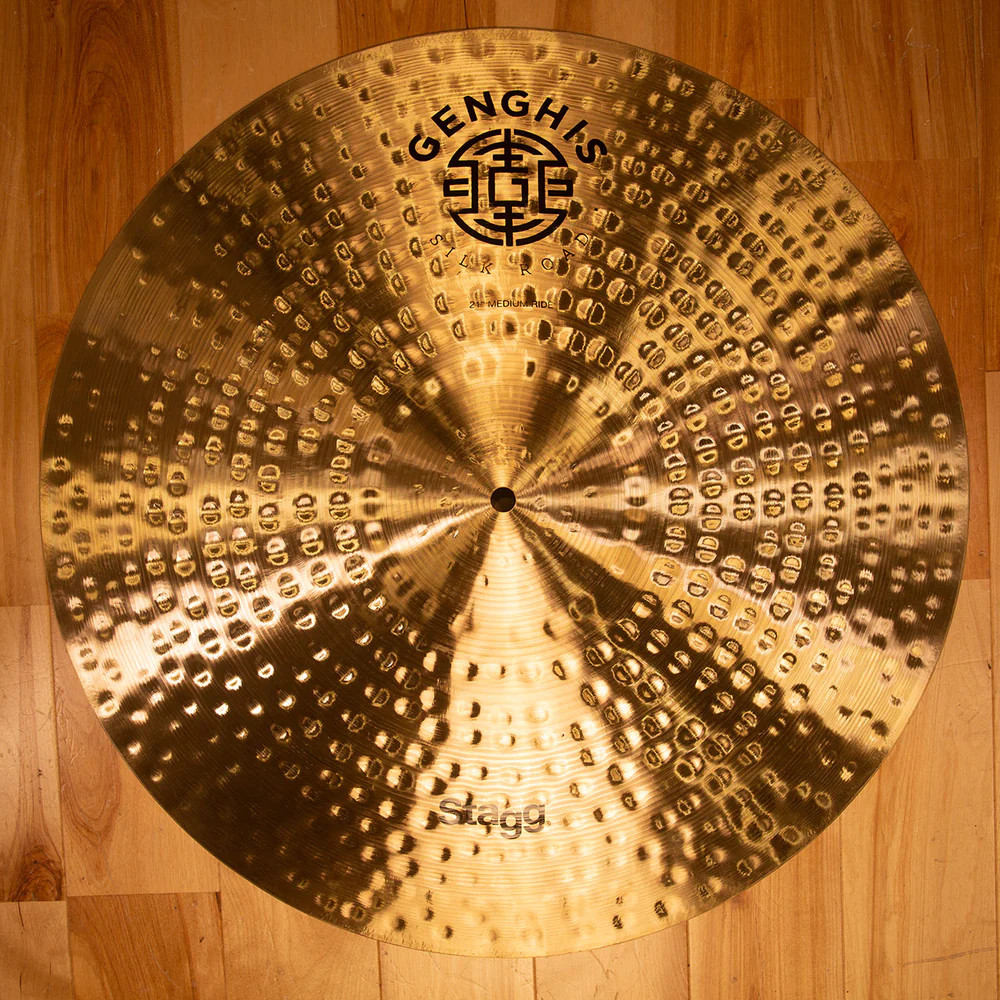
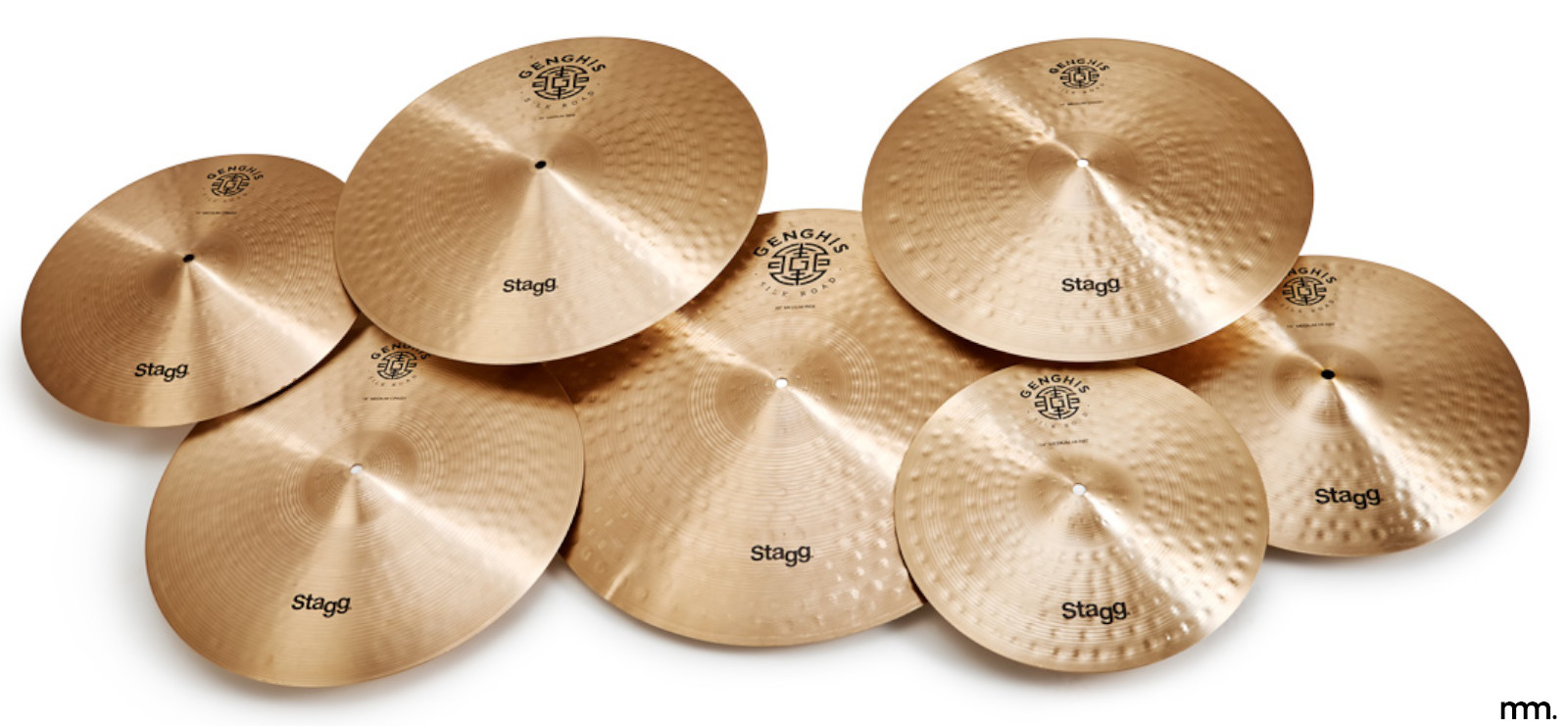
The Stagg Genghis Series is made from B20 bronze — approximately 80% copper and 20% tin — and is hand hammered, with Stagg describing the family around darker and warmer professional voices. Within it, Classic models emphasise full-bodied dynamics, Dual cymbals push towards darker territory, and Exo models introduce a sweeter, shimmering character.
This is serious cymbal construction.
And B20 deserves a little clarification because those three characters have acquired almost mythical status among drummers. B20 is deeply associated with professional cymbal making because the high tin content provides fertile territory for complex, harmonically rich instruments, but B20 itself is not magic. An alloy does not decide the finished sound on its own. Profile, weight, hammering, lathing and the judgement involved in shaping the cymbal remain enormously important.
The Genghis range demonstrates that beautifully.
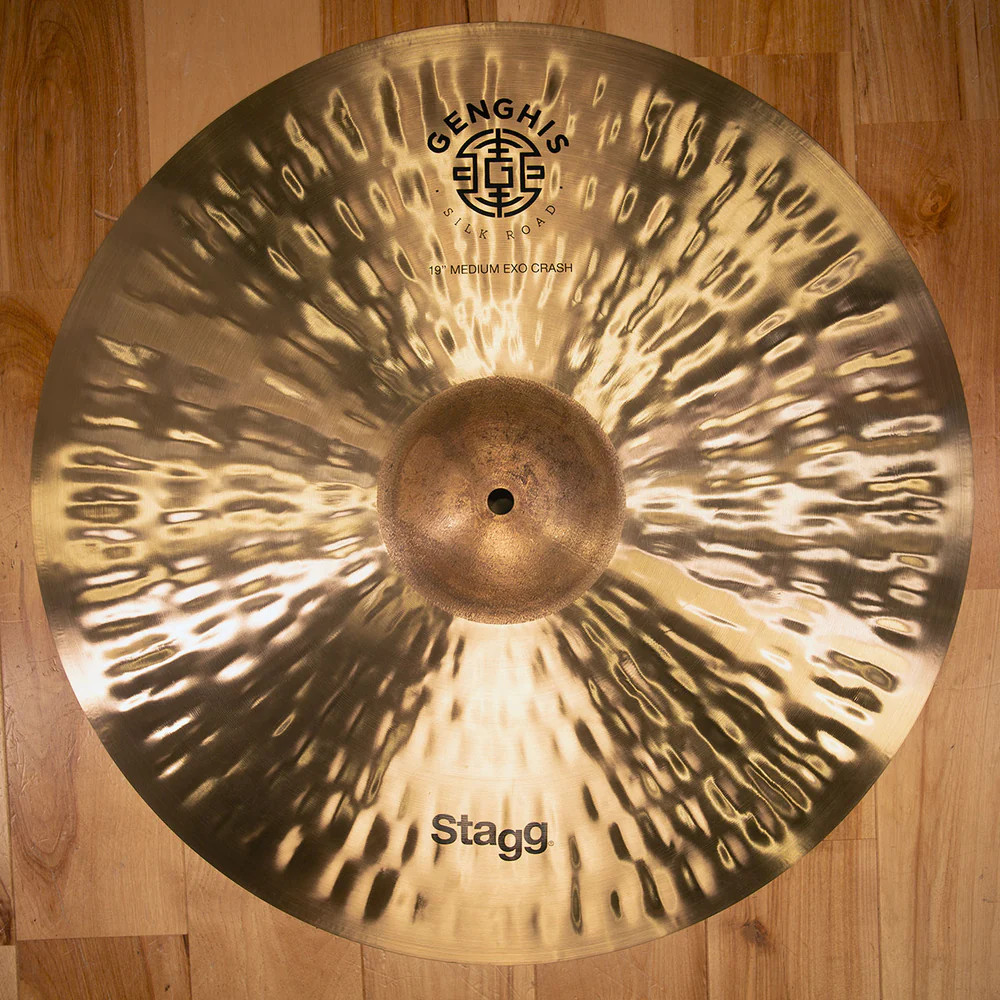
Our Musicmaker selection runs from the tiny 8" Genghis Dual Splash through 17", 18" and 19" crashes and all the way into 20" and 22" medium rides.
That is a tremendous spread of voices.
The 17" Genghis Exo Medium Crash offers a relatively compact crash dimension with the Exo flavour, while the 18" Genghis Crash occupies that gloriously useful middle ground where a crash can possess genuine body without becoming enormous. Move to the 19" Genghis Exo Medium Crash and the instrument gets physically broader again, offering another route towards a larger, longer crash voice.
And then come the rides.
The 20" Genghis Exo Medium Ride gives you a more conventional ride diameter, while the 22" Genghis Medium Ride is the big bronze dinner plate for players who want more scale beneath the stick. Stagg's regular 20-inch Genghis Medium Ride, for example, is specified in B20 bronze and voiced for long sustain and wash while retaining stick definition, with a low-profile bell contributing to its darker vintage character.
This is where cymbal choice stops being an accessory decision and becomes part of your musical identity.
A darker ride changes the atmosphere around a groove. A larger crash can make a chorus feel physically bigger. A tiny Dual splash can cut through the arrangement for half a second and disappear before anybody has quite worked out what happened.
You begin constructing a sound around your hands.
And the wonderful thing about Genghis is that Stagg has brought those hand-hammered B20 professional-cymbal ideas into territory that remains remarkably accessible compared with some of the eye-watering prices possible at the upper end of the cymbal market.
That is precisely why drummers should pay attention.
Not because they're cheap. Because they're interesting.
Big difference.
Silent Practice: The Cymbals That May Save Your Relationship
There is, unfortunately, one immutable truth about cymbals.
They are loud.
Beautifully, magnificently, irresponsibly loud.
This presents certain logistical complications if your rehearsal space is also somebody else's house.
Enter the Stagg Silent Practice Cymbal Set with Bag.
Stagg's SX low-volume cymbals use a heavily perforated design to reduce acoustic volume while retaining a playing feel and response intended to resemble conventional cymbals.
For students, apartment dwellers and anybody trying to establish a genuine practice routine, this is not some boring side issue. It can be transformative.
Drumming is intensely physical. You are learning distances as much as rhythms: the movement from hats to ride, the height of the crash, the rebound beneath the stick, the relationship between hand and foot when opening the hats. Practising those movements on actual cymbal-shaped surfaces makes considerably more sense than pantomiming them above cushions because everyone else in the house has threatened mutiny.
And practice frequency matters.
Forty-five manageable minutes every day can do far more for a developing drummer than one enormous weekly session conducted at full volume until the neighbours begin organising.
The silent set therefore occupies a wonderfully practical place in the Stagg universe. It will not be the cymbal setup you take onto the stage.
But it may be the reason you're good enough when you get there.
So How Should You Actually Build a Cymbal Setup?
Here is where we reject one of the worst habits in gear buying: assuming that everything has to match.
It doesn't. Your cymbal setup is not a dining-room furniture collection.
You might begin with the AXK Innovation 14/16/20 set because you need the fundamental voices and want to start playing. Later, perhaps the crash becomes the first thing you want to change, so an 18-inch SH goes onto the stand. Six months after that, you realise you want a darker, more expansive ride and start eyeing a 22-inch Genghis. Then a Sensa splash appears because you heard somebody use one on a record and now your life has taken an unexpected turn.
This is normal. In fact, it is healthy.
A great cymbal setup is often assembled gradually because the drummer's ears are developing alongside it. Buying slowly allows you to identify what is genuinely missing rather than purchasing six cymbals because somebody on the internet said it was a "complete setup".
Think about function first.
Your hi-hats and ride will often do an enormous amount of timekeeping, so their articulation, pitch and wash have to work with the music you actually play. Crashes are more about colour, dynamics and punctuation. Splashes and other effects can then add distinctive voices once the fundamentals are doing their jobs.
Then think about contrast.
Two crashes do not necessarily need to sound alike. In fact, there is enormous musical value in having one fast, relatively bright voice and another darker, broader crash. A ride can be clean and controlled or deliberately washy. Hats can be crisp and tight or enormous and sloshy.
There are no points awarded for symmetry.
There is only the sound.
Back to School: Train Your Ears as Hard as Your Hands
If you're returning to drum lessons, starting college, joining a school band or simply deciding that this is the year you finally get serious about playing, don't only practise your hands and feet.
Practise your ears.
Listen to the hi-hat on records you love. Is it crisp and dry or loose and washy? Listen to what happens when the drummer moves to the ride. Does the whole track suddenly seem to widen? Listen to crash decay. Does it disappear quickly or hang above the guitars for several beats? Can you hear the bell of the ride? Is the cymbal dark underneath the stick or bright enough to cut through everything?
Then sit behind your own kit and ask the same questions.
This is the real beauty of having affordable access to different cymbal voices. The Stagg AXK, SH, Sensa and Genghis ranges allow you to explore increasingly sophisticated ideas about size, response, construction and tonal character without assuming that musical curiosity should only be available to drummers with enormous budgets.
The lesson isn't simply how to buy cymbals. It is learning why you like what you like.
That knowledge stays with you long after the school year ends.
From the Musicmaker Drum Department
We've been selling drums and cymbals at Musicmaker Dublin long enough to know that cymbal shopping can become wonderfully obsessive.
And we encourage one thing above everything else: Listen to them.
Specifications matter. Alloy matters. Hammering matters. Lathing matters. Diameter and weight matter enormously. Understanding those things makes you a more informed buyer and, eventually, a more intentional player.
But cymbals are physical acoustic instruments. Hit them.
A cymbal that looks perfect on paper may do nothing for you. Another one can receive a single strike and immediately make you turn around with that expression every drummer knows.
Oh.
That one.
That is part of what makes the current Stagg selection at Musicmaker so much fun. The AXK Innovation set can start the journey with a complete basic setup. SH gives you an affordable entrance into lightly hammered, traditionally lathed cymbals. Sensa brings sweet, bright contemporary colours and a fantastic selection of effects. Genghis takes the conversation into hand-hammered B20 bronze and darker professional territory. And the Silent Practice set lets you put in the hours required to actually deserve all the magnificent bronze you've slowly surrounded yourself with.
There is no rule saying your first cymbal collection has to be expensive. There is no rule saying every cymbal has to come from the same series.
There isn't even a rule saying the cymbal somebody else considers "better" is going to be better for you.
Your job is to build a vocabulary of sounds that responds to the way you play and the music you want to make.
Start with the essentials.
Learn what they do. Listen harder. Add colour. Develop opinions.
Become strangely passionate about ride bells.
Then one afternoon, several years from now, you will find yourself holding two apparently identical 22-inch cymbals while explaining to another human being that one has a darker fundamental beneath the wash but better stick definition when you move out from the bow.
At that moment, remember where it began. You just wanted a crash.
Welcome to cymbals.