




Donner Guitar Pedals Have Landed at Musicmaker
Eighteen Ways to Make Your Guitar Considerably Less Sensible
There is a particular kind of happiness known only to guitarists.
It begins with an empty patch of pedalboard.
You tell yourself you're going to be disciplined. Perhaps a tuner, a little overdrive and a delay. Nothing extravagant. A tasteful, practical collection of effects assembled by a mature adult with excellent impulse control. Then somebody hands you a fuzz pedal.
Things deteriorate rapidly from there.
This is precisely why we're so delighted about the frankly enormous Donner guitar pedal shipment now at Musicmaker. We've been waiting for these little boxes of noise for quite some time, and they have finally landed in Dublin in glorious numbers: overdrives, distortion, fuzz, compression, chorus, tremolo, pitch shifting, delay, reverb, tuners, loopers, switching, multi-effects and one particularly wonderful collaboration with Jack White's Third Man Hardware.
For guitarists searching for affordable guitar effects pedals in Ireland, players building their first pedalboard, experienced tone obsessives looking for another colour, or anyone who simply believes their guitar should occasionally sound as though it has fallen through a hole in space, this is an exceptionally fun place to begin.
And because this is Musicmaker, we intend to investigate properly.
The Glorious Democracy of the Stompbox
There is something beautifully egalitarian about a guitar pedal.
Electric guitar can become an expensive pursuit remarkably quickly, but effects have always provided a different route into experimentation. One little box can completely alter your relationship with an instrument you already own. A compressor changes the behaviour of your picking hand. Tremolo introduces movement. Delay creates space. Fuzz can turn a perfectly respectable guitar into an industrial accident.
This is where Donner has made its name. Since arriving in 2012, the company has concentrated heavily on making music technology accessible, and its compact guitar pedals became an important part of that story. The attraction was obvious: familiar effect types, small enclosures, straightforward controls and prices that encouraged guitarists to experiment.
That last point matters.
A pedal doesn't necessarily need to become a permanent fixture on your board to be valuable. Sometimes discovering that you don't like chorus is useful. Sometimes an inexpensive octave pedal sends you down an entirely new musical path. Sometimes you buy a tremolo because you want a little vintage pulse and six months later you're making strange ambient music at two in the morning.
Effects invite curiosity.
And curiosity is good for guitar players.
Start at the Beginning: DT-1 Tuner
Before we make anything wobble, repeat, distort or howl, we should probably get the guitar in tune.
The Donner DT-1 Tuner Pedal is the sensible member of this deeply unserious family: a compact pedalboard tuner designed to provide quick visual tuning without consuming unnecessary board space.
A dedicated tuner pedal remains one of the smartest additions to any live setup. Hit the switch, tune silently, get back to work. It isn't glamorous, but neither is discovering halfway through the opening chord that your G string has developed independent political ambitions.
Every good pedalboard needs a grown-up.
This is it.
Donner Lax Comp: The Effect You Feel Before You Hear
Compression is frequently misunderstood because, unlike distortion or delay, its effect can initially seem subtle.
Then you switch it off.
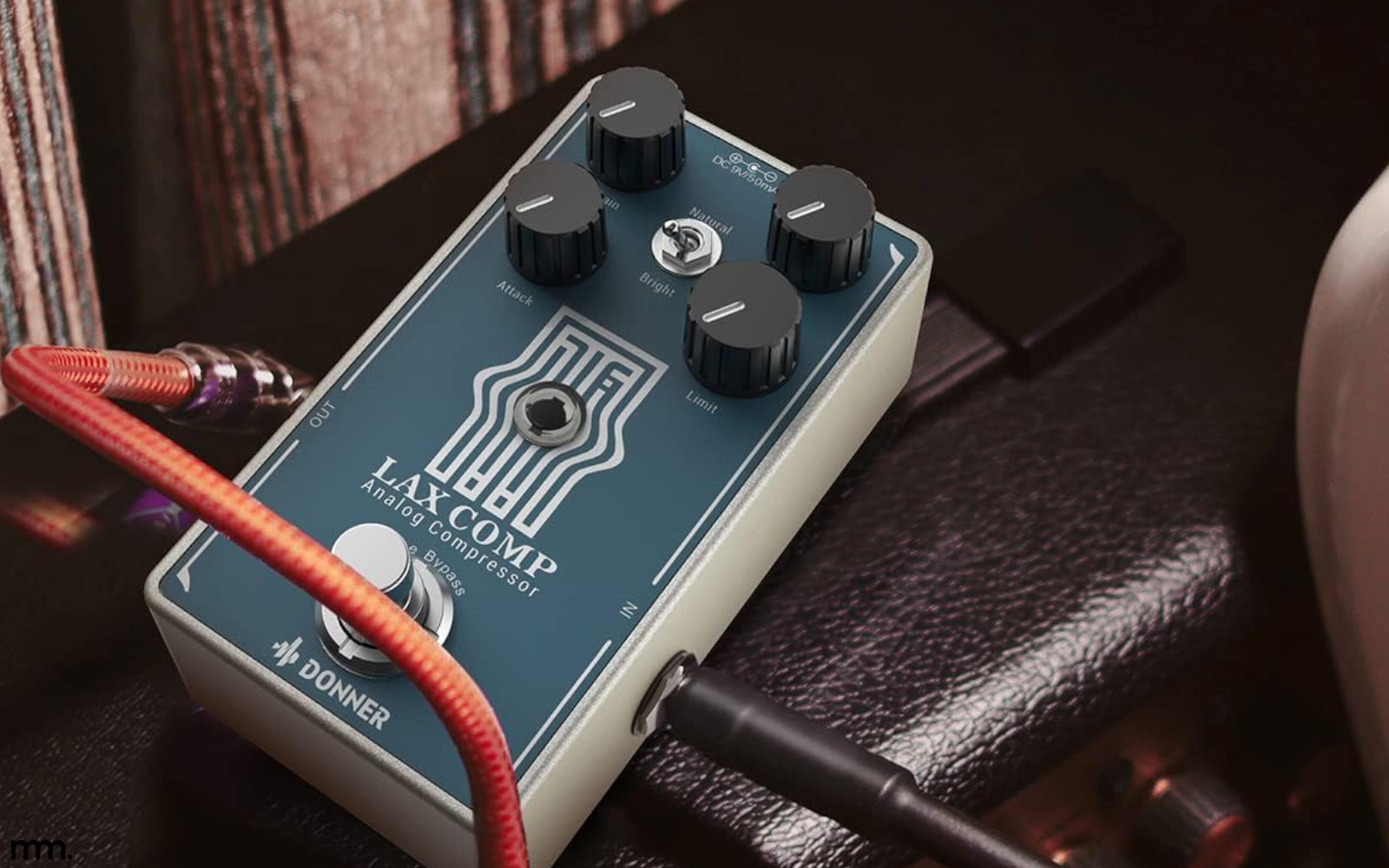
The Donner Lax Comp Compressor gives guitarists control over the dynamics of their signal, helping even out peaks, increase sustain and bring consistency to clean rhythm playing, country picking, funk and lead work. Donner gives the Lax Comp controls for Attack, Sustain and Level, alongside additional tonal shaping that makes it considerably more versatile than a simple one-knob compressor.
Used gently, compression can make clean guitar feel beautifully polished and controlled. Push it harder and notes become more even, sustain increases and those gloriously percussive funk parts begin snapping into place.
It isn't really about making your guitar louder.
It's about changing how the instrument responds beneath your fingers.
Donner Blues Drive: A Little Dirt Goes a Long Way
Then we reach overdrive. Now things become emotional.
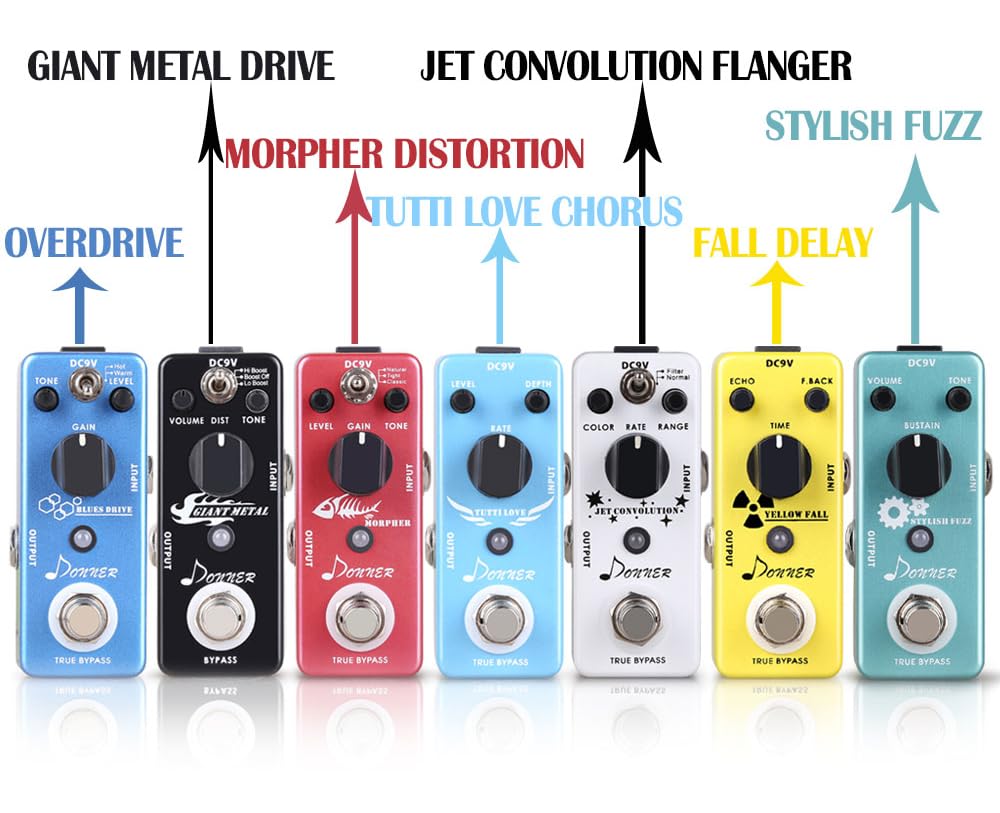
The Donner Blues Drive Overdrive Pedal lives in that endlessly useful territory between clean amplification and outright distortion. Think edge-of-breakup rhythm tones, singing blues leads and the wonderful moment when a clean amplifier begins to push back against the player.
And this is where an affordable overdrive becomes particularly useful. Don't only think of it as your entire distorted sound. Run the gain lower and use the pedal to push an already working amplifier or another drive pedal harder. That is how pedalboards become ecosystems. One pedal changes another.
Suddenly three knobs contain approximately four hundred possible arguments.
Donner Dumbal Drive: Smooth Operator
The Donner Dumbal Drive Overdrive Pedal heads towards another famous corner of guitar culture: the smooth, harmonically rich, touch-responsive style of overdrive associated with boutique D-style amplification.
This is an analogue overdrive with Gain, Volume, Bass and Treble controls plus three clipping modes, giving considerably more tonal shaping than its straightforward appearance suggests.
The interesting part isn't attempting to pretend that a pedal transforms an affordable combo into an impossibly rare amplifier. It doesn't.
The fun lies in the philosophy behind this kind of circuit: smooth gain, useful headroom and an overdriven sound that still responds to how hard you play. Back off your touch and things settle. Dig in and the harmonics arrive.
That's a far more interesting relationship than simply "more distortion".
Donner Giant Metal: Absolutely No Mystery Here
Sometimes subtlety can take the afternoon off.
The Donner Giant Metal Distortion Pedal exists for saturation, aggression, tight riffs and the sort of gain levels that make palm-muted power chords deeply satisfying.
High-gain distortion is its own engineering challenge. Too much bass before the clipping stages and everything turns to porridge; too much high-frequency content and the guitar becomes exhausting. The joy of a dedicated metal distortion is the ability to sculpt an aggressive sound while retaining enough definition for fast riffs, dropped tunings and precise rhythm playing.
Nobody called it Giant Metal because they were hoping you'd use it for polite jazz accompaniment.
Although now we desperately want somebody to try.
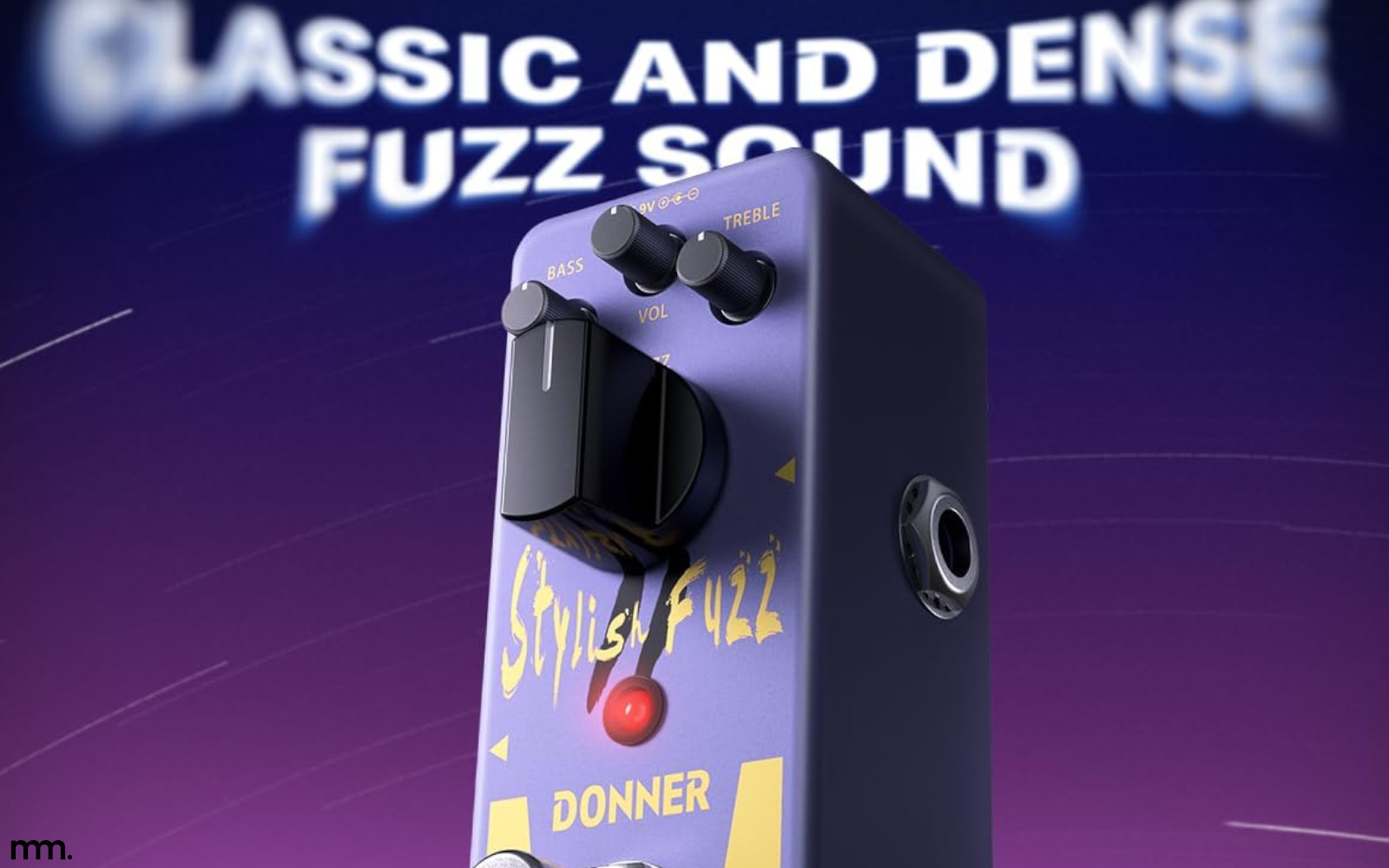
Donner Stylish Fuzz: Beautifully Broken
Distortion clips. Fuzz obliterates. That distinction is important.
The Donner Stylish Fuzz Pedal belongs to one of electric guitar's oldest and most wonderfully primitive traditions. Fuzz doesn't necessarily want to preserve the natural character of your amplifier. It wants to reshape it into something hairy, compressed, harmonically enormous and occasionally borderline unstable.
That's precisely the charm.
From garage rock and psychedelia to doom, shoegaze and experimental noise, fuzz remains one of those effects where technically "wrong" sounds can become extraordinarily musical.
Every guitarist should experience a proper wall of fuzz at least once.
Preferably loudly.
Donner Tutti Love Chorus: One Guitar Becomes Wider
Chorus works by taking your original signal and combining it with a subtly delayed, modulated version of itself. Those tiny variations in timing and pitch create the impression of multiple performances occupying the same space.
The Donner Tutti Love Chorus Pedal packages that unmistakable movement into Donner's compact format, ready for shimmering clean chords, liquid arpeggios and the gloriously polished modulation tones that ran rampant through the 1980s before being rediscovered by indie, dream-pop and contemporary players.
A little chorus adds width.
A lot of chorus makes the room feel pleasantly seasick.
Both are legitimate artistic decisions.
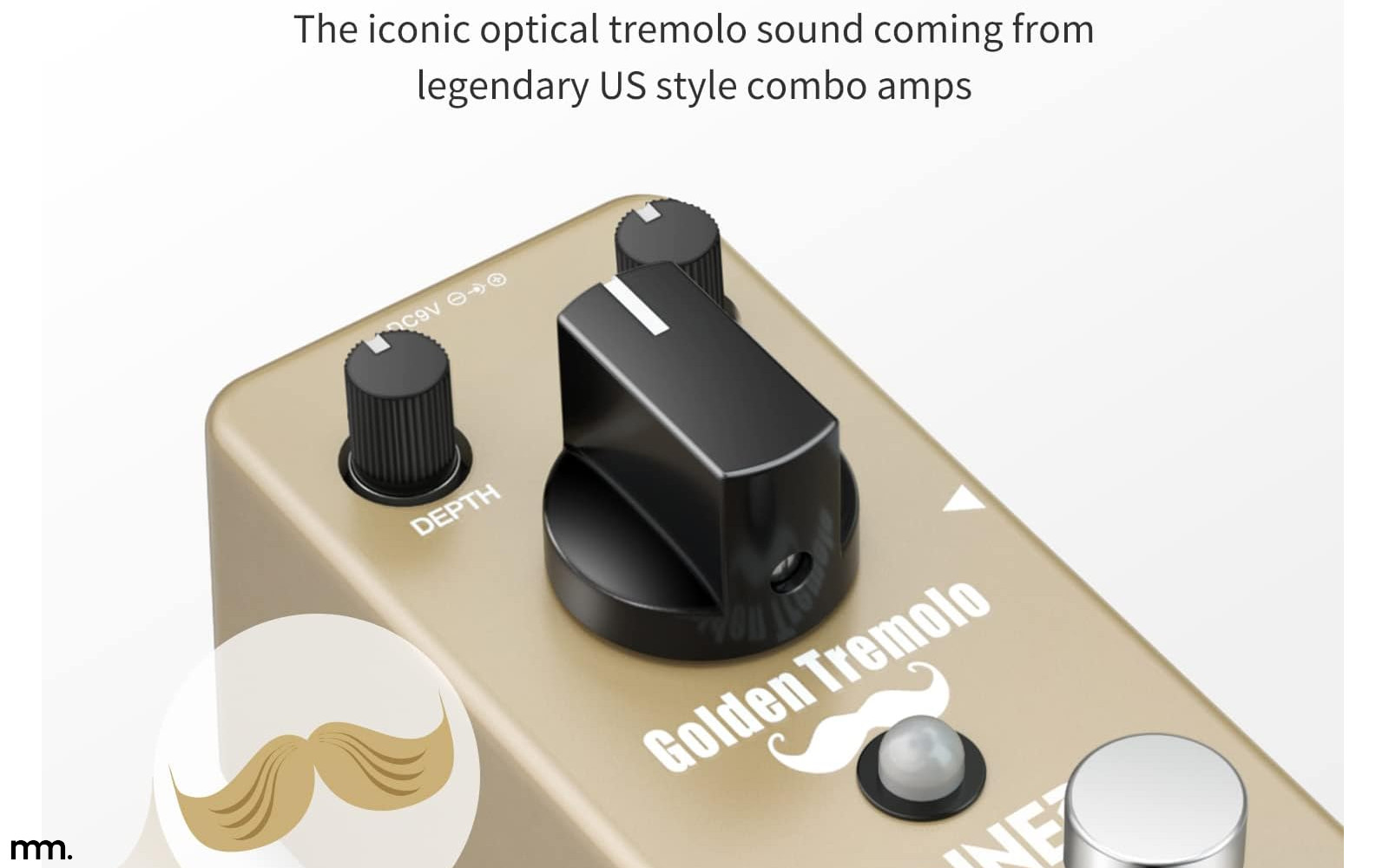
Donner Golden Tremolo: The Amplifier Starts Breathing
Before chorus pedals, digital processors and enormous modern pedalboards, there was tremolo.
The Donner Golden Tremolo Pedal explores one of the oldest electric guitar effects of all: rhythmic modulation of volume. The guitar isn't being repeated or pitch-shifted; its level is simply rising and falling at a controllable rate, creating everything from a gentle vintage pulse to a hard rhythmic chop.
It's a wonderfully physical effect. Set slowly, tremolo seems to breathe beneath sustained chords. Increase the speed and it becomes part of the rhythm itself.
Simple circuit. Enormous atmosphere.
Donner Harmonic Square: Twenty-One Ways to Leave the Note Behind
Now we get weird.
The Donner Harmonic Square Pitch Shifter/Octave Pedal offers seven pitch intervals across three operating modes — Sharp, Flat and Detune — producing 21 pitch-shifting possibilities, with independent Wet and Dry controls for balancing the shifted and original signals.
That opens an extraordinary amount of territory from one compact pedal.
Octave-up sounds can add synthetic, almost organ-like character to single-note lines. Octave-down settings can create huge riffs or pseudo-bass parts. Smaller intervals produce harmonised lines, while Detune can thicken the guitar with subtle pitch variation without becoming an obvious harmony.
Put it before distortion for one character. Put it after distortion for another. Pedal order is not law.
It's an invitation to misbehave.
Donner Yellow Fall Delay: Tiny Box, Big Space
Delay is where one guitar begins having conversations with itself.
The Donner Yellow Fall Delay Pedal became one of Donner's best-known compact effects, built around the simple pleasure of warm, analogue-flavoured repeats. Short settings can thicken a lead tone almost imperceptibly; longer delay times produce obvious echoes, while increased feedback allows those repeats to tumble into one another.
The beautiful thing about delay is that it changes how you play. Once repeats become part of the rhythm, you begin leaving space for them. The pedal becomes another musician.
Admittedly, one who only repeats what you've just said.
Donner Analog White Tape Delay: Wobble Is Beautiful
Tape echo has never been loved because it is perfect. Quite the opposite.
Old tape systems introduced saturation, modulation and tiny inconsistencies into their repeats. Those imperfections became part of the sound, and modern tape-style delay pedals deliberately explore that softer, less clinically precise character. The Donner Analog White Tape Delay heads into this world of warm echoes and vintage-flavoured ambience, giving players another route to everything from subtle slapback to spacious, atmospheric guitar parts.
Sometimes pristine repetition is exactly what a track needs. Sometimes you want the echo to look slightly haunted.
We support both positions.
Donner Versa Yellow Fall II: Delay Meets Reverb
Then Donner takes the Yellow Fall idea and opens the windows.
The Donner Versa Yellow Fall II Delay & Reverb Pedal combines three delay types — Echo, Digital and Vintage — with Hall, Room and Plate reverbs, producing nine possible combinations. It adds separate effect switching, tap-tempo functionality, preset storage and stereo operation, making it a much more sophisticated spatial-effects machine than the tiny original Yellow Fall.
This is where delay stops being merely an echo and becomes architecture.
A short room reverb around a rhythmic delay can create definition and depth. A plate with longer repeats can turn lead guitar into something enormous. Push everything outward and you're into ambient territory where individual notes dissolve into landscapes.
Space is an effect.
This pedal gives you rather a lot of it.
Donner Triple Looper: Your Most Patient Bandmate
Loopers are among the greatest practice tools guitarists have ever been given.
The Donner Triple Looper Pedal allows a player to capture a phrase and immediately perform over it. Lay down chords, practise scales against the changes, develop harmonies, construct arrangements or simply discover what happens when you stop thinking like one guitarist and begin thinking like three.
This is where looping becomes more than an effect. It's composition.
A looper reveals timing problems with brutal honesty because your slightly rushed rhythm part will continue reminding you of its existence every few seconds until you record it properly.
Useful. Occasionally humbling.
Always educational.
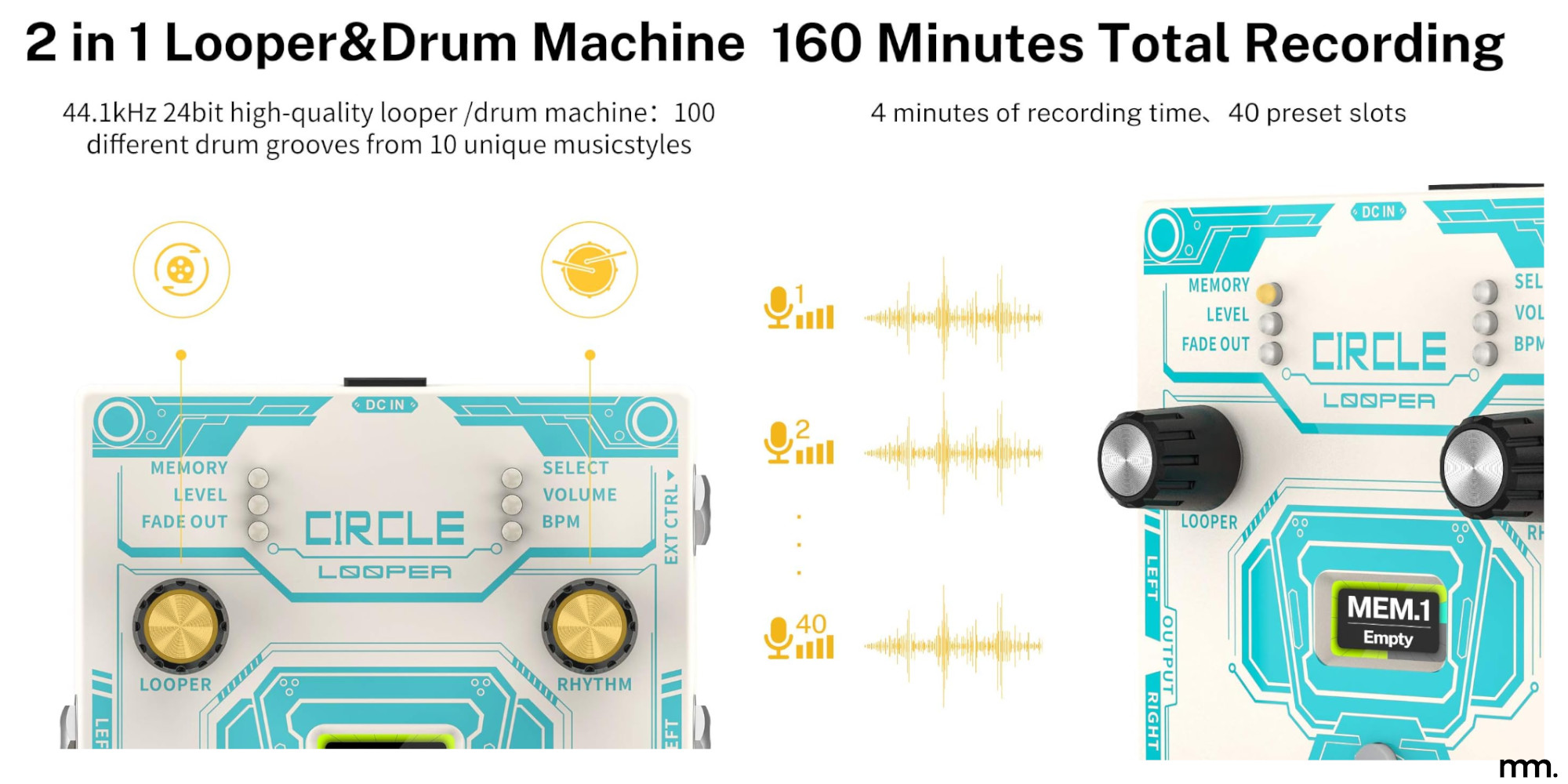
Donner Circle Looper & Drum Machine: Build the Whole Song
The Donner Circle Looper and Drum Machine Pedal pushes the concept further by bringing rhythmic accompaniment into the equation.
Now the guitarist isn't merely looping chords. They're building arrangements against a pulse, developing timing, writing songs and creating solo performances from the floor.
For home practice, songwriting and one-person performance setups, the combination of looper and drum machine is extraordinarily powerful. Instead of practising a riff in isolation, you hear how it behaves against rhythm. Instead of imagining the arrangement, you begin constructing it.
That's a major creative leap from one pedal.
Donner ABY Box: One Signal, Two Destinations
Not every useful pedal makes a sound. The Donner ABY Box Line Selector is about routing: sending or selecting signals between different destinations.
That might mean running one guitar into two amplifiers, switching between different signal paths or building more adventurous live and studio rigs.
And two amplifiers is where things become particularly interesting.
A clean amp on one side and an overdriven amp on the other. Different speaker sizes. Different effects chains. Stereo-style stage spreads.
The ABY Box isn't an effect in the conventional sense. It's infrastructure for bad ideas.
We mean that as the highest compliment.
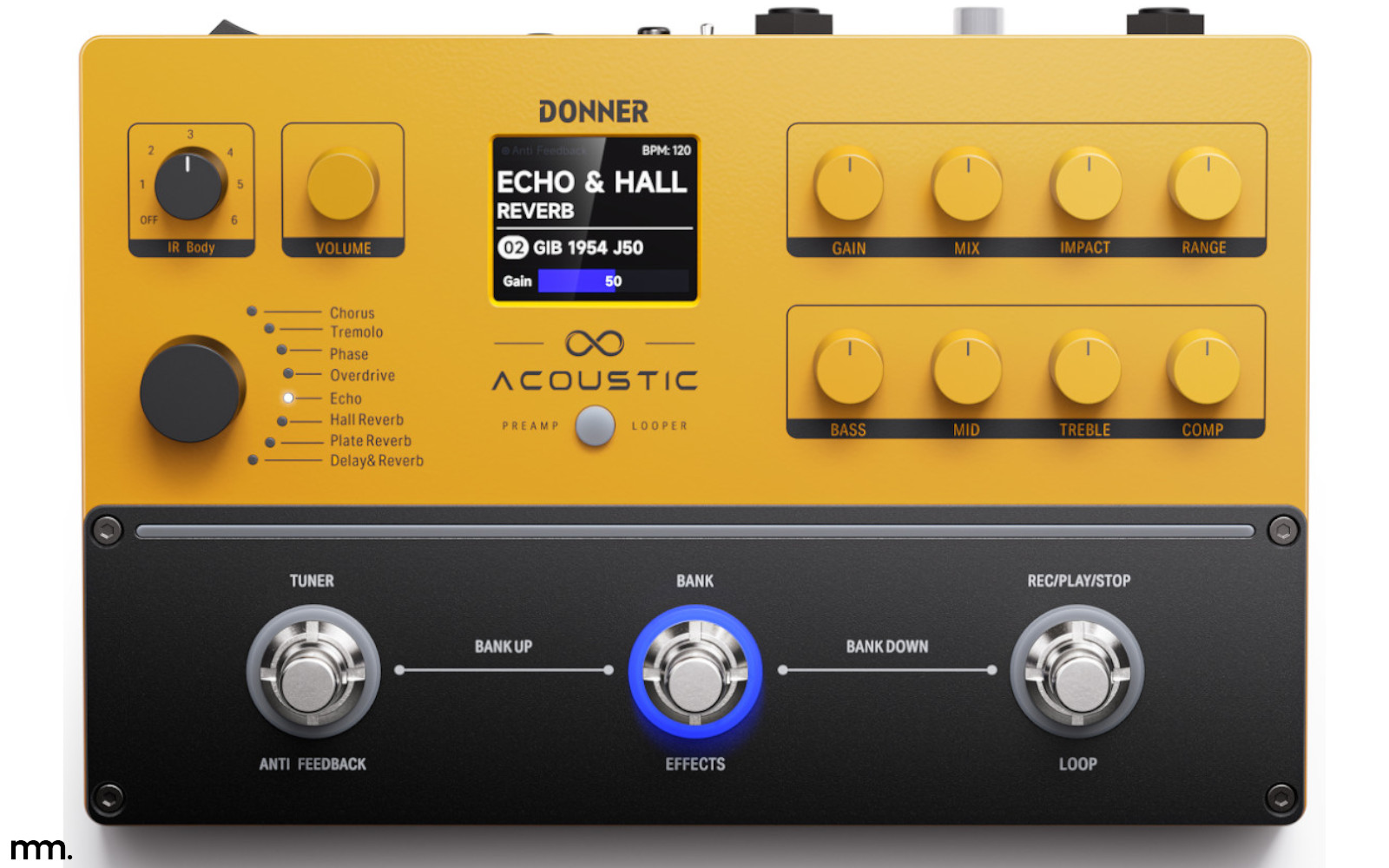
Donner APL Multi Effects: The Pedalboard Becomes One Box
For players who want breadth without assembling a traditional board one pedal at a time, the Donner APL Multi Effects Pedal brings multiple guitar effects together in a single compact unit.
And multi-effects make enormous sense in 2026. They're brilliant for discovering which effect families you actually use, tremendously convenient for practice and rehearsal, and far easier to transport than a board covered in individual pedals and patch cables. They're also an education.
Spend a month experimenting with compression, modulation, delay, reverb and drive in different orders and you'll understand signal chains far better than you would from simply reading about them.
Tone is learned with the ears.
Donner Arena 2000: Now Things Get Serious
Then there's the Donner Arena 2000 Guitar Multi-Effects Pedal. This is a different animal entirely.
Donner's current specification gives the Arena 2000 278 effects, 80 high-resolution amplifier models, 50 built-in cabinet IRs plus 50 slots for third-party impulse responses, 150 presets, movable effect blocks, a built-in expression pedal, 40 drum patterns and a 60-second looper with reverse, half-speed and double-speed functions. Processing runs at 24-bit/44.1kHz, while USB audio can record dry and processed signals simultaneously. There's MIDI input, computer editing software and Bluetooth-based mobile editing too.
That specification tells us something important about modern guitar rigs. A pedalboard no longer has to end at an amplifier.
With amp modelling and cabinet impulse responses, a processor like the Arena 2000 can form the centre of a complete direct rig. Guitar goes in; a finished amp-and-cab-style signal can head towards recording equipment, headphones or an appropriate live system. You can practise, record, build presets and take the same core sounds towards the stage without rebuilding the entire rig each time.
That's not simply "lots of effects". It's a guitar system.
And at this end of the Donner range, the company's accessibility philosophy becomes particularly interesting. Technology that once belonged almost exclusively to expensive professional processors has migrated dramatically down the market.
More guitarists get to experiment.
That can only be a good thing.
And Then Jack White Walked In
Of all the Donner pedals now at Musicmaker, one has a particularly delicious backstory.
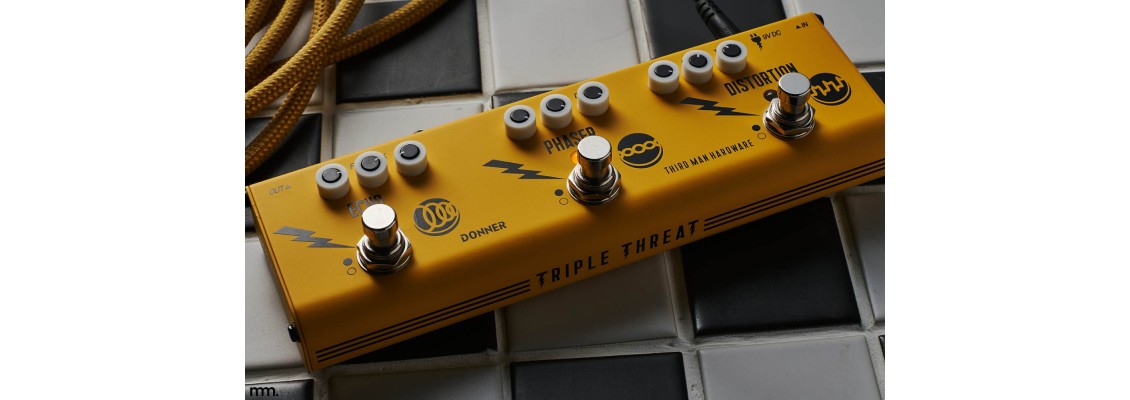
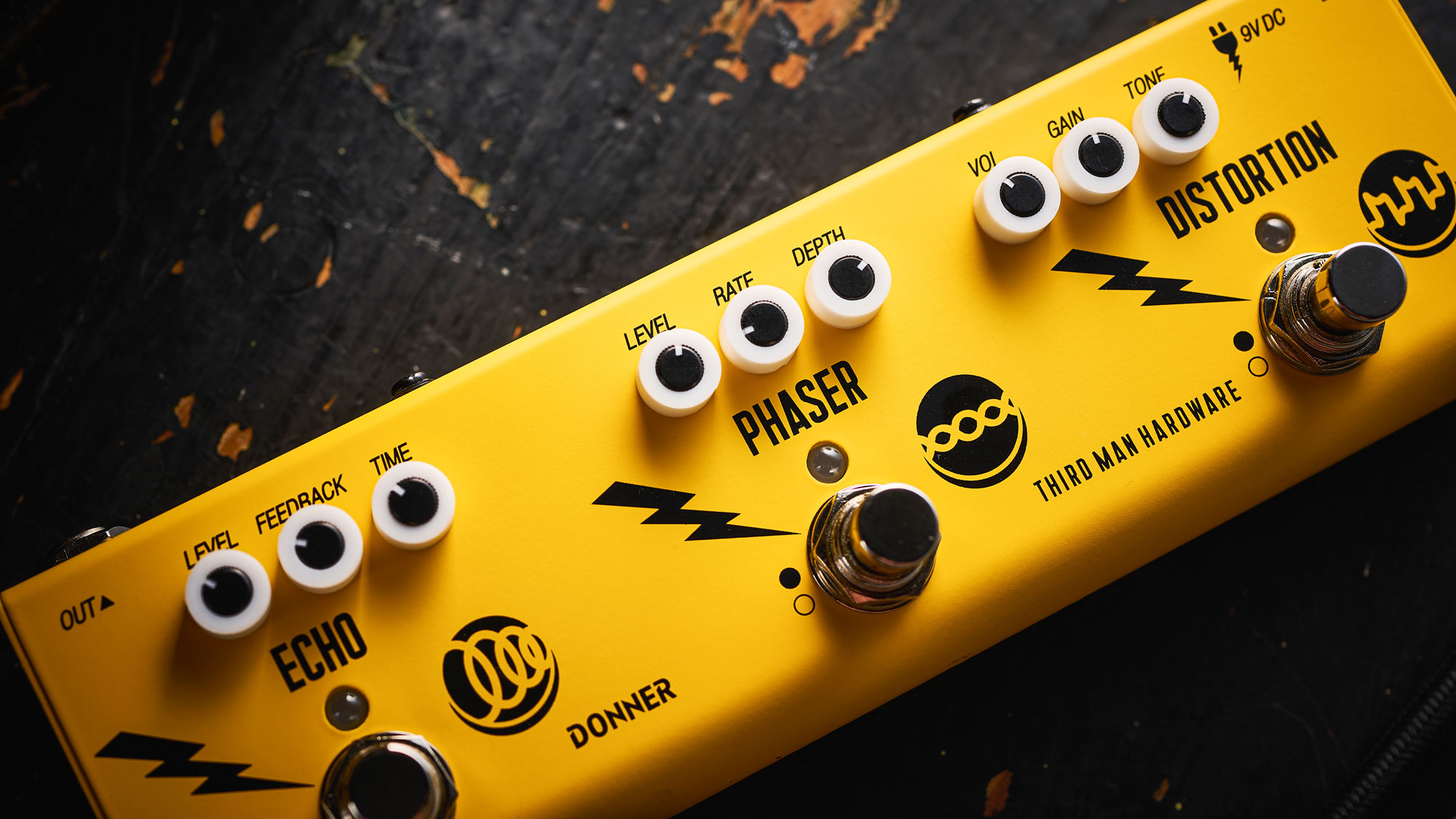
The Donner x Third Man Hardware Triple Threat 3-in-1 Analog Multi-Effects Pedal was developed with Jack White's Third Man Hardware, combining three analogue effects — Distortion, Phaser and Echo — inside one gloriously distinctive enclosure. Third Man says the high-gain distortion is followed by a phaser developed from Donner's Pearl Tremor circuit, while the echo traces its ancestry to Donner's original 2013 Yellow Fall. The circuits were then revised and tuned to White's specifications.
Each section gets its own controls and footswitch. Distortion offers Volume, Gain and Tone; Phaser provides Level, Rate and Depth; Echo gives Level, Feedback and Time. The whole thing runs with buffered bypass from 9V DC.
And conceptually, it's brilliant.
Jack White has spent an entire career demonstrating that guitar tone doesn't have to be polite. It can be crude, futuristic, ancient, abrasive, enormous, broken and beautiful — sometimes within the same song.
Distortion. Phaser. Echo.
Three effects. One box.
Plenty of trouble.
Building Your First Donner Pedalboard
This enormous arrival also gives us something we've wanted for ages at Musicmaker: the ability to help somebody build an entire affordable guitar pedalboard without immediately disappearing into boutique-pedal territory.
Start with the DT-1 Tuner. Add Lax Comp if you want greater dynamic control.
Choose Blues Drive or Dumbal Drive for your core overdrive. Introduce Giant Metal when civility is no longer required, or Stylish Fuzz when you would prefer civility to leave the building altogether.
From there, colour arrives.
Tutti Love Chorus adds width. Golden Tremolo adds pulse. Harmonic Square introduces pitch and octave textures. Yellow Fall creates echoes. Versa Yellow Fall II adds serious delay and reverb capability.
Finish with a looper and suddenly the pedalboard isn't merely producing sounds.
It's helping you write songs.
There is no universally correct signal chain, either. Tuner, compression, pitch, drive, modulation and delay/reverb is a sensible starting point, but some of the greatest guitar sounds ever recorded came from musicians doing supposedly inappropriate things with equipment.
Move the fuzz. Put the pitch shifter somewhere strange.
Run tremolo before distortion. See what breaks.
The pedalboard is a laboratory with footswitches.
Why Affordable Guitar Pedals Are Great
There is a tendency in guitar culture to confuse price with permission.
We don't particularly like that.
You shouldn't need an enormous budget to discover what a phaser does to a fuzz sound. A beginner shouldn't need to spend hundreds simply to learn that they adore delay. A teenager building a first pedalboard deserves the same freedom to experiment as somebody assembling a professional touring rig.
That's the genuinely exciting thing about this Donner shipment.
Yes, there are lots of pedals. Yes, they're ridiculously fun.
But more importantly, they make experimentation accessible.
The guitarist who walks into Musicmaker looking for their first overdrive might leave fascinated by compression. The songwriter who came in for a delay might discover looping. Someone who has only ever played through an amplifier might plug into the Arena 2000 and suddenly understand amp modelling, impulse responses and direct recording.
Gear should open doors.
Not guard them.
Eighteen Little Invitations to Make Some Noise
That's what a great effects pedal really is. An invitation.
Step on this and see what happens. Turn that knob further than seems sensible. Play the chord again.
Move the pedal somewhere else in the chain.
Add another repeat. More feedback. Less gain. More fuzz.
Definitely more fuzz.
The new Donner guitar pedal range at Musicmaker Ireland stretches from the humble tuner to sophisticated multi-effects processing, with overdrive, distortion, compression, chorus, tremolo, fuzz, pitch shifting, delay, reverb, looping and routing filling practically every space between.
Some will become permanent fixtures on pedalboards. Others will send players down entirely unexpected rabbit holes.
Both outcomes are excellent.
Because the great joy of guitar effects has never really been finding the perfect tone. It's discovering a sound you hadn't imagined until five seconds ago.
And right now, the Musicmaker pedal wall contains an absolutely unreasonable number of ways to find one.
Come and make something weird.
The Donner Pedals Now at Musicmaker
Donner Giant Metal Distortion Pedal
Donner ABY Box Line Selector Pedal
Donner Harmonic Square Pitch Shifter Octave Pedal
Donner Yellow Fall Delay Pedal
Donner Tutti Love Chorus Pedal
Donner Blues Drive Overdrive Pedal
Donner Lax Comp Compressor Pedal
Donner Analog White Tape Delay Guitar Pedal
Donner Dumbal Drive Overdrive Pedal
Donner APL Multi Effects Pedal
Donner Versa Yellow Fall II Delay & Reverb Pedal
Donner Arena 2000 Guitar Multi-Effects Pedal
Donner Circle Looper and Drum Machine Pedal
Donner x Third Man Hardware Triple Threat 3-in-1 Analog Multi-Effects Guitar Pedal
From the Musicmaker Workshop
Since the early 1980s, Musicmaker has been a place for guitarists to experiment. Pedals are one of the great playgrounds of electric guitar: little boxes that can change a familiar instrument into something completely unexpected. That's why we're delighted to finally have this huge Donner effects range in Dublin. Plug in, turn some knobs, make a noise and follow wherever it leads.