


Your First Home Recording Setup: Start Making Music
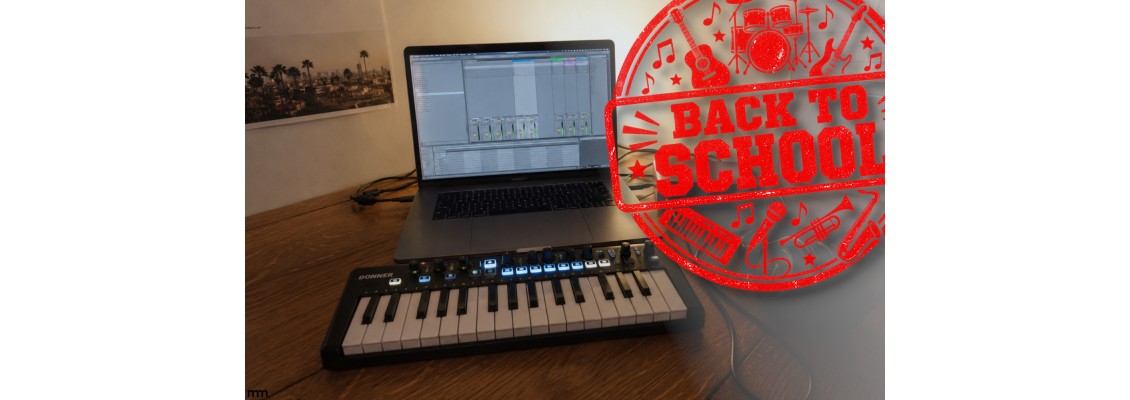
Back to School Doesn't Have to Mean Back to Boring
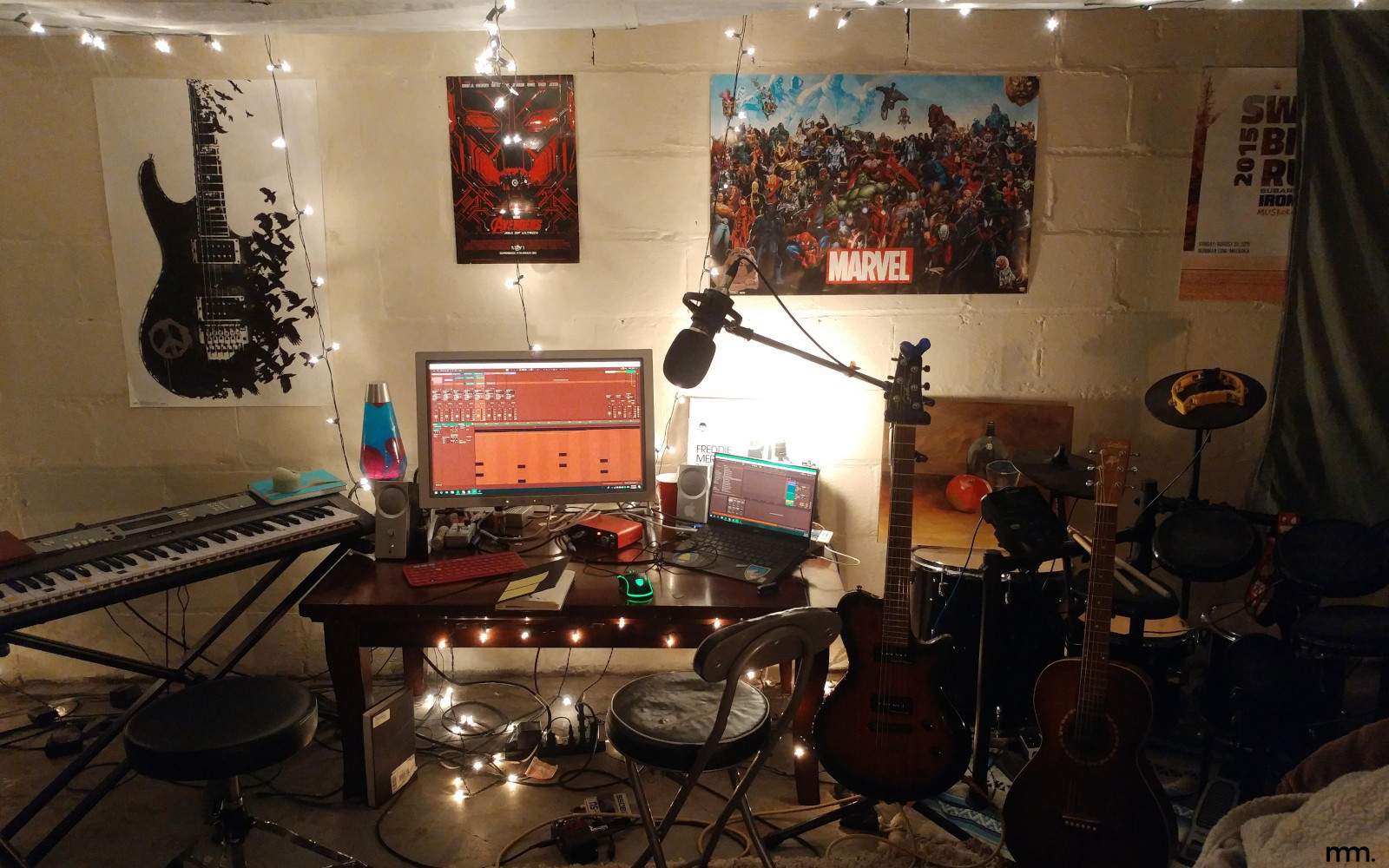
There was a time when recording your own music involved a room full of equipment, a frightening amount of money and, ideally, somebody who knew what all the enormous knobs did.
Things have improved.
Today, a student can come home from school or college, open a laptop, connect a small audio interface or MIDI controller, put on a pair of headphones and start making music almost immediately. A bedroom can become a songwriting room, production space, practice studio and slightly chaotic creative laboratory without requiring a mixing console the size of a family car.
And that's what makes home recording for beginners so exciting right now.
You do not need Abbey Road in your bedroom.
You don't need twenty microphones, racks of preamps, expensive studio monitors and enough acoustic treatment to make the room look like a geometric puzzle. You don't even need to know exactly what kind of music you're going to make yet.
You need somewhere to begin.
For this Back to School home recording guide, we're keeping things deliberately simple: Donner Livejack audio interfaces, Donner MIDI controllers, the Donner DEP-1S digital piano and a good pair of headphones.
Four ingredients. Thousands of possibilities.
Let's make something.
First Things First: What Is a Home Studio?
Forget the photographs of enormous recording studios for a minute.
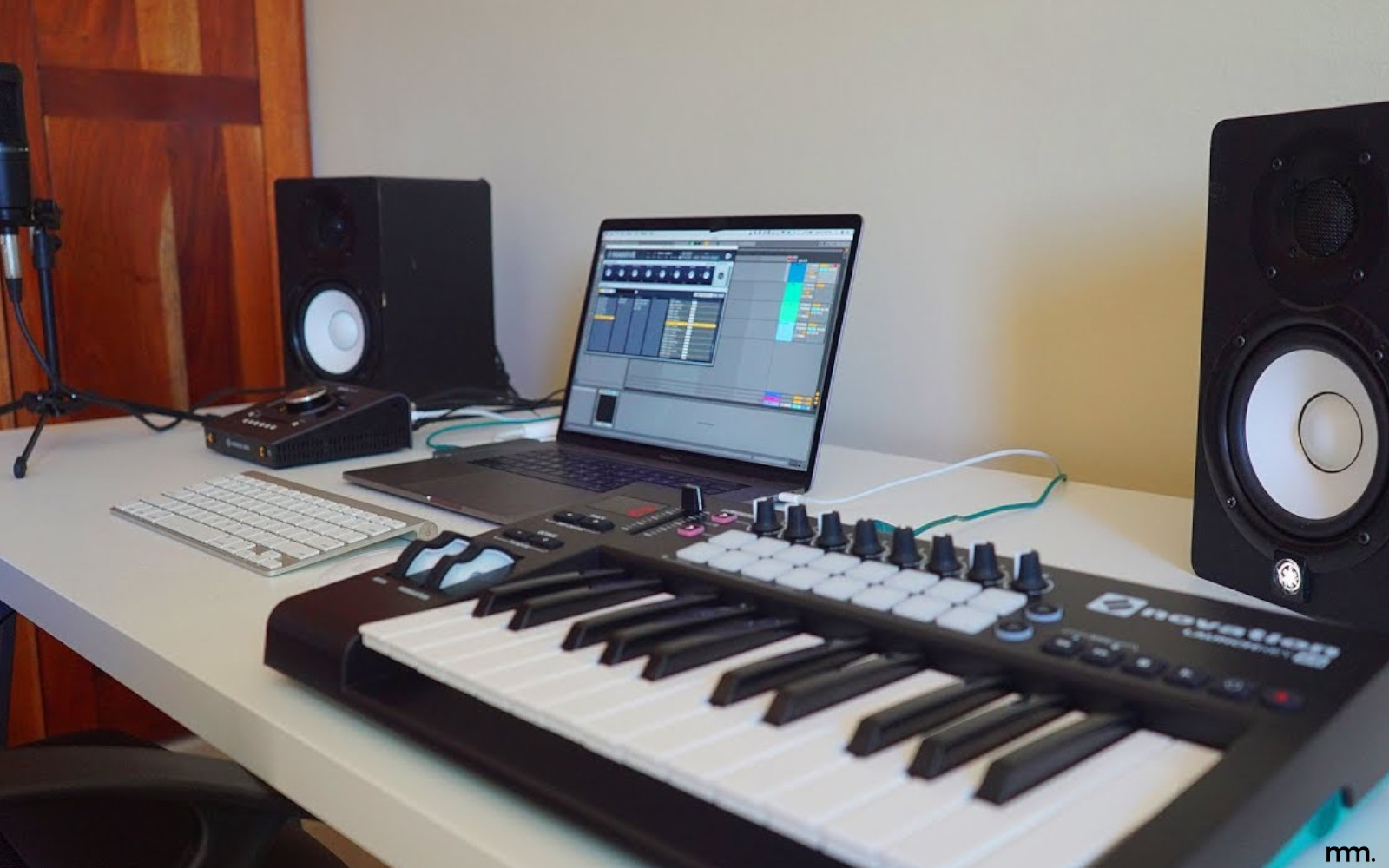
At its most basic, a home recording studio is simply a collection of equipment that allows you to get musical ideas into a computer, hear them properly and work with them afterwards.
Your laptop or desktop computer runs the recording software — usually called a DAW, or Digital Audio Workstation. That's where recordings, MIDI performances, virtual instruments, edits, effects and eventually complete songs can live.
Everything else is really about getting information into and out of that computer.
Want to record a guitar, microphone or other audio source? That's where an audio interface comes in.
Want to play software synths, drum machines, sampled instruments or virtual pianos? That's where a MIDI controller becomes enormously useful.
Already learning piano? A digital instrument such as the Donner DEP-1S can bridge the gap between piano practice and computer-based music making through USB-MIDI and Bluetooth MIDI.
And once all those sounds are inside the computer?
You need to hear them.
Hello, headphones.
That's basically the studio.
The rest can come later.
The Audio Interface: Your Computer's Front Door
The phrase audio interface makes a very simple object sound unnecessarily intimidating.
Think of it as the front door between the physical musical world and your computer.
Your computer already has audio hardware, of course, but a dedicated recording interface gives musicians the connections and controls needed for proper recording. It allows instruments and other audio equipment to become signals your recording software can work with, while providing outputs for monitoring what you're doing.
For a beginner producer, songwriter or student musician, that little box can be the moment home recording suddenly makes sense.
Plug in. Arm a track. Press record. Make noise.
Congratulations.
You're recording music.
Donner Livejack Lite: Start Here
The Donner Livejack Lite is exactly the kind of product that makes sense in a first home studio because the whole point is accessibility.
You don't need to start your recording journey by buying equipment designed to capture a twelve-piece band simultaneously. If you're working by yourself, learning the basics of recording, laying down ideas or gradually building songs one part at a time, a compact interface gives you the important functionality without surrounding you with connections you don't yet need.
And working one part at a time is how an enormous amount of bedroom music gets made.
Record the first idea. Add another track. Try something over it. Delete the terrible thing you just tried.
Record something better. Add another layer.
Suddenly, the little riff that existed only in your head after school has drums, bass, keys and another guitar surrounding it.
That is the real power of a beginner audio interface. It isn't merely converting audio into digital information.
It's giving ideas somewhere to go.
Donner Livejack 2x2: Give Yourself More Room
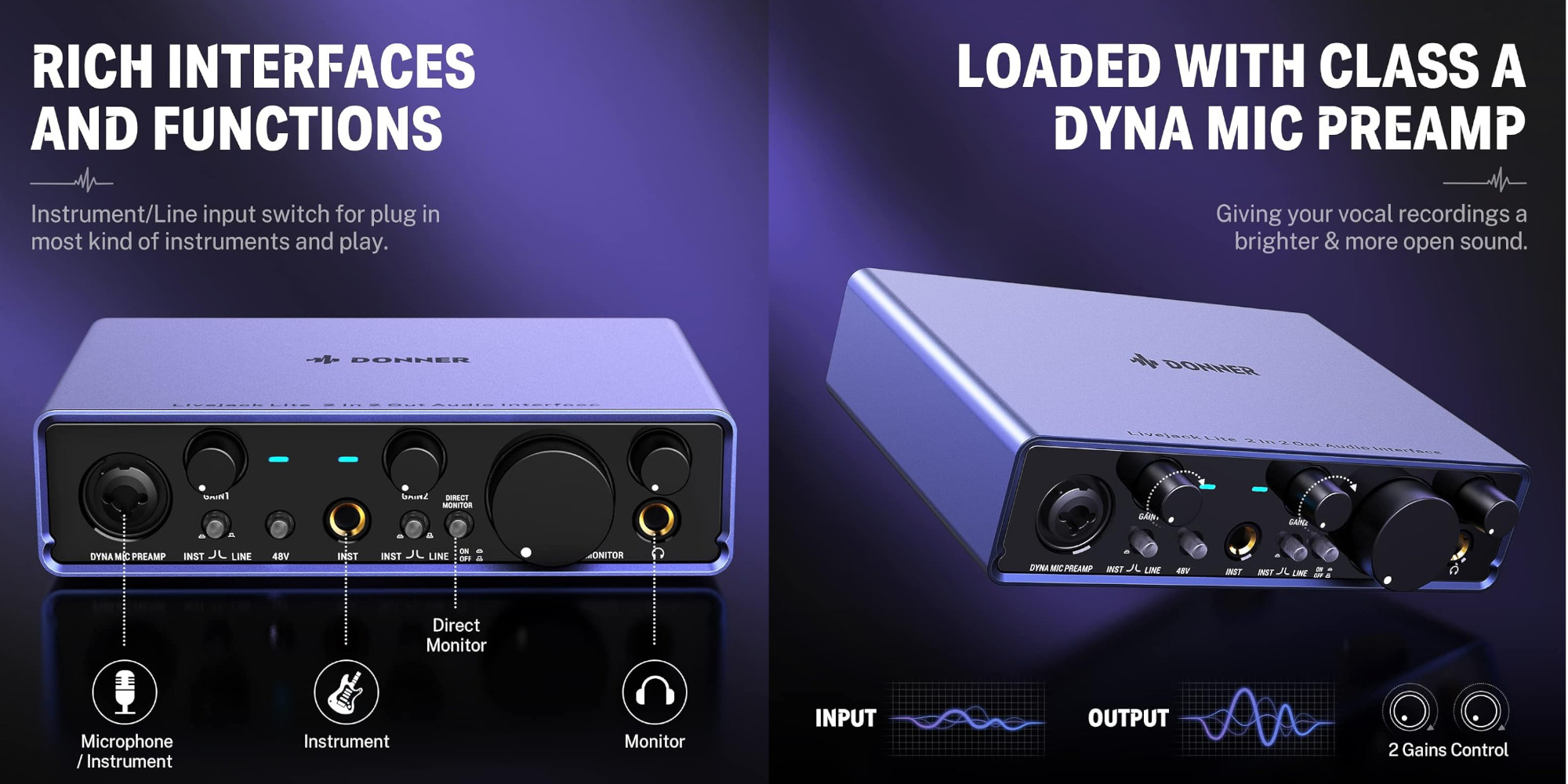
Then we have the Donner Livejack 2x2, which is the natural step for somebody who wants a little more flexibility in their first recording setup.
The clue is in 2x2: this is the sort of format that makes sense when you want a compact interface capable of handling a small but properly useful recording setup, particularly when two sources need to be accommodated rather than constantly swapping one connection around.
That opens up lovely possibilities for a student studio.
Singer and instrument. Stereo keyboard. Two sources recorded together. Or simply a setup where more of your equipment can remain connected and ready when inspiration arrives.
And that last point is more important than it sounds.
Creative momentum is fragile.
If recording an idea requires finding an adaptor, moving three things off the desk, crawling underneath it, discovering the cable you need is somewhere else and then updating software for twenty minutes, there is a very real chance the original idea will have wandered off by the time you're ready.
A good student home studio setup should reduce that friction.
Laptop open. Interface connected. Headphones on.
Go.
But What If You Don't Play Guitar?
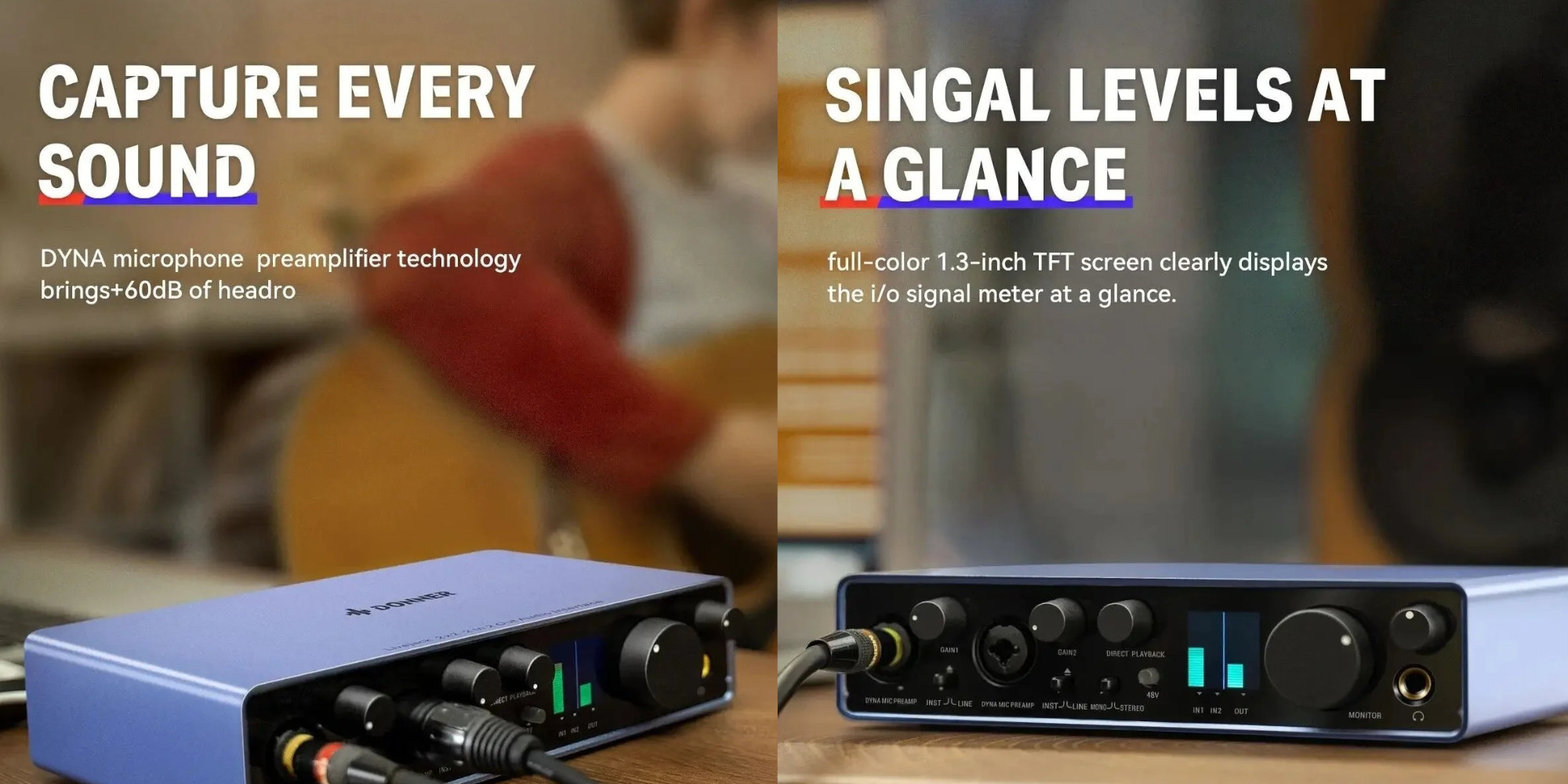
Excellent. Welcome to MIDI.
This is where home recording gets absolutely enormous.
MIDI isn't audio. It doesn't record the sound of a piano key, synth or drum being played. Instead, MIDI can record performance information: which note you played, when you played it, how long you held it and, with velocity-sensitive controllers, how hard you played it.
That distinction is ridiculously powerful.
Record a MIDI part using a piano sound and you can later make it a synthesiser. Or strings. Or bass.
Or something from space that sounds like an industrial freezer developing emotions.
The performance remains editable.
Change notes. Move them. Lengthen them. Alter velocity. Change tempo. Replace the instrument entirely.
For young musicians getting interested in beat making, electronic music, songwriting, film music or home production, MIDI is one of the biggest creative playgrounds available.
And Donner has given us some extremely accessible ways in.
Donner N-25: Small Keyboard, Huge World
The Donner N-25 25-Key MIDI Keyboard Controller is almost the perfect explanation of why you don't need a gigantic studio to begin producing music.
It weighs only around 450g and measures roughly 13 x 4 x 1.3 inches, yet gives you 25 velocity-sensitive mini keys, a joystick for expressive control, octave, transpose and sustain functions, programmable controls with four memory banks, plus USB-C connectivity and MIDI output.
Twenty-five keys clearly aren't intended to replace a full piano.
That's not the job.
The N-25 is about getting musical information into software quickly. Bass lines, synth melodies, chord ideas, drum parts and little musical fragments can all be played rather than laboriously drawn onto a screen with a mouse.
And because it's tiny, it can live beside a laptop without consuming the entire desk.
For a student bedroom studio, that is a serious advantage.
Schoolwork over. N-25 out.
Homework becomes beats. We cannot officially endorse that sequence.
But we understand.
Donner N-32: A Little More Room for the Fingers
The Donner N-32 stretches the compact MIDI concept to 32 velocity-sensitive mini keys, giving melodies and chord voicings a little more breathing room while remaining extremely portable.
It adds useful creative tools including chord and sequencer functions, octave control, pitch control and sustain-pedal connectivity, alongside USB and 3.5mm MIDI output. Donner lists compatibility with major DAW environments including Ableton Live, Cubase and Logic.
This is where the difference between a musical keyboard and a MIDI controller becomes important.
The N-32 doesn't need to contain hundreds of impressive built-in instrument sounds because your computer can provide those.
The controller is the hands. The software is the instrument.
Load a virtual synth and the N-32 controls a synth. Load sampled strings and now you've got strings. Load a drum instrument and the keys can trigger drums. Load an enormous cinematic sample library and suddenly your bedroom contains an orchestra that absolutely does not fit in there physically.
MIDI is wonderfully unreasonable.
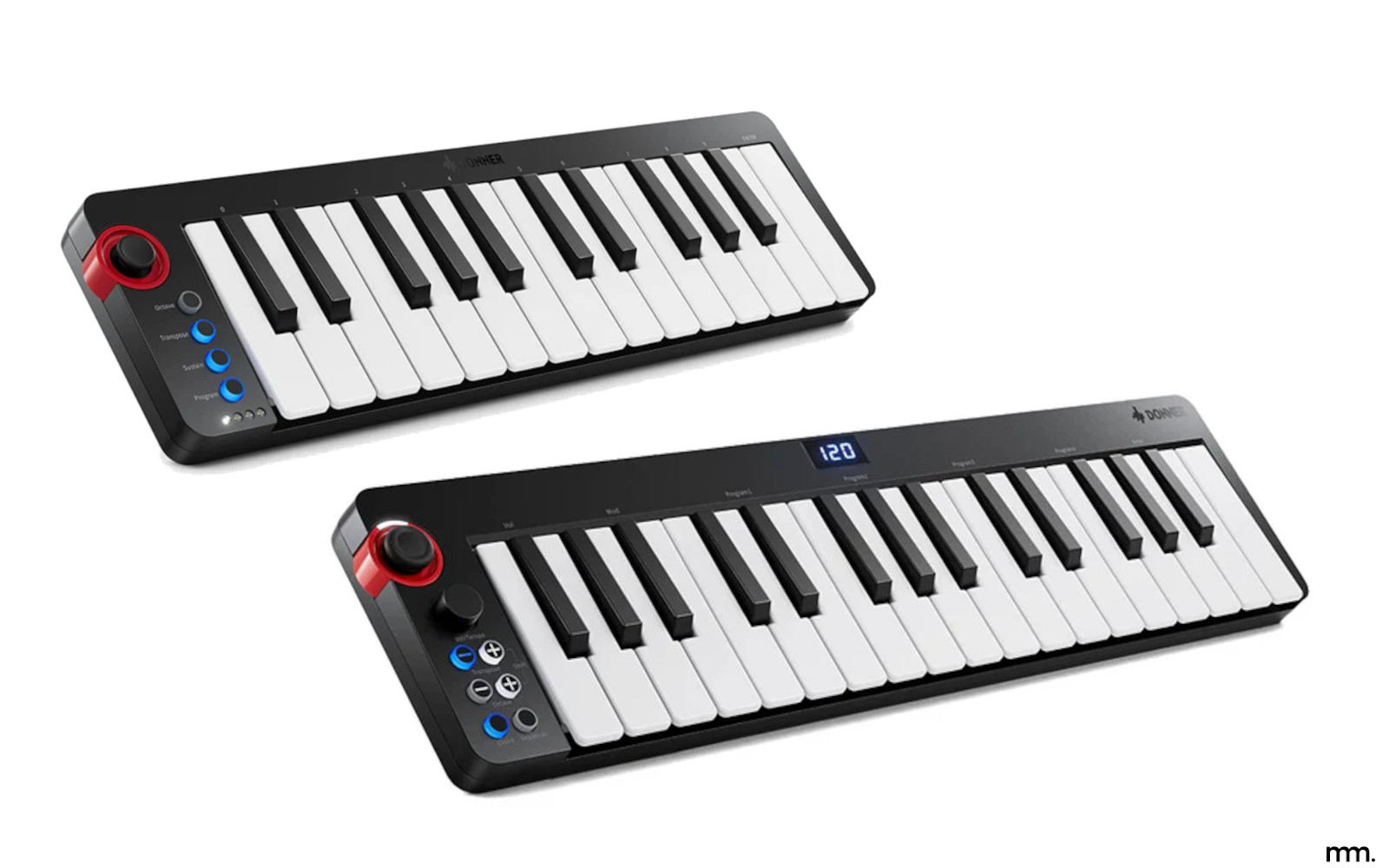
Check out the Donner N-25 and N-32 in Musicmaker today!
Donner STARRYPAD: For the Finger Drummers
Not everybody wants to play their beats from piano keys. Some people want pads.
The Donner STARRYPAD MIDI Pad Controller is built around that more tactile approach to rhythm and production, giving beat makers and producers a physical surface for triggering drums, samples and other software-controlled sounds.
And there is something wonderfully immediate about finger drumming.
Kick. Snare. Hi-hat. Sample.
Hit the pads and the rhythm becomes physical rather than something assembled entirely with a mouse.
For students interested in hip-hop production, electronic music, beat making and sampling, a pad controller can make the whole process feel considerably more like playing an instrument.
Because that's exactly what it is. Technology doesn't remove musicianship.
It just gives musicians new things to hit.
Donner DMK-25 Pro: Now We're Producing
Then we arrive at the Donner DMK-25 Pro, where the compact controller begins to look much more like a miniature production command centre.
You get 25 keys, eight pads, four knobs, four sliders and an OLED display, alongside USB-C and 3.5mm MIDI output. The whole controller measures only around 13.37 x 7.36 x 1.42 inches, so despite all that control it remains very friendly to small desks and portable setups.
This is the controller for the student who's beginning to realise that making music involves more than simply entering notes.
Those knobs can become parameters. The sliders can control levels or software functions. The pads can trigger percussion or samples. The keyboard handles melodic and harmonic parts.
Suddenly you're interacting with the DAW rather than simply staring at it.
Donner also bundles the DMK-25 Pro with access to Cubase LE, WaveLab LE and Cubasis LE, giving a new producer a particularly useful route into actual music-production software.
And this is where the home studio becomes dangerous. Because once somebody understands that a laptop and a little controller can become a synthesiser, drum machine, sampler, recording system and arrangement tool...
Good luck getting them to come downstairs.
But I'm Learning Piano — Do I Need Another Keyboard?
Not necessarily.
And this is why the Donner DEP-1S deserves a place in this article. We've already talked about it as an affordable beginner digital piano, but the DEP-1S has another life hiding behind the piano lessons.
It has USB-MIDI. And Bluetooth MIDI.
Which means the piano you're using to practise scales and learn repertoire can also communicate with music software.
Which is brilliant.
Donner DEP-1S: From Piano Lesson to Home Studio
At its heart, the Donner DEP-1S is an approachable 88-key digital piano built for developing players. Donner specifies 88 semi-weighted, velocity-sensitive keys, with five adjustable touch levels, alongside 128 voices, 100 rhythms, 88 demo songs and 64-note polyphony. A pair of 15W speakers provides onboard amplification.
For the piano student, that gives you a full keyboard range and the ability to work on touch, timing, chords, scales and repertoire.
Then you connect it to the computer.
Through USB-MIDI, the DEP-1S can become an 88-key controller for compatible music software. Bluetooth MIDI provides another route into compatible apps and production workflows, while Bluetooth audio can be useful for playing audio through the piano itself. Suddenly, the same instrument used for Tuesday's piano lesson can control a software grand piano, synthesiser, organ, strings or any number of virtual instruments.
That is an enormous creative bridge for young musicians.
Learning piano doesn't have to exist in one box marked Piano Lessons, while music production lives somewhere completely separate marked Computer Stuff.
They're connected. Theory becomes songwriting. Chords become arrangements. Keyboard technique becomes synth playing. The student begins to understand that the things they're learning aren't exercises that exist only for next week's lesson.
They're tools.
And tools are much more interesting when you discover what you can build with them.
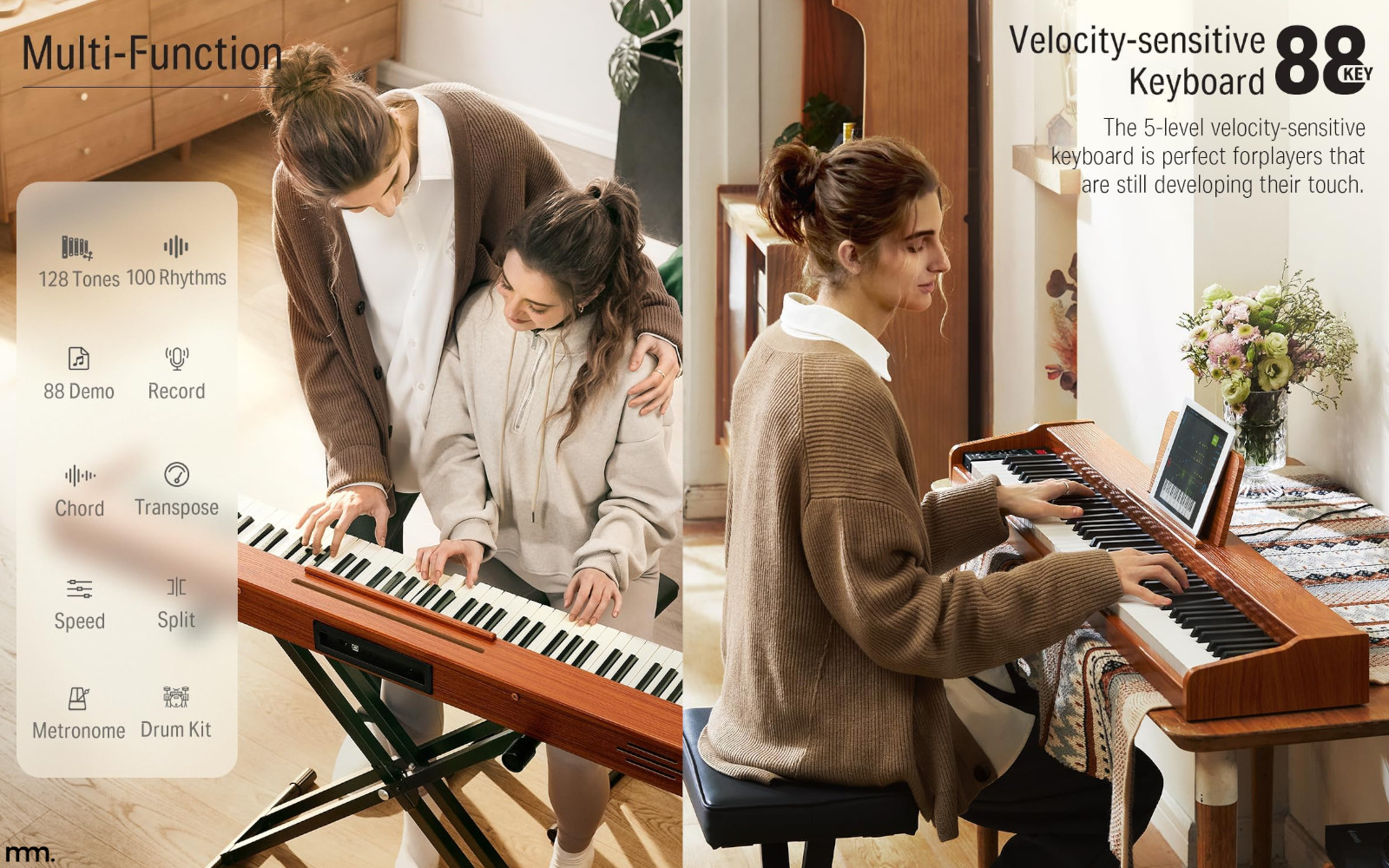
MIDI Controller or DEP-1S?
This is a useful distinction for parents and new producers.
If the primary goal is music production, and desk space or portability matters, a compact MIDI controller such as the N-25, N-32 or DMK-25 Pro makes enormous sense.
They're designed to sit beside a computer and control software.
If you're primarily learning piano and want music production to be an additional possibility, the DEP-1S is a very different proposition.
You get all 88 keys and a standalone digital instrument with its own sounds and speakers, but you also retain the ability to use those keys to control compatible software through MIDI.
One isn't universally better. They're solving different problems.
And understanding that before buying gear can save an awful lot of money.
Headphones: Your First Studio Doesn't Need Speakers
One of the easiest ways to keep a first home recording setup affordable is to start with a good pair of headphones rather than immediately worrying about studio monitors. They take up almost no space, allow students to record and produce without disturbing the rest of the house, and make late-night experimentation considerably more socially acceptable. At Musicmaker, we've got options covering the journey from first recordings to serious monitoring: the affordable Stagg SHP-5000H is a straightforward starting point, while the Donner M100 Studio Monitor Headphones step things up with large 50mm drivers, 32-ohm impedance and a specified 20Hz–20kHz frequency response. The Audio-Technica ATH-M20x offers an accessible route into dedicated professional monitoring, while the hugely popular ATH-M50x, with its 45mm drivers, closed-back construction and detachable cables, is a serious long-term choice for recording, production and mixing. Electronic drummers can look towards the purpose-built Roland VMH-D1, while the Roland RH-300 takes us into premium closed-back monitoring for musicians and producers who want a more revealing listening tool. You certainly don't need the most expensive pair to start making music; you need headphones that let you hear clearly, work privately and begin learning the most important piece of studio equipment you'll ever own — your ears.
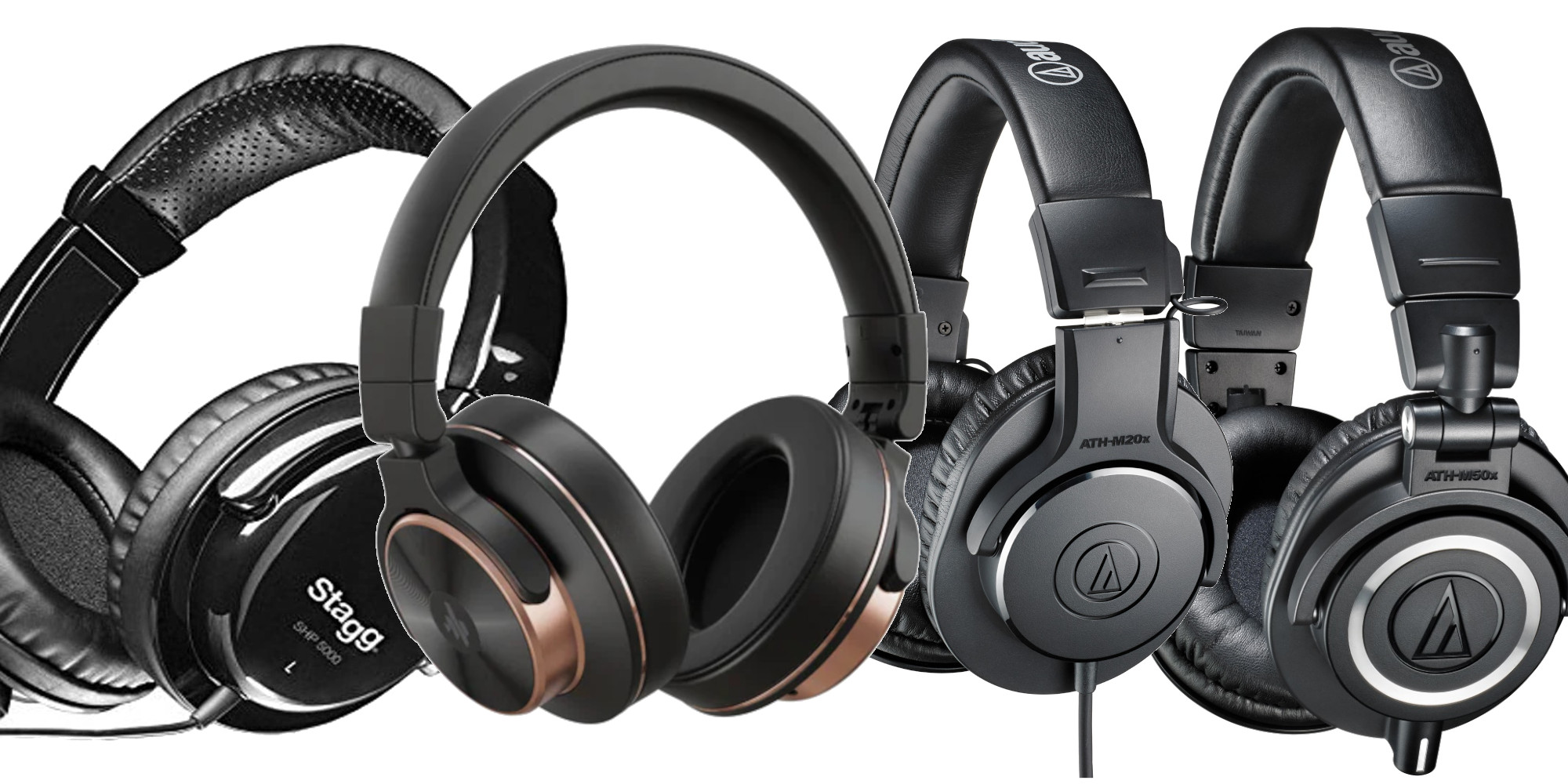
Your First Recording Will Probably Be Terrible
Excellent. Make it anyway.
This is the recording equivalent of our quiet-practice philosophy.
Beginners sometimes assume they should wait until they're good enough before recording themselves.
Absolutely not. Record now.
Recording teaches you things ordinary practice doesn't.
Timing suddenly becomes painfully visible. That chord you thought was clean has a buzz in it.
Your keyboard part is rushing. The second verse is mysteriously louder.
You have discovered that singing and maintaining a consistent distance from a microphone are two different skills.
Wonderful.
These aren't failures. They're information.
Record something. Listen. Change something.
Record it again.
That cycle is one of the fastest ways to understand music production because you're no longer thinking about sound theoretically.
You're hearing the consequences of decisions.
Back to School, Back to Making Things
And this is where the Back to School angle becomes much more interesting than another list of stationery.
A laptop isn't only for essays. A keyboard isn't only for scales. A pair of headphones isn't only for Spotify.
A student already surrounded by technology can use remarkably affordable equipment to start writing, arranging, recording and producing music at home.
The Donner N-25 can become a synth. The N-32 can become strings.
The STARRYPAD can become a drum machine. The DMK-25 Pro can become a compact production surface.
The DEP-1S can go from piano lesson to 88-key MIDI controller.
The Livejack can bring external audio into the computer.
And headphones turn the whole thing into a studio that can operate while somebody in the next room is trying to watch television.
None of these things tells you what music to make.
That's the best part.
Your Bedroom Is Good Enough
This might be the most important part of the whole article.
You don't need to wait for the perfect room. You don't need to understand every feature in your DAW. You don't need expensive equipment. You don't need to know what mastering is yet.
And you definitely don't need to spend three weeks watching videos about what equipment you should buy instead of making anything with the equipment you already own.
Start.
Put the MIDI controller beside the laptop. Connect the DEP-1S. Plug in the Livejack when you have something real to record.
Put the headphones on.
Create eight bars. Make them sixteen. Add something. Remove something. Save it.
Come back tomorrow.
The first home studio isn't really a room full of equipment.
It's the moment somebody realises they can make the music themselves.
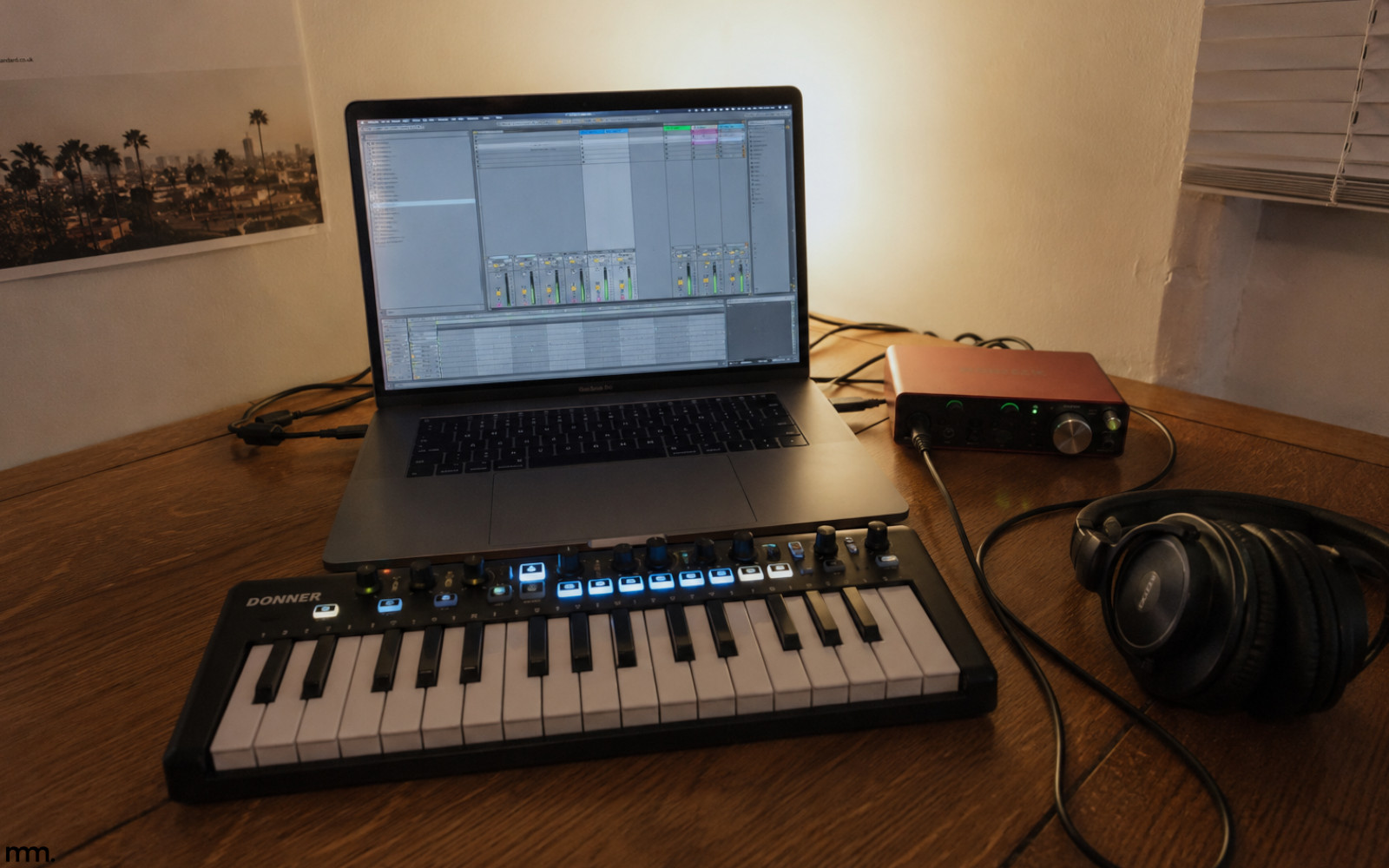
Your First Home Studio at Musicmaker
At Musicmaker Dublin, we've watched the barriers around recording fall dramatically over the years. Equipment that once belonged exclusively in dedicated studios has become smaller, more affordable and considerably easier for young musicians to explore at home.
That's why we love gear like this.
The Donner Livejack Lite and Livejack 2x2 audio interfaces give new recording musicians a practical way into computer-based audio. Donner's N-25, N-32, STARRYPAD and DMK-25 Pro MIDI controllers open up virtual instruments, beats and electronic production without demanding enormous amounts of desk space. The Donner DEP-1S connects traditional piano learning with modern music-making through its MIDI capabilities, while our selection of studio headphones from Stagg, Donner, Audio-Technica and Roland means the whole operation can happen without taking over the house.
That's a home studio.
Not a photograph on the internet. Not somebody else's equipment list.
Yours.
Build it slowly. Learn what every piece does.
And above all, actually make something with it.
Start Making Music — With Free Shipping
Building your first home studio should be about deciding what you want to create, not working out how you're going to get the gear home. Musicmaker offers free shipping across Ireland on qualifying orders, so your new Donner Livejack audio interface, MIDI controller, DEP-1S digital piano or studio headphones can make the journey from our place to your creative corner without adding another expense to the setup. Start small, add the pieces that actually help you make music and let your studio grow alongside your ideas. The bedroom might still look like a bedroom when you're finished, but once the laptop opens and the headphones go on, that's a studio now.
From the Musicmaker Workshop
When Musicmaker first opened its doors in Dublin in the early 1980s, recording music was a very different proposition. Today, a student can carry technology in a backpack that opens creative possibilities earlier generations could only have dreamed about, but the important part hasn't changed: somebody still has to have the idea.
That's why we think a first home studio should be exciting rather than intimidating. Start with the equipment that helps you do something you couldn't do yesterday. Record your first track. Play your first virtual instrument. Build your first beat. Discover that the piano you're learning can control an entirely different world of sounds. Make something dreadful, learn from it and make something slightly less dreadful tomorrow.
You don't need Abbey Road in your bedroom.
You need an idea and somewhere to put it.
The rest can grow with you.