





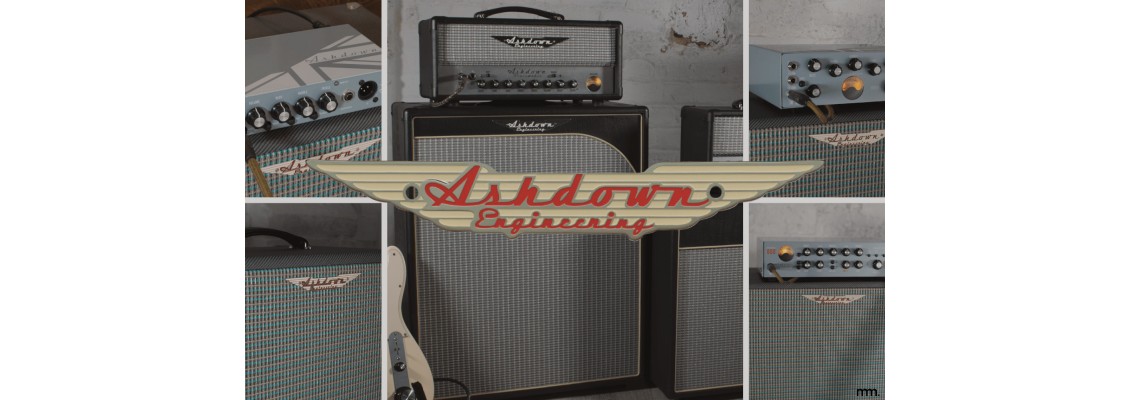
Listen to the Thunder: Ashdown UK Bass Amps
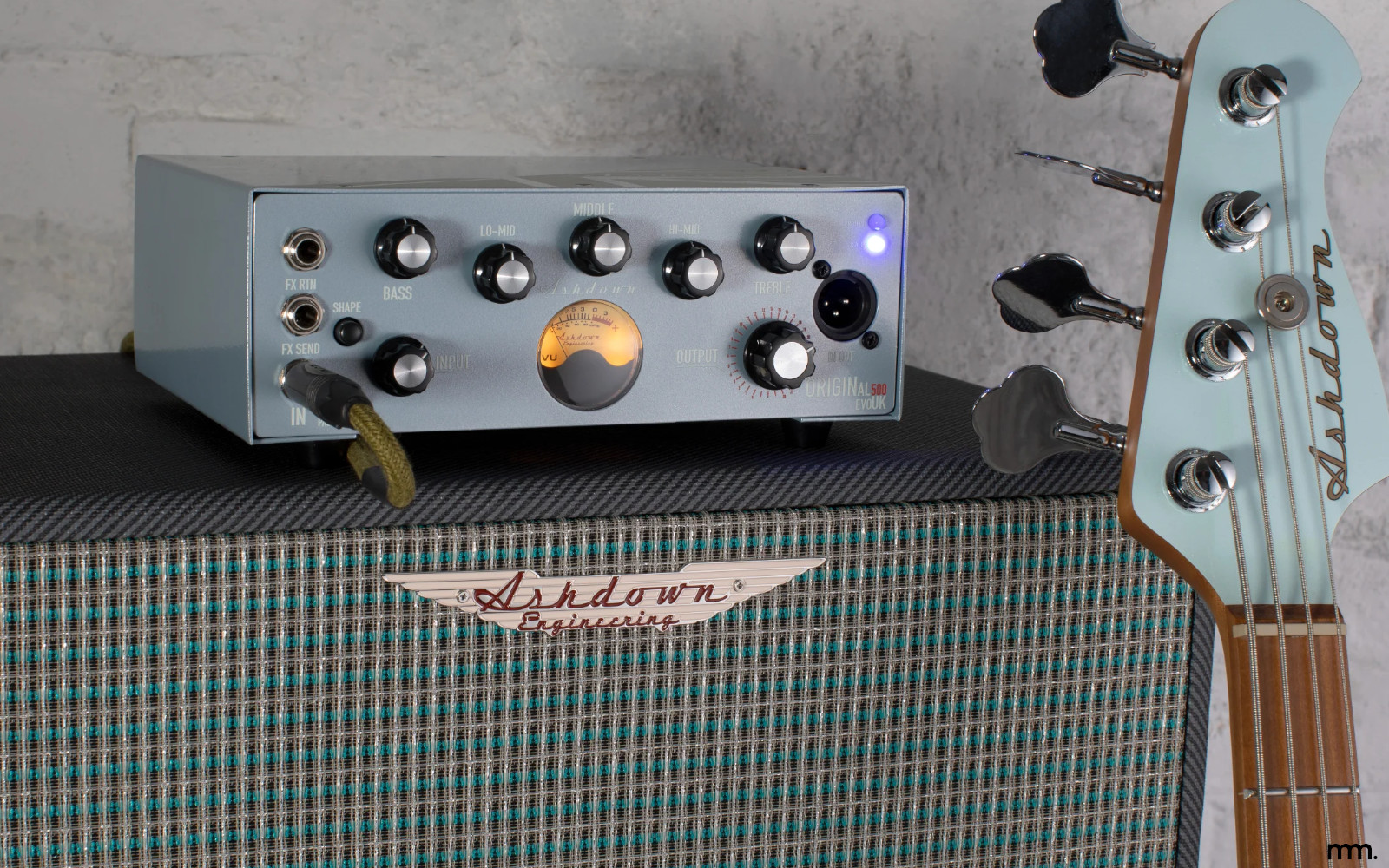
We've all been there.
The guitarist has arrived with enough pedals to operate a regional airport. The drummer has spent twenty minutes adjusting a snare wire by approximately the width of a human emotion. Somebody is still looking for a functioning XLR cable. Then the bass player plugs in, strikes one properly committed low E and somewhere behind the rehearsal-room wall a previously secure object moves three millimetres to the left.
There it is. The foundation. The pressure.
The glorious physical certainty of a bass amplifier doing what a bass amplifier is supposed to do.
And right now, sitting in Musicmaker, we have some particularly tasty machinery for producing exactly that sensation: the UK-built Ashdown OBM and SBM bass amplifiers, including the wonderfully compact UK-OBM-300 head, the UK-OBM-C112-300 1x12 combo, and two increasingly serious members of the Studio Bass Magnifier family, the UK-SBM-112-200 and UK-SBM-115-500.
These aren't amplifiers designed around the idea that bassists should apologise for taking up space. Quite the opposite. They are about giving the instrument authority, definition and useful tonal control while acknowledging something bass players have been telling manufacturers for years:
We would quite like our backs to survive the gig. Welcome to modern Ashdown.
Turn up.
Listen to the thunder.
Ashdown: Bass Amplification With History in It (Innit?)
There are amplifier companies that happen to make bass amps, and there are companies whose identity is inseparable from the instrument.
Ashdown belongs firmly in the second camp.
The company's distinctive visual language and bass-first engineering have made Ashdown amplifiers a familiar sight on stages for decades, but the interesting thing about these new UK-OBM and UK-SBM amplifiers is how thoroughly they embrace the realities of modern bass playing.
Players still need weight in the sound, of course. Bass without authority is an upsetting concept. But today's working bassist may also need a balanced DI for the PA or recording interface, an effects loop for an increasingly sophisticated pedalboard, controllable EQ, quiet practice facilities, manageable physical weight and enough clean power to preserve the attack and personality of the instrument when the rest of the band begins behaving irresponsibly.
Ashdown's new UK ranges approach that problem from slightly different directions.
OBM is the beautifully direct one.
SBM brings more colour to the party.
And both are built in the UK.
That last point matters. Not because geography magically makes electrons sound more British, but because these amplifiers sit within Ashdown's UK-made range and represent a very deliberate combination of compact modern engineering and the company's established approach to bass amplification. Ashdown describes the OBM family as drawing on its OriginAL EVO platform, with the emphasis on lightweight power, straightforward tone shaping and dependable gigging functionality.
The result is bass amplification that feels reassuringly focused.
No twelve-inch colour touchscreen.No menu called GLOBAL DEEP PARAMETER 7B.
Knobs. Sockets. Power.
Excellent.
UK-OBM: Small Box, Deep Consequences
The first thing that makes the Ashdown UK-OBM-300 amusing is its physical size.
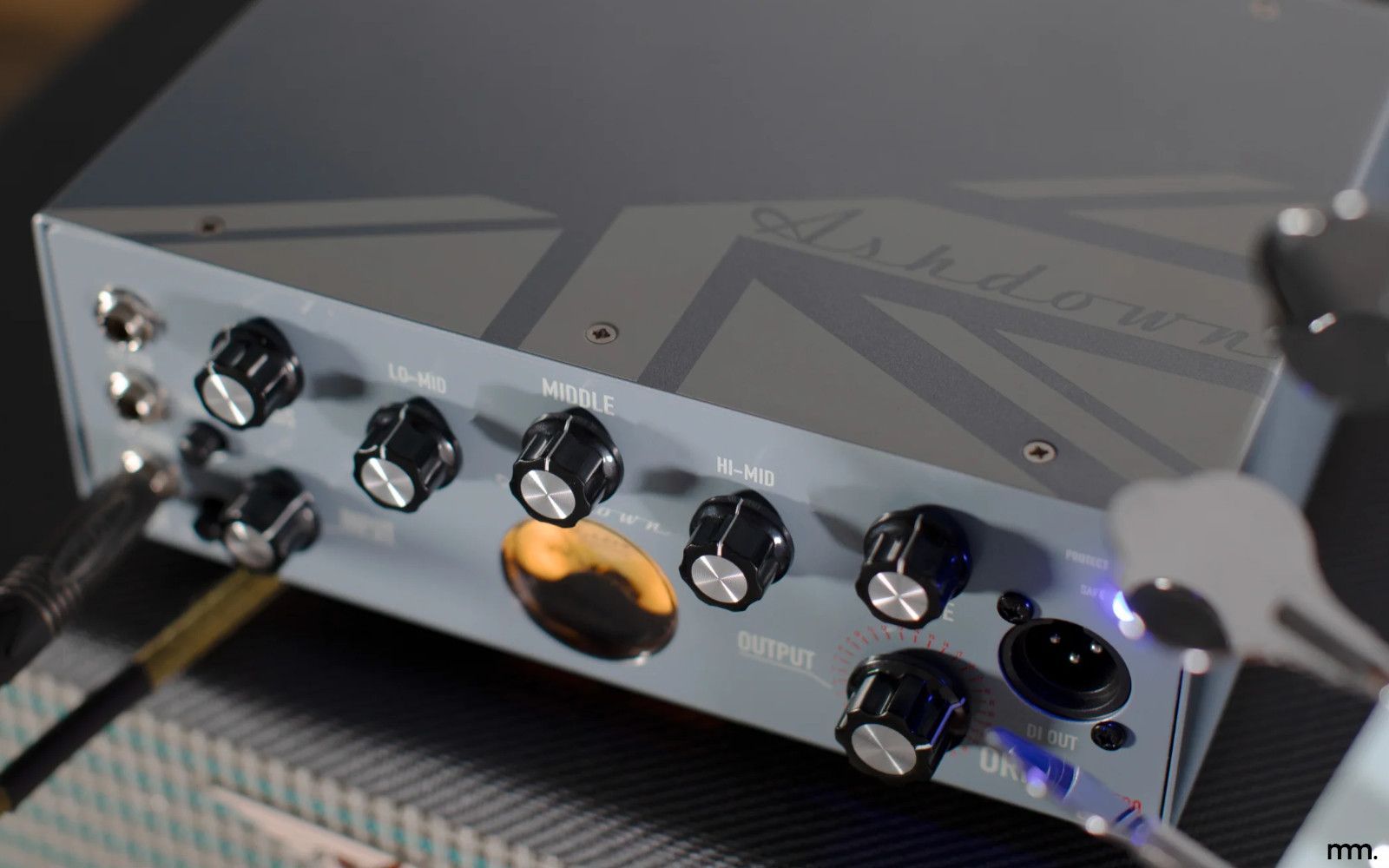
This is a 300-watt bass head measuring only 220mm wide, 209mm deep and 89mm high, with a net weight of 1.8kg.
One point eight kilograms.
Bassists of a certain vintage may need a moment here.
There was a time when moving serious bass amplification involved castors, questionable lifting technique and the possibility that somebody named Dave would have to help you get the thing down a narrow staircase at 1:30 in the morning.
The UK-OBM-300 can deliver 300 watts into a minimum 4-ohm load while remaining small enough that transporting your amplifier is no longer the dominant logistical event of the evening. It also supports 115–230V operation, making the compact format particularly appealing for travelling players.
But portability would mean very little if the front panel left you unable to control what came out of it.
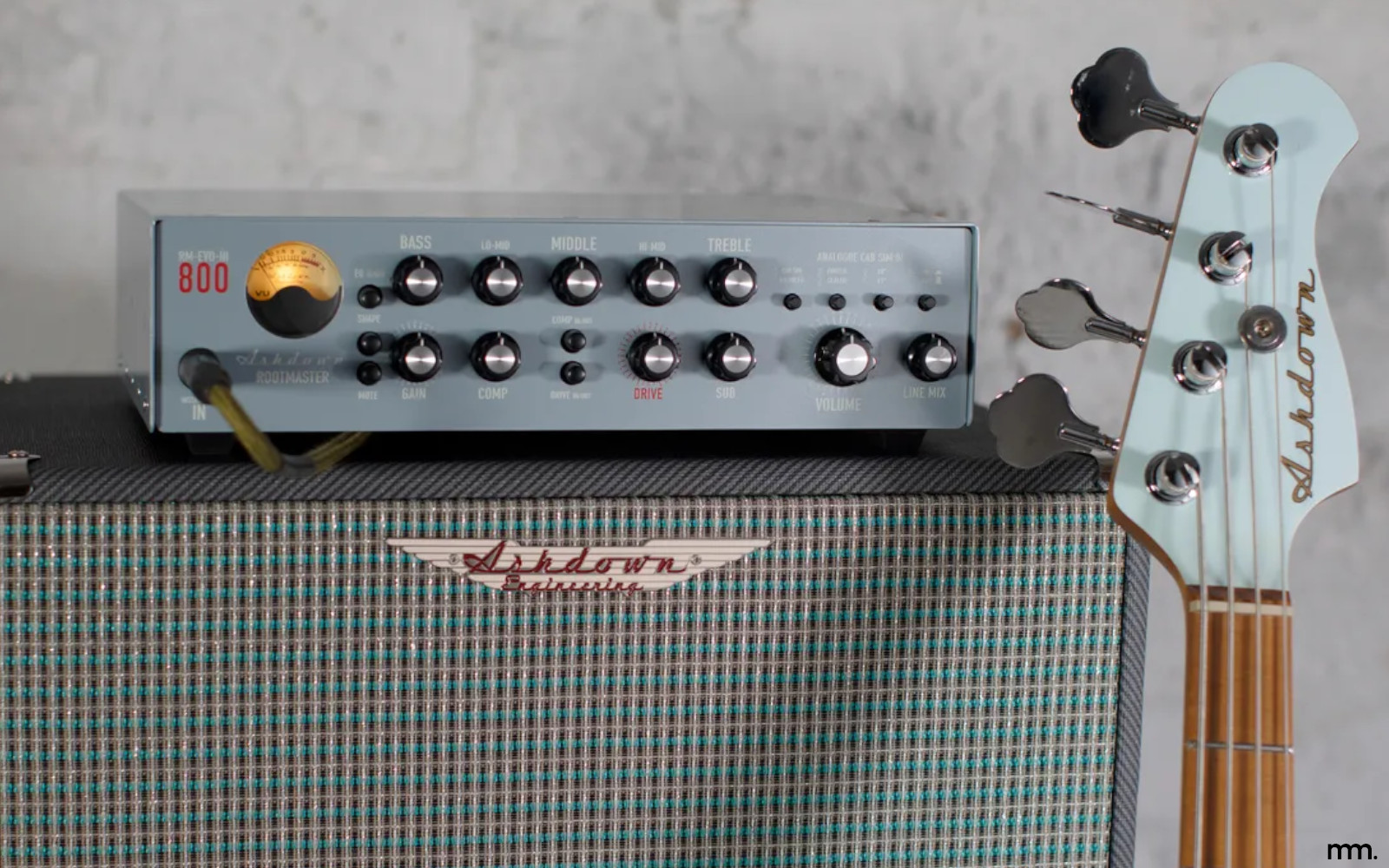
Ashdown has therefore given the OBM-300 a proper five-band EQ, with ±15dB control centred around 100Hz, 220Hz, 660Hz and 1.6kHz, plus a 7kHz shelving treble control. The quoted frequency response extends from –3dB at 22Hz to 25kHz, with signal-to-noise better than 80dB with the EQ flat.
Those EQ frequencies are worth lingering over because bass tone is not simply a question of adding more bass.
The lowest control gives you access to the weight and fundamental authority of the instrument. Move upwards and you begin shaping the regions responsible for thickness, definition and the ability of a bass line to remain intelligible once guitars, keyboards and an enthusiastic drummer occupy the same sonic territory. By the time you're working with the upper mids and treble, you're influencing attack, string articulation and the audible edges that help a bass speak through a dense arrangement.
That is why a useful bass EQ is less about making the instrument enormous and more about deciding where it should be enormous.
There is also Ashdown's Pre-Shape circuit, giving you an immediate voiced contour without requiring a five-minute discussion with every knob on the front panel. Ashdown positions it as a quick route to enhanced low-end impact and high-frequency clarity, while the full EQ remains available when you want to dig in properly.
Around the back and front, the grown-up gigging necessities are present too: high and low instrument inputs, line input, balanced DI output, effects send and return, and two speaker outputs.
Which means the little blue box is not a novelty mini amp.
It is a 300-watt UK-built bass head that happens to weigh 1.8kg.
Your lumbar vertebrae have already added it to their Christmas list.
UK-OBM-C112-300: Put the Thunder in One Box
Now take that 300-watt philosophy and make the speaker part of the deal.
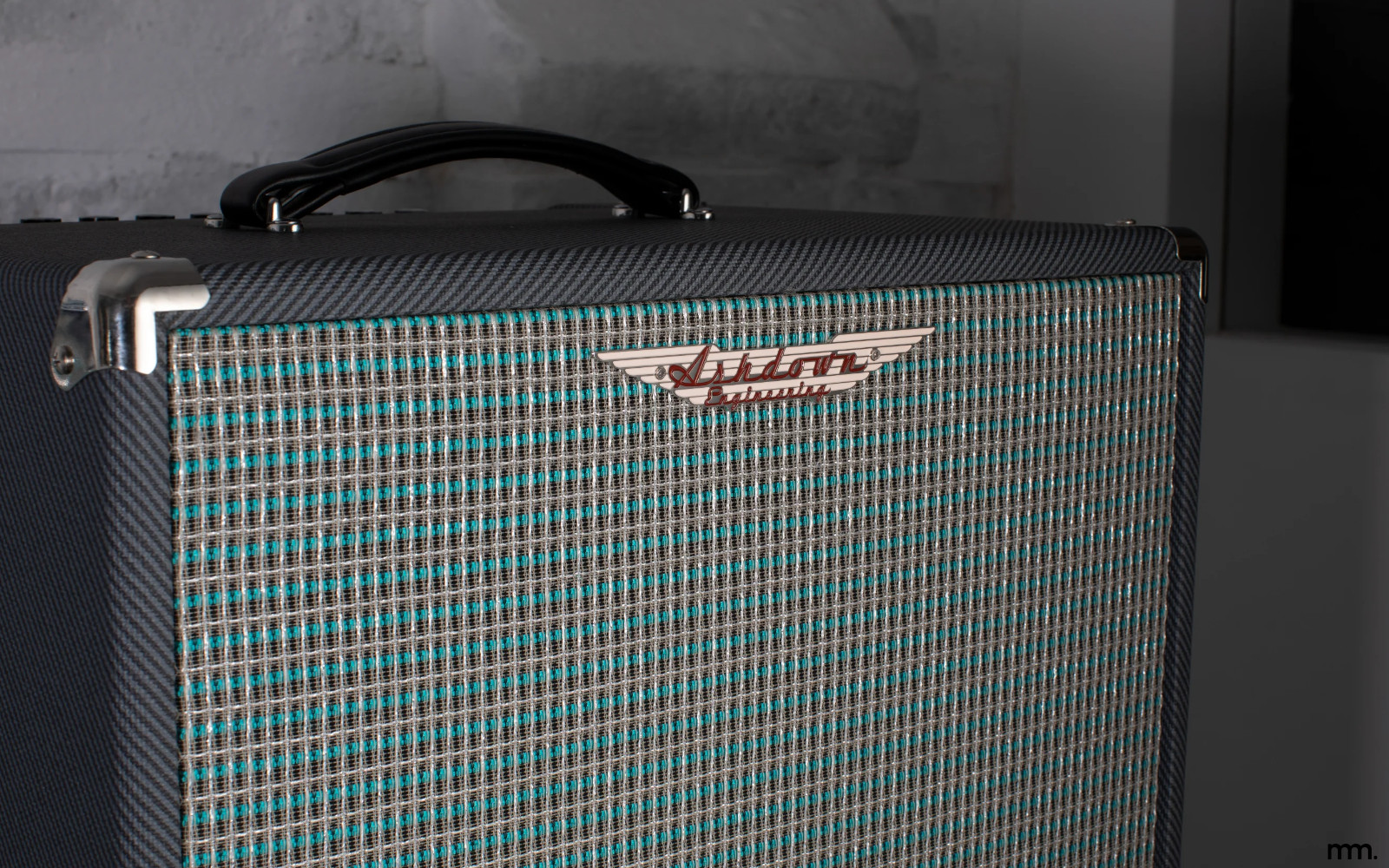
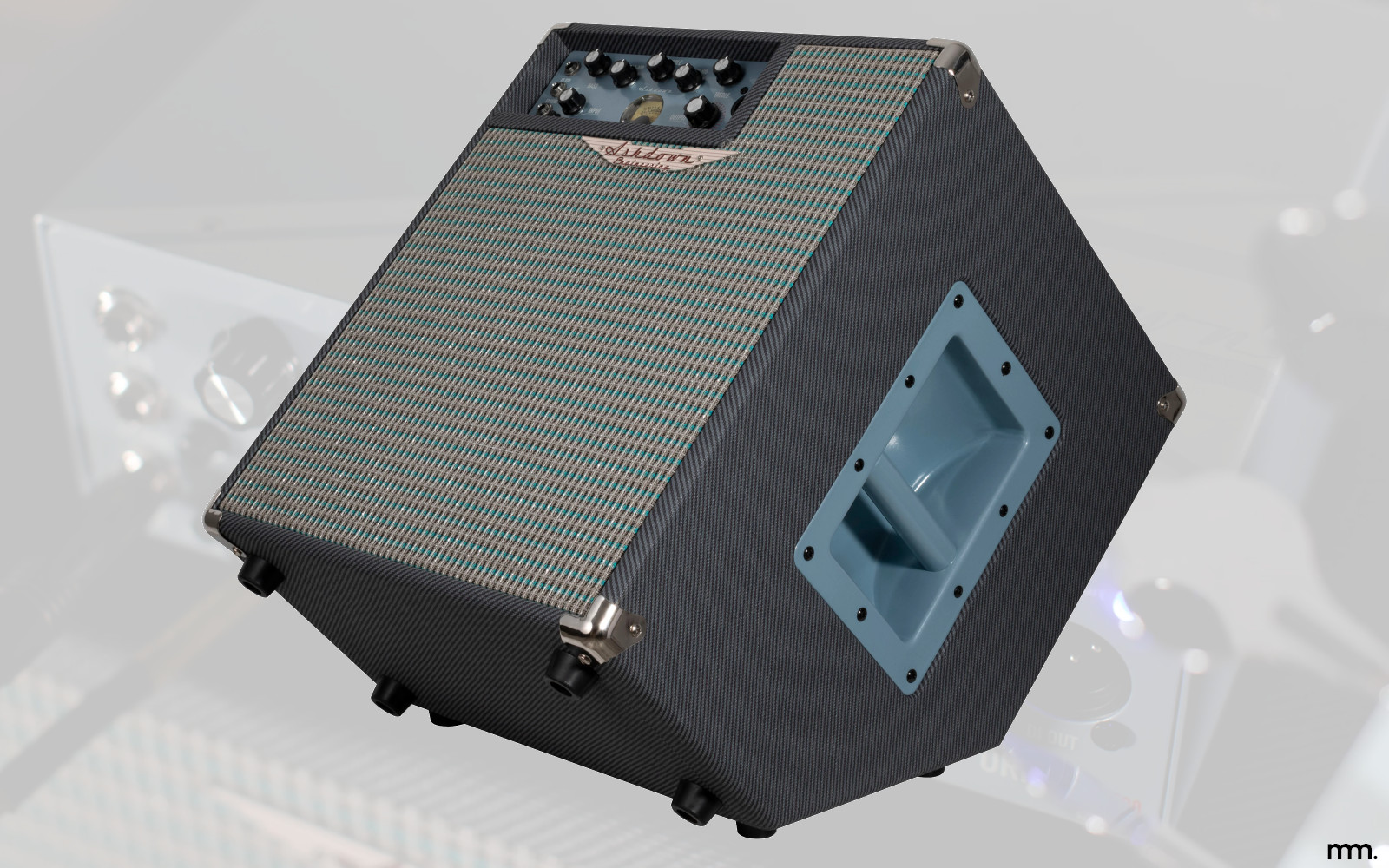
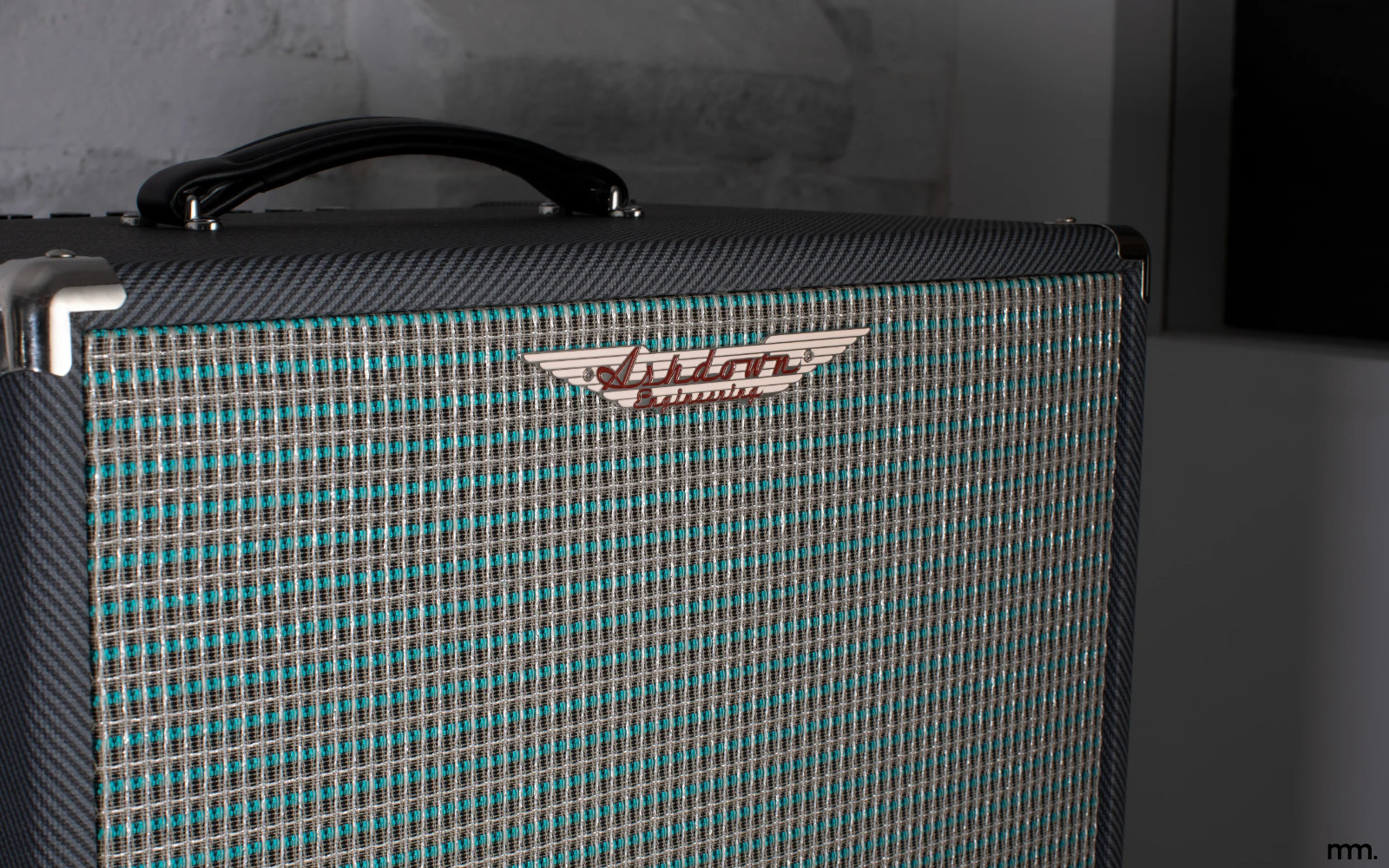
The Ashdown UK-OBM-C112-300 is the combo counterpart: a UK-built 300-watt bass amplifier feeding a 12-inch Sica NEO speaker with tweeter, packaged in that rather handsome Ice Blue, Charcoal Tweed and Silver Weave aesthetic.
And the speaker choice tells us something important.
A modern 1x12 bass combo occupies a very useful middle ground. Twelve-inch drivers can deliver genuine low-frequency authority while retaining the speed and articulation players need when the bass is doing more than sitting underneath three cowboy chords. Fingerstyle, pick attack, slap articulation, effects-heavy textures and more harmonically complicated playing all benefit from a system capable of communicating the detail as well as the thump.
The NEO part matters practically too. Neodymium speaker designs allow manufacturers to pursue serious performance while reducing the punishing magnet weight associated with traditional high-powered drivers, and here the complete OBM 1x12 combo comes in at a quoted 13.5kg.
Again, veteran bassists may wish to sit down. Preferably without lowering themselves too quickly.
The OBM-C112-300 retains the useful five-band EQ architecture, including ±15dB control at 100Hz, 220Hz, 660Hz, 1.5kHz and 7kHz, while providing line input, balanced DI, effects loop and a headphone output for silent practice.
That makes this a particularly appealing proposition for the bassist who wants one thing to carry.
Rehearsal? Grab the combo. Session? Grab the combo. Small gig? Grab the combo.
Home practice without announcing your root notes to the entire street?
Headphones.
There is something deeply satisfying about equipment that understands its job this clearly.
SBM: The Bass Magnifier Has Entered the Room
And then things get a little dirtier.
Ashdown calls these Studio Bass Magnifier combos, which is already an excellent name because magnifier gets at what a good bass amplifier should actually accomplish. The objective isn't merely to make the instrument louder. A useful amplifier reveals what is already happening in your hands and bass — the weight of a note, the edge of the attack, the difference between digging in and backing off, the growl of a bridge pickup, the bloom of a neck pickup and all the tiny dynamic decisions bass players make while guitarists are busy deciding which of their three nearly identical overdrives is currently switched on.
Across the current UK-SBM family, Ashdown combines Sica speakers, onboard overdrive, balanced DI, an effects loop and headphone output in a studio-minded feature set intended to move between home, rehearsal, recording and performance work.
The important addition here is Drive. And not simply a switch labelled make bass gurglier.
Ashdown describes it as a tube-emulated Drive control, allowing the sound to move from subtle warmth towards a more obvious growl. Both of the SBM models we're looking at also provide a Pre-Shape EQ switch, Pre-Gain for matching input sensitivity, multi-band tone controls and a footswitch connection that can control the Drive circuit with the optional FS-1.
Now we're cooking. Because clean bass tone is magnificent.
But bass tone with a carefully judged amount of harmonic filth?
That is how civilisations begin.
UK-SBM-112-200: The Articulate One
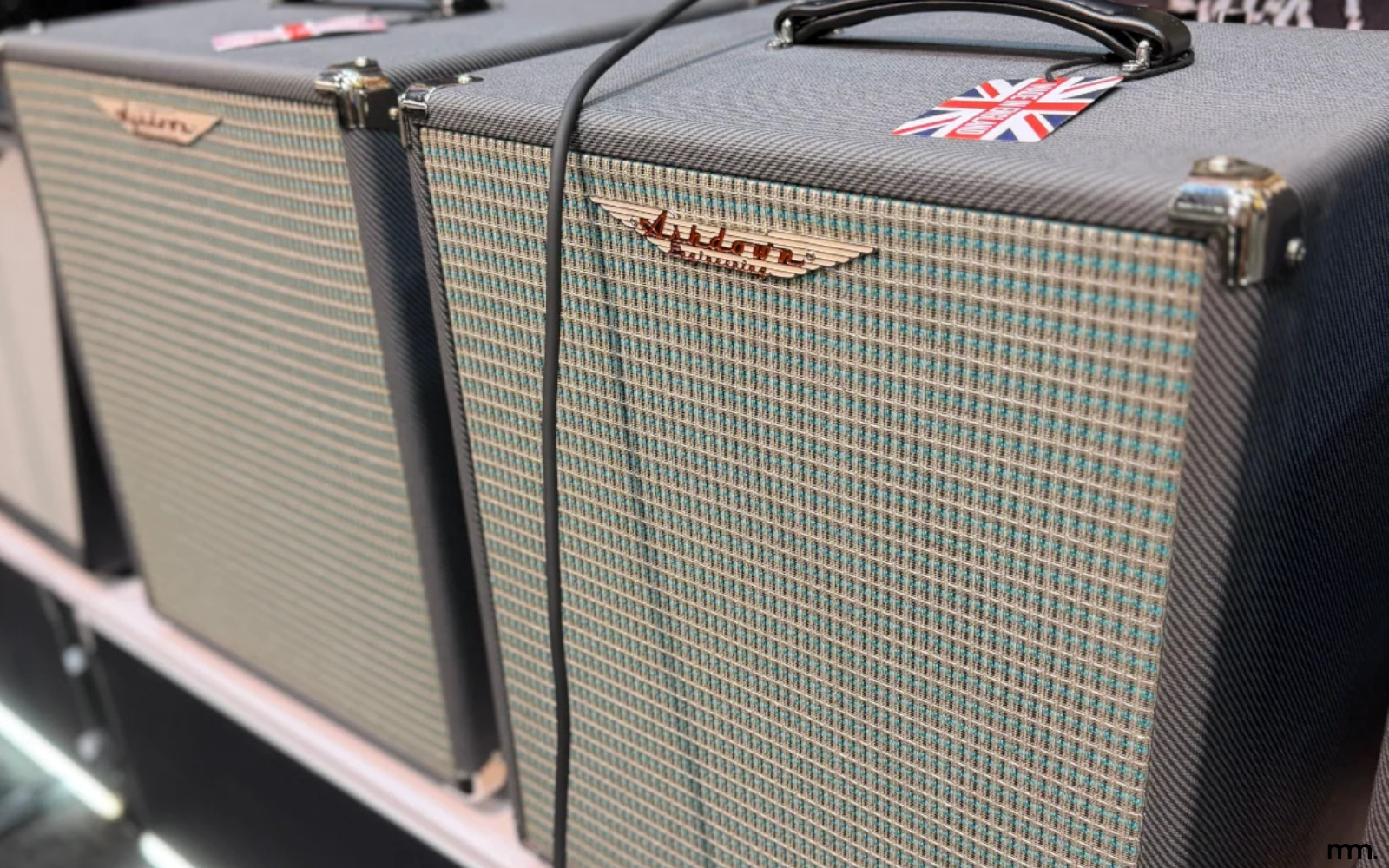
The Ashdown UK-SBM-112-200 puts 200 watts through a Sica NEO 12-inch speaker and aims squarely at players who want definition and portability without stripping away useful features.
That 12-inch format again gives us a lovely balance. There is enough physical speaker area to make a bass feel like a bass, but the emphasis remains on punch and articulation rather than trying to recreate a refrigerator-sized touring rig in your spare bedroom.
And unlike the more deliberately straightforward OBM architecture, the SBM gives you that additional tube-emulated Drive stage.
This matters because overdriven bass occupies a fascinating place in a mix. Push distortion too far without understanding what is happening and the bottom can disappear into glorious but useless fuzz. Introduce harmonic content intelligently and the opposite can happen: the bass becomes more perceptible because the ear gains additional midrange information to latch onto.
That can mean a touch of hair around a clean tone. A gritty rock grind. A little old-school warmth.
Or enough growl to suggest that the bass has recently become aware of the guitarist's monitor level and is preparing a response.
The SBM-112-200 backs that up with Bass, Lo-Mid, Middle, Hi-Mid and Treble controls, plus balanced XLR DI, FX loop, line input, headphone output and speaker muting for silent operation. There's also a -15dB pad for active instruments, which is exactly the kind of unglamorous but essential feature that becomes extremely glamorous when you plug in a hot active bass and don't immediately assault the input stage.
The complete combo weighs a quoted 17.14kg.
Compact enough to remain civilised. Powerful enough to be taken seriously.
And sufficiently controllable that the bassist gets to decide what seriously means.
UK-SBM-115-500: Oh. There It Is.
And now we reach the large animal. The Ashdown UK-SBM-115-500.
This is where the Studio Bass Magnifier concept acquires a 15-inch Sica NEO driver, Eminence tweeter and a power stage capable of delivering 250 watts through the internal speaker, expanding to the full 500 watts when an 8-ohm extension cabinet joins the party.
That power arrangement is important, because the model name alone doesn't tell the whole story. Used as a standalone 1x15 combo, you're working with 250 watts into the internal speaker. Add the appropriate 8-ohm extension cabinet and the amplifier can deliver its full 500-watt output.
And suddenly the architecture makes enormous sense.
You can have a self-contained 1x15 for situations where that is all the rig you need, then expand the system when the stage gets larger, the drummer gets louder or somebody has made the regrettable decision to hire a guitarist with two 4x12s.
The 15-inch driver brings a different physical proposition from the 12. Driver diameter alone never determines an entire speaker's sound — cabinet design, motor structure, cone, tuning and crossover behaviour all matter enormously — but a good 1x15 bass system can provide precisely the sense of scale and low-frequency authority that makes players fall in love with larger-format bass speakers in the first place.
Then Ashdown adds the Eminence tweeter for high-frequency detail.
So this isn't intended to be some woolly vintage box that turns every note above the fifth fret into a rumour. The architecture is built to combine serious low-end presence with articulation further up the spectrum. Ashdown also provides Tweeter and Speaker Mute switches, letting you exercise some control over how that full-range system behaves.
The familiar SBM toolkit is present too: tube-emulated Drive, Pre-Shape, Pre-Gain, multi-band EQ, active/passive input accommodation, effects loop, balanced XLR DI, headphone output, line input and footswitchable Drive capability.
And here's the particularly lovely bit. The quoted weight is 16.5kg.
A UK-built 1x15 bass combo with a NEO driver, tweeter and expandable 500-watt amplifier architecture at sixteen and a half kilos.
Somewhere, a bass player who spent the 1990s moving an enormous cabinet up pub staircases has just stared silently into the middle distance.
We honour your service.
12-Inch or 15-Inch Bass Speaker?
Ah. Now we're in curious territory.
Because bassists can become remarkably animated about speaker diameter, and simple rules such as “15s are deep, 10s are punchy” refuse to die despite being woefully inadequate descriptions of how loudspeakers actually work.
Driver diameter matters, but so do cone mass, excursion, sensitivity, motor design, enclosure volume, cabinet tuning, crossover implementation and the amplifier driving the entire arrangement.
So don't buy a bass combo because somebody once told you that a 15-inch speaker automatically has more bass.
Listen to it.
The 12-inch OBM and SBM configurations make enormous sense for players prioritising a compact rig with clarity and articulation. The 15-inch SBM offers a larger-format physical voice, complemented here by its tweeter and the ability to expand the amplifier to its full 500-watt output with an appropriate extension cabinet.
Your bass matters. Your technique matters. Your band matters. The room matters.
And, most importantly, your ears are already installed and require no firmware update.
Use them.
Why Five-Band EQ Matters on Bass
Here is where we get a bit nerdy. Bass lives in a brutally competitive part of the frequency spectrum.
The fundamental of your low E is around 41Hz, but the sound we identify as bass tone extends vastly beyond the fundamental itself. Harmonics, finger noise, fret interaction, pickup position and playing technique distribute useful information throughout the low mids, central mids and upper frequencies.
This is why simply turning up the lowest EQ control when you cannot hear yourself can make everything worse. You add more low-frequency energy. The room begins booming. The kick drum starts sending legal correspondence.
And your actual notes remain difficult to distinguish.
The five-band arrangements used across these Ashdown amps allow much more intelligent intervention. You can add physical weight down low, work on thickness and definition in the low mids, shape the central midrange where much of the bass's identity survives in a busy mix, then adjust upper-mid attack and treble detail.
Sometimes the best way to make a bass sound bigger is not to add bass. Sometimes it is to give the note enough midrange information to exist.
This is the kind of knowledge that eventually turns a bassist into the person the sound engineer likes.
Imagine that.
DI: The Socket That Makes Everybody Happy
Every amp here also acknowledges one of the great realities of modern bass performance:
Sooner or later, somebody wants a DI signal.
The balanced DI outputs on these Ashdown models mean the amp can integrate directly with a mixing console or recording setup, giving the front-of-house engineer or recording chain a sensible signal while the amplifier continues doing the important physical work beside you.
This is particularly valuable for bass because the stage sound and PA sound do not have to perform identical jobs.
Your amplifier can provide the feel, response and local monitoring that make you play properly, while the PA handles distribution around a larger room.
Everybody wins.
Except the guitarist, who has just discovered the sound engineer can turn the bass up independently.
Which Ashdown UK Bass Amp Makes Sense for You?
The beautiful thing about these four amps is that they aren't merely four different quantities of the same idea.
The UK-OBM-300 is the minimalist traveller: 300 watts, 1.8kg, five-band EQ, Pre-Shape, DI and effects loop. Pair it with the cabinet that suits the job and you have a startlingly portable modular bass rig.
The UK-OBM-C112-300 takes that practical philosophy and puts it into a complete 300-watt 1x12 NEO combo, adding the convenience of a self-contained system that still gives you proper EQ, DI, effects integration and headphone practice.
The UK-SBM-112-200 is for the bassist attracted to the compact 12-inch format but wanting the additional personality of tube-emulated Drive, along with its studio-friendly and live-friendly connectivity.
And the UK-SBM-115-500 is where things become properly substantial: a Sica NEO 15-inch driver, Eminence tweeter, 250 watts internally and up to 500 watts with an 8-ohm extension cabinet, plus the Drive and connectivity that define the SBM concept.
Different tools.
Same fundamental objective.
Better bass.
The Bass Player Was Right All Along
Bass players receive a lot of abuse. Some of it is even funny.
We ask why they only play one note at a time. We make jokes about root notes. Guitarists explain harmony to them despite having spent the previous forty minutes playing an open E chord through a fuzz pedal. Then the bass player stops playing. And suddenly everybody understands.
The guitars become smaller. The drums lose context. The song's movement changes. The relationship between rhythm and harmony develops an enormous hole directly through its centre.
That is the strange power of the instrument. Bass doesn't always demand your attention.
It changes everything around it.
And a good bass amplifier understands that its job is not merely to generate enormous quantities of low frequency. It must preserve timing, dynamics, articulation and personality while producing enough physical authority for the player to feel connected to the room.
That is what makes these new UK-built Ashdowns interesting.
The OBM models reduce the rig without reducing the seriousness.
The SBM models add tonal colour and drive without forgetting that a working amplifier still needs DI, effects integration, practical inputs and quiet-practice capability.
The NEO speakers attack the old assumption that serious bass equipment must be physically punitive.
And throughout the range, Ashdown has resisted the temptation to make the bass amp behave like a laptop.
Plug in. Set the gain. Shape the EQ.
Add drive if appropriate.
Turn up.
Play.
There are worse philosophies.
Come and Hear the Thunder at Musicmaker
Specifications can tell you an enormous amount about a bass amplifier. They can tell you the wattage, speaker configuration, impedance, EQ frequencies, connectivity, dimensions and weight.
They cannot tell you what happens to your face when you strike the first note.
For that, you need a bass. And an amplifier.
And a room containing enough air to move.
The Ashdown UK-OBM-300, UK-OBM-C112-300, UK-SBM-112-200 and UK-SBM-115-500 are now part of the bass-amplification arsenal at Musicmaker Dublin, giving us everything from an absurdly portable 300-watt head to a UK-built expandable 1x15 system capable of bringing 500 watts to the argument.
So bring your bass. Bring the one you know.
The one whose pickups, strings and response are already embedded in your hands. Plug it into these amps and hear what happens when familiar notes travel through unfamiliar machinery.
Turn the EQ. Try the Pre-Shape. Give the SBM Drive control a little encouragement.
Play softly. Then don't.
Because bass amplification eventually reaches a point where technical language has done all it can.
The cone moves. The room answers. Your trousers receive information.
There it is.
Listen to the thunder.
From the Musicmaker Workshop
Since the early 1980s, Musicmaker has helped Irish musicians find instruments and equipment worth falling in love with. Every guitar, drum, piano, microphone, pedal, amplifier and piece of studio gear we stock is carefully chosen by people who genuinely play, perform, teach and obsess over music.
These new UK-built Ashdown bass amplifiers fit beautifully into that tradition: practical equipment made for musicians who care about sound, feel and the glorious business of moving air.
And bass players?
We know. You were right.
The band needed more bass.
Check out all our bass amps HERE.