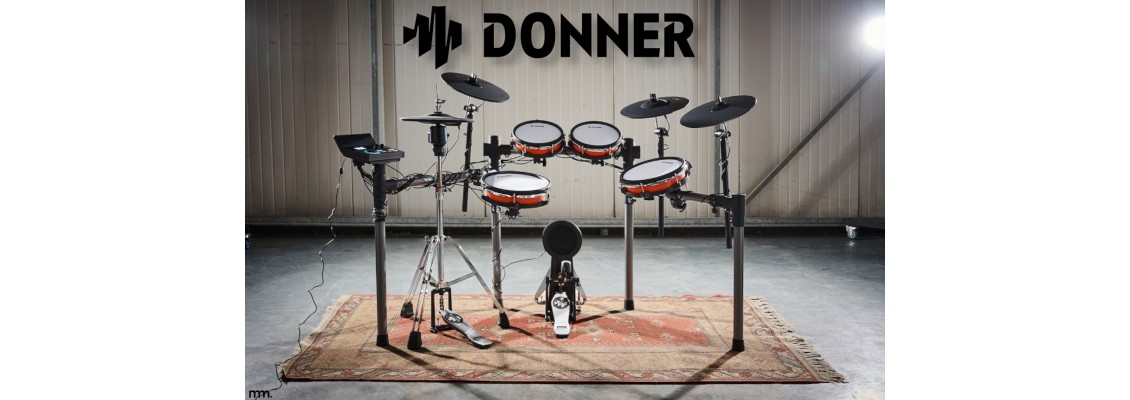
Donner Electronic Drums: Make Some Noise. Quietly.
Four kits. A world of rhythm. And absolutely no excuse not to practise.
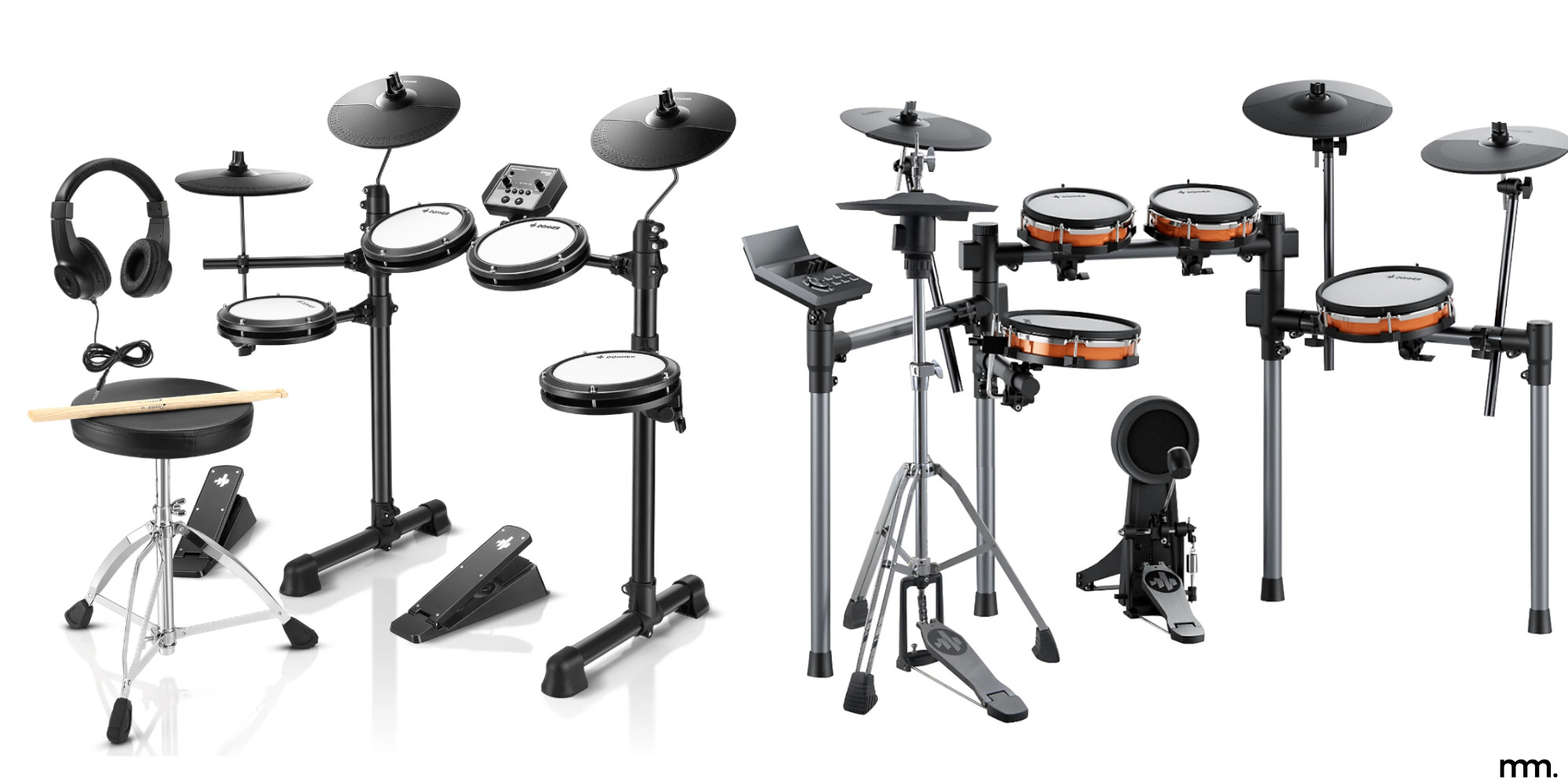
The Donner Pocket, and the Donner Ultra. What are you waiting for?
Somewhere in Dublin, a drummer is trying to practise a paradiddle.
The right hand is behaving itself. The left hand has begun negotiating separate terms. The kick drum keeps arriving slightly early, the hi-hat appears to have developed an independent personality, and the drummer is now entering the thirty-seventh minute of an argument with a metronome that has done absolutely nothing wrong.
This is progress.
This is how drummers are made.
Unfortunately, if that drummer happens to live in an apartment, a terraced house, a student flat or anywhere within reasonable earshot of another human being, progress can become a neighbourhood issue.
Acoustic drums are magnificent instruments. We love them. The physical rush of a snare drum cracking against a bass drum, cymbals opening above the groove and toms rolling across the kit is one of music's great pleasures. But they are also exceptionally good at communicating your enthusiasm through floors, ceilings and structural masonry.
And that presents a problem.
Because the single most important thing a developing drummer can do is practise consistently.
Not once a week when the rehearsal room is available. Not for twenty minutes before somebody complains. Not exclusively when the house is empty and the neighbours have gone to Donegal.
Consistently.
That's where modern electronic drum kits have become genuinely exciting. They don't simply turn the volume down. They make it easier to put in the hours, develop technique, explore different sounds and connect your playing to the increasingly digital world of modern music production.
And right now, Musicmaker has four Donner electronic drum kits that demonstrate just how accessible that world has become.
The compact Donner Pocket. The affordable DED-70. The wonderfully practical DED-80P. And the impressively equipped Groove Ultra.
Four different approaches to the same beautiful obsession.
Hit things. Get better. Hit them again.
Electronic Drums Have Come a Long Way
Electronic percussion has been part of popular music for decades, from the distinctive synthetic toms and hexagonal pads of the late 1970s and 1980s to the increasingly sophisticated digital drum systems that followed.
Early electronic kits could produce fascinating sounds, but they often demanded compromises in playing feel. Hard rubber pads offered limited rebound, dynamic response could be inconsistent, and the relationship between striking a surface and hearing a convincing acoustic drum sound wasn't always particularly satisfying.
Modern electronic drums are a different proposition.
Improved trigger technology allows drum modules to interpret how hard a pad is struck. Mesh heads provide a more familiar stick response. Multi-zone pads allow different playing surfaces to produce different articulations, while modern sound engines offer a broad selection of acoustic, electronic and percussion voices.
The fundamental concept is wonderfully clever.
When a stick strikes an electronic drum pad, a sensor detects the impact and sends information to the module. The module interprets that signal and produces the appropriate sound. Strike harder and, depending on the pad and module, the resulting note can respond with greater volume or a different sampled dynamic character.
The result is an instrument that can be expressive beneath the sticks while offering a degree of control that acoustic drums simply cannot provide on their own.
You can change an entire drum kit without moving a single stand. You can practise through headphones. You can record MIDI performances and change the drum sounds afterwards. You can move from a tight, dry funk kit to enormous arena-rock toms without employing a drum technician or purchasing a warehouse.
For drummers, this is rather wonderful.
And Donner has made a compelling argument that you shouldn't need an enormous budget to enjoy it.
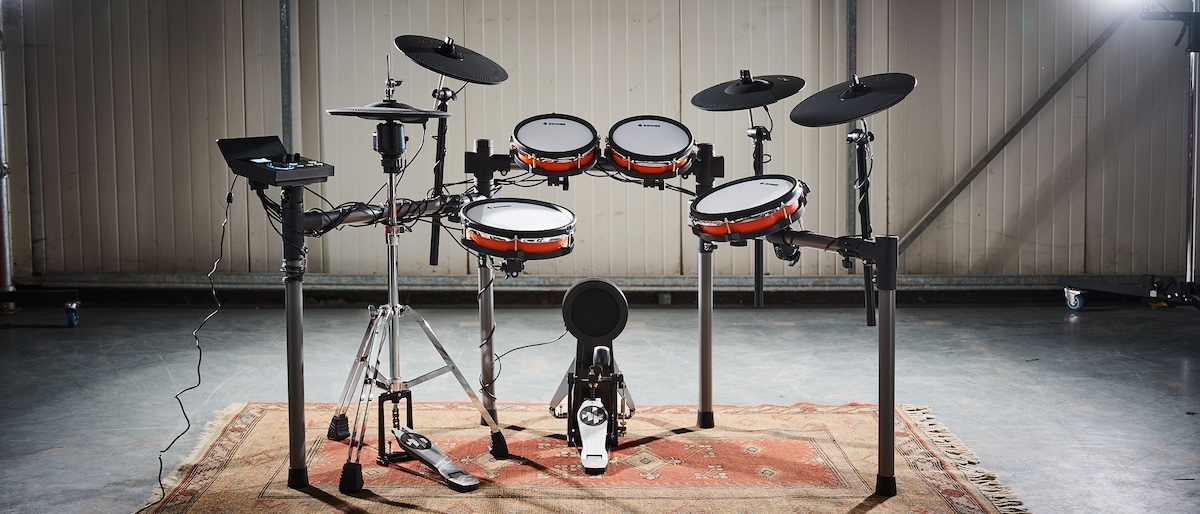
Mesh Heads: Why the Feel Matters
Before we get into the individual kits, we need to talk about the part your sticks actually meet.
Because the difference between a drum kit that encourages good playing and one that simply makes drum noises often begins with the pads.
On an acoustic drum, the head responds to the stick through a combination of tension, elasticity, shell interaction and air movement. The stick rebounds, allowing the player to use the natural return of the head rather than physically lifting every stroke.
That rebound is central to developing efficient technique.
Single strokes, doubles, paradiddles, buzz rolls, ghost notes and accents all depend on understanding how the stick moves after impact.
Mesh electronic drumheads attempt to recreate an important part of that mechanical response using a woven playing surface, generally with adjustable tension on suitable pads. They also produce considerably less airborne sound than striking an acoustic drumhead.
They're not identical to acoustic heads, and different mesh pads have different playing characteristics, but they provide a far more useful foundation for developing stick control than the rigid surfaces associated with many early electronic kits.
And then there's dynamics.
A good drummer doesn't play every note at the same volume.
The snare backbeat might be authoritative, while the ghost notes between beats are barely audible. The hi-hat might carry a steady pulse with subtle accents, while the kick drum anchors the whole thing beneath the music.
That relationship between loud and soft is what makes a groove breathe.
Velocity sensitivity matters because music happens between the accents.
Which brings us to our first Donner.
Donner DED-70: The First Groove Starts Here
There is something genuinely exciting about a first drum kit.
Not because the new drummer immediately sounds brilliant. They generally don't. Nobody emerges from their first lesson playing like Steve Gadd. Most of us begin by discovering that our four limbs have apparently never met.
But the first kit is where the coordination begins.
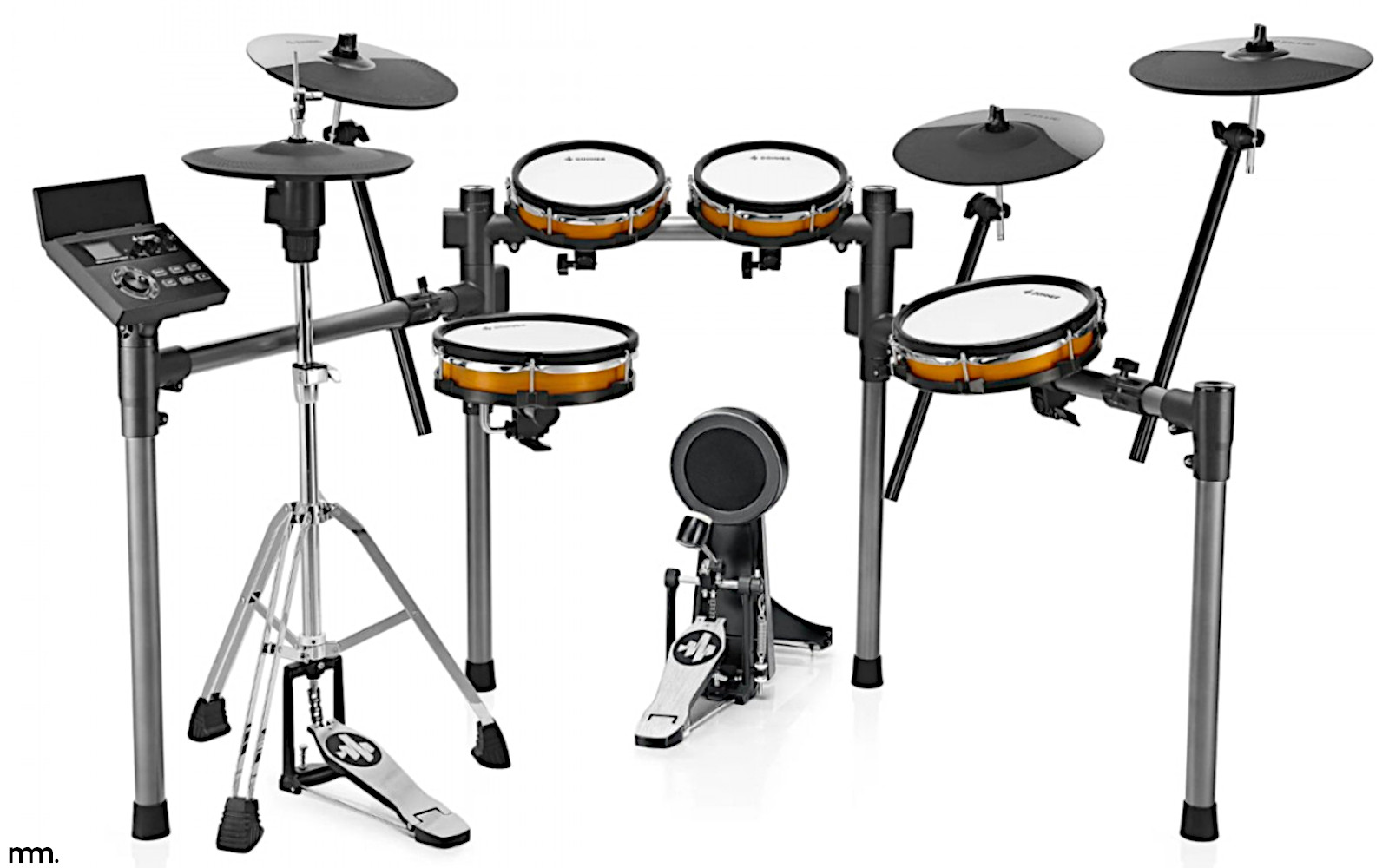
The Donner DED-70 Electronic Drum Set is designed to make that beginning accessible, practical and affordable without reducing drumming to a toy-like experience. Its compact rack supports a familiar drum-kit layout, with a mesh snare, three mesh toms and cymbal pads arranged around the player. That layout is important because the drummer can begin learning the physical geography of the instrument: snare in front, hi-hat to the side, toms across the rack and kick beneath the foot.
It is the beginning of muscle memory.
The DED-70's sound module is listed with more than 240 drum and percussion voices across 40 preset kits, providing plenty of room to explore different musical styles. There are conventional acoustic-style drum sounds for rock and pop, alongside electronic and percussion options that allow a beginner to discover just how many different musical roles a drummer can occupy.
But the most useful features are often the least glamorous.
A built-in coaching system and rhythm-training functions help players work on timing and consistency. An auxiliary input and playback facilities make it easier to practise alongside music. The module also offers editing of parameters including tuning, sensitivity, volume and ambience, introducing the player to the idea that drum sound can be shaped rather than simply accepted.
The listed USB-MIDI connection opens another door entirely, allowing the kit to communicate performance data with compatible music software.
That might not matter on day one. On day one, the mission is usually to play a steady kick-snare pattern while keeping eighth notes moving on the hi-hat. But six months later, when that drummer wants to record an original song, those connections become very interesting indeed.
The DED-70 also comes with a drum throne and headphones, removing two of the most common additional purchases from the beginner's shopping list.
A first drum kit should encourage somebody to sit down and play, not send them on a scavenger hunt for the remaining equipment.
The DED-70 is about getting started properly.
Four limbs. One groove. An entire lifetime of excitement ahead.
Donner Pocket: Small Kit, Proper Intentions
There is a particular sort of drummer who looks at a compact kit and immediately starts worrying about what has been sacrificed.
Fair question.
But compact electronic drums deserve to be judged by what they're designed to accomplish.
The Donner Pocket Electronic Drum Set is built around accessibility and space efficiency. It is particularly attractive for younger players, beginners, families and anyone trying to establish a proper drumming routine without dedicating an entire room to the instrument. Despite the Pocket name, this isn't merely a little tabletop pad that produces drum sounds.
It's a compact rack-mounted electronic kit with a Groove Drum Module containing 180 drum and percussion sounds and 15 preset drum kits.The playing surfaces include mesh snare and tom pads, alongside three single-zone cymbal pads and dedicated kick and hi-hat control pedals.
That's a meaningful configuration for learning.
The snare and toms give the hands their own playing surfaces. The cymbals allow a beginner to explore timekeeping and accents. The foot controls introduce the coordination that makes drumming fundamentally different from practising on a single pad.
And there is a crucial distinction between learning a rhythm and learning to perform that rhythm around a kit. A paradiddle played on a practice pad teaches sticking.
A paradiddle moved between snare and toms teaches sticking, movement, accuracy and orchestration.
Both matter hugely, the second one is more fun.
The Pocket also includes a metronome and coaching functions, providing structured ways to work on tempo and control. Its adjustable metal rack allows the layout to be adapted to the player, which is particularly useful when younger drummers are still growing.
A throne, headphones and drumsticks are included, making it a straightforward introduction to the instrument.
We love this kind of kit because it removes one of the most ridiculous obstacles in music.
The idea that you need a large amount of space before you're allowed to begin.
You don't. You need somewhere to sit, something to hit, a little patience and an understanding that the metronome is not your enemy.
Although it may occasionally feel like it.
Donner DED-80P: Where Practice Gets Serious
There comes a moment in every drummer's development when simply playing along with songs stops being enough.
You begin hearing the details.
The hi-hat isn't quite even. The ghost notes disappear whenever the kick pattern gets complicated. Your right foot is confident until somebody asks it to play quietly.
Congratulations. Your ears are getting better. This can become extremely inconvenient.
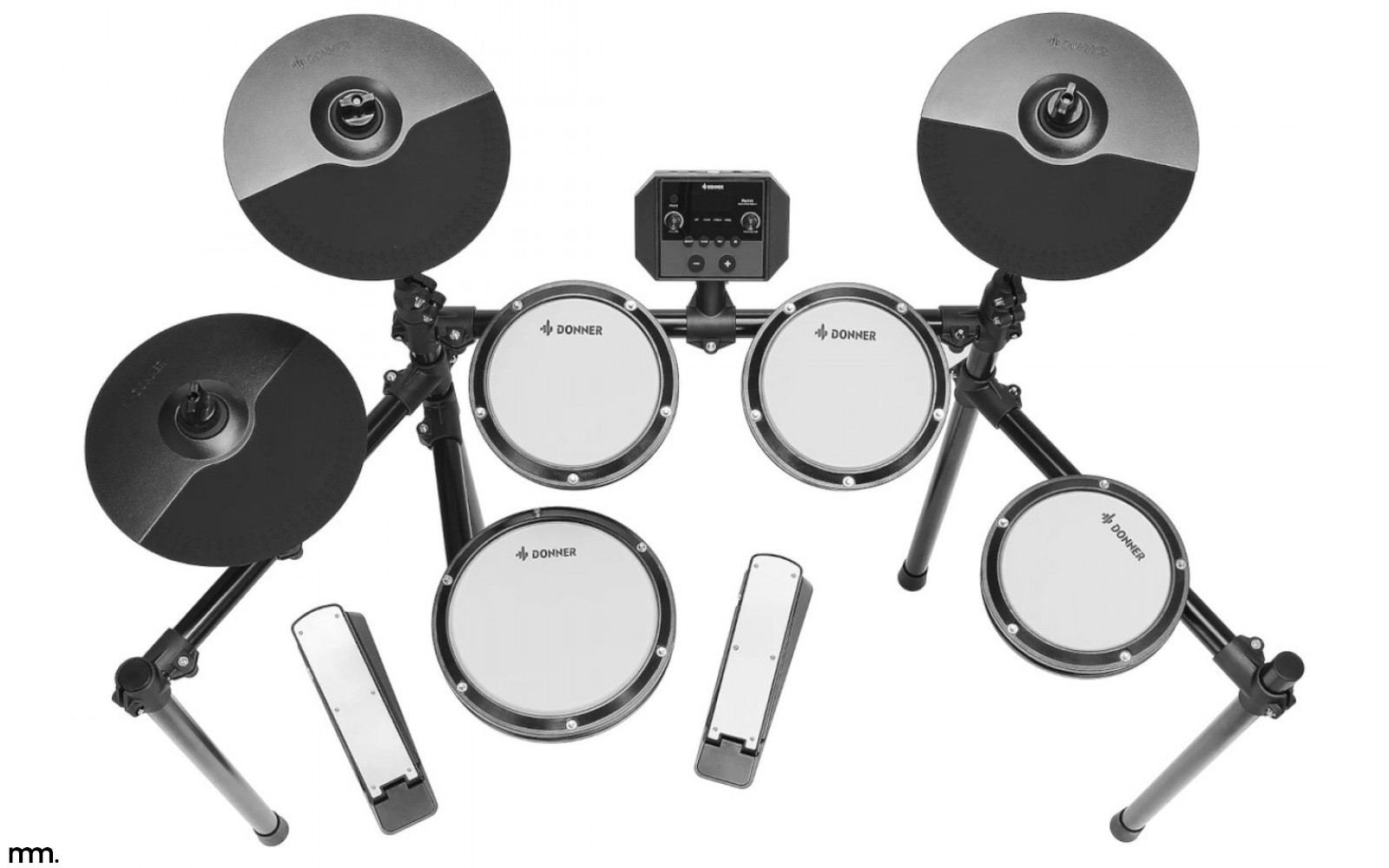
The Donner DED-80P Digital Drum Kit is particularly interesting for players reaching that stage because its design places a strong emphasis on responsive mesh playing surfaces, a compact footprint and practical learning tools. The DED-80P uses dual-layer mesh pads across the snare and toms, giving the player a responsive surface for working on rebound, articulation and dynamic control. Its kick system uses a compact, quiet trigger arrangement rather than a conventional beater striking a large kick tower. That helps keep the physical footprint manageable and reduces some of the impact noise associated with mechanical bass-drum beaters.
The trade-off is worth understanding.
A beaterless kick control can be excellent for quiet home practice, but it won't reproduce the exact mechanical resistance and rebound of a conventional bass drum pedal striking a head. Drummers intending to move regularly between electronic and acoustic kits should remain conscious of that difference.
The DED-80P also lists half-pedal hi-hat functionality, allowing more nuanced transitions between open and closed hi-hat behaviour than a simple binary footswitch. That is useful because the hi-hat is one of the most expressive parts of a drum kit. A tightly closed hi-hat can be crisp and controlled. Release a little pressure and the cymbals begin to loosen. Open them further and the sound becomes broader, noisier and more sustained.
That subtle control is central to everything from delicate funk to driving rock.
Inside the module, the DED-80P offers 180 drum and percussion voices, 15 preset kits and 30 backing tracks, alongside coaching features for developing timing and technique. USB-MIDI connectivity makes it possible to use the kit as a performance controller for compatible recording software and virtual drum instruments.
And, again, the practical bundle is excellent: headphones, throne, sticks and the necessary kit connections are included.
This is the sort of electronic drum kit that makes sense for the player who has decided drumming is no longer a passing curiosity.
The enthusiasm has survived.
Now it's time to put the hours in.
Donner Groove Ultra: Now We're Talking, Drummers
Right. Let's move the furniture.
The Donner Groove Ultra Electronic Drum Set is where the current Musicmaker Donner range becomes especially interesting for players who want a more substantial electronic setup.
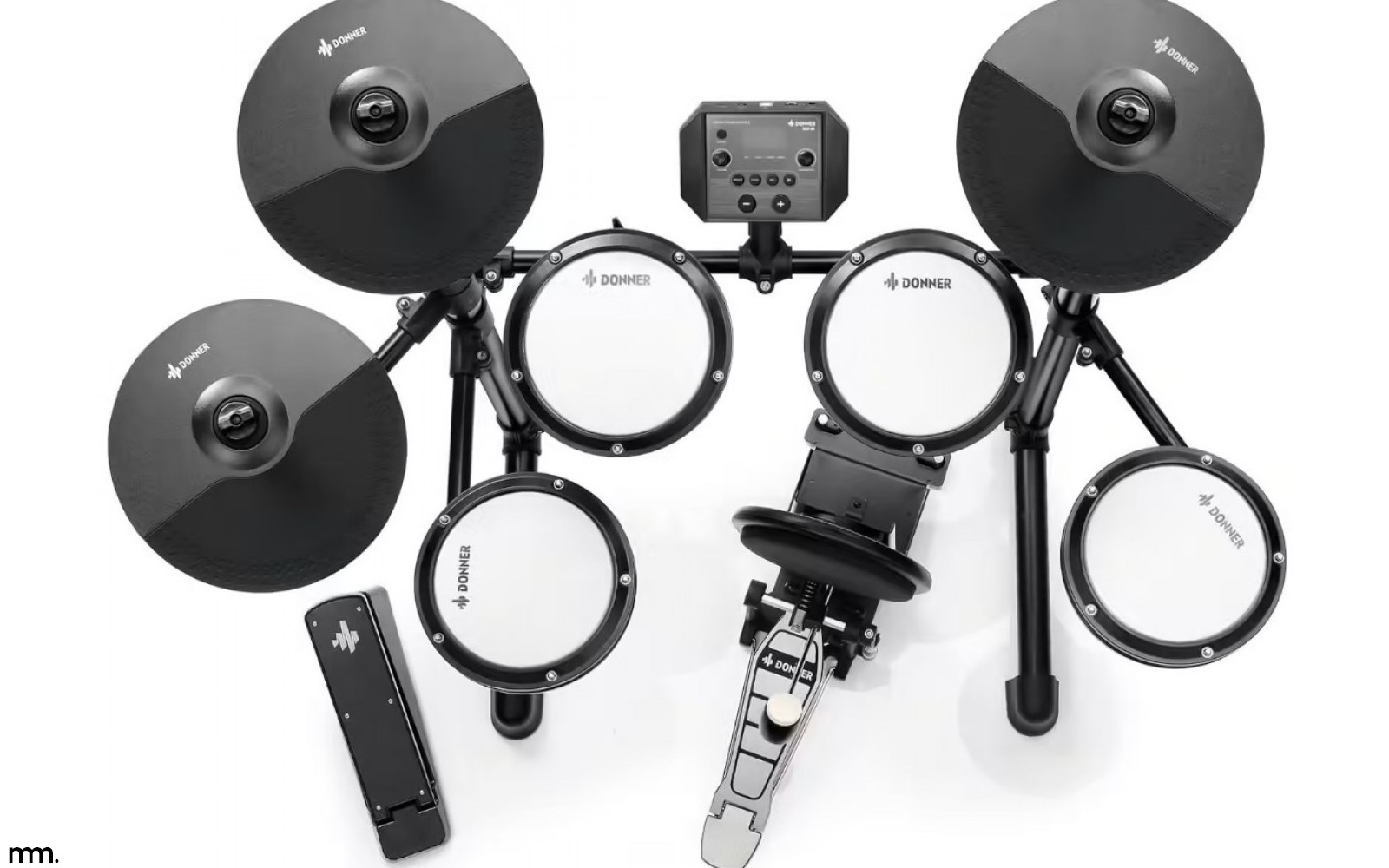
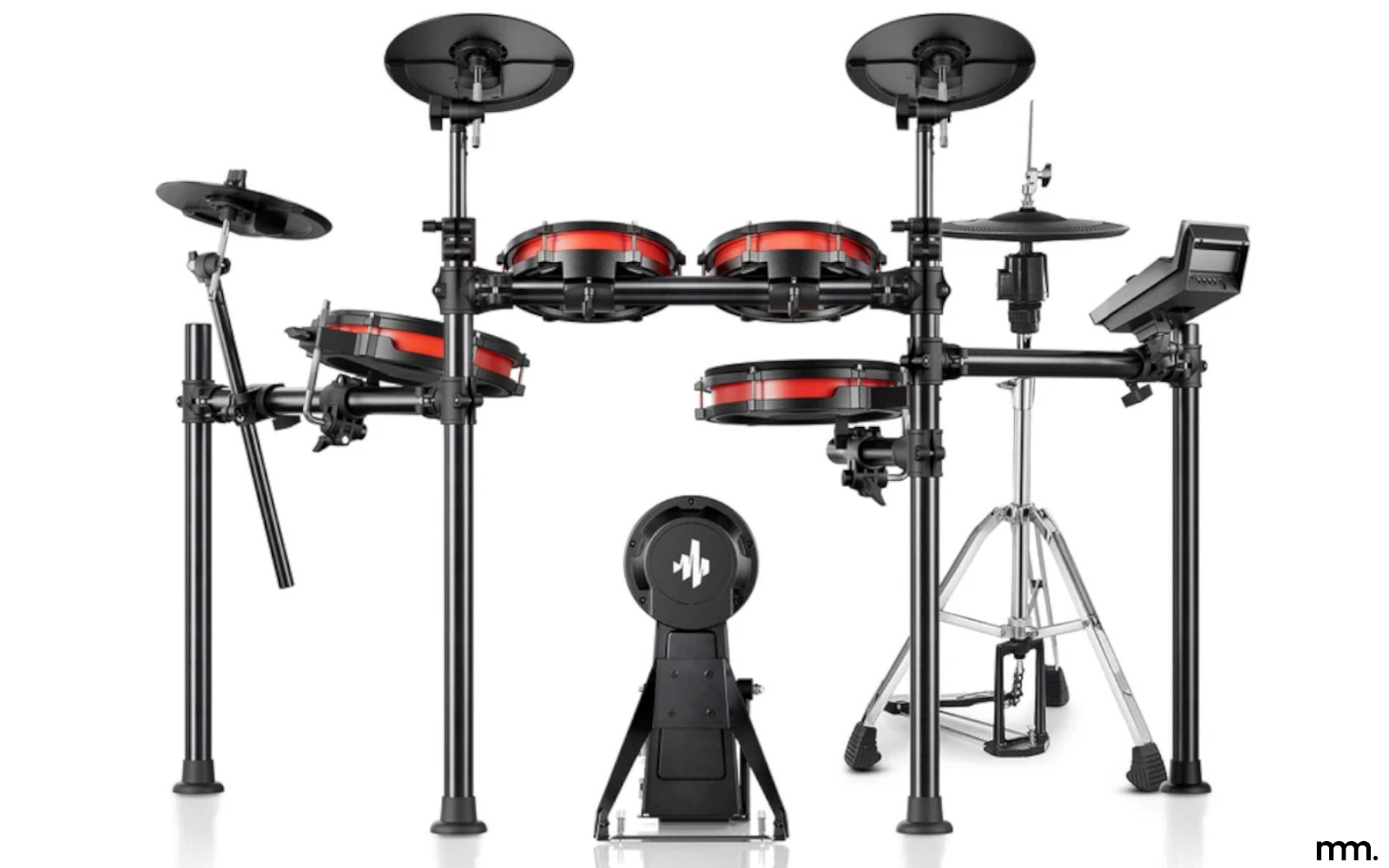
Its configuration moves closer to the playing layout of a full acoustic drum kit, with larger playing surfaces, a dedicated kick tower and a significantly more expressive cymbal arrangement. The snare is a 10-inch dual-zone mesh pad, joined by two 8-inch dual-zone mesh toms and a larger 10-inch dual-zone mesh tom.
That gives the drummer room to move.
The larger snare provides a more generous playing target for techniques involving accents, rim articulations and movement around the head. Dual-zone triggering allows different playing areas to produce distinct sounds where supported by the module's configuration.
The tom arrangement also makes physical sense.
A pair of smaller rack toms and a larger tom pad give the player a familiar route around the kit, helping fills feel less like navigating a collection of identical rubber discs.
Then we get to the kick.
The Groove Ultra features a 6-inch kick tower, allowing a conventional-style bass drum pedal and beater arrangement rather than relying solely on a compact electronic footswitch.
That mechanical distinction matters enormously.
A bass drum pedal has its own physics: spring tension, beater travel, footboard response, impact and rebound. Learning to control those elements is an important part of developing consistent foot technique. For players working on doubles, heel-up and heel-down approaches, dynamics or faster kick patterns, a physical kick tower provides a more familiar foundation.
And then there are the cymbals. Oh, the cymbals.
The Groove Ultra includes a 12-inch hi-hat on an independent stand, two 12-inch dual-zone crash cymbals with choke functionality, and a 12-inch triple-zone ride cymbal with choke. That is a seriously attractive specification at this end of the electronic drum market.
Why?
Because cymbal articulation is one of the great challenges of electronic percussion.
An acoustic ride cymbal isn't one sound. The bow, bell and edge all produce different responses. Stick angle, playing position and velocity change the result. A crash cymbal can be struck and then physically grabbed to stop its vibration. A triple-zone electronic ride attempts to reproduce important parts of that vocabulary through separate trigger areas. Choke functionality allows the player to stop a cymbal sound by gripping the appropriate sensor area, recreating one of the most dramatic and useful articulations in rock, metal and contemporary drumming.
These details matter because a drummer's relationship with cymbals is intensely physical. The Groove Ultra gives that relationship considerably more room to develop.
And the module is no slouch either.
It offers more than 575 drum and percussion sounds, with 50 drum-kit locations divided into 25 factory presets and 25 user kits. There are also 50 built-in demo songs, providing practice material alongside the instrument's more advanced sound-design possibilities.
The ability to save user kits is particularly useful. A drummer might want one tight, dry setup for funk, another with larger toms and a punchier kick for rock, and a third using electronic percussion voices for contemporary production. Rather than rebuilding the sound every time, the kit can become part of a repeatable workflow.
The Groove Ultra uses Donner's Swift Rack system, designed to provide a stable, adjustable foundation for the larger pad and cymbal configuration.
And with USB-MIDI connectivity, the kit can also become the centre of a home recording setup. For the drummer who wants more playing space, greater cymbal articulation, a physical kick tower and deeper sound options, the Groove Ultra is the clear step up within this particular Donner family.
This is where the quiet practice kit starts developing rather loud ambitions.
The Kick Drum Is Still in Charge
Drummers can spend an extraordinary amount of time discussing snare sounds.
Understandable.
But the bass drum deserves equal attention because it defines so much of the physical relationship between the player and the groove.
On a traditional acoustic kit, the footboard, spring, cam, beater and drumhead form an interconnected mechanical system.
The foot doesn't simply press a button. It sets a mechanism in motion. That mechanism influences timing, rebound and the player's sense of resistance.
Electronic kits approach this in different ways.
Compact models such as the DED-80P use quieter trigger-based foot arrangements that are practical for home use. More substantial setups such as the Groove Ultra employ a dedicated kick tower, allowing the drummer to work with a more conventional beater mechanism.
Neither arrangement automatically makes somebody a better drummer.
But the distinction should influence your choice.
If quiet practice and a compact footprint are the priority, a smaller trigger system can make excellent sense.
If developing pedal technique that transfers more directly to an acoustic bass drum is important, a kick tower becomes particularly attractive. And kinda important.
And if your ultimate ambition involves rapid double-kick patterns at tempos normally associated with industrial machinery, you will eventually become deeply interested in pedal response.
Our condolences.
Your right foot has found a hobby. Your left foot is about to receive paperwork.
MIDI: Your Drum Kit Has Entered the Recording Studio
One of the most exciting aspects of modern electronic drumming is the connection between performance and music production. The traditional recording approach involves microphones placed around an acoustic kit, capturing the sound of drums, cymbals and the room.
That process can be wonderful.
It can also require microphones, stands, cables, an audio interface with enough inputs, acoustic treatment, careful tuning and a room that doesn't sound like somebody striking saucepans inside a tiled bathroom.
Electronic drums offer another route.
With USB-MIDI connectivity, a compatible Donner kit can send performance information to a computer running a digital audio workstation. MIDI does not inherently contain the recorded sound of the drum. It contains information about the performance: which note was triggered, when it happened and how strongly it was played, along with other supported controller data.
A virtual drum instrument can then turn that information into sound. That distinction is enormously powerful.
Record a groove using one set of sounds, then audition another kit without replaying the performance.
Change a snare. Experiment with kick tuning. Move a fill slightly. Correct a timing mistake.
Or leave the performance completely untouched because the tiny human imperfections are precisely what make it feel alive.
Electronic drums and MIDI recording don't remove the need for musicianship.
They give musicians more ways to use it.
For home producers, songwriters and drummers building their own recording setups, that flexibility is a genuine creative advantage.
And you still have to play the groove.
The computer cannot rescue a drummer from the fundamental responsibility of knowing where beat one lives.
Quiet Drums Are Not Silent Drums
We should address one important practical detail. Electronic drums are quieter than acoustic drums, particularly when played through headphones.
They are not completely silent.
Sticks still strike physical surfaces. Pedals still move. A kick beater still produces impact noise. Some of that vibration can travel through floors, especially in apartments and upstairs rooms.
Mesh heads help reduce airborne playing noise, but anyone living above another household should also think about vibration isolation. A suitable drum mat can protect flooring and reduce movement. More substantial isolation platforms can help limit the transmission of low-frequency impact through the structure of a building.
And headphones deserve some thought too.
Good closed-back headphones allow you to hear the kit clearly without pushing the monitoring level unnecessarily high. Because protecting your hearing matters even when the instrument itself isn't particularly loud. The goal is to practise more often.
Not to emerge from a two-hour session with ringing ears and a strongly worded note under the door.
Which Donner Electronic Drum Kit Should You Choose?
The most useful way to choose an electronic drum kit is to think about the player rather than simply comparing sound counts.
The Donner Pocket makes sense when space, simplicity and accessibility are central. It offers a compact route into proper four-limb coordination, with mesh playing surfaces, practice tools and a complete starter bundle.
The DED-70 is another compelling first-kit option, adding an extensive sound library, kit editing and a familiar layout at a particularly approachable price.
The DED-80P is attractive for a developing drummer who wants responsive dual-layer mesh pads, a quiet compact kick arrangement, built-in backing tracks and USB-MIDI recording potential.
And the Groove Ultra is the model to investigate when playing feel, larger pads, a dedicated kick tower, multi-zone cymbals and deeper kit customisation become priorities.
There is no universal winner because the best electronic drum kit is the one that fits your playing, your space and your ambitions.
A beginner doesn't need to purchase every advanced feature on day one.
An experienced drummer shouldn't ignore the physical response of the kit simply because the sound module has an impressive number printed on the box.
Sit behind it.
Play a groove. Play a fill.
Try the hi-hat. Listen to the ghost notes. Pay attention to the kick.
The instrument should make you want to keep playing.
That's the test.
Discover Donner Electronic Drums at Musicmaker
At Musicmaker, we've spent decades listening to drummers explain what they love, what they need and what their current kit is doing to annoy them.
We understand the importance of feel. We understand why cymbal response matters. We know a good kick pedal can become a lifelong obsession, and that no amount of impressive technology can replace a solid sense of time.
We also know that making drumming more accessible is a very good thing indeed.
The Donner Pocket, DED-70, DED-80P and Groove Ultra give beginners, students, home producers and developing players four different ways to get behind a kit without the volume, space and recording challenges associated with a full acoustic setup.
Come and see us at 29 Exchequer Street, Dublin.
Talk drums. Ask questions. Get into the details.
We are entirely comfortable discussing mesh tension, MIDI triggering and the finer points of snare articulation for considerably longer than is socially reasonable.
It's a drum shop. This is what we're here for.
Free Shipping Across Ireland
Can't make it into Dublin? No problem.
Musicmaker offers free shipping across Ireland on qualifying orders, making it easy to get your Donner electronic drum kit delivered to your door.
Explore the compact Donner Pocket, beginner-friendly DED-70, responsive DED-80P and feature-packed Groove Ultra, alongside our range of drumsticks, headphones, drum thrones and accessories. The next great groove could begin in a bedroom, a spare room, a rehearsal space or a home studio.
All you need is somewhere to start.
From the Musicmaker Drum Department
Since the early 1980s, Musicmaker has helped Irish drummers find the instruments, equipment and encouragement they need to keep playing.
We've seen beginners become performers, students become teachers, and musicians discover that a good groove can be every bit as thrilling as the most spectacular drum solo.
We believe the best equipment is the gear that encourages you to sit down, pick up the sticks and put in the work.
That's why we're delighted to have Donner electronic drums in the shop.
Not because they replace acoustic drums. Not because technology can do the practising for you.
But because they give more people the opportunity to become the drummers they want to be.
And somewhere, right now, somebody is playing their first proper backbeat.
The kick lands. The snare answers. The hi-hat holds everything together.
For one glorious bar, all four limbs agree.
Welcome to drumming.
Now play it again.