Shut Up & Listen! Best Headphones for Music & Studio Use
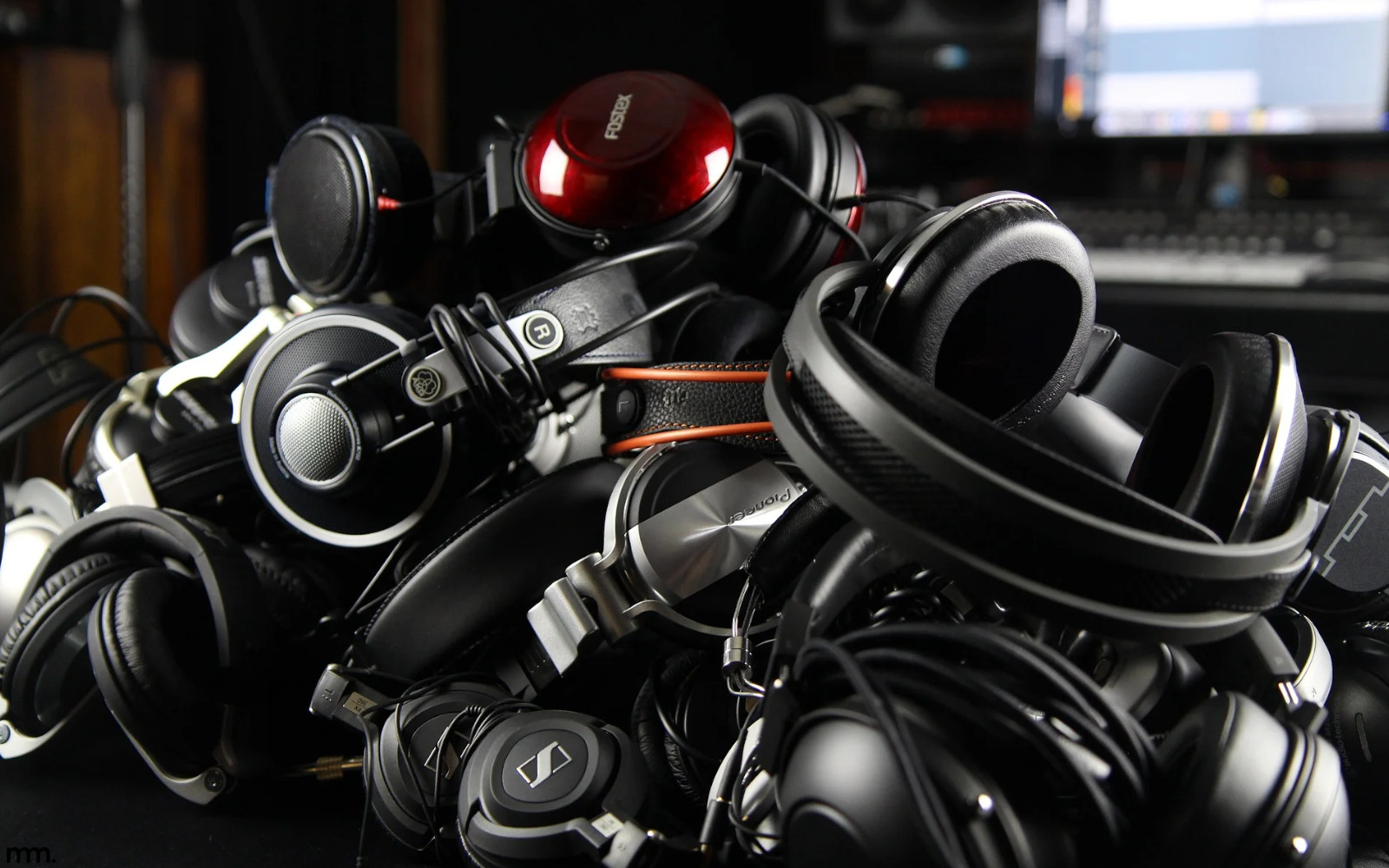
From late-night studio sessions and electronic drum practice to Bluetooth listening and the simple pleasure of hearing a favourite record properly, the right headphones can change the way you experience music. Here's our guide to the headphones at Musicmaker Dublin, grouped by the people who make them.
We spend an extraordinary amount of time discussing how music is made.
Guitar pickups. Drumheads. Microphone capsules. Synthesiser oscillators. Analogue circuitry. The mysterious and occasionally expensive world of studio compressors. The exact distance between a microphone and a guitar amplifier that makes somebody in the control room suddenly shout, "THERE IT IS!"
All fascinating stuff. But eventually, every instrument, recording and carefully assembled signal chain arrives at the same place.
Your ears.
And headphones occupy a rather special position in that relationship. They're simultaneously some of the most personal pieces of equipment a musician owns and some of the most practical.
A good pair can turn a bedroom into a private practice space. They can help a producer hear the unpleasant little click hiding between two edits. They can make electronic drums feel enormous without introducing the neighbours to the drummer's developing double-kick technique. They can reveal a backing vocal you've somehow missed for twenty years.
Or they can simply give you forty minutes alone with a brilliant album and absolutely nobody asking you anything, which is not to be underestimated.
At Musicmaker Dublin, our headphone collection covers a wonderfully varied set of musical needs. We've got studio-minded designs from Audio-Technica, practical monitoringfrom Donner and Roland, everyday wireless listening from Sony, and an especially clever educational solution from SOHO Sound Company.
Different companies. Different approaches. Different reasons to put the world on mute.
So rather than treating every pair of headphones as interchangeable, we're going to explore what each brand does well, get into the specifications that actually matter, and help you find something suited to the way you listen, practise and create.
Because the best headphones aren't necessarily the most expensive ones. They're the ones that make sense for your ears and your music.
Before We Begin: What Actually Makes Good Headphones?
Spend five minutes looking at headphone specifications and you'll encounter a familiar parade of numbers. Driver diameters. Impedance. Sensitivity. Frequency response. Battery life. Bluetooth versions. Occasionally a frequency range extending so far beyond human hearing that you begin to wonder if the manufacturer is also targeting dolphins.
These specifications matter. But they need context.
A headphone driver is the miniature loudspeaker responsible for converting electrical energy into sound. You'll commonly find dynamic drivers measuring around 30mm, 40mm or 50mm across. Larger drivers can offer useful design possibilities, particularly in managing diaphragm movement and low-frequency output, but diameter alone doesn't determine sound quality. Magnet design, diaphragm materials, acoustic tuning and the shape of the earcup are all important.
Then there's impedance, measured in ohms.
A headphone's impedance influences the electrical load it presents to an amplifier, but it doesn't tell you everything about how easy the headphones are to drive. Sensitivity also matters. Two pairs with similar impedance figures can require different amounts of power to reach the same listening level.
Frequency response describes the range of frequencies a manufacturer specifies its headphones can reproduce. A quoted range of 5Hz–40kHz might look more impressive than 20Hz–20kHz, but those figures don't tell you how evenly the headphones reproduce bass, midrange and treble. Without information about measurement conditions and tolerances, the endpoints alone reveal surprisingly little about tonal accuracy.
And finally, there's the distinction between closed-back, open-back, on-ear and over-ear designs.
Closed-back headphones enclose the rear of the driver, helping reduce sound leakage and provide some isolation from the surrounding environment. That's especially useful for recording, instrument practice and monitoring. Open-back designs allow more airflow and sound to pass through the earcups, often creating a different sense of spaciousness, but with greater leakage.
Over-ear headphones surround the ears. On-ear headphones rest against them. Comfort, isolation and fit can differ considerably between the two.
And no, Bluetooth headphones aren't automatically the right choice for every job. Wireless transmission introduces latency, which can become distracting when monitoring an instrument in real time.
The important question isn't simply, "Which headphones sound best?"
It's "What am I actually going to do with them?"
Now we're talking.
Donner: Big Drivers, Sensible Money, Proper Studio Intentions
Donner has become an increasingly interesting name in affordable musical equipment, particularly for musicians putting together their first serious practice or recording setups. We've already seen what the company can do with electronic drums, digital pianos, guitar effects and audio interfaces. Its approach tends to focus on practical features and accessible pricing rather than making entry-level musicians feel they've arrived at the wrong end of the equipment market.
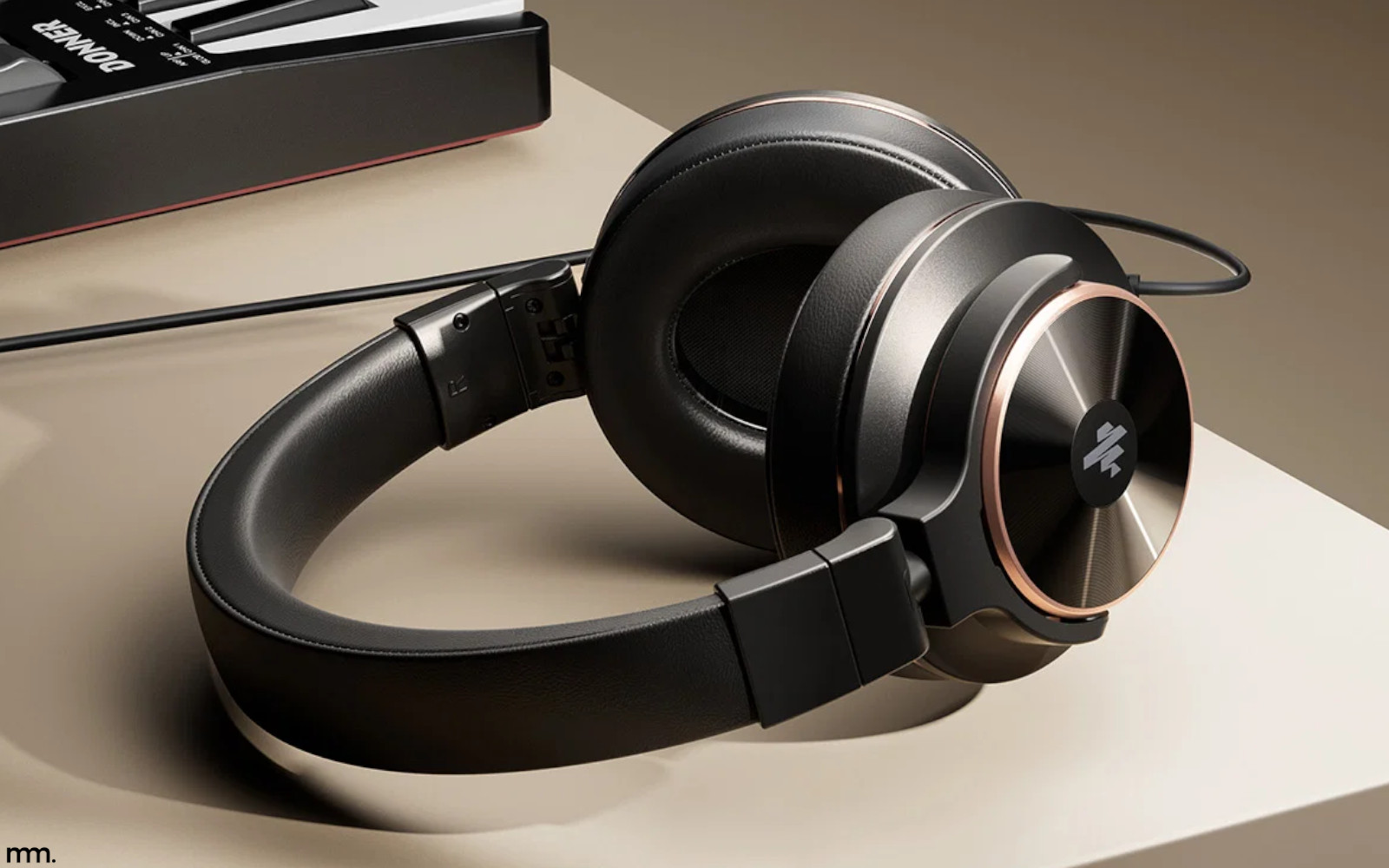
And the Donner M100 Studio Monitor Headphones follow that same philosophy.
The M100 uses substantial 50mm dynamic drivers, with a specified frequency response of 20Hz–20kHz, 32-ohm impedance and sensitivity rated at 110dB ±3dB. Donner lists 30mW rated power and 300mW maximum input power.
What does that mean in practice?
The relatively low impedance makes the M100 a practical companion for many digital pianos, electronic drum modules, audio interfaces and everyday headphone outputs, although the final listening level still depends on the output device and headphone sensitivity.
The closed-back construction helps keep the sound close to the listener, making the M100 useful for private practice and basic recording applications where unwanted sound leakage can become a problem. And Donner has paid attention to something musicians regularly overlook until it becomes a nuisance.
The cable.
The M100 uses a detachable coiled cable that can extend to approximately three metres. That's extremely handy when you're sitting at a digital piano, moving around a recording desk or leaning over an electronic drum kit to adjust something.
A short, permanently attached cable can make those simple movements unexpectedly dramatic. Stand up too quickly, forget you're connected, and suddenly your audio interface is making an unscheduled journey across the desk. Not ideal.
Donner also provides 3.5mm connectivity and a 6.35mm adaptor, allowing the headphones to connect to the smaller sockets found on computers and portable equipment as well as the larger headphone outputs used by many musical instruments and studio devices.
Comfort is addressed through soft ear cushions and an adjustable headband, important considerations when practice sessions extend beyond the first enthusiastic twenty minutes.
For a beginner producer, pianist, electronic drummer or home-recording musician, the M100 represents exactly the kind of equipment we like to see.
Not unnecessarily complicated. Not financially terrifying. Just a useful pair of headphones that makes it easier to sit down and get on with the music.
Audio-Technica: Studio Legends and Wireless Freedom
Some headphone brands earn their reputation through flashy marketing. Audio-Technica did it by becoming practically impossible to avoid in recording studios, DJ booths and production rooms. And with the ATH-M20xBT and ATH-M50x, you've got two rather different ways to enjoy that Japanese engineering.
The Audio-Technica ATH-M20xBT Bluetooth Headphones bring studio-inspired sound into the wireless world. Their 40mm dynamic drivers, closed-back construction and Bluetooth connectivity make them brilliant everyday companions, while multipoint pairing lets you connect two compatible devices. There's even a low-latency mode for watching videos, plus a whopping 60 hours of battery life. And here's the clever bit: plug in the supplied cable and you've got wired listening for your keyboard, interface or studio setup. One pair, two worlds, considerably fewer cables tangled around your chair.
Then there's the big lad.
The Audio-Technica ATH-M50x Professional Monitor Headphones are genuine studio royalty. Their 45mm large-aperture drivers, rare-earth magnets and copper-clad aluminium voice coils deliver punchy bass, detailed mids and the sort of clarity that exposes a dodgy edit hiding in the mix. With a 15Hz–28kHz frequency response, 38-ohm impedance, swivelling earcups and three detachable cables, they're built for serious recording, production and DJ monitoring.
The M50x isn't designed to make every recording sound lovely. It's designed to let you hear what's actually happening — including that slightly suspicious bass guitar note you've been pretending not to notice.
Our verdict? The M20xBT is the versatile wireless all-rounder. The M50x is the studio workhorse that means business. Both are excellent reasons to put your phone on silent and disappear into some music.

The Audio Technica ATH-50x , available at Musicmaker now.
Roland: Three Headphones, Three Levels of Studio Seriousness
Roland knows a thing or two about sound. After decades of building synthesisers, digital pianos, electronic drums and recording equipment, the company understands that headphones aren't simply for listening to music. Sometimes they're how you discover that your supposedly perfect keyboard patch has a bass frequency capable of frightening small animals.
At the top of this particular pile sit the Roland RH-300 Stereo Headphones. These premium closed-back monitors feature custom 45mm neodymium drivers, copper-clad aluminium voice coils, a 10Hz–25kHz frequency response and 40-ohm impedance. Designed for accurate, detailed monitoring, they combine excellent isolation with soft ear cushions and sturdy aluminium housing accents. They're the serious choice for producers, engineers and musicians who want to hear every layer of a recording without unnecessary sonic flattery.
The Roland RH-200 Stereo Monitor Headphones occupy the wonderfully useful middle ground. Their 40mm drivers, 20Hz–20kHz frequency response and 65-ohm impedance deliver clear, controlled monitoring for recording, mixing and instrument practice. The closed-back design helps keep backing tracks out of nearby microphones, while the comfortable earcups make long sessions considerably less punishing. Proper studio headphones without the need to remortgage the rehearsal room.
And then there's the Roland RH-5 Closed Stereo Headphones, a cracking entry point for musicians who need dependable wired listening. With 40mm drivers, 32-ohm impedance and a 10Hz–22kHz frequency response, they're a practical match for digital pianos, electronic drums, keyboards and everyday music practice. Lightweight, straightforward and ready to work, they're proof that useful musical equipment doesn't always require an intimidating price tag.
Our verdict? The RH-300 is the premium studio specialist, the RH-200 is the dependable recording-room all-rounder, and the RH-5 is the affordable practice companion.
Three different headphones. Three different budgets. One very Roland obsession with getting the sound right.
And frankly, we're all for it.
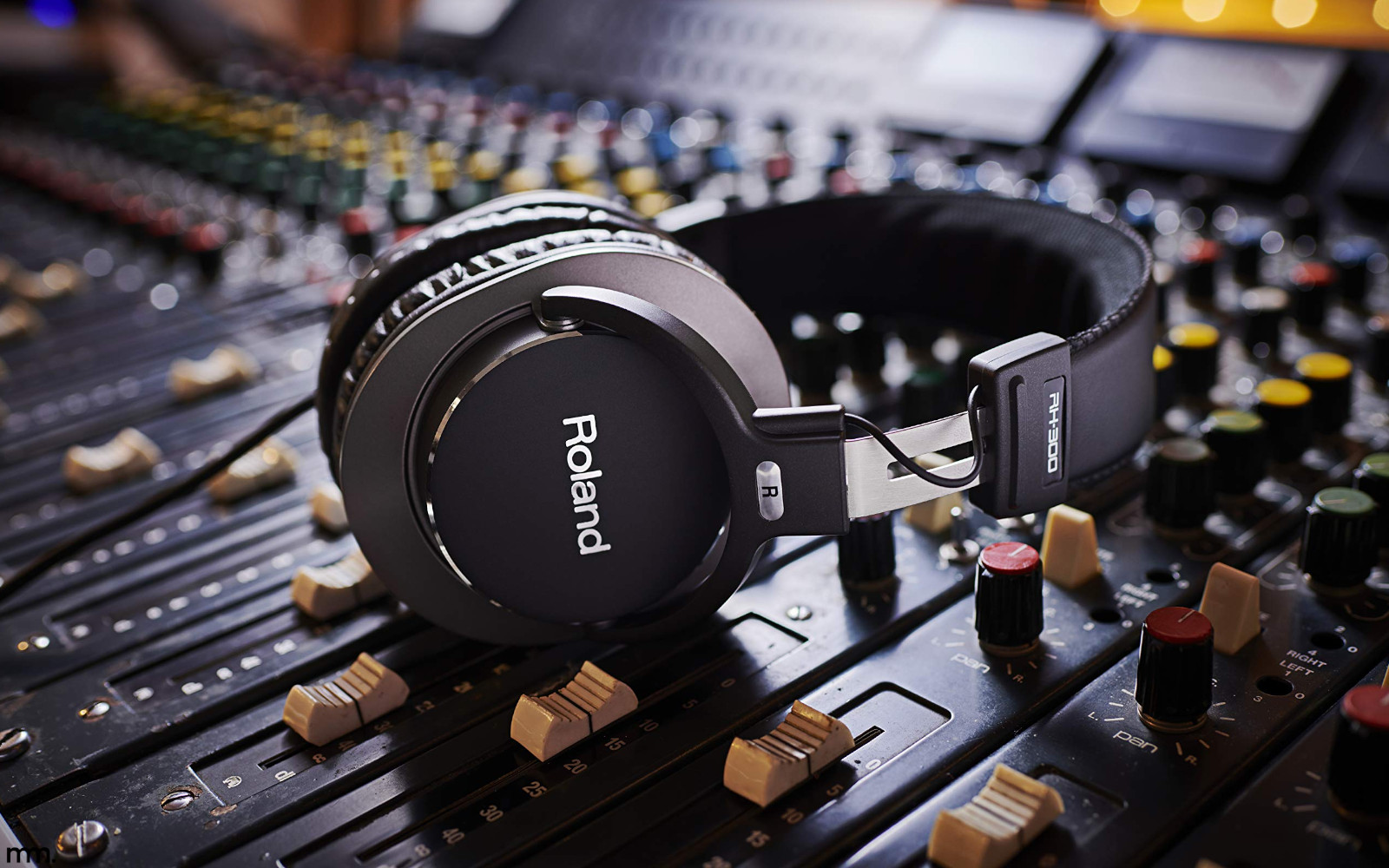
The Roland RH-300 Headphones
Roland VMH-D1: Somebody Finally Thought About the Drummer
Right. Drummers. Gather round.
The Roland VMH-D1 V-Drums Headphones are one of the most interesting products in the current Musicmaker headphone collection, largely because Roland has approached them from the perspective of somebody actually sitting behind an electronic drum kit.
And that changes everything. An electronic drummer experiences two sounds simultaneously.
There's the sound produced by the drum module: the beautifully sampled kick, the snare articulation, the cymbal wash, the toms, the ambience and all the musical detail the kit is designed to reproduce. And then there's the physical noise of wooden sticks repeatedly striking mesh and rubber pads.
The latter isn't particularly glamorous.
Nobody spends thousands of euro assembling an electronic drum kit because they've always dreamed of hearing a small collection of plastic objects being tapped in a spare room. The VMH-D1 is designed to help separate those two experiences.
Roland uses custom-tuned 50mm dual-diaphragm drivers with a specified frequency response of 5Hz–40kHz, 32-ohm impedance and sensitivity around 100dB. The closed-back earcups and form-fitting memory-foam cushions provide passive isolation, helping the drum module's sound remain prominent against the physical noise of the pads.
That can make an enormous difference to the playing experience.
The kick feels more substantial. The snare becomes easier to hear at lower monitoring levels. Cymbal detail is clearer. Ghost notes and subtle articulations have a better chance of remaining audible while the sticks are doing their thing.
But Roland hasn't stopped at the sound.
The VMH-D1 includes two detachable cables: a three-metre cable for playing drums and a shorter 1.5-metre cable for everyday listening. There's also a cable restraint system designed to route the lead behind the player's neck.
If that sounds like a minor detail, you've clearly never had a headphone cable attempt to join a drum fill.
Roland even includes a dedicated headphone hanger that can attach to a drum or cymbal stand, along with a carrying pouch and a 6.3mm adaptor. Finish practising. Hang the headphones on the kit. Return tomorrow. Everything is exactly where it belongs.
A revolutionary concept in the world of drummers, where finding the correct drum key can occasionally resemble an archaeological expedition. For electronic drummers, the VMH-D1 is not simply another set of studio headphones with a Roland logo. It's a product designed around the actual mechanics and inconveniences of playing electronic drums.
And that makes it rather brilliant.
Explore the Roland VMH-D1 V-Drums Headphones at Musicmaker.
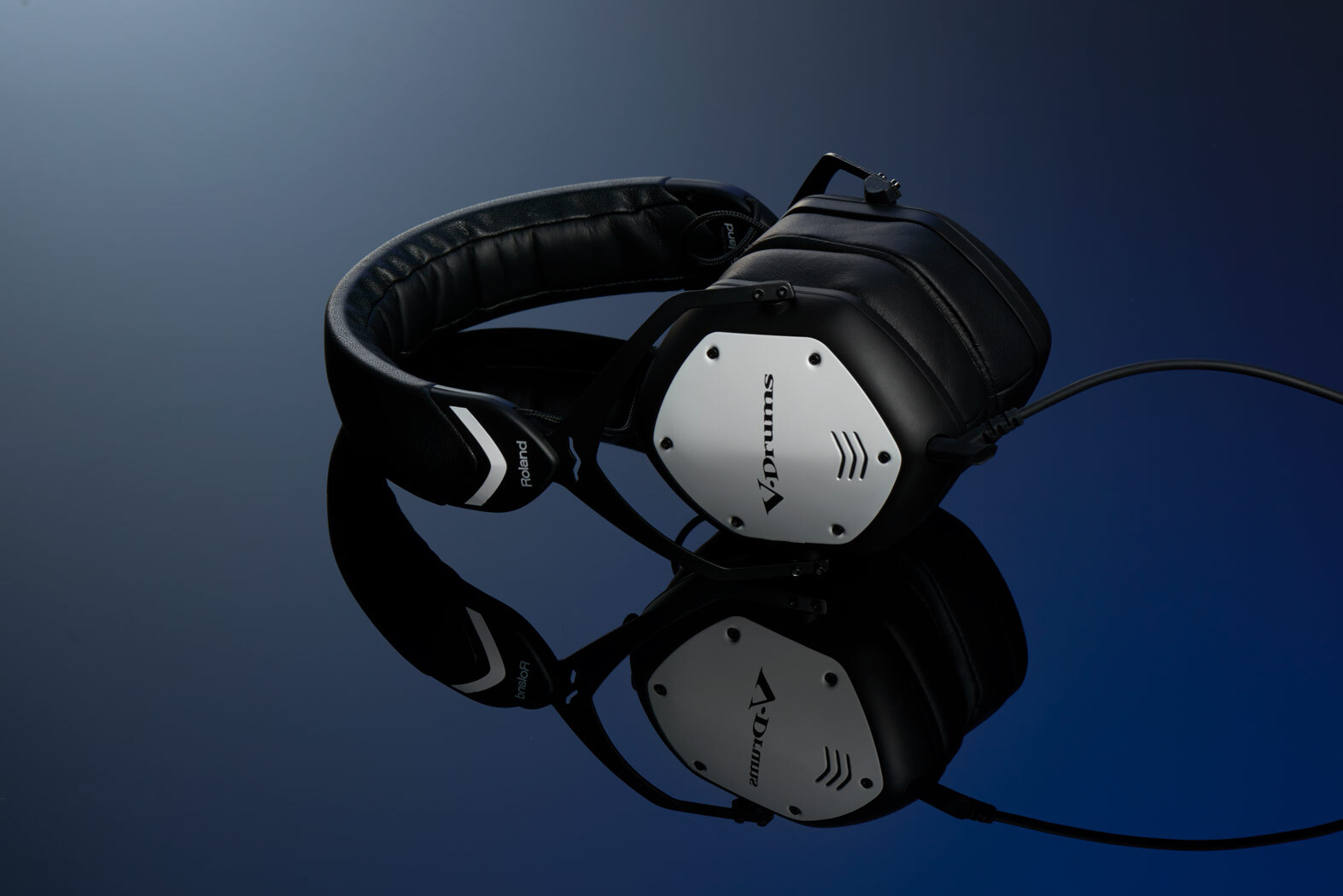
The Roland VH-1 Drummer's Headphones, available at Musicmaker.
Sony: Sometimes You Just Want to Listen to Music
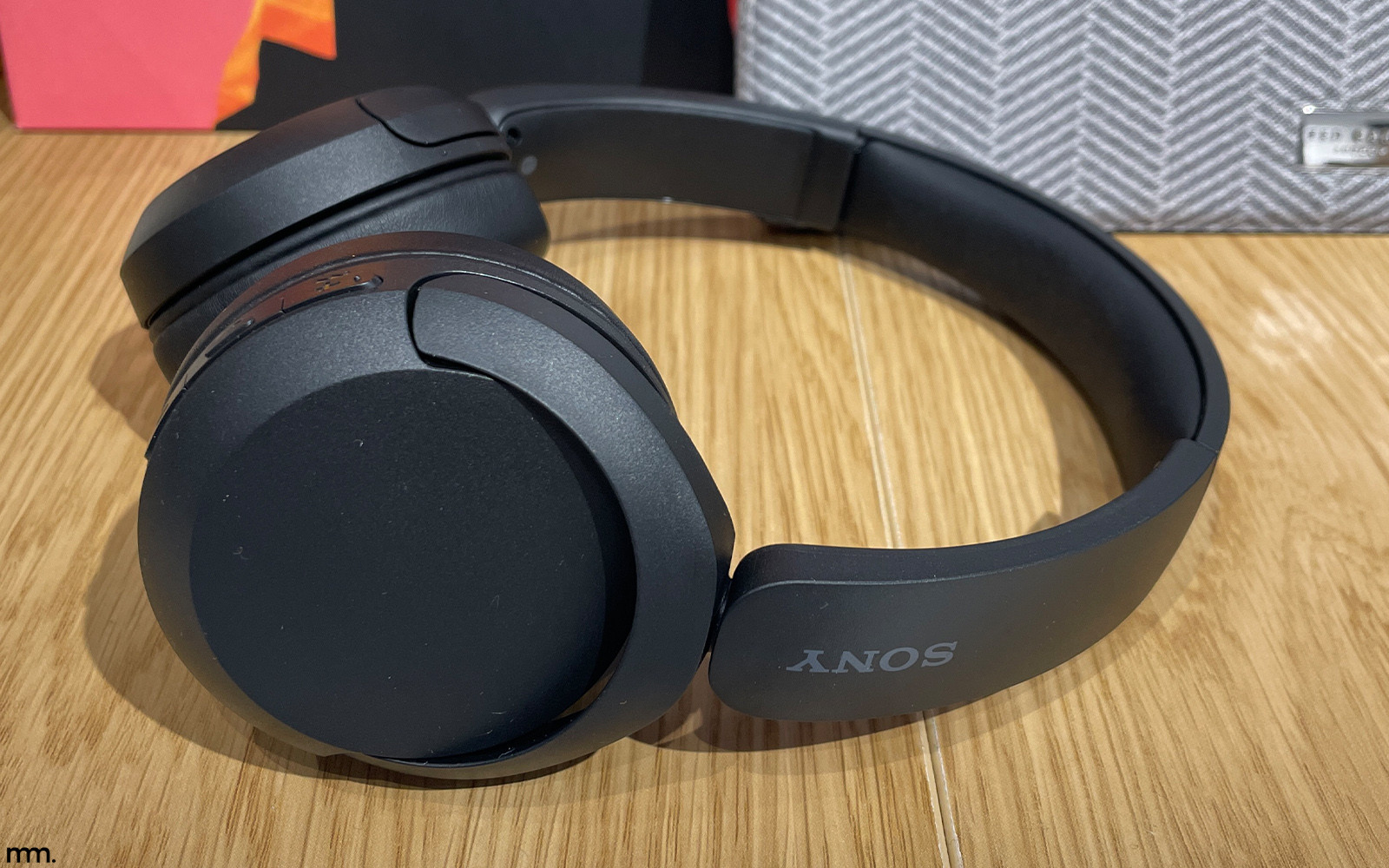
Sony WH-CH520 wireless on-ear headphones in black
Not every pair of headphones needs to be part of a recording studio. Sometimes the job is considerably simpler.
Put them on. Press play. Enjoy yourself.
Sony has been a major force in personal audio for decades, and its headphones reflect an enormous amount of experience in designing products for people who simply want music to accompany their day. The Sony WH-CH520 Wireless Headphones are a particularly attractive example of that approach.
These are lightweight, on-ear Bluetooth headphones rather than large over-ear studio monitors. At approximately 147g, they're designed to be comfortable and easy to carry, with swivel earcups, soft padding and a straightforward adjustable headband.
Inside are 30mm dynamic drivers, supported by Sony's DSEE sound enhancement technology, which processes compressed audio in an attempt to improve perceived detail. Bluetooth 5.2 provides wireless connectivity, while multipoint support allows connection to two compatible devices. There's a built-in microphone for calls, physical controls for playback and volume, and access to customisable equalisation through Sony's companion app.
But the headline specification is the battery life. Up to 50 hours of playback.
That's an awful lot of listening between charges.
And a quick three-minute charge can provide approximately 1.5 hours of additional playback when the battery is running low. The WH-CH520 is particularly appealing for commuting, studying, travelling, working and enjoying music away from a dedicated studio setup.
It's also important to be clear about what it isn't.
The WH-CH520 is an on-ear wireless listening headphone, not a specialist wired studio monitor. It doesn't offer the same kind of passive isolation as a fully enclosing over-ear design, and Bluetooth latency makes it a less suitable choice for real-time monitoring of electronic instruments.
But that's not a criticism. It's simply understanding the job. If your priority is music on the bus, podcasts on a walk, playlists while working or an album in the evening, the Sony is doing exactly what it was designed to do.
And there's a lot to be said for that.
Explore the Sony WH-CH520 Wireless Headphones at Musicmaker.
The Closed-Back Question: Why Isolation Matters
There's a reason closed-back headphones appear so frequently in recording studios and practice setups.
Imagine you're recording a vocal. The singer is wearing headphones, listening to the backing track while a sensitive microphone sits nearby.
If the headphones leak too much sound, that playback can enter the microphone and become part of the recording. Suddenly the vocal track contains unwanted traces of the instrumental, which can complicate editing, compression and mixing.
Closed-back headphones help reduce that problem.
The same principle applies to electronic instruments. When you're practising digital piano or electronic drums, you generally want to hear the instrument's output clearly rather than the surrounding room. Passive isolation can help. But there's a distinction between isolation and active noise cancellation.
Closed-back construction physically reduces some external sound. Active noise cancellation uses microphones and electronic processing to generate signals that counteract certain environmental noises.
Neither approach makes headphones completely silent to the outside world, and neither automatically guarantees a neutral monitoring response.
For recording and instrument practice, good passive isolation, comfort and a reliable wired connection are often more useful than a long list of consumer audio features. For travelling and casual listening, the priorities can be quite different.
And that's why comparing every headphone by the same criteria doesn't make much sense.
Headphones at Musicmaker Dublin: Come and Have a Listen
There's one thing a specification sheet cannot tell you. How a pair of headphones feels on your head.
Head shape matters. Ear shape matters. Clamping pressure matters. The softness of the pads matters. The weight distribution matters.
A pair that feels magnificent for five minutes might become uncomfortable after two hours. Another pair might fit so naturally that you forget you're wearing them.
And then there's sound.
A driver specification cannot tell you how much you'll enjoy the midrange of your favourite singer's voice. An impedance figure cannot tell you how satisfying the kick drum will feel on a record you've known since you were sixteen.
That's the human part.
At Musicmaker, we've spent decades helping musicians find equipment that suits the way they actually make and enjoy music. Headphones are no exception.
Explore our headphones collection online, or come and visit us at 29 Exchequer Street, Dublin 2, where we're always happy to talk about studio monitoring, electronic instruments, recording setups and the finer details of a good listening experience.
And with free shipping across Ireland on orders over €15, your next listening upgrade doesn't need to involve a trip into town.
From the Musicmaker Workshop
We've spent more than four decades helping musicians make sound at Musicmaker, but listening has always been the other half of the equation.
A good pair of headphones can make practice more private, recording more precise and familiar music unexpectedly new again. From affordable Donner monitoring and Audio-Technica's studio-inspired designs to Sony's wireless convenience, Roland's musician-focused engineering and SOHO's clever educational headphones, the right pair isn't necessarily the most expensive one on the wall.
It's the pair that suits what you're actually doing.
And makes you want to keep listening.
Because before you can decide what the music needs next, you have to hear what's already there.
So put the headphones on. Shut up for a minute.
There's music playing.