sE Electronics: Serious Sound, No Studio Snobbery
From sweat-soaked stages to beautifully detailed studio recordings and the rapidly expanding world of podcasting, sE Electronics has become a fascinating name in modern microphone design. A fresh selection has arrived at Musicmaker Dublin, and there is an awful lot here for singers, engineers, drummers and dedicated audio nerds to get excited about.
There is a moment in every recording session when somebody moves a microphone two inches and the entire sound changes.
The guitar suddenly has definition. The vocal stops fighting the room. The snare acquires that satisfying crack you've been chasing for the last forty minutes. Everybody looks at the engineer, who nods thoughtfully as though this was the plan all along.
Welcome to microphones.
They're deceptively simple things. A capsule, some electronics, a connector and a housing. Yet the relationship between microphone design, placement, polar pattern and sound source can transform a recording or live performance more dramatically than an expensive collection of plug-ins.
That's why we're particularly delighted to have a substantial range of sE Electronics microphones at Musicmaker.
sE has developed a reputation for bringing serious microphone engineering into price brackets that make sense for working musicians. Its range stretches from dependable handheld dynamics and versatile studio condensers to specialist drum microphones and purpose-built broadcast designs.
And rather than treating every microphone as interchangeable, sE has given different jobs different tools.
Which is exactly how it should be.
Dynamic Microphones: Built for the Real World
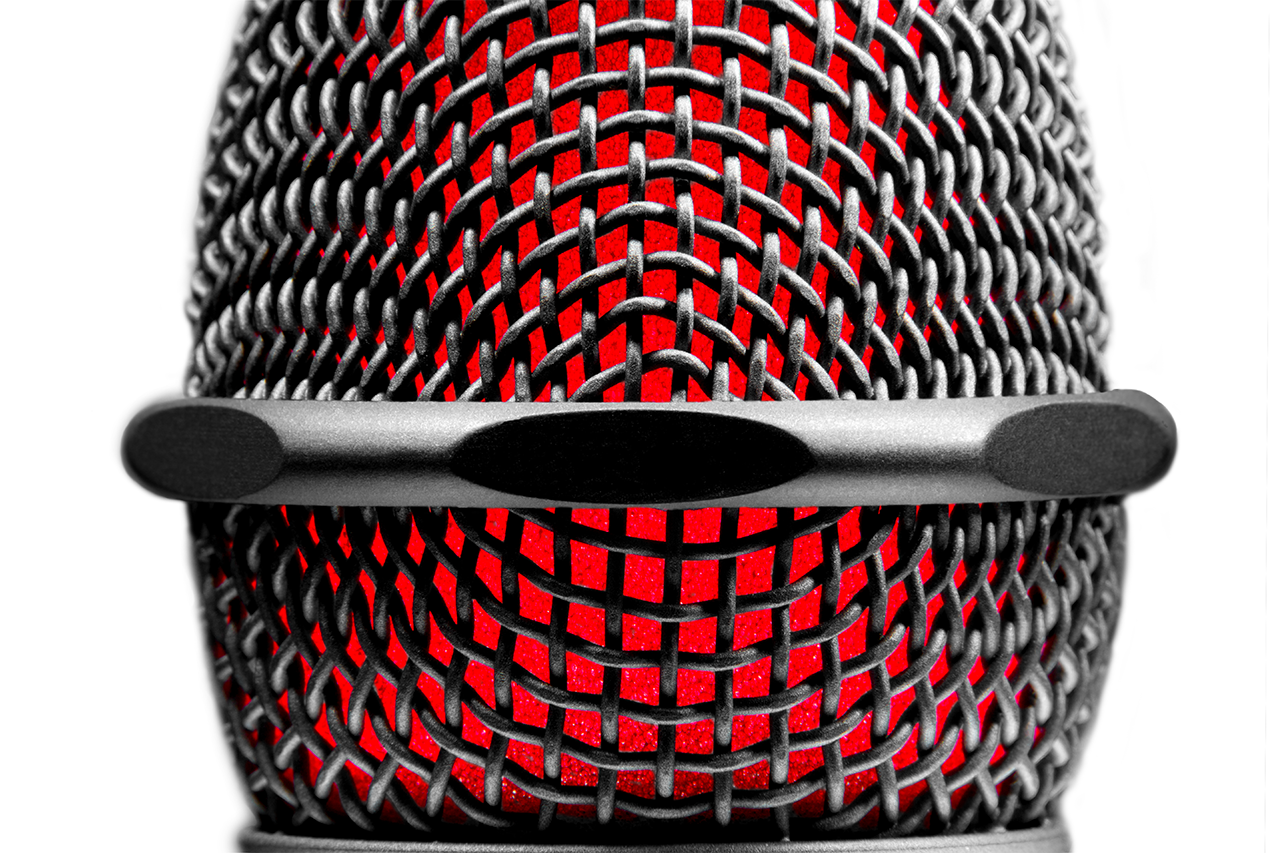
Dynamic microphones are the workhorses of live sound, rehearsal rooms and countless recording sessions. Their moving-coil capsules operate through electromagnetic induction: sound pressure moves a diaphragm connected to a coil, which travels within a magnetic field to generate an electrical signal.
It's a beautifully practical design. Dynamic microphones generally tolerate high sound-pressure levels, don't require phantom power for a conventional passive capsule, and can be engineered for exceptional physical durability.
But the really interesting part is what happens when a manufacturer pays attention to capsule tuning, internal suspension and polar response.
The V7: A Vocal Microphone With Proper Attitude
The sE Electronics V7 is a particularly convincing example of how much performance can be packed into a handheld dynamic microphone.
Its supercardioid pickup pattern concentrates sensitivity towards the front of the capsule while reducing sound arriving from many off-axis directions. On a busy stage, that can help keep the lead vocal distinct from cymbals, guitar amplifiers and the general sonic excitement occurring behind the singer.
The V7 also uses an integrated capsule suspension system to reduce handling noise, alongside a robust metal body and steel mesh grille. Its aluminium voice coil contributes to the capsule's particular response, giving the microphone an articulate, present character that suits energetic live vocals.
It's worth remembering that supercardioid microphones have a small rear sensitivity lobe, so monitor placement still matters. A well-positioned wedge can make the difference between a confident vocal and the sort of feedback that causes everybody in the room to look accusingly at the sound engineer.
Musicmaker also carries V7 variations, including switch-equipped and vintage-inspired options. Explore the full sE Electronics collection for the current selection.
V2 and V3: Sensible Prices, Serious Intentions
Not every singer needs the same microphone, and not every microphone purchase needs to become a financial event.
The sE Electronics V2 Switch is a rugged handheld dynamic with an integrated on/off switch. That simple feature is genuinely useful for spoken-word applications, rehearsal spaces and performers who want direct control between songs.
The sE Electronics V3 takes a straightforward approach to reliable vocal reproduction, using a cardioid capsule, internal windscreen, integrated suspension and durable metal construction.
Cardioid and supercardioid are not merely marketing labels. They describe different directional responses, with practical implications for stage layout, monitor positioning and rejection of surrounding sound. Understanding those differences is one of the easiest ways to make a sensible microphone purchase.
V7X and V Beat: When the Instruments Start Shouting
Move away from vocals and things become even more interesting.
The sE Electronics V7X is designed for instrument capture, with a supercardioid pattern and a stated frequency response of 30Hz–19kHz. It makes a compelling choice for guitar cabinets, brass, percussion and drum applications where attack, separation and controlled spill matter.
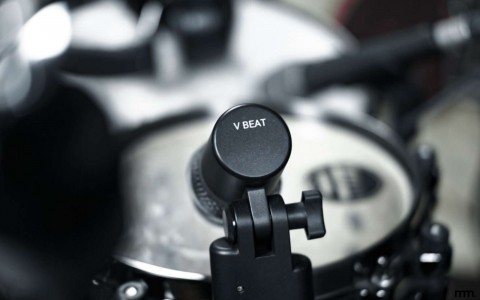
The sE Electronics V Beat takes a more specialised route, designed for close-miking drums in demanding stage and studio environments.
That distinction matters. A microphone positioned near a tom is dealing with considerable sound pressure, abrupt transients, neighbouring cymbals and a drummer whose sticks may occasionally travel through airspace reserved for expensive equipment.
Compact positioning, rugged construction and useful off-axis rejection are not glamorous specifications. They're the details that make a microphone easy to work with when the drummer starts counting in.
A great dynamic microphone doesn't need to flatter everything. It needs to capture the right thing, in the right place, when the music gets loud.
Condenser Microphones: Where the Details Live
If dynamics are often the first choice when the stage gets loud, condenser microphones have long been central to capturing the finer details of recorded sound.
A condenser capsule uses a diaphragm and backplate forming a capacitor. As the diaphragm moves in response to sound, the electrical relationship between those elements changes, allowing the microphone's circuitry to produce an audio signal.
Because condenser designs can use very light diaphragms, they can offer excellent transient response and detailed high-frequency capture. They also require power, commonly supplied through 48V phantom power from a compatible interface or mixer.
But detail is a double-edged sword.
A condenser microphone can reveal the beautiful shimmer of an acoustic guitar string. It can also reveal the traffic outside, the room's reflections and the chair that squeaks every time the singer breathes.
Good recording begins with understanding both sides of that equation.
X1 A: Your First Serious Studio Microphone
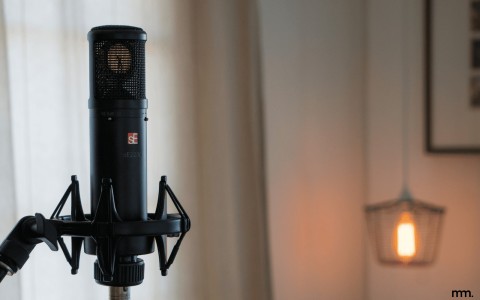
The sE Electronics X1 A is a particularly attractive entry into large-diaphragm condenser recording.
Its cardioid capsule offers a stated 20Hz–20kHz frequency response, while a switchable -20dB attenuation pad extends its usefulness with louder sources. A 100Hz low-cut filter helps manage rumble, footfall noise and excessive low-frequency energy.
Those controls make a real difference in everyday recording.
Put a condenser close to a loud guitar cabinet and the pad becomes useful. Record an acoustic guitar in a room with low-frequency vibration and the filter may help clean things up. Move from vocals to percussion and you begin to appreciate why flexibility matters more than a single impressive specification.
The X1 A is the sort of microphone that can introduce a home-recording musician to proper microphone technique without immediately exhausting the equipment budget.
X1 S: More Control for the Developing Studio
The sE Electronics X1 S builds on that philosophy with a refined large-diaphragm design, very low self-noise and additional flexibility for recording different sources.
Its switchable attenuation and low-cut options make it well suited to the realities of a working home studio, where the same microphone might capture a vocal in the morning, an acoustic guitar after lunch and a guitar amplifier when everybody else has left the house.
Low self-noise becomes particularly relevant when recording quieter material, because the microphone's own electronic noise is less likely to intrude on delicate passages or require unnecessary compromises during mixing.
And for singers who like to work with dynamics and subtle changes in delivery, that quiet performance can be especially rewarding.
sE2200: A Studio Favourite With Some History
The sE Electronics sE2200 belongs to one of the company's most recognisable microphone families.
Its large-diaphragm condenser design is aimed squarely at detailed studio recording, offering a combination of vocal presence, controlled low-frequency response and the sort of sensitivity that makes careful microphone placement worthwhile.
It's an excellent reminder that buying a better microphone should lead to better recording decisions, not simply more expensive recordings.
Move the mic slightly off-axis to soften a harsh vocal. Adjust the distance to control proximity effect. Experiment with room position before reaching for equalisation.
The microphone captures what you put in front of it. Learning how to present the sound is half the craft.
sE7: Small Diaphragms, Big Possibilities
Large-diaphragm condensers tend to attract the glamorous studio photographs, but small-diaphragm microphones are some of the most useful tools an engineer can own.
The sE Electronics sE7 Matched Pair is designed for detailed instrument recording, making it particularly interesting for acoustic guitars, piano, percussion and stereo overhead applications.
Using two closely matched microphones opens the door to stereo techniques such as XY and spaced-pair recording. Each approach creates a different relationship between stereo width, localisation and room ambience.
With acoustic guitar, a well-positioned pair can capture both the immediacy of the strings and the instrument's broader resonance. Over a drum kit, the same microphones can become the foundation of an entire drum sound.
That's the joy of a useful microphone collection: the possibilities multiply as your understanding improves.
Podcast and Broadcast Microphones: Every Word Counts
There was a time when broadcast microphones belonged almost exclusively to radio studios and television facilities.
Now they sit on desks in bedrooms, offices, rehearsal spaces and spare rooms across the country.
Podcasting, streaming, voiceovers, online teaching and independent broadcasting have changed the way people think about microphones. The priorities are often different from a conventional music session: intelligibility, plosive control, room rejection, simple positioning and repeatable results become central concerns.
And a microphone that looks magnificent on camera still needs to sound good.
DynaCaster DCM 3: The Voice Gets Its Own Microphone
The sE Electronics DynaCaster DCM 3 is a front-address dynamic microphone designed for speech, vocals and broadcast applications.
Its cardioid pattern helps prioritise the speaker over surrounding sound, while integrated pop filtering and mechanical isolation make it a practical choice for desk-mounted microphone arms.
Unlike a typical side-address studio condenser, a front-address broadcast microphone is intended to be spoken into from the end. That allows it to sit comfortably on a boom arm without blocking the speaker's face or dominating the camera frame.
It's a small ergonomic detail with a large practical benefit.
DynaCaster DCM 6: Thirty Decibels of Cleverness
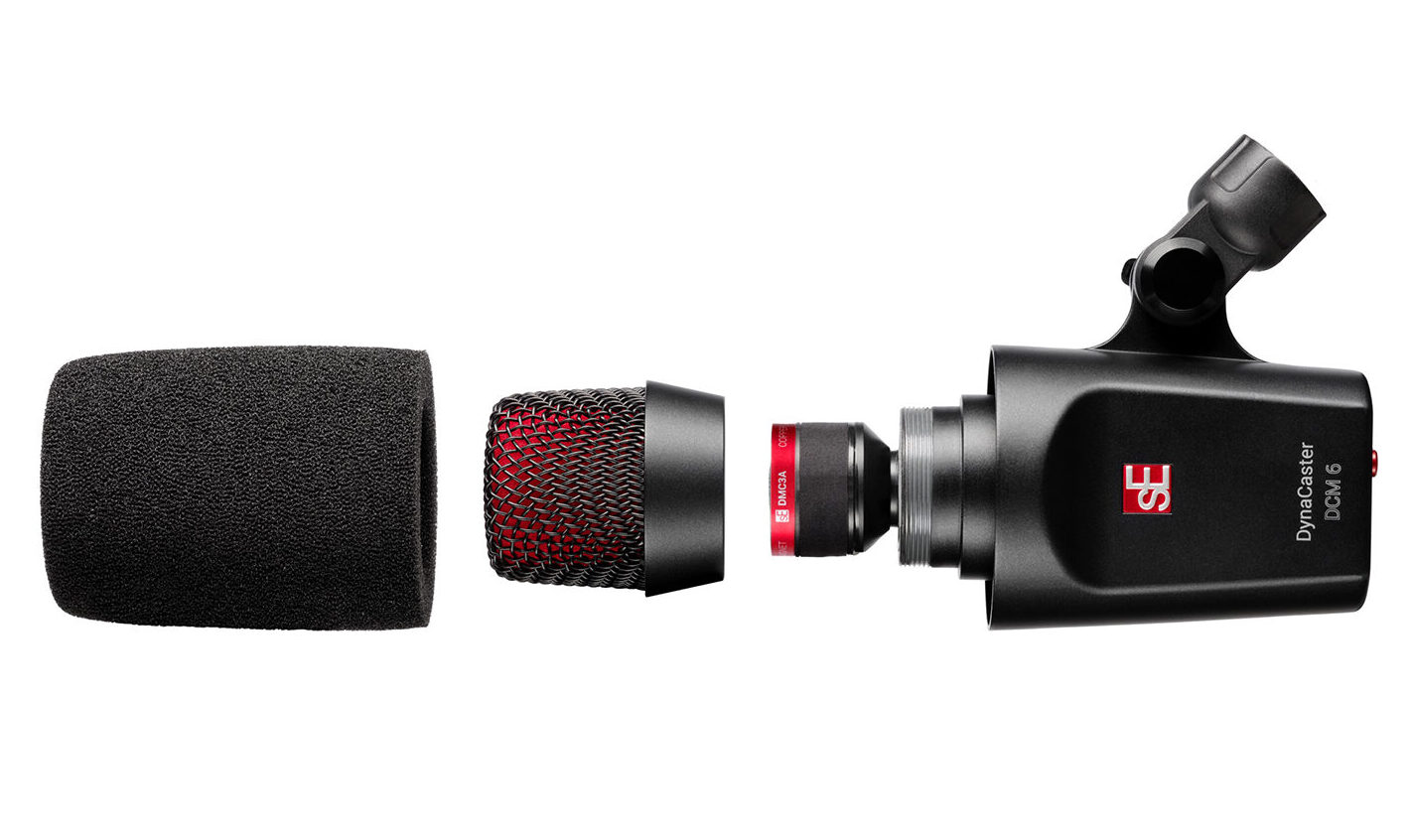
The sE Electronics DynaCaster DCM 6 adds a particularly useful trick: an integrated Dynamite preamplifier offering up to 30dB of additional gain when powered by 48V phantom power.
Why is that exciting?
Many passive dynamic broadcast microphones produce comparatively low output levels. If the connected interface has limited clean gain available, users may find themselves turning the preamp up aggressively and hearing more electronic noise than they would like.
An integrated active gain stage can help deliver a stronger microphone signal before it reaches the interface.
The DCM 6 combines that capability with a cardioid dynamic capsule, internal pop filtering and shock isolation. For podcasters and voiceover artists who want a straightforward XLR setup, it's an exceptionally sensible piece of engineering.
There's one important technical point: phantom power is required to activate the additional gain, rather than to make the underlying dynamic capsule behave like a condenser microphone.
Little details. Big difference.
NEOM USB: Plug In, Speak Up
For creators who would rather avoid assembling an XLR microphone chain, the sE Electronics NEOM USB takes a different approach.
It's a USB condenser microphone with its audio interface functionality built into the microphone itself, designed for direct computer connection.
That makes it especially appealing for podcasting, streaming, video calls, narration and straightforward home recording.
An XLR microphone offers flexibility when building larger recording systems, but a good USB microphone can be an excellent choice when simplicity matters most.
Less wiring. Less setup. More time making something worth listening to.
Musicmaker Mic Bundles: The Clever Way to Get Started
We love microphones. We also know that buying one is only part of the job.
Because there's a particular disappointment reserved for somebody who arrives home with a beautiful new microphone and realises they've forgotten the cable.
Or the stand.
Or both.
Which is why we've put together a selection of Musicmaker microphone bundles that make getting started considerably easier.
Musicmaker V2 Bundle: Straight to the Point
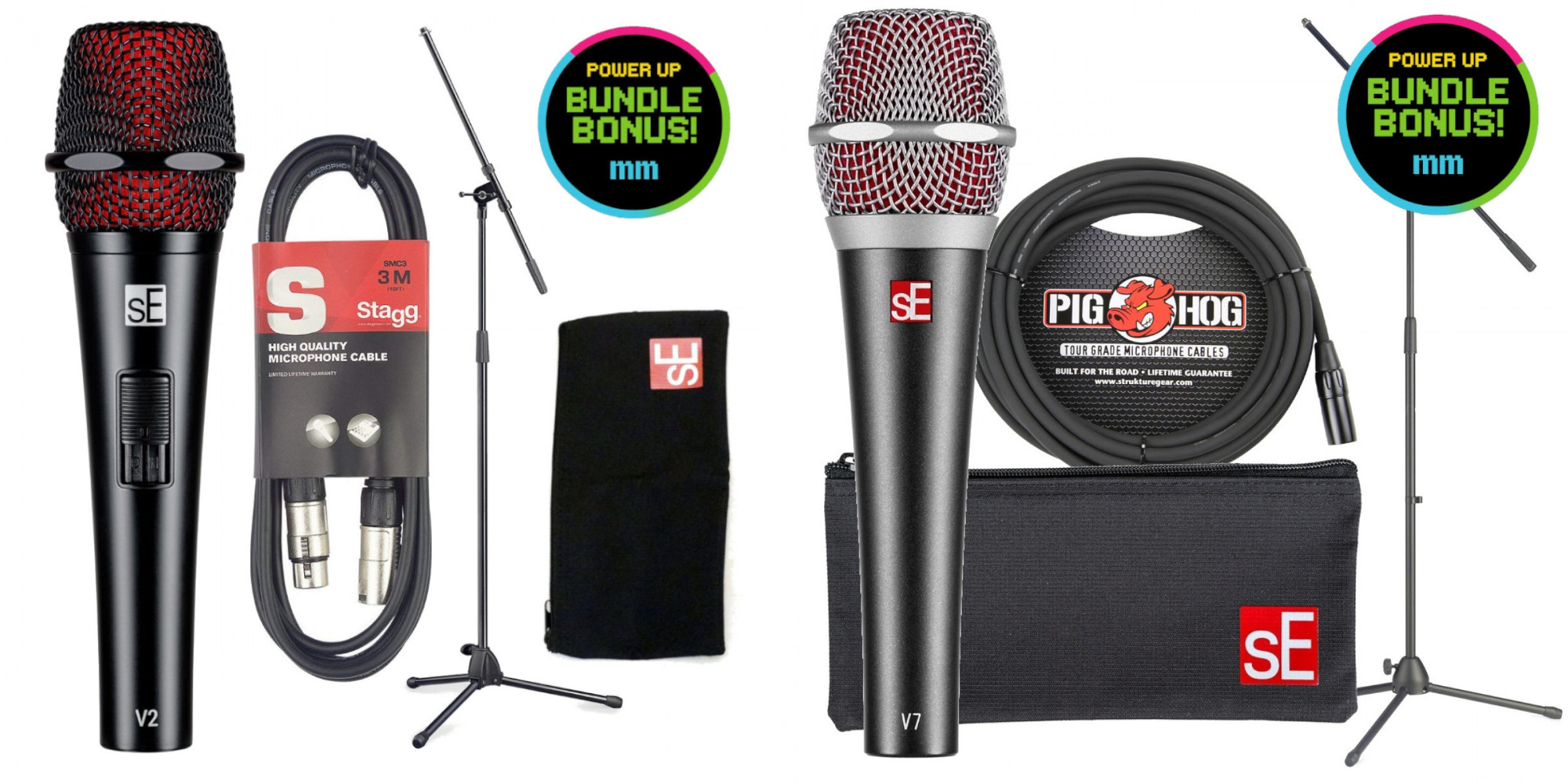
Our sE Electronics V2 Microphone Promo Bundle combines the V2 Switch dynamic microphone with a Stagg microphone stand and a 3-metre Stagg XLR cable.
It's a wonderfully practical package for rehearsals, presentations, live vocals and general-purpose microphone duties. The switch adds convenience, the stand gets the microphone into position, and the cable connects everything to your compatible mixer, interface or PA system.
No elaborate shopping expedition required.
Musicmaker V3 Bundle: A Proper Vocal Setup
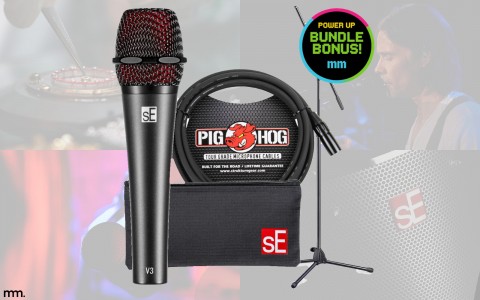
The sE Electronics V3 Microphone Promo Bundle centres on the V3 dynamic vocal microphone and adds a Stagg stand plus a Pig Hog 10ft XLR microphone cable.
It's an appealing setup for singers building their first live rig, rehearsal rooms upgrading their vocal microphones and anyone who wants dependable equipment without getting lost in an accessory catalogue.
The V3's cardioid pickup and integrated suspension provide a solid starting point for clear, controlled vocal reproduction.
Musicmaker V7 Bundle: The Stage-Ready Upgrade
Our sE Electronics V7 Microphone Promo Bundle brings together the V7 supercardioid dynamic microphone, a sturdy Stagg microphone stand and a Pig Hog 10ft XLR cable.
For singers looking for a more specialised live vocal microphone, the V7 is a particularly attractive centrepiece. Its directional response, capsule design and physical construction make it a serious option for regular rehearsals and demanding gigs.
The package brings the essential hardware together in one place, leaving you free to concentrate on the more important question.
What are we singing?
Bundle availability can change, so check the individual Musicmaker product pages before ordering.
And for the Drum Nerds: The V Pack Collection
We cannot talk about sE Electronics without giving the drummers and recording engineers a little extra attention.
The sE Electronics V Pack Venue and V Pack Club bring together purpose-built instrument microphones for capturing a drum kit as a coherent system.
Drum recording is an exercise in balancing attack, body, cymbal detail, phase relationships and microphone spill. The kick microphone must cope with enormous low-frequency energy. Tom microphones need controlled rejection. Overheads capture the broader kit and its relationship with the room.
It's not simply a matter of pointing several microphones at several drums and hoping the universe behaves.
Thoughtful microphone choice and positioning can save hours of corrective work during mixing.
And when the drums sound right at the source, everything else becomes easier.
So, Which sE Microphone Should You Choose?
For a singer playing live, start with the V-series dynamics. The V2 Switch and V3 make excellent practical choices, while the V7 offers a particularly appealing combination of vocal articulation and directional control.
For instrument recording and live miking, explore the V7X and V Beat. For acoustic instruments, detailed studio work and stereo recording, look towards the X1 A, X1 S, sE2200 and sE7 pair.
For podcasts and voiceovers, the DynaCaster DCM 3 and DCM 6 offer broadcast-focused dynamic designs, while the NEOM USB makes particular sense when direct computer connectivity is the priority.
And for anyone starting from scratch, our Musicmaker microphone bundles are a convenient way to bring the essential pieces together.
The important thing is not choosing the microphone with the most dramatic specification sheet.
It's choosing the microphone that suits the source, the room and the job.
The best microphone is not necessarily the most expensive one. It's the one that makes you forget about the microphone and concentrate on the performance.
Discover sE Electronics at Musicmaker Dublin
There's something wonderfully satisfying about getting a sound right before it ever reaches a plug-in.
A carefully positioned vocal mic. A condenser finding the sweet spot on an acoustic guitar. A kick drum captured with proper weight and definition. A podcast voice that sounds natural, intimate and clear.
That's what good microphones help us do.
Explore the full sE Electronics range at Musicmaker, including dynamic microphones, studio condensers, podcast microphones, instrument microphones and accessories.
Come and see us at 29 Exchequer Street, Dublin 2, and talk to people who genuinely enjoy getting into the details of recording equipment.
We offer free shipping across Ireland on orders over €15, so your next microphone can make its way to you wherever you are in the country.
From the Musicmaker Workshop
Since the early 1980s, Musicmaker has helped Irish musicians find instruments and equipment worth falling in love with. Every guitar, drum, piano, microphone, pedal and piece of studio gear we stock is chosen with musicians and their creative ambitions in mind.
We believe good equipment should encourage better performances, more experimentation and the confidence to make something new.
So find your sound. Move the microphone. Try another take.
And for the love of music, record the good one.