
Avalon L590c: Irish Bog Oak, Cedar and the Art of Guitar Making
Handcrafted in Northern Ireland from ancient Irish bog oak and solid cedar, the Avalon L590c is an extraordinary example of what happens when rare materials meet thoughtful, individual craftsmanship.
There are acoustic guitars whose appeal is immediately apparent. A beautifully figured piece of rosewood, an elegant body shape, a familiar maker's name on the headstock. You can recognise the quality from across a room.
Other instruments ask you to look a little closer.
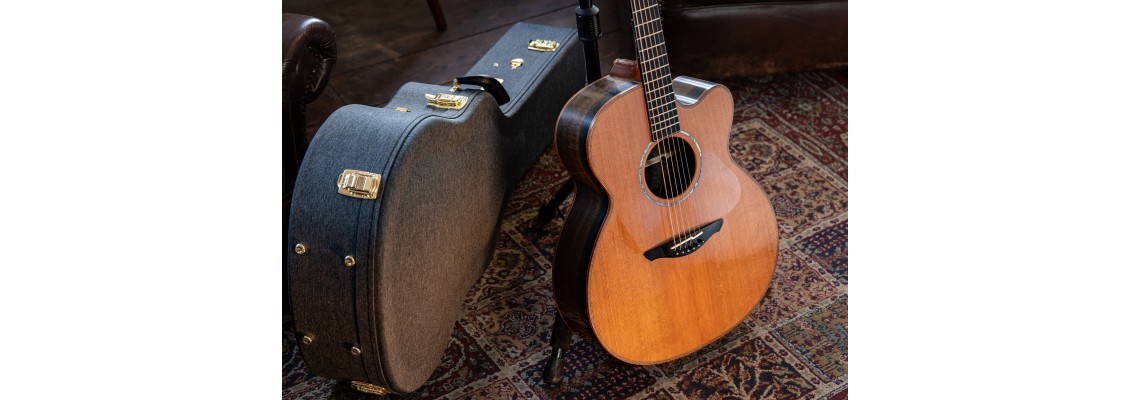
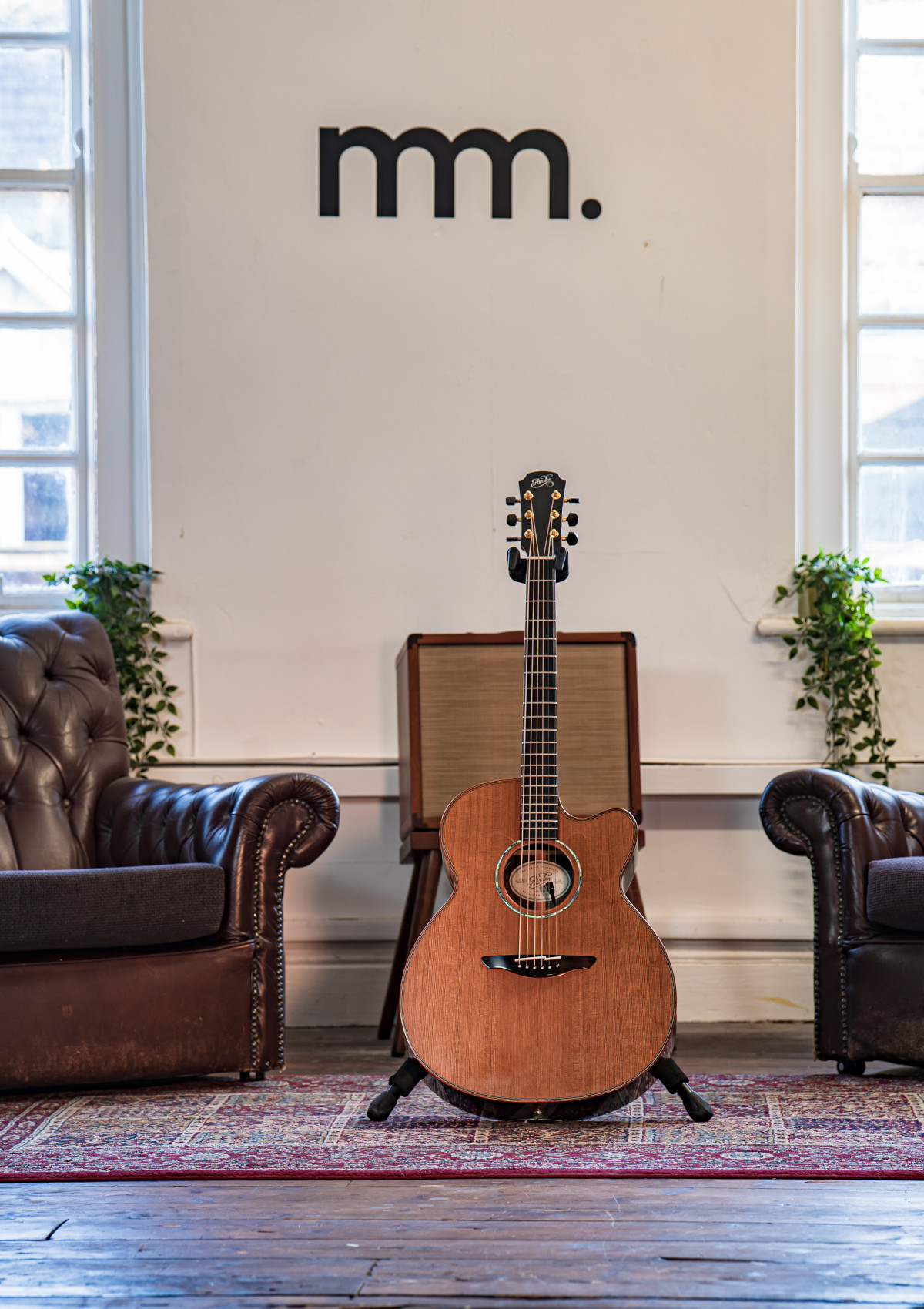
The Avalon L590c Bog Oak/Cedar Cutaway is one of those guitars. At first, its dark back and sides, warm cedar soundboard and restrained detailing suggest an exceptionally well-made contemporary acoustic. It is only when you begin examining the materials, the construction and the decisions behind them that the full significance of the instrument becomes clear.
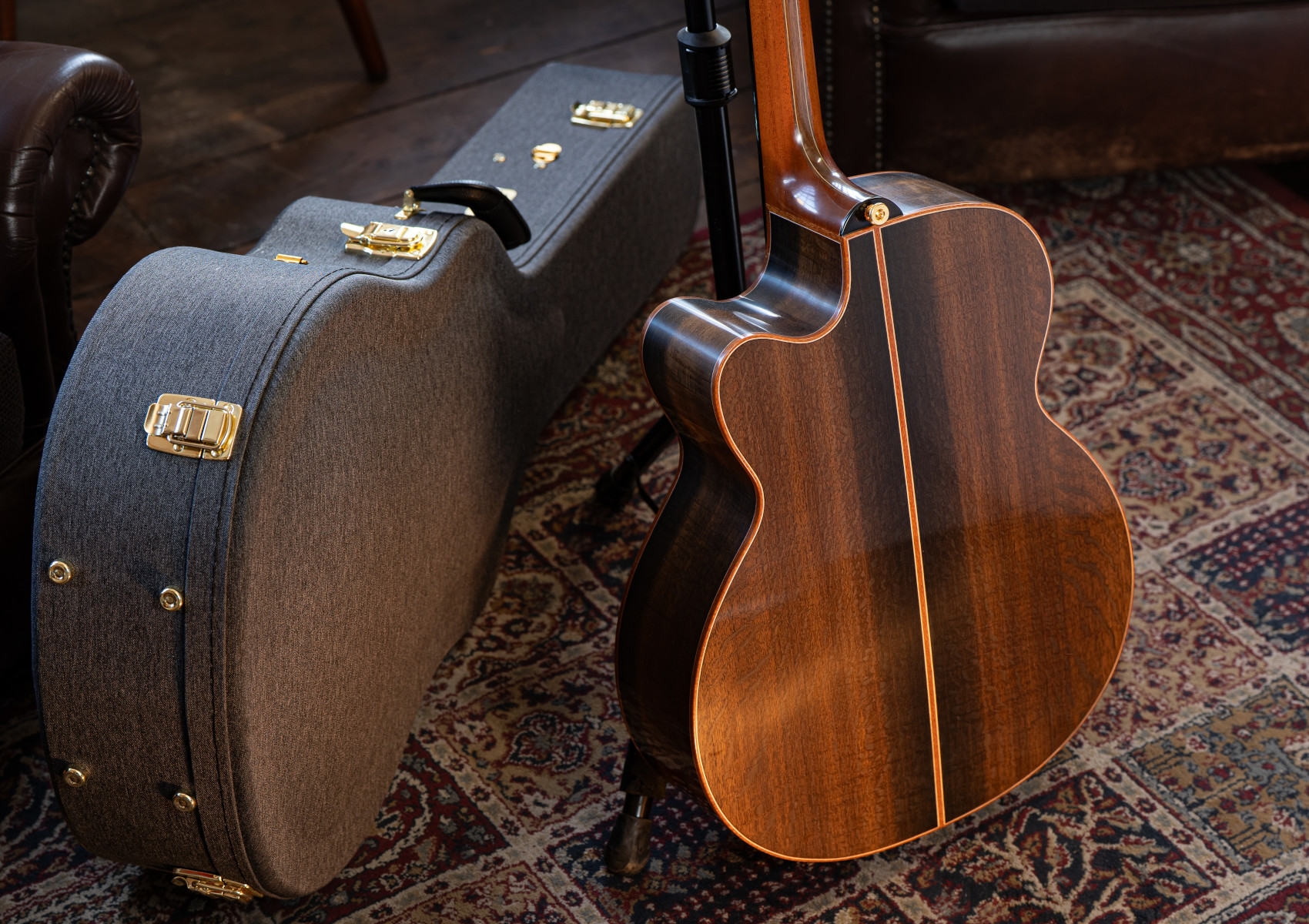
The back and sides are made from Irish bog oak that spent more than 4,000 years preserved beneath the landscape. The top is solid cedar. The guitar was built by Avalon in Northern Ireland, where the company's luthiers have developed a reputation for individual voicing, careful timber selection and a distinctly personal approach to acoustic guitar making.
It would be easy to let the remarkable age of the wood dominate the conversation. But that would miss something important.
The most interesting thing about the Avalon L590c is not simply where its materials came from. It is what an experienced guitar maker has been able to do with them.
An Irish Acoustic Guitar With an Unusual History
Bog oak is not a separate species of tree. It is oak that has spent an extended period preserved in the waterlogged, low-oxygen conditions of a peat bog. Over centuries and millennia, the timber undergoes physical and chemical changes. Compounds within the wood interact with the surrounding environment, and its colour can deepen considerably, producing the dark browns and almost black tones for which ancient bog oak is known.
The material is visually remarkable, but it also presents interesting challenges to a guitar maker.
Unlike a conventional supply of commercially prepared tonewood, ancient bog oak is not something that can be ordered in perfectly uniform sets. Its history, condition and physical properties vary from piece to piece. Selecting material suitable for an acoustic instrument requires careful assessment, and the maker must understand how the individual timber behaves rather than relying on a familiar recipe. For the Avalon L590c, the reward is a back and sides set with extraordinary character.
The dark colouring is not a surface stain designed to imitate age. It is part of the material itself. The grain carries subtle variation, giving the guitar an appearance that is both natural and unmistakably individual. There is a certain satisfaction in knowing that the timber came from the Irish landscape and was subsequently worked into a finished instrument by luthiers in Northern Ireland.
The provenance is meaningful. It connects the guitar to a place, a material and a particular tradition of making.
Yet provenance is only the beginning.
Why Pair Bog Oak With a Cedar Top?
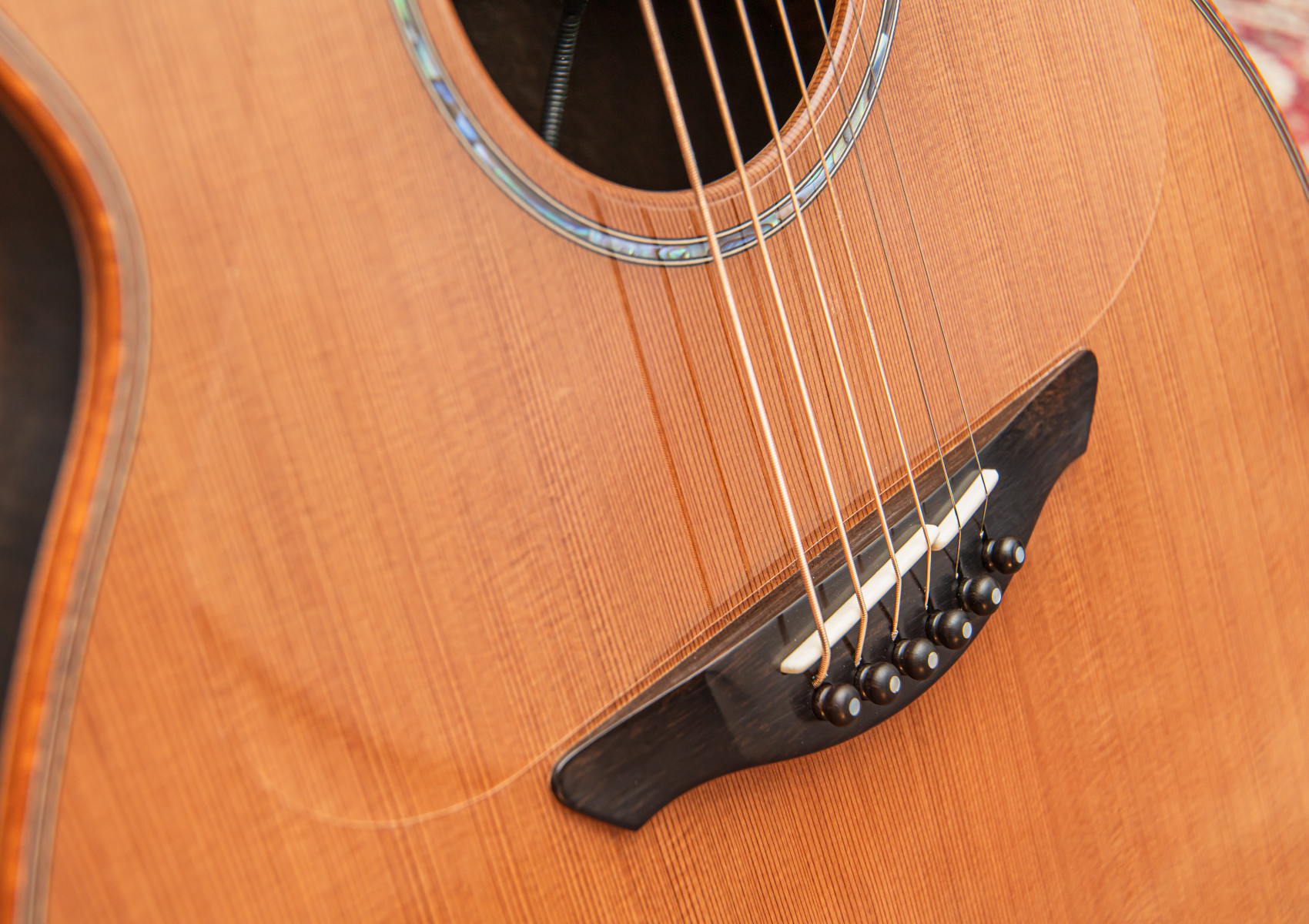
The soundboard is responsible for much of an acoustic guitar's audible response. Energy passes from the vibrating strings through the bridge into the top, where it sets a much larger surface into motion. For that reason, the choice of soundboard timber is central to the instrument's design. Spruce remains the most familiar choice for steel-string acoustics. It is valued for its combination of stiffness, strength and dynamic range, and its characteristics have shaped many of the guitar sounds we regard as traditional.
Cedar offers a different set of possibilities.
A well-made cedar-topped guitar can respond readily to a relatively light touch, producing a warm, rounded attack and a satisfying sense of immediacy. This makes cedar particularly attractive to fingerstyle players, whose music often depends on small differences in dynamics, articulation and the balance between individual strings. On the Avalon L590c, that sensitivity is an important part of the instrument's appeal.
The cedar top encourages a nuanced playing approach, while the large-bodied L-series design provides the physical capacity for a fuller, more expansive acoustic voice. The bog oak back and sides are intended to complement that response, contributing to the overall resonance and tonal balance of the instrument. It is worth being careful about assigning too much sonic responsibility to any one timber. An acoustic guitar is a complete vibrating system. Body dimensions, bracing, plate thickness, bridge design, construction methods and the individual properties of the wood all influence the result.
A particular species does not guarantee a particular sound. What matters is how successfully the maker brings those elements together.
And this is where Avalon's approach becomes especially relevant.
The Importance of Individual Voicing
There is a fundamental difference between choosing attractive materials and building a responsive acoustic guitar from them.
Good timber provides possibilities. The luthier must turn those possibilities into an instrument. Within Avalon's Luthier Series, individual craftsmanship plays a central role. The selection and shaping of the wood, the relationship between the soundboard and its bracing, and the balance of stiffness and flexibility all contribute to the finished guitar's response.
The process requires judgement.
A soundboard must be strong enough to support string tension over many years, but not so rigid that its ability to vibrate is unnecessarily restricted. Bracing must provide structural integrity while allowing the instrument to develop a useful range of movement and resonance. These are competing demands, and there is no single solution that works equally well for every piece of timber. With a material as unusual as ancient bog oak, the importance of that judgement becomes particularly clear.
The L590c is not compelling because Avalon has simply attached a rare set of back and sides to an otherwise ordinary guitar. It is compelling because the instrument has been conceived and built around the materials available.
That distinction is central to understanding high-end acoustic guitar making.
A Large-Bodied Guitar With a Sensitive Response
The Avalon L590c uses the company's L-series body shape, a substantial acoustic design that offers generous internal volume and a broad soundboard area.
A larger body can support a powerful low register and a sense of depth that smaller instruments sometimes approach differently. But size alone does not determine the character of a guitar. The relationship between the body and the top is what makes the L590c interesting. Its cedar soundboard is particularly suited to players who value responsiveness at moderate dynamics. Delicate fingerpicked passages, open tunings and arrangements that rely on sustained notes are natural areas of interest. The instrument's larger body also makes it worth exploring with a pick, particularly for players who want warmth and weight without sacrificing the separation between individual notes.
That balance can be useful in the studio.
An acoustic guitar that maintains clarity through the midrange may sit more comfortably around a vocal or another instrument, especially in arrangements where several acoustic parts occupy similar frequencies. Of course, recorded results depend heavily on microphone choice, placement, the room and the player. There is no substitute for listening. But the L590c's combination of cedar and bog oak presents an intriguing set of possibilities for musicians who appreciate tonal detail.
And because the guitar is individually handcrafted, the most meaningful evaluation remains the simplest one: sit down with it and play.
The Cutaway and the Playing Experience
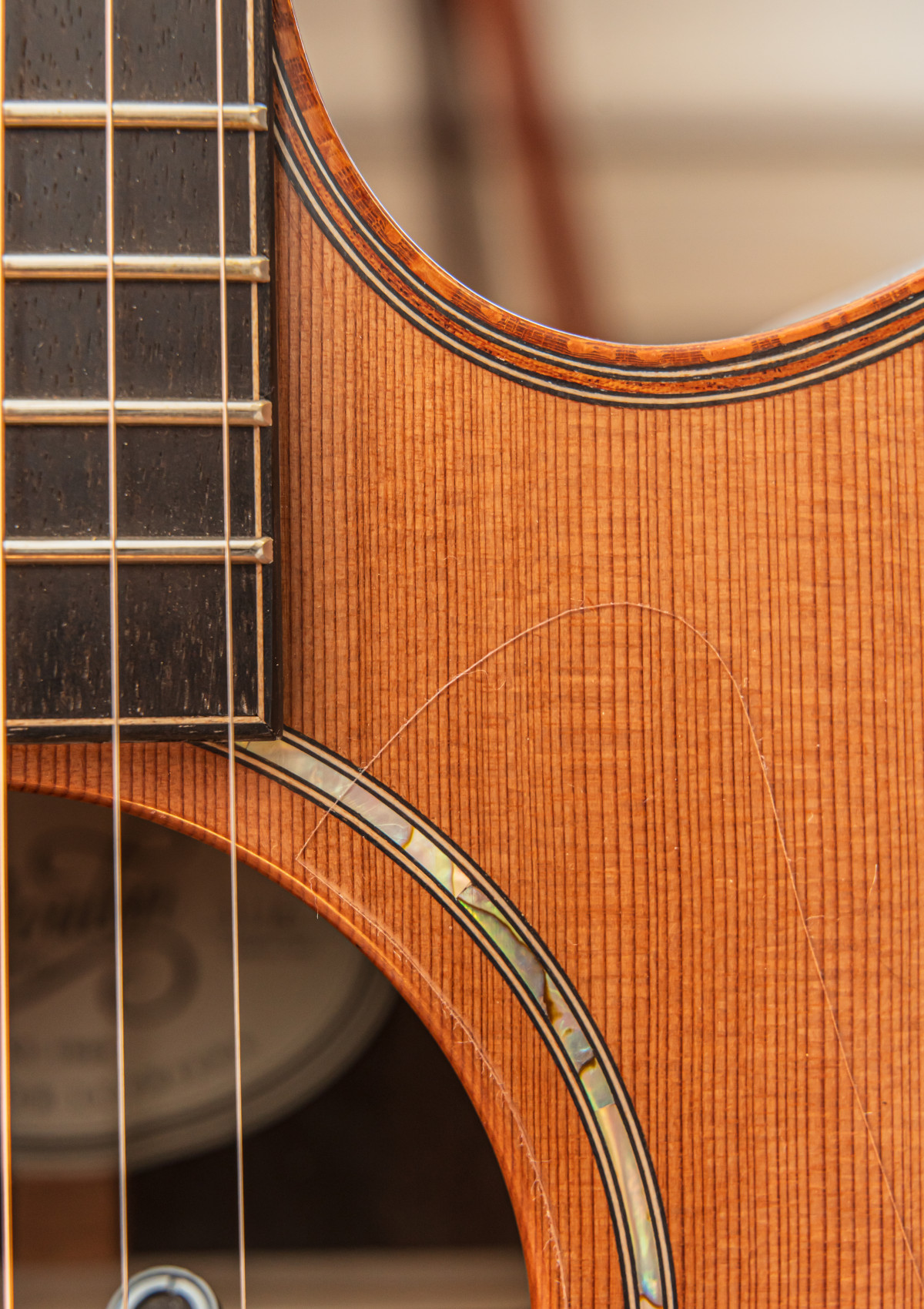
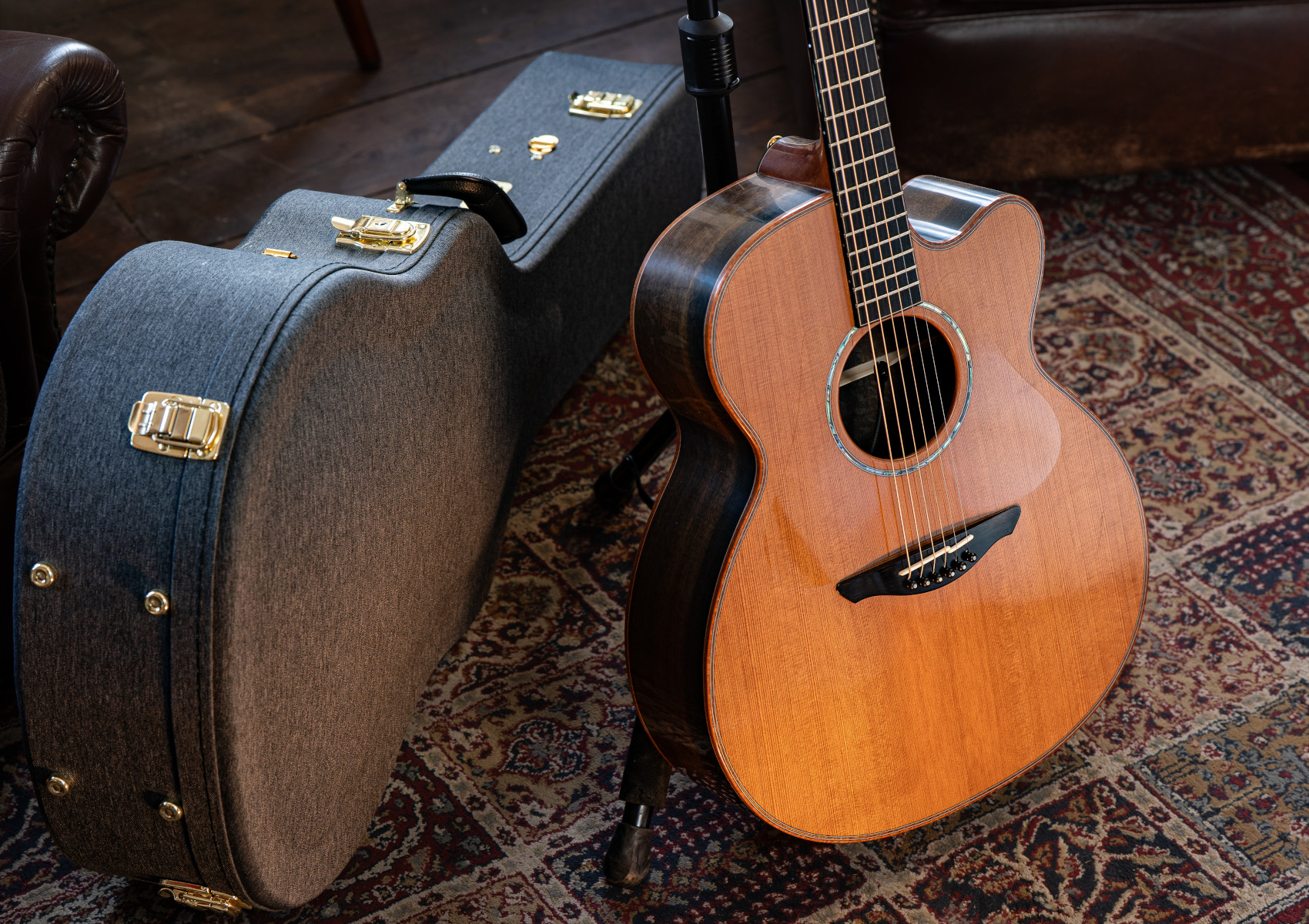
The final letter in the L590c model designation identifies another practical feature: the cutaway. On a large-bodied acoustic, access to the upper frets can become an important consideration for players who incorporate melodic lines, extended chord voicings and contemporary fingerstyle techniques. The L590c's cutaway gives the fretting hand more room to work higher up the ebony fingerboard.
It also provides a graceful visual counterpoint to the instrument's substantial body, complementing the dark bog oak and warm cedar without making the design feel overly elaborate.
The neck is made from Brazilian mahogany, while ebony is used for the fingerboard, bridge, bindings and headplate. Ebony is valued for its density, durability and smooth playing surface. On this instrument, its consistent dark appearance also provides a visual connection between the different parts of the guitar.
These details matter because a premium acoustic instrument must offer more than impressive sound.
The neck needs to feel comfortable. The frets must be accurately finished. The transition between body and neck should encourage confident playing. And the instrument should remain enjoyable over the course of a long practice session, recording date or performance.
The L590c has clearly been designed with the working musician in mind, even though its materials are anything but ordinary.
Restrained Details, Carefully Chosen
One of the most successful aspects of the Avalon L590c is its visual restraint. Ancient bog oak already provides a striking natural appearance. Elaborate decoration could easily distract from the timber rather than enhance it.
Instead, Avalon has chosen details that sit comfortably within the overall design.
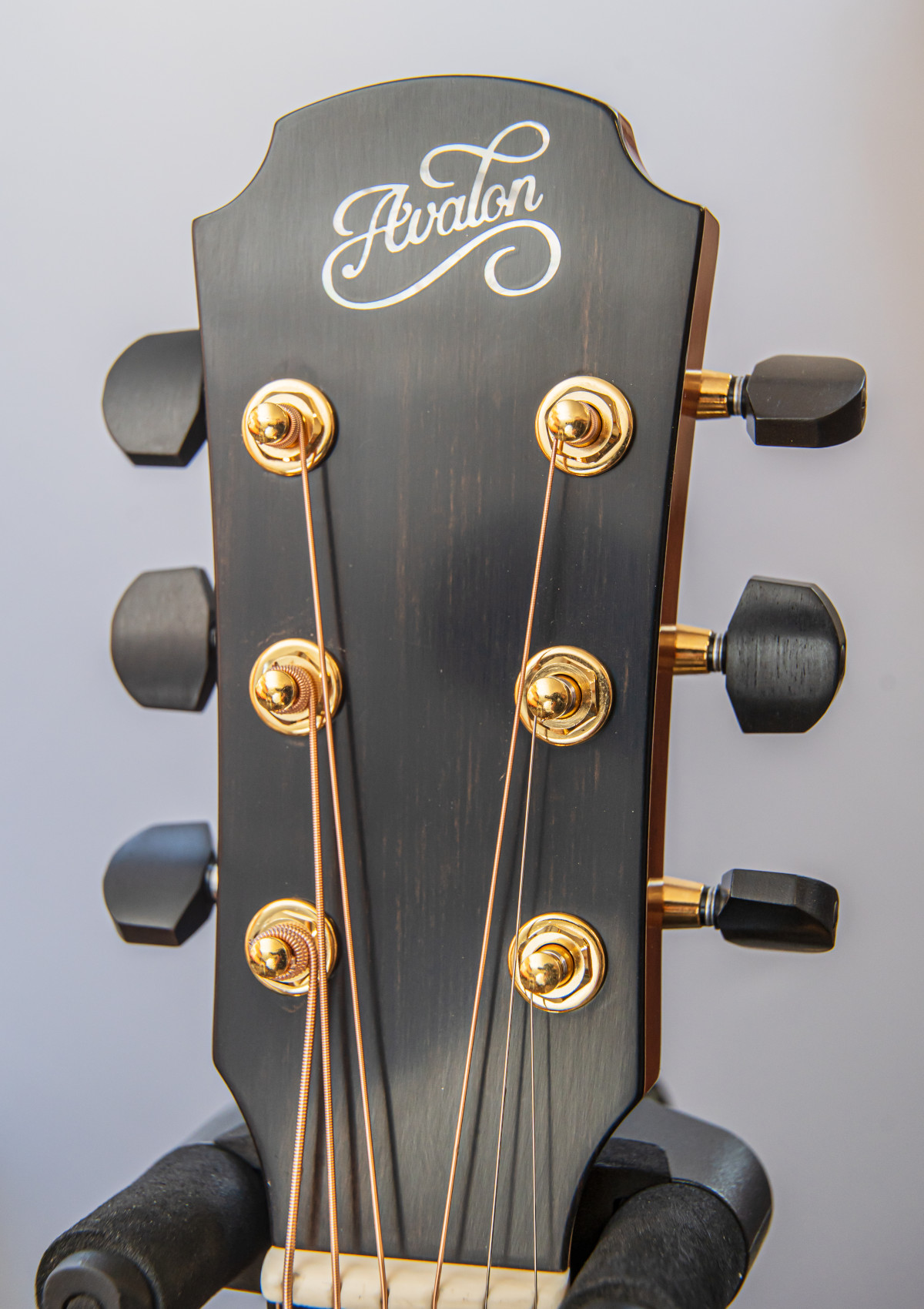
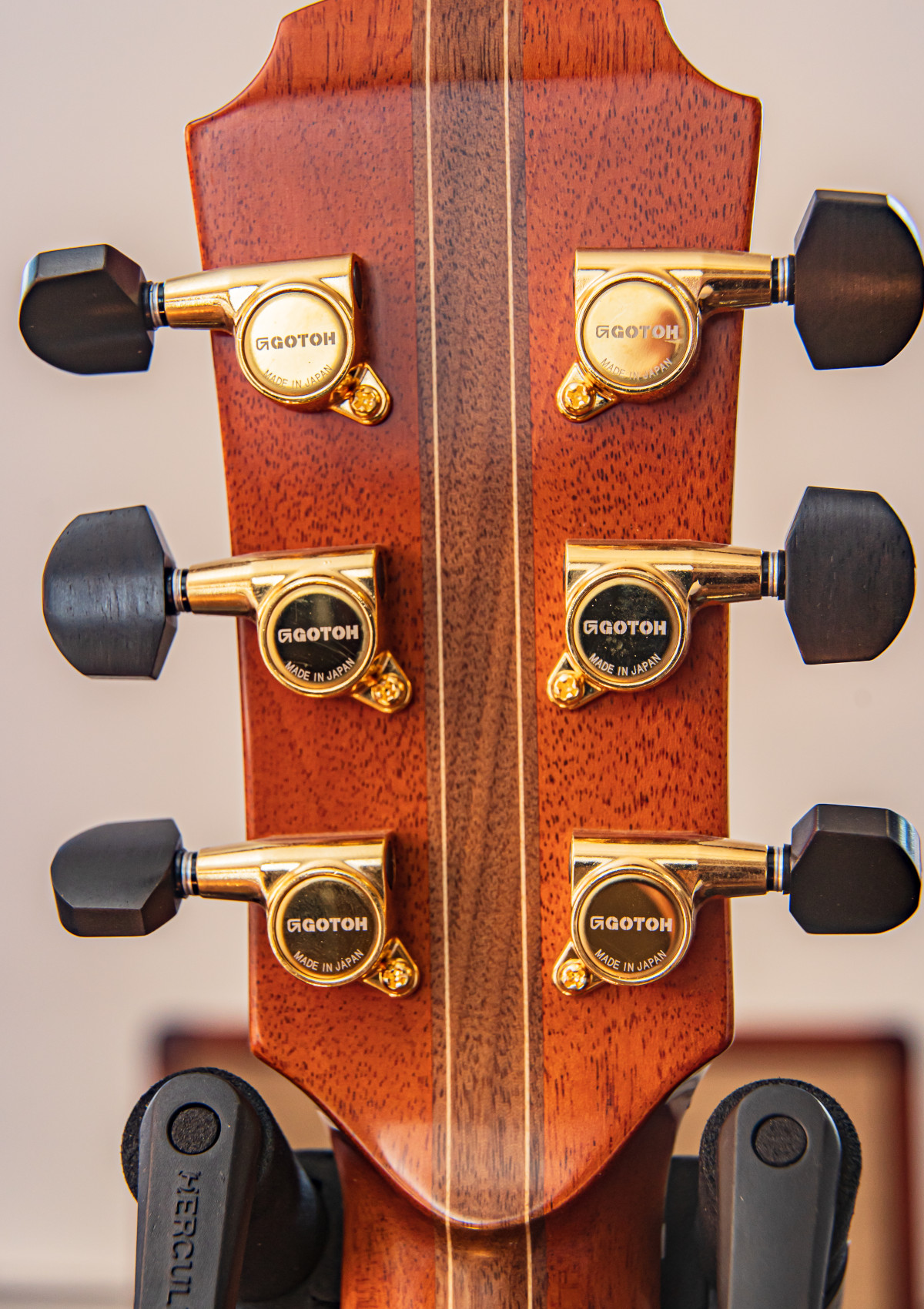
A solid paua abalone rosette introduces a controlled amount of colour around the soundhole. The mother-of-pearl Avalon logo adds a familiar finishing touch at the headstock. The ebony bindings and headplate reinforce the darker tones of the back and sides, while the cedar soundboard provides a warm visual contrast. A natural bone nut and saddle form the string contact points, and Gotoh SG381 machine heads provide precise tuning adjustment.
The guitar is supplied with D'Addario XS .012–.053 strings and a deluxe TKL hard case.
None of these elements is particularly extravagant in isolation. Together, they create an instrument whose detailing feels coherent and deliberate.
That is often the mark of confident design: knowing when enough is enough.
Fishman Ellipse Blend: An Acoustic Built to Be Heard
A guitar of this quality deserves an amplification system that provides useful control without overwhelming the natural character of the instrument.
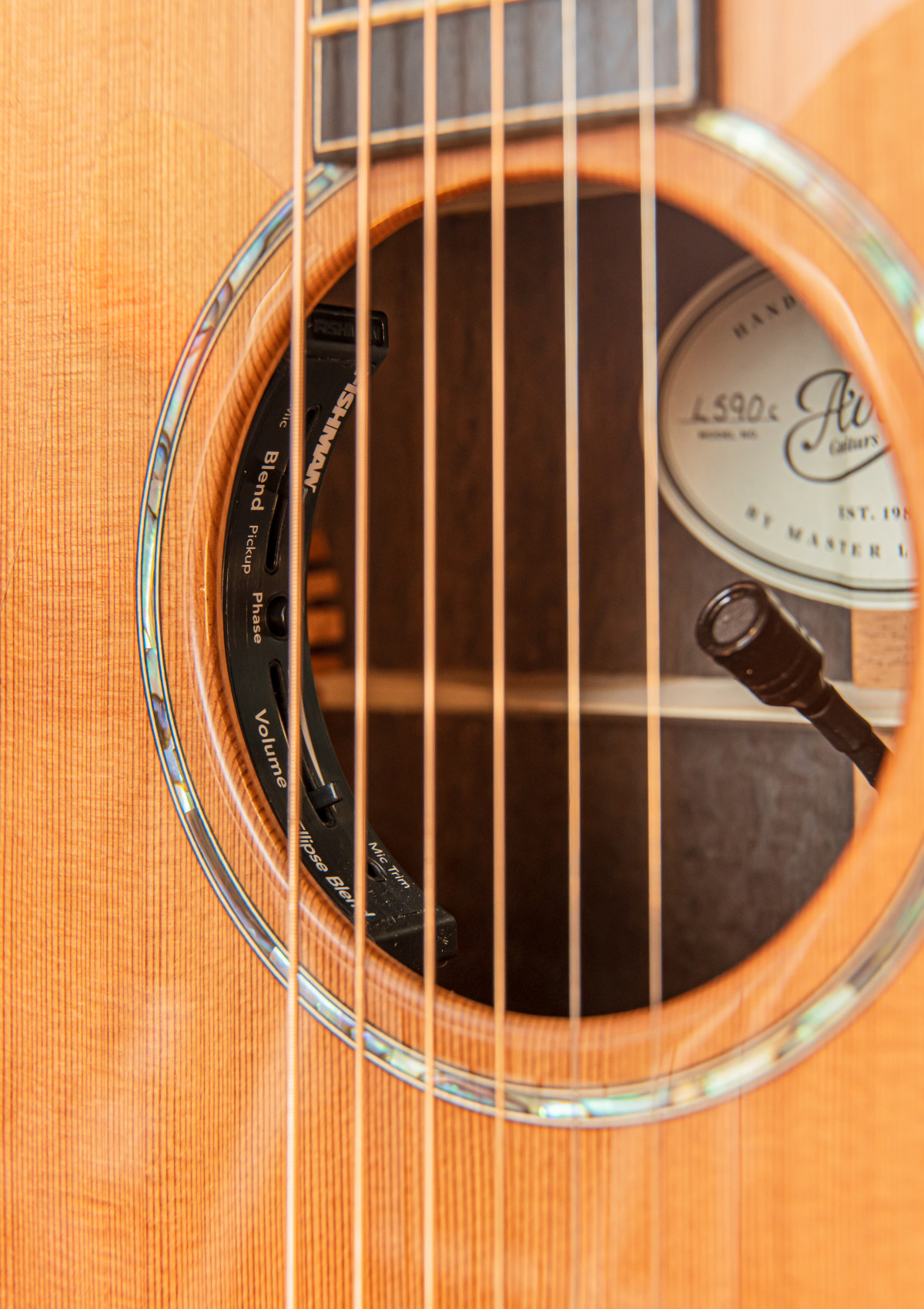
The L590c is equipped with a Fishman Ellipse Blend.
This system combines an undersaddle pickup with an internal microphone, allowing the player to blend two different approaches to capturing the guitar's sound. The undersaddle element offers a direct, consistent signal that can be particularly useful in live environments. The microphone contributes more of the air and acoustic character associated with the guitar's resonating body.
Being able to balance those sources is exceedingly valuable.
On a quiet stage or in a controlled performance setting, a greater contribution from the microphone may provide a more open, natural presentation. In a louder environment, favouring the pickup can help maintain a more manageable signal. The appropriate balance will depend on the room, the monitoring system and the volume of the performance. For musicians who move between acoustic sessions, amplified gigs and studio work, that flexibility is an important practical advantage.
It also means the L590c can be considered as a professional performance instrument, not simply an exceptional example of handcrafted luthiery.
A remarkable guitar should be played. Often.
Handcrafted in Northern Ireland
There is a particular significance to the Avalon L590c being made on the island of Ireland.
The story of high-end acoustic guitar building is often told through familiar centres of production in the United States, Japan and continental Europe. Those traditions have produced extraordinary instruments and continue to influence makers around the world. But outstanding acoustic guitar craftsmanship exists much closer to home.
Avalon's workshop in Newtownards, Northern Ireland, represents a serious commitment to the art of building acoustic instruments by hand. The company's work demonstrates that traditional techniques and contemporary design need not be opposing ideas. Careful wood selection, individual voicing and detailed handwork can coexist with modern pickup systems, practical neck designs and the expectations of today's performing musicians.
The L590c is an especially distinctive expression of that approach.
Its bog oak connects the instrument to the Irish landscape. Its construction reflects the skill of Northern Irish luthiers. And its finished design belongs comfortably alongside the work of respected boutique acoustic makers internationally. For us at Musicmaker, that combination is worth celebrating. We've always believed that musicians should have access to exceptional instruments from makers who take their work seriously, and Avalon is a particularly compelling example.
You can explore more of the company's instruments in our Avalon Guitars collection, or read our feature on the Avalon guitars at Musicmaker.
For another perspective on the extraordinary range of materials Avalon works with, our Seven Seas Collection feature offers a fascinating introduction.
What Makes the Avalon L590c Special?
The age of the bog oak is extraordinary. More than four millennia is a remarkable history for any material used in a modern musical instrument. But it would be a mistake to treat the guitar's age-related story as a substitute for musical substance. The L590c has to justify itself as an acoustic guitar.
Its solid cedar top offers a distinctive approach to responsiveness and touch. Its large L-series body provides a substantial acoustic platform. The cutaway extends its practical range, while the Fishman Ellipse Blend makes it suitable for amplified performance.
The ebony appointments, mahogany neck, Gotoh hardware and carefully judged detailing reinforce the sense of a thoroughly considered instrument. And perhaps most importantly, it represents the work of makers prepared to approach an unusual material on its own terms.
That is where the real value lies. Rare wood is interesting. A beautifully made guitar is valuable.
An instrument that combines both, while remaining genuinely expressive and useful to a musician, is something considerably less common.
Discover the Avalon L590c at Musicmaker Dublin
The Avalon L590c Bog Oak/Cedar Cutaway is currently listed at Musicmaker for €5,500. The individual instrument is identified as L590C#3116; please check its product page or contact the team for current availability.
It is a substantial investment, and appropriately so. This is an individually handcrafted Luthier Series acoustic built from exceptional materials, equipped for professional performance and supplied with a deluxe hard case.
For a musician considering an instrument at this level, we'd strongly encourage a visit.
Photographs can show the remarkable colour of the bog oak. Specifications can explain the construction. Articles like this can provide context for the choices made by the builder. But the important questions can only be answered by playing. How does the cedar respond to your touch? How does the neck feel? What happens when you change the dynamics, move into an alternate tuning or play the music that matters most to you?
Those are the details that turn an interesting instrument into the right instrument.
Explore the Avalon L590c Bog Oak/Cedar Cutaway at Musicmaker
You can also browse our full Avalon Guitars collection and acoustic guitars, or visit us at 29 Exchequer Street, Dublin 2.
Free shipping around Ireland on orders over €15.
The bog oak spent more than four thousand years beneath the Irish landscape.
Avalon has given it a new purpose.
What matters now is the music someone will make with it.
Independent minds. Serious gear. Glorious noise.