
Brushes & Rods: A Different Language for Drummers
From the delicate sweep of a wire brush to the woody pulse of a bundle rod, Vater's alternative drumsticks offer something every drummer needs: more ways to make the music feel right.
The singer has reached the second verse, the guitarist has settled into a lovely little figure somewhere around the middle of the neck, and the room has finally found its balance. There's a conversation happening on stage. You can hear the words, the movement of the bassline, the space between the chords. Then the drummer changes from sticks to brushes.
Nothing else in the arrangement moves, but everything sounds different.
The snare stops announcing every backbeat and begins to breathe beneath the music. The cymbals become softer around the edges. The groove acquires a sense of movement that wasn't there a moment earlier. And the audience, most of whom couldn't tell you exactly what changed, leans a little closer.
It's a lovely thing to hear.
It's also a reminder that the drummer's choice of implement is one of the most powerful — and frequently overlooked — decisions in a musical arrangement.
At Musicmaker Dublin, we've always had a soft spot for drummers who think beyond the standard pair of 5As. Those are wonderful tools, of course. But there's an extraordinary amount of music waiting inside a good set of wire brushes, a bundle of wooden rods or one of the more unusual percussion creations from Vater.
And right now, our Vater brushes and rods collection is looking particularly healthy.
So let's investigate what these things actually do, why they matter and how a simple change of stick can transform your playing.
The Sound Starts at the Point of Contact
Drummers spend a great deal of time thinking about drums, cymbals, heads and tuning. Quite rightly, too. The difference between a coated and clear drumhead can be considerable. Snare-wire tension changes the instrument's response. Cymbal weight and profile influence attack, sustain and the way the instrument opens up beneath the stick.
But the object making contact with those surfaces deserves just as much attention.
A conventional drumstick concentrates the impact into a relatively small area. The shape and material of the tip influence the attack, while the weight, taper and balance of the stick affect how it rebounds. A brush distributes that contact across dozens of thin strands. A rod spreads it across a bundle of smaller dowels or flexible elements. The energy reaches the drum differently. That changes the initial attack, the amount of high-frequency information and the way the drumhead responds.
It also changes the physical relationship between the drummer and the instrument.
With a stick, you can rely on a familiar rebound. With a wire brush, you may spend as much time moving across the drumhead as striking it. With rods, the individual elements flex and move, creating a softer, more complex contact. These aren't simply quieter versions of the same thing.
They're different instruments in the hands of the same drummer.
And that is where the fun begins.
Wire Brushes: The Art of Playing Between the Notes
There's a reason wire brushes have remained essential to jazz drumming for generations. A good brush allows you to do something a conventional stick cannot: create a continuous sound through movement across the drumhead.
Instead of producing a series of separate impacts, you can sweep the bristles across a coated snare head and generate a sustained, textured rhythm. That movement becomes part of the groove. In traditional jazz playing, the familiar circular sweep on the snare can provide a continuous rhythmic foundation while the other hand articulates accents and subdivisions.
But brushes have never belonged exclusively to jazz.
They're beautiful in blues, country, folk, acoustic pop and contemporary singer-songwriter music. They can add intimacy to a ballad, create movement beneath a piano trio or give a restrained indie arrangement exactly the right amount of rhythmic detail. In an Irish setting, think about a small venue where the vocal needs to remain front and centre, or a recording session built around acoustic guitar, fiddle and upright bass. There's a point where a conventional snare backbeat can become too assertive.
Brushes give the drummer another option.
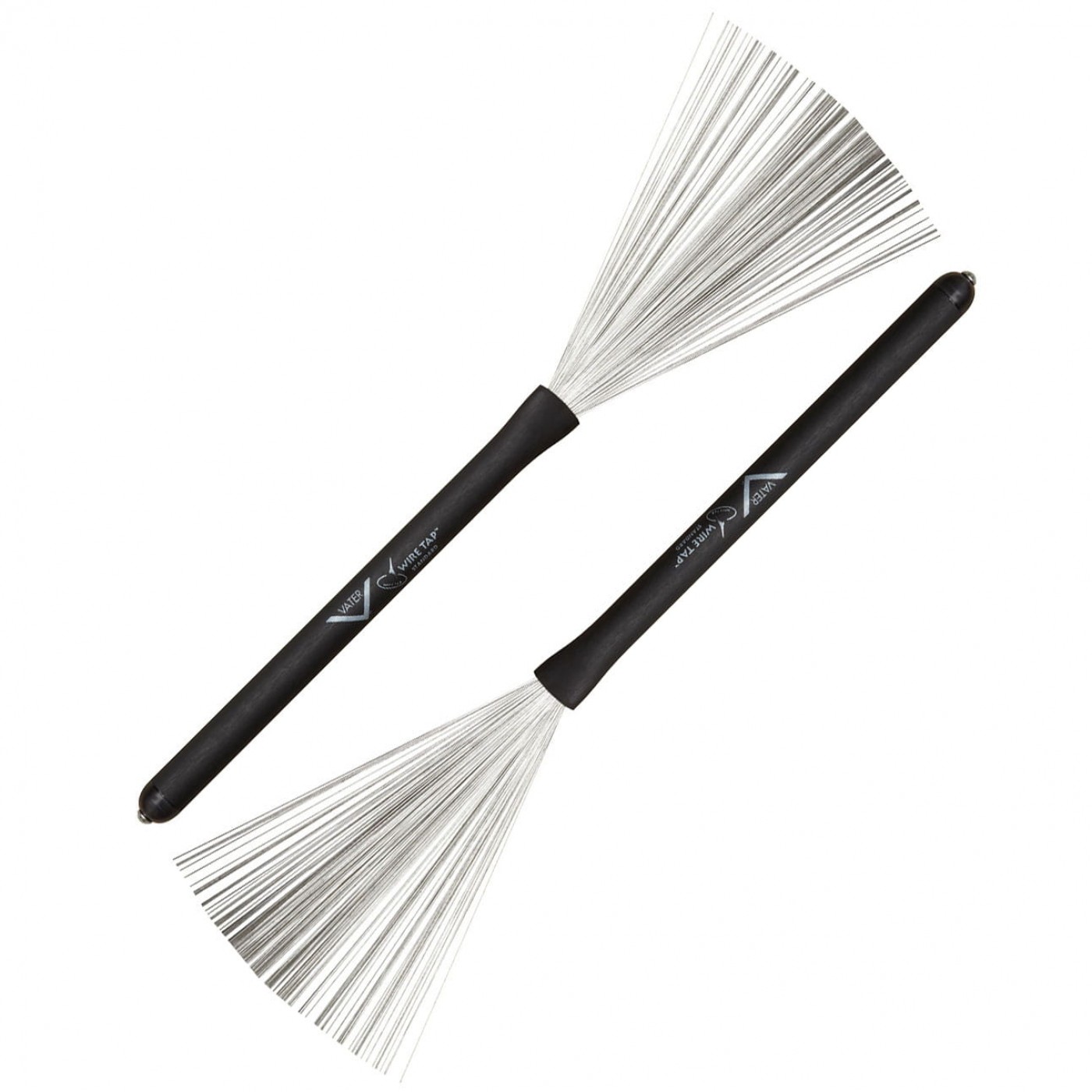
Vater Standard Wire Brush
The Vater Standard Wire Brush is a natural place to begin.
Its non-retractable design offers a straightforward, traditional brush experience. For players interested in learning the fundamentals of sweeping, tapping and accenting, there's real value in an uncomplicated tool. A good starting exercise is to play a steady quarter-note sweep with one hand while placing gentle accents on beats two and four with the other. Keep the movement continuous. Listen to the sound between the accents rather than concentrating only on the accents themselves.
It's deceptively difficult, particularly for drummers accustomed to thinking in terms of separate stick strokes.
But once the motion begins to feel natural, a new kind of phrasing becomes available.
Vater Manhattan and Beantown Brushes
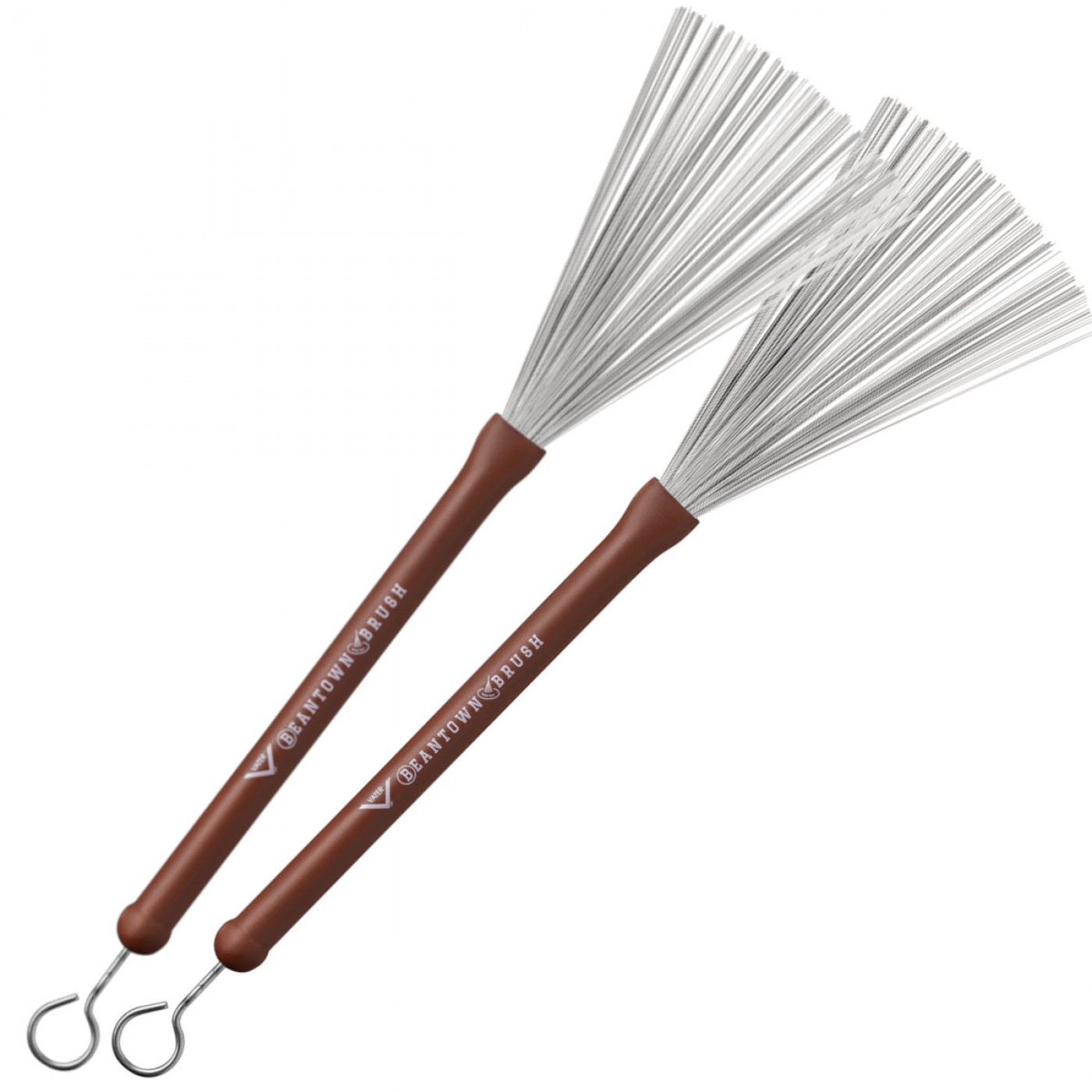
The Vater Manhattan Brush and Vater Beantown Brush offer further possibilities for drummers developing a more individual brush technique. Different brush designs alter the relationship between the handle, the spread of the wires and the resistance felt against the drumhead.
Those details influence how comfortably a player can execute fast articulations, broad sweeps and subtle dynamic changes. A brush that feels perfectly balanced to one drummer may feel quite different to another.
That's not a problem. It's the reason it's worth experimenting.
The Manhattan Brush and Beantown Brush are both available in our Brushes & Rods selection, alongside other traditional wire-brush options. And if you're making the move from sticks to brushes for the first time, don't be surprised if your initial attempts sound a little awkward.
Every drummer has to learn how to make the wires speak.
Even the ones who now make it look effortless.
Vater Rods: Keeping the Groove Without Taking Over the Room
Now we come to one of the most useful inventions in the modern drummer's stick bag.
Rods.
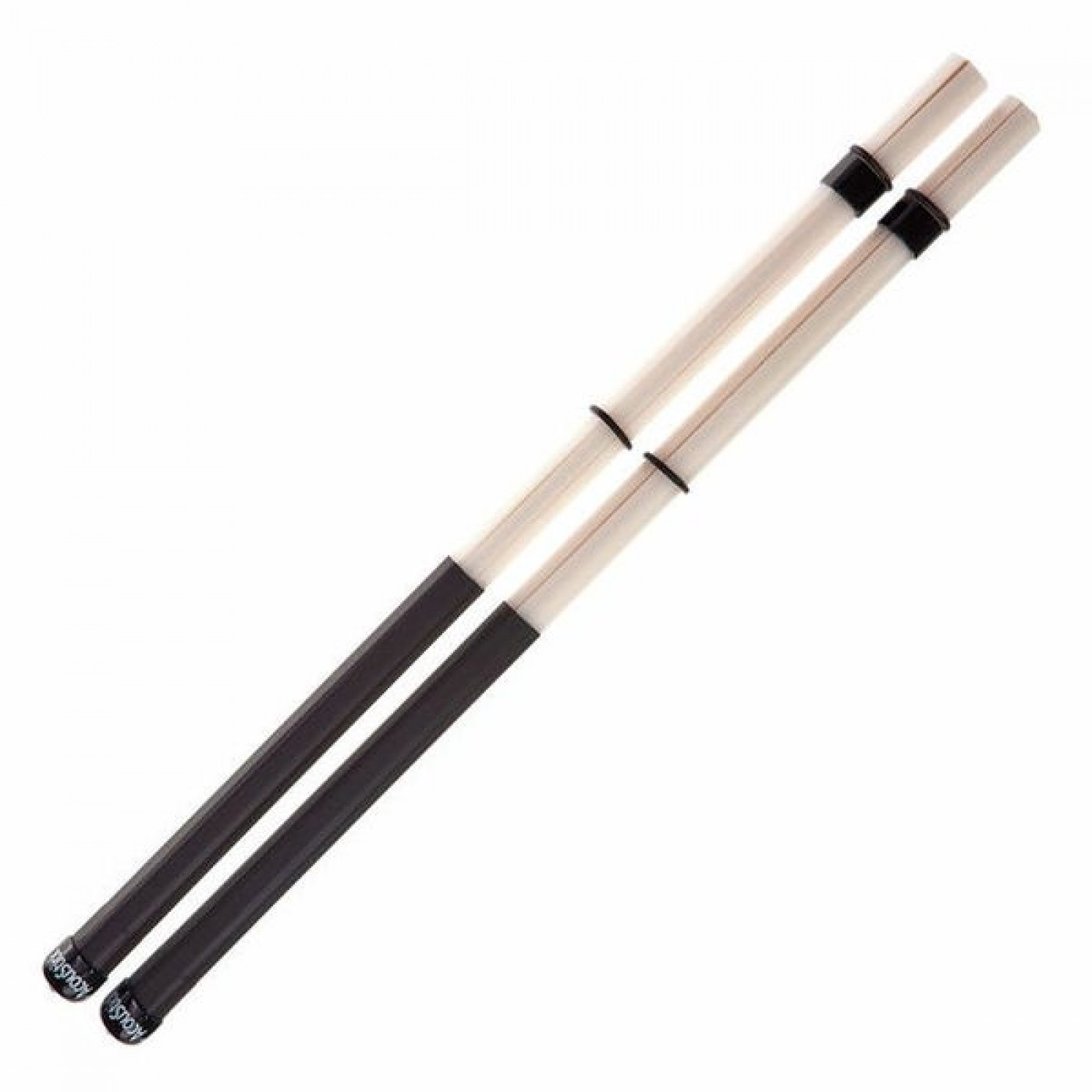
They're sometimes described as a halfway point between sticks and brushes, which is a reasonable starting point, but it doesn't tell the whole story. A bundle rod usually consists of multiple thin dowels or flexible elements bound together into a stick-like shape. When the rod strikes a drum, those individual elements can flex and spread the impact. The result is generally a softer attack than a conventional drumstick, but with more defined rhythmic articulation than a broad wire-brush sweep.
That makes rods enormously useful for music that still needs a recognisable backbeat. Think acoustic rock, folk-pop, small-room performances and rehearsals where the full force of a standard stick would overwhelm the arrangement.
They're also excellent for players who want to retain familiar stick-based movements while exploring a different sound.
Vater Acoustick Rods
The Vater Acoustick Rods take an interesting approach to the familiar bundled-stick design. They combine seven wooden dowels with six strips of impact-resistant polymer. The wooden elements provide the familiar character of a multi-rod, while the polymer strips contribute to the design's response and help manage contact between the bundle and the playing surface.
There's also an Acoustick Solid Rods variation for drummers who prefer a different construction. These are the sort of tools that make immediate musical sense when you try them in a small room. You can still play a backbeat. You can still articulate the ride pattern. You can still move around the toms.
But the relationship between attack and volume changes. The snare feels less confrontational. The cymbals can become less dominant. And the rest of the band may suddenly discover that they can hear themselves.
If that's what we really want?
Depends on the situation. But we have options, and options are always good.
Vater Splashsticks: Finding the Right Amount of Attack
The Vater Splashstick family takes the bundled-stick idea in several directions. Our current selection includes Lite, Soft, Traditional, Rock and Heavy variants, along with bamboo designs. Those variants matter because not every low-volume situation demands the same response.
A delicate acoustic performance may benefit from a lighter bundle with a gentle attack. A more energetic folk-rock set might need greater definition and a stronger backbeat. A drummer who plays intricate ghost notes may prioritise one kind of feel, while another player wants something capable of delivering confident eighth notes on the hi-hat without becoming too loud.
It's worth remembering that a rod's reduced attack doesn't mean you should automatically play harder to compensate. That defeats much of the purpose. Instead, explore the natural response of the bundle. Listen to the way the individual elements contact the drumhead, and allow that character to influence the groove.
You might find yourself playing fewer notes. You might discover a different accent pattern. You might even realise that a song you've been playing for years sounds better when you stop trying to make every snare hit a major public announcement.
Explore Vater Splashsticks, Bamboo Splashstick Slim and Acoustick Rods at Musicmaker.
When Things Get Interesting: Monster Brushes and Whisks
Of course, Vater doesn't stop at traditional brushes and rods. And this is where the company's more adventurous designs become particularly appealing. Because sometimes the most useful percussion sound isn't a familiar backbeat at all.
Sometimes you want a broad wash of texture. A soft, woody movement. A sound that sits somewhere between a brush stroke, a mallet and a piece of hand percussion.
Something that encourages you to stop thinking about the drum kit as a collection of individual targets.
Vater Monster Brush
The Vater Monster Brush has a wonderfully substantial physical presence. Its broad playing surface encourages a different approach to the snare and toms, particularly when the music calls for sweeping textures or a softer, more expansive attack. It's a compelling choice for ambient music, experimental percussion and studio arrangements where the drum kit is being used for colour rather than conventional timekeeping.
Try playing slow, deliberate strokes across a floor tom. Then move to the snare, allowing the brush to contact the head over a wider area. Finally, experiment with cymbal edges and surfaces at low dynamics, listening carefully to the response. The aim isn't to play a complicated pattern.
It's to discover what the instrument can produce when approached differently.
Find the Vater Monster Brush at Musicmaker.
Vater Monster Whisk and Monster Whisk Soft
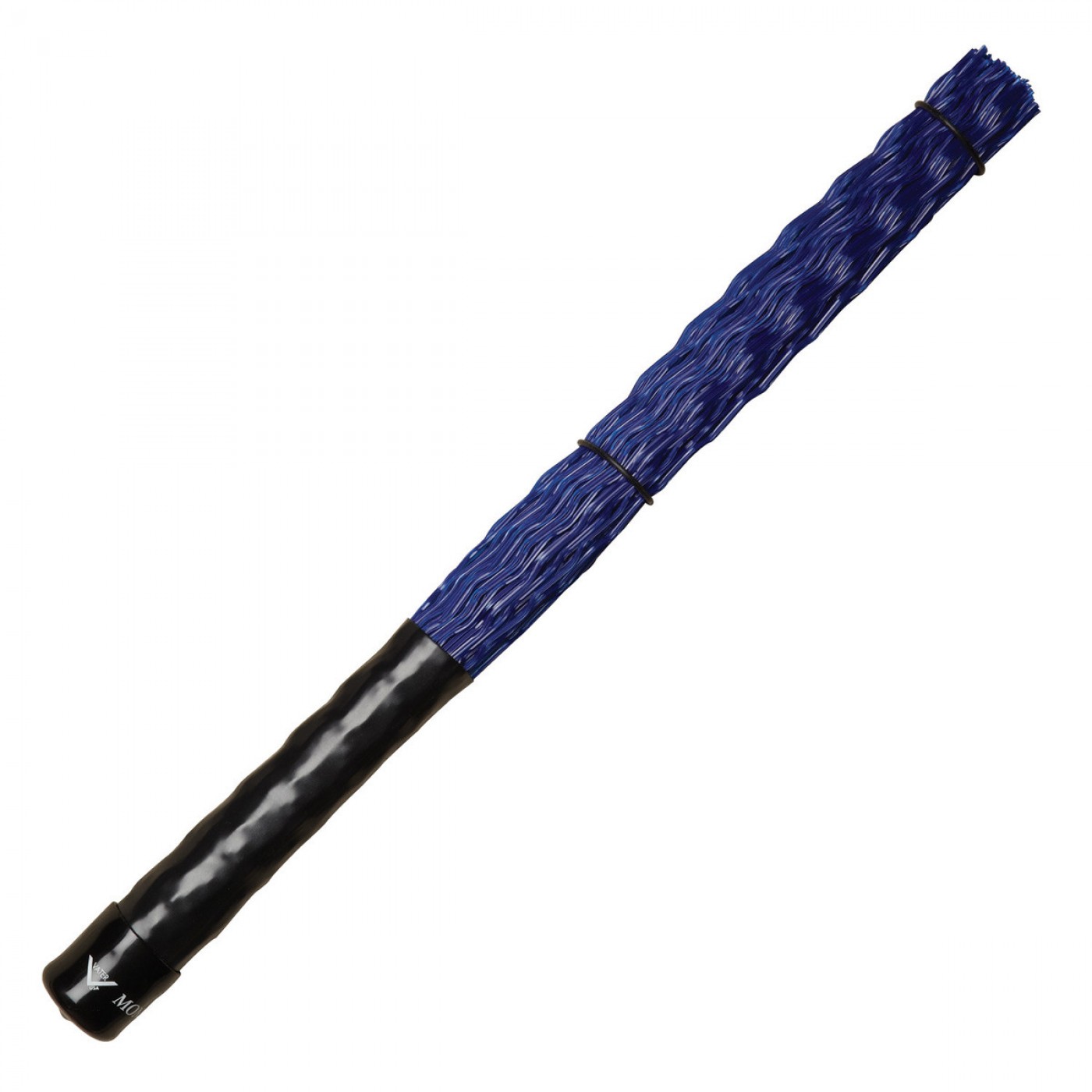
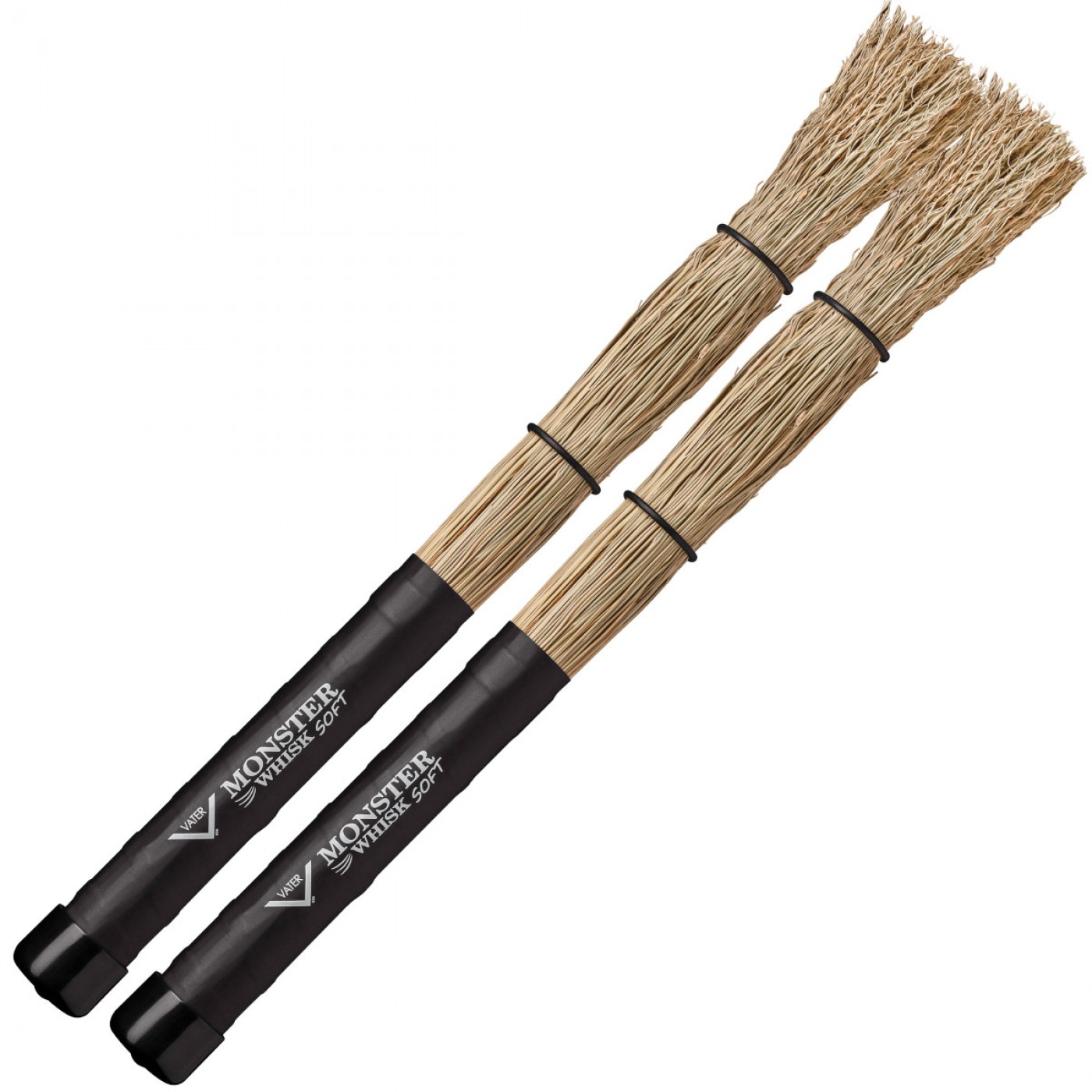
These are particularly intriguing. The Monster Whisk designs use natural sorghum straw, introducing a playing material that behaves differently from both wire and wood. The Vater Monster Whisk Soft uses the softer, naturally wavy ends of the straw, arranged into a broad playing surface. That gives it an unusually gentle, textural response, particularly appealing on hand percussion, cajón and selected drum surfaces.
The standard Monster Whisk offers another interpretation of the same general concept. These are not the tools you'd necessarily reach for when somebody shouts for a straight-ahead rock beat. They're for the drummer who hears a sound in their head and wants to find a physical way of producing it.
And that instinct is at the heart of creative percussion.
In the studio, a few carefully placed strokes with an unusual implement can provide a distinctive rhythmic layer without occupying the same sonic space as the main drum kit. You don't always need another plugin.
Sometimes you need a different thing to hit the drum with.
Polymer Brushes: A Modern Alternative
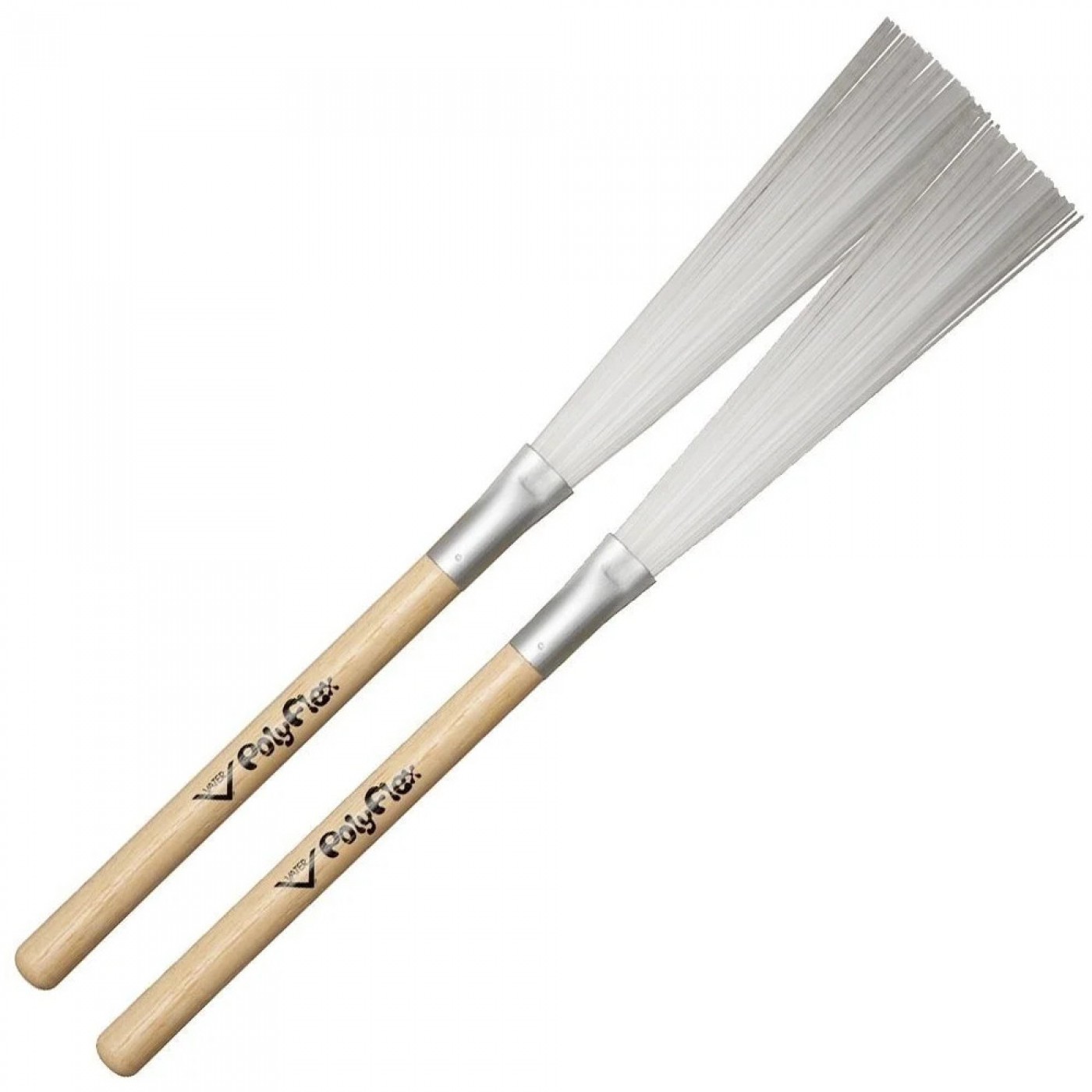
Wire brushes have a distinctive sound, but they're not the only way to create a broad, flexible playing surface. The Vater Poly Brush and Poly Flex Brush use synthetic bristles, offering a different response from traditional metal wires, which can be pretty significant.
Polymer strands interact with drumheads and cymbals differently from steel wire, changing the attack and the tactile resistance beneath the hands. For drummers who enjoy brush-based playing but want to investigate another texture, they're an interesting addition to the stick bag. They're also worth exploring on percussion instruments beyond the standard snare drum.
A cajón, for example, can respond beautifully to a softer, more distributed impact. The broad playing surface can produce a controlled, textured attack that sits comfortably beneath acoustic instruments.
And because different percussion surfaces respond differently, it's worth trying a few combinations rather than assuming a brush will sound the same everywhere.
Browse the Vater Poly Brush, Poly Flex Brush and Cajon Brush.
What Brushes and Rods Can Teach Your Stick Playing
Here's something that doesn't get discussed often enough.
Learning to play brushes and rods can improve the way you approach ordinary drumsticks. Not because the techniques are identical. They aren't. But because alternative implements encourage a different kind of listening. With sticks, it's easy to become focused on the mechanics of the stroke: rebound, speed, accent height and the relationship between the wrists and fingers.
Those things are important. Brushes add another set of concerns.
How much of the wire is contacting the head? How quickly are you moving? How does the angle of the brush change the sound? Can you maintain a consistent pulse while one hand moves continuously?
Rods introduce different questions. How does the bundle respond to a soft stroke? At what point does a stronger accent become too aggressive? Can you preserve the groove without relying on the familiar sharp attack of a wooden tip?
These questions make you more aware of the sounds you're producing. And that awareness carries back into conventional playing. A drummer who learns to control the quietest part of a groove often develops a better understanding of the louder parts too.
There's no magic involved.
Just practice, attention and a willingness to listen.
The Irish Gigging Reality: Dynamics Matter
Anyone who's played drums around Ireland knows that gigs come in every conceivable shape and size. There are proper stages with excellent monitoring, spacious rehearsal rooms and venues where a full drum kit can stretch its legs.
And then there are the intimate rooms.
The back of a pub. A singer-songwriter night. A folk session. A little stage where the drummer is close enough to the front row to ask how they're enjoying the set. In those environments, controlling volume is part of being a good musician. But playing quietly isn't simply a matter of hitting everything more gently.
At very low dynamics, conventional sticks can lose some of their natural feel. Cymbal articulation changes. The snare response becomes less predictable. A groove that felt comfortable at rehearsal volume can become awkward when reduced to a whisper.
Brushes and rods provide another approach.
Instead of fighting the instrument to make it quieter, you change the way energy reaches the playing surface. That can make the performance feel more natural. It can also help the drummer remain musically expressive without competing with the vocal, acoustic guitar or other instruments. Of course, brushes and rods aren't a complete volume-control system. A loud cymbal is still a loud cymbal, and a forceful stroke can still produce considerable sound.
Technique, drum tuning, cymbal choice and room acoustics remain important. But alternative implements give the player more options.
And more options are always welcome.
Especially when the venue manager is standing beside the drum kit looking concerned.

Choosing Your First Vater Brushes or Rods
So where should you begin?
If you love jazz, blues or delicate acoustic music and want to learn traditional brush technique, start with a good pair of wire brushes.
The Vater Standard Wire Brush is a sensible introduction, while the Manhattan and Beantown models offer further opportunities to explore feel and articulation.
If you're primarily a rock or pop drummer looking to reduce the intensity of your backbeat without completely changing your playing technique, rods are an excellent starting point.
The Acoustick and Splashstick families provide several options, with different constructions and degrees of attack.
If you're interested in experimental sounds, studio percussion or ambient textures, take a closer look at the Monster Brush and Monster Whisk designs.
And if you're working with cajón or hand percussion, the Poly Brush, Poly Flex Brush and dedicated Cajon Brush are all worth investigating.
There's no single correct answer. The best choice depends on the instrument, the music and the sound you want to hear. That's what makes this such an enjoyable corner of the drumming world.
A Brilliant Little Gift for a Drummer
And yes, since we're heading towards Christmas, let's acknowledge something. A good pair of brushes or rods makes an excellent present for a drummer.
Not because it's a novelty.
Because it's something they might not buy for themselves, but could end up using for years. A player who already owns a favourite pair of sticks may discover an entirely new approach to their instrument with a set of Acousticks or a pair of wire brushes.
For the more adventurous drummer, a Monster Whisk is the sort of present that can lead to a very entertaining afternoon of experimentation. And because most of these options fit neatly into a stick bag, they're considerably easier to wrap than a floor tom.
You can find more seasonal ideas in our Christmas Gifts for Musicians in Ireland guide. But the beauty of brushes and rods is that they're useful long after the decorations come down.
A good musical idea doesn't have an expiry date.
Discover Vater Brushes and Rods at Musicmaker Dublin
We've been looking after Irish drummers at Musicmaker since 1981, and one of the pleasures of working with musicians is watching somebody discover a sound they weren't expecting.
Sometimes that happens with a new snare drum. Sometimes it's a different cymbal. And sometimes it's as simple as putting down a familiar pair of sticks and picking up something completely different.
Vater understands that side of drumming particularly well.
Its range of wire brushes, rods, Splashsticks, Acousticks, polymer brushes and unusual percussion tools gives players a remarkable variety of ways to shape their sound.
If you're interested in expanding your vocabulary behind the kit, we'd love to help.
Explore all Vater brushes and rods at Musicmaker, browse our wider drumsticks and accessories, or visit us at 29 Exchequer Street, Dublin 2.
For more stick-bag inspiration, have a read of our Vater Drumsticks Ireland feature, which takes a broader look at the brand's sticks, signature models and percussion accessories.
Free shipping around Ireland on orders over €15.
And the next time you're sitting behind the kit, try something different.
Change the brush. Change the rod. Change the way you touch the drum.
Then listen.
You might be surprised by how much music was waiting there all along.