Make Music at Home: Donner & sE on a Budget
Analogue basslines, beautiful beats, proper microphones and a recording setup that won't require a second mortgage. Welcome to the affordable home studio.
There's a certain magic to making music at home.
Not the glamorous, velvet-sofa, million-euro-console version of recording. We're talking about the spare bedroom with a desk against the wall. The guitar leaning against the wardrobe. The laptop balanced beside a cup of tea. The mysterious collection of cables that seems to multiply every time you look away. And somewhere in the middle of all that, a genuinely brilliant piece of music taking shape.
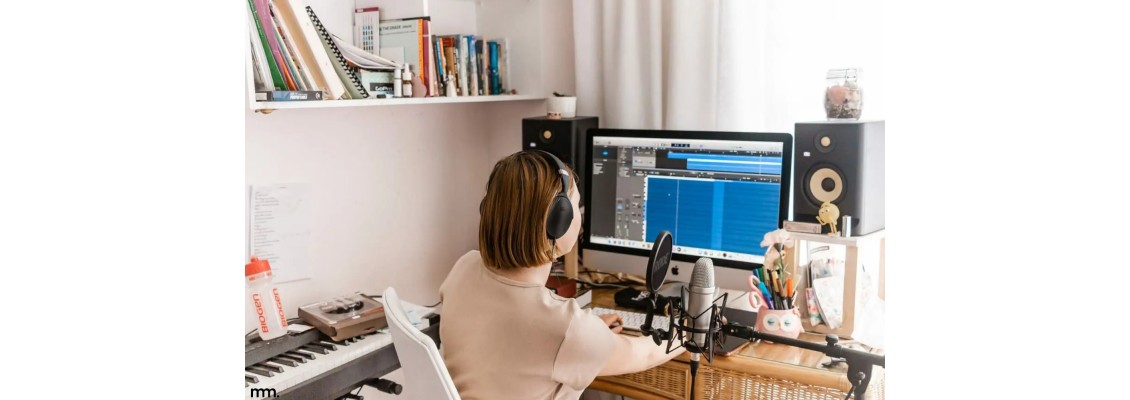
Home music production has become one of the most exciting parts of modern music-making, and for good reason. You can build a complete track, record a vocal, experiment with analogue synthesis and mix the results without ever leaving the house. More importantly, you can do it without spending an outrageous amount of money.
At Musicmaker Dublin, we've always loved equipment that makes musicians curious. Gear that invites you to experiment rather than demanding six months of research before you press the first button. That's exactly why we're so fond of Donner and sE Electronics. Between Donner's hands-on synthesisers, drum machines, USB audio interfaces and studio headphones, and sE Electronics' wonderfully capable microphones, there's a remarkably complete little recording studio waiting to be assembled.
So pull up a chair, open your recording software and make yourself comfortable.
We're going to build something glorious.

Start With a Beat: Donner Essential D1 Drum Machine
Every great recording needs a starting point. Sometimes that's a guitar riff. Sometimes it's a melody you hummed into your phone on the bus. And sometimes it's a kick drum, a snare and a hi-hat pattern that suddenly makes the entire afternoon disappear.
Enter the Donner Essential D1 Digital Drum Machine.
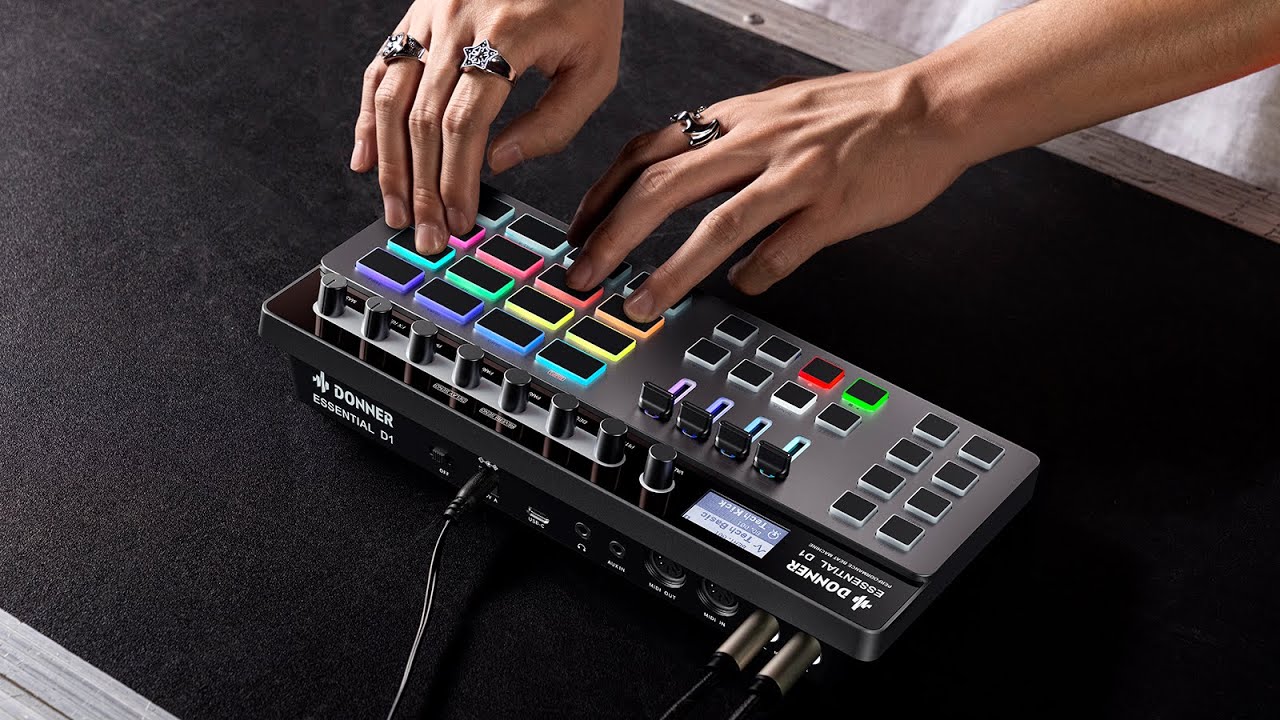
The D1 is a compact, sample-based drum machine built around a 12-track sound engine. That means you can construct a rhythm from individual percussion parts rather than relying on a single pre-recorded drum loop. A kick on one track. A snare on another. Closed hats ticking away. Open hats adding movement. A shaker, a clap, a strange little percussion sample you recorded by tapping a saucepan. Nobody said production had to be sensible.
The machine provides 16 velocity-sensitive RGB pads, so you can play rhythms with your fingers and capture the feel of a performance. Alternatively, you can programme notes into its step sequencer, which supports patterns of up to 64 steps.
And here's where things get interesting.
A drum machine isn't just about putting sounds on a grid. It's about deciding how those sounds behave together. Shift a snare slightly. Change the velocity of every second hi-hat. Add a quiet ghost note before the backbeat. Suddenly a rigid pattern starts to develop a personality. The D1 offers individual sound-shaping parameters including pitch, filtering, envelope adjustment, distortion and bit-crushing. There are also delay and reverb effects, plus a bus compressor to help bring the rhythm together.
For the uninitiated, compression controls dynamic range by reducing the difference between louder and quieter sounds. Used thoughtfully on drums, it can help a kick and snare feel more cohesive and give a beat that satisfying sense of punch. The D1 also supports user sample import through Donner's companion software, allowing you to expand beyond the supplied sounds.
That's an important creative feature.
You might begin with a straightforward electronic kit and end up building a rhythm from sampled handclaps, percussion instruments and recordings made around the house. With MIDI and USB connectivity, the D1 can also join a larger computer-based setup. For house, hip-hop, electronica, indie-pop, ambient experiments and gloriously strange late-night musical ideas, it's an extremely inviting place to begin.
Explore the Donner Essential D1 Drum Machine at Musicmaker.
Give That Beat Some Bass: Donner Essential B1 Analogue Synth
Right. We've got a rhythm. Now it needs something lurking underneath it. Something rubbery. Something growling. Something that makes you involuntarily pull a ridiculous face when you turn the filter knob.
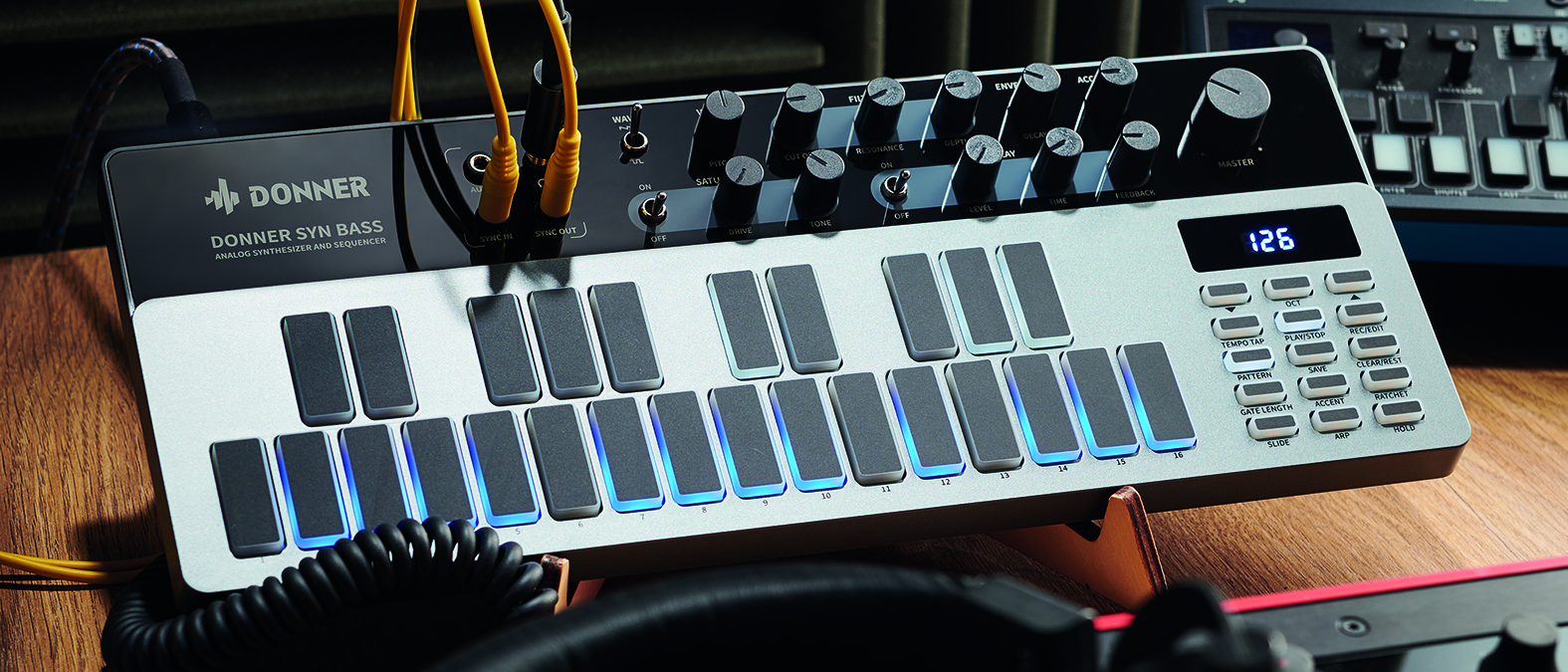
The Donner Essential B1 Analogue Bass Synthesizer and Sequencer is precisely the sort of instrument that causes this behaviour.
The B1 takes its inspiration from classic analogue bass synthesis, particularly the squelchy, resonant sound associated with acid house and early electronic dance music. But there's nothing old-fashioned about the way it fits into a modern home studio.
At its heart is a monophonic analogue synthesiser with a single oscillator offering sawtooth and square waveforms. Monophonic simply means it plays one note at a time. For basslines, that's often exactly what you want. The oscillator generates the raw waveform, which then passes through a low-pass filter. That filter determines how much high-frequency content reaches your ears. Turn the cutoff down and the sound becomes rounder and darker. Open it up and the harmonics come rushing through. Then introduce resonance.
Resonance emphasises frequencies around the filter's cutoff point, producing that unmistakable vocal, almost liquid quality heard in countless electronic records. It's one of the most satisfying controls in synthesis. A tiny adjustment can take a bassline from polite background accompaniment to something that sounds as though it's attempting to chew through the speakers.
The B1 includes saturation and delay effects too. Saturation introduces additional harmonic character, while delay creates rhythmic echoes that can make a simple phrase feel considerably more elaborate. And the built-in 16-step sequencer is where the fun becomes properly dangerous.
You can programme notes, accents, slides, ratchets and different gate lengths to create phrases that evolve and bounce against your drum pattern. Accent changes the emphasis of particular notes. Slide connects pitches. Ratcheting repeats a note rapidly within a step. Gate length determines how long a note is held. Individually, these sound like small technical details. Together, they're the difference between a bassline that simply repeats and one that feels alive.
The B1 also offers MIDI connections and USB-MIDI integration, making it a natural companion for the D1 and a computer-based recording setup.
One practical point worth understanding: USB-MIDI communicates musical information such as notes, timing and control messages. It doesn't automatically record the B1's analogue audio output. To capture the actual sound, you'll connect its audio output to an interface.
We'll get to that in a moment. First, picture the scene. The D1 is playing a tight four-on-the-floor rhythm. The B1 is bouncing around underneath it. You reach for the resonance knob. Suddenly it's 1994 in a warehouse somewhere.
Lovely stuff.
Explore the Donner Essential B1 Analogue Bass Synth at Musicmaker.
The Bridge Between Hardware and Computer: Donner Livejack Interfaces
Now we have two beautiful little machines making an enormous amount of noise.
How do we get that sound into a computer?
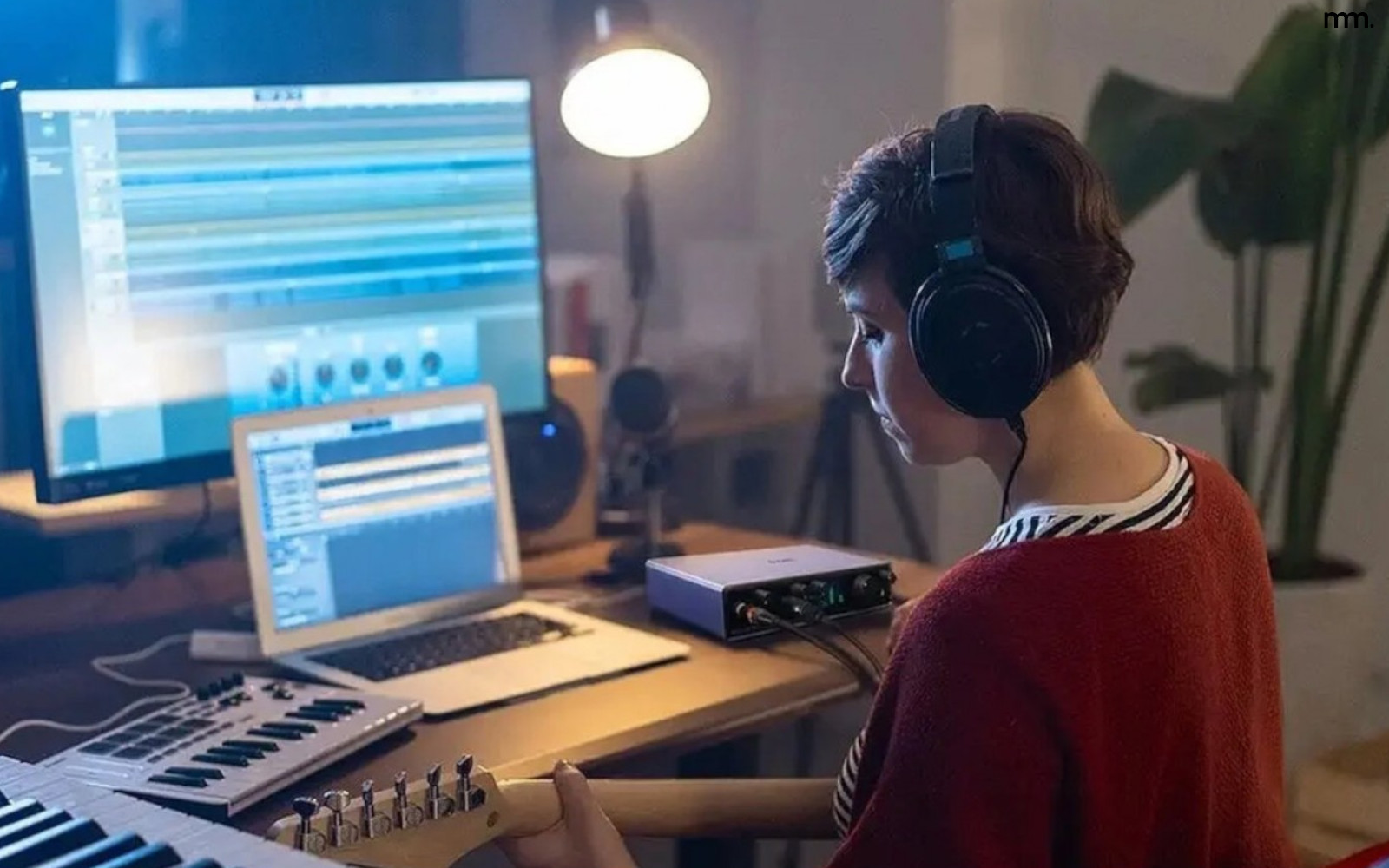
This is where the audio interface enters the picture. An audio interface converts analogue sound into digital information that your recording software can store and manipulate. It also converts digital audio back into an analogue signal for headphones or speakers. In a typical home studio, it's the central connection point for microphones, guitars, synthesisers and monitoring.
And Donner has two particularly appealing options.
Donner Livejack Lite: A Proper First Recording Interface
The Donner Livejack Lite Audio Interface is an excellent starting point for someone assembling a first serious home-recording setup.
It's a compact, USB-powered 2-in/2-out interface with an XLR/quarter-inch combination input, a dedicated instrument input, headphone monitoring and balanced outputs for studio speakers. It also supports recording at up to 24-bit/192kHz. Now, before anybody gets too excited about enormous numbers, here's the important bit.
Bit depth and sample rate are technical measurements of digital recording resolution. They're useful, but they don't automatically determine how musical a recording will sound. A beautifully performed vocal recorded at 24-bit/44.1kHz is infinitely more interesting than a lifeless performance recorded at some astronomical sample rate. The Livejack Lite's real appeal is that it gives you the essential connections and controls without burying you under unnecessary complexity.
Plug in a microphone. Connect a guitar. Record a synth. Monitor through headphones.
Its direct-monitoring facility is particularly valuable. When recording through a computer, the audio signal can experience a small delay as it travels through the interface, software and back out again. This is called latency. Direct monitoring lets you hear the incoming signal through the interface itself, greatly reducing that distracting delay. If you've ever tried singing while hearing your own voice arrive a fraction of a second late, you'll understand why this matters. It's like trying to have a conversation with your reflection while somebody keeps moving the mirror.
The Livejack Lite also provides switchable 48V phantom power for compatible condenser microphones.
For solo musicians, guitarists, vocalists and producers working one part at a time, it's a wonderfully practical introduction to proper recording.
Explore the Donner Livejack Lite Audio Interface.
Donner Livejack 2in 2out: More Ways to Connect
If you're planning to combine hardware synthesisers, MIDI controllers, microphones and streaming, the Donner Livejack 2in 2out USB Audio Interface is another very interesting option. It retains the essentials: microphone and instrument connectivity, headphone monitoring, balanced speaker outputs and low-latency direct monitoring. But it adds something particularly useful for electronic musicians.
MIDI input and output.
That means you can connect compatible keyboards, controllers and external sound modules through the interface, giving your computer a convenient way to exchange MIDI data with hardware instruments. It's worth remembering that MIDI and audio perform different jobs.
MIDI tells an instrument what to play. Audio is the sound you actually hear.
So you might use MIDI to keep the B1 playing in time with your recording software, then run the B1's audio output into the Livejack to record its glorious analogue filter sweeps. The larger Livejack also offers loopback functionality, useful for livestreaming, podcasting and capturing audio from a computer alongside external sources. For musicians whose home studio is gradually developing into a proper collection of instruments, that additional flexibility is extremely welcome.
A quick practical note: a two-input interface can record up to two mono input channels simultaneously, subject to its input configuration. If you want to capture the D1's stereo outputs and the B1 at the same time on separate tracks, you'll need additional inputs, a suitable mixer or a track-by-track recording approach.
Fortunately, recording one part at a time is a perfectly good way to make music.
In fact, it's how countless brilliant home recordings have been assembled.
Explore the Donner Livejack 2in 2out USB Audio Interface.
The Human Element: sE Electronics Microphones
We've got the beat. We've got the bass. We've got a way to record everything.
Now it's time for the bit that makes a production unmistakably yours.
A voice. An acoustic guitar. A tambourine. A whispered harmony. A slightly questionable attempt at hand percussion. For that, we need a microphone.
And this is where sE Electronics at Musicmaker becomes a very attractive proposition.
sE has built an excellent reputation for microphones that offer thoughtful engineering, strong performance and sensible prices. The company's range covers dynamic vocal microphones, large-diaphragm condensers, small-diaphragm instrument microphones and broadcast-focused designs. But choosing a microphone isn't about finding the most expensive one you can afford.
It's about choosing the right tool for the source and the room.
The sE X1 A: A Lovely First Studio Condenser
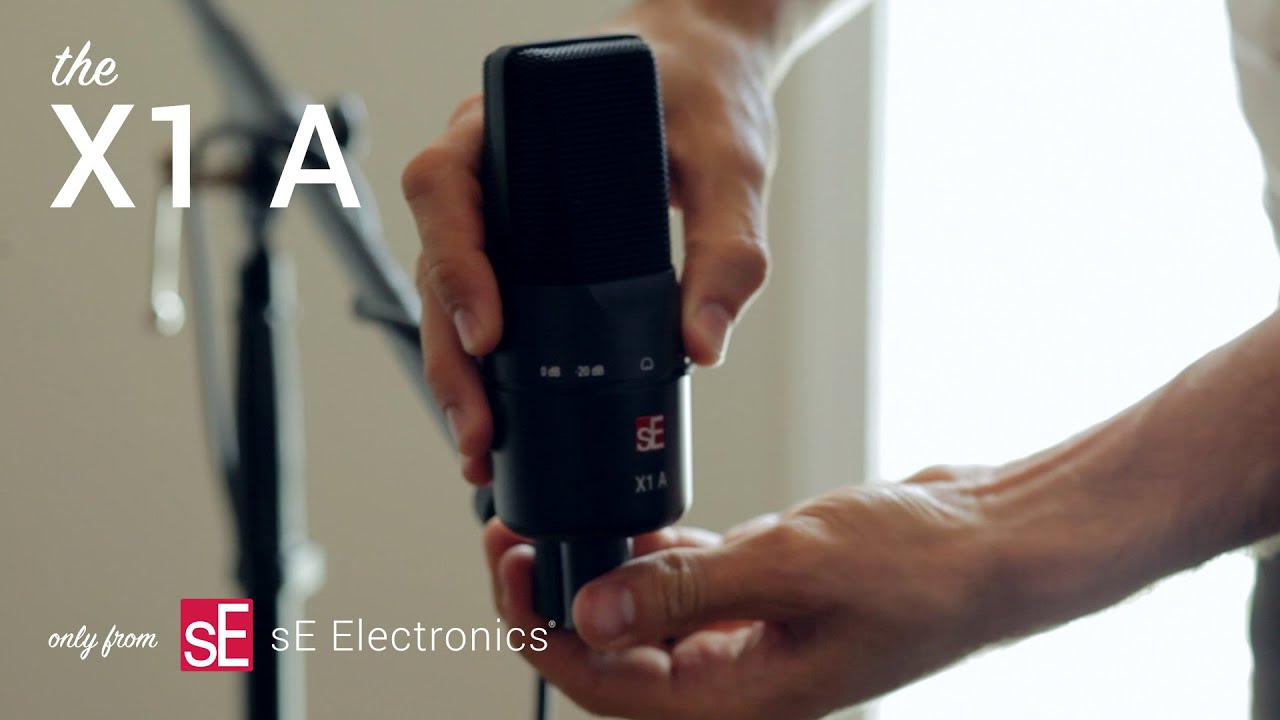
If you're recording vocals, acoustic guitar, percussion or spoken word, the sE Electronics X1 A is a particularly appealing introduction to large-diaphragm condenser microphones.
Condenser microphones use a lightweight diaphragm and electrically charged capsule arrangement to respond to sound pressure. They can capture fine detail and fast transients with impressive clarity. The X1 A has a cardioid pickup pattern, concentrating its sensitivity towards the front of the microphone while reducing sound arriving from behind. It also offers a switchable -20dB attenuation pad and a low-cut filter.
The pad helps when recording louder sources by reducing the signal level before it overloads the microphone's electronics. The low-cut filter can help tame rumble and unwanted low-frequency energy. For home recording, those are genuinely useful controls.
But here's a little studio secret.
A sensitive microphone will record the room as well as the instrument. That means the lovely detail of your acoustic guitar may arrive alongside reflections from bare walls, traffic outside or the refrigerator staging a minor industrial protest in the kitchen. A few soft furnishings, sensible microphone placement and a quiet recording space can make an enormous difference.
You don't necessarily need a professionally treated studio.
You need to listen carefully.
Browse sE Electronics condenser microphones at Musicmaker.
The sE V7: Don't Overlook a Good Dynamic Microphone
Not every home studio is quiet. Some rooms are reflective. Some have computers humming away. Some are beside busy streets. And some musicians simply like to sing with a bit of enthusiasm.
The sE Electronics V7 Dynamic Vocal Microphone deserves serious consideration in those situations.
The V7 uses a moving-coil dynamic capsule with a supercardioid pickup pattern. That tighter directional response can help reduce unwanted sound arriving from many off-axis directions, although microphone placement remains important. Dynamic microphones also tend to be physically robust and can work extremely well for close-miked vocals, guitar amplifiers and certain percussion sources.
The V7 has a wonderfully clear, present character, with an aluminium voice coil, integrated shockmount and sturdy metal construction. It's designed primarily as a live vocal microphone, but there's absolutely no rule against using a good stage microphone in a home studio. In fact, close-miking a singer with a dynamic microphone can be an excellent way to get a focused vocal recording in a less-than-perfect room.
And unlike a conventional condenser, the passive V7 doesn't require phantom power.
Sometimes the best recording decision is the one that solves a practical problem.
Explore the sE Electronics V7 Dynamic Microphone.
Want to Record Acoustic Instruments? Meet the sE7
As your studio develops, you may find yourself becoming increasingly fascinated by the tiny details of acoustic instruments.
The sound of a pick brushing across strings. The initial strike of a piano hammer. The shimmer of a cymbal. The delicate attack of a fingerpicked guitar. A small-diaphragm condenser microphone can be a wonderful tool for capturing those details.
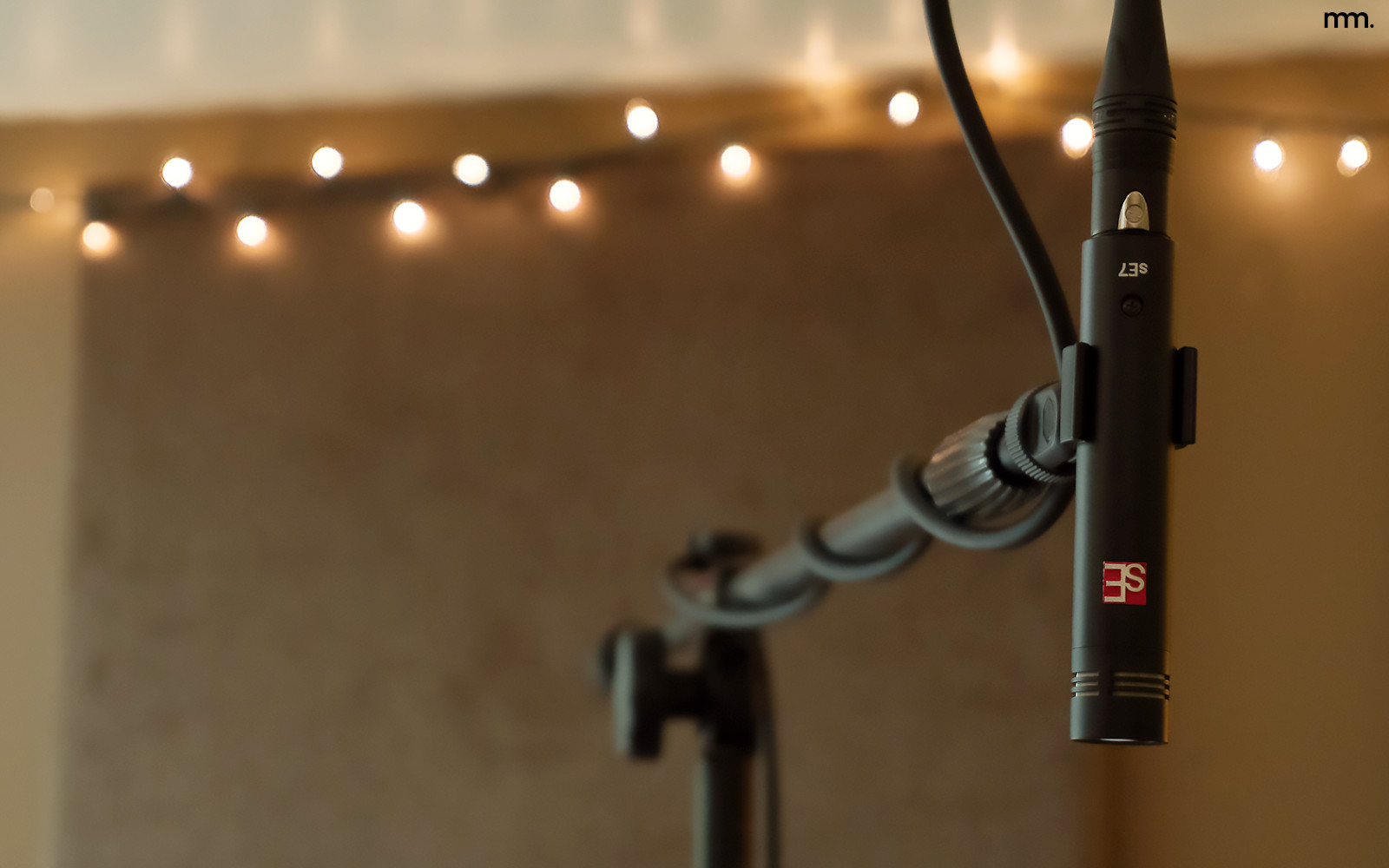
The sE Electronics sE7 matched pair offers a particularly interesting route into stereo recording.
A matched pair can be used in stereo configurations such as XY, allowing you to capture a sense of width and placement that a single microphone cannot reproduce in quite the same way. But there is one thing to remember.
Stereo recording requires two suitable microphone inputs. And microphone positioning matters enormously. Move a microphone a few centimetres and the balance between attack, body and room ambience can change significantly.
That's not a problem.
That's the fun.
Browse the full sE Electronics range at Musicmaker.
Hear What You're Doing: Donner M100 Studio Monitor Headphones
There comes a moment in every recording session when you need to stop adding things.
No more synth layers. No more percussion. Absolutely no more mysterious ambient textures.
It's time to listen.
Properly.
The Donner M100 Studio Monitor Headphones are an affordable option for musicians who need practical monitoring without dedicating half their budget to a pair of headphones. They feature 50mm dynamic drivers, a specified frequency response of 20Hz–20kHz and a comfortable over-ear design. The closed-back construction is particularly useful during recording because it helps reduce sound escaping from the headphones and being picked up by a nearby microphone.
That's especially important when tracking vocals.
If your backing track is blasting from speakers while you're singing into a sensitive condenser microphone, that backing track is likely to end up in the recording too. Headphones help keep the microphone focused on the performance. The M100 also includes a detachable coiled cable that can extend to approximately three metres, which is surprisingly useful when you're moving between an instrument, a microphone stand and a computer.
And at €59, according to Musicmaker's current listing, it's a very approachable piece of studio equipment.
One important thing to understand about headphones, though: no pair should be treated as an infallible reference. Every headphone has its own frequency response, fit and presentation. If you're mixing on headphones, check your work on other familiar playback systems too. Listen through ordinary speakers, a car stereo or another set of headphones. Pay particular attention to the bass. Low frequencies can be deceptive when you don't feel the physical energy of loudspeakers moving air around a room.
Good mixing isn't about owning the most expensive listening system.
It's about learning the one you've got.
Explore the Donner M100 Studio Monitor Headphones.
Putting It All Together: Your First Home Production Session
Now for the really satisfying part.
Let's actually make a track.
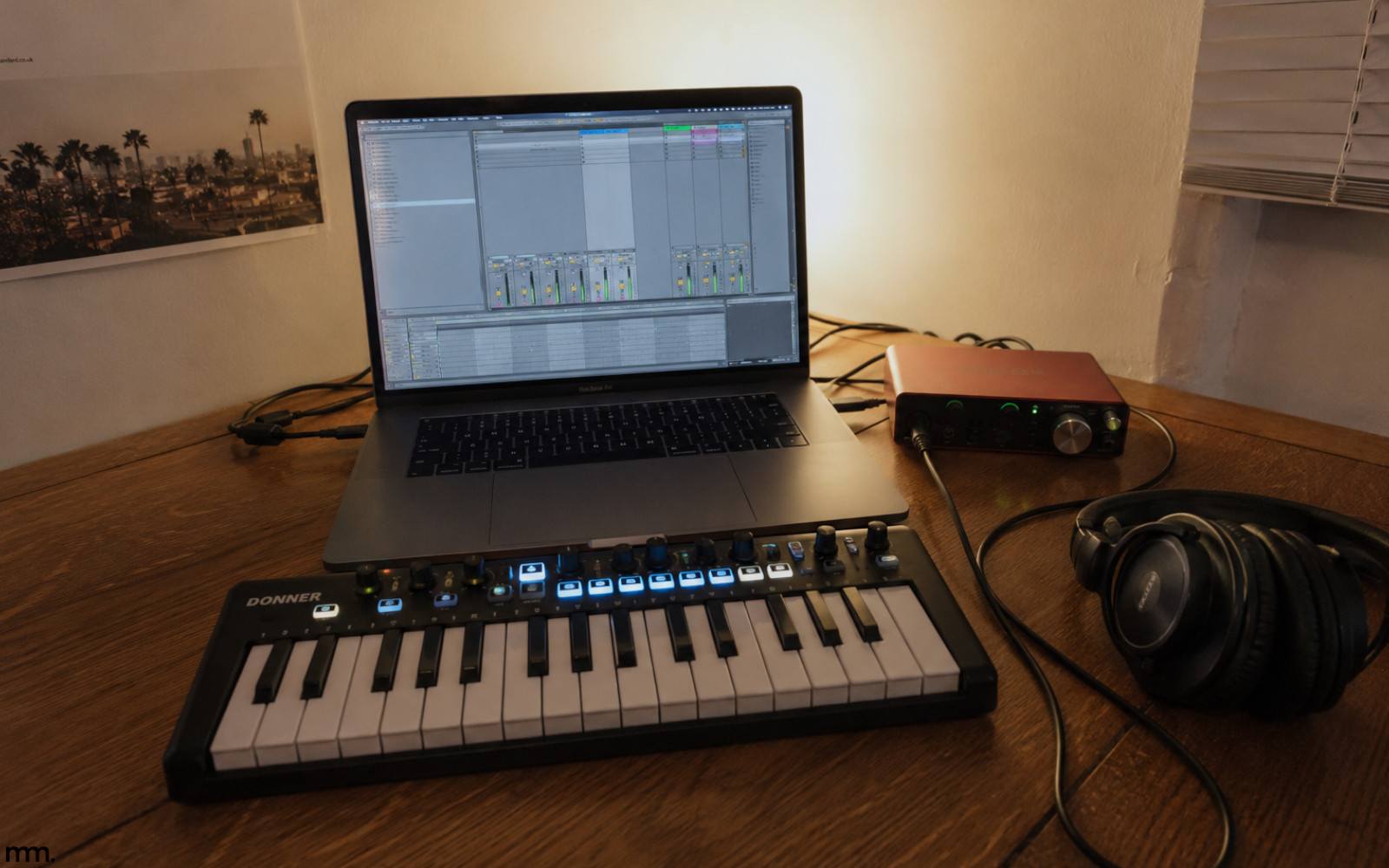
Imagine we've got a laptop running a digital audio workstation — a DAW — such as GarageBand, Reaper, Ableton Live or another recording application. We begin with the Donner D1. Programme a simple four-bar drum pattern. Start with a kick, snare and hi-hat. Resist the urge to use every sound in the machine immediately. Give the groove room to breathe.
Next, bring in the B1.
Create a short bass sequence that locks into the rhythm. Experiment with the filter cutoff and resonance until the bass has the right amount of movement. If you're using MIDI synchronisation, configure the appropriate clock source and connections so the two instruments follow a common tempo. Otherwise, you can record each part against the DAW's click and arrange the audio afterwards. Connect the audio output of the drum machine to your Livejack interface and record the rhythm.
Then connect the B1 and record the bassline onto a separate track. Don't worry if your first performance isn't perfect.
Record a few passes.
Twist the filter while the sequence plays. Capture something spontaneous. That's one of the great pleasures of hardware production: the controls invite you to perform the sound rather than simply select it.
Now introduce a microphone.
Perhaps you've written a vocal melody. Perhaps there's an acoustic guitar part that needs recording. Perhaps the song would benefit from somebody clapping along in the hallway. Connect your chosen sE microphone to the interface using an XLR cable. If you're using a condenser that requires phantom power, enable 48V on a compatible input. For a conventional passive dynamic microphone such as the V7, phantom power isn't required. Set the input gain so your loudest performance peaks stay safely below digital clipping. Aiming for peaks around -12 to -6dBFS is a sensible starting point for many 24-bit recording sessions, although the exact level depends on the source and workflow.
There's no prize for recording as loudly as possible.
In digital audio, clipping occurs when the signal exceeds the available maximum level, potentially creating unpleasant distortion. Leave yourself some headroom. Put on the Donner M100 headphones, enable direct monitoring if appropriate and record your performance.
Then sit back and listen.
You've now got a beat, a bassline and a real recorded performance. That's a song beginning to take shape.
And you've done it with a handful of compact, affordable tools.
A Little Studio Wisdom: Spend Money Where It Matters
One of the most common mistakes in home music production is assuming that better equipment automatically creates better recordings.
It doesn't.
Better equipment can make certain jobs easier, provide more flexibility and help you capture sound more accurately. But microphone placement, arrangement, performance, gain staging and critical listening are just as important.
Consider a few simple examples.
A €100 microphone positioned carefully can produce a more useful recording than an expensive microphone pointed in the wrong direction. A modest audio interface with properly set input gain can capture excellent performances. A simple drum pattern with thoughtful velocity changes can feel more musical than a complicated arrangement packed with unnecessary percussion. And a single well-designed analogue bassline can do more for a track than sixteen layers of synthesiser presets fighting for space.
There's also a technical distinction worth remembering when buying recording equipment.
Audio interfaces provide a limited number of physical inputs, and different sources require different connections. A microphone generally uses an XLR connection into a microphone preamp. A guitar or bass with passive pickups typically needs a high-impedance instrument input. A hardware synthesiser or drum machine usually sends a line-level signal.
Using the correct input type, cable and gain setting is part of getting a clean recording.
The Livejack interfaces provide practical connections for these jobs, but it's always worth planning how many instruments you intend to record simultaneously.
You don't need a gigantic studio.
You need a setup that suits the way you make music.
Affordable Home Recording in Ireland: Start Small, Make Something
There's an enormous amount of music production equipment available today. Some of it is spectacular. Some of it is eye-wateringly expensive. And some of it is so complicated that you could finish an entire EP in the time it takes to understand the settings menu.
But the most enjoyable home studios aren't necessarily the most elaborate ones.
They're the studios where everything is connected, everything works and ideas can become recordings before the inspiration disappears. That's the appeal of this little Donner and sE Electronics combination.
The D1 gives you rhythm.
The B1 gives you analogue bass and hands-on sound design.
The Livejack interfaces give you a practical route into your recording software.
sE Electronics provides microphones capable of capturing voices, instruments and the wonderfully unpredictable sounds of the real world.
And the Donner M100 headphones let you work, record and listen without turning the whole house into an unwilling audience.
It's a remarkably complete approach to affordable music production. One that leaves plenty of room to develop your skills, expand your equipment and discover what kind of music you actually want to make. At Musicmaker, we've been helping Irish musicians find their sound since 1981.
And one thing hasn't changed.
The best equipment is the equipment that gets used.
So if you've been thinking about building a home recording studio, come and have a chat with us at Musicmaker, 29 Exchequer Street, Dublin 2. We'll happily talk synths, drum machines, microphones, audio interfaces, headphones and the strange joy of recording a perfect take just as somebody starts drilling next door.
Enjoy free shipping around Ireland on orders over €15.
Or explore the gear online:
Donner Essential B1 Analogue Bass Synth
Donner Essential D1 Drum Machine
Donner Livejack Lite Audio Interface
Donner Livejack 2in 2out USB Audio Interface
Donner M100 Studio Monitor Headphones
Shop sE Electronics Microphones
The next great song doesn't need an expensive room.
It needs somebody to press record.
And we reckon that somebody might be you.
Musicmaker — Independent minds. Serious gear. Glorious noise.