Silent Night, Happy People: Quiet Christmas Gifts in Ireland
Silent Night? Not quite. Discover electronic drums, HUSH guitars and digital pianos that let the music continue long after the rest of the house has gone to bed.
Christmas morning is a wonderful time to give somebody a musical instrument. There's the excitement of unwrapping it, the immediate demand to try it out and that rather touching moment when somebody plays their first recognisable notes. A new guitar, drum kit or piano can transform an ordinary Christmas into the beginning of a lifelong musical obsession, and at Musicmaker, we're wholeheartedly in favour of that sort of thing.
Then comes Boxing Day, and the household begins to understand the full implications of its generosity. The aspiring drummer has discovered a four-beat rhythm and is determined to perfect it through sheer repetition. The guitarist has mastered the opening of a famous rock riff but hasn't yet investigated the rest of the song. Somebody at the piano is making excellent progress through the first eight bars of a Christmas carol, which everyone else has now heard approximately forty-seven times. Somewhere in the house, a family member is quietly considering a move to Donegal.
It's all part of the magic, of course. We've been helping people make glorious noise at Musicmaker since 1981, and we have no intention of changing our minds about the value of a home filled with music. But we've also learned that the best instrument isn't always the one that makes the biggest racket. Sometimes it's the one that allows a musician to practise regularly, improve their playing and enjoy themselves without turning every evening into a domestic negotiation.
That's the thinking behind this Christmas gift guide. We're looking at three particularly clever ways to bring music into the home: Donner electronic drum kits, Donner HUSH guitars, and digital pianos and keyboards with headphone connections. Each offers a different solution to the same familiar problem, making it easier to fit musical enthusiasm around the realities of family life, shared accommodation and neighbours who might not share your passion for progressive rock.
And before we go any further, one important clarification: none of these instruments is literally silent. Drumsticks still strike pads, guitar strings still vibrate and piano keys still move. What they offer is something much more useful than a marketing promise of complete silence: a practical way to keep playing while making considerably less noise.
The Great Christmas Practice Problem
Learning an instrument requires repetition, and quite a lot of it. A drummer doesn't develop timing by playing a groove once and declaring the matter settled. A guitarist needs to practise chord changes until the fingers begin to find their positions naturally, while a pianist might spend an entire session working on the relationship between two hands. These are the small, unglamorous exercises that gradually turn unfamiliar movements into musical instincts.
Unfortunately, they're also the exercises most likely to test the patience of everyone sharing the house. A difficult transition might need to be repeated fifty times, and the first forty-nine attempts aren't necessarily going to sound magnificent. In a detached house with a dedicated music room, that may be perfectly manageable. In an apartment, a terraced home or a household with young children, the situation can become a little more complicated.
The answer isn't to discourage somebody from playing. It's to give them an instrument and a setup that make practice easier to accommodate. Modern music technology has become remarkably good at this, allowing electronic drums to deliver convincing kit sounds through headphones, specially designed guitars to operate without a conventional amplifier and digital pianos to provide a full keyboard experience at a controllable volume.
The important distinction is between the sound the player hears and the sound everybody else hears. A drummer wearing headphones might be enjoying a thunderous stadium kit while the room hears only the tapping of sticks and pedals. A guitarist can listen to an amplified signal while producing relatively little acoustic sound. A pianist can play a rich concert-grand tone through headphones while the rest of the household hears the gentle mechanical movement of the keys.
That's a rather wonderful arrangement, especially when somebody wants to practise after dinner, before work or during those rare moments when the house is otherwise quiet.
Donner Electronic Drums: All the Rhythm, Less of the Racket
Let's begin with the most obvious household challenge: drums. We adore acoustic drum kits, and there's something extraordinary about the physical relationship between a cracking snare, a resonant kick drum and the wash of cymbals filling a room. Unfortunately, those same qualities make a conventional kit difficult to accommodate in many homes. Acoustic drums produce substantial sound pressure, while the low-frequency energy from a kick drum can travel through floors and walls with remarkable determination.
An electronic kit approaches the problem differently. Instead of relying on acoustic shells and cymbals to produce the main sound, it uses pads and triggers to send performance information to a sound module. That module generates the drum sounds, which the player can hear through headphones or an external amplifier. The result is a dramatically quieter practice experience for many households, while still allowing the drummer to work on the essential coordination, timing and stick control involved in playing a proper kit.
Donner has made this approach particularly accessible, with compact electronic drum sets that offer useful learning features without demanding the space or volume of a traditional acoustic setup.
Donner DED-70: A First Drum Kit That Fits Real Life
The Donner DED-70 Electronic Drum Set is a particularly appealing starting point for a younger drummer or somebody taking their first steps into rhythm. Its compact layout provides separate playing surfaces for the main parts of a drum kit, allowing beginners to develop the coordination between hands and feet that makes drumming such a rewarding challenge.
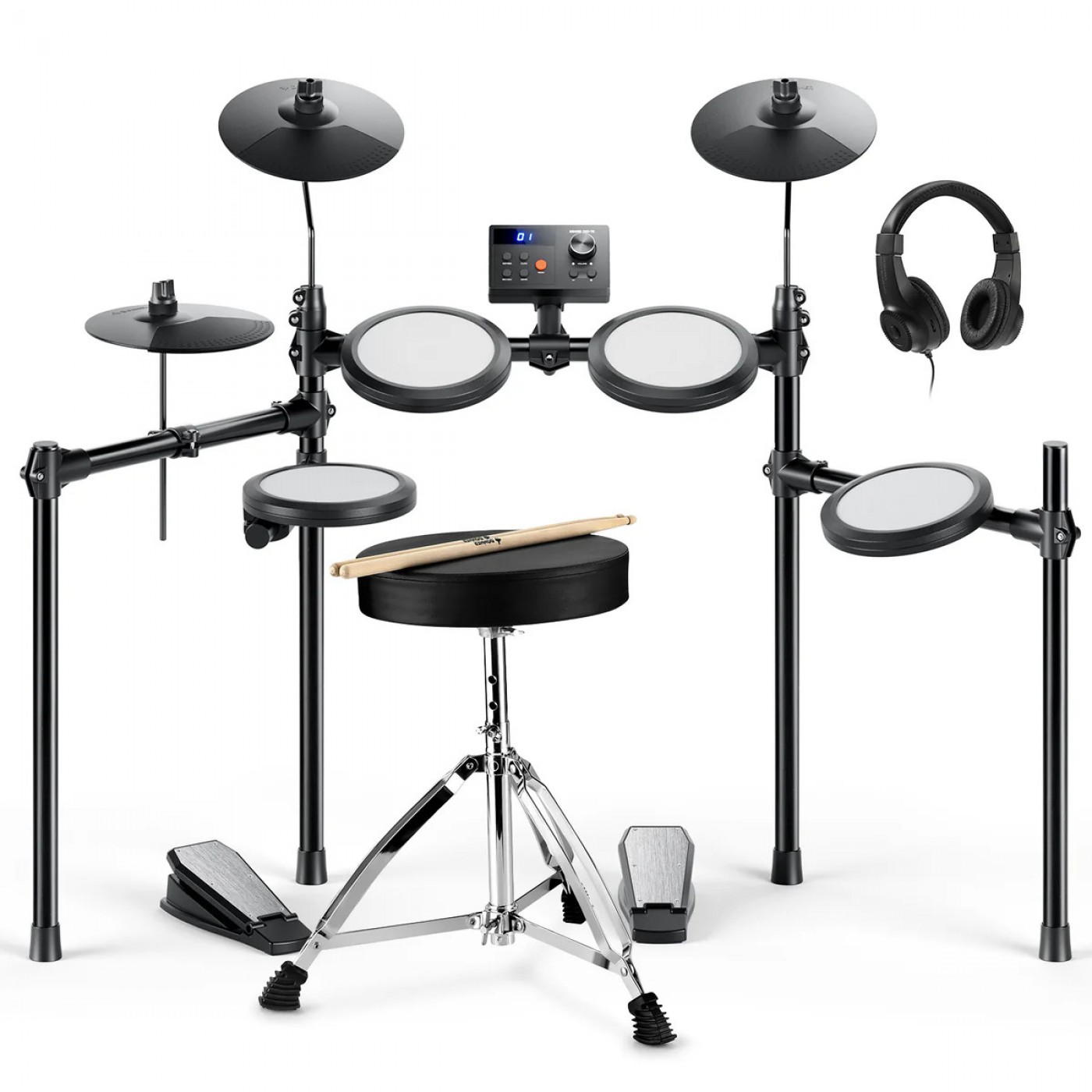
A new player might begin by keeping a steady pulse on the hi-hat, adding snare hits on beats two and four, and gradually introducing the bass drum. It sounds straightforward until you attempt to make all three things happen independently, at which point you discover that the human body has a rather interesting sense of humour. With regular practice, though, those movements begin to settle into a groove, and the satisfaction of getting everything working together is tremendous.
The DED-70 makes that process much more manageable in a family home. Musicmaker's listed package includes headphones and a drum throne, offering a useful starting point for somebody who doesn't already own the essential accessories. As with any Christmas bundle, it's worth checking the exact contents before purchasing, particularly if the plan is to have everything ready for immediate use on Christmas morning.
For a first-time drummer, the real attraction is the opportunity to develop genuine rhythmic skills without the space and acoustic volume requirements of a conventional kit. The family, meanwhile, retains a reasonable chance of hearing the television.
Donner DED-80P: Mesh Pads and Room to Grow
For somebody looking for a more developed electronic drum setup, the Donner DED-80P Digital Drum Kit is especially interesting. Its dual-layer mesh snare and tom pads are an important part of the appeal, providing a responsive playing surface that produces much less acoustic volume than a conventional drumhead.
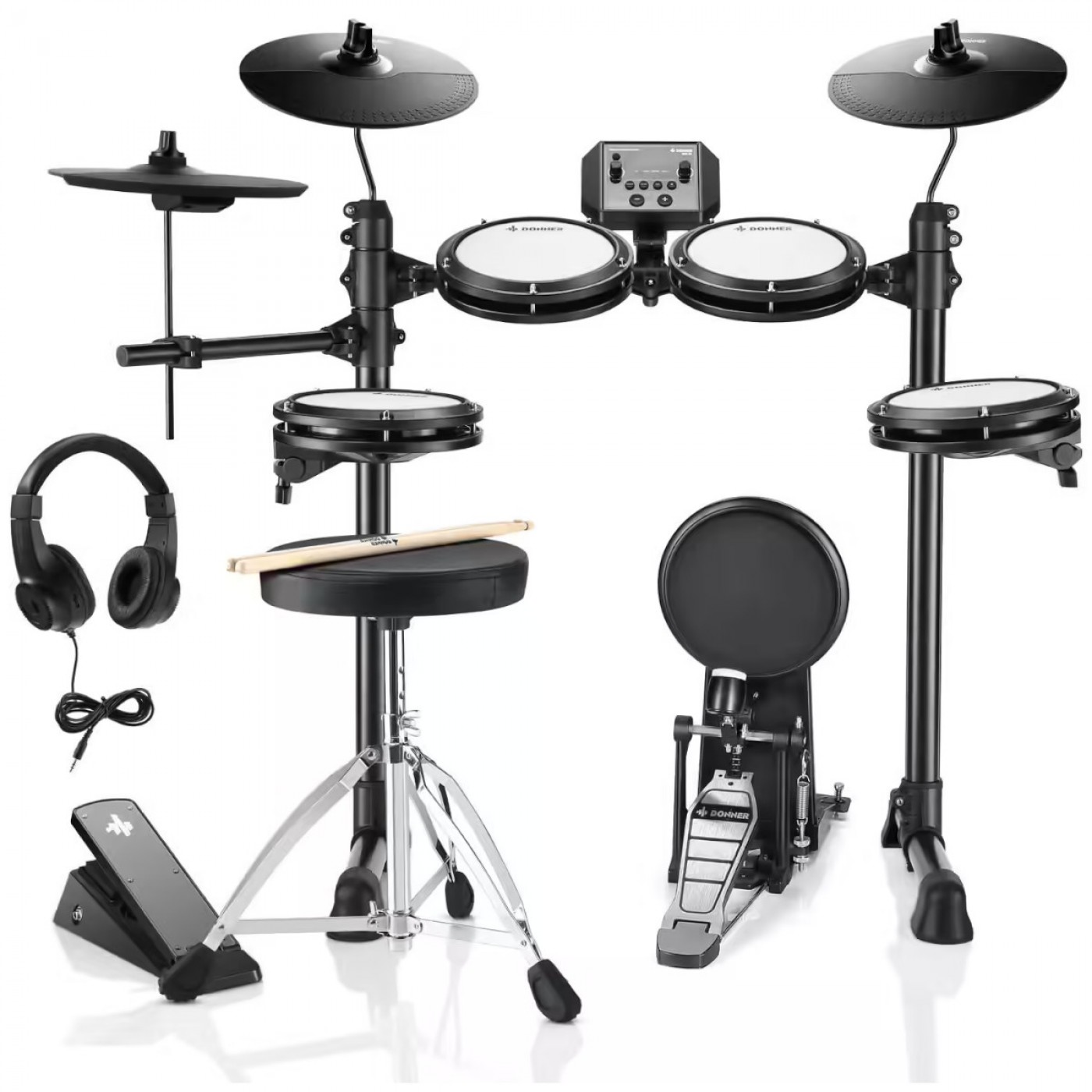
The physical response of a pad matters more than people sometimes realise. Drummers need to develop stick control, accents, timing and the ability to play quieter notes between stronger ones. A responsive surface gives them something meaningful to work with, while the sound module provides the musical feedback that makes those exercises enjoyable. The DED-80P also includes a compact kick-trigger arrangement, a hi-hat control pedal, 180 drum and percussion sounds, 15 preset kits and 30 backing tracks.
Those backing tracks are particularly useful because they place rhythmic exercises in a musical context. Practising a groove in isolation is valuable, but playing alongside a backing track helps the drummer understand how the snare, kick and hi-hat work together to support a piece of music. It's also much more entertaining than staring at a metronome for half an hour, although the metronome will undoubtedly have its revenge eventually.
USB-MIDI connectivity adds another useful dimension, allowing the kit to work with compatible recording software and virtual drum instruments. For a teenager becoming interested in music production, that opens the door to exploring how live rhythmic performances fit into a recording project. Musicmaker's DED-80P package also includes headphones, a throne and sticks, making it an attractive Christmas option for somebody beginning from scratch.
Are Electronic Drums Quiet Enough for an Apartment?
Here's where it's worth being realistic. Electronic drums are generally much quieter than acoustic drums, but they aren't completely silent, and the physical sound of sticks striking pads remains audible in the room. More importantly, kick pedals and other foot-operated components can transmit vibration through the floor, which may be noticeable to somebody living downstairs even when the drummer is wearing headphones.
A suitable drum mat can help protect the floor and reduce movement, although it won't necessarily eliminate structural vibration. In particularly sensitive buildings, additional isolation beneath the kit or pedals may be worthwhile. Positioning the instrument away from shared walls and being considerate about practice hours can also make a significant difference.
The aim isn't to pretend the neighbours have vanished. It's to make regular drumming practical enough that somebody can enjoy developing their skills without creating unnecessary friction at home. For many households, a compact electronic kit makes an enormous difference, and for someone who has always wanted to learn drums but assumed their living arrangements made it impossible, that can be a wonderful Christmas discovery.
Explore the electronic drum kits at Musicmaker to find a setup that suits the player and the space available.
Donner HUSH Guitars: A Brilliant Idea for Late-Night Players
Guitarists have their own quiet-practice challenges. Some live in apartments, some travel frequently, and others simply find that their best musical ideas arrive late at night, just as the rest of the house has settled down. The traditional approach involves a guitar, an amplifier and a hopeful glance at the volume control, but there's a rather clever alternative.
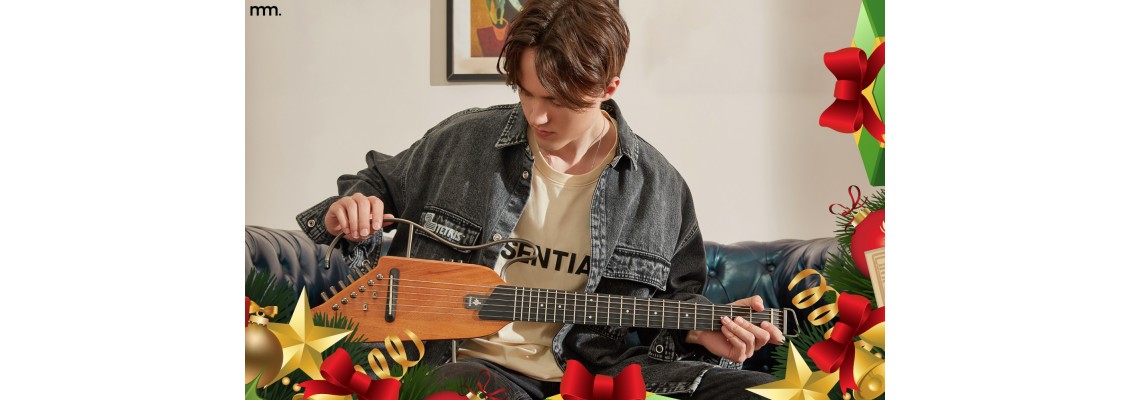
The Donner HUSH series is designed around portability, reduced acoustic output and convenient headphone playing. These instruments look unusual at first, with headless designs, slim bodies and removable support frames that provide a familiar playing position without the bulk of a conventional guitar. Beneath that striking appearance, though, the concept is straightforward: give the musician real strings, a proper guitar neck and a satisfying playing experience, while making it easier to practise without filling the room with amplified sound.
It's an idea that makes particular sense for musicians who struggle to find uninterrupted playing time. A guitar that can be picked up and enjoyed through headphones is much more likely to get used during those spare twenty minutes that appear unexpectedly in the evening.
Donner HUSH-I: For the Acoustic-Minded Guitarist
The Donner HUSH-I is the model we'd encourage acoustic players to investigate. Its design uses a pickup-based electronic system to produce an amplified acoustic-style sound through headphones or suitable external equipment, while the absence of a conventional resonant guitar body keeps its natural acoustic volume much lower than that of a typical steel-string acoustic.
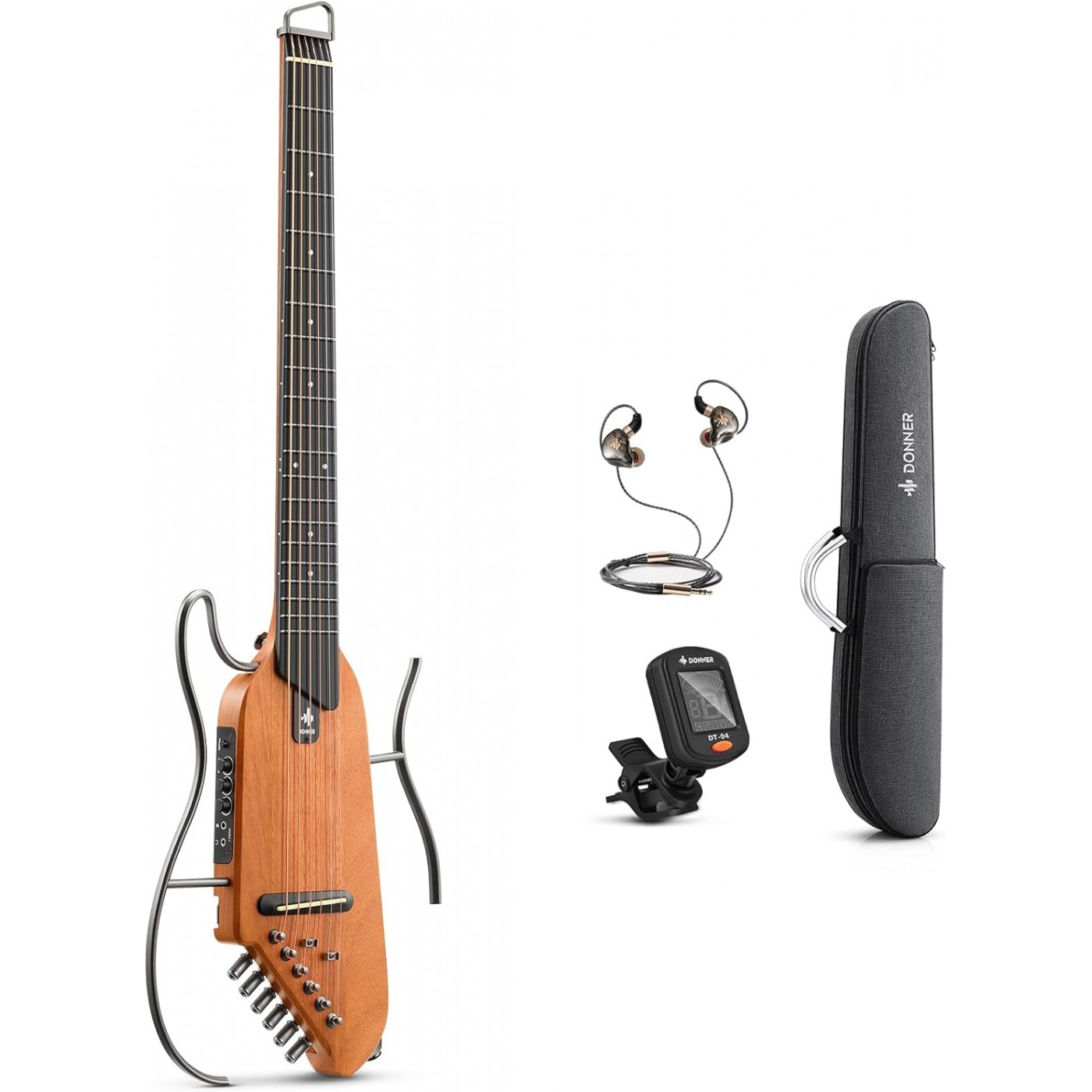
That makes it particularly appealing for practising fingerstyle patterns, working through chord changes and writing songs in shared spaces. Because the player is still working with actual strings and a familiar guitar neck, they're developing fretting-hand accuracy, picking control, chord transitions and musical timing. Those skills remain useful when they return to a conventional acoustic guitar, even though the HUSH-I doesn't reproduce every physical sensation of a large resonant soundbox.
The compact construction also makes it an attractive travel companion. With its removable support frame and slim body, the instrument can be packed into a relatively small space, which is useful for musicians who spend time in hotel rooms, travel for work or simply don't have room for another full-sized guitar case. A quiet evening away from home suddenly becomes an opportunity to practise rather than a break from playing altogether.
For headphone playing, the standard HUSH-I uses a 9V battery to power its onboard electronics. Check the battery and headphone connection before wrapping it, so the first practice session can begin without an emergency search through the kitchen drawer.
The HUSH-I isn't intended to replace the experience of sitting behind a beautifully resonant acoustic guitar. Its purpose is different, and wonderfully practical: to keep a guitarist playing when a conventional acoustic would be inconvenient or too intrusive.
Donner HUSH-X: Electric Guitar Without the Amp Drama
The Donner HUSH-X takes the concept in a more electric direction. It's a compact headless electric guitar designed for players who want to practise riffs, chords, scales and lead techniques without relying on a conventional amplifier, with a slim construction and detachable frame that make it particularly convenient for home use and travel.
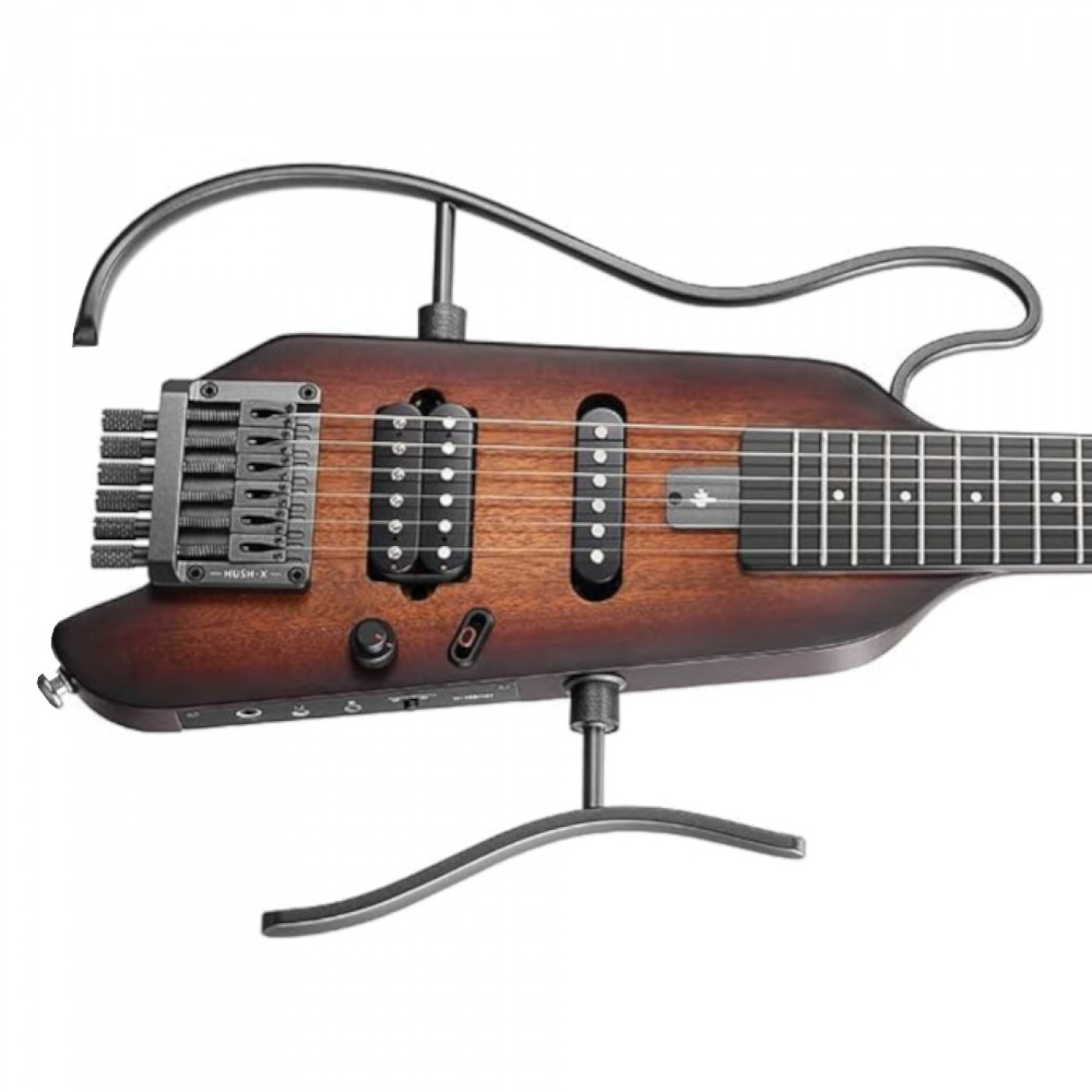
Think about the practical difference for somebody learning electric guitar. They can work on a difficult alternate-picking exercise without setting up an amplifier, practise a solo repeatedly without broadcasting every missed note to the household, or explore a new chord progression late in the evening without rearranging the sitting room. Those small conveniences add up, especially when regular practice is the goal.
For an experienced guitarist, the appeal is slightly different but equally compelling. A HUSH-X can become the instrument that comes along on trips, sits within reach during a working day or gets picked up when an idea appears at an inconvenient hour. And, rather wonderfully, it looks like something that has escaped from a very stylish science-fiction film. That isn't a technical specification, but it certainly doesn't hurt.
Headphone listening on the standard HUSH-X also requires a 9V battery and its active mode. Its passive setting is for use through suitable external guitar equipment; it does not power the headphone output.
Are HUSH Guitars Actually Silent?
Not completely. The strings still make an audible acoustic sound when picked or strummed, and there's always some mechanical noise involved in physically playing a guitar. The important difference is that a HUSH instrument doesn't rely on a large resonant body or a loud external amplifier to provide the player's main listening experience.
With headphones connected, the guitarist can hear the electronic signal while the surrounding room remains much quieter. That makes these instruments particularly useful for late-night practice, travel and shared accommodation, although anyone living in an exceptionally noise-sensitive environment should still be mindful of string noise.
It's also worth remembering that the HUSH-I and HUSH-X serve different musical purposes. The HUSH-I is the natural starting point for somebody interested in acoustic-style playing, while the HUSH-X is better suited to electric guitar techniques and sounds. The right choice depends on the music the recipient actually wants to make, and that's a question worth investigating before Christmas morning.
For more on the range, read our Donner HUSH guitar guide.
Digital Pianos: Big Musical Possibilities, Less Household Noise
A piano is one of the loveliest instruments to bring into a home, but it can also produce a substantial amount of sound, particularly when somebody is learning a difficult passage and has decided that the solution is to play it slightly louder. Traditional acoustic pianos are magnificent things, but they don't come with a headphone socket. Digital pianos do, and that single feature can completely change how practical regular piano playing becomes.
A modern digital piano allows the player to enjoy piano sounds through built-in speakers during the day, then switch to headphones when quiet practice is needed. The keys still move, and a weighted action will produce some mechanical noise, but the main musical sound stays in the headphones. For families, shared homes and apartments, that's a considerable advantage.
Donner offers several interesting approaches to the digital piano, from accessible beginner instruments to furniture-style models designed to remain permanently in the home. The important thing is understanding the difference between their keyboard actions and choosing one that suits the player's goals.
Donner DDP-60: A Friendly First Piano
The Donner DDP-60 is an appealing introduction to digital piano playing, combining an 88-key keyboard with a furniture-style design and a range of sounds and learning-friendly features. Its semi-weighted action is an important part of the specification, and one worth understanding before making a decision.
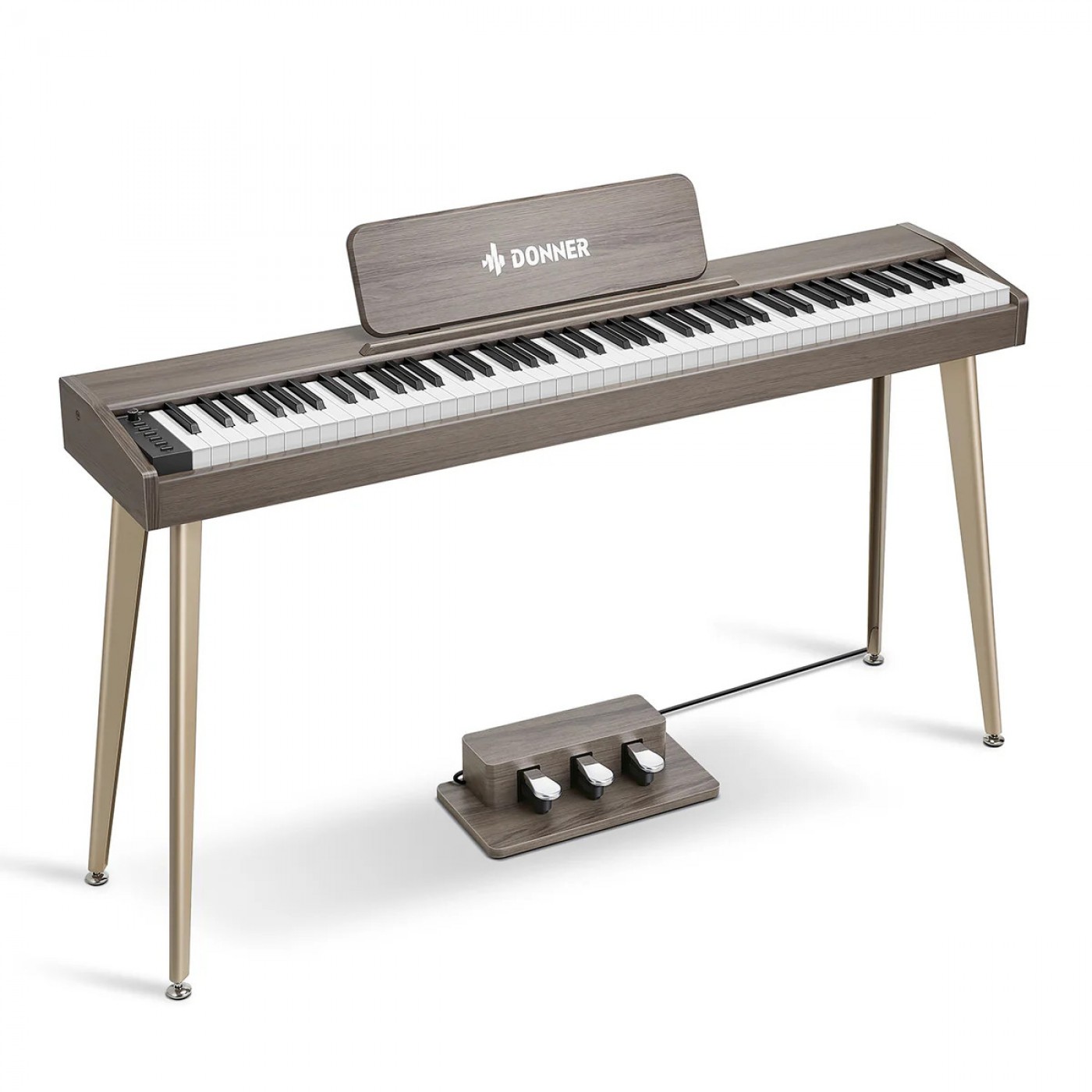
A semi-weighted keyboard offers more resistance than many lightweight synth-style actions, but it doesn't reproduce the hammer-action feel of a traditional piano in the same way as a fully weighted digital piano. For somebody exploring music, learning chords, composing songs or enjoying casual keyboard playing, that may be perfectly suitable. For a student beginning formal piano lessons with a strong emphasis on acoustic-piano technique, it's worth comparing the feel with a fully weighted alternative.
The DDP-60 is particularly attractive for a family that wants an accessible, full-length keyboard without making a major financial commitment. Its compact furniture-style design also helps it feel like a permanent part of the home rather than another piece of equipment that has to be packed away after every session.
And because it supports headphone practice, the new pianist can work through those early exercises without making them the soundtrack to everybody else's evening. That's a very considerate way to give somebody the gift of music.
Donner DDP-80: A More Traditional Piano Feel
The Donner DDP-80 takes a different approach, placing greater emphasis on a weighted, piano-style keyboard action and a clean, understated cabinet design. The DDP-80 features 88 graded hammer-action keys, intended to provide a more familiar physical response for somebody developing traditional piano technique.
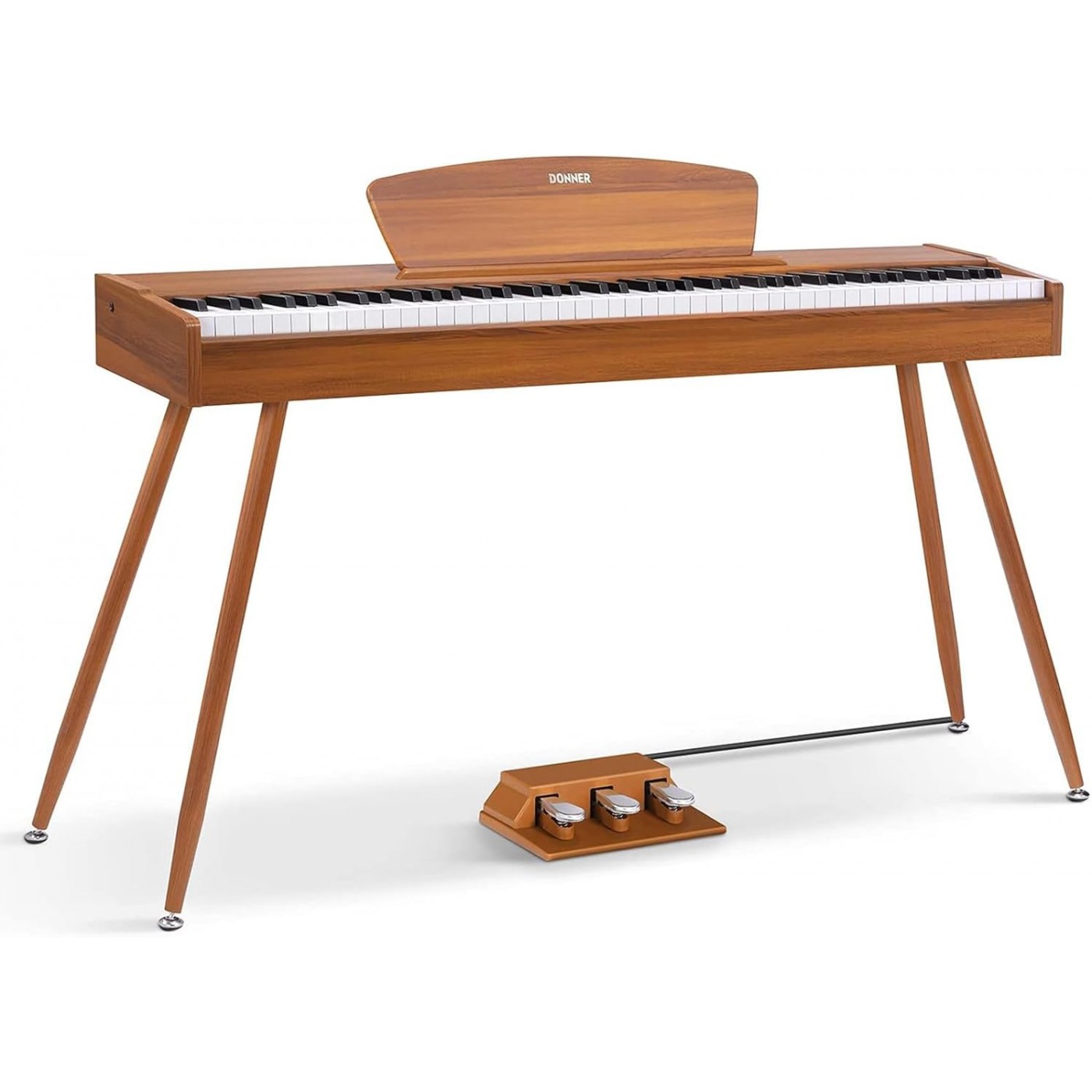
That difference becomes important as a player begins working on dynamics, articulation and finger control. A weighted action gives the hands resistance to work against, encouraging the development of touch in a way that's closer to the experience of playing an acoustic piano. The DDP-80 also has a deliberately straightforward approach to sound selection, focusing on the essential piano-playing experience rather than overwhelming the player with endless menus.
There's something appealing about that simplicity. You sit down, play and listen, without having to navigate a complicated collection of settings. When the house needs to be quiet, headphones allow the practice session to continue without filling the room with sound.
The cabinet makes the DDP-80 an attractive choice for a living room, bedroom or dedicated music space, and its permanent presence can encourage more frequent playing. A piano that's ready to use is often a piano that gets used, particularly during those short practice sessions that gradually build confidence and technique.
Musicmaker also carries other Donner digital pianos and Roland keyboards, each offering different approaches to keyboard feel, sounds, size and features. Our Christmas digital piano guide for 2026 explores those options in more detail. Here, our concern is the simple pleasure of giving somebody an instrument they can practise whenever inspiration strikes, without needing to ask the entire household for permission first.
The Unsung Christmas Hero: A Good Pair of Headphones
There's one accessory that ties this entire guide together, and it isn't particularly glamorous. Nobody has ever dramatically unveiled a quarter-inch headphone adaptor while the family applauded, but a good pair of headphones can be one of the most useful things a musician owns.
They allow the drummer to hear the electronic kit's sounds clearly, let the HUSH guitarist enjoy the amplified signal without a conventional speaker and give the pianist access to a rich playing experience without filling the room with sound. For home practice, comfortable wired headphones are often the simplest choice because they connect directly to compatible instruments, avoid the potential latency associated with some wireless listening arrangements and don't require charging.
Comfort matters more than people sometimes realise. A pair that feels fine for five minutes might become unpleasant during an hour of practice, so a sensible fit, appropriate cable length and reliable connection are worth considering. It's also important to check the headphone socket on the instrument: some use a 3.5 mm connection, others use a 6.35 mm connection, and some accommodate both. A suitable adaptor may be needed.
Before wrapping the present, make sure the recipient has everything required to plug in and play. Discovering that the only missing item is a headphone adaptor at nine o'clock on Christmas morning is a very particular form of festive frustration.
And one final point: headphones make it possible to practise without disturbing other people, but they don't make unlimited listening volume a good idea. Keep levels comfortable, take breaks and resist the temptation to compensate for a noisy environment by turning everything up. Your ears have a long musical career ahead of them, and they're worth looking after.
A Little Preparation Goes a Long Way
There's a special pleasure in giving somebody an instrument they can start using immediately, and a little planning makes that much more likely. For electronic drums, think about where the kit will go. Even a compact setup needs enough space for a comfortable playing position, a throne and free movement of the sticks and pedals. A mat beneath the kit can protect the floor, while additional vibration isolation may be needed if pedal movement travels into neighbouring rooms.
For a HUSH guitar, check the included accessories, the headphone connection and how the removable frame fits together. It's also worth making sure the player has a tuner and the correct power arrangement. For a digital piano, plan its location before Christmas morning, allowing space for a suitable bench, comfortable posture and access to a power socket.
In every case, take a moment to confirm that the headphones actually work with the instrument. It's a small detail, but it's the sort of thing that makes the difference between a present that can be enjoyed immediately and one that requires an emergency shopping expedition.
Which Quiet Instrument Makes the Best Christmas Gift?
The answer isn't simply the quietest one. It's the instrument that fits the person, their musical interests and the home they'll be playing in.
If the recipient has been drumming on tables for years, a Donner electronic kit could give them a proper way to develop rhythm and coordination. If they're a guitarist who struggles to find uninterrupted practice time, a HUSH-I or HUSH-X could make regular playing much more convenient. If they've always wanted to learn piano, a digital instrument with headphones could remove one of the biggest obstacles to getting started.
Quiet-practice equipment can be just as exciting for experienced musicians. A drummer might appreciate a compact home kit for working on timing, a guitarist could use a HUSH instrument for travel and late-night writing, and a pianist might love being able to practise in the evening without waking the rest of the house.
The common thread is freedom: the freedom to practise more often, explore an idea when it appears, make mistakes and repeat a difficult passage without feeling that everybody nearby is keeping score. That's a very good thing to give somebody, especially at Christmas.
Silent Night? Not Quite. And That's Perfectly Fine.
We're not going to pretend that a house full of musicians will ever be completely peaceful. Somebody will still tap a rhythm on the kitchen counter, hum a melody while making tea or announce that they've finally learned a song and insist that everybody comes in to hear it. Excellent. That's exactly the sort of household we like.
But there's something wonderful about instruments that make music easier to fit around everyday life. Donner electronic drums let players explore proper drum-kit technique without the acoustic volume of a traditional set. HUSH guitars offer a practical way to keep playing without a conventional amplifier, while digital pianos bring the pleasure of a full keyboard into homes where acoustic-piano volume might be difficult to manage. Add a suitable pair of headphones, and all three become more flexible.
So this Christmas, perhaps the best gift isn't the loudest thing under the tree. Perhaps it's the instrument that gets played every day because it fits into the recipient's life.
You can explore Donner instruments at Musicmaker, browse our electronic drums, discover the Donner HUSH guitar range and explore our digital pianos. Or come and have a chat with us at Musicmaker, 29 Exchequer Street, Dublin 2. We've been helping Irish musicians find their sound since 1981, and we're more than happy to help them find a way to keep it to themselves occasionally.
Free shipping around Ireland on orders over €15. Oversized instruments may carry a delivery surcharge; check the individual product page and delivery details when ordering.
Happy Christmas, and here's to a gloriously musical New Year.
Independent minds. Serious gear. Glorious noise.