Small Boxes, Glorious Noise: Nine Pedals Worth Unwrapping
Nine guitar pedals. Nine very good reasons to spend the holidays making noise. We asked the Musicmaker team which little boxes deserve a place under the tree, and the results are a glorious mixture of classic tone, modern invention and deeply enjoyable trouble.
There comes a moment in every guitarist's life when they look down at their pedalboard and declare, with tremendous confidence, that it's finished.
Everything is exactly where it should be. The overdrive sounds magnificent. The delay repeats are perfectly judged. The patch cables are tidy, the power supply is behaving itself, and there is absolutely no reason to buy another pedal.
Then somebody mentions a new fuzz. Or a particularly interesting compressor. Or an overdrive that sounds a little different from the three already sitting on the board. And suddenly we're back to measuring the available space between the tuner and the reverb, wondering if a smaller patch cable might free up another centimetre.
It's a familiar story at Musicmaker Dublin.
We've been helping Irish guitarists explore new sounds since 1981, and one thing we've learned is that the pedalboard is rarely a finished project. It's an ongoing conversation between the player, the guitar, the amplifier and a collection of small electronic devices that have a remarkable ability to consume an entire evening.
So, if you're shopping for guitar pedals for Christmas in Ireland, we asked the people who spend their working days surrounded by this stuff to help us put together a proper guitar pedal wishlist. Not a random collection of expensive boxes. Not nine variations on the same overdrive circuit. And definitely not a list assembled by somebody who thinks distortion and fuzz are interchangeable.
These are nine recommendations from the Musicmaker shop floor, chosen for their sounds, musical possibilities and ability to make a guitarist forget what time it is. There are affordable discoveries, enduring classics, beautifully strange inventions and a few pedals that could become permanent fixtures on somebody's board.
Let's get involved.
1. BOSS JB-2 Angry Driver: Two Personalities, One Pedal
Some collaborations make perfect sense the moment you hear about them. BOSS and JHS Pedals joining forces to create the JB-2 Angry Driver is one of those.
On one side, you have the familiar, touch-sensitive overdrive character of the BOSS Blues Driver. On the other, the more aggressive, British-amp-inspired distortion voice of the JHS Angry Charlie. The clever part is that the BOSS JB-2 Angry Driver doesn't simply make you choose between them.
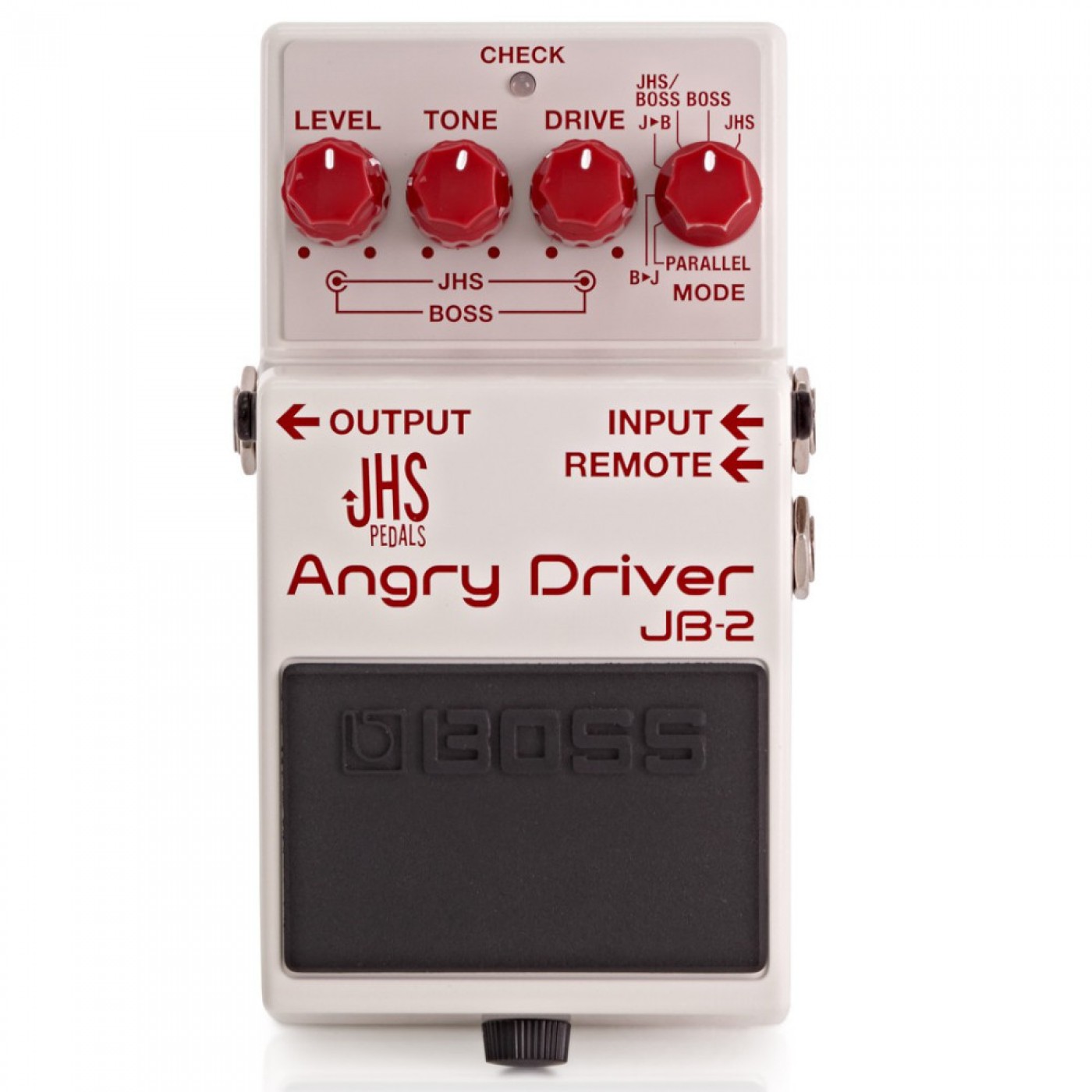
Its six operating modes let you use either circuit individually, place one before the other in either order, or run them in parallel. And those possibilities are musically significant. Put a lower-gain overdrive before a higher-gain distortion and you can shape the way the second circuit responds. Reverse the order and the character changes again. Run both voices in parallel and you can combine different gain textures without simply forcing the entire signal through one distortion stage after another.
It's the sort of pedal that rewards a guitarist who enjoys experimenting.
Start with the BOSS side for a lightly driven rhythm sound. Move to the JHS side when you want a more forceful lead voice. Then begin combining them and see how quickly an ordinary rehearsal turns into an investigation of signal routing. The JB-2 is particularly appealing for a guitarist who needs several gain sounds but doesn't want to dedicate half a pedalboard to individual drive pedals. And there's something rather satisfying about giving somebody a present that will almost certainly require them to read the manual.
Not because it's difficult. Because there's so much to explore.
2. Ibanez TS808 Tube Screamer: The Little Green Institution
There are few guitar pedals with a reputation quite like the Ibanez Tube Screamer. The TS808 is one of those rare pieces of equipment whose influence extends well beyond its own circuit. It's become a reference point for an entire category of overdrive.
But the reason guitarists keep returning to it is wonderfully practical.
The Ibanez TS808 Tube Screamer has a characteristic midrange emphasis, a controlled low-frequency response and a clipping character that works beautifully with an amplifier already beginning to break up.
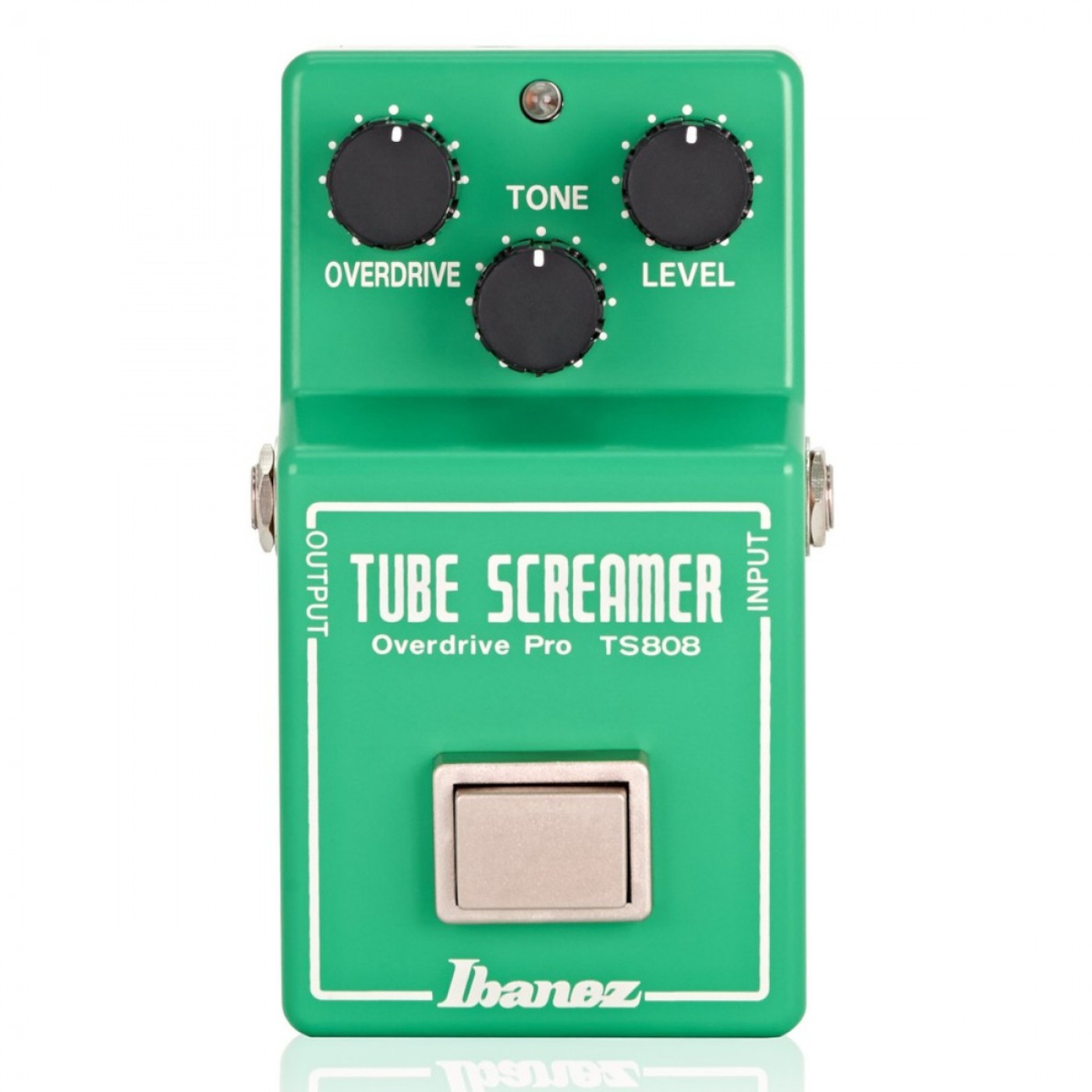
That midrange shape is pretty important. A guitar tone that sounds enormous on its own can become surprisingly difficult to hear once the bass, drums and second guitar join in. The Tube Screamer's familiar frequency response can help a guitar sit more clearly in a busy mix. It's also a brilliant pedal for pushing an amplifier. Turn the overdrive control down, raise the output level and let the amp do more of the work. Rather than relying entirely on the pedal for distortion, you're changing the level and frequency balance of the signal hitting the amplifier's input. The result can be tighter, more focused and wonderfully responsive.
Of course, the TS808 also works as a standalone overdrive into a clean or lightly driven amp, particularly for blues, classic rock and expressive lead playing. Three controls. One unmistakable green enclosure. Decades of musical history. There's a reason this one keeps finding its way onto pedalboards.
And for a guitarist who's never owned a Tube Screamer, Christmas is a particularly good excuse to discover what all the fuss has been about.
3. JAM Pedals Octaurus: Fuzz With Extra Teeth
Now we're leaving polite society behind.
The JAM Pedals Octaurus is an octave-up fuzz, which means it combines the thick, harmonically saturated character of fuzz with an additional upper-octave effect.
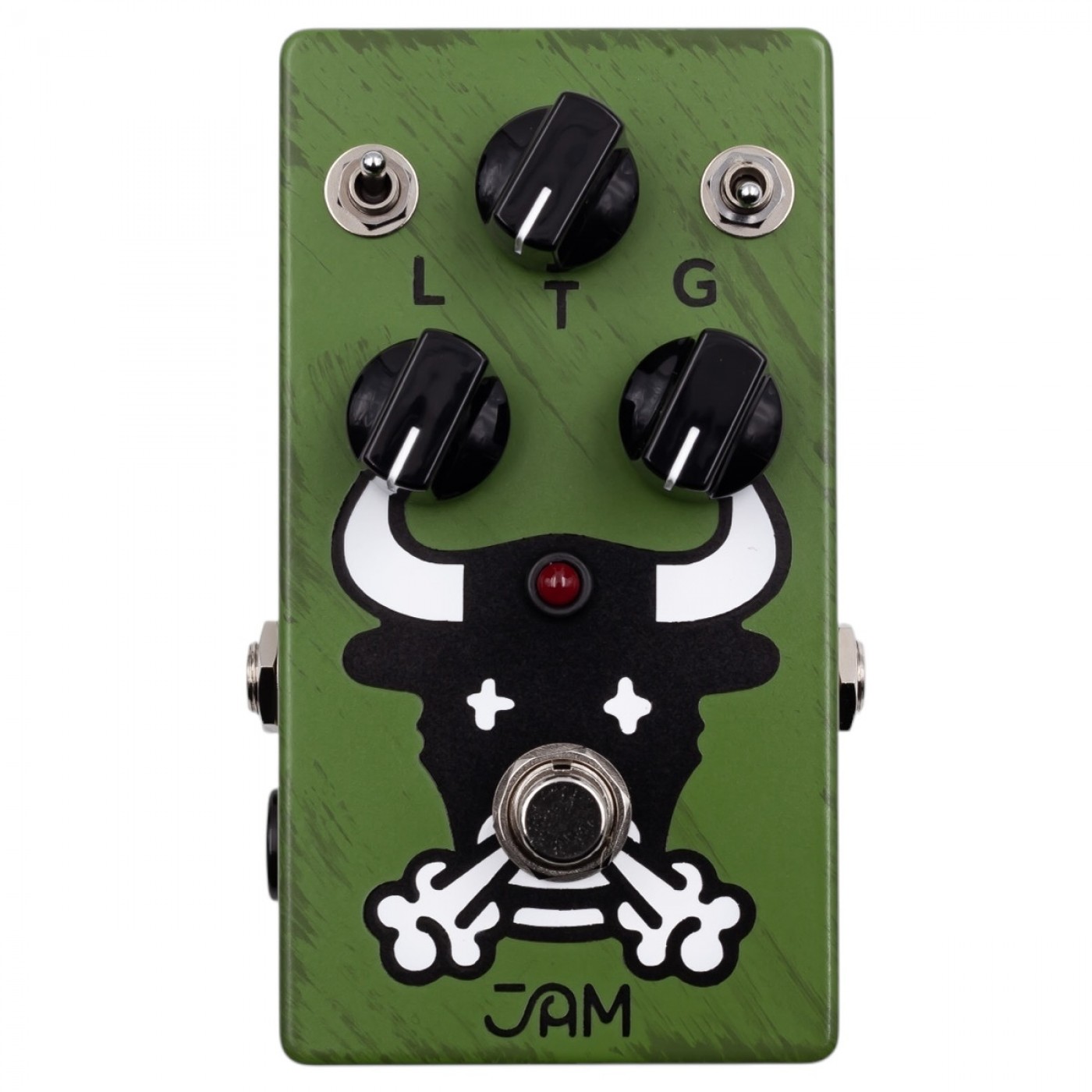
And if you've never played through a proper octave fuzz, the first encounter can be wonderfully alarming. A conventional overdrive generally preserves a recognisable relationship between your guitar's original signal and the amplified, clipped result. Fuzz pushes things further, creating a much more saturated waveform with a dense collection of harmonics. Add an upper octave and the sound becomes even more distinctive.
Single notes can acquire a cutting, almost vocal quality. High-register lines develop an extraordinary edge. Sustained notes can bloom into harmonically complex textures that feel quite unlike a conventional distortion pedal.
The Octaurus offers additional control over that character through selectable voicing and clipping options. One switch changes the tonal emphasis; another lets you explore different clipping behaviours. Together with the Gain, Tone and Level controls, they give you plenty of room to move between focused, articulate sounds and much more unruly territory.
Here's a lovely little trick: select the neck pickup, move above the twelfth fret and experiment with sustained single notes. Octave fuzz effects can become particularly pronounced in that register, especially when the guitar's fundamental and harmonic content interact favourably with the circuit. Don't expect every chord to behave like a conventional distortion sound. That's part of the charm.
The Octaurus is for the guitarist who wants a lead tone with character, an experimental player looking for unusual textures, or somebody whose favourite recordings contain at least one moment where the guitar appears to be arguing with the amplifier.
It's also a splendid reminder that fuzz should occasionally be allowed to misbehave.
4. Ibanez Analogue Delay Mini: Small Pedal, Beautiful Repeats
Delay is one of the most immediately rewarding guitar effects. Play a note, and it comes back. Play a phrase, and the repeats begin interacting with the next phrase. Set the timing carefully and a simple guitar part can acquire rhythmic movement that wasn't present in the original performance.
The Ibanez Analogue Delay Mini brings that experience into a compact enclosure, making it particularly attractive for players whose pedalboards are already running short of space.
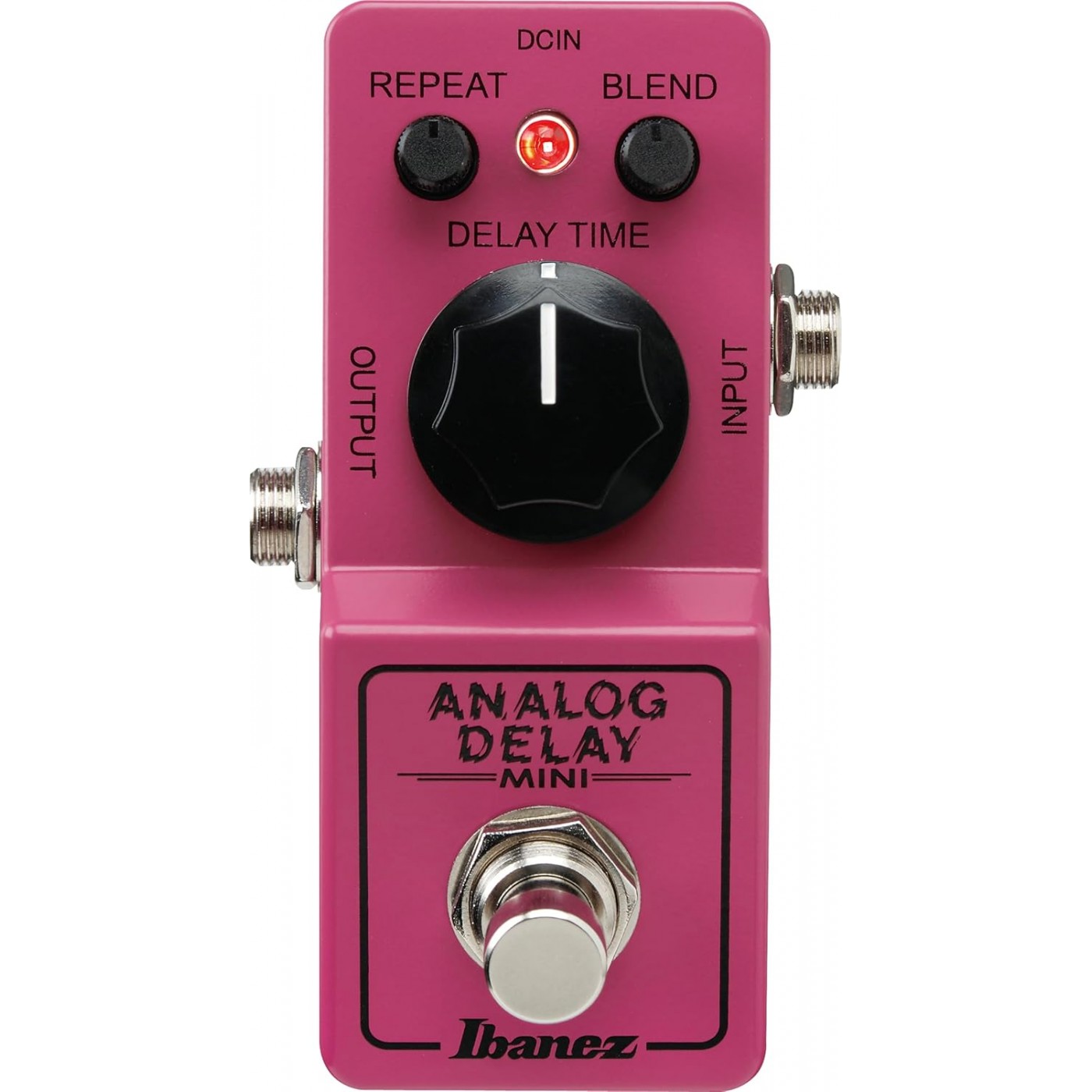
The analogue design is part of the appeal. Traditional analogue delays often produce repeats that become progressively darker and softer as they decay. Rather than each echo sounding like a pristine copy of the original note, the repeats settle into the background.
A short delay with one or two audible repeats adds body to a lead guitar without drawing attention to itself. Increase the delay time and feedback, and the effect becomes a more obvious part of the arrangement. For slapback-style sounds, try a relatively short delay time with a modest repeat level. You'll get that lively sense of space associated with countless rockabilly, country and roots recordings. For more atmospheric playing, let the repeats overlap gently while picking sparse notes or open chords.
The key is restraint.
A good delay doesn't have to announce itself every time you touch the strings. Sometimes its greatest achievement is making a simple guitar part feel just a little more complete. And because the Ibanez Mini occupies so little pedalboard real estate, it leaves room for the next Christmas present.
An important consideration, obviously.
5. BOSS RV-6: A Room of Your Own
Reverb and delay are related, but they do different musical jobs. Delay produces distinct repetitions of a sound. Reverb simulates the dense collection of reflections that occurs when sound travels through a physical space. A small room, a large hall and the spring unit in an amplifier produce very different kinds of reverberation. Those differences can have an enormous influence on how a guitar part feels.
The BOSS RV-6 Reverb is a particularly versatile way to explore that territory.
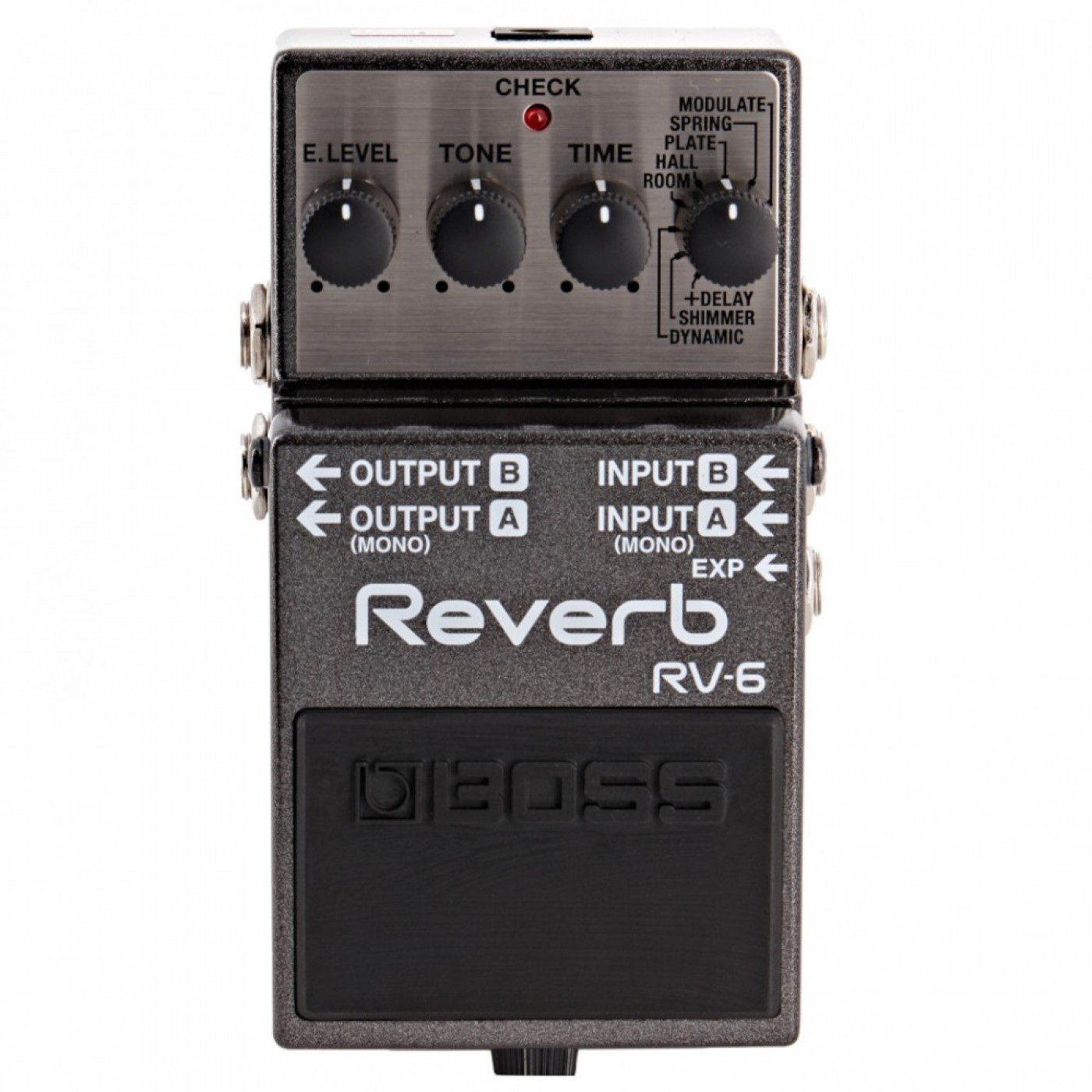
Its eight modes cover Room, Hall, Plate, Spring, Modulate, Dynamic, Shimmer and a combined Delay+Reverb setting. Spring reverb brings the familiar splash and character associated with classic guitar amplifiers. Plate sounds can provide a smooth, flattering sense of space around lead notes and chords. Hall settings allow longer, more expansive decays.
Then things become more adventurous.
Shimmer introduces an additional pitched, atmospheric quality that works beautifully with sustained chords and ambient guitar arrangements. Modulate adds movement to the reverb tail, creating a more animated texture. The Dynamic mode is especially interesting because it can help manage the relationship between the dry guitar and the reverb effect as you play.
For somebody who spends time recording at home, the RV-6 can be an extraordinarily useful creative tool.
A clean guitar part recorded through a suitable amplifier or amp-simulation setup can feel rather exposed. Add a carefully chosen reverb and it begins to occupy a more convincing musical space. On stage, the same pedal can move from a restrained room sound for rhythm guitar to a much larger atmosphere for an instrumental passage. And the RV-6 supports stereo operation, opening up further possibilities for players using two amplifiers or a stereo recording setup.
This is a Christmas present with serious long-term potential.
Because once somebody discovers how much a good reverb can change an arrangement, it's very difficult to go back.
6. Ibanez Mini Flanger: A Little Movement Goes a Long Way
Modulation pedals are fascinating because they can change the apparent movement of a sound without necessarily changing the notes being played.
Flanging is one of the more distinctive examples. The basic principle involves combining the original signal with a very short, continuously changing delayed version. As the delay time moves, different frequencies reinforce and cancel one another. The result is a series of moving peaks and notches in the frequency response. And to the ear, that can sound like a sweeping, metallic, almost jet-like movement.
The Ibanez Mini Flanger brings that familiar effect into a compact, Japanese-made format. Its Depth, Regen and Speed controls shape the sweep, feedback and rate of the modulation.
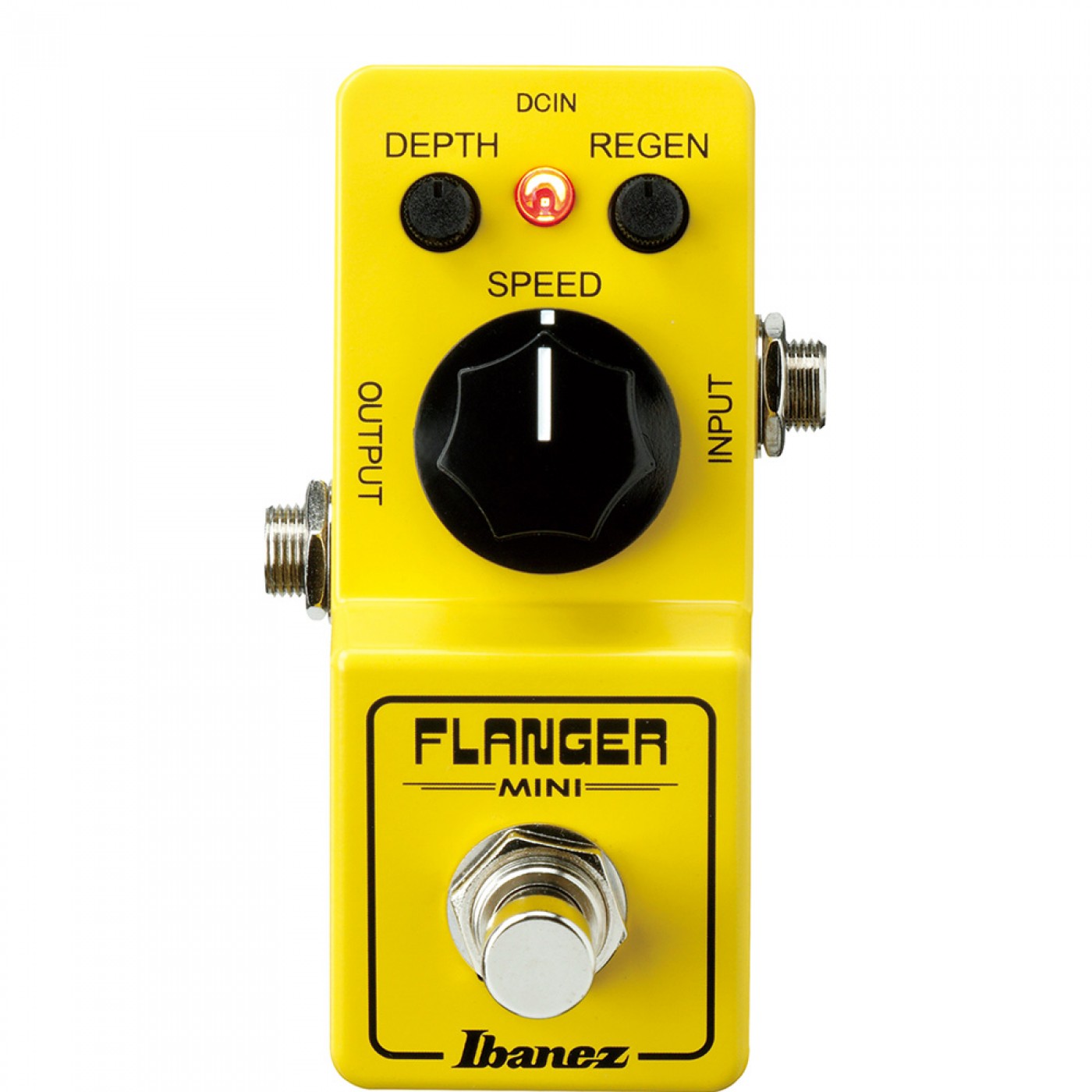
At subtle settings, a flanger can add gentle movement to clean chords or arpeggiated passages. Increase the intensity and speed, and the effect becomes much more pronounced. It's particularly enjoyable on sustained notes and slower chord changes, where the sweep has enough time to become audible.
Try placing it after an overdrive and before delay or reverb. You'll hear the flanger moving through the driven signal, while the later effects provide space around the result. Then experiment with the flanger before the overdrive. The interaction changes because the drive circuit is now responding to a modulated input. Neither arrangement is automatically correct.
That's the fun of pedalboards. A single change in signal order can produce a sound you wouldn't have discovered otherwise.
For a guitarist interested in classic rock, psychedelic textures, post-punk or atmospheric indie playing, the Mini Flanger is a particularly entertaining addition. And yes, it's small. Which means the pedalboard is still technically finished.
For now.
7. Donner Tutti Love: Chorus Without the Financial Drama
The second modulation choice from the Musicmaker team offers a very different character. Where flanging produces a pronounced moving-filter effect, chorus is generally associated with gentle pitch movement, thickening and a sense of width. The principle involves mixing the dry guitar with a slightly delayed signal whose delay time is being modulated.
That movement creates subtle pitch variation and interaction between the two signals. The result can make a single guitar sound richer, wider or more animated. The Donner Tutti Love Chorus is a lovely affordable introduction to that world.
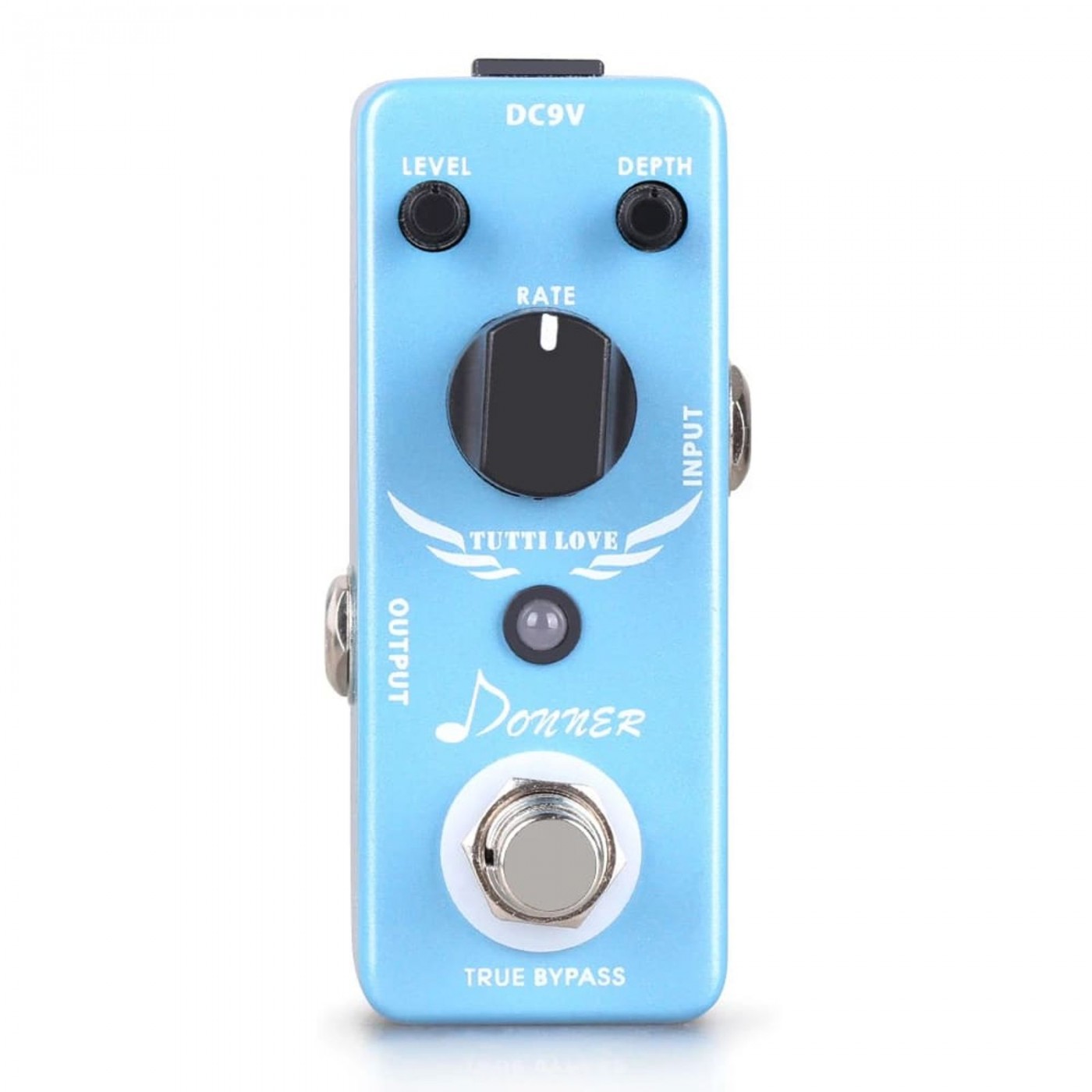
Its Rate, Depth and Level controls make it straightforward to explore different sounds without spending half the evening navigating menus.
Start with a slow rate and restrained depth. Play a few clean chords and listen to the gentle movement around the notes. Then increase the depth for a more obvious chorus effect. It's particularly effective with clean electric guitar, picked arpeggios and sustained chords. It can also work beautifully with bass when used thoughtfully, especially where a little movement helps a melodic part stand apart from the rest of the arrangement.
Chorus has a long and colourful history in pop, rock and alternative music, but it's far from being confined to any particular decade. Modern indie and dream-pop guitarists continue to use modulation to create movement and texture, often combining chorus with delay and reverb.
The Tutti Love is a brilliant gift for somebody beginning to explore effects, and just as appealing for an experienced guitarist who wants a simple, compact chorus.
There's something refreshing about a pedal that invites you to turn three knobs and start playing.
No screen. No presets to organise. No firmware updates.
Just a guitar, an amplifier and a pleasing amount of wobble.
8. Donner x Third Man Hardware Triple Threat: Three Ways to Cause Trouble
Every Christmas wishlist needs at least one item that makes you stop and grin.
The Donner x Third Man Hardware Triple Threat is that item.
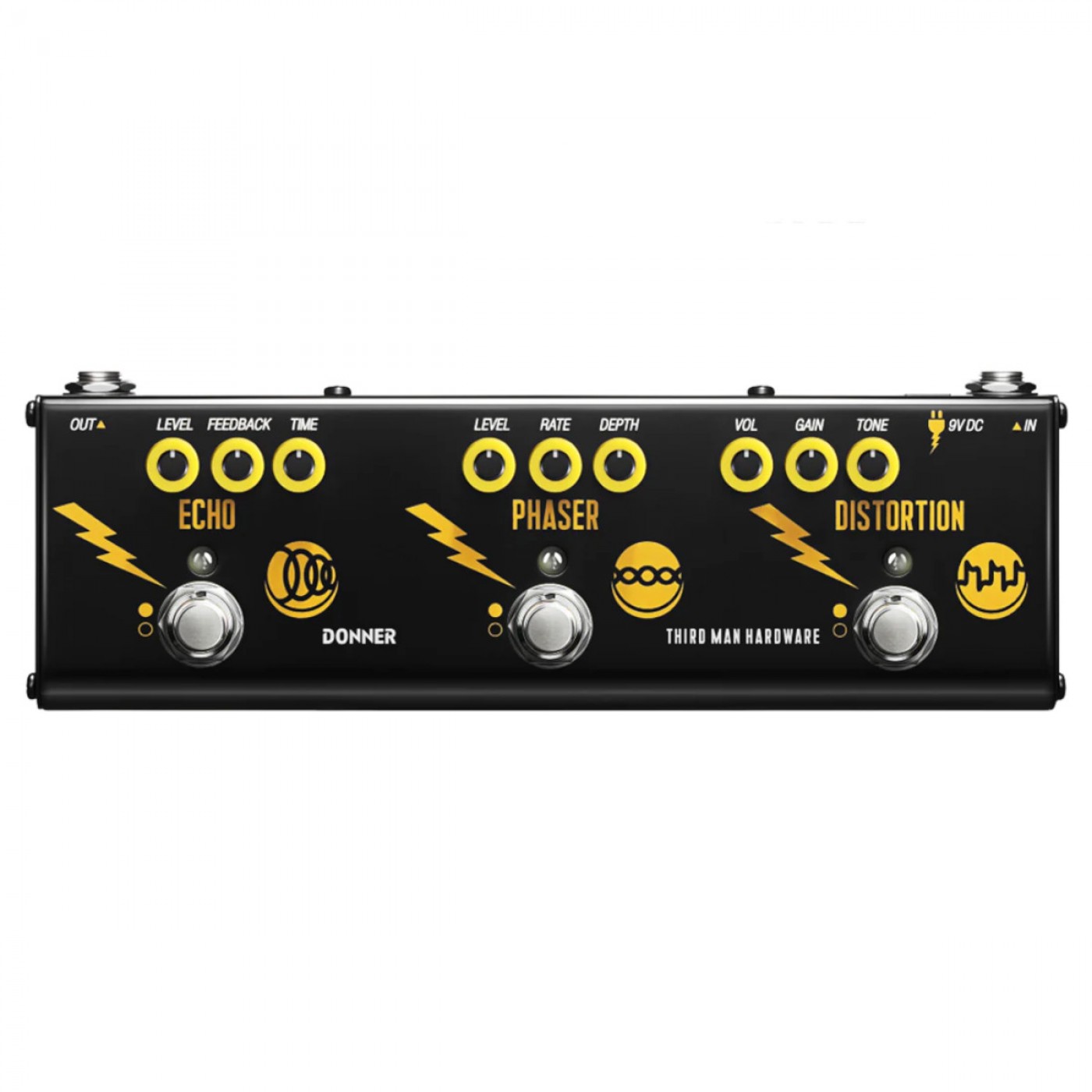
Developed in collaboration with Jack White's Third Man Hardware, it combines three effects in one striking enclosure: distortion, phaser and analogue-voiced echo. Each section has its own controls and footswitch, allowing the effects to be used individually or together.
And what a combination.
Distortion provides the aggression. Phaser adds moving, sweeping colour. Echo creates repeats that can range from restrained rhythmic support to much more unpredictable textures. You can build a perfectly sensible guitar sound with the Triple Threat. But it seems a shame not to explore the other possibilities.
Try a thick distorted riff with a slow phaser moving through it. Add a short echo to create a little depth. Then increase the feedback and see how the repeated notes interact with the distortion and modulation.
The Triple Threat is particularly appealing for garage rock, psychedelic blues, alternative guitar and experimental playing.
It also offers something genuinely useful: three different effect types without requiring three separate purchases. For a guitarist building a first pedalboard, that's a compelling proposition. For an experienced player, it's an opportunity to explore an unusually characterful combination in a single box.
And for anybody who appreciates Jack White's willingness to make guitar sounds rough, strange, immediate and exciting, the collaboration makes perfect musical sense.
A Christmas present that looks distinctive, sounds distinctive and encourages the recipient to make a tremendous racket.
We approve wholeheartedly.
9. Fender The Bends V2 Compressor: The Unsung Hero
Some guitar pedals make their presence known immediately. A fuzz announces itself. A flanger sweeps across the room. A long reverb turns a single chord into a weather system.
Compression is different.
A good compressor can be one of the most useful pedals on a board while remaining almost invisible to the listener. Its job is to manage the dynamic range of a signal. When the input level rises above a certain threshold, compression reduces the amount by which the output increases. Depending on the settings, this can help control strong picking attacks, increase perceived sustain and make the level of a guitar part more consistent.
But the musical results depend enormously on how the compression is applied. Too much compression can flatten the natural dynamics of a performance. Used carefully, it can make a clean rhythm part feel more even, help picked notes remain audible and give lead lines a pleasing sense of sustain.
The Fender The Bends V2 Compressor is the team's utility recommendation. This is the current V2 model: Input and Release controls work alongside a three-position Attack switch, while Blend brings the clean signal back into the mix. There's also an independent boost, so a carefully balanced clean rhythm sound can have a little extra lift when the music calls for it.
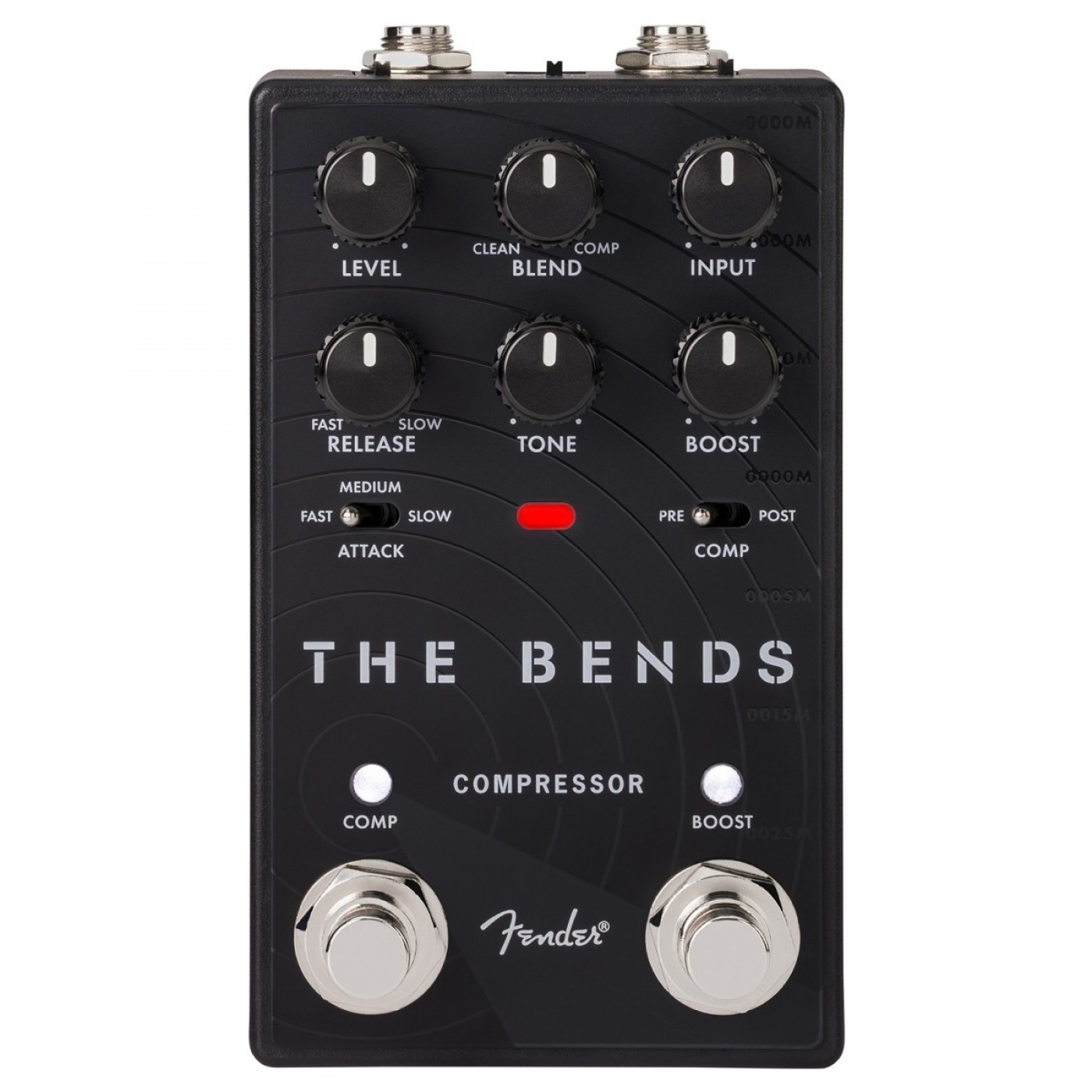
And that's a particularly interesting choice for a Christmas guide. Because a compressor isn't always the first pedal a guitarist asks for. It doesn't promise an outrageous new distortion sound or a vast ambient landscape. Instead, it helps the player refine what they're already doing.
For country-style picking, funk rhythm guitar, clean pop arrangements and expressive lead work, compression can be enormously valuable.
One of the most useful experiments is to compare the pedal at matched output volume with the effect engaged and bypassed. Don't let the louder setting automatically win. Listen instead to the attack of each note, the consistency of the part and the way sustained notes behave.
A good compressor teaches you to listen more carefully to your own playing.
And that's a gift worth giving.
Chorus or Flanger? Choose Your Kind of Movement
We've already met our two modulation recommendations individually, but they deserve one final conversation together. Because they illustrate something wonderful about guitar effects.
Two pedals can belong to the same broad family and still lead a player in completely different directions. The Ibanez Mini Flanger is about moving comb-filter textures, sweeping colour and pronounced frequency interaction. The Donner Tutti Love is about chorus, thickening and gentle pitch movement.
Put either one into a clean guitar rig and the character changes. Combine them with drive, delay or reverb and the possibilities expand further. And that's the real reason the Musicmaker team wanted both represented in this Christmas selection.
It's not about choosing a winner. It's about recognising that guitarists approach sound differently.
One player wants a subtle chorus beneath a clean chord progression. Another wants the dramatic sweep of a flanger moving through a distorted riff.
Somebody else wants both. We know that person.
They've probably already started reorganising the pedalboard.
How to Choose a Guitar Pedal as a Christmas Present
Buying a pedal for another guitarist can be surprisingly personal. The temptation is to look at the music they enjoy and choose the most obvious effect associated with it.
That can work.
But there's another approach that's often more rewarding. Think about what they already own and what might open up a new musical possibility. A guitarist with several overdrives but no delay could discover an entirely different approach to phrasing with the Ibanez Analogue Delay Mini. Somebody who loves clean guitar sounds might get enormous enjoyment from the Donner Tutti Love or the BOSS RV-6. A player who's spent years perfecting conventional rock tones could have an unforgettable afternoon with the JAM Octaurus.
And a guitarist who already owns a large collection of effects might appreciate the less glamorous but genuinely useful contribution of a compressor.
It's also worth checking the practical details.
Most pedals need a suitable power supply, and voltage, polarity and current requirements are not always identical. Some use standard 9V centre-negative connections; others have different needs.
Pedalboard space matters too. A compact pedal can be particularly useful for somebody whose board is already crowded, while a larger multi-effect enclosure may need a little more planning.
And if you're buying for a guitarist who records at home, think about how the pedal will interact with their existing amplifier, audio interface and other effects.
These aren't reasons to worry. They're simply good questions to ask before making a choice.
If you're unsure, the team at Musicmaker can help you narrow things down.
We've spent enough time around pedalboards to know that every guitarist has a slightly different idea of perfection.
Nine Pedals, Countless Possibilities — Christmas at Musicmaker
The best thing about this selection is how different the recommendations are.
The TS808 represents one of the great enduring ideas in guitar overdrive. The Angry Driver takes two distinctive gain voices and makes them interact in clever ways.
The Octaurus is gloriously adventurous. The Ibanez Mini Delay is compact and musical. The RV-6 offers an extraordinary range of spaces.
The Mini Flanger and Tutti Love remind us that modulation can be subtle, dramatic or beautifully strange.
The Triple Threat brings three effects together with a healthy dose of Jack White-inspired mischief.
And The Bends V2 Compressor earns its place by doing something every guitarist eventually learns to appreciate: making the details matter.
These are the pedals the Musicmaker team wanted to share this Christmas.
Not because any single one is the answer to every guitarist's needs.
But because each offers a different way to discover something new.
And that, ultimately, is what makes a guitar pedal such a brilliant present.
You already know how to play your guitar.
Then somebody hands you a little box, you connect two cables, press a footswitch and suddenly you're hearing possibilities you hadn't considered before.
That's a lovely thing to find under the tree.
Explore our full guitar effects pedal collection, discover more in our Donner guitar pedals guide, or browse our Christmas Gifts for Musicians in Ireland for more ideas.
And if you're in Dublin, call into Musicmaker at 29 Exchequer Street.
Bring your questions. Bring your favourite riffs. Bring a healthy curiosity about what happens when you turn that little knob a bit further.
We'll take it from there. And remember, there's free shipping around Ireland on orders over €15.