Spira Guitars: The Riff, the Bad and the Beastly
The Musicmaker Guitar Drop — November 2026
Eight new arrivals. Enough sharp angles to upset a geometry teacher. From €385, the latest Spira guitars have landed at Musicmaker Dublin, and they're not here to play nicely.
Somewhere, a man in a beige cardigan is explaining the tonal benefits of a vintage capacitor. We wish him well. Today, however, we're going to put on something black, turn up the gain and investigate a collection of guitars that look like they should be transported in a coffin.
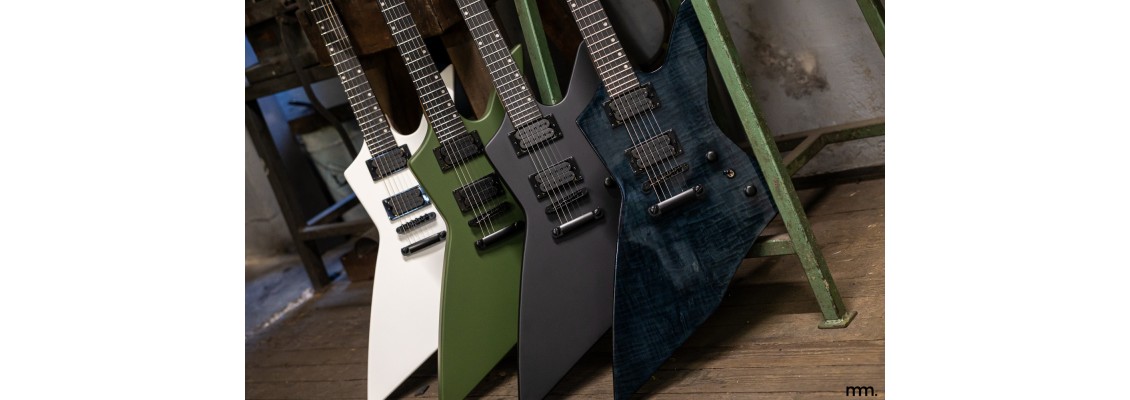
Spira is back at Musicmaker with a particularly glorious selection of six-string monstrosities. There are angular X-Series guitars, magnificent V-shaped beasts, flame maple tops, a double-locking tremolo and a baritone that is presumably on speaking terms with geological activity.
But underneath all that delicious heavy metal theatre, there's something genuinely interesting happening. Spira is producing remarkably well-equipped electric guitars at prices that leave enough money in your pocket for strings, rehearsal rooms and the occasional questionable band T-shirt.
We're talking roasted maple necks, 24 jumbo frets, contemporary fingerboard geometry, custom ceramic humbuckers and performance-orientated hardware. The same sort of specification that, not so long ago, would have required a rather more uncomfortable conversation with your bank account.
So, tighten your studded wristbands, extinguish the scented candles and join us in the distortion department. Things are about to get magnificent.
Who the Hell Are Spira Guitars?
Launched in late 2024, Spira is a relatively young guitar brand with a very clear understanding of the contemporary rock and metal guitarist. Its instruments combine unapologetically aggressive styling with practical specifications and prices that make sense for working musicians.
There's no particularly mysterious philosophy here. Spira recognises that modern guitarists want comfortable necks, dependable hardware, articulate pickups and instruments that can accommodate everything from traditional heavy metal to technically demanding progressive music and subterranean down-tuned riffing.
What makes the brand particularly interesting is the consistency of its design approach. Across much of the range, you'll encounter Canadian roasted maple necks, relatively flat fingerboards, jumbo frets and Spira's own Villain humbuckers.
And frankly, naming your pickups after the bad guy is a tremendous start.
The Spira X-400: Angles of Aggression
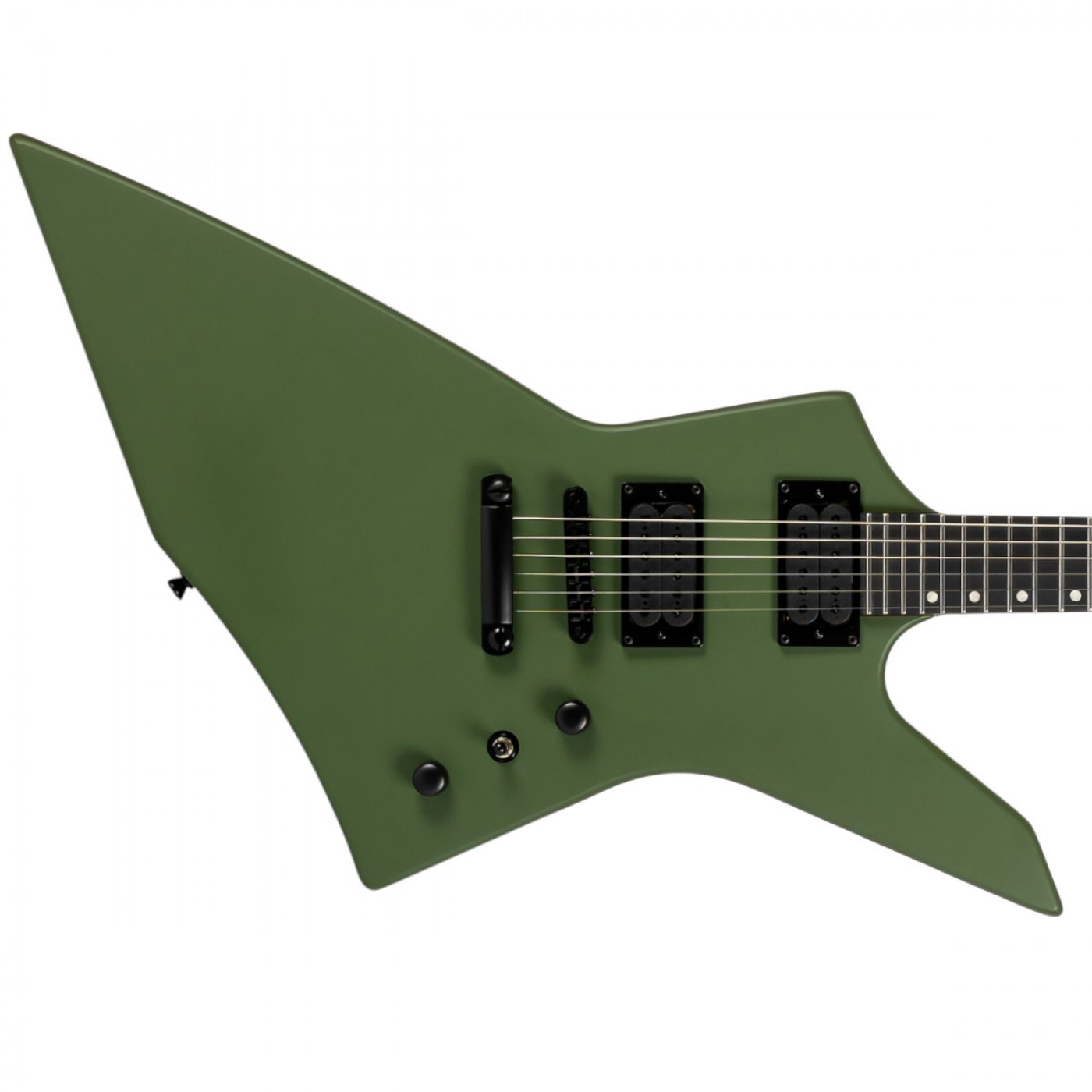
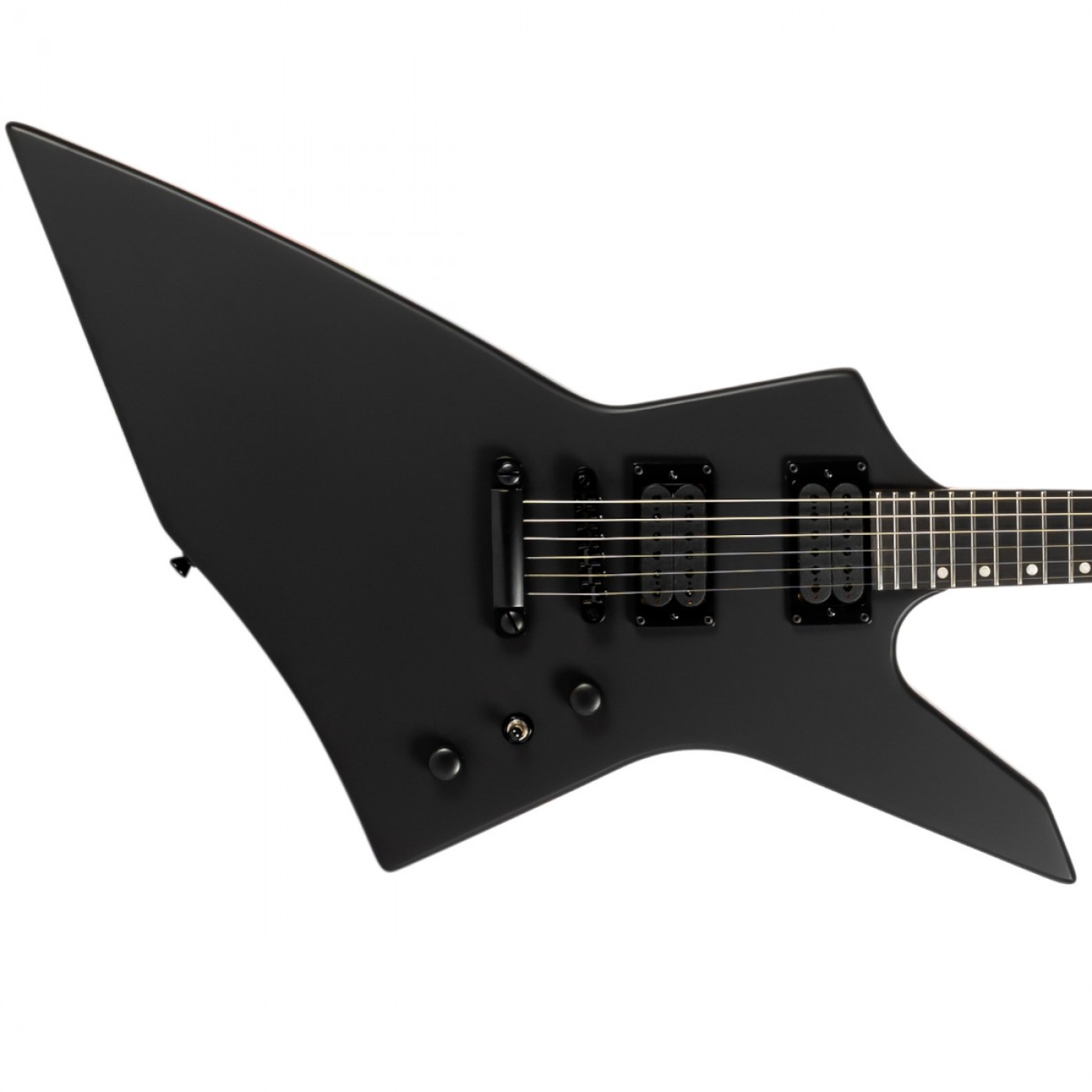
The X-400 looks like somebody introduced an ordinary electric guitar to a particularly hostile mathematics department. Its offset, angular body has absolutely no interest in blending into the background, and that's precisely why we love it.
Available in Satin Green and Satin Black, both priced at €409, the X-400 combines that gloriously confrontational silhouette with a surprisingly sensible specification.
The roasted poplar body is paired with a Canadian roasted maple neck, carved into Spira's Modern D profile. The satin neck finish is a particularly welcome feature for players who dislike the sticky sensation that can develop on heavily glossed necks during enthusiastic rehearsals.
The Ebony Tech fingerboard features a relatively flat 14-inch radius and 24 jumbo frets, providing a useful platform for wide bends, aggressive vibrato, legato passages and the occasional solo that sounds like somebody has thrown a collection of cutlery down a staircase.
Two ceramic Villain humbuckers provide the electrical muscle, while a fixed bridge and locking tuners keep the hardware refreshingly straightforward. A volume control, tone control and three-way pickup selector complete the electronics. There are no complicated switching systems to investigate while your drummer is counting in the next song.
The Satin Green model has a wonderfully military-industrial aesthetic, particularly appealing to players who fancy something a little different from the traditional black metal guitar. The Satin Black version, meanwhile, looks exactly like the instrument your parents were worried you might eventually buy.
Both are magnificent.
Choose your particular flavour of X-shaped destruction
The Spira V-400: Because Subtlety Is Overrated
There are certain guitar shapes that carry their own musical associations. Pick up a V-shaped guitar and suddenly that restrained little blues lick you've been practising feels insufficient. Your feet move further apart, your picking hand becomes more enthusiastic and somewhere in your subconscious a smoke machine switches itself on.
The V-400 takes that wonderfully theatrical shape and equips it for contemporary metal guitar playing.
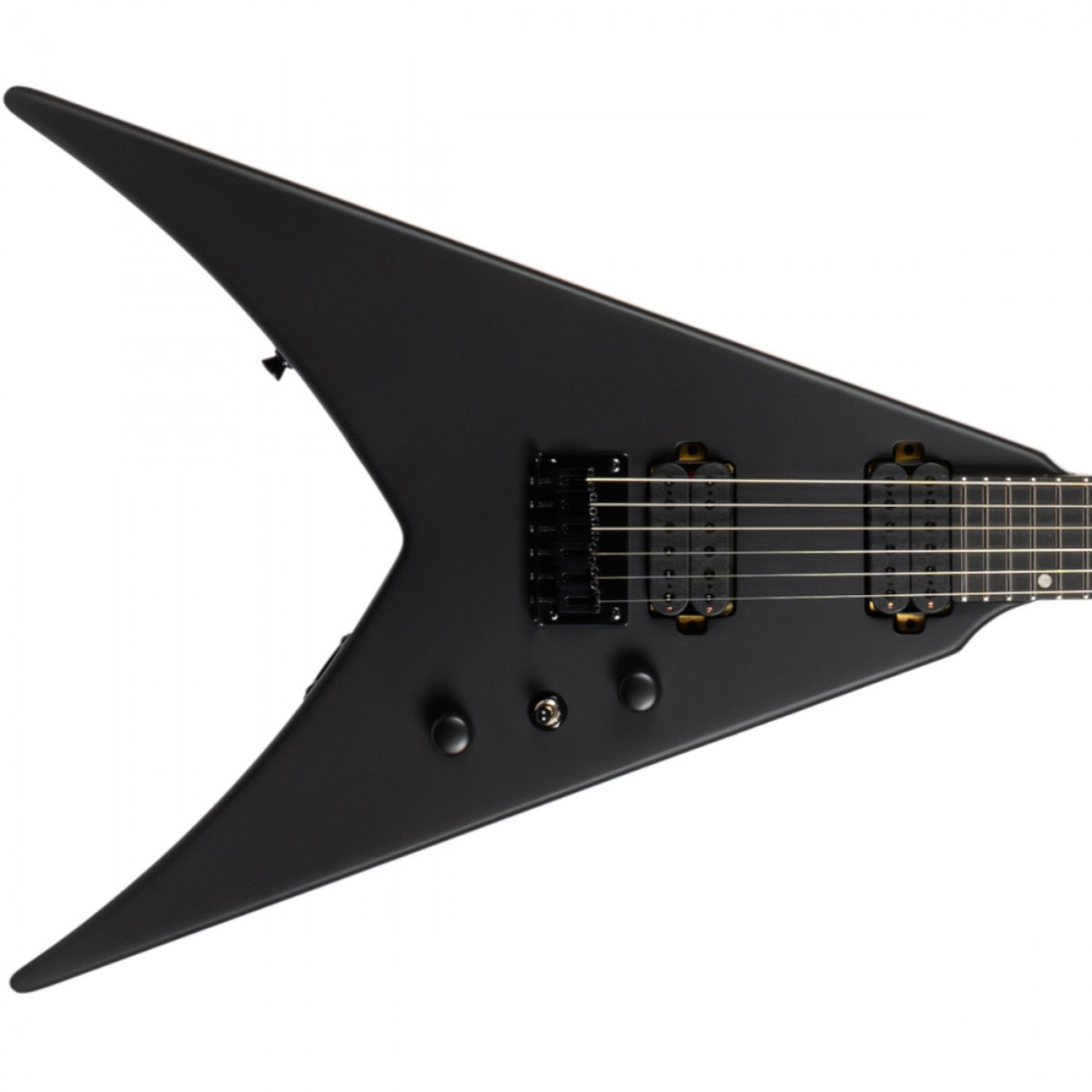
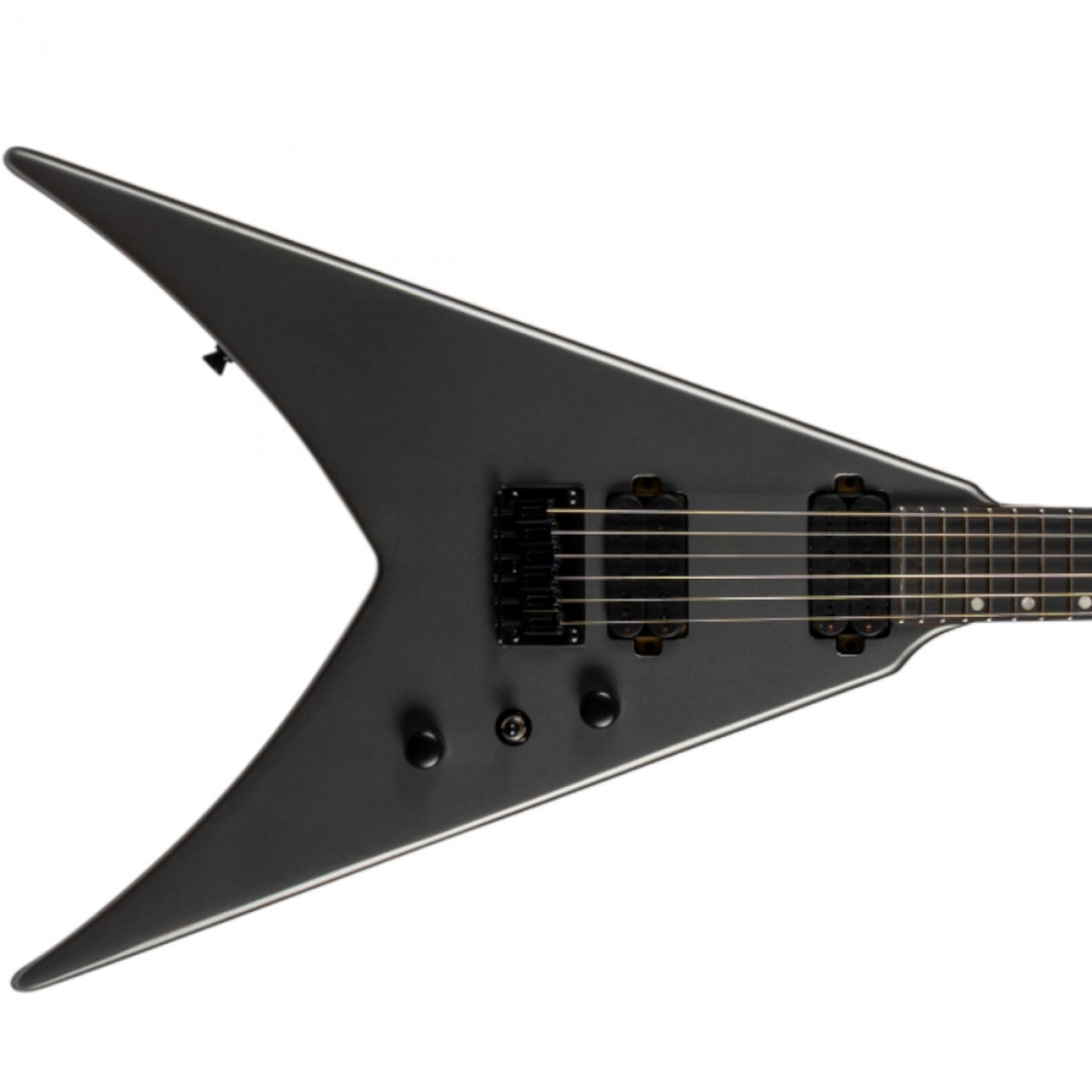
At €385, the Satin Black and Satin Silver V-400 models are the most affordable of the eight guitars in this delivery. Both feature roasted timber construction, a Modern D roasted maple neck, 24 jumbo frets and the familiar pairing of Spira Villain humbuckers.
Unlike many traditional V-shaped guitars, the V-400 employs a 25.5-inch scale length. All other things being equal, a longer scale produces greater string tension at the same pitch and string gauge. That firmer response can be particularly appealing when you're playing fast, tightly muted rhythm passages or exploring slightly lower tunings.
The fixed bridge makes the V-400 a refreshingly uncomplicated instrument for rehearsing, recording and experimenting with different tunings. There's no floating tremolo mechanism to rebalance every time you decide the new song needs to be a whole tone lower.
Satin Black delivers the classic visual menace you'd expect from a metal-focused V. Satin Silver brings something a little more futuristic to the equation, as though somebody has fashioned a guitar from the remains of a particularly extravagant science-fiction spaceship.
One practical consideration with V-shaped guitars is seated playing. Their body geometry can feel unfamiliar to musicians accustomed to conventional guitar shapes. Many players find placing the lower wing between their legs, in a position reminiscent of classical guitar technique, makes seated playing considerably more comfortable.
Standing up, however, is where the V really gets to indulge its theatrical tendencies. Pair it with a comfortable strap, adopt an unnecessarily dramatic stance and enjoy yourself.
The V-shaped congregation
The Spira X-500: Evil, but Make It Fancy
At some point in every metal guitarist's life, there comes an appreciation for fancy timber. Beneath the black clothing, alarming album artwork and enthusiasm for blast beats, there lurks somebody who gets genuinely excited about the way light moves across a flame maple top.
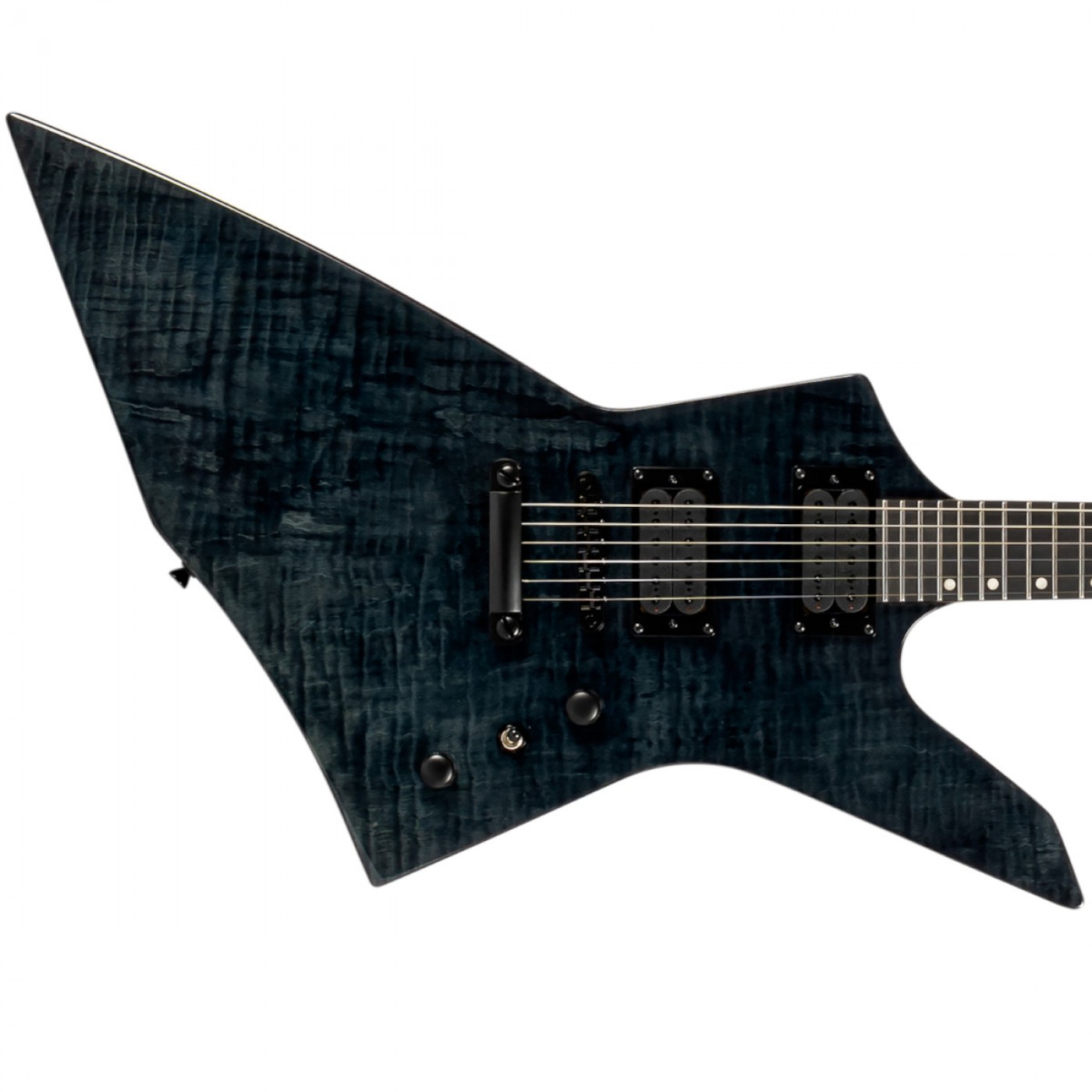
The Spira X-500 in Transparent Black is aimed squarely at that person.
Priced at €545, the X-500 moves away from the roasted poplar construction of the 400 Series in favour of a mahogany body with a flame maple top. Its transparent gloss finish allows the figuring of the maple to remain visible, introducing an element of sophistication to a body shape that looks entirely opposed to sophisticated behaviour.
The neck specification remains reassuringly familiar. Canadian roasted maple, Modern D profile, Ebony Tech fingerboard, 14-inch radius and 24 jumbo frets. Spira has also retained the fixed bridge, locking tuners and dual ceramic Villain humbuckers, while introducing a bone nut.
There's one particularly interesting specification lurking here, though: the X-500 uses a 24.75-inch scale length.
That puts it in different territory from the 25.5-inch V-500. With equivalent strings and tuning, the shorter scale produces lower string tension, which can make string bends feel a little more accommodating and give the instrument a slightly more yielding response beneath the fingers.
For guitarists who enjoy expressive lead playing, enormous vibrato and the occasional wildly optimistic three-semitone bend, that difference is worth investigating.
The combination of premium body appointments, practical hardware and an unmistakably aggressive silhouette makes the X-500 a particularly attractive proposition for somebody upgrading from a more basic electric guitar.
It's the sort of instrument you could take to a black-tie event, provided nobody had been particularly specific about what constituted appropriate evening wear.
Meet the Spira X-500 Transparent Black – €545.
The Spira V-500: Purple Reign of Terror
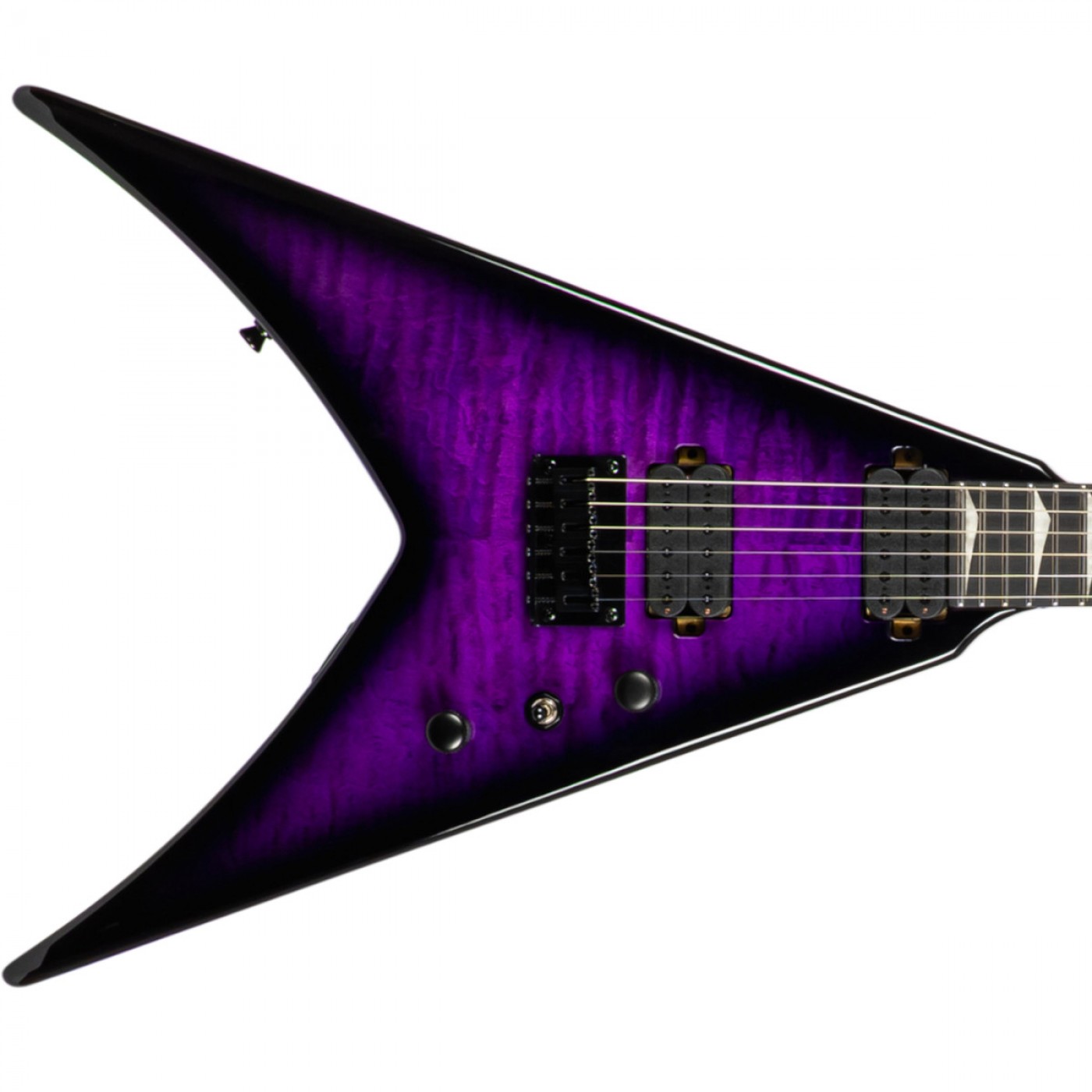
There are guitars that look expensive. There are guitars that look dangerous. The Spira V-500 in Transparent Purple manages to look like both while costing a rather reasonable €525.
The flame maple figuring beneath its transparent purple gloss finish is an absolute delight. There's something gloriously extravagant about a purple V-shaped guitar, particularly one that combines its dramatic appearance with genuinely useful contemporary hardware.
Like the X-500, it features a mahogany body with a flame maple top, Canadian roasted maple neck, bone nut and Ebony Tech fingerboard. The 24 jumbo frets and 14-inch radius continue Spira's modern approach to fingerboard geometry.
However, the V-500 retains a 25.5-inch scale, giving it approximately six per cent more string tension than the shorter-scale X-500 when using identical strings at identical pitches.
That's not a gigantic difference, but it's certainly meaningful to experienced guitarists. Picking response, string bending, vibrato and the sensation of fretting notes can all feel slightly different as a result.
For rhythm-focused players who appreciate a more resistant string response, the V-500 is especially interesting. For ambitious lead guitarists, the spacious upper-register playing area and modern fret specification offer plenty of opportunities for extravagant musical behaviour.
As with the X-500, a pair of ceramic Villain humbuckers handles the amplification duties. The fixed bridge and locking tuners keep the instrument practical for regular use, rather than merely being something spectacular to hang on the wall.
The real question is how you're supposed to resist a guitar that looks this good for €525.
We certainly haven't developed an effective strategy.
Witness the Spira V-500 Transparent Purple – €525.
The Spira V-420: Whammy Bar Warfare
Some guitarists are perfectly happy with a fixed bridge. They enjoy changing tunings without complications, replacing strings quickly and maintaining a generally peaceful relationship with their instrument.
Then there are guitarists who want their amplifier to produce the sound of a fighter jet falling down a lift shaft.
We have something for those people, too.
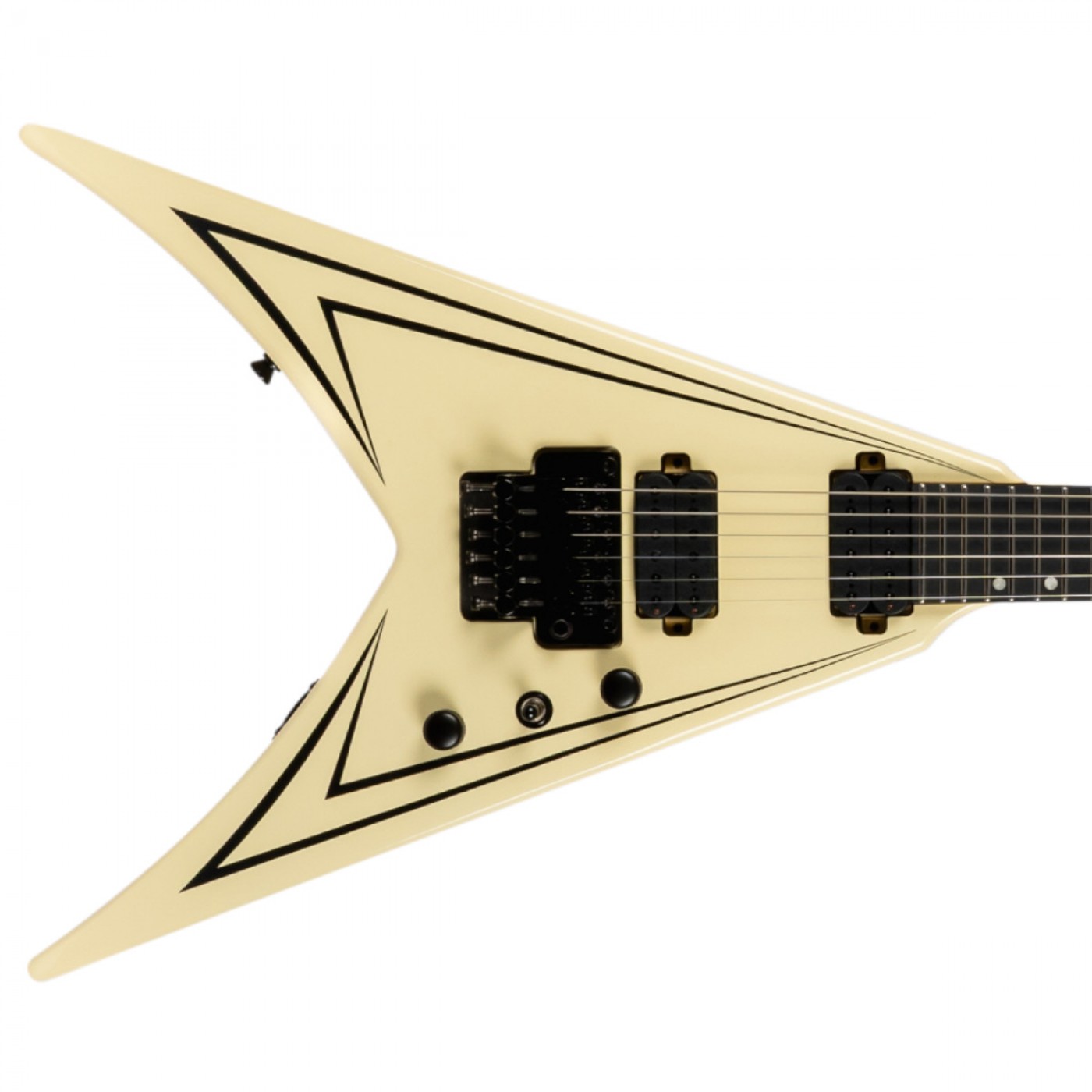
The Spira V-420 in Antique White is an extraordinarily handsome nod towards classic heavy metal and thrash guitar aesthetics. Its gloss white finish, contrasting pinstripes and black hardware evoke an era when guitar solos were both a musical contribution and an opportunity to demonstrate an alarming disregard for moderation.
Priced at €449, its standout technical feature is a Korean-made Sung-il double-locking tremolo system.
A floating double-locking tremolo operates through an equilibrium between string tension and the springs located behind the guitar's body. Moving the tremolo arm changes that balance and alters the tension of the strings, allowing the player to manipulate pitch dramatically.
The strings are secured at both the locking nut and bridge, helping reduce slipping at those contact points during aggressive tremolo use. Once the nut is locked, small tuning corrections can be made using the bridge's fine tuners.
The resulting expressive possibilities are enormous. Divebombs, harmonic squeals, flutter effects, dramatic pitch dips and delicate chord vibrato all become part of the guitarist's vocabulary.
Naturally, there are compromises. Changing string gauge or making substantial tuning changes generally requires adjusting the spring tension and rebalancing the bridge. String replacement is more involved than on a conventional hardtail guitar, and a broken string can affect the tuning of the remaining strings on a floating setup.
For a player who genuinely wants to explore tremolo techniques, however, those additional maintenance requirements become part of understanding the instrument.
The rest of the V-420 specification is equally appealing: roasted poplar body, Canadian roasted maple neck, Modern D profile, 25.5-inch scale, Ebony Tech fingerboard, 14-inch radius, 24 jumbo frets and dual Villain humbuckers.
At this price, it's a tremendously entertaining proposition for aspiring shred guitarists, thrash enthusiasts and people who have been practising artificial harmonics until their families have started looking at alternative accommodation.
Unleash the Spira V-420 Antique White – €449.
The Spira T-400 Baritone: Greetings From Below
And now we descend.
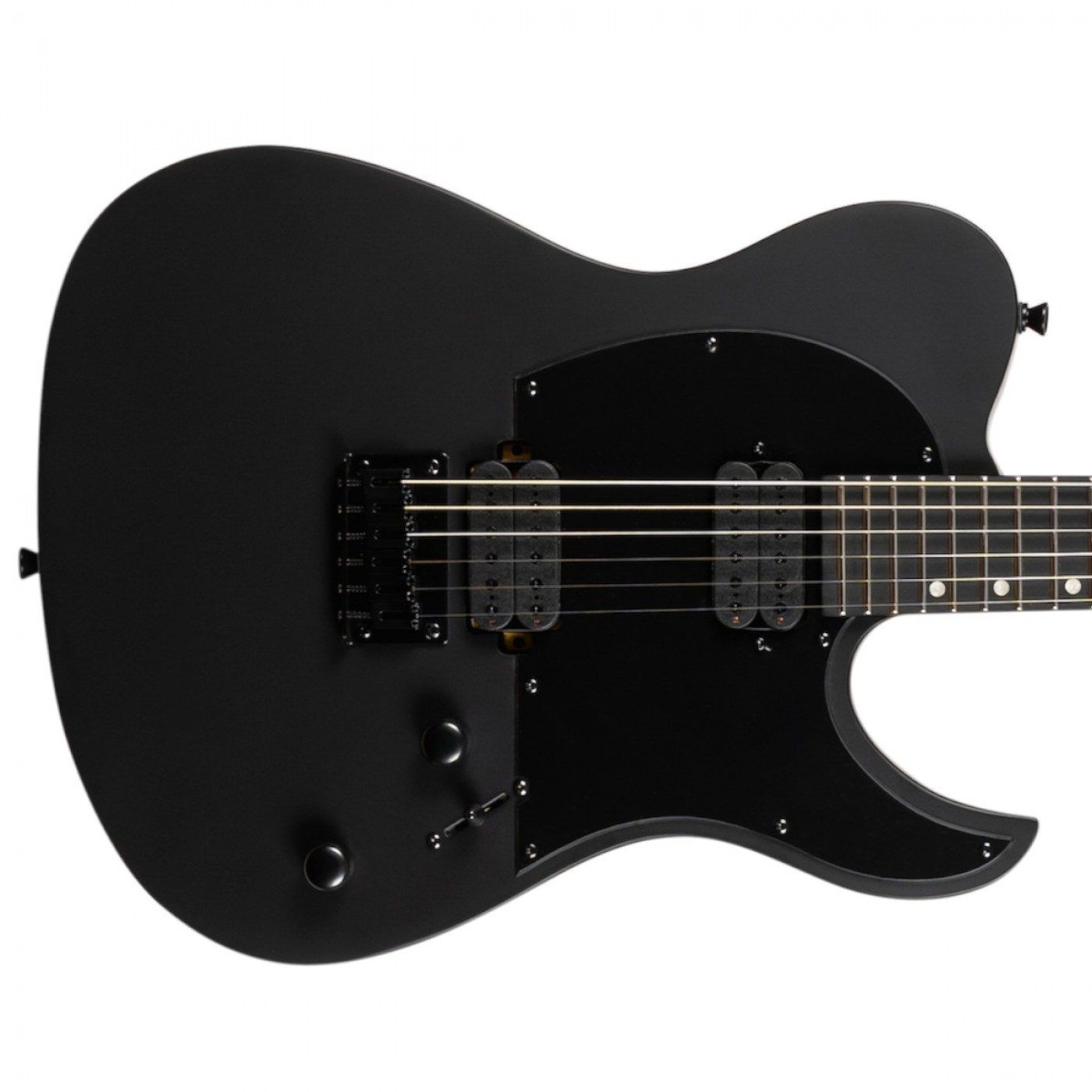
The Spira T-400 MBK Baritone takes the familiar T-style electric guitar silhouette and introduces it to a considerably darker musical neighbourhood.
Priced at €405 and finished in Satin Black, this six-string baritone features an extended 27-inch scale length, roasted poplar body, Canadian roasted maple neck, 14-inch Ebony Tech fingerboard and 24 jumbo frets.
There are locking tuners, a fixed bridge and two ceramic Villain humbuckers. All familiar territory for Spira, until you consider what happens when that longer scale is combined with heavier strings and lower tuning.
What actually is a baritone guitar?
A baritone guitar generally occupies the tonal territory between a conventional six-string guitar and a bass guitar. It retains familiar six-string playing relationships but is designed to accommodate lower tunings, commonly B standard or A standard.
The longer scale allows the player to achieve those lower pitches while retaining a more useful degree of string tension. This makes it particularly attractive for musicians who find that heavily down-tuned conventional guitars can feel excessively loose or difficult to articulate.
Imagine a fast, palm-muted riff played on a string that moves excessively beneath the pick. The initial attack can pull the note noticeably sharp before its pitch settles, creating problems with clarity and consistency, particularly when recording multiple rhythm guitar tracks.
An appropriate combination of longer scale, heavier strings and suitable setup can help address that behaviour.
Spira's 27-inch scale provides around 12 per cent more string tension than a conventional 25.5-inch scale when the string gauge and pitch remain identical. That additional tension is useful when moving into lower tunings, although choosing the correct strings remains enormously important.
The T-400 Baritone is a particularly interesting instrument for modern metalcore, progressive metal, djent, doom and sludge. But don't overlook its possibilities for atmospheric post-rock, cinematic guitar arrangements and wonderfully dark clean tones.
There's something enormously satisfying about playing a familiar guitar chord shape and hearing it emerge from an entirely different register.
Especially when the amplifier is beginning to sound like an industrial ventilation system.
Explore the Spira T-400 Baritone at Musicmaker.
Into the Nerd Crypt: Why Roasted Maple?
You'll have noticed roasted maple appearing rather frequently throughout this guitar drop. And no, Spira hasn't simply discovered an exciting new barbecue technique.
Roasting, more formally referred to as thermal modification, involves exposing timber to carefully controlled elevated temperatures under conditions intended to limit combustion.
The treatment changes aspects of the wood's chemical structure and moisture-related behaviour. Properly thermally modified timber can become less susceptible to dimensional changes associated with fluctuations in humidity.
For guitar necks, this can be particularly useful. A neck is a long wooden component under substantial string tension, and its geometry influences string height, fret clearance and overall playability.
A roasted maple neck is not immune to environmental changes, and it still requires sensible care and occasional adjustment. Nevertheless, improved dimensional stability is an attractive characteristic in an instrument that might regularly travel between bedrooms, rehearsal studios, stages and the damp realities of Irish weather.
The treatment also gives maple its distinctive darker appearance, which looks particularly handsome alongside black hardware and dark fingerboards.
Spira's Modern D profile and satin neck finish complement the material choice, creating a modern playing surface without unnecessarily elaborate appointments.
Enter the Villain: Let's Talk Humbuckers
The wonderfully named Villain pickups are a central part of Spira's identity. These custom ceramic humbuckers are specified at around 12kΩ DC resistance and voiced towards the higher-output requirements of rock and metal guitarists.
A humbucker typically employs two coils arranged to reduce common electromagnetic interference while retaining the desired signal generated by the vibrating strings. That reduction in hum becomes particularly useful when running substantial amplifier gain, where unwanted noise can become considerably more noticeable.
Ceramic magnets are commonly used in pickups intended for high-gain applications because they can provide strong magnetic fields and lend themselves to certain output and tonal design objectives.
However, a little clarification for our fellow electronics nerds: DC resistance isn't a direct measurement of pickup output. The actual signal level and frequency response depend on numerous factors, including the coil winding, wire gauge, magnet arrangement, inductance, pickup height and interaction with the guitar's electronics.
So don't assume that a pickup measuring 16kΩ is automatically louder or better for metal than one measuring 12kΩ. Guitar electronics are considerably more interesting than that.
What matters most here is that the Villains are designed with definition and an assertive response in mind. When playing heavily distorted rhythm guitar, the ability to distinguish consecutive notes and maintain some sense of harmonic separation can be considerably more valuable than simply generating as much signal as possible.
A useful experiment is to reduce the gain on your amplifier slightly and adjust your pickup height. You may discover that the guitar sounds significantly heavier when the individual notes are allowed to retain more definition.
Yes, we know. Turning the gain down sounds like heresy.
The dark lord of double-tracked rhythm guitars will forgive you.
Scale Length: The Mathematics of Mayhem
One of the most interesting aspects of this particular Spira delivery is the availability of guitars with different scale lengths.
Scale length is the nominal vibrating length of the open string, conventionally determined by doubling the distance from the nut to the twelfth fret. Individual bridge saddles are then adjusted slightly to compensate for intonation.
For the same string construction, gauge and pitch, string tension increases with the square of its vibrating length.
That means a relatively small difference in scale length can produce a noticeable difference in how the instrument feels.
| Scale length | Relative string tension | Example |
|---|---|---|
| 24.75 inches | 94.2% | Spira X-500 |
| 25.5 inches | 100% | Spira V-400, V-420 and V-500 |
| 27 inches | 112.1% | Spira T-400 Baritone |
The figures use a 25.5-inch scale as the reference and assume identical strings and tuning. Actual baritone setups generally use different string gauges and lower pitches.
Shorter scales can make bends feel easier and produce a more relaxed response. Longer scales can provide additional resistance and help maintain clarity in lower tunings.
Neither is inherently better. The right choice depends on your playing style, tuning preferences, string selection and the physical response you enjoy from an instrument.
This is precisely why having guitars with different specifications available to try in a real music shop is so useful. Numbers tell us something important, but your hands ultimately have the deciding vote.
Hardtail or Double-Locking Tremolo?
For anybody comparing the V-400, V-420 and V-500, the bridge system is one of the most important distinctions.
A fixed bridge, often called a hardtail, provides a straightforward mechanical arrangement. Changing tunings, experimenting with string gauges and replacing strings is generally simpler, although significant changes may still require adjustments to the nut, neck relief and intonation.
A floating double-locking tremolo provides a much broader range of pitch manipulation techniques at the cost of additional setup complexity.
If your musical life involves hopping between E standard, Drop D, D standard and other tunings during rehearsals, a hardtail guitar will generally make those transitions easier.
If your musical ambitions involve outrageous divebombs, expressive tremolo techniques and solos that make dogs deeply suspicious, the V-420 is calling your name.
Choose the hardware that supports the music you actually want to make, rather than simply accumulating features for the sake of it.
Eight Guitars, One Unholy Gathering
Here's the complete Musicmaker Spira guitar drop at a glance.
| Guitar | Finish | Bridge | Price |
|---|---|---|---|
| X-400 MGR | Satin Green | Fixed | €409 |
| X-400 MBK | Satin Black | Fixed | €409 |
| V-400 MBK | Satin Black | Fixed | €385 |
| V-400 MSL | Satin Silver | Fixed | €385 |
| X-500 TBK E | Transparent Black | Fixed | €545 |
| V-500 TPP E | Transparent Purple | Fixed | €525 |
| V-420 AWH | Antique White | Double-locking tremolo | €449 |
| T-400 Baritone | Satin Black | Fixed | €405 |
Prices and availability checked against Musicmaker’s live product pages on 25 November 2026. Check individual listings for the latest details.
Complete Your Ritual: A Few Metal Guitar Essentials
Naturally, a magnificent new guitar needs a few carefully considered accompaniments. Nobody's suggesting that you need to remortgage the house and purchase seventeen amplifiers, but the right accessories can make a substantial difference to the way your instrument performs.
Strings that can handle the punishment
A conventional .010–.046 electric guitar string set is a useful starting point for many standard-tuned guitars. As you move into lower tunings, heavier string gauges can help maintain a more controlled playing response.
Baritone guitars generally require specialist heavier sets, with the appropriate string length for the instrument.
Browse our strings and accessories department, and speak to us about matching your strings to your preferred tuning.
Distortion, overdrive and noise control
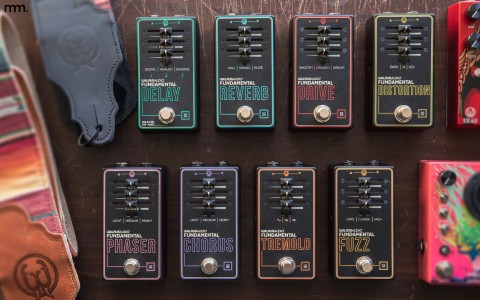
A good high-gain setup is about considerably more than maximum distortion. An overdrive positioned before an already driven amplifier can be useful for shaping the frequency response reaching the amplifier's clipping stages, while a suitable noise gate can help manage unwanted noise between passages.
Explore our guitar effects pedal department for distortion, overdrive, modulation and all manner of wonderful sonic misbehaviour.
A proper strap
Angular guitars deserve comfortable straps, particularly if you're spending extended periods standing up and playing.
Our own Musicmaker strap range includes options developed in collaboration with re.store, combining characterful designs with reclaimed materials.
You don't necessarily need six feet of leather and enough metal studs to interfere with airport security. But we completely understand the aesthetic.
Protect the pointy bits
Unconventional guitar shapes often require appropriately shaped gig bags or hard cases. A case designed for a conventional electric guitar may not accommodate the dimensions of a V or X-shaped instrument.
Check compatibility before ordering, and make sure the guitar is properly supported during transportation. Those magnificently sharp body wings are considerably less entertaining when they've just collided with the side of a van.
Frequently Asked Questions About Spira Guitars
Are Spira guitars good for metal?
Spira's modern neck profiles, jumbo frets, relatively flat fingerboards and ceramic Villain humbuckers make the range particularly well suited to rock and metal playing. The availability of hardtail, tremolo and baritone models offers options for different techniques and tuning requirements.
What is the difference between Spira's 400 and 500 Series?
In this selection, the X-400 and V-400 focus on straightforward performance with roasted poplar bodies and satin finishes. The X-500 and V-500 introduce mahogany bodies, flame maple tops, transparent gloss finishes and bone nuts while retaining many of the brand's familiar performance features.
Are Spira guitars suitable for beginners?
Yes. Models such as the hardtail V-400 and X-400 offer accessible controls and practical hardware. Beginners should take the body shape and seated playing comfort into consideration when choosing an instrument.
What scale length is the Spira T-400 Baritone?
The T-400 Baritone features a 27-inch scale, making it suitable for exploring lower tunings with appropriately selected strings and setup.
What pickups do Spira guitars use?
The eight models featured here use Spira's custom Villain ceramic humbuckers in a dual-pickup configuration.
Are Spira's fingerboards real ebony?
Spira identifies these fingerboards as Ebony Tech. They should not be described as traditional solid ebony fingerboards without specific confirmation from the manufacturer.
Where can I buy Spira guitars in Ireland?
The guitars featured in this article are available through Musicmaker, an independent musical instrument shop at 29 Exchequer Street, Dublin 2, serving musicians since 1981.
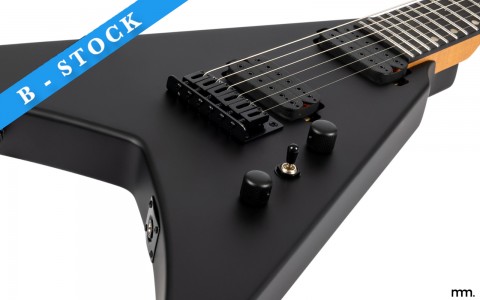
For another chapter in the story, our earlier B-stock Spira feature explores two individual instruments from a previous arrival. Availability has changed since that feature, so check current listings for today’s options.
The Riff Is Alive and Well at Musicmaker Dublin
There is something immensely encouraging about seeing a relatively young guitar brand putting this much thought into instruments at these prices. Spira understands that somebody buying a €385 guitar can be every bit as passionate about playing as somebody spending several thousand euro.
The new arrivals offer an interesting selection of shapes, finishes, hardware and scale lengths. More importantly, they give guitarists opportunities to explore different musical ideas without needing a spectacularly irresponsible budget.
The V-400 offers classic heavy metal theatre at an accessible price. The X-400 introduces gloriously unconventional geometry. The 500 Series brings some extravagant visual appointments into the equation, the V-420 opens up the wonderful world of double-locking tremolo techniques, and the T-400 Baritone takes proceedings into considerably deeper territory.
Explore the Spira guitars available at Musicmaker, browse our electric guitar department or come into our Dublin shop and introduce yourself to the new arrivals.
Free shipping across Ireland on orders over €15.
Bring your favourite riff. Bring your curiosity. Bring that particularly ridiculous band T-shirt you've been waiting for an opportunity to wear.
The world has enough polite guitar music.
Let's make something filthy.
Serious gear. Glorious noise.