
Walrus Audio: Beautiful Boxes of Sonic Madness
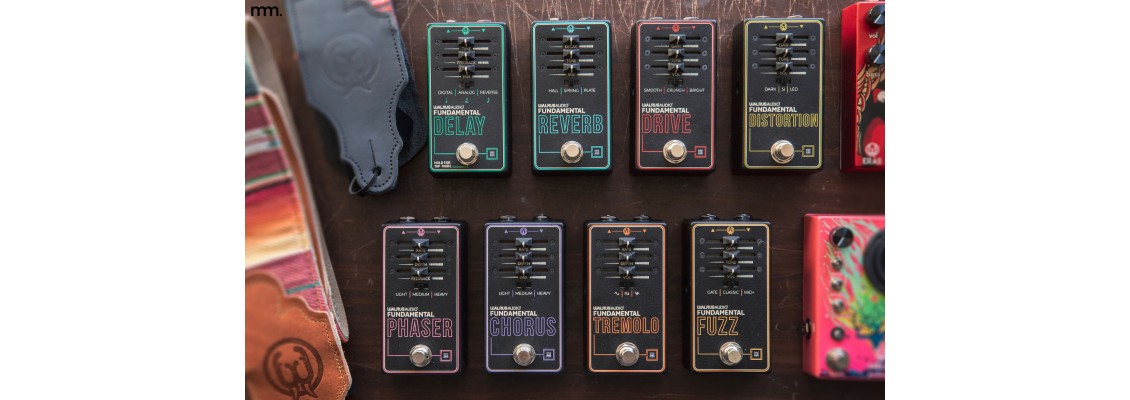
Six new arrivals. Eighteen effects algorithms. Three sliders per pedal. €119 each. Welcome to the wonderfully expressive world of Walrus Audio's Fundamental Series at Musicmaker Dublin.
Somewhere in Oklahoma City, a collection of gloriously enthusiastic electronics nerds has been thinking about what happens when a guitar signal stops behaving itself. What if those repeats gradually deteriorated into something resembling a forgotten radio transmission? What if a single note could bloom into an enormous, slowly evolving atmospheric texture? What if all that lovely sonic exploration could happen without navigating seventeen menus and downloading a firmware update?
Enter Walrus Audio and its Fundamental Series, six members of which have just landed at Musicmaker, looking ridiculously handsome and positively itching to interfere with your guitar signal.
Walrus Audio has established itself in the boutique effects world by bringing together thoughtful engineering, distinctive visual design and a genuine appetite for experimentation. Its pedals appeal to musicians who enjoy exploring the space between familiar guitar sounds and something considerably less predictable. There's plenty here for the traditionalist who simply wants a gorgeous chorus or a dependable delay, but the more adventurous algorithms offer some particularly interesting opportunities for creative sound design.
The Fundamental Series distils that philosophy into a wonderfully approachable format. Three sliders, a three-position mode switch and a compact enclosure. No overwhelming control surfaces, no screens and very little standing between the musical idea in your head and whatever magnificent noise eventually emerges from your amplifier.
And at €119 each, things are about to get very interesting indeed.
Going Fundamental: Less Interface, More Imagination
One of the great contradictions of modern effects design is that having more options doesn't necessarily make finding a sound easier. A complex digital processor might offer extraordinary flexibility, but sometimes the most inspiring musical moments happen when you're physically interacting with a handful of controls and responding immediately to what you're hearing.
The Fundamental Series embraces that idea. Instead of conventional rotary knobs, Walrus uses three linear faders on each pedal, making the relationship between your settings immediately visible. The three-position selector changes the underlying effects algorithm, giving each pedal three distinct sonic personalities without cluttering the interface.
From an engineering perspective, algorithms are essentially different sets of instructions governing how the incoming audio is processed. Changing an algorithm can alter the behaviour of modulation, filtering, feedback networks, pitch movement and the interaction between delayed signals.
That means you're not simply choosing between three EQ presets. You're potentially changing the entire character of the effect.
Designed and assembled at Walrus Audio's headquarters in Oklahoma City, the Fundamental range brings some of that boutique pedal fascination into a much more accessible price bracket. And because the interface is so immediate, it's particularly rewarding for guitarists who enjoy adjusting effects in real time while composing, recording or simply disappearing into a particularly satisfying chord progression for forty-five minutes.
Let's meet the new arrivals.
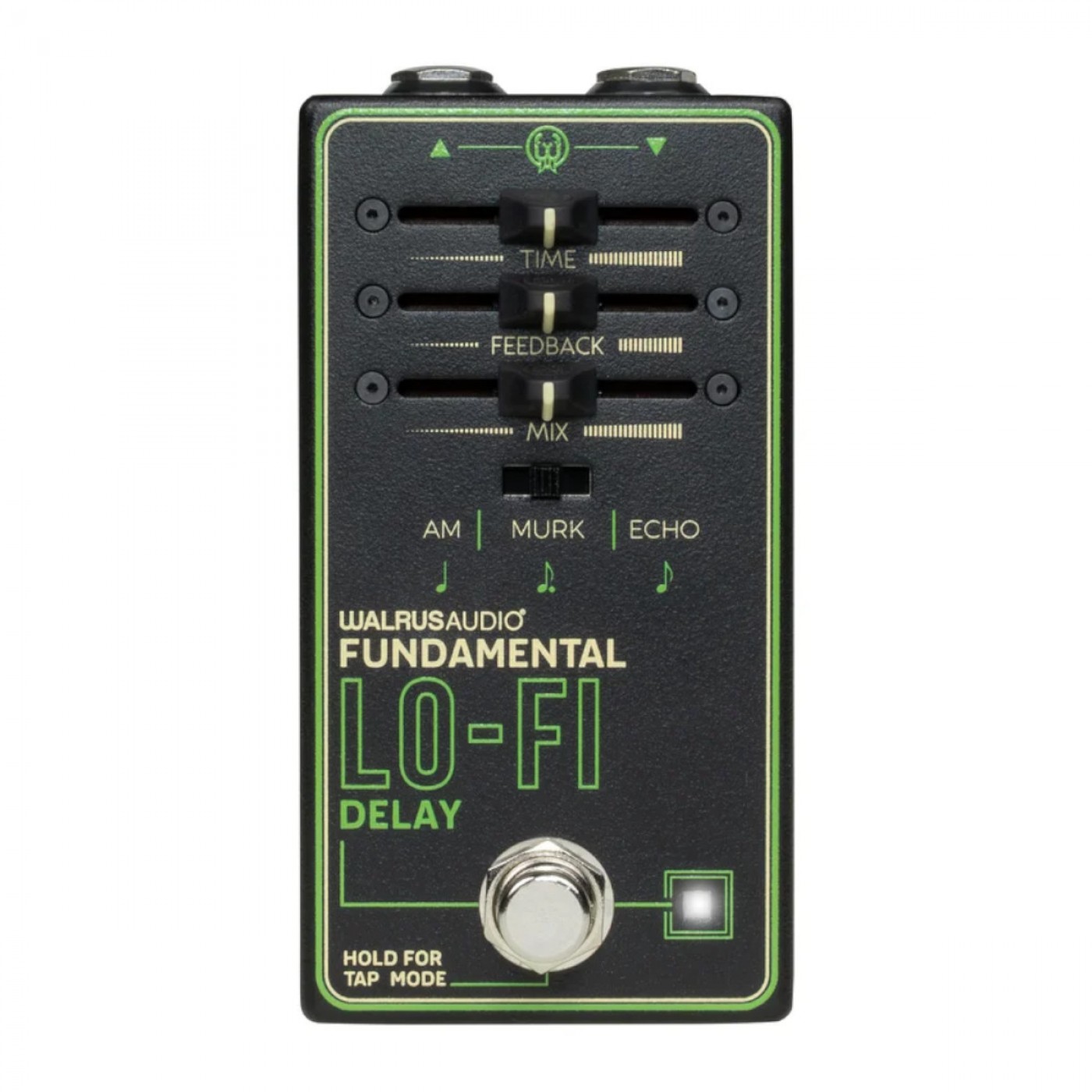
1. Fundamental Lo-Fi Delay: The Beauty of Imperfection
€119 | AM, Murk and Echo modes
There's something deeply satisfying about audio that sounds as though it has travelled through several decades of questionable recording equipment before reaching your ears. Pitch instability, saturation, frequency loss and unexpected rhythmic movement can give a guitar part a personality that perfectly clean digital repeats simply don't possess.
The Walrus Audio Fundamental Lo-Fi Delay takes those imperfections and turns them into musical ingredients.
Its three sliders control Time, Feedback and Mix, offering up to one second of delay time and everything from a solitary repeat to near-endless layers of deteriorating sound. The three algorithms, however, are where this little creature really starts showing its teeth.
AM: Somewhere Between the Stations
AM mode combines bright, harmonically coloured repeats with two layers of pitch modulation. The resulting wow and flutter evoke the instability associated with ageing recording and playback equipment, where tiny variations in speed introduce fluctuations in pitch.
Wow generally describes slower pitch fluctuations, while flutter refers to faster variations. Together, they can produce that wonderfully uneasy sensation of a sound struggling to maintain its original tuning.
Try AM mode with a clean guitar, relatively short delay time and restrained feedback. Play an open chord and listen to how the repeats move around the original note rather than simply reproducing it. It's an absolutely delicious ingredient for indie guitar, dream pop and melancholic instrumental music.
Murk: Things Get Beautifully Uncomfortable
Murk heads in the opposite tonal direction. Dark filtering, saturation and gradual pitch movement create thick, shadowy echoes that sit beneath the original guitar signal.
There's enormous creative value in removing high-frequency information from successive repeats. It allows the delay to occupy a different part of the frequency spectrum from the original note, creating depth without every echo competing for attention.
Increase the Feedback slider and those darker layers begin interacting with one another. The results can become wonderfully unstable, particularly when you're feeding the pedal sparse, sustained notes rather than busy chord progressions.
If your musical tastes lean towards experimental ambient guitar, post-rock or the soundtrack to a particularly unsettling independent film, Murk deserves some serious investigation.
Echo: Rhythmic Architecture
Echo uses multiple delay taps to create interlocking patterns with vintage-inspired tonal colouration.
A multi-tap delay differs from a conventional single-delay arrangement by producing echoes at multiple time offsets. Rather than hearing one repeated rhythmic interval, you're hearing a more complex arrangement of repeats that can create new accents and subdivisions around your playing.
Shorter delay times can create a dense, nearly reverberant texture. Longer times allow the rhythmic relationships between those taps to become more apparent.
The Lo-Fi Delay also features tap tempo, quarter-note, dotted-eighth and eighth-note subdivisions, plus selectable trails. That's a considerable amount of practical functionality hiding behind such a simple interface.
For the guitarists who love the grain, texture and emotional character of imperfect recordings, this might be the most immediately fascinating pedal in the entire drop.
Explore the Fundamental Lo-Fi Delay at Musicmaker.
Hear the Fundamental Lo-Fi Delay in Walrus Audio’s official demonstration.
2. Fundamental Ambient Reverb: Into the Beautiful Unknown
€119 | Deep, Lush and Haze modes
Conventional reverb often tries to communicate something about the physical environment surrounding an instrument. The Walrus Audio Fundamental Ambient Reverb is considerably less concerned with architectural plausibility. Its interest lies in creating expansive, evolving textures that can become musical voices in their own right.
This is reverb for musicians who enjoy hearing the spaces between notes develop into something unexpected. The three algorithms offer distinctly different approaches to ambience, with Decay, Tone and Mix sliders providing control over the duration, frequency character and prominence of the processed signal.
Deep: The Octave Beneath
Deep introduces a lower octave into its dark reverberant texture, creating a rich foundation beneath the original guitar signal.
Adding lower-pitched material changes the perceived scale and weight of the effect. A relatively thin guitar note can suddenly acquire an enormous atmospheric presence, particularly when the decay is allowed to develop over time.
This is a gorgeous mode for sparse melodic playing, volume swells and slow-moving chord arrangements. Keep the original guitar signal relatively clear and allow the lower-octave ambience to occupy the background.
Lush: The Guitar Becomes a Pad
Lush stretches the decay into an expansive, soft-edged reverberation that can produce remarkably synthesiser-like textures.
With a generous Mix setting and a long decay, individual notes begin overlapping and forming sustained harmonic layers. Introduce a volume pedal before the reverb, roll back your picking attack, and the distinction between guitar and keyboard-like ambience becomes increasingly blurred.
It's the kind of sound that rewards restraint. Play fewer notes, listen to the developing harmony and allow the existing reverb to influence whatever you play next.
Haze: Delicious Digital Dirt
Haze is arguably the most mischievous of the three modes. It combines distortion, reduced sample rate and resonant frequency filtering to create a weathered, lo-fi reverb character.
Sample rate reduction changes how frequently the audio signal is represented in the digital domain. Depending on the processing involved, it can introduce audible aliasing and other rough-edged digital artefacts. Rather than treating those characteristics as engineering problems to eliminate, Haze uses them as part of the aesthetic.
Interestingly, the Tone slider behaves differently here than it does in Deep and Lush. Those modes use low-pass filtering, whereas Haze uses a band-pass response that can restrict both ends of the frequency spectrum. This gives the mode its distinctive, narrow-band, radio-like character.
The Ambient also allows fully wet operation, making it particularly interesting for experimental signal chains, parallel processing and studio applications. Selectable trails let the reverb continue decaying after the effect is bypassed, or disappear immediately if that's more appropriate for the arrangement.
A particularly dangerous combination? Fundamental Lo-Fi Delay into Fundamental Ambient, with a little gentle overdrive further upstream. You may lose an entire afternoon.
Explore the Fundamental Ambient Reverb at Musicmaker.
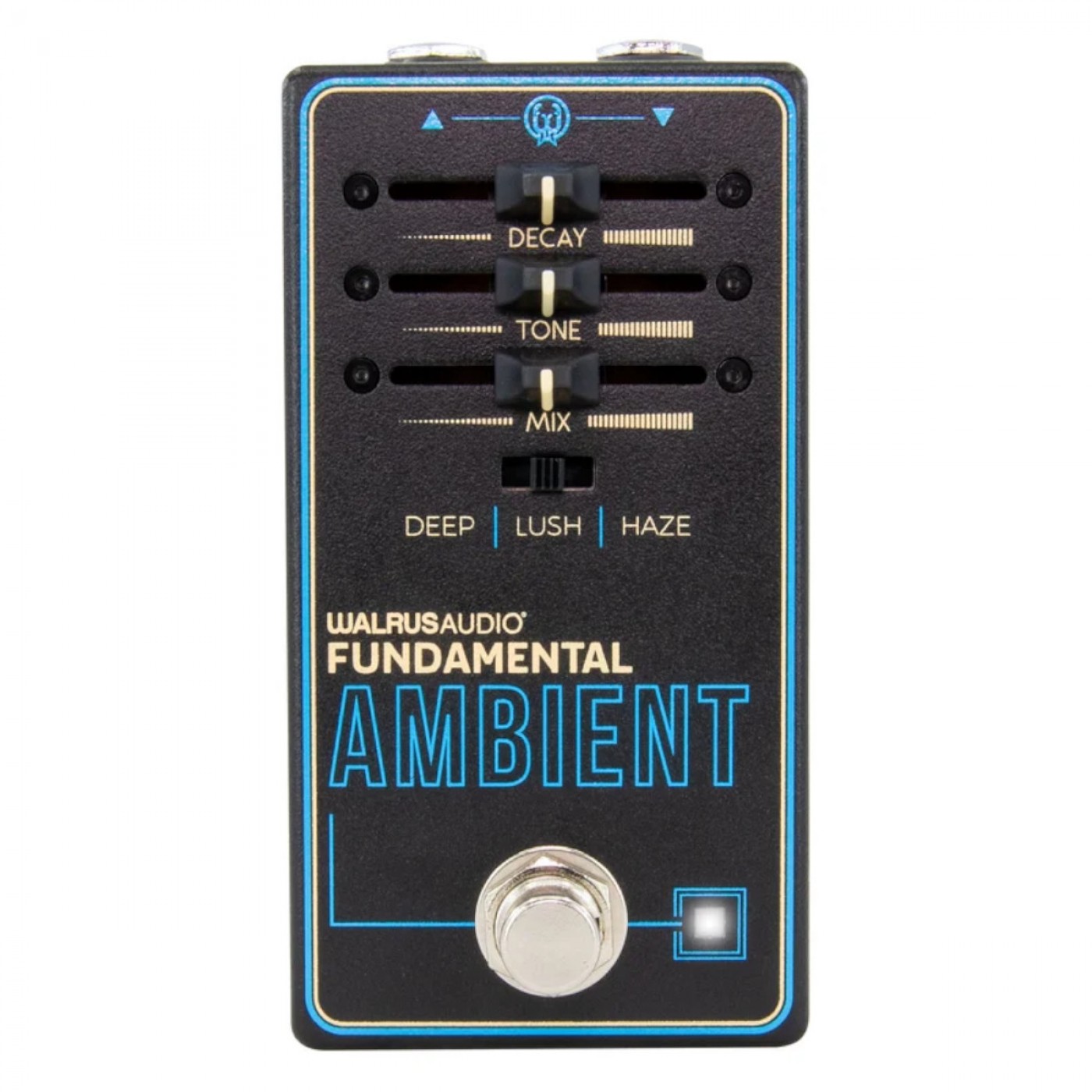
Hear the Fundamental Ambient Reverb in Walrus Audio’s official demonstration.
3. Fundamental Phaser: Embrace the Phase
€119 | Light, Medium and Heavy modes
Phasing is one of the most fascinating modulation effects because its distinctive sound arises from the interaction between different versions of the same audio signal.
A traditional phaser uses stages of all-pass filtering to introduce frequency-dependent phase shifts. When that processed signal is combined with the original, certain frequencies partially or completely cancel, creating notches in the frequency response. Modulating the filters moves those notches through the spectrum, producing that unmistakable sweeping sensation.
It's a beautiful example of fairly sophisticated audio engineering producing something immediately musical.
The Walrus Audio Fundamental Phaser uses digital processing to explore three different phasing characters, controlled by Rate, Depth and Feedback sliders.
Rate determines how quickly the modulation moves, Depth influences the extent of that movement, and Feedback increases the interaction within the processed signal, accentuating the resonant characteristics of the effect.
Light mode introduces gentle movement, making it excellent for clean rhythm guitar and delicate arpeggios. The effect can remain relatively understated while giving sustained chords a slowly shifting tonal character.
Medium moves towards the familiar warmth and sweep associated with vintage analogue phasers. Think seventies funk, psychedelic rock, expressive single-note playing and that wonderfully chewy modulation that emerges when a phaser is positioned before an overdrive.
Heavy introduces more elaborate, multi-voiced movement. Increase the Depth and Feedback and things can become distinctly synthetic, particularly with sustained notes and slower modulation rates.
One of the greatest pleasures of a phaser is experimenting with its position relative to gain pedals. Before overdrive, the modulation changes which frequencies are being pushed into saturation. After overdrive, the phaser processes the harmonically richer distorted signal, often producing a more pronounced sweep.
Same pedal, same settings, radically different musical results. This is precisely the sort of nonsense we love spending our time investigating.
The Fundamental Phaser uses true bypass according to its product specifications, and its compact design makes it an easy addition to an existing effects setup.
Explore the Fundamental Phaser at Musicmaker.
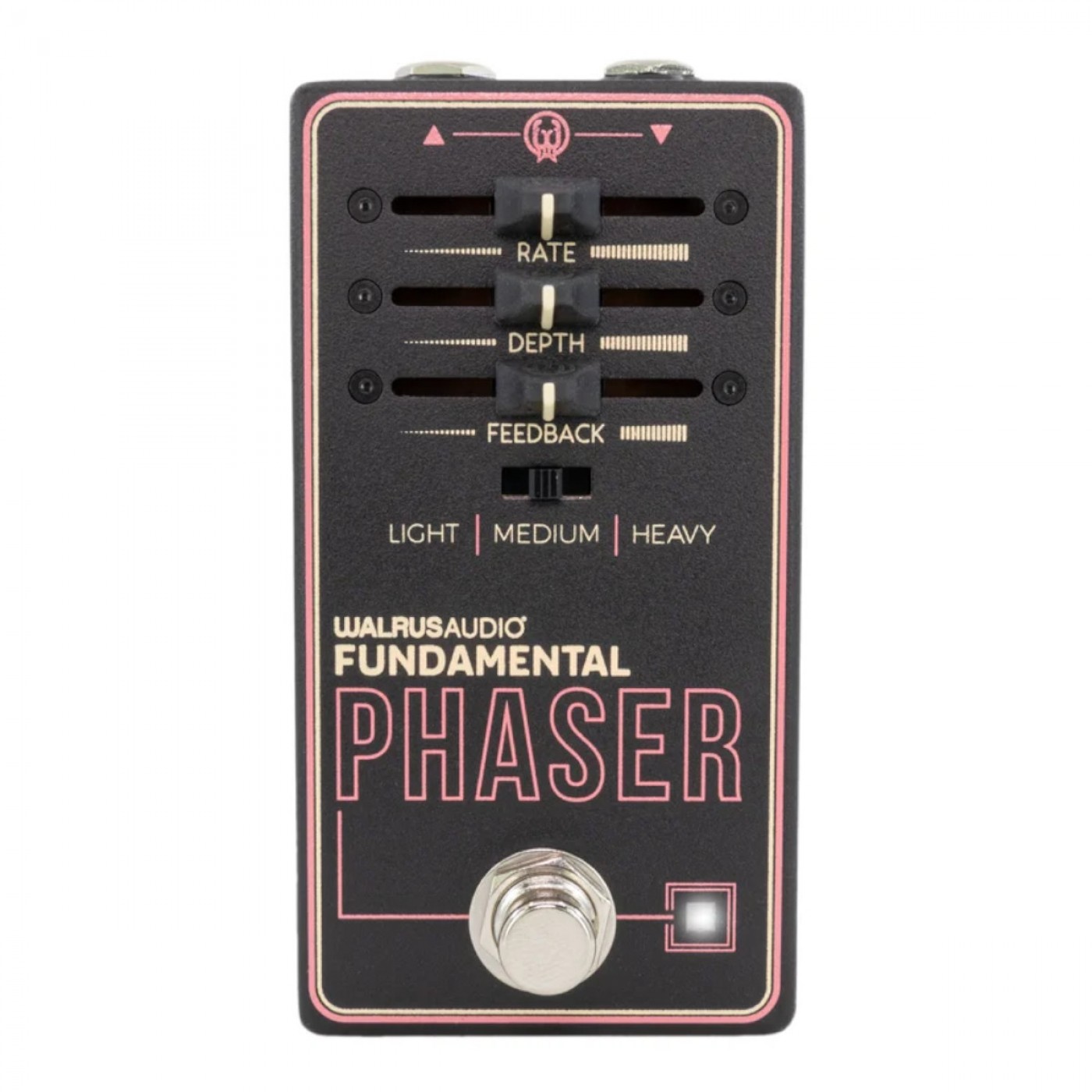
Hear the Fundamental Phaser in Walrus Audio’s official demonstration.
4. Fundamental Chorus: The Beautiful Art of Being Slightly Out of Tune
€119 | Light, Medium and Heavy modes
Chorus might be one of the most misunderstood effects on the pedalboard. Its reputation is often tied to the enormous clean guitar tones of the 1980s, but the underlying principle is capable of producing everything from delicate organic movement to gloriously seasick textures.
At its core, a chorus effect combines the original signal with a short, continuously modulated delayed signal. Changing the delay time introduces small variations in pitch, creating the impression of overlapping performances with subtle differences in timing and tuning.
The Walrus Audio Fundamental Chorus uses digital processing to recreate characteristics associated with analogue bucket-brigade chorus circuits.
For the uninitiated, a bucket-brigade device is an analogue delay technology in which a signal passes through a sequence of charge-storage stages under the control of a clock. The technology became fundamental to many classic chorus, flanger and delay designs. Its bandwidth limitations and other circuit characteristics contributed to a distinctive sonic aesthetic that modern digital algorithms frequently seek to recreate.
Walrus gives us Rate, Depth and Mix sliders, with three different chorus constructions available through the mode selector.
Light mode provides traditional analogue-inspired modulation. Keep the Rate and Depth low, introduce a little of the processed signal and you'll find a lovely way to enrich clean guitar parts without making the effect dominate the arrangement.
Medium introduces multiple modulation taps, creating a more intricate and animated texture. It's a particularly appealing setting for layered indie guitar parts and dreamy chord work.
Heavy draws inspiration from the elaborate LCR tri-chorus sounds associated with classic studio and rack equipment. Multiple modulation voices create a highly animated, richly layered effect.
It's worth noting that this is a mono pedal. The tri-chorus-inspired processing creates its characteristic richness within that mono output rather than providing separate left, centre and right audio connections.
Something particularly interesting happens when you increase the Mix towards its fully wet end. With less unmodulated guitar signal present, the pitch movement becomes more apparent, taking you closer towards vibrato-like territory.
Try it with a clean electric guitar and a slow modulation rate, followed by a subtle plate reverb. Those slightly unstable sustained chords can be extraordinarily expressive.
Explore the Fundamental Chorus at Musicmaker.
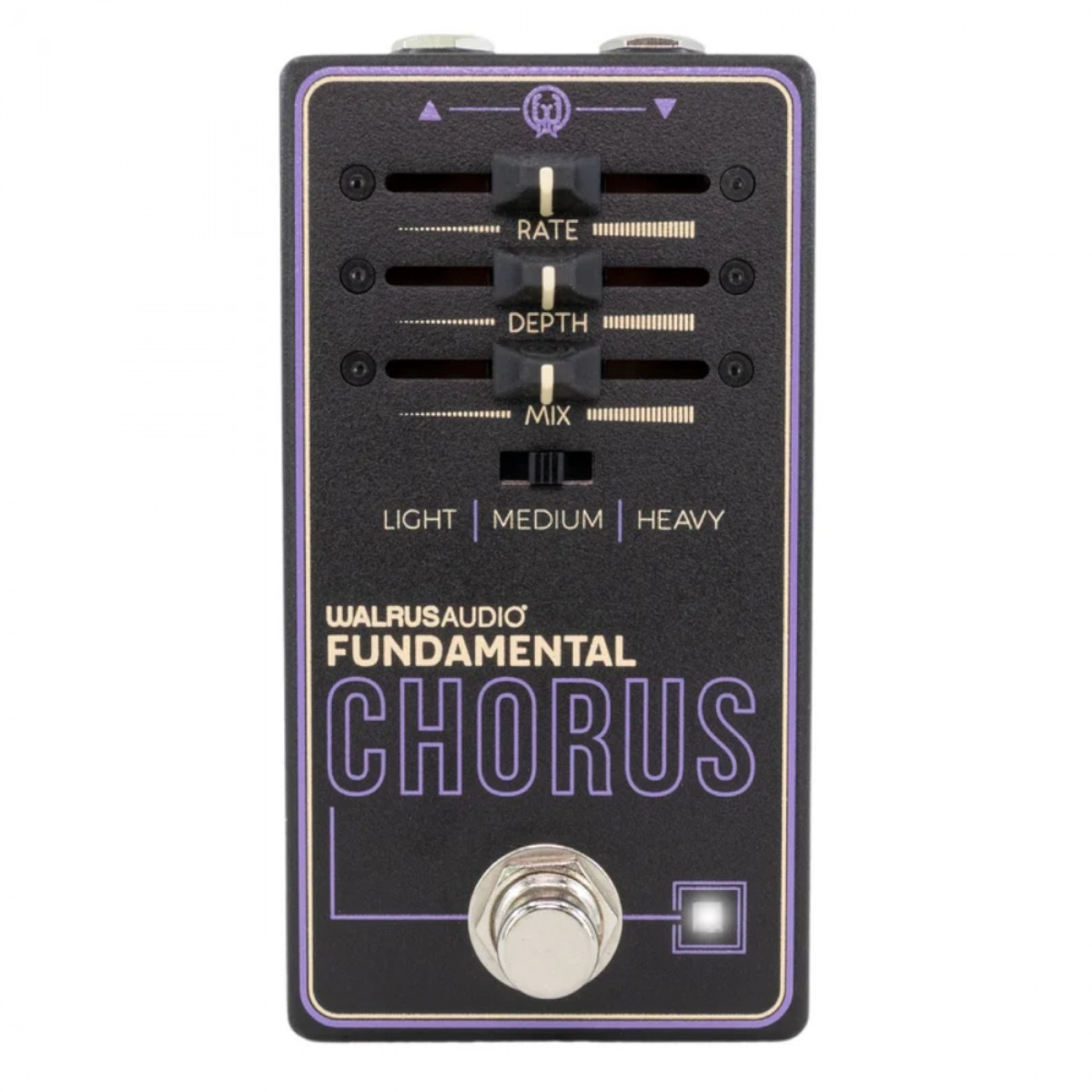
Hear the Fundamental Chorus in Walrus Audio’s official demonstration.
5. Fundamental Delay: Yesterday's Notes, Tomorrow's Ideas
€119 | Digital, Analog and Reverse modes
Delay is an effect that can influence how a guitarist actually plays. Once you've established a rhythmic relationship with the repeats, you start leaving intentional gaps, changing picking patterns and allowing previous notes to complete phrases that your hands haven't physically played.
The Walrus Audio Fundamental Delay approaches this fundamental effect through three distinctly different algorithms, offering up to 1,000 milliseconds of delay time, adjustable feedback and a wet/dry mix that can extend to fully processed operation.
Digital mode delivers clean, clearly defined repeats. It's particularly useful for rhythmic playing because the repeats preserve much of the original note's definition. Set the delay to a tempo-related subdivision and a relatively simple picked pattern can develop into something rhythmically elaborate.
Analog mode introduces the filtering and mild distortion associated with traditional bucket-brigade delay circuits. As the echoes recirculate through the feedback path, the tonal character changes, producing repeats that tend to recede behind the original note rather than competing directly with it.
This distinction becomes particularly useful when recording. A clean digital repeat can be a compositional element that needs to remain clearly audible, while a darker analogue-style repeat can provide depth without occupying quite as much sonic space.
Reverse mode takes recorded fragments of the signal and plays them back in the opposite temporal direction. Familiar note envelopes become reversed, attacks are transformed into swelling textures, and the relationship between what you're playing and what you're hearing becomes wonderfully unfamiliar.
Try fully wet Reverse mode with a series of isolated notes. Follow it with a generous reverb and you can create fascinating, almost orchestral textures without changing anything about the guitar itself.
Like the Lo-Fi Delay, the Fundamental Delay offers tap tempo and rhythmic subdivisions, alongside selectable trails. That combination makes it practical for live performance as well as considerably less responsible studio experimentation.
A Little Delay Mathematics for the Nerds
The relationship between tempo and delay time is surprisingly straightforward.
Quarter-note delay time in milliseconds = 60,000 ÷ BPM.
At 120 BPM, a quarter-note delay is 500 milliseconds, an eighth-note delay is 250 milliseconds, and a dotted-eighth delay is 375 milliseconds.
That dotted-eighth relationship is particularly rewarding because the repeats fall between the notes of a conventional eighth-note picking pattern, creating interlocking rhythms.
Tap tempo saves you from doing arithmetic while standing onstage, but understanding the relationship between tempo and delay time opens up some lovely compositional opportunities.
Explore the Fundamental Delay at Musicmaker.
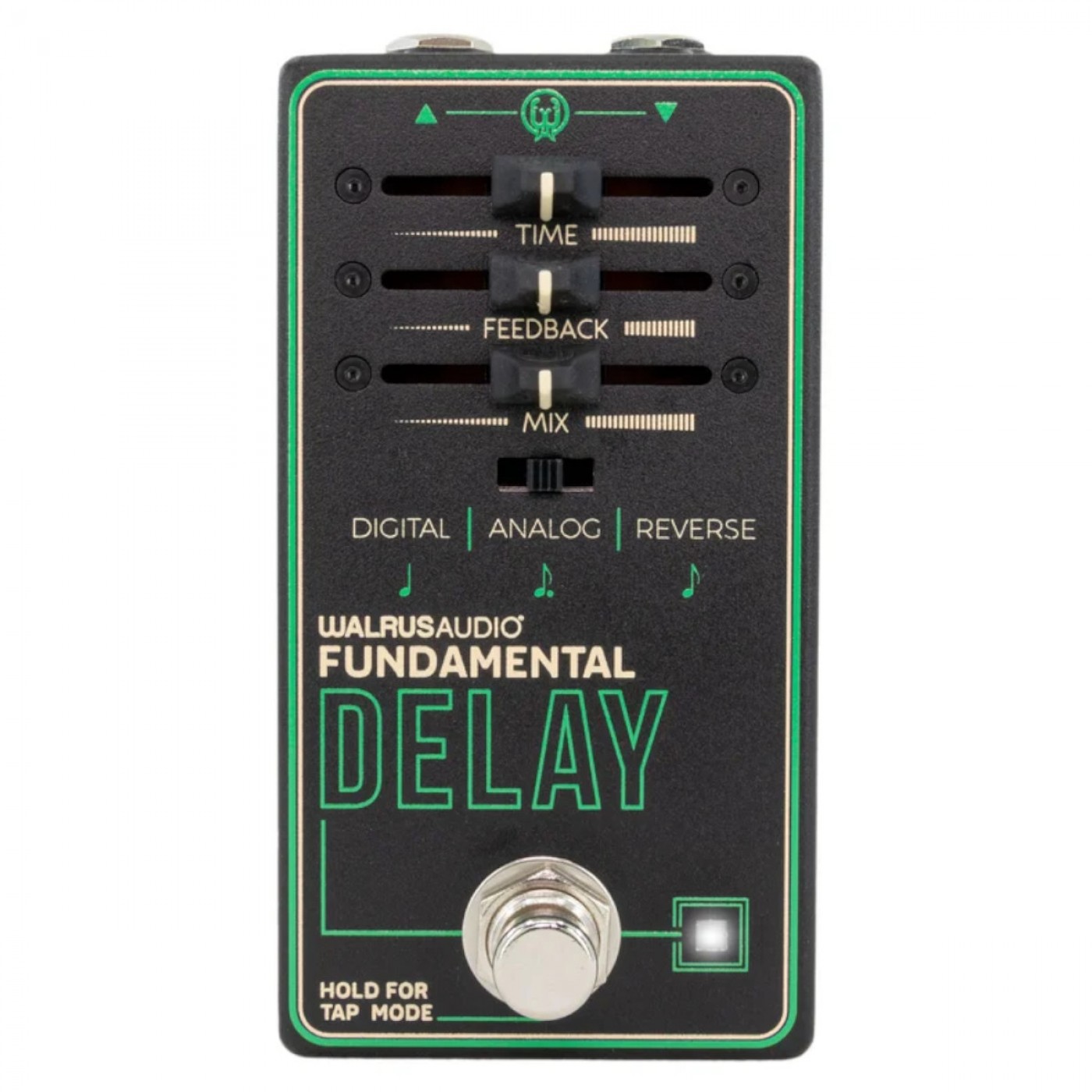
Hear the Fundamental Delay in Walrus Audio’s official demonstration.
6. Fundamental Reverb: The Architecture of Sound
€119 | Hall, Spring and Plate modes
Reverberation is one of the principal ways our ears interpret acoustic environments. Direct sound reaches us first, followed by reflections travelling along different paths. The timing, density, frequency content and decay of those reflections provide information about the space surrounding the sound source.
Artificial reverb allows musicians to shape that perceived environment without physically changing rooms.
The Walrus Audio Fundamental Reverb concentrates on three classic reverb characters, each drawing inspiration from a different part of audio history.
Hall: A Sense of Scale
Hall reverberation explores the spacious, diffuse reflections associated with large performance environments. Its characteristic decay can give clean guitar parts an expansive sound, particularly when individual notes are allowed to develop rather than competing with constant playing.
The Fundamental's Decay and Tone controls make it easy to move between understated ambience and much larger atmospheric textures.
Spring: Glorious Mechanical Weirdness
Traditional spring reverb uses electromechanical transducers to send vibrations through metal springs. Those vibrations produce a distinctive collection of resonances and reflections, resulting in the bouncy, slightly metallic character associated with surf guitar, vintage amplifiers and countless classic recordings.
The Fundamental recreates that aesthetic digitally, bringing the personality of spring reverb into a compact pedal format.
Pair it with a clean amplifier sound and some rhythmic tremolo for classic vintage guitar tones, or use it underneath a gritty overdrive for something altogether more unruly.
Plate: A Little Recording Studio History
Plate reverberation traditionally involves exciting a large suspended metal plate and capturing the resulting vibrations. The technique became an important part of recording studio history, providing a dense, smooth reverberation with a distinctive tonal response.
Digital plate emulations remain popular because their character can complement melodic lead instruments without necessarily producing the impression of a vast physical space.
For guitar solos, a moderately short plate decay and a restrained Mix setting can produce a satisfying sense of sustain and depth while preserving the definition of the original playing.
The Fundamental Reverb provides selectable trails, analogue dry-through and a fully wet Mix setting in addition to those three algorithms.
Its strengths lie in the sheer usefulness of its sounds. It's an excellent choice for musicians who want classic reverb characters alongside the possibility of more expansive experimentation.
Explore the Fundamental Reverb at Musicmaker.
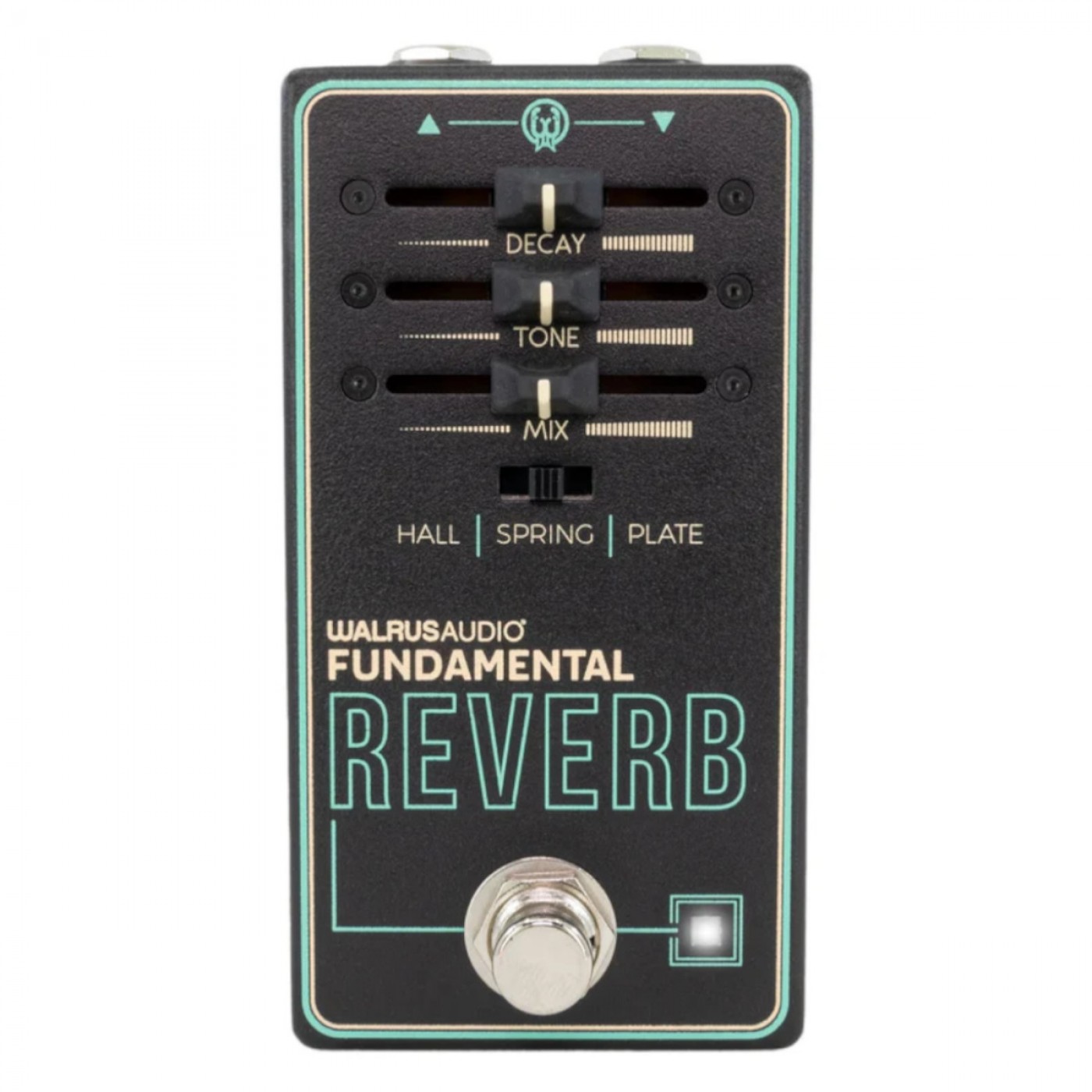
Hear the Fundamental Reverb in Walrus Audio’s official demonstration.
The Big Question: Fundamental Reverb or Ambient?
With two dedicated reverb pedals in this particular delivery, it's worth understanding the distinction.
The Fundamental Reverb focuses on familiar acoustic and electromechanical reverb characters. It's a particularly versatile everyday option, giving you conventional Hall, Spring and Plate sounds that work across a broad range of guitar music.
The Fundamental Ambient is more interested in texture, sustained harmonic layers and creative processing. Its lower-octave content, extended decay characteristics and lo-fi processing offer something considerably less conventional.
If you mainly want to add space to an existing guitar tone, the Fundamental Reverb is the natural starting point. If you want the reverb itself to become a defining element of the composition, the Ambient deserves your attention.
Of course, placing both pedals in the same signal chain introduces some rather interesting possibilities. A short spring reverb feeding a much longer, darker ambient decay? Well, now we're talking.
Three Pedalboard Experiments Worth Losing an Evening To
The individual pedals are excellent fun, but the particularly interesting possibilities emerge when their different processing characteristics begin interacting.
The Dream Pop Machine
Guitar → Fundamental Chorus → Fundamental Lo-Fi Delay → Fundamental Ambient → Amplifier
Begin with a clean guitar tone and a moderate chorus setting. Add AM mode on the Lo-Fi Delay with a handful of repeats, followed by Lush mode on the Ambient.
The modulated echoes develop their own pitch movement before being absorbed into the longer reverberant layer. Keep the effect mixes reasonably controlled so the original chord remains identifiable.
You'll find yourself exploring chord voicings simply because of the way different intervals interact inside the texture.
The Psychedelic Time Traveller
Guitar → Fundamental Phaser → Overdrive → Fundamental Delay → Fundamental Reverb → Amplifier
Use Medium mode on the Phaser with a slow Rate setting, followed by a moderately driven overdrive. Select Analog mode on the Delay and Spring on the Reverb.
The moving frequency response of the phaser interacts with the overdrive's clipping behaviour, producing a rich, evolving harmonic character. The darker echoes provide depth while the spring-style ambience lends the arrangement a wonderfully vintage personality.
Try sustained single notes, double-stops and sparse chord fragments. Sometimes the spaces between the notes reveal more about an effect than the notes themselves.
The Experimental Noise Laboratory
Guitar → Fundamental Delay in Reverse mode → Fundamental Lo-Fi Delay → Fundamental Ambient in Haze mode → Amplifier
This is where things become considerably less predictable.
Reverse fragments feed another delay network, which introduces further temporal movement, saturation and modulation before everything reaches the textured Haze reverb.
Begin with low Feedback and Mix settings and gradually increase them while keeping your amplifier at a comfortable volume. Multiple feedback-based effects can accumulate energy surprisingly quickly, and the resulting textures are often more interesting when you retain some control over their development.
Add a looper before the effects and you've got a particularly inspiring arrangement for improvisational sound design.
These are starting-point experiments rather than rigid recipes. Moving the pedals around can fundamentally change their interaction, and discovering those differences is half the entertainment.
The Pedal Nerd's Technical Reference
All six pedals share the Fundamental Series' approachable interface and compact format, but their individual signal-processing characteristics deserve a little attention.
| Pedal | Algorithms | Controls |
|---|---|---|
| Reverb | Hall, Spring, Plate | Decay, Tone, Mix |
| Ambient Reverb | Deep, Lush, Haze | Decay, Tone, Mix |
| Phaser | Light, Medium, Heavy | Rate, Depth, Feedback |
| Chorus | Light, Medium, Heavy | Rate, Depth, Mix |
| Delay | Digital, Analog, Reverse | Time, Feedback, Mix |
| Lo-Fi Delay | AM, Murk, Echo | Time, Feedback, Mix |
The Delay and Lo-Fi Delay offer a maximum delay time of 1,000ms, with tap tempo functionality and rhythmic subdivision options. The delay and reverb models offer selectable trails, allowing their processed audio to decay naturally or stop when bypassed.
Bypass arrangements differ across these six pedals: the Phaser uses true bypass, while the Chorus, Delay, Lo-Fi Delay, Reverb and Ambient use buffered bypass. The delay and reverb models’ selectable trails determine whether echoes and reverberation continue after you switch the effect off.
These are mono effects pedals, so bear that in mind if you're integrating them into an existing stereo rig.
Power is supplied through a conventional 9V DC centre-negative connection, with a minimum current rating of 100mA per pedal. We'd recommend using a good-quality isolated pedal power supply, particularly when running several digital effects together. Isolation can help prevent unwanted noise associated with shared power connections.
Don't confuse the voltage requirement with the available current. A suitable 9V isolated output rated at 300mA can power a pedal requiring 100mA, but a higher-voltage output should never be used unless the manufacturer explicitly permits it.
Browse our pedal power supplies and power solutions and wider guitar effects pedals department to find the equipment needed to put your own setup together.
A few well-chosen connections help keep the creative experiments tidy. Our EBS 10cm Deluxe Flat Patch Cable is one option for linking nearby pedals; check the distance and jack positions on your own board before choosing cable lengths.
For more pedalboard inspiration, explore our guide to choosing guitar effects and building a pedalboard. Looking for a musical present? Try our Musicmaker staff’s Christmas pedal picks and wider Christmas gifts for musicians guide.
Why the Fundamental Series Makes So Much Sense
There's an interesting space in the effects pedal market between affordable entry-level designs and enormously sophisticated boutique processors. Plenty of musicians want distinctive, thoughtfully designed sounds but have relatively little interest in programming extensive presets or spending several hundred euro on every addition to their pedalboard.
The Fundamental Series inhabits that space rather beautifully.
An experienced effects enthusiast can appreciate the details of the algorithms, experiment with feedback relationships and combine different modes into elaborate signal chains. Somebody buying their first modulation or ambient pedal can understand the controls in minutes and start discovering sounds immediately.
At €119 per pedal, there's also an appealing opportunity to explore an effect category that you haven't previously considered. Perhaps you've never particularly understood chorus, or you've always associated reverb with conventional amplifier ambience. These pedals offer a straightforward way of discovering how those effects can influence your own musical ideas.
The Lo-Fi Delay and Ambient are particularly exciting additions because they bring some of the more experimental tendencies of contemporary boutique pedal design into this accessible format. They encourage players to think beyond conventional guitar tones and consider how the processing itself can become part of the music.
And they look bloody gorgeous together.
Frequently Asked Questions About Walrus Audio Pedals
Where are Walrus Audio Fundamental pedals made?
The Fundamental Series is designed and assembled at Walrus Audio's headquarters in Oklahoma City, USA.
Are Walrus Audio Fundamental pedals suitable for beginners?
Yes. Their three-slider interface and three-position mode selector make them approachable for musicians who are new to effects, while the different algorithms offer plenty of scope for more experienced players.
Are the Fundamental pedals analogue or digital?
The six modulation, delay and reverb models featured here use digital effects processing. Several recreate characteristics associated with traditional analogue equipment, and certain models retain an analogue dry signal path.
What power supply do Walrus Audio Fundamental pedals need?
A regulated 9V DC centre-negative supply capable of delivering at least 100mA per pedal is required. An isolated pedalboard power supply is recommended.
Are Walrus Audio Fundamental pedals stereo?
The six Fundamental models featured in this article use mono input and output connections.
What's the difference between the Fundamental Delay and Lo-Fi Delay?
The Fundamental Delay concentrates on clean digital echoes, analogue-style repeats and reverse processing. The Lo-Fi Delay introduces more pronounced tonal degradation, pitch movement, saturation and rhythmic multi-tap processing.
How much do Walrus Audio pedals cost in Ireland?
At the time of this delivery, all six Fundamental pedals featured here are priced at €119 each at Musicmaker Dublin. Check the individual product listings for current prices and availability.
The Walrus Has Landed at Musicmaker Dublin
Six pedals, eighteen distinct algorithms and an enormous amount of creative potential have just joined our effects department.
The Fundamental Reverb and Delay cover familiar ground with considerable flexibility. The Chorus and Phaser bring movement and vintage-inspired modulation into the equation. The Ambient and Lo-Fi Delay open up some gloriously strange possibilities for musicians who enjoy exploring the less predictable edges of guitar sound.
Come and explore the Walrus Audio range at Musicmaker, or visit us at 29 Exchequer Street, Dublin 2, where we've been enthusiastically discussing musical equipment with fellow gear obsessives since 1981.
Free shipping across Ireland on orders over €15.
Bring your curiosity, your favourite chord progression and perhaps a little willingness to abandon whatever preconceived ideas you have about how a guitar should sound.
Normal service may not resume immediately.
Serious gear. Glorious noise.