Tiny Thing, Big Possibilities: Your Kyser Capo Guide
Updated November 2026
From a Texas machinist's workshop to guitar cases across Ireland, discover why Kyser Quick-Change capos have become indispensable — and how to choose and use the right one.
There are pieces of musical equipment that announce themselves. The beautiful acoustic guitar, the enormous amplifier, the pedalboard glowing on the floor like the control panel of a small spacecraft. These are the things musicians spend hours researching, comparing and occasionally trying to justify to their partners.
And then there's the capo.
Small enough to disappear into a gig bag, simple enough to operate with one hand and important enough to cause a minor emergency when somebody needs one five minutes before a gig. The guitarist checks the case, the music stand and every pocket in the room before asking the bass player, who has absolutely no reason to know where it is. Eventually, somebody discovers it clipped to the headstock of the guitar they've been holding all along.
At Musicmaker, we've always had a soft spot for equipment that solves a genuine musical problem without demanding too much attention. A good capo is a perfect example, and few companies have embraced that idea as enthusiastically as Kyser.
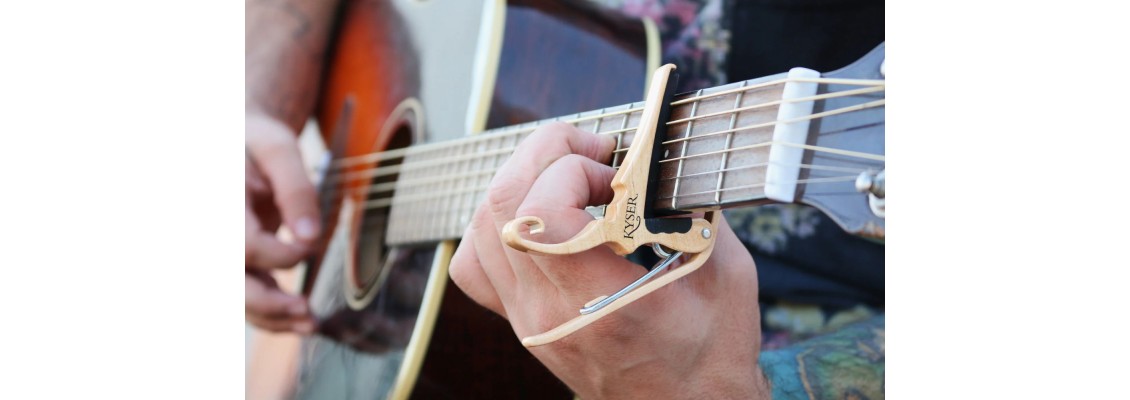
The Kyser Quick-Change capo has become a familiar sight on acoustic and electric guitars because it does one job exceptionally conveniently. Squeeze the handle, position it behind a fret, release it and play. There are no adjustment screws to fiddle with between songs, no batteries to replace and no complicated instructions to remember.
Behind that simple movement, however, there's a fascinating little story involving a Texas machinist, decades of manufacturing experience and some surprisingly thoughtful engineering. There's also rather more musical possibility in a capo than many guitarists realise.
So let's give this humble accessory the attention it deserves.
From a Texas Garage to Guitar Cases Everywhere
The Kyser story begins with Milton Kyser, an experienced machinist who developed a particular interest in improving the guitar capo. Having acquired an existing capo patent in the 1970s, he continued refining the idea and eventually developed the spring-loaded Quick-Change design that would become the company's signature product.
Kyser Musical Products was established in Texas in 1980, and the company still manufactures its capos in Canton, East Texas. The original idea has proved remarkably durable: make a capo that's quick to operate, comfortable to handle and dependable enough for musicians who use one every day.
What makes that history particularly appealing is its practical character. This wasn't a gadget conceived to solve a problem nobody had noticed. Guitarists already used capos, but changing their position during a performance could be fiddly, especially when dealing with older screw-operated designs. Kyser's spring-loaded mechanism made the process much faster, allowing players to reposition a capo with one hand while keeping the other free to hold the guitar.
The company has continued to refine the product and expand its range without abandoning that basic philosophy. Its current Quick-Change capos are made from aluminium and manufactured through a multi-stage process involving machining, finishing, inspection and assembly. Kyser describes a 14-step manufacturing process for its standard acoustic model, and the company continues to emphasise American production and long-term durability.

There's something rather satisfying about a small accessory with that much thought behind it. A capo might not inspire the same reverence as a hand-built guitar, but when it's being opened, closed and moved around the neck hundreds of times, good engineering becomes very easy to appreciate.
For a deeper look at the company and its capos, you can also read our earlier Kyser history and top picks feature.
What Does a Guitar Capo Actually Do?
A capo is essentially a movable nut. When you clamp it across the strings just behind a fret, it shortens their vibrating length and raises the pitch of the notes they produce. The relationship between the strings stays the same, so familiar chord shapes remain playable even though the music comes out in a different key.
Every fret represents one semitone. Put a capo at the first fret and everything rises by one semitone; move it to the second fret and the pitch rises by two. At the third fret, you've raised the guitar by three semitones, and so on.
Here's a useful example. Place a capo at the second fret and play an ordinary open G chord shape. Your fingers are making a G shape, but the notes have all moved up by a whole tone, so the chord you actually hear is A major. Play a C shape and you'll hear D major; play a D shape and you'll hear E major.
This is enormously useful for singers. Suppose you're accompanying somebody who finds a particular song slightly too low. Instead of learning the entire progression again in a less comfortable key, you can move the capo up the neck and keep using the chord shapes you already know.
Of course, a capo only raises the pitch of those shapes. If the singer needs the song lower, you may have to choose different chord shapes, remove the capo or rethink the arrangement. It's a wonderfully useful tool, but it hasn't yet developed the ability to read a vocalist's mind.
The same principle makes capos particularly valuable for beginners. Songs that would otherwise require difficult barre chords can sometimes be played using accessible open shapes, provided the capo is placed at the appropriate fret. That doesn't remove the need to learn barre chords eventually, but it can make playing and enjoying real songs much easier while those skills develop. For the other useful bits that belong beside a first guitar, explore our beginner amps and accessories guide.
Why the Kyser Quick-Change Design Works
The cleverness of the Kyser Quick-Change lies in the relationship between its spring, jaws and contact surfaces. The spring provides the clamping force, while the padded surfaces press the strings against the fretboard and help protect the instrument where the capo makes contact.
Unlike an adjustable screw capo, a standard Quick-Change doesn't require the player to dial in the pressure manually. You simply squeeze the handle to open the jaws, position the capo and release it. That makes it particularly convenient during rehearsals and live performances, when a quick key change can be the difference between a smooth transition and an awkward silence while the singer explains that the next song is now in B-flat.
The design is also remarkably portable. A Kyser can live in a guitar case, sit on a music stand or clip to a suitable part of the headstock between songs. The aluminium construction keeps it lightweight, while the spring-loaded action makes it easy to operate with one hand.
There is a trade-off, however. Because a conventional spring capo applies a preset amount of pressure, it isn't individually adjustable to every possible guitar setup. String gauge, neck shape, fingerboard radius and action can all influence how well a particular capo works.
That's why choosing the correct model matters, and why Kyser makes different versions for different instruments rather than expecting one capo to handle every conceivable neck.
Acoustic, Electric, Classical: Which Kyser Capo Do You Need?
The most familiar member of the family is the standard six-string acoustic Quick-Change. It's designed for the neck geometry and string requirements of a typical steel-string acoustic guitar, making it an excellent starting point for singer-songwriters, folk players and anyone who regularly accompanies themselves with open chords.
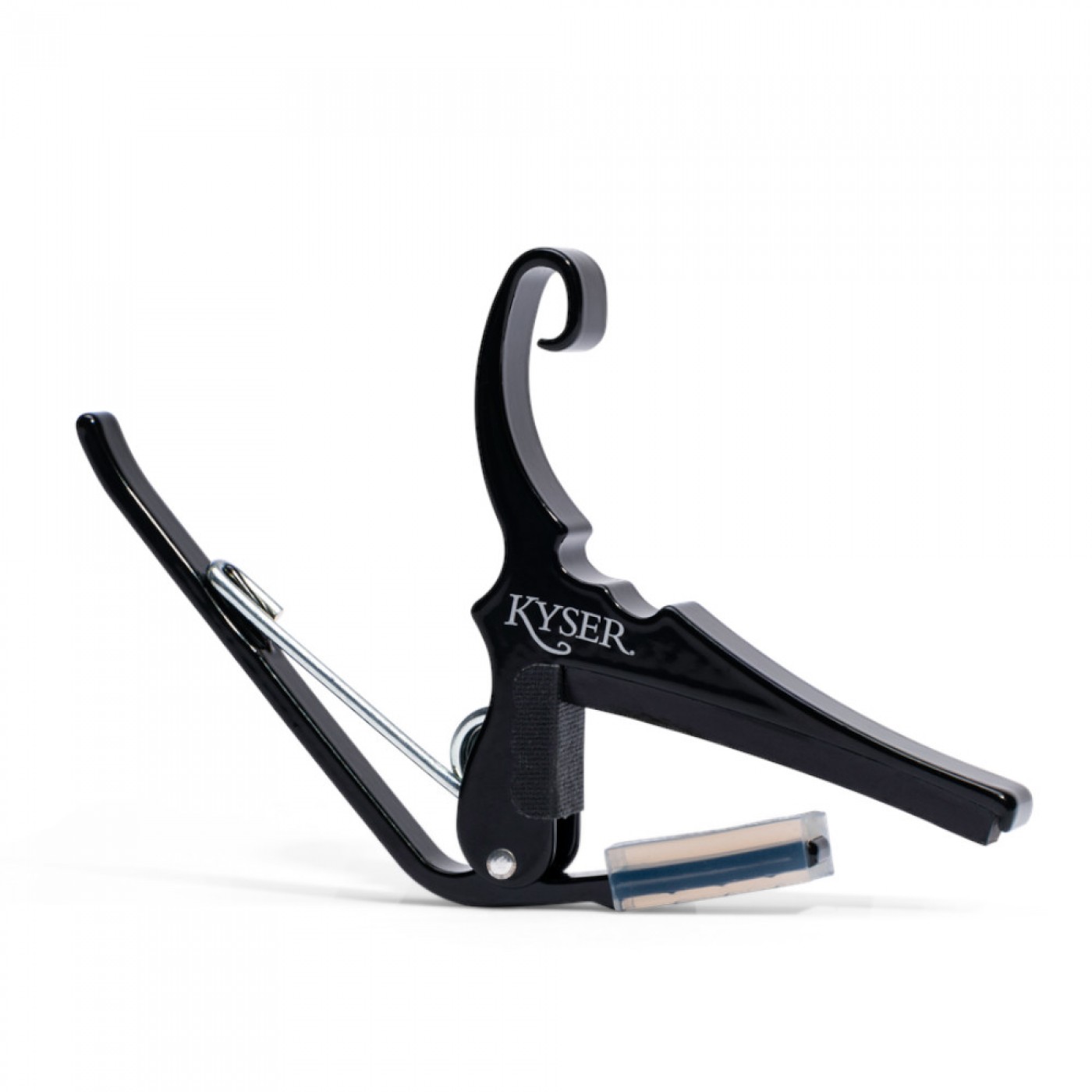
The Kyser KG6B Quick-Change Capo in Black is a classic example. It's straightforward, dependable and entirely uninterested in making a fuss. Musicmaker also carries the acoustic model in a range of finishes, including rosewood-style, sunburst and brighter colours, for players who prefer their accessories to have a little personality.
Electric guitarists have slightly different requirements. Many electric guitars use lighter strings and lower actions than steel-string acoustics, so a capo designed specifically for electric guitar can help provide an appropriate clamping force without unnecessary pressure.
The Kyser KGEB Quick-Change Electric Guitar Capo has a smaller body and lower spring tension than the standard acoustic version. That makes it worth considering for players who use a capo on a Stratocaster, Telecaster, Les Paul or similar electric guitar. It doesn't mean a standard acoustic capo can never work on an electric; it means the dedicated model is designed around the needs of that instrument.
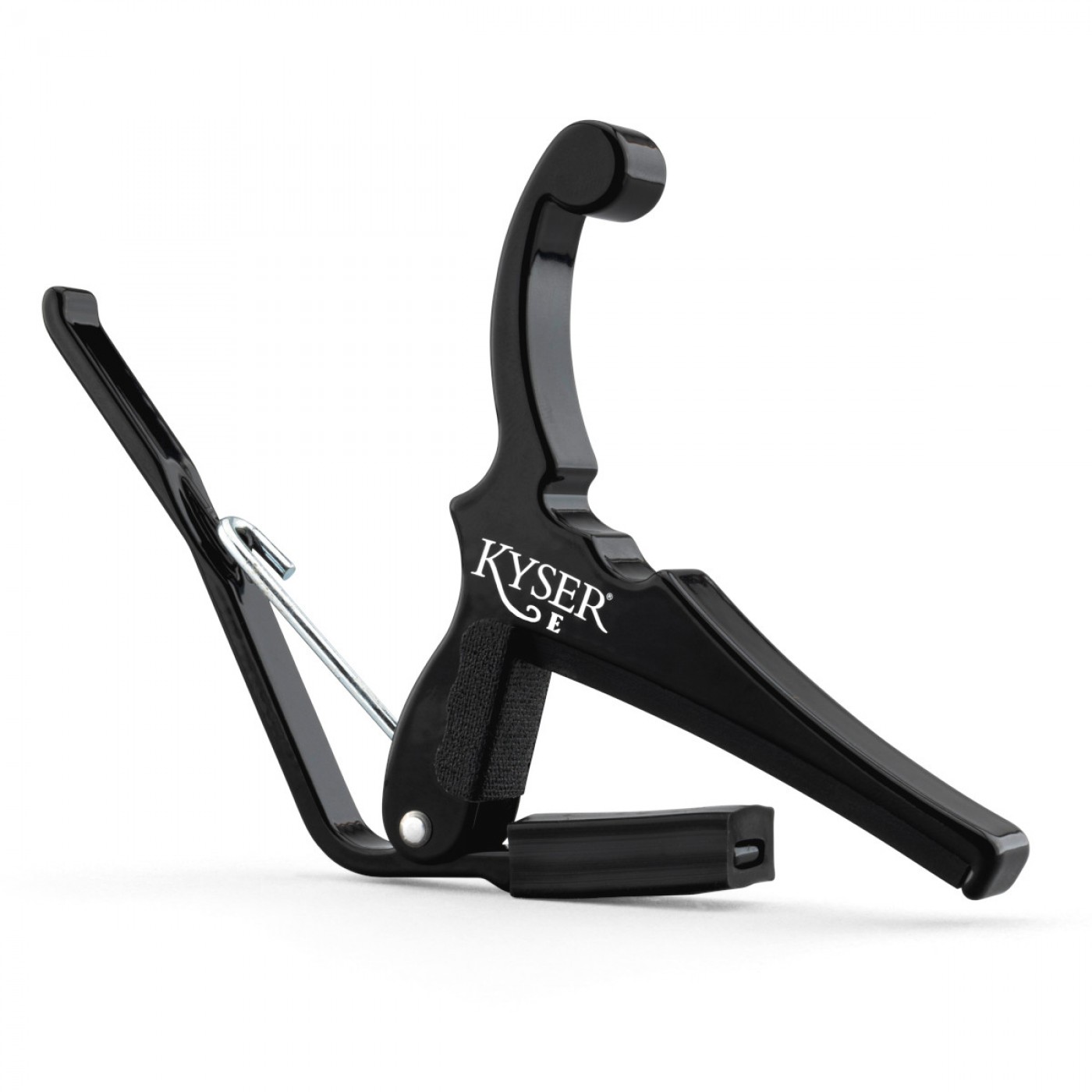
Classical guitars are different again. Their fingerboards are generally wider and flatter than those found on steel-string acoustics, and their nylon strings behave differently under pressure. A capo designed for a curved steel-string fingerboard may not press evenly across a classical guitar's strings.
That's where the Kyser KGCB Classical Guitar Capo comes in. Its contact surface is designed for the flatter fingerboard of a classical guitar, with a clamping action suited to nylon strings. There's also a rosewood-style classical version for anyone who likes a traditional-looking finish.
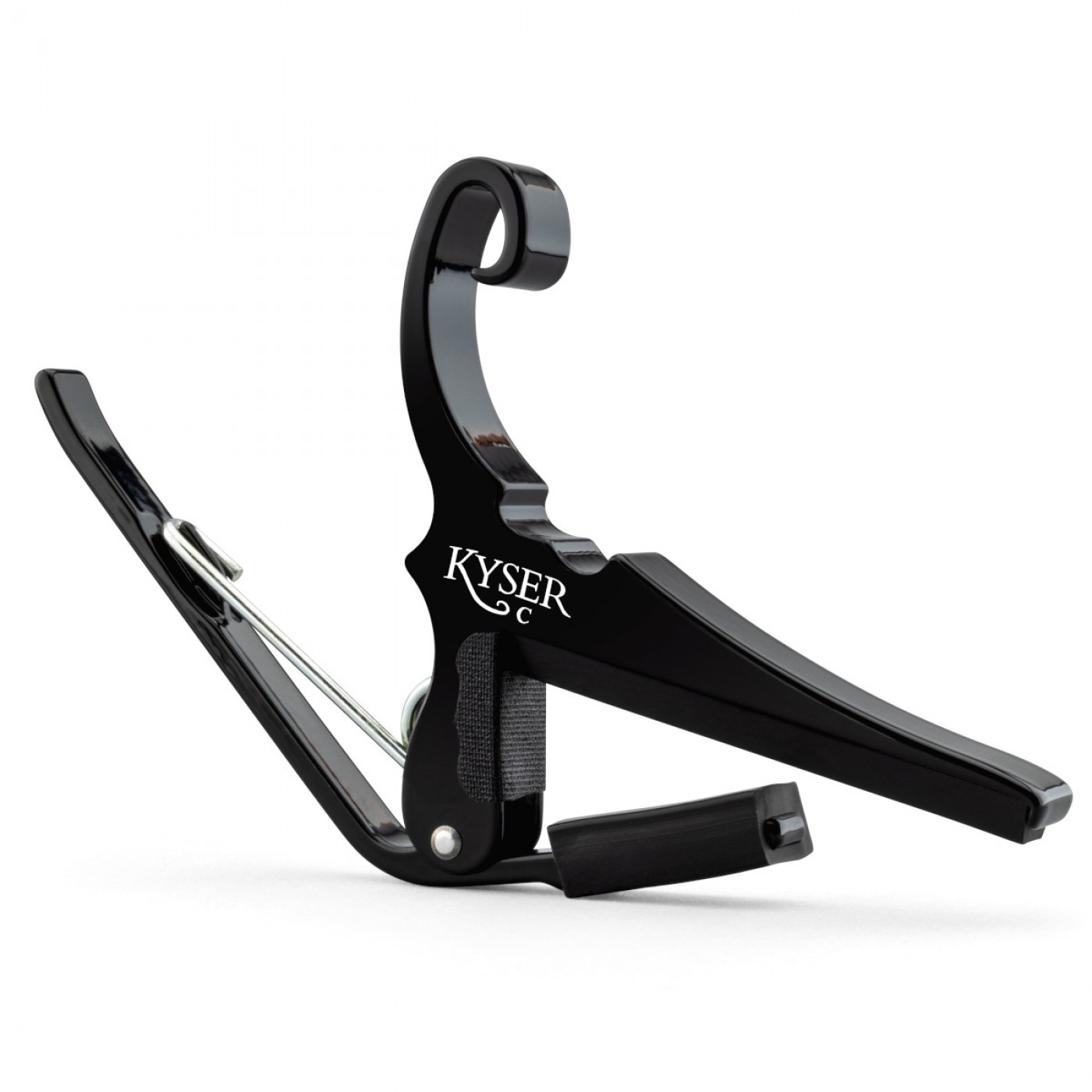
The important lesson is that the instrument determines the capo. Choosing the correct model is a much better approach than assuming that anything capable of clamping onto a guitar neck must be suitable.
Twelve Strings, Ukuleles and Other Musical Complications
If a six-string guitar needs careful capo pressure, a twelve-string introduces another layer of complexity. Each course contains two strings, often with different gauges, and the capo needs to press them cleanly without causing unnecessary tuning problems.
The Kyser KG12B 12-String Capo is designed specifically for this job. A dedicated twelve-string capo is particularly worthwhile for players who regularly use one, because achieving clean contact across all twelve strings can be more demanding than it is on a conventional six-string.
Ukulele players haven't been forgotten either. The Kyser Hawaiian Lei Ukulele Capo is designed for the smaller necks of ukuleles, providing the same convenient Quick-Change operation in a more appropriate format.
Kyser also makes capos for banjo and mandolin, along with partial capos for guitarists who want to explore less conventional arrangements. You can see the available models together in the Kyser range at Musicmaker or browse our wider guitar capo collection.
A good capo should fit the instrument, press the strings cleanly and leave the player free to concentrate on the music. If it requires heroic amounts of force or constant retuning to make it behave, it's worth checking that you're using the right one.
How to Fit a Guitar Capo Without Pulling Everything Sharp
A capo might be simple to use, but positioning it properly makes a noticeable difference. The most common mistake is placing it too far behind the fret, forcing the strings to travel further down towards the fingerboard than necessary.
That extra movement stretches the strings slightly and can make notes sound sharp. The effect becomes more obvious on guitars with higher actions, lighter strings or a capo that applies more pressure than the setup requires.
For the cleanest result, position the capo just behind the fret you want to use, rather than halfway between two frets. Make sure it's sitting squarely across the strings and that the padded contact surface is pressing them evenly. You don't need to clamp it directly on top of the fret, but you do want it close enough to avoid unnecessary stretching.
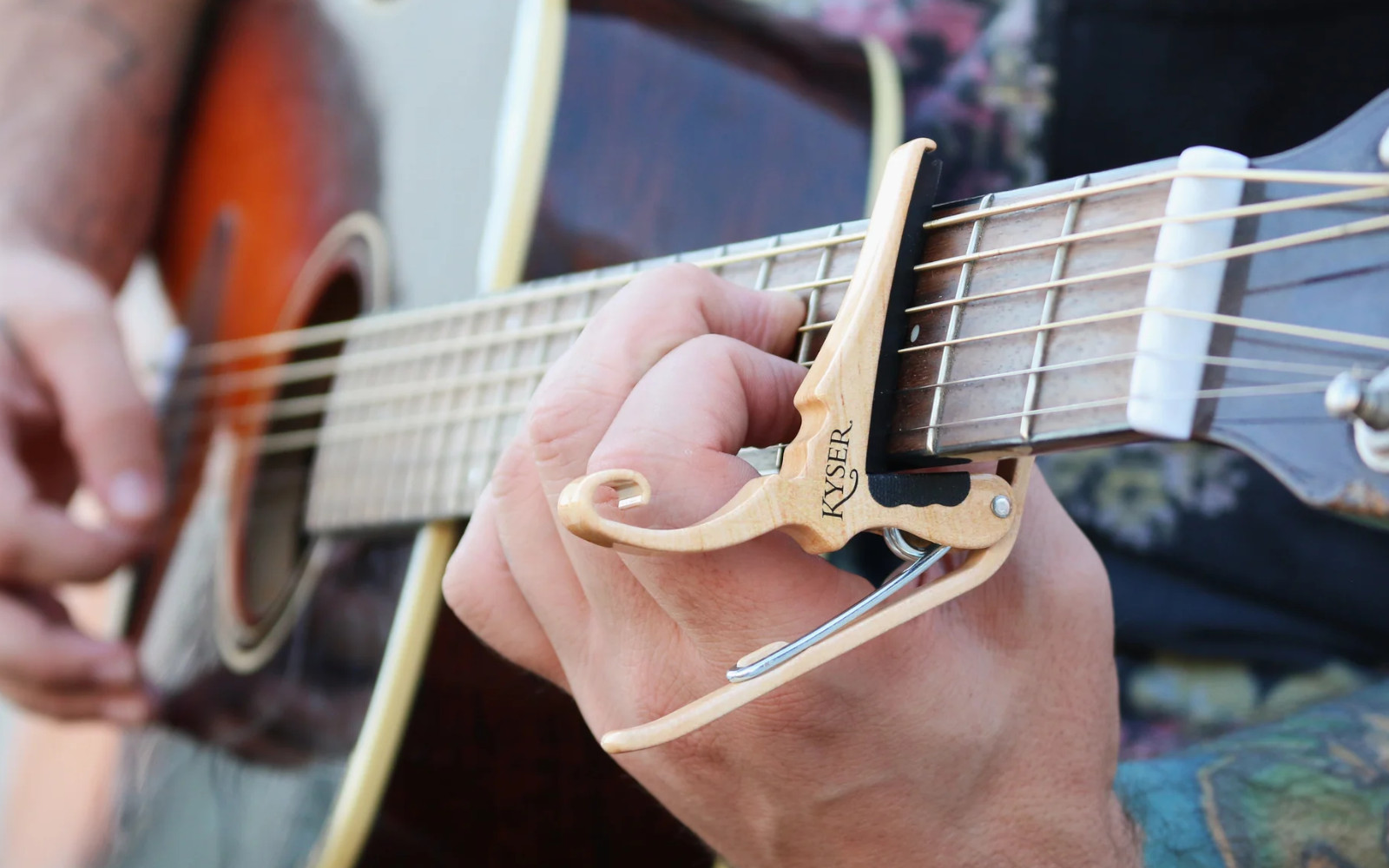
Once it's in place, play each string individually and listen for buzzing or muted notes. Then check the tuning. A well-fitted capo should produce clean notes with minimal disruption, although small tuning adjustments may sometimes be necessary.
If the guitar suddenly sounds sharp, don't immediately blame the tuning machines. First check the capo's position and make sure you're using a model suited to the instrument. It's also worth checking the guitar's action and intonation, because a capo can reveal setup issues that were already present.
One useful piece of Kyser care advice is to open the jaws fully before moving the capo. Don't drag it along the strings or fingerboard, as that can cause unnecessary wear. The company also recommends removing the capo from the strings when it's not being used, allowing the rubber contact surface to recover its shape.
And if the mechanism becomes stiff over time, follow the manufacturer's maintenance advice rather than attempting a heroic workshop intervention with whatever lubricant happens to be nearest the kettle.
A Capo Can Change Your Songwriting, Not Just Your Key
Most guitarists first encounter a capo as a transposition tool, but its creative possibilities are much broader. Moving familiar chord shapes higher up the neck changes the register of the notes, alters the balance between fretted and ringing strings, and can give a familiar progression a completely different character.
Try playing an open G–C–D progression without a capo, then move the capo to the fifth fret and play the same shapes. The progression has shifted into a different key, but something else has happened too: the guitar's open-string relationships now sit in a higher register, creating a brighter and more compact texture.
That can be useful when arranging two acoustic guitars. Instead of having both players use identical chord voicings in the same part of the neck, one can play the progression in its ordinary position while the other uses a capo and different shapes to produce the same sounding chords. The result is often a more interesting arrangement, with the instruments occupying different registers rather than competing for exactly the same space.
For example, one guitarist could play G, C and D without a capo, while another places a capo at the fifth fret and uses D, G and A shapes. Both are producing the same sounding chord progression, but the voicings and textures are different. It's a simple technique that can make two acoustic guitars sound more considered and less like two people accidentally rehearsing the same part.
A capo can also be useful for discovering new songwriting ideas. Familiar finger movements suddenly produce unfamiliar results, encouraging you to listen to a progression differently. Sometimes that little change is enough to send a song in an unexpected direction.
It's an inexpensive creative experiment, which is a refreshing change in a world where musical inspiration is occasionally marketed as requiring a new pedalboard, three synthesisers and a small personal loan.
The Kyser Drop-D Capo: A Clever Twist on Familiar Chords
For guitarists who enjoy experimenting, the Kyser Drop-D Quick-Change Capo offers an especially interesting variation.
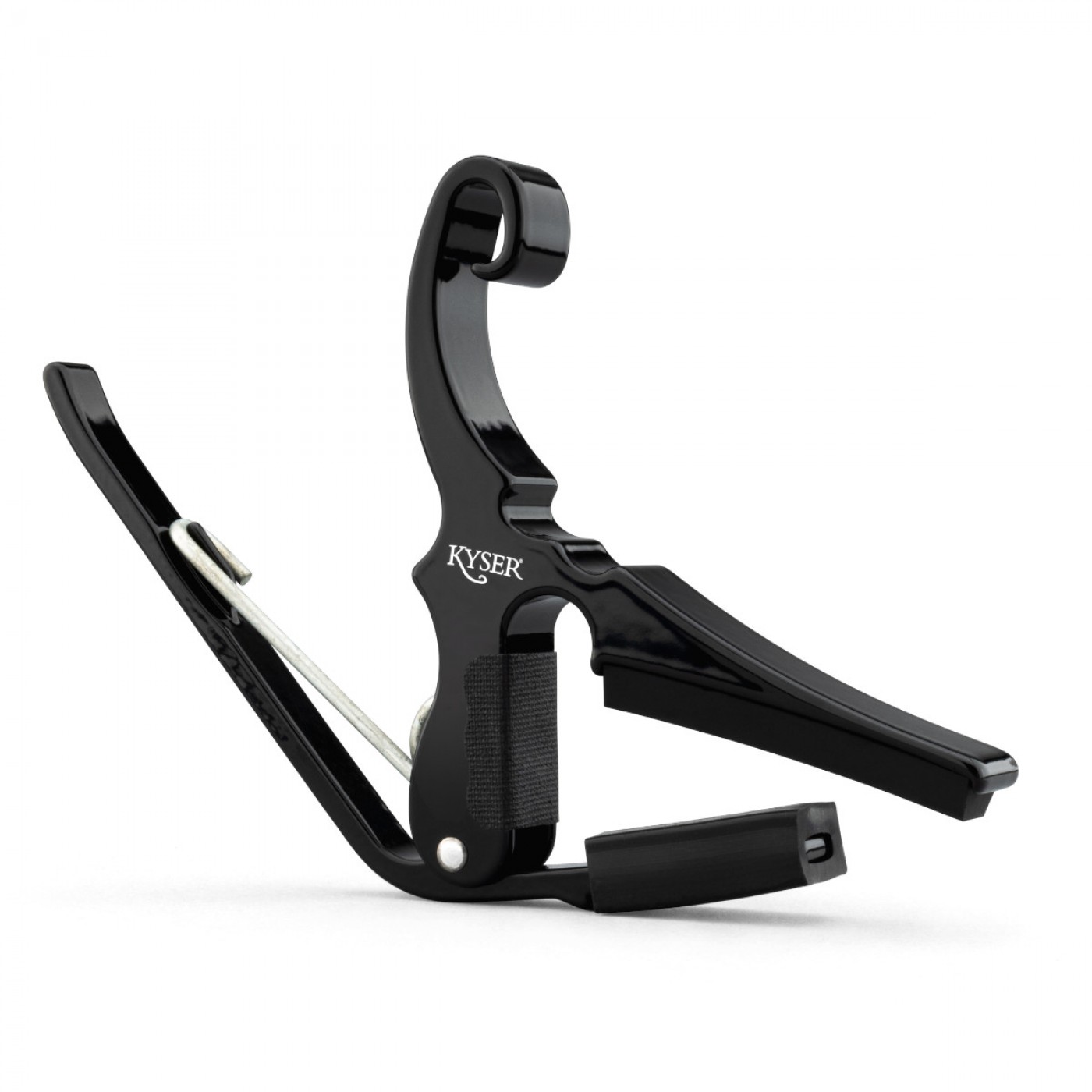
Unlike a conventional capo, which presses down all six strings, the Drop-D model leaves the low E string open while fretting the other five. At the second fret, that gives you the pitch relationship E–B–E–A–C♯–F♯, rather than the D–A–D–G–B–E tuning of a guitar physically retuned to Drop D.
That distinction is important. The capo creates a Drop-D-like interval relationship between the lowest strings, but it does not literally retune the guitar to Drop D. The bottom string remains E, while the others have been raised by the capo.
The resulting tuning relationship can be wonderful for drones, unusual chord shapes and open-string textures. It encourages guitarists to think differently about the relationship between the bass notes and the upper strings, which is exactly the sort of small creative disruption that can produce interesting music.
Kyser also makes Short-Cut partial capos that fret selected strings rather than the entire fingerboard. These can open up further possibilities for alternative voicings, though they're best approached as creative tools rather than shortcuts to conventional tuning.
The joy of a partial capo is that it gives you an unfamiliar musical landscape while leaving much of your existing technique intact. You can experiment with the chord shapes you already know, listen to what changes and discover new combinations without committing to a full retune.
Why Kyser's Lifetime Guarantee Matters
One of the most reassuring details about the Kyser Quick-Change range is the manufacturer's lifetime guarantee. Kyser stands behind its products against defects in materials and workmanship, including manufacturing-related failures of the spring mechanism.
That matters because a capo is a working accessory. It gets opened and closed repeatedly, moved between guitars, dropped into cases and taken to gigs. It's reasonable to expect something so simple to last, but dependable manufacturing is what makes that expectation realistic.
The guarantee isn't unlimited protection against everything that can happen to an accessory. Normal wear, accidental damage, neglect and the natural deterioration of finishes or materials aren't covered in the same way as manufacturing defects. It's also worth checking Kyser's current guarantee terms and claim process if you ever need support.
Unfortunately, the guarantee doesn't cover leaving your capo in a pub, lending it to a friend who moved to Australia or putting it somewhere so exceptionally safe that it has effectively passed beyond human knowledge.
Some responsibilities remain with the musician.
A Few Common Kyser Capo Questions
Does a capo change the tuning of a guitar?
A capo raises the pitch of the strings it covers, but it doesn't alter their tuning relationships in the way turning the tuning machines does. With a conventional full capo, the strings retain the same intervals relative to one another. You can therefore use familiar chord shapes to play in a higher key.
Can I use an acoustic guitar capo on an electric guitar?
Sometimes, yes, but a dedicated electric guitar capo is generally the better starting point. Electric guitars often use lighter strings and lower actions, and a capo applying more pressure than necessary may pull notes sharp. Kyser's electric model is designed with lower tension for those requirements.
Why does my guitar sound out of tune with a capo?
The most common causes are excessive pressure, poor capo placement and an unsuitable match between the capo and the guitar. Try positioning the capo close behind the fret, making sure it sits evenly, and checking each string. The guitar's setup can also influence the result.
Do I need a special capo for a classical guitar?
Yes, a classical-specific capo is strongly recommended. Classical guitars generally have wider, flatter fingerboards and nylon strings, so the capo needs an appropriate contact surface and clamping action. Kyser makes dedicated classical models for this reason.
Is a Kyser Quick-Change capo good for beginners?
Absolutely. The one-handed mechanism is easy to understand, and a capo can make many songs more accessible by allowing beginners to use familiar open chord shapes in different keys. It's also a useful accessory that remains relevant long after the first few lessons.
The Little Thing Every Guitar Case Needs
There's a reason we like Kyser capos so much at Musicmaker. They aren't glamorous in the traditional sense, and nobody wheels one onto a festival stage in a flight case. They don't have glowing valves, complicated menus or seventeen different modes that require an afternoon with the manual.
They simply make playing guitar more convenient.
For a gigging musician, that means quick changes between song keys. For a singer accompanying themselves, it means finding a comfortable vocal range without rebuilding every arrangement. For a songwriter, it means fresh chord voicings and unexpected ideas. For a beginner, it means being able to play more songs with the chord shapes they've already learned.
And there's something particularly appealing about the fact that the same basic design has remained useful for more than four decades. Milton Kyser's spring-loaded idea solved a practical problem, and musicians have been squeezing, moving and releasing it ever since.
At Musicmaker, 29 Exchequer Street, Dublin 2, we've been helping Irish musicians find the right gear since 1981. Sometimes that means a beautiful guitar, a thunderous amplifier or a pedal capable of making deeply irresponsible noises. Sometimes it means a small piece of aluminium that does one important job very well.
Browse the full Kyser capo range at Musicmaker, explore our guitar accessories and capos, or drop into the shop and we'll help you find the right one for your instrument.
Free shipping around Ireland on orders over €15.
And once you've found it, keep it in the guitar case. Perhaps buy a spare for the gig bag.
Just don't put either of them somewhere safe.
That's how they get you.
Independent minds. Serious gear. Glorious noise.