The History of the Les Paul: Goldtops, Bursts & Glory
From a homemade experiment to the roaring heart of rock music, the Gibson Les Paul has one of the greatest stories in guitar history. And at Musicmaker Dublin, you can still get your hands on a little piece of that magic.
Some guitars arrive with a reputation. Others have to earn one.
The Gibson Les Paul did something considerably stranger. It arrived, evolved, disappeared, returned from the dead and became one of the most desirable electric guitars ever made. Not bad for an instrument that struggled to find its audience the first time around.
Think of the records. Eric Clapton's searing guitar on the Bluesbreakers album. Peter Green making a single note sound heartbreakingly human. Jimmy Page building enormous Led Zeppelin riffs. Gary Moore bending a string until the whole room seemed to ache. Slash emerging from the late-1980s Los Angeles rock scene with a low-slung Les Paul and a tone that helped introduce a new generation to the guitar.
Different players. Different decades. Different amplifiers, hands and musical ambitions. But that unmistakable silhouette kept appearing.
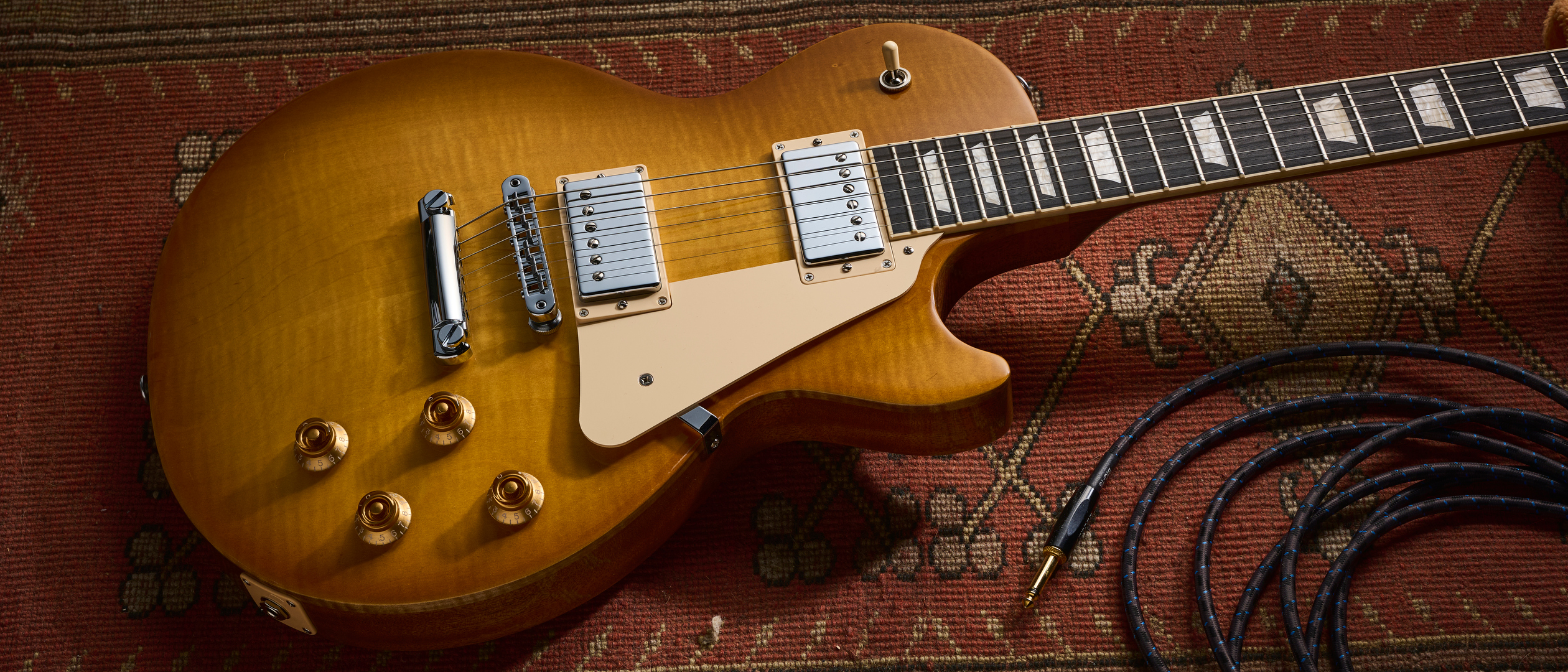
The single cutaway. The carved top. The four control knobs. The three-way selector. The neck that seems to invite one more enormous bend. And behind all that glorious noise lies a fascinating history of invention, commercial misjudgement, extraordinary craftsmanship and musical obsession.
At Musicmaker, we've loved these guitars for decades. Our current Gibson and Epiphone collection spans the stripped-back brilliance of the Les Paul Junior, the vintage elegance of the Goldtop, the legendary late-1950s Standard and the practical sophistication of the modern Les Paul Studio.
So let's go back to the beginning.
Before the sunbursts. Before the humbuckers. Before the stadiums. Before the guitar that almost disappeared became immortal.
Les Paul, The Log and the Birth of an Idea
The story begins with Lester William Polsfuss.
Known professionally as Les Paul, he was already an accomplished guitarist, inventor and recording innovator long before his name appeared on a Gibson headstock. And he had a problem.
Early amplified guitars were largely hollow-bodied instruments. They could sound wonderful, but at high volume the interaction between the loudspeaker and the resonant guitar body could produce unwanted feedback. Les Paul wanted an instrument that could sustain notes, remain controllable at higher volume and respond consistently to amplification. His experiments led to The Log, an extraordinary prototype built around a solid central piece of wood with strings, pickups and hardware attached. Sections of a conventional guitar body were added to make the thing look less alarming.
It was ingenious. It was also a little ridiculous.
Which, frankly, describes a surprising number of the greatest inventions in music. The important discovery was that a magnetic pickup could reproduce string vibration without requiring a large acoustic soundbox. Other builders, including Paul Bigsby and Leo Fender, were exploring solid-body designs too. By the early 1950s, Fender had demonstrated that commercially successful solid-body electric guitars were entirely possible.
Gibson had been watching.
And in 1952, the company introduced a guitar that would change everything.
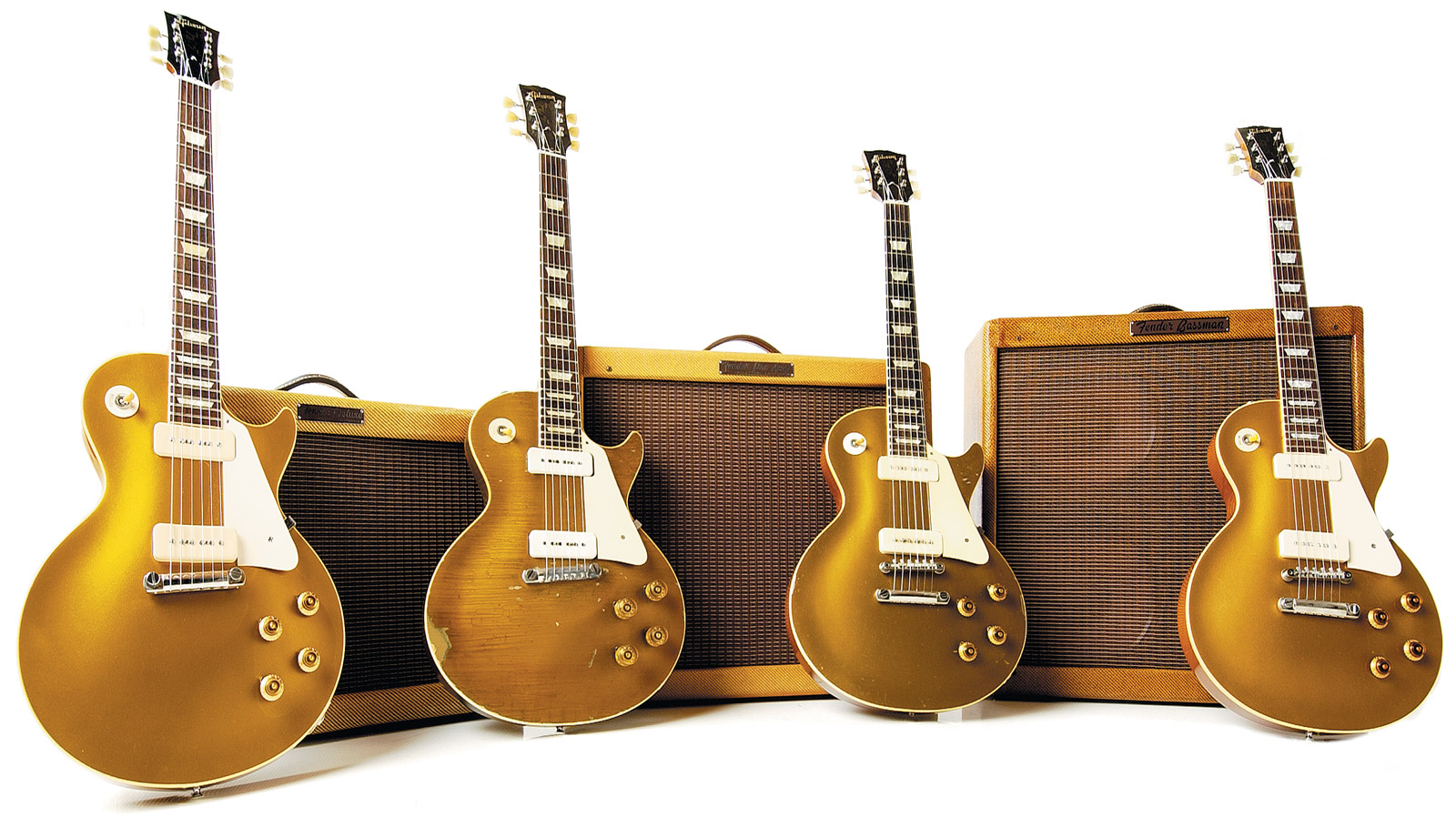
1952: The Gibson Les Paul Goldtop
The original Gibson Les Paul Model was a remarkable combination of old-world craftsmanship and new electric-guitar thinking. It featured a mahogany body with a carved maple top, a glued-in mahogany neck and two Gibson P-90 pickups.
And, of course, that extraordinary gold finish.
There was nothing particularly subtle about the Goldtop's appearance. It looked luxurious, distinctive and unmistakably Gibson. But underneath the finish was a serious piece of engineering. The mahogany-and-maple construction would become closely associated with the Les Paul. The glued-in neck reflected Gibson's traditional manufacturing approach, while the shorter 24¾-inch scale length helped establish a playing feel that differed from Fender's 25½-inch designs.
Scale length is the vibrating distance between the nut and bridge. For a given string gauge and tuning, a shorter scale generally requires less tension, making bends and vibrato feel a little easier. That's one of the reasons a Les Paul can feel so inviting when you start leaning into big blues phrases.
The original Goldtop was not perfect.
Its early trapeze tailpiece arrangement created practical difficulties, and Gibson soon began refining the hardware. The wraparound bridge appeared in 1953, followed by the Tune-o-matic bridge on the Les Paul Custom in 1954 and on the Goldtop in 1955. Those developments helped establish the bridge and tailpiece arrangements that remain familiar today.
And the P-90 pickups? Glorious.
A P-90 is a single-coil pickup, but its broad coil gives it a different construction and response from the narrower single-coils associated with many Fender designs. It can sound articulate and surprisingly sweet when played cleanly, yet become wonderfully aggressive when an amplifier begins to distort.
There's a wiry attack and muscular midrange that can make simple chords sound enormously satisfying.
But in 1957, Gibson was about to give the Les Paul an entirely different voice.
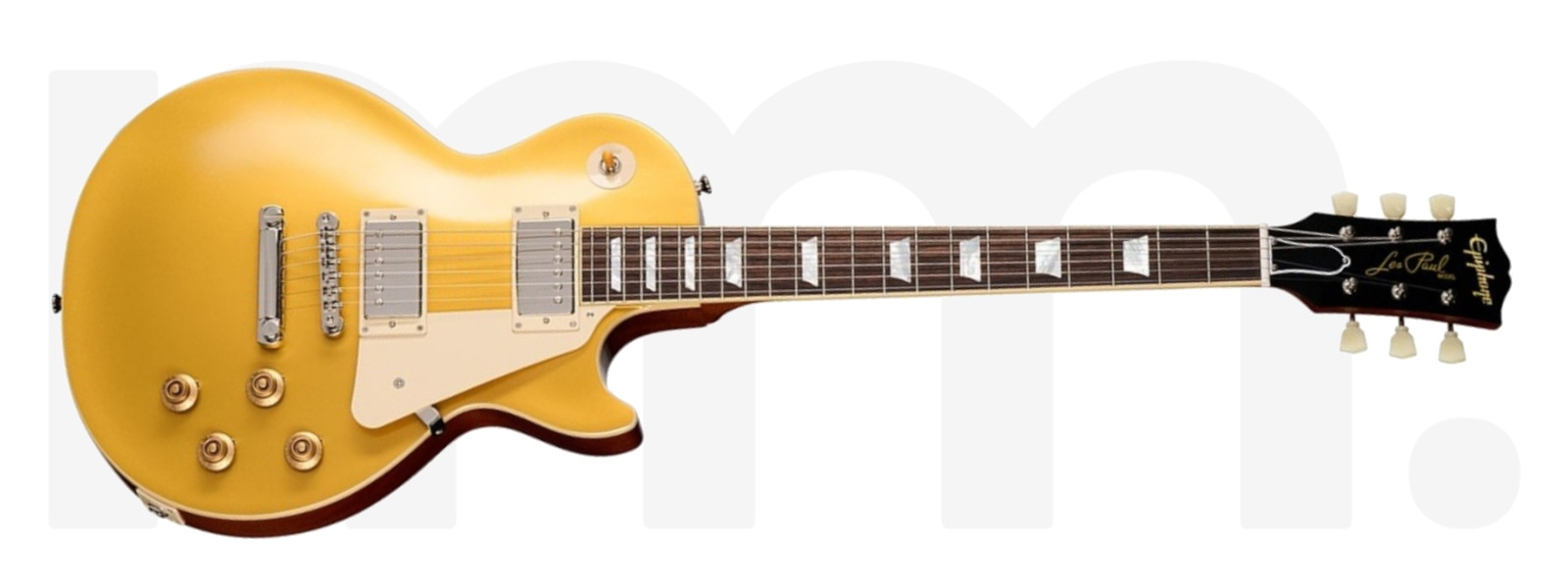
This beautiful Epiphone IGC 1957 Les Paul Goldtop Reissue is available at Musicmaker now.
1957: Seth Lover and the Humbucker Revolution
The late 1950s were an extraordinary period of experimentation in electric guitar design.
And one of the most important developments came from Gibson engineer Seth Lover. Traditional single-coil pickups can pick up unwanted electromagnetic interference, often heard as a steady background hum. Lover developed a pickup that used two coils with opposing magnetic polarity and winding relationships to cancel much of that interference while preserving the signal generated by the vibrating strings.
The humbucker had arrived.
Early Gibson examples became known as PAF pickups, named after the Patent Applied For marking on their bases. And they would eventually become some of the most celebrated pickups in electric guitar history. A traditional PAF-style humbucker can deliver a beautifully rounded sound, strong midrange and rich harmonic detail. But its real appeal becomes obvious when you plug into a valve amplifier and turn up.
The amplifier begins to compress and distort. Notes acquire weight. Sustain increases. The guitar becomes wonderfully responsive to picking dynamics. Strike a chord gently and it can remain articulate. Dig in and the whole thing begins to growl.
Importantly, the original PAF concept wasn't simply about maximum output. Many vintage examples are comparatively moderate-output pickups, and their dynamic response is part of the appeal. In 1957, Gibson fitted humbuckers to the Les Paul Goldtop.
Today, that moment is celebrated by guitars such as the Epiphone Inspired by Gibson Custom 1957 Les Paul Goldtop Reissue in Double Gold.
With its mahogany body, carved maple cap, rounded '50s neck profile and vintage-inspired humbuckers, this is a beautifully accessible way to experience the spirit of that pivotal year.
And the Double Gold finish?
Absolutely magnificent.
It looks as though it belongs in a museum.
Fortunately, you're allowed to plug it in and make a racket.
1958–1960: The Legendary Les Paul Burst
In 1958, Gibson introduced a finish that would become one of the most recognisable sights in electric guitar history.
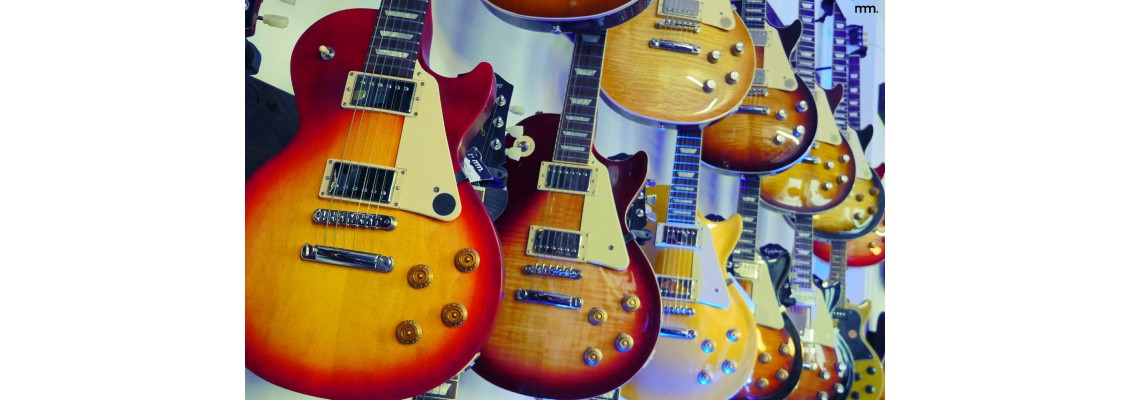
The cherry sunburst Les Paul Standard. Instead of hiding the maple beneath gold paint, Gibson began showing off the grain. Some tops were relatively plain. Others displayed spectacular flame or figuring. The finishes varied, and many original examples faded over time, creating the honey, tea, lemon and washed-cherry shades that collectors now discuss with almost alarming enthusiasm.
These guitars became known as Bursts.
The models produced between 1958 and 1960 would eventually achieve mythical status, with 1959 examples becoming especially coveted. The recipe was extraordinary: carved maple over mahogany, set neck, two humbuckers, Tune-o-matic bridge and stopbar tailpiece. But the magic wasn't simply in the specification.
Individual instruments varied.
Neck profiles differed. Pickup characteristics varied. Wood density, construction tolerances and decades of ageing all contributed to the personalities of surviving guitars. Some have become famous for their clarity. Others for their extraordinary sustain. Others because a particular musician used one to create a sound that changed guitar history.
And here's the astonishing part.
These guitars were not enormous commercial successes when they were new. They were relatively expensive, and the market was moving towards other designs. Within a few years, Gibson would abandon the original carved-top Les Paul entirely. Today, those same late-1950s guitars are among the most valuable electric instruments ever made.
Quite the turnaround.
For modern guitarists, the wonderful news is that you don't need a collector's budget to explore the sound and feel of the Burst era.
Musicmaker has the Epiphone 1959 Les Paul Standard Reissue in Royal Teaburst and the Epiphone Inspired by Gibson Custom 1959 Les Paul Standard Reissue in Sunburst Fade.
Both celebrate the late-1950s aesthetic, with vintage-inspired styling and the sort of substantial Les Paul personality that makes a player want to revisit every favourite blues and rock recording.
The Royal Teaburst is particularly beautiful, recalling the mellowed finishes of vintage instruments. The Sunburst Fade offers another interpretation of that golden period. They're guitars designed to be played, not merely admired.
Although we completely understand if you spend the first ten minutes staring at them.
The Les Paul Junior: One Pickup, Unlimited Attitude
While the Goldtop and Burst were becoming legendary, another member of the Les Paul family was developing a very different reputation.
The Les Paul Junior arrived in 1954 as a relatively affordable, straightforward instrument. Its design was gloriously simple. A flat mahogany body. A single P-90 pickup. A wraparound bridge. One volume control and one tone control. That was essentially the whole idea.
And it was brilliant.
The Junior's appeal lies in how directly it responds to the player. With only one pickup, you begin exploring tonal changes through your picking hand, guitar volume and amplifier settings. Roll back the volume and the sound can become unexpectedly delicate. Turn it up, strike the strings hard and the same guitar can become ferocious. The simplicity encourages you to listen more closely to the relationship between your hands and the instrument.
It's no surprise that the Junior became a favourite of rock and punk musicians.
Leslie West, Johnny Thunders and Billie Joe Armstrong are among the players associated with its beautifully uncomplicated character.
And at Musicmaker, the Epiphone Les Paul Junior in TV Yellow is a magnificent modern tribute to that tradition.
The classic TV Yellow finish looks sensational against the simple mahogany body, while the substantial '50s-inspired neck and wraparound bridge reinforce the vintage character. It's a guitar that encourages you to stop worrying about options and start playing.
We also have the Epiphone Les Paul Junior Double Cut in Ebony, offering a different silhouette and improved access to the upper frets.
For anyone who loves raw, responsive electric guitars, the Junior deserves serious attention.
Sometimes the simplest ideas are the ones that endure.
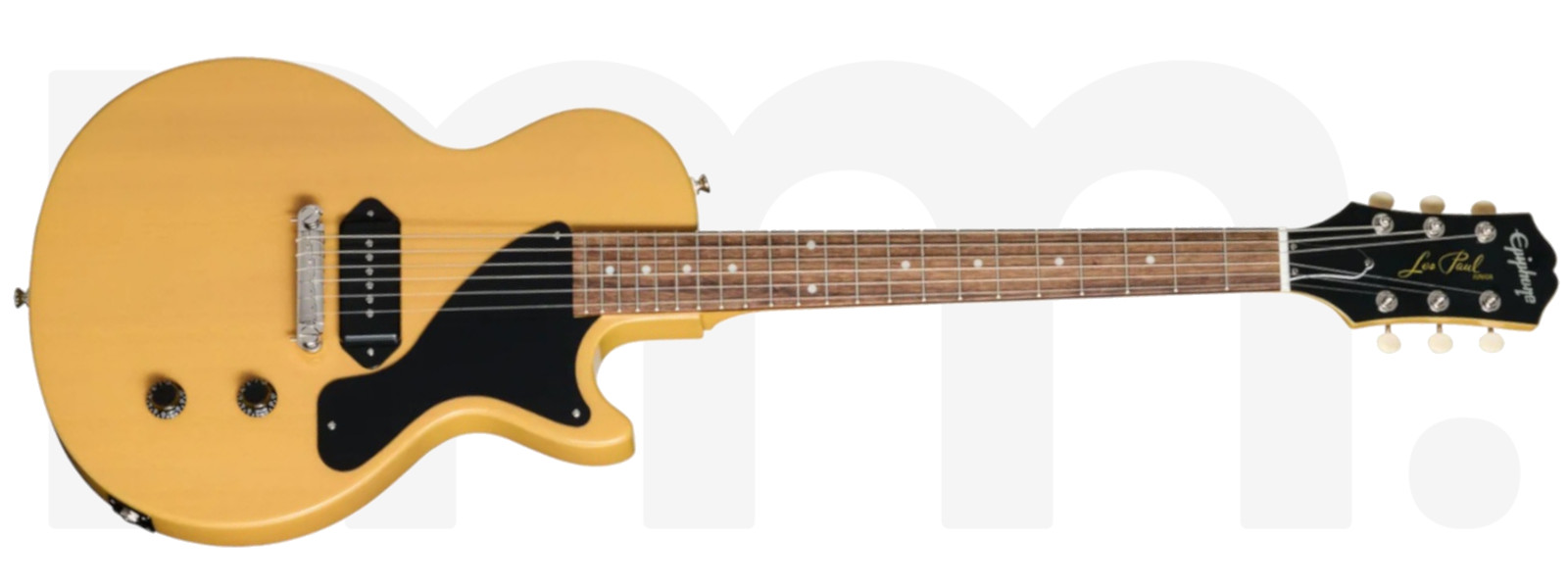
The Epiphone Les Paul Junior in TV Yellow, available at Musicmaker now.
The Les Paul Special: Two P-90s and a Whole Lot of Trouble
In 1955, Gibson expanded the stripped-back Les Paul concept with the Special.
The basic philosophy remained wonderfully direct, but the addition of a second P-90 pickup gave players greater tonal flexibility. The neck pickup offered a fuller, warmer response. The bridge pickup delivered bite and attack. And the middle position provided another useful blend of the two. The Special became a favourite of players who wanted the immediacy of a Junior with a little more tonal range.
It's a wonderfully expressive guitar.
The Gibson Les Paul Special in Vintage Cherry captures that appeal beautifully. A solid mahogany body, mahogany neck, rosewood fingerboard, two P-90 pickups and a wraparound bridge create a remarkably direct connection between player and amplifier. The Vintage Cherry finish is an absolute classic.
And for players who prefer easier access to the upper frets, the Gibson Les Paul Special Double Cutaway in Vintage Cherry offers the same essential philosophy in a different shape. That double-cutaway body has an energy all its own. It looks sharp, feels purposeful and makes those high-register blues bends a little more accessible. These are guitars with an enormous amount of personality.
Plug one into a valve amplifier, find the point where the clean sound begins to break up and spend a few minutes working the volume control.
You'll discover a surprising amount of tonal range without touching a pedal.
And if your idea of a good afternoon involves loud chords, expressive bends and the occasional deeply irresponsible guitar solo, you'll feel right at home.
1961: The Les Paul Disappears
Now comes one of the strangest chapters in the story.
By the beginning of the 1960s, Gibson was reconsidering the Les Paul design. The original single-cutaway model was relatively heavy and expensive to manufacture. Other guitars were capturing the imagination of younger musicians. In 1961, Gibson introduced a radically redesigned instrument.
The carved maple top was gone. The body was thinner, lighter and made from mahogany Two pointed cutaways provided excellent upper-fret access. The guitar initially carried the Les Paul name, but eventually became known as the Gibson SG. Les Paul's own relationship with the redesigned model was complicated, and the association was ultimately discontinued. The original carved-top Les Paul had effectively vanished.
Think about that.
The guitar now associated with some of the greatest rock recordings ever made had been taken out of production. Its most influential years were still ahead of it.
And the musicians who would rescue it were about to turn up their amplifiers.
The British Blues Explosion: The Les Paul Returns
During the mid-1960s, British musicians became fascinated by American blues.
They studied Freddie King, B.B. King, Albert King, Muddy Waters and countless other artists. They absorbed the phrasing, the expressive string bends and the emotional intensity. Then they plugged their guitars into increasingly powerful amplifiers.
One of the defining moments came in 1966.
Eric Clapton recorded with John Mayall's Bluesbreakers, using a Les Paul and Marshall amplifier combination that would become legendary. The resulting guitar sound was thick, sustaining, aggressive and remarkably expressive. The album became known among guitarists as the Beano record, after the comic Clapton is reading on its cover. Its influence was enormous.
But Clapton was only part of the story.
Peter Green developed an extraordinarily sensitive approach to the Les Paul with Fleetwood Mac. His famous 1959 Burst, later owned by Gary Moore and subsequently Kirk Hammett, became known as Greeny. The guitar's unusual middle-position sound, associated with the magnetic polarity relationship between its pickups, became part of its legend. Gary Moore would later use Greeny to produce some of the most passionate blues guitar performances ever recorded.
Then there was Jimmy Page.
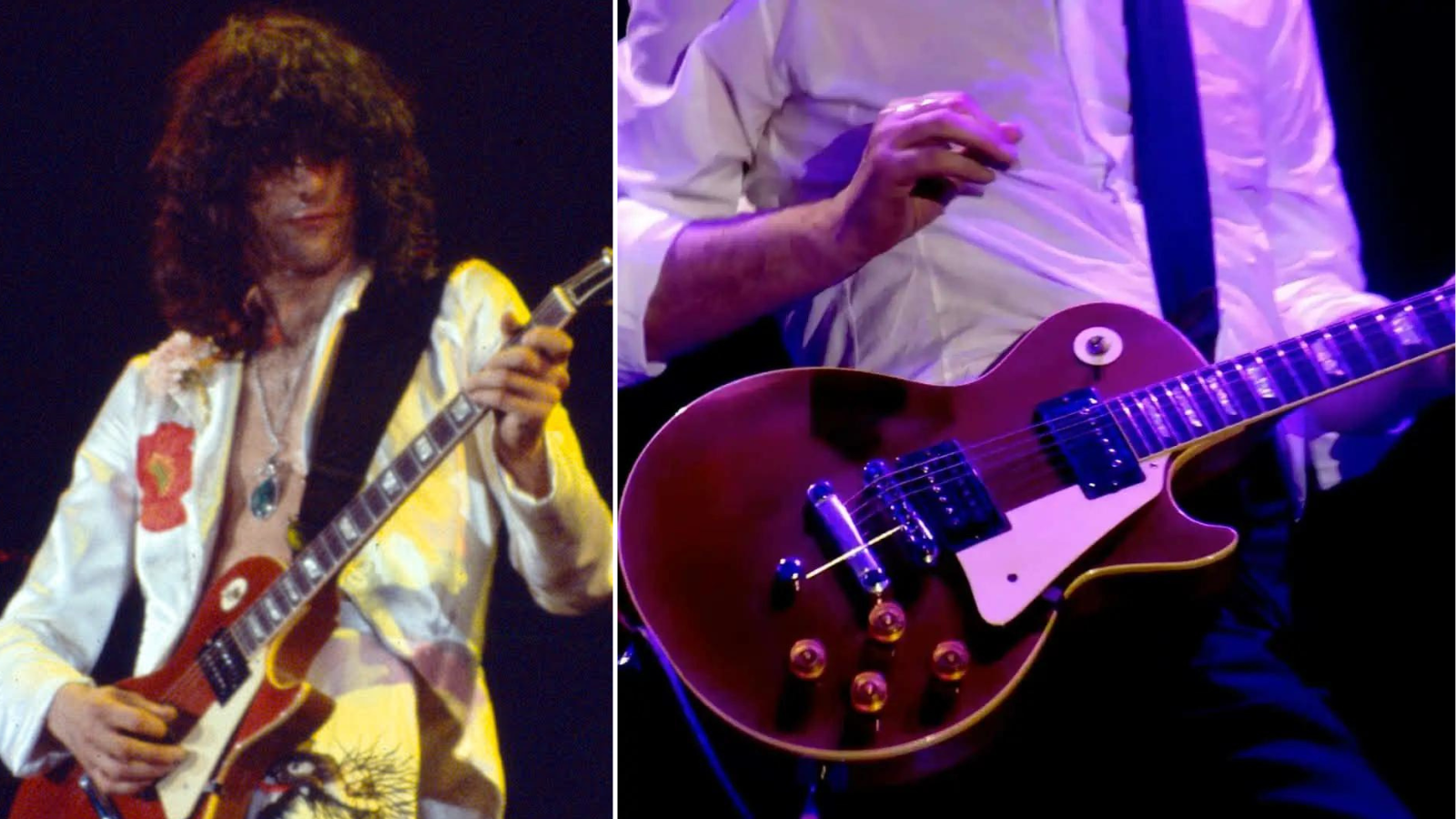
His Les Paul became inseparable from the sound of Led Zeppelin, contributing to riffs and solos that helped define the vocabulary of hard rock. Page's approach also revealed something important about great guitar tone. It wasn't simply about maximum distortion. It was about touch, arrangement, amplifier response, microphone placement and knowing when to let a note breathe. The Les Paul provided an extraordinary instrument.
The musicians supplied the imagination.
By 1968, demand for the original single-cutaway design had grown too strong to ignore. Gibson brought the Les Paul back.
And this time, it wasn't going anywhere.
The 1970s: The Les Paul Conquers Rock Music
The Les Paul's return coincided with an era of increasingly powerful rock music.
Paul Kossoff coaxed breathtaking sustain and vibrato from his Les Paul with Free. Billy Gibbons developed an instantly recognisable blues-rock vocabulary with ZZ Top. Ace Frehley made the Les Paul Custom a spectacular part of KISS's visual and musical identity. Peter Frampton, Mick Ronson, Steve Jones and countless others demonstrated the instrument's versatility. The Les Paul was equally at home producing enormous power chords, delicate blues phrases and beautifully sustained melodic lines.
The range continued to evolve too.
The Les Paul Deluxe introduced mini-humbuckers, offering a brighter, more focused alternative to full-sized humbuckers. The Les Paul Custom remained a favourite of players who appreciated its elaborate appointments and commanding appearance. And the Junior and Special continued to find enthusiastic audiences among musicians who preferred simpler instruments. By the end of the decade, the Les Paul was firmly established as one of rock music's defining guitars.
It had survived its own disappearance.
Now it was everywhere.
The Les Paul Sound: What Makes It So Special?
There's a reason guitarists continue to discuss Les Paul tone with extraordinary enthusiasm. And, occasionally, with a level of seriousness normally reserved for international diplomacy.
But what actually creates that familiar sound? The traditional Les Paul combines several important design choices. The shorter scale length influences string tension and playing feel. The set-neck construction creates a different physical design from bolt-on instruments. The mahogany body and maple cap contribute to the instrument's overall structure, mass and mechanical behaviour. The pickups translate string movement into an electrical signal.
And the guitar's controls allow players to shape that signal before it reaches the amplifier.
A neck-position humbucker usually produces a rounder, fuller sound because it senses the string at a point where the vibration has a larger amplitude. The bridge pickup tends to sound brighter and more focused, making it particularly useful for cutting through a loud band. With independent volume and tone controls, players can create dramatically different sounds without changing instruments. One of the great Les Paul tricks is to set the neck pickup for a warm, relatively clean sound and the bridge pickup for a more aggressive response.
Then switch between them during a song.
With a responsive amplifier, the guitar becomes an expressive control surface. Roll back the volume and the sound cleans up. Open it up and the amplifier begins to roar. Of course, there's no single magical ingredient. Pickups, strings, setup, amplifier, speaker cabinet and playing technique all influence the final sound.
A great Les Paul doesn't produce one fixed tone.
It gives the player an exceptionally musical range of possibilities.
Epiphone: Making Les Paul History Accessible
One of the most important developments in the modern Les Paul story is the extraordinary range of instruments available at different prices.
Not everybody can afford a vintage Gibson. Not everybody needs one. And the first Les Paul somebody owns can be just as important to their musical life as a priceless collector's instrument.
Epiphone has played a central role in making these designs accessible.
The company's modern range includes affordable beginner guitars, classic Les Paul Standards, Juniors, Customs and increasingly sophisticated vintage-inspired reissues. At Musicmaker, the Epiphone Les Paul Melody Maker in Sunset Yellow is a wonderfully approachable introduction.
It's light-hearted, affordable and designed to encourage new players to get started. For musicians who want the classic late-1950s look and feel, the 1957 Goldtop and 1959 Standard reissues offer a more historically focused experience. And for players who love the directness of a single pickup and a wraparound bridge, the Junior remains one of the most appealing electric guitar designs ever created.
There's something deeply satisfying about that range. A teenager picking up their first Epiphone and a lifelong guitarist exploring a premium vintage-inspired reissue are participating in the same musical tradition.
The price tags are different.
The excitement of plugging in is remarkably similar.
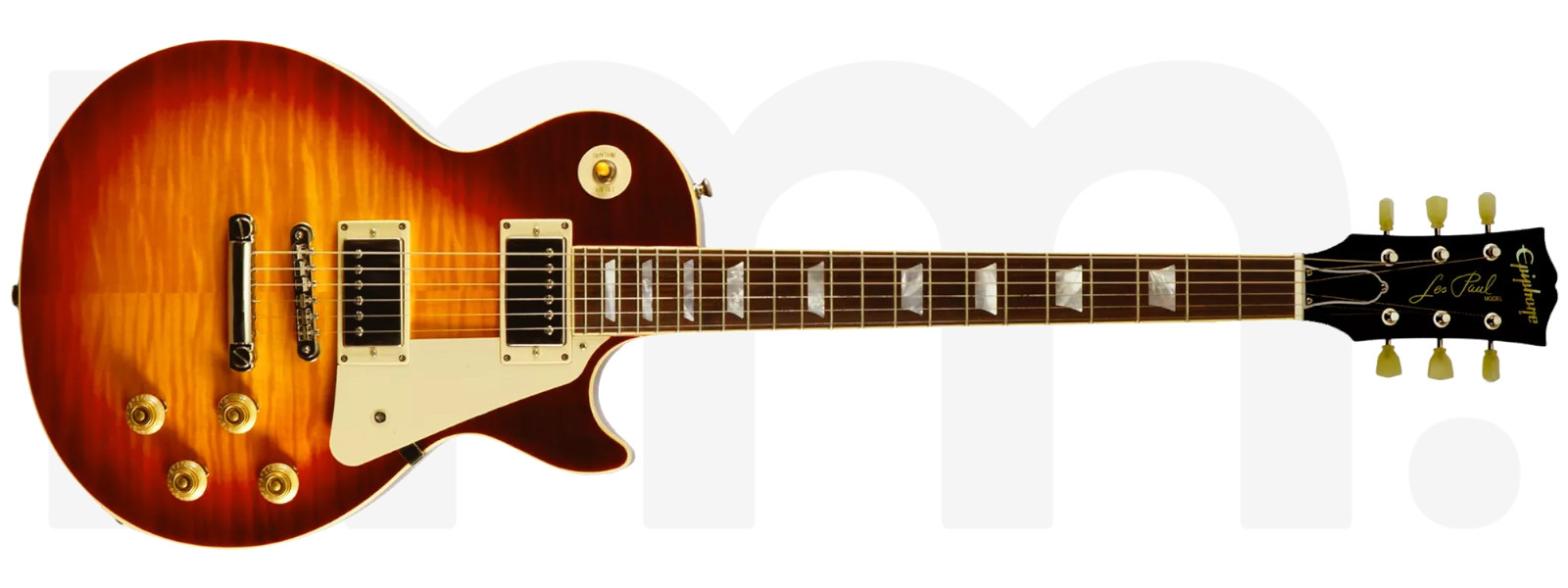
Check out the gorgeous Epiphone 1959 Les Paul Standard Reissue in Musicmaker today.
The Modern Gibson Les Paul: Tradition Still Evolving
The Les Paul hasn't stood still. Modern players ask for features that would have seemed unusual in the late 1950s.
Lighter bodies. Comfortable neck profiles. Improved access to higher frets. More versatile electronics. And instruments that remain enjoyable to play through long rehearsals and performances. Gibson has continued exploring those ideas while preserving the fundamental character of the design.
The Gibson Les Paul Studio Figured in Washed Cherry Sunburst represents a particularly appealing modern approach.
The Studio family focuses on delivering the essential Gibson Les Paul experience with a practical, working-musician sensibility. The figured top adds a welcome touch of visual luxury, while the design remains rooted in the familiar Les Paul tradition. It's a guitar built for people who intend to use it.
And that's exactly how we like them.
The modern Les Paul range proves that a classic design doesn't have to remain frozen in time.
It can evolve. It can respond to the needs of contemporary musicians. And it can continue inspiring players without losing the qualities that made it famous in the first place.
Which Les Paul Should You Choose?
The beautiful thing about the Les Paul family is how much musical territory it covers.
If you're drawn to the raw, immediate character of a P-90 and love the idea of a guitar with almost no unnecessary complications, the Junior is an extraordinary place to begin.
If you want that same directness with the flexibility of two pickups, the Special is difficult to resist.
For players captivated by the elegance of the 1950s Goldtops, the Epiphone 1957 reissue offers a gorgeous tribute to one of the most important periods in Gibson history.
If the legendary Burst era is your obsession, the 1959-inspired Epiphone Standards deserve serious attention.
And for musicians seeking a contemporary Gibson with traditional Les Paul character, the Studio family provides a wonderfully practical route into the range.
But here's the thing. You can spend weeks comparing specifications. You can discuss pickup magnets, neck profiles and bridge designs until everybody else in the room quietly leaves. Eventually, you've got to play the guitars. Feel the neck. Hear the pickups. Try the volume controls. See how the instrument responds to your hands. Because the right Les Paul isn't necessarily the most expensive one.
It's the one that makes you forget what time it is.
Find Your Les Paul at Musicmaker Dublin
At Musicmaker, we've been helping Irish musicians find instruments they love since 1981. And few guitars generate quite the same excitement as a Les Paul.
There's something about opening a case and seeing that familiar shape. The gold finish catching the light. The cherry sunburst revealing the maple beneath. The beautiful simplicity of a Junior. The deep red of a Gibson Special. It's guitar history you can actually pick up and play.
Our Gibson and Epiphone collection includes instruments inspired by several of the most important chapters in the Les Paul story.
From approachable beginner guitars to beautifully crafted professional instruments, there's a remarkable amount to explore.
Browse Gibson and Epiphone Les Paul guitars at Musicmaker Ireland.
Enjoy free shipping around Ireland on orders over €15.
Or come and see us at Musicmaker, 29 Exchequer Street, Dublin 2.
We'll happily talk Goldtops, P-90s, humbuckers, neck profiles, amplifiers and the peculiar emotional experience of hearing a Les Paul through a properly driven valve amp. And if you find yourself playing the same riff for twenty minutes?
Don't worry.
We've all been there.
The Legend Lives On
The Gibson Les Paul has one of the greatest comeback stories in musical instrument history.
Born in 1952. Refined throughout the 1950s. Effectively discontinued in 1961. Rediscovered by a generation of musicians who transformed electric guitar music. And resurrected in 1968, just as rock was entering one of its most extraordinary periods.
Since then, the Les Paul has appeared on countless recordings, inspired generations of guitarists and become one of the most enduring designs in music.
But its greatest achievement isn't its collector value. Or its association with famous musicians. Or even its extraordinary history.
It's the fact that, more than seventy years after the first Goldtop appeared, somebody can still pick one up, plug it into an amplifier and discover a sound they've never made before. The Goldtop began the story. The Burst became the legend.
The players made it immortal.
And the next chapter is still being written.
Musicmaker — Independent minds. Serious gear. Glorious noise.