
Roland RP107: A Beautiful Digital Piano for Christmas 2026
An 88-key weighted keyboard, expressive Roland piano sound and an elegant upright-style cabinet make the RP107 a compelling choice for a musical home. Here's why this digital piano deserves a closer look at Christmas — and long after the decorations come down.
There are certain Christmas presents that change the rhythm of a household. Not necessarily on Christmas morning, when the wrapping paper is everywhere, somebody's looking for batteries and the kettle has been boiled approximately fourteen times. The real change happens a little later. It's the sound of somebody working out a melody in the sitting room. A child returning to the same four bars until they finally get them right. An adult who hasn't touched a piano since school discovering that their fingers remember rather more than expected.
Perhaps somebody sits down after dinner and plays a few chords. Nothing particularly elaborate. Just enough to make everyone stop talking for a moment. Then, a few weeks into January, the instrument is still being played.
That's when you know you've chosen well.
For anyone thinking about bringing a proper piano into the home this Christmas, the Roland RP107-BKX Digital Piano deserves serious consideration.
It combines a full-sized weighted keyboard, Roland's SuperNATURAL piano sound technology, an elegant cabinet and a collection of thoughtful features designed to make everyday playing enjoyable. It's also the sort of instrument that makes sense beyond the festive season. Beginners can develop their technique on it, returning players can rediscover familiar music, and more experienced pianists can enjoy a convenient home instrument that doesn't require regular tuning.
At Musicmaker Dublin, we've been helping people find their instruments since 1981. And when somebody asks us about buying their first proper piano, there's one question we always think is worth considering.
Will this instrument make them want to sit down and play tomorrow?
The RP107 makes a persuasive case.
A Proper Piano Feeling, Right from the First Note
When you're choosing a digital piano, it's tempting to begin with the number of sounds, the Bluetooth features or the cabinet finish.
Those things matter. But the keyboard itself is where the relationship between player and instrument begins. A piano isn't simply a collection of notes arranged from left to right. The way the keys respond to the hands is central to developing control, expression and confidence. Press a key gently and you should be able to produce a quieter sound. Play with greater force and the instrument should respond accordingly. Move between soft and loud passages, and the keyboard needs to give you enough control to make those changes feel intentional.
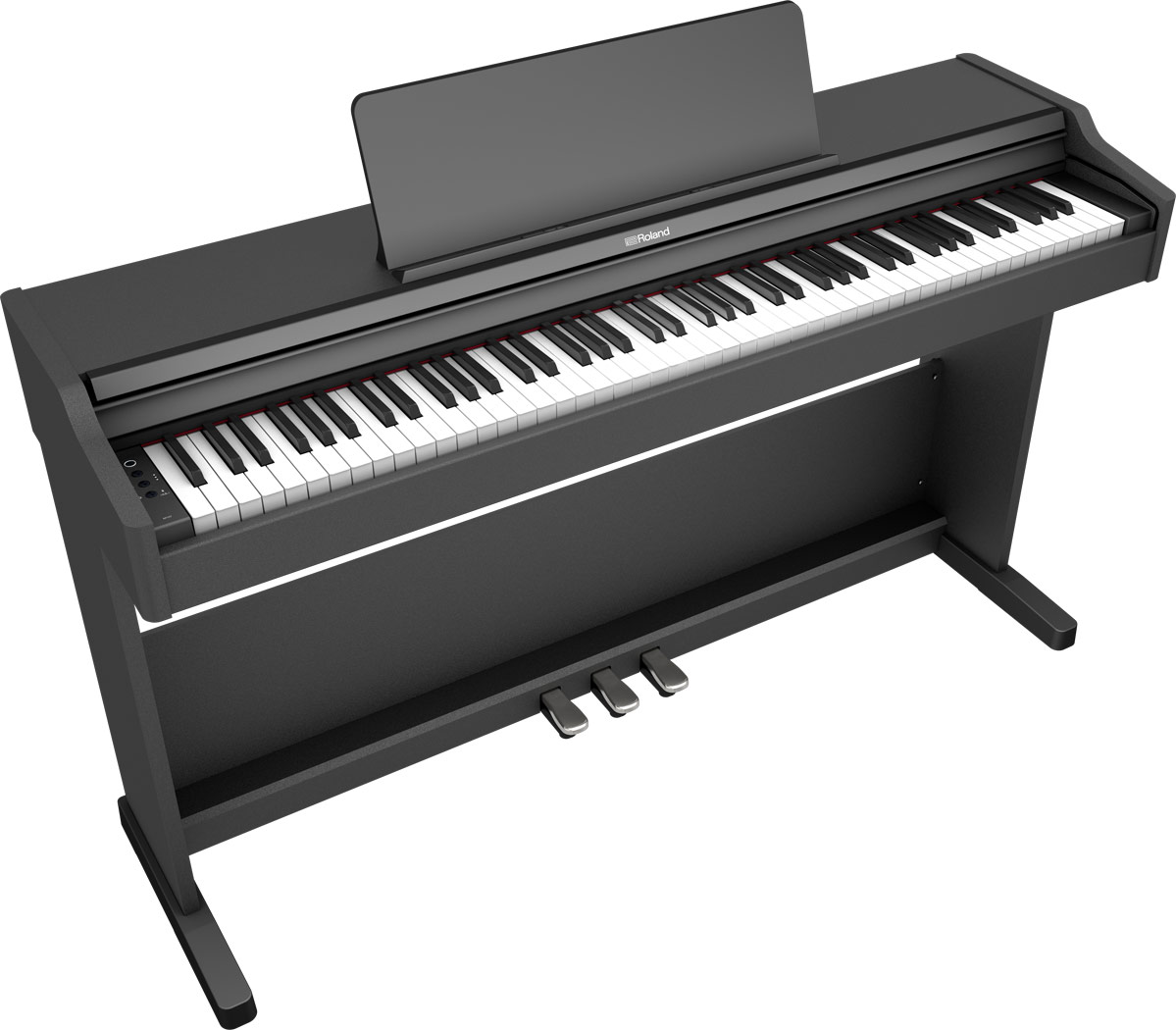
The Roland RP107 uses the company's PHA-4 Standard keyboard, with 88 weighted keys, escapement simulation and an Ivory Feel surface.
Those details deserve a little explanation.
Why 88 Weighted Keys Matter
An acoustic piano uses a mechanical action to transfer movement from the key to a hammer, which strikes the strings. That mechanism gives the player physical resistance and a particular sense of movement beneath the fingers. A digital piano can't reproduce every detail of a complex acoustic action, but a well-designed weighted keyboard can provide a useful and expressive approximation.
The RP107's PHA-4 Standard action is designed to give the player that familiar sense of weight and control, which matters enormously for somebody learning piano technique. On a lightweight, unweighted keyboard, it's possible to develop habits that don't transfer comfortably to an acoustic piano. The fingers and hands encounter a different resistance, and controlling dynamics can feel unfamiliar.
With the RP107, a developing pianist has a keyboard that encourages proper attention to touch, articulation and phrasing from the beginning.
The full 88-key range matters too. It gives students access to the entire compass of a standard modern piano, so they aren't forced to work around missing notes as their repertoire becomes more ambitious. From early exercises and simple melodies to classical repertoire, jazz voicings and contemporary arrangements, there's room to grow.
Escapement and Ivory Feel
Roland's PHA-4 Standard action includes escapement simulation, a feature intended to recreate an aspect of the mechanical sensation found in grand piano actions. It isn't a claim that the RP107 feels identical to a concert grand. Those are substantial acoustic instruments with complex physical mechanisms.
But it does demonstrate the attention Roland has paid to the playing experience.
The Ivory Feel key surfaces add a subtly textured finish, helping the keyboard feel comfortable and controlled beneath the fingers. These are small details when you're looking at a photograph. They become much more meaningful when you're practising scales, working through a difficult passage or trying to bring a melody forward without overpowering the accompaniment.
And those are exactly the moments when a piano's keyboard earns its keep.
Roland SuperNATURAL Piano Sound: Expression Over Gimmicks
A piano can have an excellent keyboard and still leave the player feeling disconnected if the sound doesn't respond convincingly. That's where Roland's SuperNATURAL Piano technology comes in.
The RP107 uses this sound engine to create an expressive piano voice that responds to the player's touch. Rather than treating every note as a simple on-or-off event, the system is designed to reproduce changes in tonal character and dynamics as the player moves between quieter and stronger playing.
Think about a familiar piano passage where the right-hand melody needs to sing above a softer left-hand accompaniment. The player isn't merely producing two groups of notes at different volumes. They're shaping a musical relationship between them. The melody might begin gently, grow in intensity and then settle back into a quieter phrase. The accompaniment needs to support that movement without drawing attention away from it. A responsive piano sound helps make those choices audible.
The RP107 also offers 256-note maximum polyphony.
Polyphony describes how many notes or voices the instrument can generate simultaneously. On a digital piano, sustained notes, layered sounds and the interaction of the damper pedal can all contribute to the number of voices being used. A generous polyphony specification gives the sound engine room to handle more complex passages and overlapping notes without prematurely cutting off sustained tones under normal playing conditions.
For the player, the important result is simple: you can concentrate on the music rather than worrying about the instrument running out of notes.
More Than One Sound, Without Losing the Plot
Although the RP107 is very much a piano-first instrument, it isn't restricted to a single acoustic piano tone. There are 15 sounds accessible directly from the instrument's front-panel controls, with a wider selection of 324 tones available through the Roland Piano App. That opens the door to electric pianos, strings and other useful sounds.
It's a lovely feature for someone interested in contemporary music, songwriting or experimenting with arrangements.
A warm electric piano can change the character of a familiar chord progression. A layered sound can make a simple melody feel fuller. Different voices can encourage a player to approach the same piece in a new way. But the RP107 doesn't bury its central purpose beneath hundreds of buttons.
You can simply switch it on and play piano. And sometimes that's exactly what you want.
A Digital Piano That Looks at Home in the Home
There's another reason the RP107 is an attractive Christmas choice.
It looks like a piano.
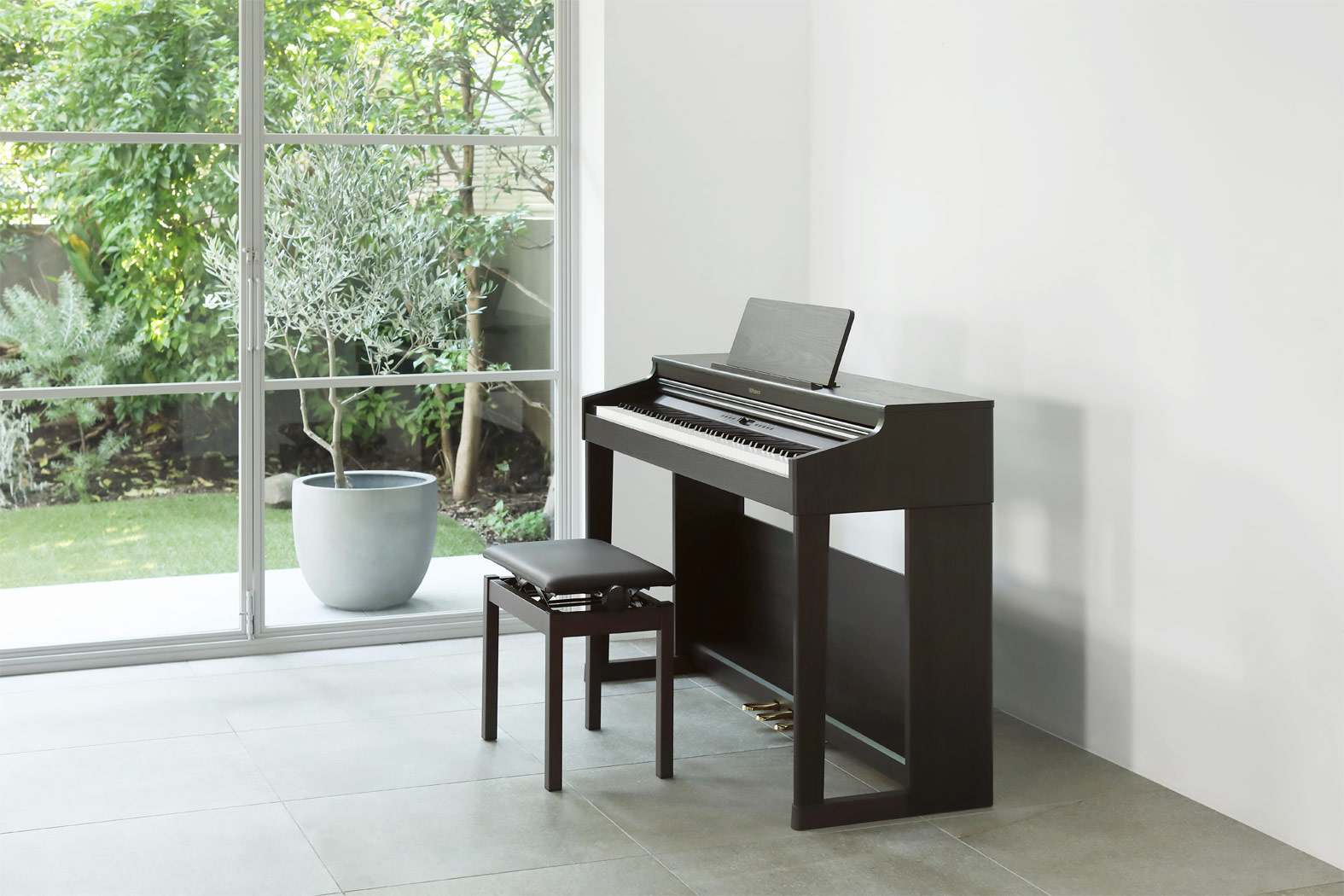
Not a keyboard balanced on a temporary stand. Not an instrument that has to be packed away every time the room is needed for something else. The RP107 has a traditional upright-inspired cabinet with a contemporary black finish, an integrated music rest and a sliding keyboard cover. It's understated, tidy and designed to remain in place. That may sound like a purely aesthetic consideration, but it can have a real influence on how often an instrument gets played.
If a keyboard has to be taken out of a cupboard, assembled, connected and cleared away afterwards, practising becomes an event. With a home piano that's ready to play, the barrier is much lower.
Ten minutes before dinner? Sit down. A quick run through a piece before leaving for work? Go ahead. An unexpected idea for a melody? The instrument is waiting.
That convenience is especially valuable for beginners, where frequent, manageable practice sessions can be more productive than occasional marathon efforts.
Compact, But Still a Serious Piece of Furniture
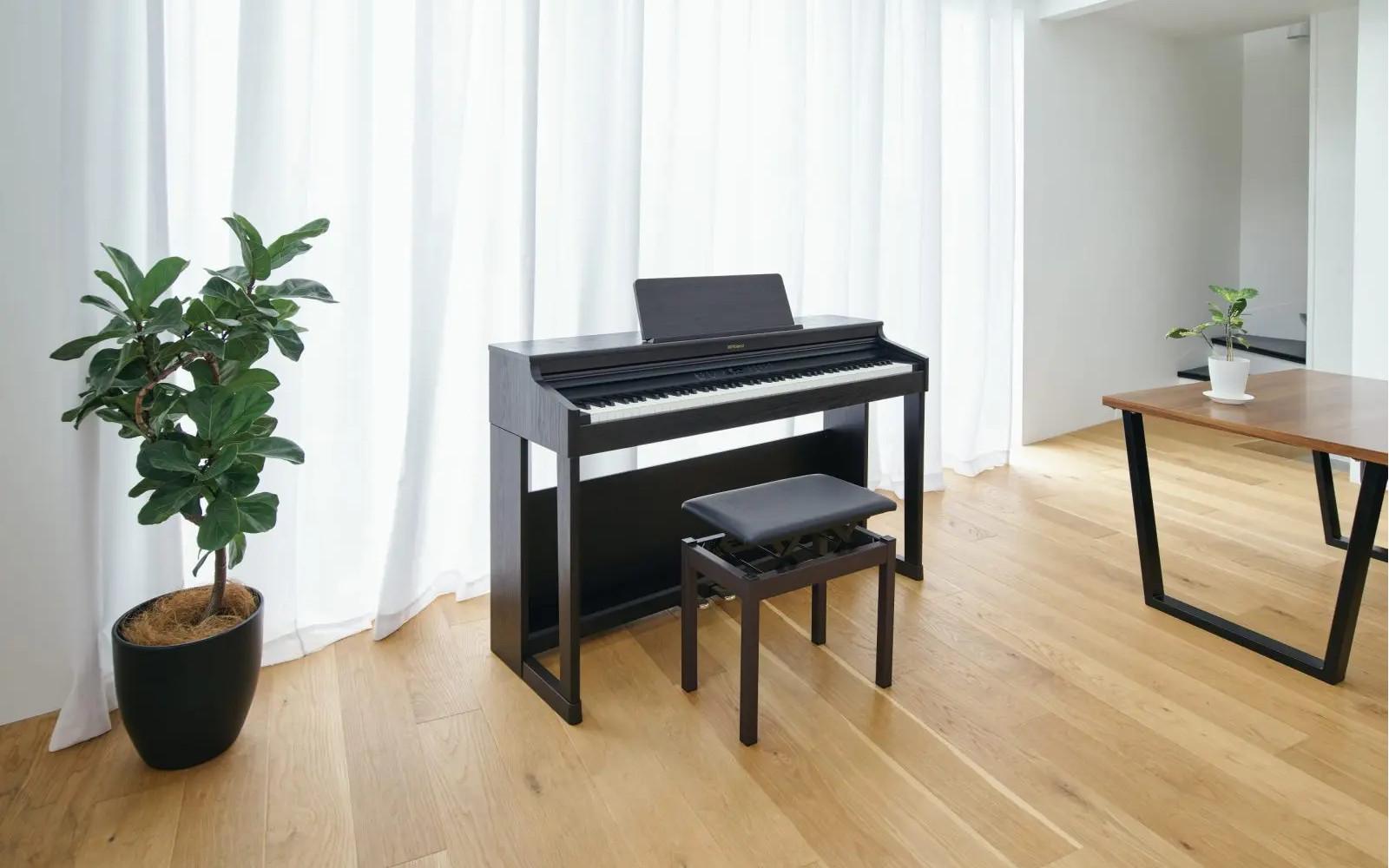
The RP107 measures approximately 137.8 cm wide, 41 cm deep and 98.2 cm high with its music rest in place. That relatively shallow depth helps it fit into rooms where a traditional acoustic upright might feel imposing. It weighs approximately 37 kg, so this is not an instrument designed to be carried from rehearsal to rehearsal.
It's a home piano. And that's part of its appeal. Once assembled and positioned, it becomes a permanent part of the room.
If you're considering the RP107 as a Christmas gift, it's worth planning where it will live before the big day. Make sure there's sufficient space for the cabinet, bench and comfortable movement around the instrument. And remember that, like any electronic instrument, it needs access to a suitable power socket. A little preparation can make Christmas morning considerably more enjoyable.
Especially if the recipient is already desperate to start playing.
Built-In Speakers and the Joy of Playing Without Headphones
There's something satisfying about sitting at a piano and hearing the sound fill the room. The RP107 has a built-in stereo speaker system with two 12 cm speakers and a rated output of 8 watts per channel. It's designed for everyday home playing, practice and enjoyment. The speakers mean there's no need to purchase a separate amplifier or external sound system just to get started.
You can sit down, switch on and play.
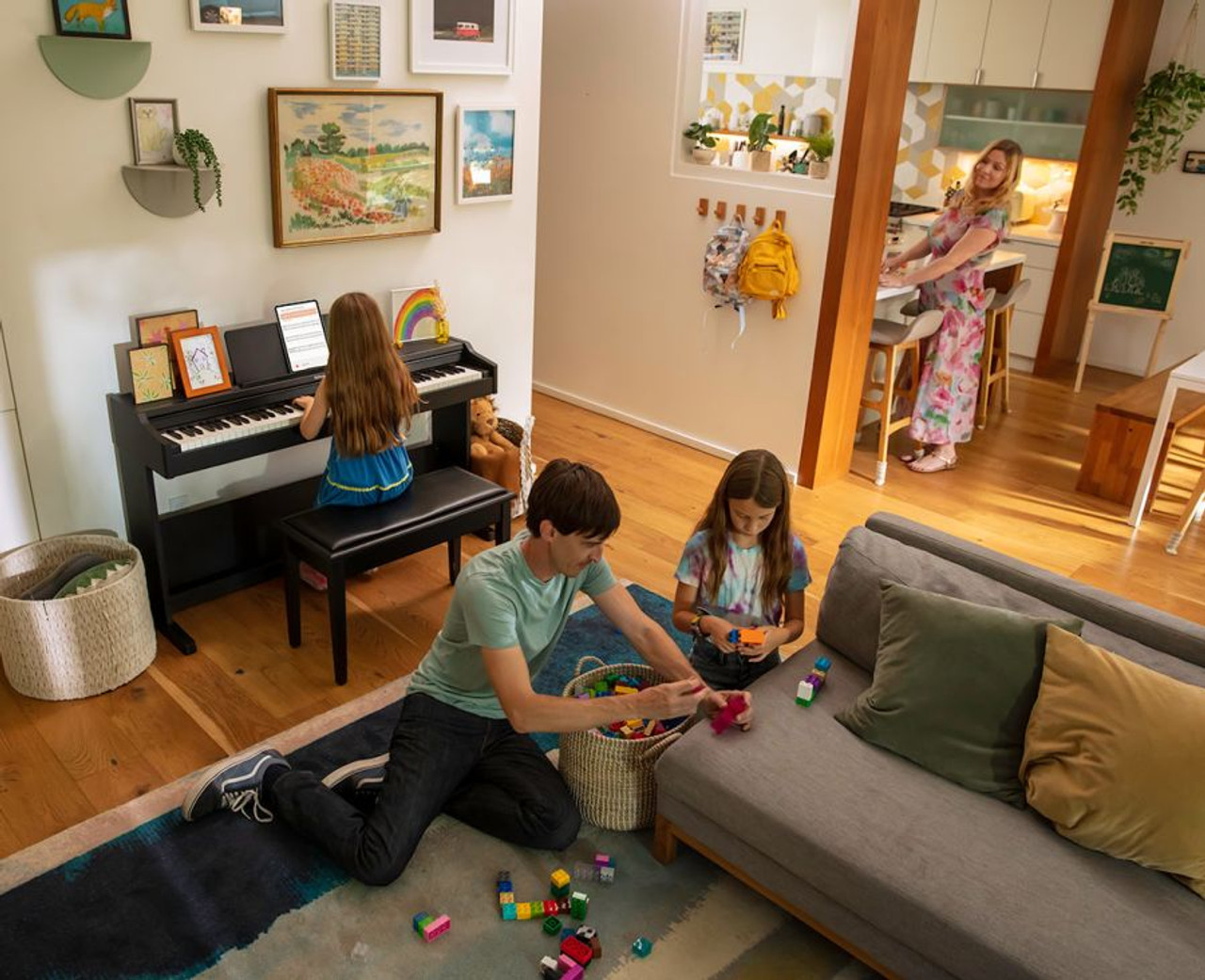
And while the RP107 isn't intended to fill a concert hall, its built-in amplification is entirely appropriate to its role as a compact home piano. The stereo presentation also contributes to a more spacious listening experience than a single small speaker could provide. For families, that matters. One person might be learning a new piece while another listens from the sofa. Somebody might be working through a Christmas carol while the rest of the household joins in. Those little moments are part of what makes having a piano at home enjoyable.
But of course, not every household is ready for a spirited rendition of the same eight bars at half past ten in the evening.
Which brings us to one of the RP107's most practical features.
Two Headphone Sockets: Peace in Our Time
Every developing pianist has to repeat things. Scales. Exercises. Difficult transitions. The left-hand passage that absolutely refuses to cooperate.
And then repeat them again.
It's an essential part of learning.
It's also a useful reminder that the people sharing your home may not wish to hear the opening of the same piece forty-seven times before breakfast. The RP107 provides two headphone connections, allowing quiet practice without relying on the built-in speakers. Roland also includes Headphones 3D Ambience, designed to create a more spacious listening experience when using headphones.
That's useful for late-night practice, shared accommodation and homes where several people have different schedules. It also makes the instrument more flexible for lessons. A student and teacher can both listen through headphones, allowing them to work together without disturbing the rest of the room. And because the piano's volume is electronically controlled, there's no need to compromise between playing expressively and keeping the household happy.
A particularly welcome development for anyone who remembers learning piano on an acoustic upright in a small Dublin sitting room.
The neighbours may never know how fortunate they are.
Three Pedals, Proper Piano Technique
One detail that distinguishes the RP107 from many basic keyboards is its integrated three-pedal arrangement. It includes damper, soft and sostenuto pedals. These are familiar features of acoustic piano playing, and they're valuable for developing musical technique. The damper pedal is the one most pianists encounter first. On an acoustic piano, it lifts the dampers from the strings, allowing notes to continue ringing after the keys are released. On the RP107, the damper pedal provides the corresponding sustain behaviour, with continuous detection allowing more nuanced pedal control.
That matters when learning to connect phrases without allowing everything to blur together.
Good pedalling is a skill in its own right.
Too little and a passage can sound dry or disconnected. Too much and the harmony becomes muddy. The soft pedal offers another expressive option, while the sostenuto pedal allows selected notes to be sustained in a different way from the standard damper pedal. Not every beginner will use all three immediately.
That's perfectly fine. The important thing is that they're available when the music begins to demand them. A piano should give a developing player somewhere to go.
The RP107 has been designed with that progression in mind.
Bluetooth, the Roland Piano App and Learning at Home
Technology is most useful when it makes playing easier or more enjoyable. The RP107 includes Bluetooth audio and MIDI connectivity, allowing it to work with compatible smartphones and tablets.
Those two Bluetooth functions serve different purposes.
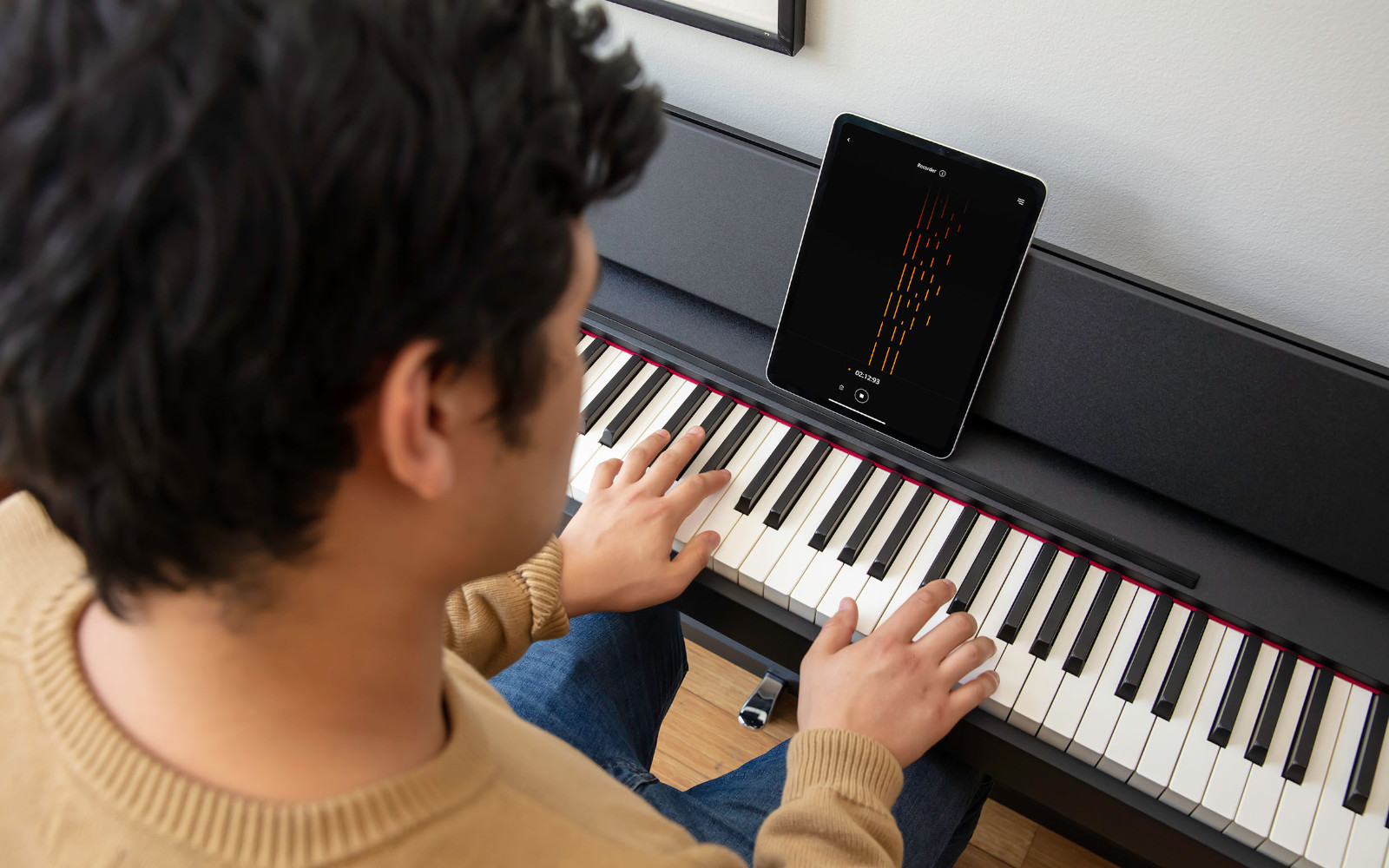
Bluetooth audio allows music from a compatible device to play through the piano's speaker system. That's useful for practising alongside recordings, working out parts by ear or simply enjoying music through the instrument. Bluetooth MIDI, meanwhile, allows compatible apps to communicate musical performance information with the piano.
Instead of transmitting an audio recording of what you're playing, MIDI represents musical events such as note activity.
That makes it particularly useful for learning software and interactive musical tools.
Roland Piano App
The RP107 works with the Roland Piano App, which provides access to instrument settings and additional learning features. The app can help players explore the RP107's wider range of sounds, adjust certain piano characteristics and work with compatible educational functions. For someone beginning lessons, this can make the instrument feel more approachable.
It's also useful for families who want to explore the piano's features without spending an afternoon memorising button combinations.
The instrument includes a metronome, internal songs and practice-oriented functions. Roland specifies 377 internal songs, including lesson material. That gives learners useful material to explore alongside their own books, exercises and teacher-assigned repertoire. Of course, an app isn't a substitute for musical curiosity, attentive listening or a good teacher. But it can be an excellent companion.
And if it encourages somebody to sit down for another fifteen minutes of practice, that's a very worthwhile result.
Twin Piano: A Clever Idea for Lessons
One of the RP107's particularly thoughtful features is Twin Piano mode. This divides the keyboard into two areas with corresponding pitch ranges, allowing two people to play in similar registers at the same time.
It's especially useful for teaching.
Instead of a teacher demonstrating a passage at one end of the keyboard while the student tries to copy it at the other, both can work in comparable ranges. That can make exercises, demonstrations and shared practice more straightforward. It's also a lovely feature for families with two learners. Perhaps a parent and child are beginning together. Perhaps two siblings are taking lessons. Perhaps one person knows a little more and enjoys helping the other.
Twin Piano gives them a practical way to share the instrument. And that's a very appealing thought at Christmas.
A present that encourages people to spend time making music together has a rather good chance of becoming part of family life.
Is the Roland RP107 a Good Piano for Beginners?
In many cases, yes.
The RP107 offers several qualities that are particularly useful for a developing pianist: a full-sized weighted keyboard, expressive piano sound, three pedals, headphone practice and learning features. Most importantly, it provides an instrument that doesn't immediately need replacing when the player moves beyond their first exercises.
That's worth thinking about when comparing a cabinet-style digital piano with a cheaper portable keyboard.
An inexpensive keyboard can be a wonderful introduction to music. It may be exactly the right choice for somebody who wants to experiment, learn a few chords or explore different sounds. But a student intending to pursue piano lessons seriously will benefit from a keyboard action that supports the development of touch and dynamics.
The RP107 addresses that need directly. It also makes daily practice convenient. No external amplifier is required. The pedals are integrated. The music rest is already there. The instrument has a dedicated place in the home.
And when the learner wants to practise quietly, headphones are ready to help.
That combination is difficult to overlook.
What About Returning Players?
The RP107 is also a compelling option for adults returning to piano after a long break. Perhaps you learned as a child, played for a few years and gradually drifted away from the instrument. Perhaps you've always wanted to play but never had the space for an acoustic piano. Or perhaps you simply miss having a keyboard in the house.
The RP107 gives you a familiar 88-key layout and weighted feel without the ongoing tuning requirements of an acoustic instrument.
You can practise quietly, explore different sounds and reconnect with music at your own pace. There's no pressure to become a concert pianist. Sometimes it's enough to learn a favourite song, work through a few jazz chords or discover that you still remember the opening of a piece you learned twenty years ago.
Those are perfectly good reasons to own a piano.
Digital Piano or Acoustic Piano? A Few Honest Considerations
We love acoustic pianos. There's something extraordinary about the physical relationship between a hammer, a string, a soundboard and the room around it. A well-maintained acoustic piano has a depth of mechanical and acoustic interaction that digital instruments seek to represent through sophisticated engineering.
The RP107 doesn't replace every aspect of that experience.
But it offers several practical advantages that make a great deal of sense in a modern home. It doesn't need regular tuning. Its volume can be adjusted. It can be played through headphones. It provides Bluetooth connectivity and learning features. And its compact cabinet is easier to accommodate than many acoustic uprights.
There are trade-offs, of course.
The RP107's speakers and sound engine are designed for home use, not the projection of a large acoustic grand. Its PHA-4 Standard keyboard is a capable digital action, but it isn't the same mechanical system found in a premium acoustic piano. And because it's a fixed cabinet instrument, it isn't the obvious choice for somebody who regularly needs to transport a piano to gigs.
If portability is the priority, a stage or portable digital piano may be more appropriate. That's why it's worth looking at the broader digital piano collection at Musicmaker before making a decision. The best piano is the one that suits the player's musical goals and everyday circumstances.
For somebody looking for an elegant, permanently installed home instrument, the RP107 makes a very strong case.
A Christmas Present With a Future
There are plenty of wonderful things to give a musician at Christmas. A new set of headphones. A favourite music book. An accessory they've been meaning to replace. But a piano is a different sort of commitment.
It's an invitation to learn something that can become part of everyday life.
The first few weeks might be filled with simple melodies and slightly hesitant chords. A few months later, those melodies may have developed into complete pieces. A year after that, the player could be exploring music they once assumed was beyond them.
Progress is rarely perfectly smooth, of course. There will be difficult passages, forgotten practice sessions and days when the hands seem determined to disagree with one another.
That's normal.
The important thing is having an instrument that encourages you to return. And this is where the RP107's combination of sound, keyboard feel and convenience becomes particularly persuasive. It isn't simply designed to impress somebody for five minutes in a showroom. It's designed to be played regularly.
On Christmas morning, certainly. But also on an ordinary Tuesday in February, a rainy Sunday in April and a quiet evening in September when somebody decides it's time to learn a new piece.
That's the kind of musical gift we like.
Discover the Roland RP107 at Musicmaker Dublin
The Roland RP107-BKX Digital Piano in Contemporary Black brings together the things that matter most in a home piano.
An expressive 88-key PHA-4 Standard keyboard. Roland SuperNATURAL piano sound. A handsome upright-style cabinet. Built-in stereo speakers, three pedals, Bluetooth connectivity and thoughtful features for learning and quiet practice.
It's an instrument with a clear purpose. To make having a proper piano at home practical, enjoyable and musically rewarding. If you're considering one as a Christmas present, we'd be delighted to help you explore the options.
You can view the Roland RP107-BKX at Musicmaker, browse our full digital piano range, or read our Christmas 2026 digital piano guide for a wider look at instruments for different homes and budgets.
For more festive ideas across the shop, explore our Christmas Gifts for Musicians in Ireland 2026.
As this is an oversized cabinet piano, please check home-delivery arrangements and the applicable surcharge with the Musicmaker team before ordering.
And if you're in Dublin, come and see us at 29 Exchequer Street.
We've been helping people make music since 1981, and few things give us more pleasure than seeing somebody find an instrument they genuinely want to play.
Christmas is a lovely time to begin.
The really good part is everything that comes afterwards.
Independent minds. Serious gear. Glorious noise.