
Ready, Set, Bow! Let’s Find Your First Violin
From choosing the correct violin size to understanding bows, rosin, strings and student outfits, Musicmaker's guide to beginning a wonderful musical adventure.
There's something rather extraordinary about the violin. Four strings, a beautifully shaped wooden body and a bow strung with horsehair have given us centuries of remarkable music. From the grand concert halls of Europe to the wonderfully chaotic energy of an Irish traditional music session, the violin has found its way into almost every corner of our musical culture.
Buying your first violin, however, can feel considerably more complicated than listening to one. Suddenly, you're confronted with fractional sizes, different types of wood, mysterious little blocks of rosin and something called a frog that, reassuringly, has absolutely nothing to do with amphibians.
For parents buying an instrument for a child, the choices can be particularly intimidating. How much should you spend? What size does your child need? Does a beginner require an expensive instrument? And what exactly is included in a violin outfit?
At Musicmaker, we've been helping Irish musicians find their instruments since 1981, right here in the heart of Dublin. We believe that getting started with music should be exciting rather than overwhelming, and choosing your first violin is no exception.
Let's explore what makes a good beginner violin, how to find the right instrument and which accessories will help you get the most out of those precious first months of learning.
What Makes a Good Beginner Violin?
The most important thing about a beginner violin isn't its appearance, its price or the impressive-sounding terminology in its description. It's how well the instrument allows somebody to learn.
Unlike a guitar, a violin has no frets to guide the fingers towards the correct notes. Unlike a piano, it doesn't produce a perfectly pitched note at the press of a key. The violinist must develop an understanding of finger placement, bow speed, pressure, coordination and listening, often simultaneously.
That's quite enough for anybody to be getting on with. The last thing a beginner needs is an instrument that makes these challenges unnecessarily difficult.
A good student violin should have dependable tuning mechanisms, a properly fitted bridge, comfortable string height and a bow that responds consistently. The instrument doesn't need to possess the sophisticated tonal characteristics of a professional concert violin, but it should produce a pleasing, reasonably clear sound when played with developing technique.
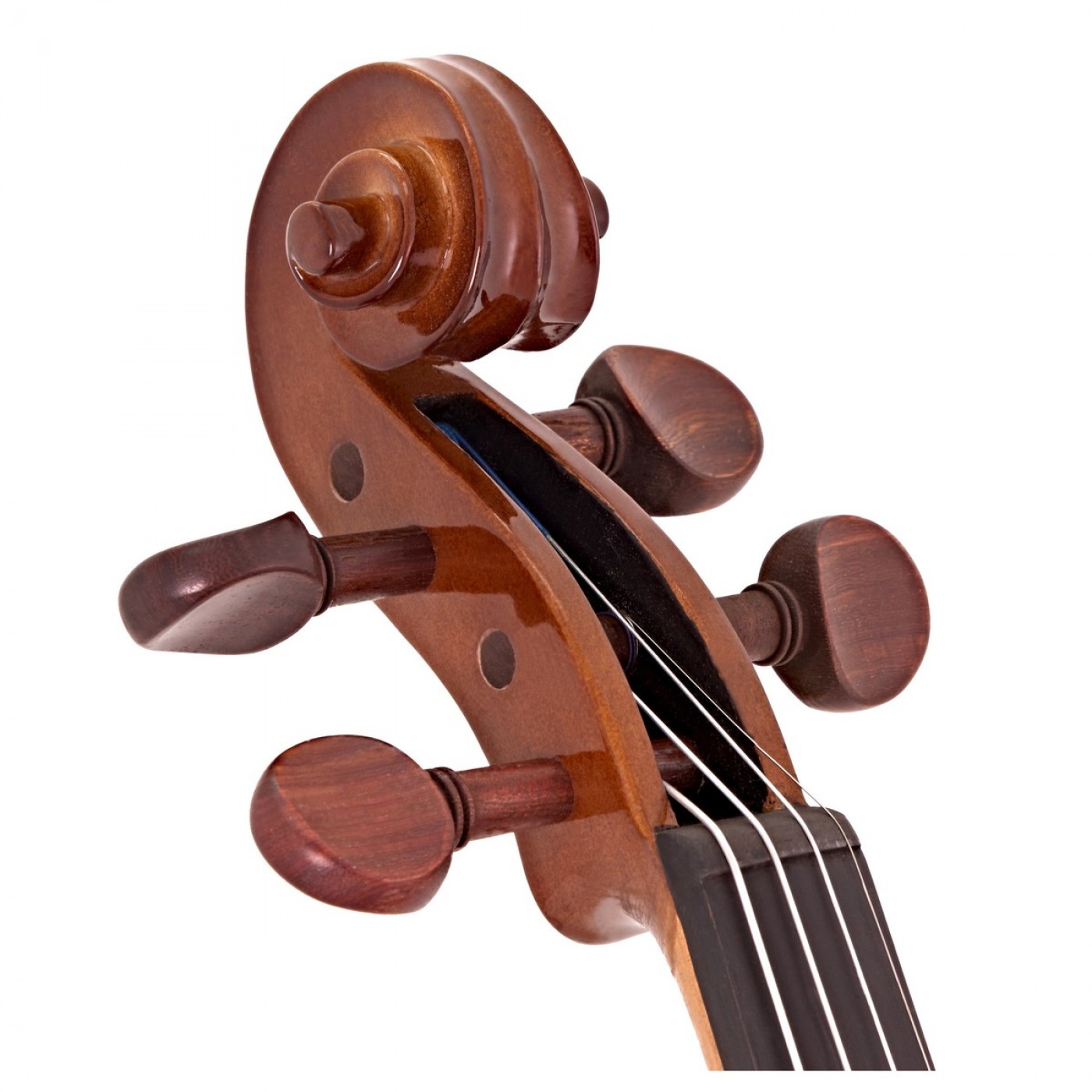
Construction matters, too. Traditionally, violins use spruce for the front, sometimes called the soundboard, and maple for the back, sides and neck. Spruce combines relatively low weight with excellent stiffness, while maple provides strength and contributes to the instrument's acoustic behaviour.
These materials have been used for centuries, and you'll find them in many properly constructed student violins today.
Explore our beginner violin range at Musicmaker for instruments specifically designed to support those important early stages of musical development.
What Size Violin Do I Need?
One of the most important differences between buying a violin and many other musical instruments is that violins are available in a range of physical sizes.
A standard adult violin is referred to as a 4/4, or full-size, instrument. Younger musicians generally begin with smaller fractional-size violins, moving up through the sizes as they grow.
It's tempting to buy a slightly larger instrument for a child to grow into, particularly when you're trying to make a sensible financial decision. Unfortunately, what works perfectly well with a pair of school shoes doesn't necessarily work with a violin.
An oversized violin can encourage excessive stretching, uncomfortable shoulder positioning and awkward wrist angles. It can also make it harder to control the bow and reach notes accurately. An appropriately sized instrument allows a young player to develop technique with less unnecessary physical strain.
The following measurements provide a rough starting point when choosing a violin.
| Violin size | Approximate arm length | Typical age range |
|---|---|---|
| 1/16 | 35–38 cm | 3–5 years |
| 1/10 | 38–42 cm | 4–5 years |
| 1/8 | 42–45 cm | 4–6 years |
| 1/4 | 45–50 cm | 5–7 years |
| 1/2 | 50–56 cm | 7–9 years |
| 3/4 | 56–60 cm | 9–12 years |
| 4/4 | 60 cm and above | Older children and adults |
These are approximate guidelines rather than definitive fitting measurements. Children grow at remarkably different rates, and two young musicians of the same age may require completely different instruments.
How to measure for a violin
Ask the player to extend their left arm comfortably out to the side, without lifting or straining the shoulder. Measure from the base of the neck to the centre of the palm.
This measurement provides an initial indication of the appropriate violin size, although the player's overall reach, hand size and comfort should also be considered. Different sizing charts may use slightly different measuring methods, so a practical fitting is preferable to relying on a number alone.
When holding a correctly sized violin in playing position, the student should generally be able to reach and cup the scroll comfortably with their left hand without locking their elbow or overstretching.
If you're between sizes, speak to your violin teacher or the team at Musicmaker before making a decision. It's always better to begin with an instrument that fits the musician today rather than one that might fit them next year.
Browse our Violin & Viola department to explore the available sizes and student instruments.
What Is a Violin Outfit?
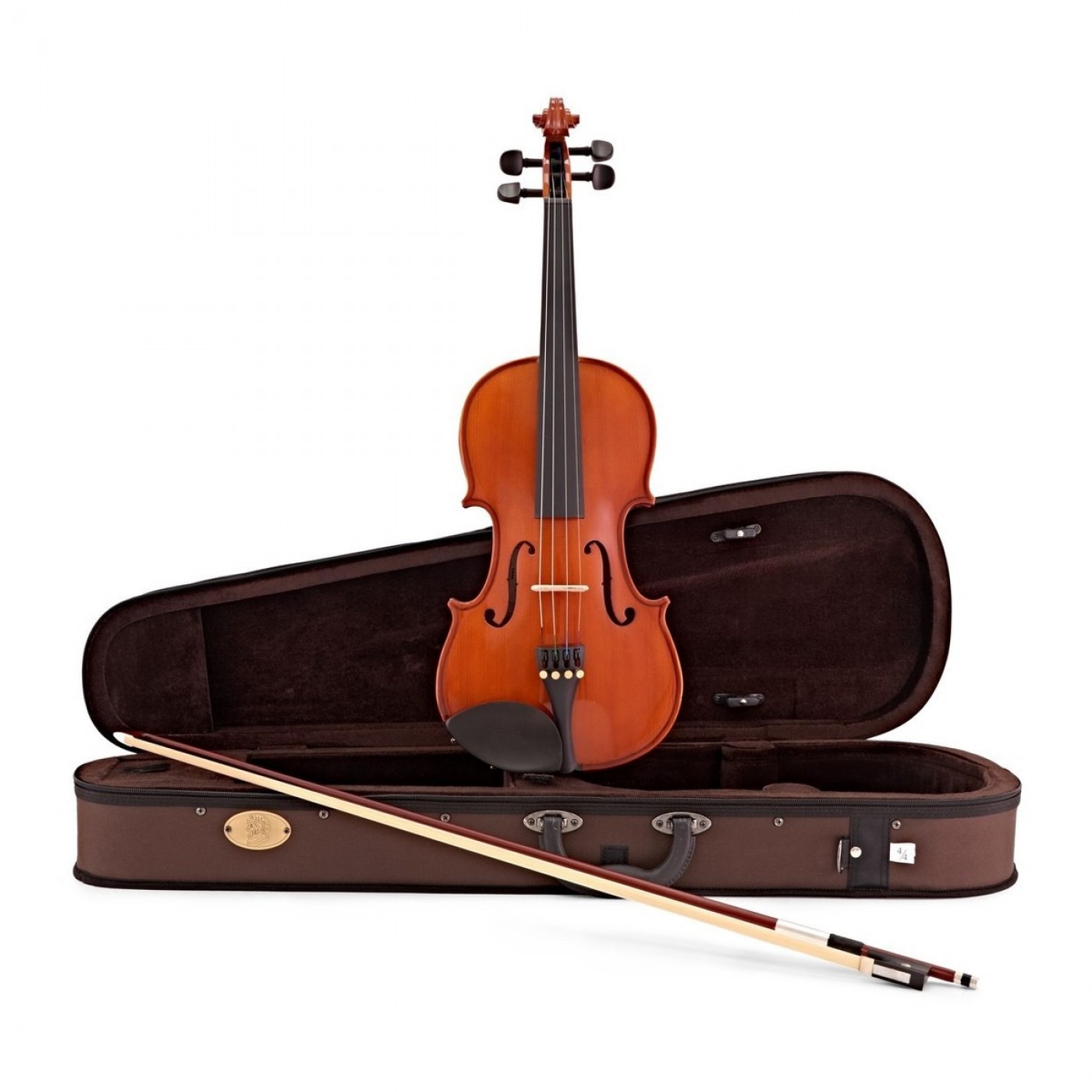
When browsing beginner violins, you'll regularly encounter the term 'violin outfit'. Contrary to what the name might suggest, we're not talking about a particularly elegant waistcoat for your instrument.
A violin outfit is a package containing the instrument and several essentials required to begin playing. Most student outfits include the violin itself, a bow and a protective case. Some also include rosin and additional accessories.
For beginners, this is generally a much more straightforward way of purchasing an instrument than attempting to choose every component separately. The bow is appropriately sized for the violin, the case is designed to hold it securely and the entire package is intended to provide a practical starting point for lessons.
However, not all outfits contain exactly the same accessories. A shoulder rest, music stand, tuner or tutor book may need to be purchased separately, so it's worth checking the contents of your chosen pack and asking your teacher about anything else they recommend.
Why We Recommend Stentor Violins for Beginners
Stentor has earned a particularly strong reputation in music education by concentrating on something that matters enormously: making dependable student instruments accessible to developing musicians.
The company's violin range covers everything from affordable entry-level outfits to instruments designed for more experienced players. Rather than treating a beginner violin as a disposable object, Stentor builds its student instruments around traditional construction methods and practical features that support learning.
We've stocked Stentor violins at Musicmaker for many years, and their combination of sensible construction, accessible pricing and student-friendly design makes them an excellent starting point.
Stentor Student Standard 1018 Series
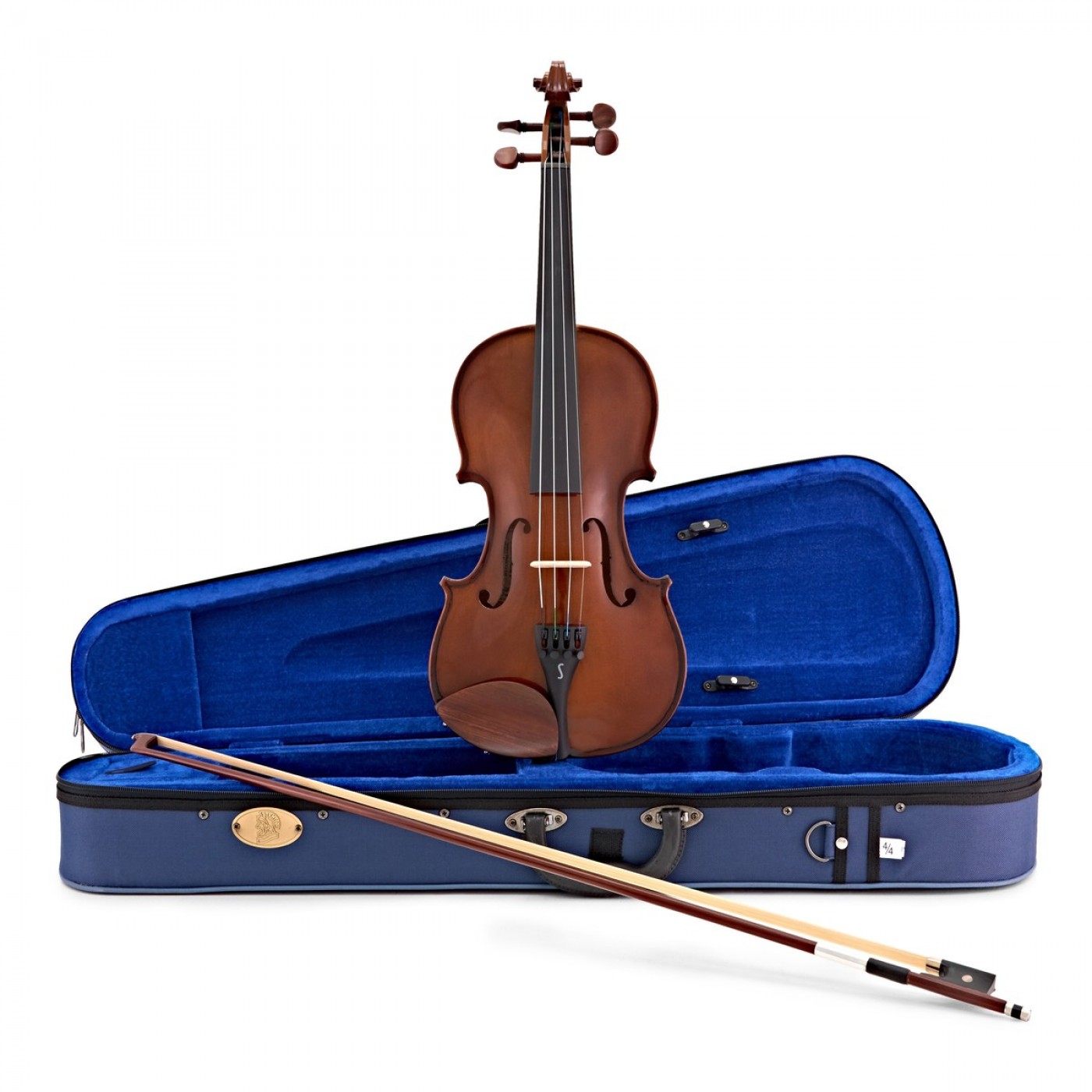
The Student Standard range is designed for musicians taking their first steps into violin playing. These instruments use carved solid tonewoods, traditional inlaid purfling, blackened hardwood fittings and a tailpiece with built-in fine tuners.
The fine tuners are particularly useful for beginners, allowing small adjustments to string pitch without immediately having to master the more delicate technique of tuning with traditional friction pegs.
Purfling, incidentally, is the decorative-looking strip that follows the outline of the violin's body. On traditionally constructed instruments, inlaid purfling also helps protect the edges of the wooden plates against the spread of cracks. It's a lovely example of violin craftsmanship combining visual elegance with practical purpose.
The Student Standard outfits include a wooden bow and lightweight protective case, making them well suited to regular lessons and travelling between home and school.
Our range includes the following models:
- Stentor Student 1018E 1/2 Violin Pack – A smaller outfit for younger beginners who require a half-size instrument.
- Stentor Student 1018C 3/4 Violin Pack – A useful choice for developing players who have outgrown smaller violins.
- Stentor Student 1018A 4/4 Violin Pack – A full-size option for older beginners and adult learners.
The Student Standard series makes a great argument for buying a properly constructed musical instrument rather than the cheapest violin you can find online. Those first few months of learning are challenging enough without adding unreliable equipment to the equation.
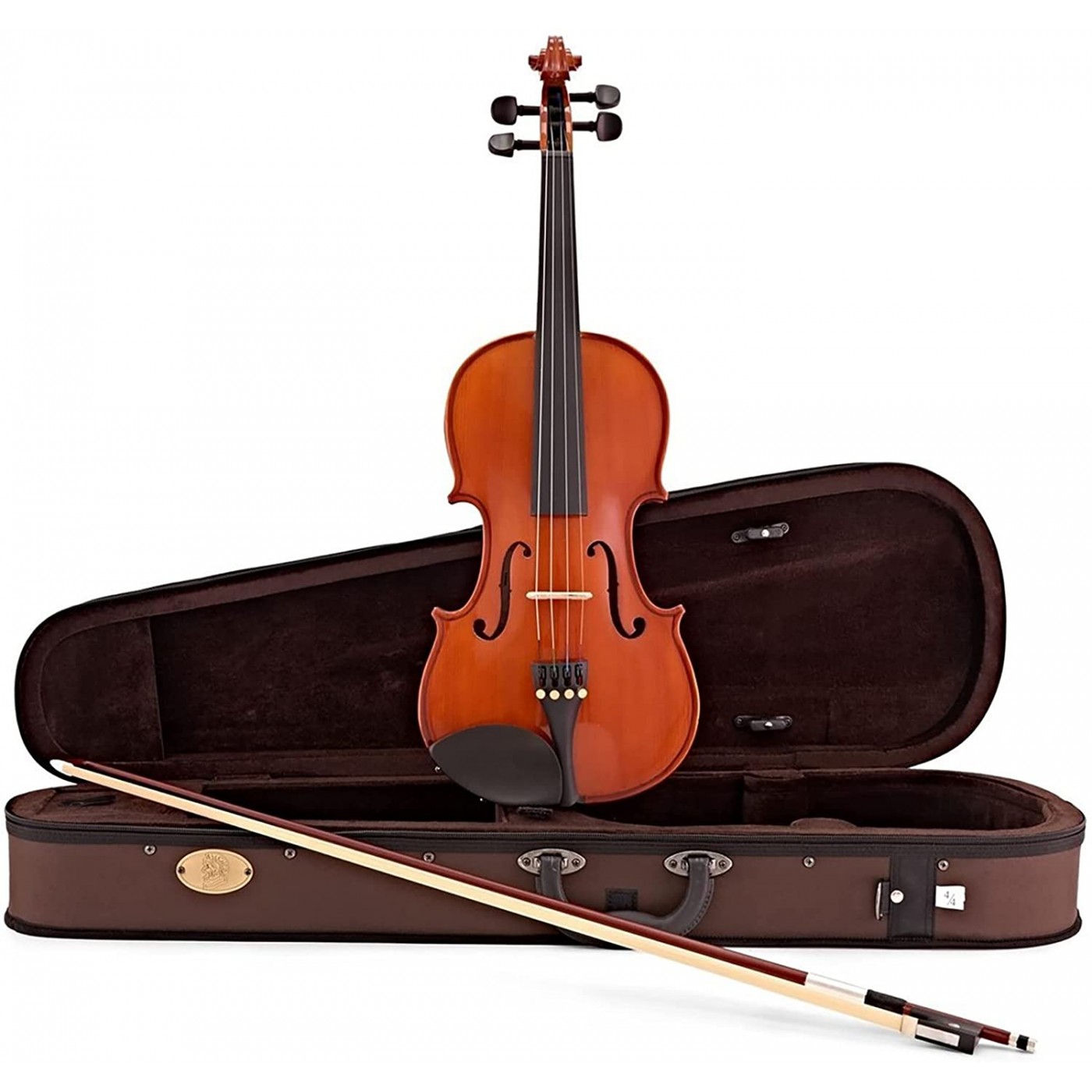
Stentor Student I
The Student I represents the next step in Stentor's student range, offering traditional solid-wood construction and thoughtfully selected components in a complete outfit.
Its carved spruce front and maple back and sides follow the established violin-making tradition, while the integrated fine tuners help make everyday tuning more approachable. A wooden bow and fitted protective case complete the package.
The Student I is an excellent option for families looking for a dependable instrument that can support a student through those formative years of learning. It's also a particularly appealing choice for adult beginners who want to invest a little more in their first violin without immediately venturing into intermediate or professional territory.
Take a look at the Stentor Student I 3/4 Violin Pack and the Stentor Student I 4/4 Violin Pack.
You can also explore the complete Stentor range at Musicmaker.
How Much Should You Spend on Your First Violin?
Buying an instrument for a beginner involves finding a sensible balance between musical quality and financial commitment. Nobody wants to spend unnecessarily on an instrument before discovering if their child enjoys playing, but buying something that is difficult to use can undermine that enthusiasm before it has a chance to develop.
At the time of writing, Musicmaker's beginner Stentor outfits sit broadly between €144.95 and €219 across several sizes and models. That provides a useful indication of what a traditionally constructed student violin outfit can cost.
You'll inevitably find cheaper instruments elsewhere, particularly through large online marketplaces. Some may be adequate, but an attractive photograph and an extensive accessories list don't necessarily tell you much about the quality of the bridge fitting, tuning pegs, bow or overall playability.
A slightly more considered initial investment can make the learning experience significantly more enjoyable. It can also mean spending less time dealing with tuning problems or replacing unsuitable components.
Remember to allow a little of your budget for additional accessories and lessons. A good teacher and a comfortable, playable student violin are likely to be far more valuable to a beginner than an impressive-looking instrument that stretches the entire budget.
Compare beginner violin outfits at Musicmaker for current prices and availability.
Why Violin Setup Matters So Much
A violin is a beautifully interconnected acoustic system. The strings vibrate against the bridge, which transfers that energy into the body. Inside the instrument, the soundpost and bass bar help support the structure and influence how those vibrations are distributed.
Even small differences in the position or fitting of certain components can affect how the violin responds.
The bridge, for example, is not normally glued to the instrument. It is held in position by the pressure of the strings, and its height, curvature and fit influence both playability and sound. If the strings sit too high above the fingerboard, a beginner may struggle to press them comfortably. If the bridge is poorly shaped, bowing individual strings can become unnecessarily difficult.
Similarly, tuning pegs that continually slip can turn a short practice session into a lengthy negotiation between musician and instrument.
This is one of the reasons we encourage beginners to choose instruments from established student ranges and seek advice from a specialist music shop. An instrument's setup is every bit as important as the wood from which it's made.
If you've purchased a violin and something doesn't feel right, resist the temptation to start making structural adjustments yourself. Bridge fitting, soundpost positioning and other specialist jobs are best handled by experienced technicians.
Understanding the Violin Bow
The bow is responsible for an enormous amount of the violin's expressive potential. Its movement determines how notes begin, how they develop and how smoothly the player travels from one note to another.
A traditional violin bow consists of a stick, a ribbon of horsehair, a tip, a frog and an adjustment screw. The frog is the component near the player's hand that holds one end of the bow hair and moves when the adjustment screw is turned.
Before playing, the hair needs to be tightened sufficiently to prevent excessive contact with the stick during ordinary bowing. However, it should never be tightened until the stick loses its natural inward curve.
After playing, loosen the bow hair before returning the bow to its case. Leaving it under tension unnecessarily can contribute to problems with the bow over time.
Most student violin outfits come with a suitable starter bow, so there's generally no need to purchase an expensive replacement immediately. Developing a relaxed bow hold and consistent bowing technique will make a considerably greater difference during the early stages of learning.
Essential Violin Accessories for Beginners
A student outfit provides an excellent foundation, but a few additional accessories can make practising, learning and looking after the instrument considerably easier.
Rosin
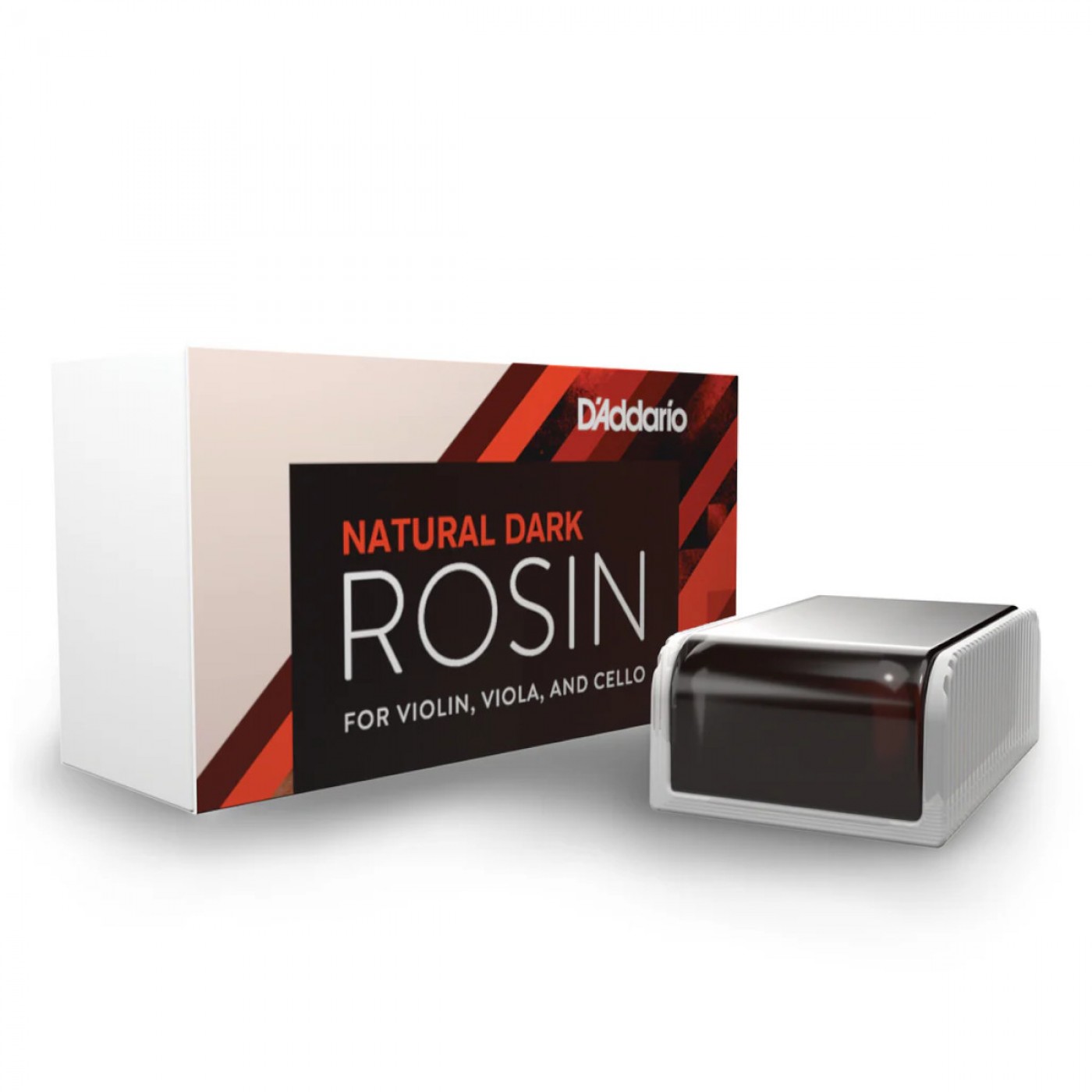
Rosin is a solid resin preparation applied to the bow hair to create the friction necessary to set the strings vibrating. Without it, a clean bow tends to slide across the strings without producing much sustained sound.
New bow hair typically requires more initial preparation than a bow that has already been used. Once the hair has been properly rosined, a modest application as needed is usually sufficient. Too much rosin can create excessive dust and an unnecessarily gritty response.
Check whether your outfit already includes rosin before buying more. The D’Addario Natural Dark Rosin currently listed in our violin packs and accessories range is a bulk 12-pack, so check the pack quantity before ordering.
Avoid touching the bow hair with your fingers, as natural oils from your skin can interfere with the effectiveness of the rosin.
Shoulder rests
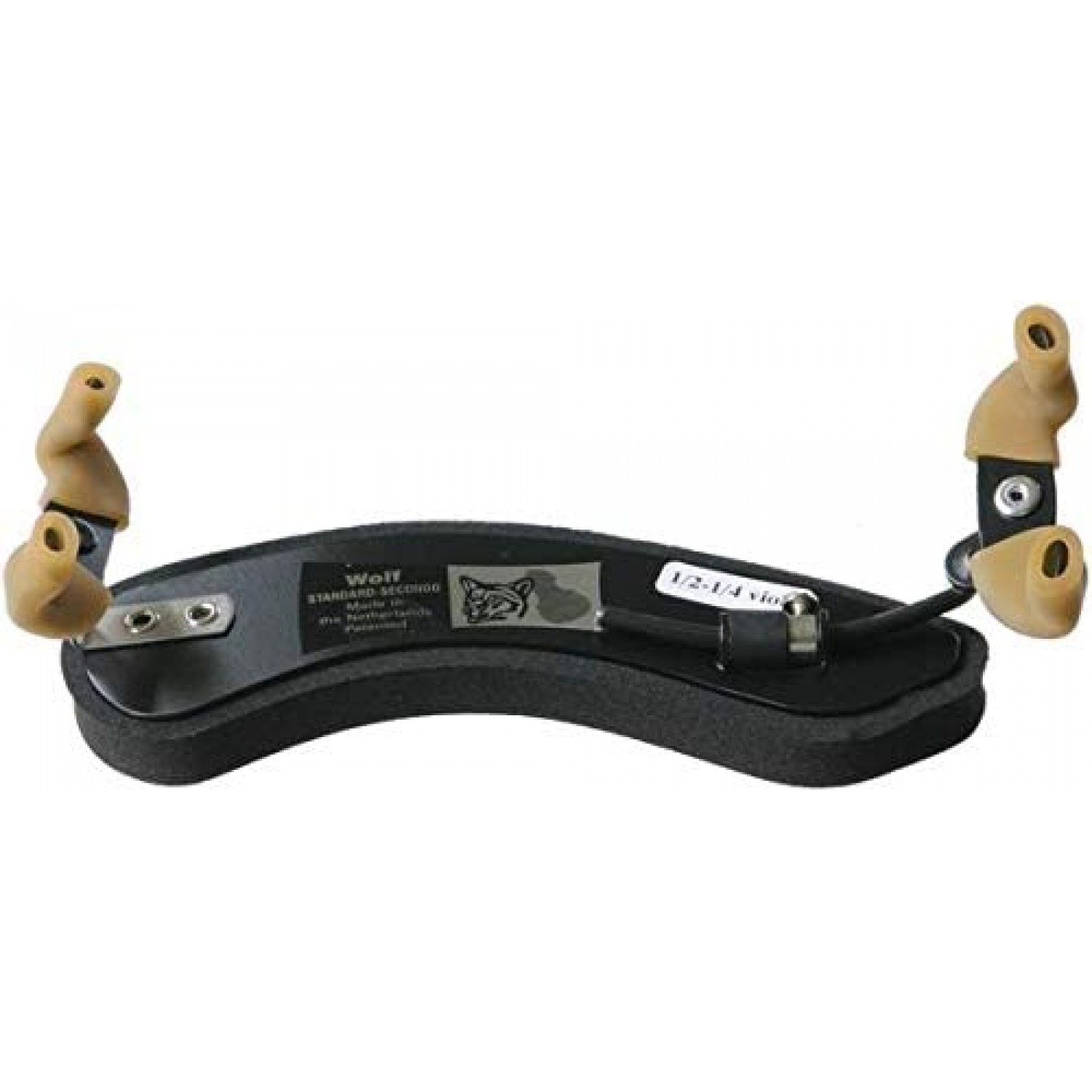
A shoulder rest sits against the back of the violin, helping the instrument rest more comfortably between the player's shoulder and chin.
Finding the right shoulder rest can encourage a relaxed playing position and reduce the temptation to grip the instrument excessively. However, there's considerable personal preference involved, and some teachers favour different approaches to supporting the violin.
Adjustable models, such as the Wolf Forte Secondo 1687C for 1/4- and 1/2-size violins available through our student violin accessories selection, can be particularly useful when finding a comfortable fit.
Make sure the shoulder rest is compatible with the size of the violin, especially when buying for a young musician.
Spare violin strings
Violin strings are available in different materials, tensions and sizes, and these characteristics influence the instrument's response, tuning stability and sound.
A conventional violin is tuned to G, D, A and E, from the lowest string to the highest. Beginners should generally start with a dependable student string set appropriate for their instrument, rather than immediately experimenting with expensive specialist strings.
Having a suitable spare E string or complete replacement set can be extremely useful. Strings have an unfortunate habit of breaking at precisely the moment somebody is getting ready for an important lesson.
Ask your teacher or the Musicmaker team for guidance before changing to a significantly different type of string.
Practice mutes
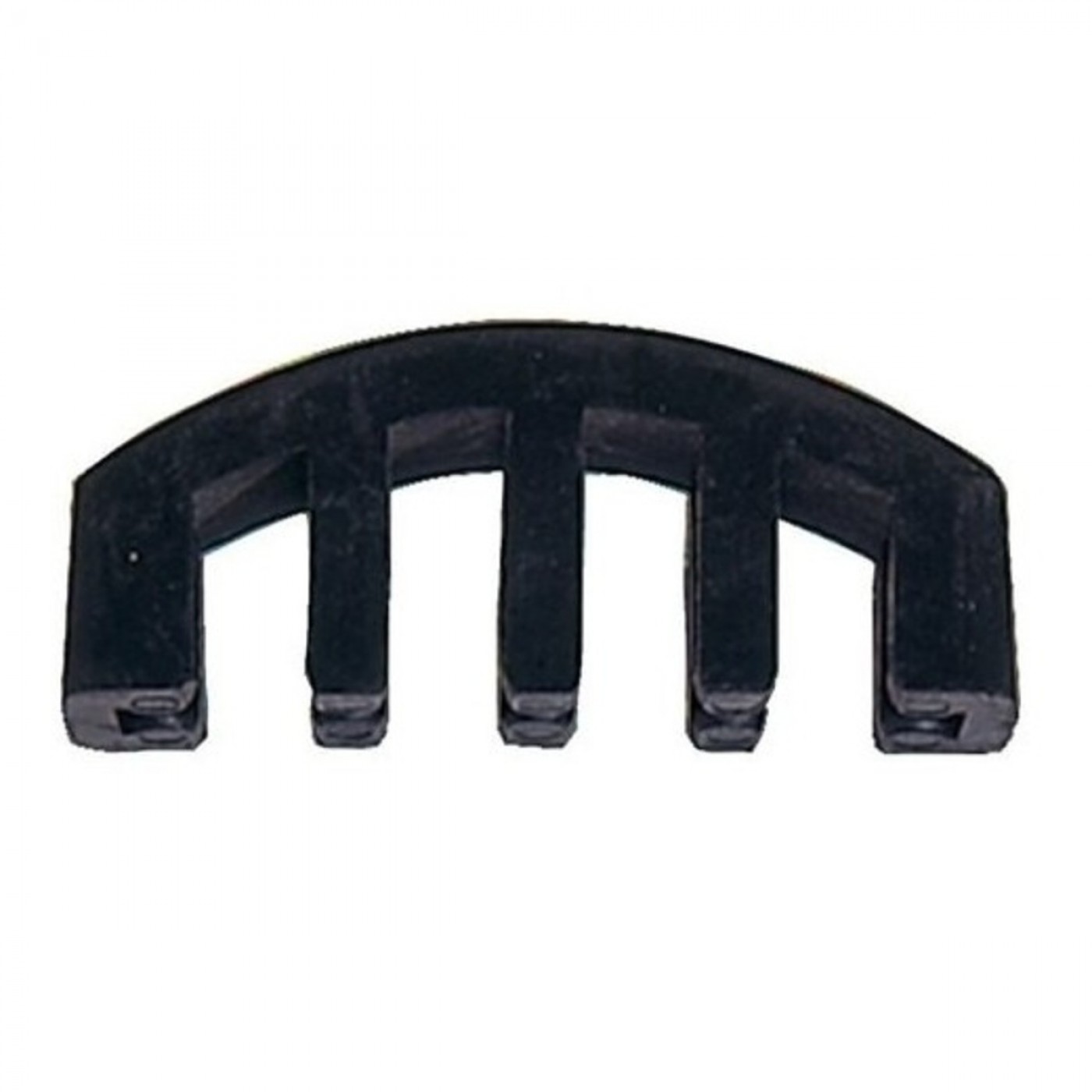
A practice mute fits onto the violin's bridge and reduces the amount of sound radiating from the instrument. It's a useful accessory for musicians living in apartments, shared accommodation or busy family homes.
Our Violin & Viola department includes accessories such as the GEWA rubber practice mute for 1/2- and 3/4-size violins.
A mute will not make the violin completely silent, and it changes the instrument's response and tone. Use it when quieter practice is necessary, but try to spend time playing without it so you can hear the instrument's natural sound and develop your bowing technique accordingly.
Music stands and violin books
A music stand allows the player to position sheet music at a comfortable height, avoiding the awkward posture that comes from balancing books on a table or bending over a completely unsuitable surface.
A good tutor book can also provide structure between lessons. We stock a selection of educational material, including titles from the popular Fiddle Time series, through our violin books department.
Ask your teacher which book best suits their teaching method and your current level of experience.
Is There a Difference Between a Violin and a Fiddle?
This is one of our favourite musical questions, particularly here in Ireland.
In most everyday contexts, a violin and a fiddle are the same instrument. The distinction largely comes down to musical tradition, playing style, repertoire and the terminology musicians use to describe what they do.
A classical violinist might spend considerable time developing precise articulation, vibrato and interpretation of written music. An Irish traditional fiddle player may focus on rhythmic drive, ornamentation, phrasing and the distinctive characteristics of regional musical styles.
Both require excellent listening skills, coordination, musical understanding and dedication.
Some fiddle players develop preferences for particular strings or bridge shapes, especially when regularly playing across adjacent strings. However, a beginner does not need a specially modified instrument to start learning Irish traditional music.
A well-chosen Stentor student violin can provide a perfectly sensible starting point for learning reels, jigs, hornpipes and airs, just as it can for classical repertoire.
If traditional music has captured your imagination, our guide to starting music lessons offers more encouragement for taking those first musical steps.
Can Adults Learn the Violin?
Absolutely. The idea that somebody must begin learning the violin during childhood to enjoy playing it is one of music's more persistent misconceptions.
Adults bring their own advantages to musical education. They can often approach practice in a structured way, understand the reasoning behind technical exercises and make informed choices about the music they want to play.
There will inevitably be challenges. Developing accurate intonation without frets takes patience, and learning to produce an even tone with the bow requires coordination that initially feels rather unfamiliar.
The secret is to approach progress in manageable stages. Short, regular practice sessions are generally more productive than occasional marathons that leave you feeling exhausted and frustrated.
Learning an instrument as an adult can also be a wonderful opportunity to explore music socially. Joining a beginner class, community orchestra or traditional music group provides motivation, shared experiences and a good excuse to occasionally escape the house with a violin case.
For most adult beginners, a full-size 4/4 student outfit is the natural starting point, although individual comfort and physical reach should still guide the choice.
Looking After Your First Violin
Violins are relatively delicate wooden instruments, but looking after one doesn't need to become an elaborate daily ceremony.
Get into the habit of wiping away rosin dust with a clean, soft cloth after playing. Over time, accumulated rosin can become difficult to remove and may affect the instrument's finish.
Keep your violin in its case when you're not using it, and avoid leaving it beside radiators, in direct sunlight or in a car exposed to significant temperature changes. Wood responds to changes in humidity and temperature, and extreme conditions can cause tuning instability or more serious problems.
Loosen the bow hair after every practice session and make sure the instrument and bow are properly secured before closing the case.
If a string breaks, a peg starts slipping or the bridge appears to be leaning, seek advice from your teacher or a qualified repair specialist. A little preventative care is considerably easier than dealing with a damaged instrument.
You can find protective cases, cleaning cloths and other useful equipment in our orchestral department.
Buying a Violin for Christmas?
A first violin can make a truly memorable Christmas present. It offers the possibility of discovering an entirely new musical world, developing a lifelong skill and eventually sharing that music with other people.
For children, however, correct sizing remains particularly important. If the violin is intended as a surprise, try to discreetly obtain the appropriate measurements or consult their music teacher before ordering.
A complete student outfit, some suitable rosin, a shoulder rest and a beginner's tutor book can make a beautifully considered gift. Arranging a first lesson alongside the instrument is another lovely idea, giving the recipient some guidance as they begin exploring their new musical companion.
And if you're buying for an adult who has spent years saying they'd love to learn the violin, perhaps this Christmas is the perfect opportunity to turn that conversation into something rather wonderful.
Explore more inspiration in our Christmas Gifts for Musicians in Ireland guide.
Frequently Asked Questions About Buying a First Violin
What is the best violin for a complete beginner?
A properly fitted student outfit from an established manufacturer is an excellent starting point. The Stentor Student Standard and Student I ranges offer accessible options designed specifically for developing musicians.
What size violin should a seven-year-old use?
A quarter-size or half-size violin may be appropriate, depending on the child's arm length, hand size and physical development. Age alone is not a reliable way to determine violin size, so always check the measurements and seek fitting advice.
Is a 4/4 violin suitable for adults?
A 4/4 violin is the standard full-size instrument and is suitable for most adult players. Adults with a smaller reach may find a smaller instrument more comfortable.
How much does a beginner violin cost in Ireland?
A dependable beginner student outfit can be found in the region of €144.95–€219 within Musicmaker's Stentor range at the time of writing. More advanced instruments are available at higher prices, while accessories and lessons should also be considered when planning your budget.
Do beginner violins come with a bow?
Most student violin outfits include a suitably sized bow and protective case. Additional items, such as rosin and a shoulder rest, vary between packages.
Do I need a teacher to learn the violin?
It's possible to begin exploring the violin independently, but professional guidance is particularly valuable for developing posture, bowing technique, finger placement and accurate intonation.
Can I play Irish traditional music on a beginner violin?
Yes. A properly sized, well-set-up beginner violin is suitable for learning Irish traditional fiddle music as well as classical and other musical styles.
Is a violin difficult to learn?
The violin presents some distinctive challenges, particularly when developing accurate pitch and consistent bowing technique. With regular practice, suitable equipment and good guidance, beginners can make rewarding progress.
Find Your First Violin at Musicmaker Dublin
Every experienced violinist was once somebody trying to draw a straight bow across an open string. Every confident fiddle player once struggled to remember where their fingers were supposed to go. The wonderful thing about learning an instrument is that nobody needs to begin with all the answers.
Choosing the right violin gives you a solid foundation for discovering those answers through practice, curiosity and the simple pleasure of making music.
At Musicmaker, we've been part of Ireland's independent musical community since 1981. We understand that buying a first instrument is an important moment, and we're always happy to help musicians and families navigate the choices.
Explore our beginner violins, browse the complete Violin & Viola range or visit us at 29 Exchequer Street, Dublin 2.
From the first tentative notes of Twinkle, Twinkle, Little Star to the exhilarating rhythm of your first Irish reel, there's a magnificent musical adventure waiting to happen.
Free shipping across Ireland on orders over €15.
Let's get you started.
Independent minds. Serious gear. Glorious noise.